

 Not in Hall of Fame News
Yes, we know that this is taking a while! As many of…
 Not in Hall of Fame News
Yes, we know that this is taking a while! As many of…
 Not in Hall of Fame News
2002 SEMI-FINAL RESULTS: Thank you for your participation in the Pro Football…
 Not in Hall of Fame News
Yes, we know that this is taking a while! As many of…
 Not in Hall of Fame News
We are diligently working away at Notinhalloffame on revising our Football lists…
 Not in Hall of Fame News
We are diligently working away at Notinhalloffame on revising our Football lists…
 From the Desk of the Chairman
October baseball often turns individual pitching performances into lasting postseason memories. Strikeout…
 From the Desk of the Chairman
For decades, the sports debate ran on gut feeling. Barstool arguments, call-in…
 From the Desk of the Chairman
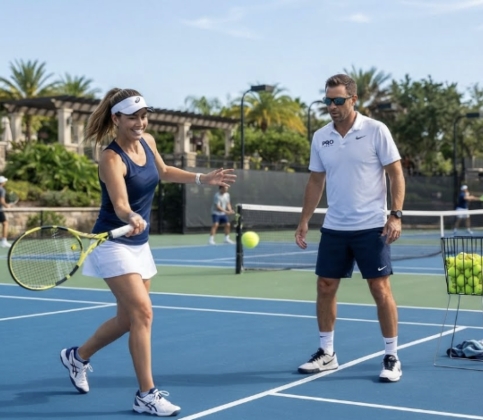
Introduction to Private Adult Tennis Camps in Prague Adult club players increasingly…
 From the Desk of the Chairman
Unlike in the case of pre-match betting, where you have to pick…
 From the Desk of the Chairman
Kupu178 builds trust with people by using top-end end-to-end encryption. It checks…
 From the Desk of the Chairman
Sports fans thrive on calculating strategy, reading momentum, and maximizing every tactical…






100 Active Potential Football Hall of Famers
-
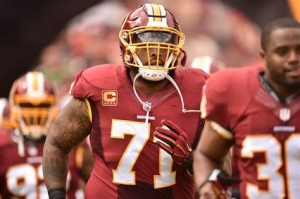 #6 Overall, Trent Williams, San Francisco 49ers, Offensive Tackle, #1 Offensive Lineman2025 Pre-Season Rank #5, 2024 Pre-Season Rank #6, 2023 Pre-Season Rank #6, 2022 Pre-Season Rank #20, 2021 Pre-Season Rank #33, 2020 Pre-Season Rank…
 -
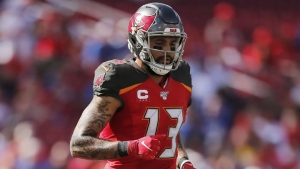 #18 Overall, Mike Evans, San Francisco 49ers, #1 Wide Receiver2025 Pre-Season Rank #13, 2024 Pre-Season Rank #18, 2023 Pre-Season Rank #35, 2022 Pre-Season Rank #58, 2021 Pre-Season Rank #73. Peak 2020-24 How…
 -
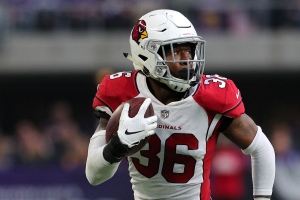 #24 Overall, Budda Baker, Arizona Cardinals, Free Safety, #1 Safety2025 Pre-Season Rank #28, 2024 Pre-Season Rank #43, 2023 Pre-Season Rank #78, 2022 Pre-Season Rank #86, 2021 Pre-Season Rank #113, 2020 Pre-Season Rank…in Safeties
 -
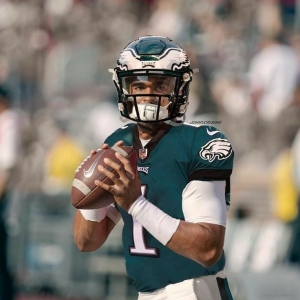 #32 Overall, Jalen Hurts, Philadelphia Eagles, #6 Quarterback2025 Pre-Season Rank #33, 2024 Pre-Season Rank #53, 2023 Pre-Season Rank #121. Peak Period: 2021-25 And in 2024, he became a champion. Jalen…in Quarterbacks
Visit the Fictitious Halls of Fame!


You May Also Like...
EDITOR’S CHOICE

 DDT's Pop Flies
When the veterans committee (VC), officially convening as the Contemporary Baseball Era…

 Live Music Head
Project/Objectan interview with André Cholmondeleyby Live Music HeadOriginally published at timessquare.com on…

LATEST RANKINGS





MOST POPULAR RANKINGS
















Committee Chairman
21. Eric Show
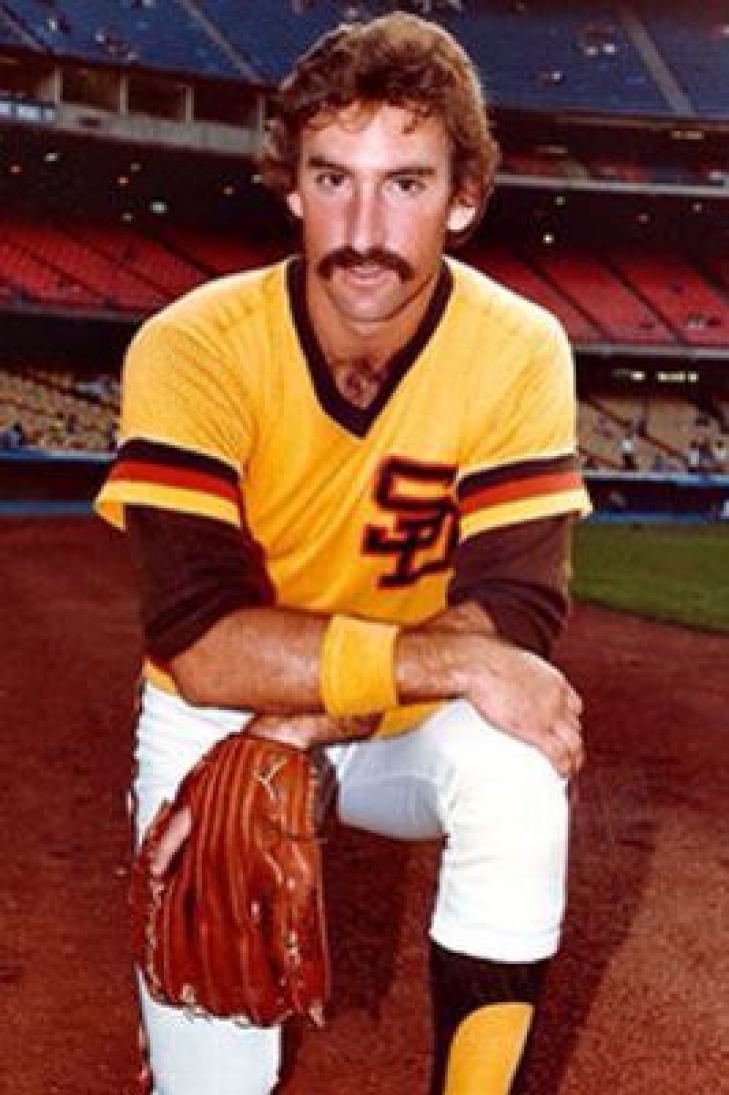
While some baseball narratives are characterized by smooth, unblemished trajectories towards legendary status, the history of the 1980s San Diego Padres pitching staff cannot be told without considering a deeply complex and highly polarizing figure. Eric Show did not conform to the conventional mold of a major league baseball player. An eccentric jazz guitarist, a born-again Christian, and an openly affiliated member of the far-right John Birch Society, his intellectual and political leanings often estranged him from his own clubhouse. Nevertheless, despite ongoing friction, mood swings, and a career overshadowed by a tragic conclusion, the right-handed pitcher served as the reliable and unwavering engine of the San Diego rotation for an entire decade.
His brief debut in September 1981 led to a impactful 1982 season, splitting time between relief and starting with a 10–6 record and 2.64 ERA over 150 innings. By spring 1983, he secured a permanent spot in the starting rotation, beginning a period of consistent durability. Show achieved consecutive 15-win seasons in 1983 and 1984, moving away from his bullpen duties to become an essential part of the middle rotation. His 15–9 record in the impressive 1984 regular season contributed significantly to the Padres’ first-ever National League pennant, providing the small-market team with reliable support during their critical moment.
To be fair, Show was seldom viewed as an elite, top-tier superstar, and he was never selected for an All-Star game. His role was mainly as a dependable, middle-of-the-rotation pitcher, with five seasons pitching at least 200 innings. His best individual season came in 1988, when he achieved a career-high 16 wins, maintained a solid 3.26 ERA, and pitched an impressive 13 complete games.
Despite his on-field skills, his performance was often overshadowed by unfortunate events and clubhouse instability. On September 11, 1985, Show made a lasting mark in baseball history by giving up Pete Rose's 4,192nd career hit, a record that came with a bittersweet sense of closure. The extended, circus-like delay afterward annoyed everyone, and the pitcher sat on the mound with crossed arms, a move that attracted harsh public criticism and irritated teammates who saw it as unprofessional. His combative nature boiled over again in 1987 when he beaned Chicago star Andre Dawson in the face, spiking a violent, bench-clearing brawl that required umpires to remove Show from the field for his own physical safety.
The unavoidable end to his career came in 1990. Suffering from chronic back pain and early signs of substance abuse that would later derail his life, his mechanics worsened considerably, resulting in a buyout from the Padres management. He then signed as a free agent with the Oakland Athletics for the 1991 season, but after a brief and forgettable relief appearance with a high 5.92 ERA, he was released the next spring and never pitched in the majors again.
Tragically, his post-baseball life unraveled into a severe, high-velocity downward spiral. On March 16, 1994, just three years after throwing his final big-league pitch, Show suffered a fatal drug overdose at a rehabilitation facility in Dulzura, California, cutting his life short at the age of 37.
Show compiled exactly 100 wins against 73 losses, a steady 3.59 ERA, and 951 strikeouts across 1,603.1 innings.
20. Brian Giles
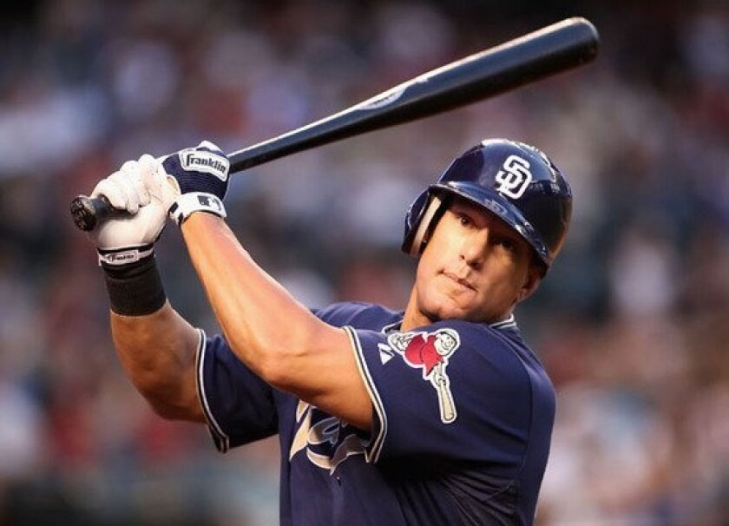
If you sought an elite clinic in modern strike-zone management, you wouldn't focus on the marquee stars; instead, you'd look at the patient—an outfielder with a lethal stroke who made walking appear as an aggressive offensive move. Brian Giles, raised in El Cajon, California, was acquired from the Pittsburgh Pirates in late August 2003, making it more than just a roster upgrade; it was a homecoming. Already a top-tier, multiple-time All-Star in Pittsburgh, this left-handed slugger brought a highly disciplined plate approach to the San Diego Padres, a team in dire need of an advanced table-setter.
He smoothly adjusted his gameplay to suit the large, pitcher-friendly dimensions of the newly opened Petco Park. During his first three full summers as a Padre, he made collecting base hits a focused daily habit, achieving at least 159 hits each season. His 2005 regular-season performance remains one of the most uniquely dominant offensive displays in the franchise's history. Giles systematically controlled deep counts to lead the National League with 119 walks, forcing opposing pitchers to change their strategies. He combined this patience with a strong .301 batting average, and his impressive .423 on-base percentage was third best in the league. Giles had a well-deserved ninth-place finish in the league's Most Valuable Player voting, marking the highest individual finish of his 15-year major league journey.
Although the large gaps of his home park naturally limited his home run numbers compared to his Pittsburgh days, Giles still offered significant power for the San Diego lineup. He hit 83 home runs while using a short, compact swing to drive the ball into the gaps and routinely score runs. He stayed a dependable, top-tier presence in right field through 2008, rebounding from a slow patch to produce an impressive 171-hit season at age 37.
Regrettably, his 2009 local residency ended abruptly due to injury. Severe arthritic knee issues impaired his mechanics, dropping his average to .191 over 61 games, and led to a permanent disabled list stint in June.
He signed with the Dodgers as a Free Agent but would not make the team. He would have a slash line of .279/.380/.435 and 872 hits with San Diego.
17. Chase Headley
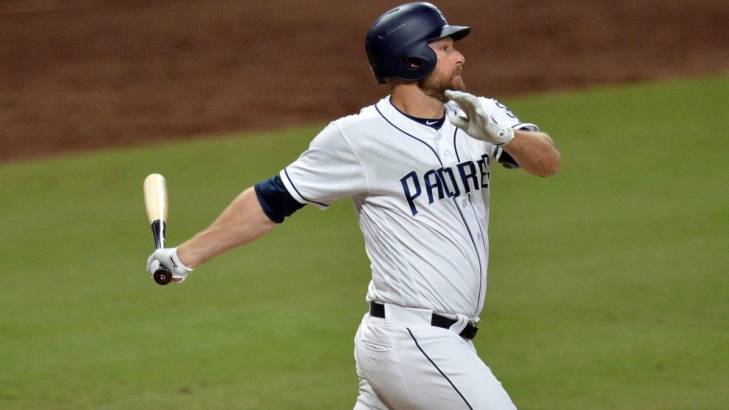
After a decorated college career at the University of Tennessee, Chase Headley translated his success as a Volunteer into a highly regarded second-round pick by the San Diego Padres in the 2006 amateur draft. The switch-hitter showed advanced skills that helped him quickly progress through the minor leagues, earning a brief call-up to the majors late in the 2007 season. Although he started 2008 back in the minors, he made his way back to Southern California by June, quickly earning an everyday role in the lineup. Initially moved to left field to fit veteran roster needs, he eventually returned to his natural position at third base.
Headley’s early Padres career showed steady growth, culminating in a standout 2012 season. He hit a career-high 31 home runs, led the league with 115 RBIs, and posted a .279/.376/498 slash line with an .875 OPS. Despite a weak offense, he earned a Silver Slugger and finished fifth in MVP voting. His defense also improved, winning a Gold Glove in 2012, strengthening San Diego's infield.
After slipping back to his regular production in 2013, Headley was traded mid-year in 2014 to the Yankees. New York would send him back after the 2017 Season, and Headley briefly returned to San Diego before he was released in May.
With the Padres, Headley contributed 87 home runs, 879 hits, and batted .263.
18. Ed Whitson
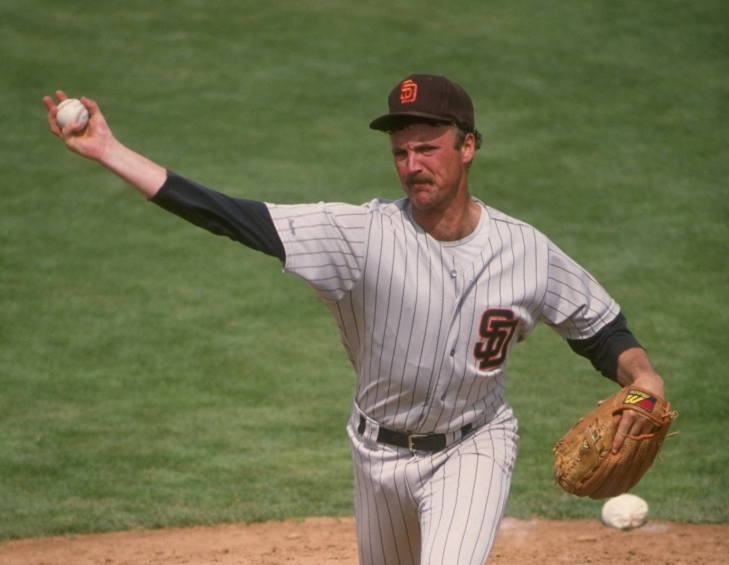
Few pitchers in baseball history have experienced a more divided relationship with two fan bases than Ed Whitson. To the Bleacher Creatures in New York, he symbolizes a turbulent, high-pressure free-agent signing gone wrong. Conversely, in Southern California among the familiar palms, he built a respected legacy as one of the most durable starters of his era. Over 15 major league seasons, Whitson's career was marked by two distinct phases with the San Diego Padres—transforming from a hard-throwing middle-of-the-rotation pitcher to a skilled, soft-tossing master of pitch sequencing.
Acquired from Cleveland ahead of the 1983 schedule, his introductory summer in San Diego was a frustrating trial. Whitson struggled to find his rhythm, fighting mechanical inconsistency to wrap up the year with a modest 5–7 record and an elevated 4.30 ERA. The definitive breakthrough erupted the following spring, catalyzed by an accidental discovery. After cutting his finger on a soda bottle, Whitson was forced to alter his grip, inadvertently developing a devastating palm ball. Armed with this new off-speed weapon, he turned efficiency into a strict daily routine during the historic 1984 campaign. Whitson cruised to a 14–8 record, cutting his ERA to a tidy 3.24 while anchoring a 1.180 WHIP across 213.2 innings. His newfound consistency drove the Padres to their first National League pennant, highlighted by a clutch, five-hit performance over eight innings in Game 3 of the NLCS to rescue San Diego from elimination against the Chicago Cubs.
That postseason exposure increased his market value, resulting in a lucrative free-agent transfer to the New York Yankees. However, following a highly volatile and media-intensive tenure in the Bronx, the front office orchestrated a mid-season intervention in July 1986, trading to re-acquire Whitson for Jack Murphy Stadium. To be candid, his immediate return to the venue was an unequivocal failure. Distraught by his experiences in New York, he struggled through the rest of the 1986 calendar year, recording a dismal 1–7 win-loss record with an inflated 5.59 ERA.
While the 1987 schedule yielded only marginal progress, Whitson fully rediscovered his mechanics by 1988, posting a dependable 13–11 record and a 3.77 ERA to stabilize a rebuilding rotation. The absolute evolutionary zenith of his career emerged during a brilliant, late-career resurgence as the decade drew to a close. Operating primarily as a "junkball" technician who relied on cerebral and zone manipulation rather than raw velocity, Whitson dominated the National League throughout the 1989 and 1990 calendars. He compiled a combined 30–20 record over those two summers, managing to push his individual earned run average well below the three-run threshold in consecutive campaigns.
His 1990 regular-season masterpiece stands as one of the most statistically dense pitching campaigns in local history. At age 35, Whitson went 14–9 with a spectacular 2.60 ERA, logging 228 innings across 32 starts. Advanced analytical filters heavily celebrate this specific peak; he generated a massive 7.0 bWAR that summer, pacing all National League hurlers and verifying his standing as an elite frontline force.
Regrettably, that workload marked his last productive peak. The physical toll hit him in 1991, causing his mechanics to decline. At 36, facing physical decline, he retired, ending his career.
Whitson had a 77-72 Record with a 3.69 ERA with the Padres.
