
gold star for USAHOF
 

Top 50 Cleveland Guardians


The origin of the Cleveland Indians begins in Grand Rapids, Michigan, in 1894, where they played in the Western League.  The franchise relocated in 1900, becoming the Cleveland Lake Shores, and eventually were an inaugural team of the American League, going through multiple name changes (Bluebirds, Broncos, Naps) before becoming the Indians for over a decade.

Cleveland would become a great sports town, but the baseball team has not given them very much to cheer for over the years.  The Indians have only won the World Series twice (1920 and 1948), with three other appearances.  

Following the 2021 Season, Cleveland changed its controversial team name to the Guardians, and this is likely how it will remain as long as the team remains on the North Shore.

This list is up to the end of the 2024 regular season.

Note: Baseball lists are based on an amalgamation of tenure, traditional statistics, advanced statistics, playoff statistics, and post-season accolades.
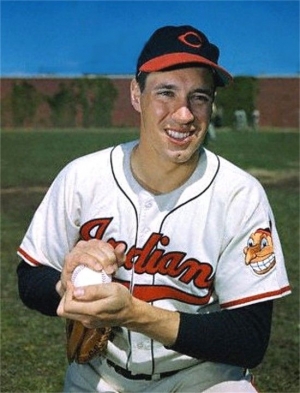
  When Bob Feller arrived in Cleveland in 1936, he was a 17-year-old high school student who looked like a farm boy but threw like a god. Bypassing the minors entirely, he famously struck out eight Cardinals in an exhibition game before he had even graduated. By the time he was 19, "Rapid Robert" was already the most feared strikeout artist in the American League, leading the circuit with 240 K's in 1938. His residency in Cleveland began with a level of hype that would have crushed a lesser player, but Feller thrived under the pressure, pairing a legendary fastball…
When Nap Lajoie arrived in Cleveland in 1902, he didn't just bring a legendary bat; he brought the validity of an entire league. After a messy legal battle with the Phillies that saw him jump to the Athletics and then flee to Cleveland to avoid a Pennsylvania injunction, Lajoie became the first true titan of the American League. He was so instantly beloved on the Lakefront that by 1903, a fan poll officially changed the team's name from the Bronchos to the "Naps" in his honor. He wasn't just playing for the city; he was the city's identity for over…

ST. LOUIS CARDINALS VS. HOUSTON ASTROS

Mar 18, 2026

Buy your Tickets to see St. Louis Cardinals vs. Houston Astros HERE!

NEW YORK YANKEES V. BOSTON RED SOX

Mar 18, 2026

Buy your Tickets to see New York Yankees v. Boston Red Sox HERE!

NEW YORK YANKEES V. BOSTON RED SOX *PINSTRIPE PASS*

Mar 18, 2026

Buy your Tickets to see New York Yankees v. Boston Red Sox *Pinstripe Pass* HERE!

ATLANTA BRAVES VS. PHILADELPHIA PHILLIES

Mar 18, 2026

Buy your Tickets to see Atlanta Braves vs. Philadelphia Phillies HERE!

 
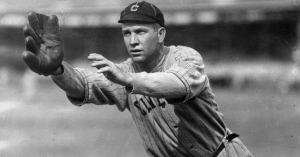
When Tris Speaker was traded to Cleveland in 1916, it was the result of a legendary insult. Despite batting .322, the Red Sox asked their superstar centerfielder to take a pay cut. Speaker’s refusal sent him to Cleveland, where he immediately set about dismantling American League pitching. In his debut season with the Indians, he proved his point with a thunderous campaign, capturing the 1916 Batting Title with a .386 average and leading the league in hits, doubles, and on-base percentage. He arrived as a disgruntled star and instantly became the premier face for a city hungry for a winner.…
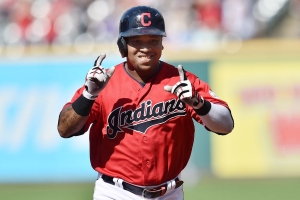
When José Ramírez arrived in Cleveland as an unheralded amateur free agent in 2009, few predicted he would become the statistical titan he is today. He debuted in 2013, but his true residency in the sport’s elite tier began with a breakout 2016 campaign, in which he helped anchor the team's run to the World Series. He arrived as a versatile "utility" piece but quickly matured into a cornerstone, displaying a combination of high-contact skill and a "leg-kick" power surge that turned him into a perennial MVP threat. The middle of his journey has been phenomenal and consistent. Between 2017…
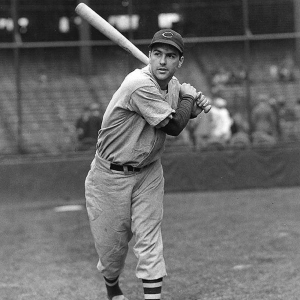
A two-sport star (Basketball and Baseball) at the University of Illinois, Lou Boudreau focused on Baseball, and the Cleveland Indians were blessed by that decision.
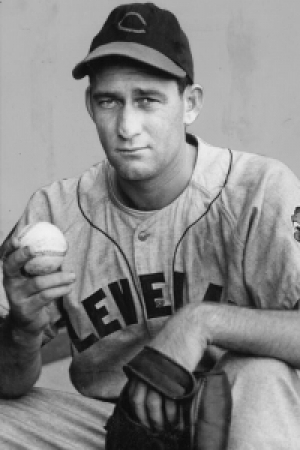
When Bob Lemon returned from military service in 1946, he had every intention of roaming center field for the Tribe. He even began the season with a spectacular diving catch that seemed to cement his future in the outfield. However, the Cleveland braintrust saw potential in his arm that surpassed his utility with a glove. In one of the most successful gambles in franchise history, they convinced Lemon to move to the mound full-time. He arrived as a middle-of-the-road outfielder and left his first few seasons as a developing project, but by 1948, the transformation was complete. The peak of…
Stan Coveleski joined Cleveland in 1916, bringing a quiet, workmanlike intensity and a devastating "wet" delivery that moved on its own mind. He secured a permanent spot in the rotation with a 15-win rookie campaign, but it was the following season that he truly established himself as the tactical leader of the staff. He matured into a model of earning the W, putting together a staggering stretch from 1918 to 1921 in which he won at least 22 games in four consecutive seasons. During this window, his ERA dipped below 2.00 twice, proving that his control and movement were nearly…
Cleveland’s decision to call up a 27-year-old rookie in 1929 might have raised eyebrows elsewhere, but Averill silenced the skeptics with his very first swing, launching a home run that signaled the arrival of a finished superstar. That debut season, a .332 average paired with 18 home runs, set the tone for a decade of relentless production. He anchored center field with a poise that suggested he had been playing at League Park for years, quickly maturing into the franchise's most potent offensive weapon. The statistical pinnacle of his residency arrived in 1936, a season that remains a monument to…
The American League landscape shifted in 1949 when Cleveland acquired Early Wynn, placing him alongside legends like Bob Feller and Bob Lemon. This environment pushed his game to a new stratosphere; after a solid debut season with the club, he authored a masterclass in efficiency in 1950. That year, he captured the ERA title while leading the league in WHIP, hits-per-nine innings, and strikeouts-per-nine. He arrived as a piece of the puzzle and instantly became an ace in his own right, providing a level of dominance that made the Cleveland staff the most feared unit in the sport. The peak…
The Cleveland rotation found a true outlier in 1961 when Sam McDowell debuted as a teenager, but it was the 1964 campaign where he matured into a full-time force. He possessed a rare, high-ceiling talent that enabled him to lead the American League in strikeouts five times during his tenure with the club. While legends like Koufax and Gibson were grabbing headlines in the Senior Circuit, "Sudden" Sam was the undisputed king of the whiff in the AL, twice eclipsing the 300-strikeout mark in a single season. He arrived as a raw prodigy and quickly became the pitcher that every…
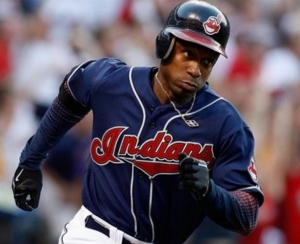
The trajectory of Cleveland baseball shifted forever in the winter of 1991 when the club acquired Lofton from Houston. He matured instantly into the premier leadoff threat in the American League, finishing as the Rookie of the Year runner-up while leading the league with 66 stolen bases. He arrived as a rare two-sport standout from the University of Arizona, having famously played point guard for the Wildcats in the 1988 Final Four—and he brought that same basketball player’s leaping ability and sprinter’s burst to the diamond. He quickly evolved into a tactical nightmare for opposing pitchers, ruling the basepaths as…
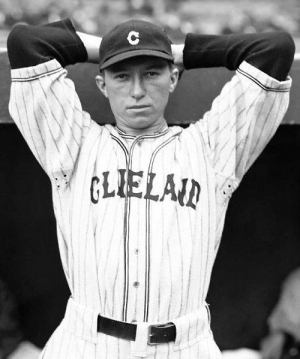
Harder’s journey in Cleveland began in 1928, and after a brief maturation period in the bullpen, he emerged as the definitive lifer of the rotation. He was the ultimate tactical technician, relying on a sharp curveball and a sinker that lived on the edges of the plate. He arrived as a young prospect from Nebraska and quickly evolved into a statistical titan, winning the American League ERA title in 1933. He was a four-time All-Star who provided a level of stability that few in the league could match, rattling off eight consecutive seasons with at least 15 victories during the…
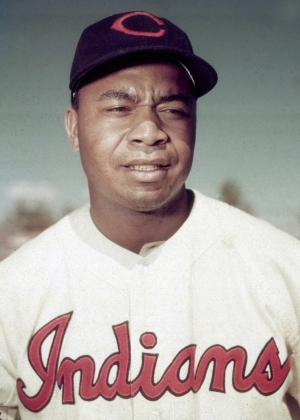
Doby’s journey in Cleveland began under the most intense scrutiny imaginable, but by 1948, he had matured into a foundational pillar of the franchise. He batted .301 that season, providing the offensive spark that helped propel the Indians to their historic World Series title. He arrived as a young star from the Newark Eagles and quickly evolved into a statistical titan, rattling off seven consecutive All-Star selections. During that remarkable stretch, Doby blasted at least 20 home runs in every single one of those seven seasons and twice captured the American League home run crown. The peak of his efficiency…
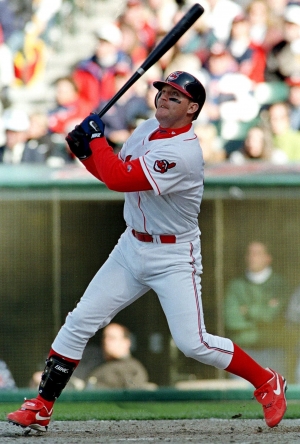
Thome’s maturation in Cleveland was a slow burn that eventually turned into a forest fire. While he debuted in 1991, the 1994 season saw him become a permanent fixture in a lineup that was quickly becoming the most feared in the American League. He arrived with a unique, pointed-bat stance, a tribute to the fictional Roy Hobbs, and instantly began a nine-year streak of 20-homer seasons. By the mid-90s, he had evolved from a tactical hitter into a statistical titan, providing the middle-of-the-order muscle that propelled Cleveland to five straight division titles and two World Series appearances. The absolute pinnacle…
When Addie Joss arrived in 1902, he bypassed the usual maturation process, maturing instantly into a premier arm in the American League. He arrived with a "shadowing" delivery that hid the ball until the last possible second, and by 1903, he was already leading the league in WHIP. He was an efficiency machine from the jump, capturing his first ERA title in 1904 with a microscopic 1.59 mark. He wasn't just a finesse pitcher; he was a high-volume workhorse who rattled off four consecutive 20-win seasons, including a league-leading 27 victories in 1907. The absolute pinnacle of his career, and…
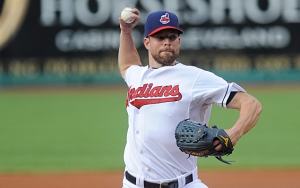
Corey Kluber emerged in the Cleveland rotation in 2013 and matured instantly into a cornerstone of the franchise. He arrived with a "slurve" that defied conventional physics and a stoic demeanor that made him a high-leverage nightmare for American League hitters. Following a breakout eleven-win campaign, he exploded onto the national stage in 2014. That summer, he was a statistical titan, leading the league with 18 wins and a 2.35 FIP, a performance that earned him his first Cy Young Award. He wasn't just a power pitcher; he was a tactical technician who used late, explosive movement to rule the…
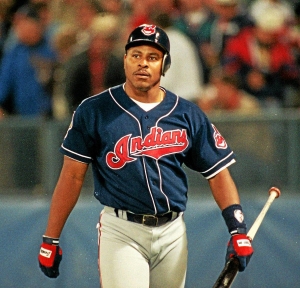
Albert Belle surfaced as a regular fixture in the Cleveland lineup in 1991 and matured instantly into the premier power threat in the American League. He emerged with a specialized, heavy-handed stroke that turned the "Jake" into a launching pad, embarking on a remarkable five-year run where he hammered at least 34 home runs and drove in over 100 runs annually. He was the definition of an efficiency outlier, a tactical weapon who anchored a lineup that led the franchise back to the World Series for the first time in over forty years. In 1995, Belle had a season of…
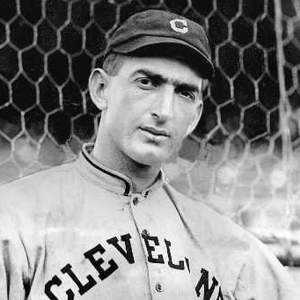
Shoeless Joe Jackson’s path to Cleveland was paved by his struggle to acclimate to the rigid environment of the Philadelphia Athletics. After appearing in just ten games across two seasons, his modest background and simple nature led to a disconnect with Connie Mack’s club. Regarded as an afterthought, he was sent to Cleveland as the "player to be named later" in a 1910 trade, a move that would become one of the most lopsided acquisitions in the history of the sport. Upon his arrival, Jackson found his footing and instantly matured into the most dangerous offensive force in the American…
Mike Garcia, “The Big Bear”, emerged as a force in 1949, having returned from his service in World War II to claim a spot in the Cleveland rotation. He made an immediate statement by capturing the American League ERA title (2.36) as a rookie, proving that his game was built on a sophisticated blend of power and run suppression. He possessed a heavy, sinking fastball and a relentless work ethic that allowed him to anchor the staff during a period of historic franchise success. By the dawn of the 1950s, he had matured into a cornerstone of the organization, embarking…