

 Not in Hall of Fame News
Yes, we know that this is taking a while! As many of…
 Not in Hall of Fame News
Yes, we know that this is taking a while! As many of…
 Not in Hall of Fame News
2002 SEMI-FINAL RESULTS: Thank you for your participation in the Pro Football…
 Not in Hall of Fame News
Yes, we know that this is taking a while! As many of…
 Not in Hall of Fame News
We are diligently working away at Notinhalloffame on revising our Football lists…
 Not in Hall of Fame News
We are diligently working away at Notinhalloffame on revising our Football lists…
 From the Desk of the Chairman
October baseball often turns individual pitching performances into lasting postseason memories. Strikeout…
 From the Desk of the Chairman
For decades, the sports debate ran on gut feeling. Barstool arguments, call-in…
 From the Desk of the Chairman
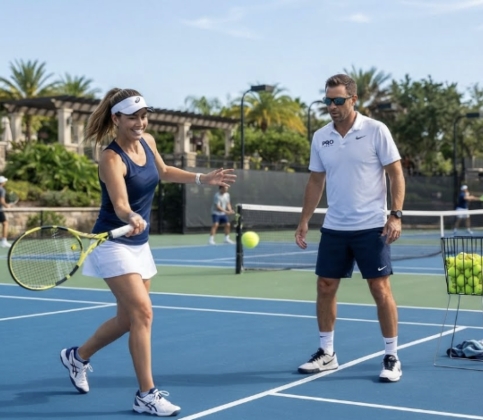
Introduction to Private Adult Tennis Camps in Prague Adult club players increasingly…
 From the Desk of the Chairman
Unlike in the case of pre-match betting, where you have to pick…
 From the Desk of the Chairman
Kupu178 builds trust with people by using top-end end-to-end encryption. It checks…
 From the Desk of the Chairman
Sports fans thrive on calculating strategy, reading momentum, and maximizing every tactical…






100 Active Potential Football Hall of Famers
-
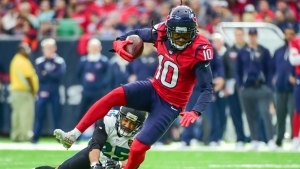 #27 Overall, DeAndre Hopkins, Free Agent, #4 Wide Receiver2025 Pre-Season Rank, #24, 2024 Pre-Season Rank #24, 2023 Pre-Season Rank #20, 2022 Pre-Season Rank #28, 2021 Pre-Season Rank #30, 2020 Pre-Season Rank…
 -
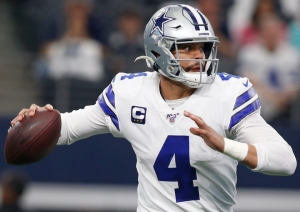 #37 Overall, Dak Prescott, Dallas Cowboys, #7 Quarterback2025 Pre-Season Rank #40, 2024 Pre-Season Rank #32, 2023 Pre-Season Rank #44, 2022 Pre-Season Rank #55, 2021 Pre-Season Rank #63, 2020 Pre-Season Rank…in Quarterbacks
 -
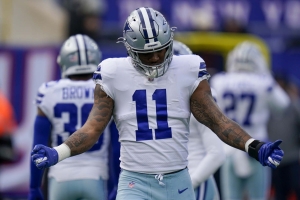 #29 Overall, Micah Parsons, Green Bay Packers, Linebacker, #10 Defensive Lineman/Linebacker: Pass Rusher2025 Pre-Season Rank #54, 2024 Pre-Season Rank #79, 2023: Pre-Season Rank #102. Peak Period: 2021-25 Here is what we wrote about Micah Parsons…
 -
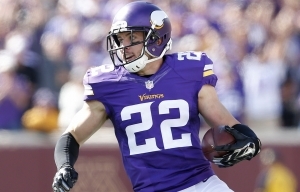 #28 Overall, Harrison Smith, Minnesota Vikings, Strong Safety, #2 Safety2025 Pre-Season Rank #38, 2024 Pre-Season Rank #50, 2023 Pre-Season Rank #72, 2022 Pre-Season Rank #79, 2021 Pre-Season Rank #90, 2020 Pre-Season Rank…in Safeties
Visit the Fictitious Halls of Fame!


You May Also Like...
EDITOR’S CHOICE

 DDT's Pop Flies
When the veterans committee (VC), officially convening as the Contemporary Baseball Era…

 Live Music Head
Project/Objectan interview with André Cholmondeleyby Live Music HeadOriginally published at timessquare.com on…

LATEST RANKINGS





MOST POPULAR RANKINGS
















Committee Chairman
11. Andy Benes
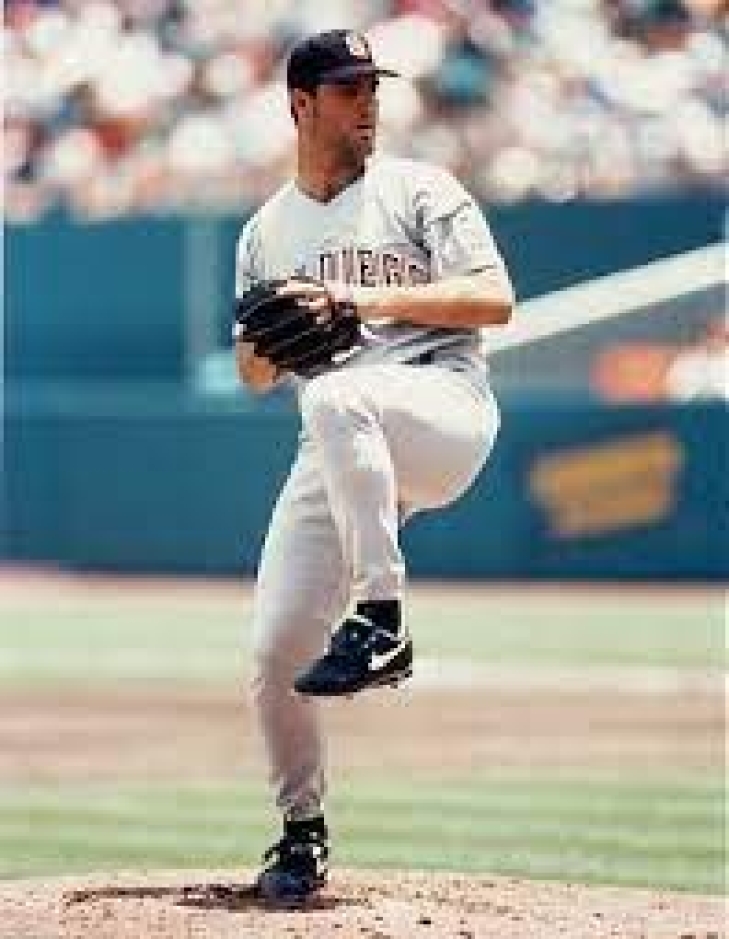
The San Diego Padres believed they found their foundational player when they picked Andy Benes at the top of the 1988 amateur draft. The talented right-hander quickly proved the front office correct, advancing rapidly through the minor leagues to make his major league debut by summer 1989. Jumping straight into the regular season, Benes delivered an impressive debut, posting a 6–3 record with a 3.51 ERA in 10 strong starts, finishing fifth in the National League Rookie of the Year voting. This promising start indicated a pitcher who would be a reliable, durable cornerstone of the San Diego pitching staff during the first half of the 1990s.
Over five summers, Benes was the clear staff ace during a challenging transitional period for the team. He combined a powerful, high-velocity fastball with excellent spatial awareness, making late-game durability a consistent expectation. In 1991, he delivered an outstanding season, leading the rotation with 15 wins and a solid 3.03 ERA, also surpassing 200 strikeouts for the first time in his career.
After achieving another consistent and productive season of frames in 1992, he regained his frontline dominance during the 1993 season's standout. Benes achieved 15 wins again and pitched a career-high 230.2 demanding innings, earning his first All-Star selection and boosting his national reputation.
His 1994 campaign vividly exemplified the challenging reality of being a key player on a struggling team. During that strike-shortened season, Benes showcased impressive high-volume performance and statistical setbacks; he dominated hitters to lead the National League with 189 strikeouts, yet a lack of run support caused him to top the league with 14 losses.
Tragically, that heavy burden caused a sharp performance drop, leading to a difficult first half of the 1995 season. As the small-market team prepared for a roster rebuild and looked to the future, the front office signaled his career end by trading him to the Seattle Mariners mid-season.
As a Padre, he had a 69-75 record with 1,036 strikeouts.
9. Adrian Gonzalez
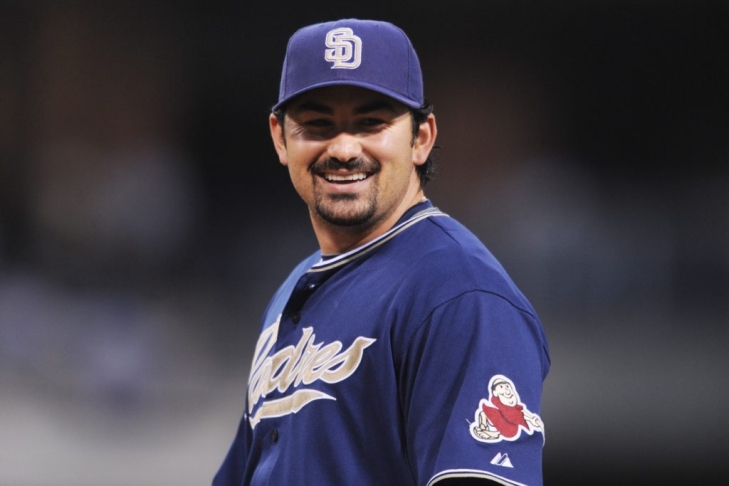
Evaluating a first overall draft pick involves significant organizational pressure, and the Florida Marlins made a critical error in their developmental patience with Adrián González. Picked at the top of the 2000 amateur draft, the left-handed first baseman injured his wrist in the minors, leading Florida scouts to prematurely doubt that his raw power would ever fully develop at the major league level. After being traded to Texas, he briefly made the team before the Rangers deemed him surplus and sent him to San Diego prior to the 2006 season. For González, this trade was like a homecoming, as he had moved to that area as a child and grown up watching the local field. Filling in for injured Ryan Klesko in the starting lineup, he quickly disproved previous evaluations of him, becoming a key contributor to run production under Southern California’s sun.
His summer debut in 2006 quickly showcased elite contact skills and smooth mechanics. González methodically dismantled National League pitching staffs, collecting 173 hits with a .304 batting average and 24 home runs, solidifying his strong presence at first base. His true power was confirmed in 2007, when he hit 30 home runs and brought in 100 RBIs.
This hardware-certified consistency flourished into an exceptional series of individual dominance over the following three summers. González achieved three consecutive All-Star selections from 2008 to 2010, combining his superior batting skills with impressive home run totals of 36, 40, and 31.
Far from a one-dimensional slugger, he was developing a telepathic batting eye to counter defensive positioning. This peaked during the 2009 season, where he systematically forced pitchers deep into counts, leading to a career-high 119 walks. This efficiency created high-leverage opportunities, earning him MVP consideration across all three All-Star campaigns, culminating in a fourth-place finish in 2010. He was also a two-time Gold Glove winner in San Diego (2008 & 2009)
At the conclusion of the 2010 Season, Gonzalez would be traded to the Red Sox for four players. Gonzalez blasted 856 hits, 161 home runs with a .514 slugging percentage as a Padre.
16. Gene Tenace
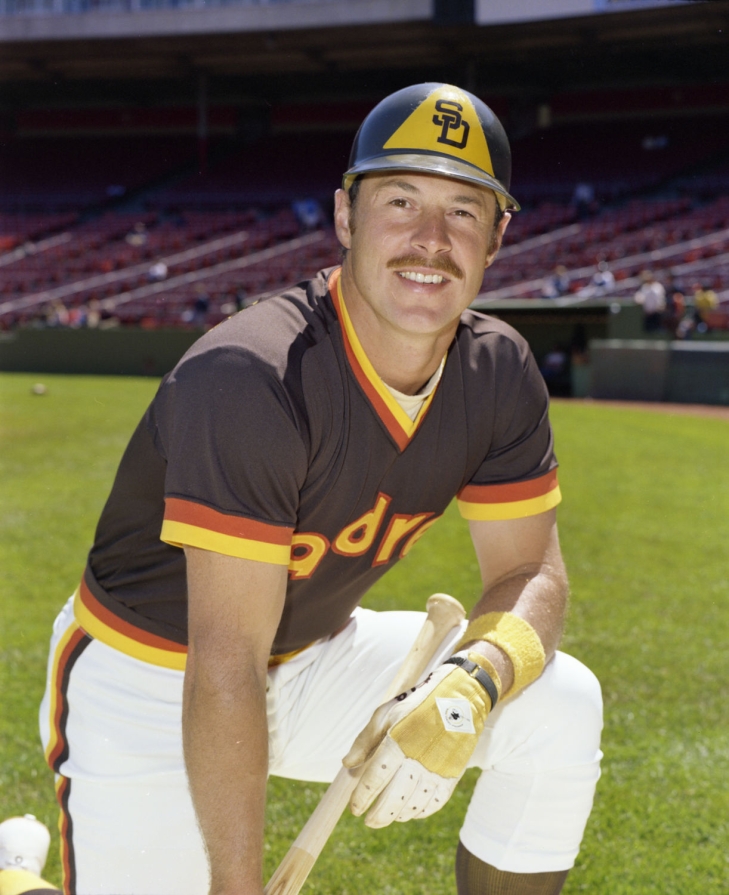
Looking back at the early innovators of modern baseball metrics, a tough, right-handed catcher from Pennsylvania emerges as a key pioneer in on-base efficiency. Gene Tenace had already established a postseason legacy as a crucial contributor to the Oakland Athletics' three consecutive championships from 1972 to 1974. However, as free agency disrupted that historic Oakland team, Tenace decided to remain in California, signing a lucrative deal to join the San Diego Padres before the 1977 season.
To be fair, Tenace was never a feared, high-average contact hitter in the traditional sense. He maintained a modest .240 batting average over his career with the Padres and didn't compile huge hit totals. Instead, he excelled at turning the basic act of drawing a walk into a showcase of spatial awareness and strike-zone discipline.
In his 1977 debut season, Tenace showcased exceptional patience, bewildering National League pitchers and drawing a league-high 125 walks. This impressive number of free passes contributed to a remarkable .415 on-base percentage, which is especially striking given that he hit only .233 that summer.
This hardware-certified authority deeply committed to discipline was no temporary success; it became his daily habit. Tenace consistently exceeded 100 walks each summer during his first three seasons in San Diego, with 101 in 1978 and 105 in 1979. Over his four seasons with the Friars, he maintained an on-base percentage never below .392, even though he only surpassed a .250 batting average once. Defensively, his value to the pitching staff was absolutely incalculable; splitting time between catcher and first base, his preparation and high-intensity game-calling settled a young rotation and provided a steady hand for the entire defense.
Dealt to the Cardinals after the 1980 Season, Tenace had a .403 OBP with San Diego, a number higher than what he did in Oakland (.374). Amazingly, he had more Walks (423) than Hits (384) as a Padre, but as Moneyball tells you, “he gets on base."
8. Andy Ashby
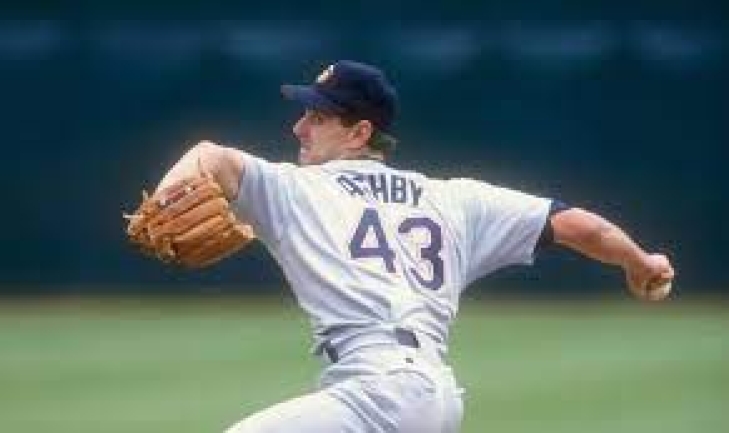
Andy Ashby was traded during his third Major League Season from the expansion Colorado Rockies in 1993 to San Diego, and it was as a Padre where Ashby shone brightest.
The Righthanded Pitcher, who arrived as the "player to be named later," finished off '93 better than in Colorado, though considering he had an 8.50 ERA with the Rockies, that did not say much. Ashby was much better in 1994 (6-11, 3.40 ERA), but in 1995, he cemented himself as a valuable part of the Padres staff, with a 12-10 Record and a 2.94 ERA.
Ashby had respectable years in 1996 and 1997 but broke out with All-Star seasons in 1998 and 1999 and was undoubtedly the staff ace. These two years landed Ashby so high on this list, but it also led to his trade, as the small market Padres traded him to the Phillies before the 2000 Season.
Ashby had a 70-62 Record and 829 Strikeouts with the Padres.
