

 Not in Hall of Fame News
Yes, we know that this is taking a while! As many of…
 Not in Hall of Fame News
Yes, we know that this is taking a while! As many of…
 Not in Hall of Fame News
2002 SEMI-FINAL RESULTS: Thank you for your participation in the Pro Football…
 Not in Hall of Fame News
Yes, we know that this is taking a while! As many of…
 Not in Hall of Fame News
We are diligently working away at Notinhalloffame on revising our Football lists…
 Not in Hall of Fame News
We are diligently working away at Notinhalloffame on revising our Football lists…
 From the Desk of the Chairman
October baseball often turns individual pitching performances into lasting postseason memories. Strikeout…
 From the Desk of the Chairman
For decades, the sports debate ran on gut feeling. Barstool arguments, call-in…
 From the Desk of the Chairman
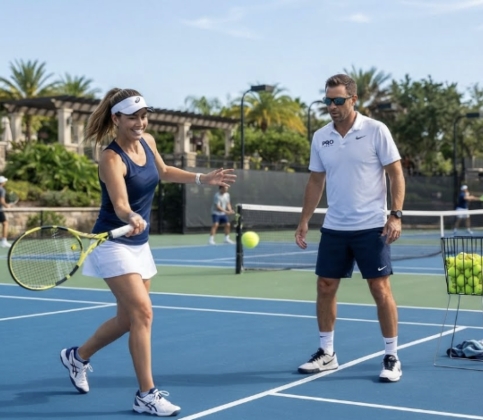
Introduction to Private Adult Tennis Camps in Prague Adult club players increasingly…
 From the Desk of the Chairman
Unlike in the case of pre-match betting, where you have to pick…
 From the Desk of the Chairman
Kupu178 builds trust with people by using top-end end-to-end encryption. It checks…
 From the Desk of the Chairman
Sports fans thrive on calculating strategy, reading momentum, and maximizing every tactical…


100 Active Potential Football Hall of Famers
-
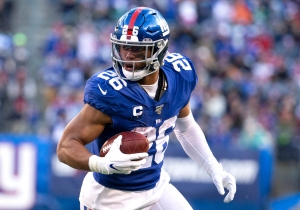 #45 Overall, Saquon Barkley, Philadelphia Eagles, #3 Running Back2025 Pre-Season Rank ##51, 2024 Pre-Season Rank #117, 2023 Pre-Season Rank #122, 2022 Pre-Season Rank #132 2021 Pre-Season Rank #101, 2020 Pre-Season Rank…
 -
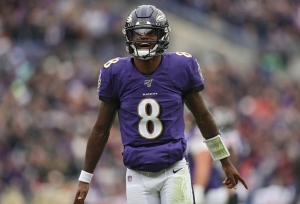 #12 Overall, Lamar Jackson, Baltimore Ravens, #4 Quarterback2025 Pre-Season Rank #10, 2024 Pre-Season Rank #14, 2023 Pre-Season Rank #30, 2022 Pre-Season Rank #38, 2021 Pre-Season Rank #46, 2020 Pre-Season Rank…in Quarterbacks
 -
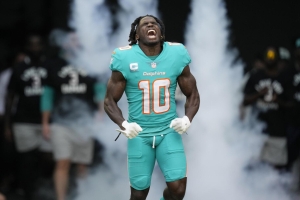 #25 Overall, Tyreek Hill, Free Agent, #3 Wide Receiver2025 Pre-Season Rank #18, 2024 Pre-Season Rank #8, 2023 Pre-Season Rank #28, 2022 Pre-Season Rank #35, 2021 Pre-Season Rank #53. Peak Period: 2019-23…
 -
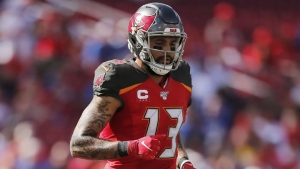 #18 Overall, Mike Evans, San Francisco 49ers, #1 Wide Receiver2025 Pre-Season Rank #13, 2024 Pre-Season Rank #18, 2023 Pre-Season Rank #35, 2022 Pre-Season Rank #58, 2021 Pre-Season Rank #73. Peak 2020-24 How…
Visit the Fictitious Halls of Fame!


You May Also Like...
EDITOR’S CHOICE
 DDT's Pop Flies
When the veterans committee (VC), officially convening as the Contemporary Baseball Era…

 Live Music Head
Project/Objectan interview with André Cholmondeleyby Live Music HeadOriginally published at timessquare.com on…
LATEST RANKINGS

MOST POPULAR RANKINGS

Committee Chairman
25. Bruce Hurst
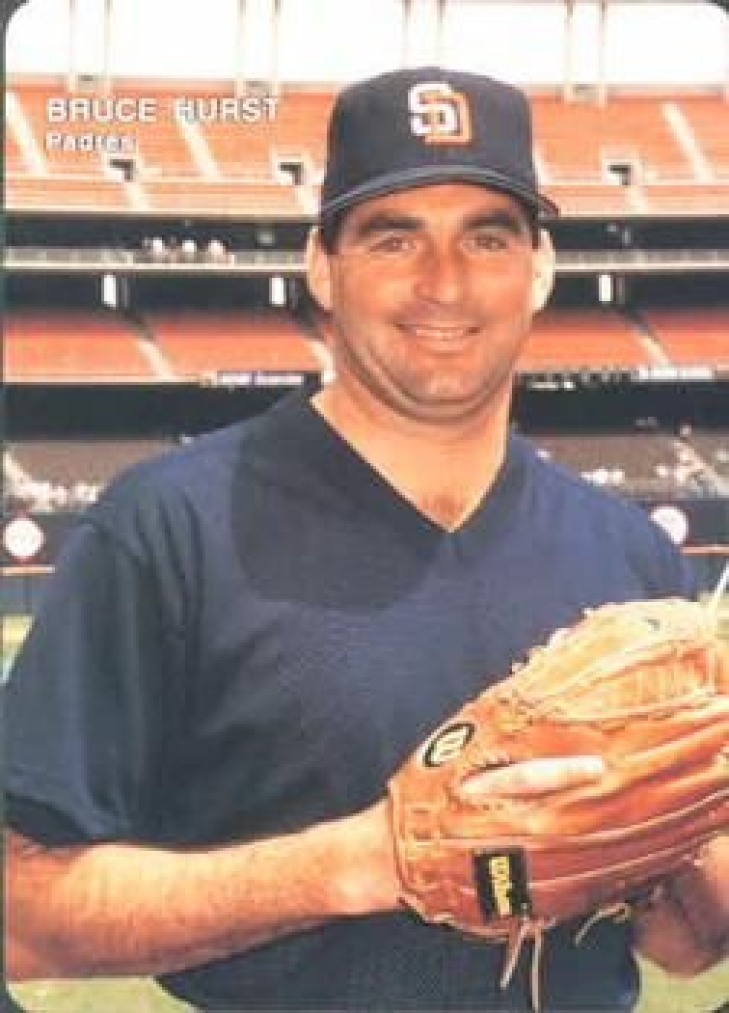
When a small-market team aims for national success, signing a postseason veteran can boost a rotation's competitiveness. In December 1988, the San Diego Padres made a key upgrade by signing left-handed starter Bruce Hurst to a lucrative free agent deal. Coming from a celebrated decade with the Boston Red Sox, including a near-MVP performance in the 1986 Fall Classic, Hurst brought professionalism and stability to Jack Murphy Stadium. Instead of a typical cross-country decline, the cerebral southpaw adapted quickly to the National League, matching his East Coast success and strengthening the Padres' top rotation.
His 1989 Padres campaign showed durability and run suppression. Hurst dismantled lineups with his split-finger fastball off his high-three-quarters delivery. He made finishing his starts a routine, leading the NL with 10 complete games. He finished 15–11, pitching 244.2 innings in 33 starts. His efficiency was unmatched; he posted a 2.69 ERA and 1.132 WHIP, proving his status as a top ace.
Hurst consistently maintained high-volume authority over three years, providing a reliable presence for the pitching staff with 40 wins and 29 losses from 1990-1992. He had an 11-complete-game performance in 1990 and a 15-win season in 1991, keeping his WHIP below 1.200 during his peak, which challenged opposing managers’ strategies.
Tragically, the immense workload required to sustain that front-of-the-rotation baseline eventually invited a sudden, injury-enforced career exit. Severe shoulder ailments completely derailed his 1993 campaign, robbing him of his signature velocity and limiting him to just two highly painful assignments in a San Diego uniform.
Recognizing an impending transition, the front office packaged the ailing veteran in a multi-player trade to the Colorado Rockies that July. Hurst only played another year, but was never the same. He might be best known for his work in Boston, but his 55-38 record with the Padres was a decent haul.
31. Garry Templeton
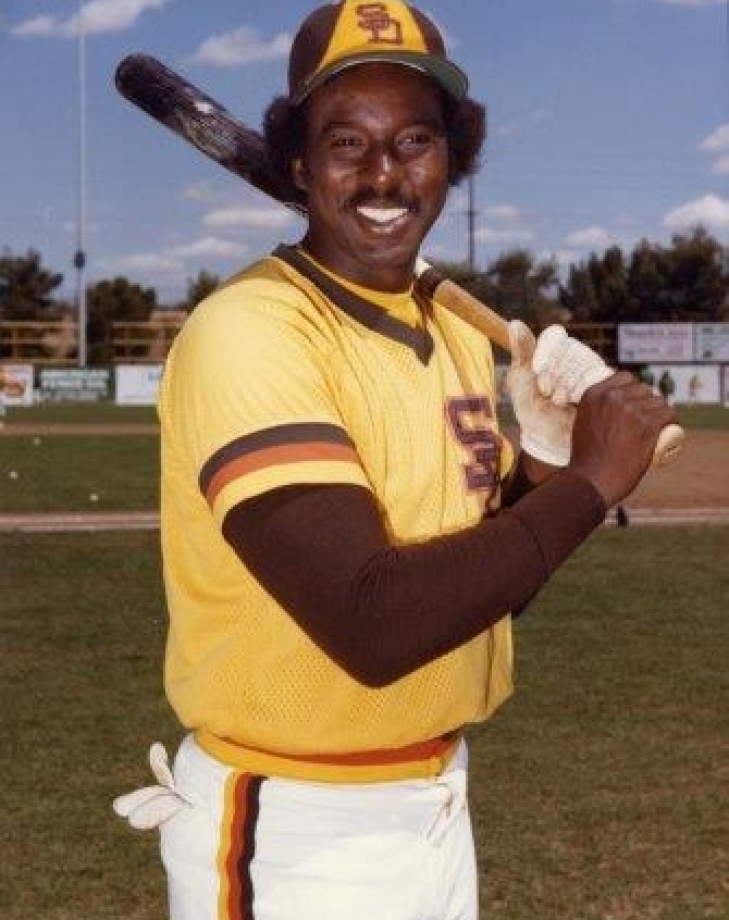
Few in modern baseball have careers so defined by a single trade, like the switch-hitting shortstop who anchored San Diego infield in the 1980s. Acquired in a blockbuster in December 1981, Garry Lewis Templeton arrived in America's Finest City in exchange for future wizard Ozzie Smith. It was a massive, high-pressure swap linking the two players forever. To be fair, historically, Templeton never reached the defensive heights of Smith nor did he match his offensive peaks. Yet, framing his career only as a trade does a disservice to a gritty contributor who provided steady leadership during a major franchise transformation.
His initial adjustment under the Southern California sun was tough, but he quickly became a reliable, everyday presence. Templeton made flashing his infield tools a daily routine, anchoring the defense for a 1984 team that shocked the circuit. During that pennant race, he hit 19 doubles and won a Silver Slugger Award, helping the Padres reach their first National League Championship Series and the World Series.
He backed up his 1985 campaign with a .282 average and 30 doubles, earning an All-Star selection and team MVP honors. Beyond offense, his steady presence and clubhouse influence solidified his legacy. Recognizing his maturity and focus, manager Larry Bowa named him team captain in 1987. Templeton proudly served as captain for four seasons, guiding a transitioning roster.
Evaluating his role in an algorithmic review involves examining efficiency leaks that limited his advanced metrics. Templeton was an old-school, aggressive contact hitter with a low OBP of .289, due to his reluctance to draw walks, and had modest power.
With the front office leaning heavily into a total youth movement and giving way to younger infield prospects, management engineered a quiet trade in May 1991, shipping their veteran captain to the New York Mets in exchange for infielder Tim Teufel, drawing a definitive curtain on his decade-long residency.
Across his 1,286 games strictly representing the Padres, Templeton accumulated exactly 1,135 hits, 195 doubles, 36 triples, and 427 runs batted in. Advanced analytical anchors reinforce his localized defensive durability, as his crisp .965 fielding percentage stood as the finest career mark by any shortstop in franchise history up to that point. Templeton was inducted into the Padres Hall of Fame, reminding the city that he was a good player in his own right.
28. Greg Harris
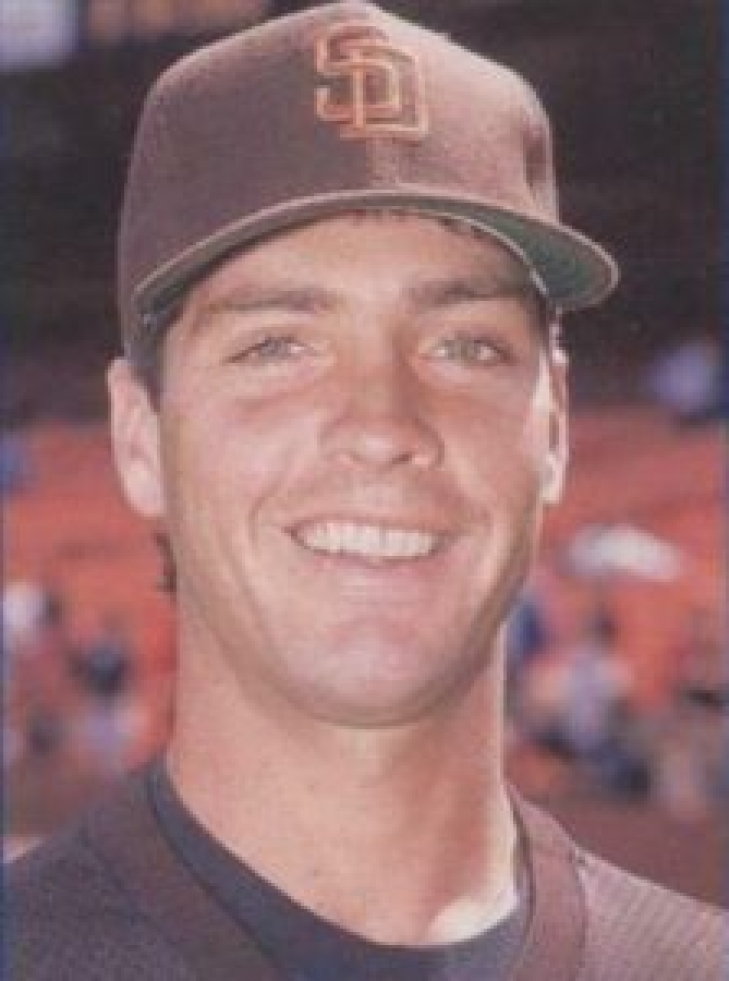
Looking at baseball rosters, some pitching stats can hide a player's true value. A 41–39 record doesn't usually signal a star, but advanced filters reveal the flaw in relying on win-loss percentages. Drafted by the Padres in 1985, Gregory Wade Harris used a dominant curveball, considered among the best in the NL. Over his career in Southern California, he evolved from a bullpen pitcher to a top-quality starter, setting local records with his outstanding run prevention.
His September 1988 debut featured three appearances, launching his historic rookie season. In 1989, Harris made 56 appearances, eight starts, throwing 135 relief innings. He finished with an 8–9 record, six saves, a 2.60 ERA, and 106 strikeouts, finishing seventh in the NL Rookie of the Year voting.
He maintained frontline reliability in 1990, serving as the main eighth-inning bridge and occasional closer for the pitching staff. Harris increased his workload to 73 appearances, tiring out NL lineups over 117.1 innings. He systematically dismantled hitters deep in counts, securing nine saves and lowering his ERA to 2.30.
The coaching staff made Harris a permanent part of the starting rotation in 1991. Despite physical issues limiting him to 20 starts, he excelled, with a 9–5 record, three complete games, two shutouts, a 2.23 ERA, and 133 innings. His performance was a stabilizing force, demonstrating his top-tier skills could handle top-of-the-rotation duties.
To be fair, the extreme physical grind of back-to-back heavy seasons generated a natural middle-ground reality check during the 1992 calendar. Harris labored through mechanical inconsistency, watching his ERA rise to an elevated 4.12 over 20 assignments. Yet, demonstrating the signature resilience that defined his entire residency, he successfully righted the ship during the 1993 schedule. He returned to his mechanics to win 10 games with a solid 3.67 ERA and four complete games over 22 starts; however, he was traded to the Colorado Rockies during the season.
Harris had a 2.95 ERA with a 41-39 Record and 462 Strikeouts with the Padres.
23. Ryan Klesko
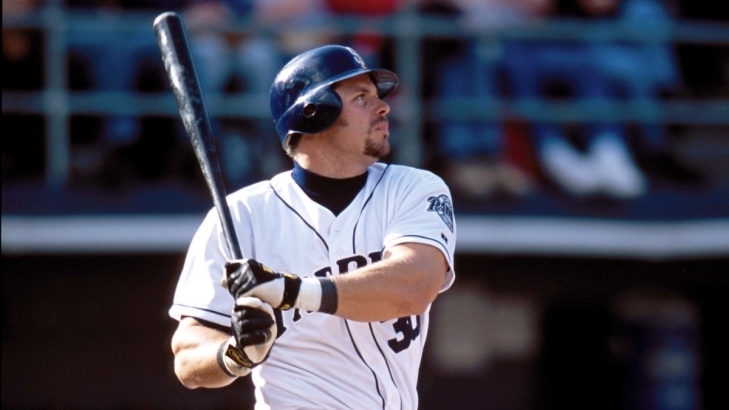
At the turn of the century, the San Diego Padres sought to add immediate, high-impact muscle to their baseball lineup. They achieved this by directly targeting the reigning National League champions. Ryan Klesko was acquired through a multi-player trade with the Atlanta Braves in December 1999. As a proven postseason hero with a World Series ring, the physically imposing, left-handed slugger arrived in Southern California with an aggressive and intense style. Instead of merely maintaining his established performance from Georgia, Klesko started the most versatile and dynamic phase of his career under the Qualcomm Stadium rafters.
Klesko turned his daily routine into a powerful part of his game during his first season in 2000, hitting 26 home runs and driving in 92 runs. But what caught everyone off guard was his sudden burst of speed on the bases. Before joining San Diego, he had never stolen more than six bases in a year. However, with the support of the Padres coaching staff, he channeled his fighting spirit and achieved back-to-back summers with exactly 23 stolen bases in 2000 and 2001. Combining that speed with strong muscle, he became one of the rare players in franchise history to join the exclusive 20-20 club in two straight seasons.
In 2001, Klesko exhibited exceptional dominance in the middle of the lineup, significantly impacting the Senior Circuit's pitching efforts by hitting 30 home runs and achieving a career-high total of 113 runs batted in, the highest ever recorded by a primary Padres first baseman. His advanced efficiency metrics were unparalleled; he drew 88 walks, hit 34 doubles and 6 triples, thereby bolstering the offense and earning his first career All-Star selection. He maintained this high level of performance into the 2002 season, delivering his most impressive all-around statistics by batting .300, along with 39 doubles, 29 home runs, and 95 RBIs.
Although he hit his fourth straight 20-home run season in 2003, the intense physical strain from his aggressive approach started causing ongoing health problems. Chronic lower-back pain and a natural decline in bat speed gradually reduced his playing time over the following summers, turning his role into more of a part-time, high-efficiency contributor.
After laboring through a limited, injury-plagued 2005 run, disaster struck ahead of the 2006 schedule. A major shoulder injury cost him nearly the entire calendar, reducing his final summer in a San Diego uniform to a brief, six-game cameo as a pinch-hitter that September. He smacked 133 dingers with the Padres, had 786 hits, and batted .279.
