
gold star for USAHOF

Top 50 St. Louis Cardinals

In terms of the World Series, there is no team more successful than the St. Louis Cardinals.  This is an 11 time World Series winner who would compete for Baseball’s elite 19 times and it has resulted in one of the best baseball fan bases in the country.

It may have always been this way.

Professional Baseball began in 1875 with the St. Louis Brown Stockings in the National Association.  The league folded and they would join the National League as charter members but that too would be short-lived as they were expelled for a game-fixing scandal and they would barnstorm over the next few years until they were purchased by a German entrepreneur and would join the American Association.  This is where the history of the team becomes official as MLB does not recognize the previous accomplishments of the franchise.

Now named the Browns, the team would become one of the elite organizations of the AA where they won the pennant four times before the league folded in 1891 and they would join the National League, but they would not have the same level of success as they were relatively mediocre until the 1920s.

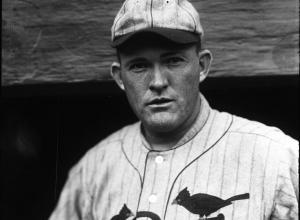
With one of the game’s most memorable stars in Rogers Hornsby won the 1926 World Series and in the 1930s they would field the famous “Gashouse Gang” that would win the 1931 and 1934 World Series.  The 1940s were even better as they won it all in 1942, 1944 & 1946 when they were led by the most consistent hitter in baseball history, Stan Musial. 

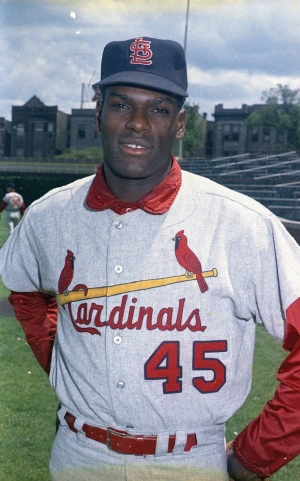
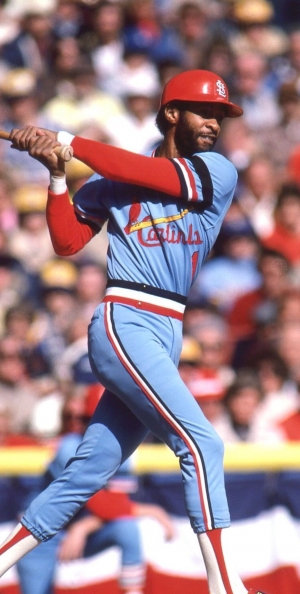
The Redbirds would continue their high level of success in the 1960s with expert pitching (led by Bob Gibson) and a combination of speed and defense, they won the title in 1964 and 1967, and in the Ozzie Smith era of the 80s, they won again in 1982.  With a power game led by Albert Pujols, they would win the World Series in 2006 and 2011.

This list is up to the end of the 2025 season.

Note: Baseball lists are based on an amalgamation of tenure, traditional statistics, advanced statistics, playoff statistics, and post-season accolades.
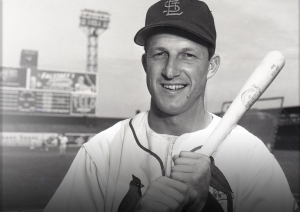
When exploring the core of baseball greatness, discussions about the most consistently excellent hitters often highlight a beloved figure from Western Pennsylvania. Stan Musial didn’t just play baseball; he demonstrated 22 seasons of offensive skill and consistency, dedicating his illustrious career to a single franchise. Originally coming up through the St. Louis Cardinals as a left-handed pitcher, a serious shoulder injury led to a permanent shift to the outfield. This turn of events established a legendary legacy under the Midwestern sun, featuring a distinctive crouched batting stance that intimidated National League pitchers over three decades. The defining feature of the…
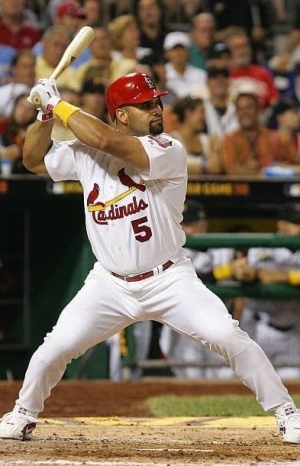
When evaluating a franchise that boasts a century-dense catalog of inner-circle immortals, taking a bold stand requires unyielding statistical justification. Ranking a modern icon ahead of the legendary Rogers Hornsby and the intimidating Bob Gibson is an analytical risk—but it is a risk heavily validated by the numbers. From the moment he erupted onto the Major League landscape in 2001, Albert Pujols orchestrated the most terrifyingly dominant opening decade of any offensive career in baseball history. Across his initial 11-season residency in St. Louis, "The Machine" operated with a mechanical precision so absolute that he didn't just participate in the…
Although debates regarding the definitive placement of contemporary baseball giants relative to historic icons can incite endless discussions across stadium concourses, the sheer mathematical improbability of the accomplishments in the batter's box during the 1920s in St. Louis remains entirely unmatched. Rogers Hornsby not only accumulated hits but also manipulated the physics of right-handed batting to an unparalleled extent in the century since. Upon his arrival in St. Louis in 1915, "Rajah" combined a fierce, resolute personality with a wide, deep-in-the-box batting stance that enabled him to cover the outer half of the plate with formidable leverage. By the advent…
When evaluating a franchise that has spent more than a century accumulating championship banners, debates over the greatest players to ever wear the uniform can linger for decades. Yet when the conversation turns to the mound, it begins and ends with a singular, fiercely competitive presence from Omaha, Nebraska. Bob Gibson did not merely pitch for the St. Louis Cardinals; he commanded the entire diamond through sheer intimidation and unparalleled physical execution. Signed as an amateur free agent ahead of the 1957 season—following a brief, legendary stint showcasing his athleticism with the Harlem Globetrotters—the muscular right-hander became a permanent fixture…
When looking at the most impactful moments in the sport's history, the December 1981 trade that changed the balance of the National League really stands out as a major event. The San Diego Padres gave up their promising young shortstop, thinking he was only good at defense and would never be a strong hitter. They couldn’t have been more mistaken. Ozzie Smith was sent to Missouri in a historic trade for Garry Templeton. He didn’t just step into a spot on the infield; he became the energetic, acrobatic heart of the Redbirds’ exciting resurgence. Over an incredible 15 seasons, "The…
If you are a regular reader of Notinhalloffame.com, you know that the editorial staff is an absolute sucker for great sports names. Enos Slaughter is a fantastic identifier all on its own, but when you inject his timeless, rustic moniker, you get Enos “Country” Slaughter—a combination of words so beautifully evocative of a bygone era that the temptation to artificially elevate him in the historical ledger was immense. We didn't do that, of course, but his performance on the grass didn't require any favoritism anyway.  Emerging from the Redbirds' minor league talent pipeline, the broad-shouldered, highly aggressive right fielder was…
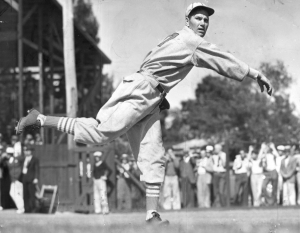
When we declare that Bob Gibson was the preeminent pitcher in the history of the St. Louis Cardinals, we substantiate this assertion; however, longevity and overall career significance constitute separate considerations. If the discussion pertains to the most rapid, overwhelmingly dominant peak performance by a Redbirds pitcher, that accolade unquestionably belongs to another individual. Born Jay Hanna Dean, but widely known as “Dizzy” due to his flamboyant, assertive, and humorously self-assured demeanor, the nation’s prodigious right-hander regarded Major League Baseball as his personal domain. Following a brief debut involving one game in 1930 and a swift stint in the minor…
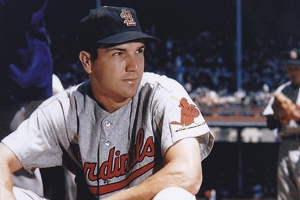
When establishing the definitive benchmark for excellence in the modern hot corner, esteemed baseball historians often scrutinize beyond the most flamboyant personalities to emphasize a player who epitomized durability and possessed an exceptional, middle-of-the-order power. Ken Raymond Boyer was initially signed by the St. Louis Cardinals as a pitcher; however, a swift organizational transition to third base during his second minor league season proved to be an unequivocal strategic success for both the athlete and the franchise. Making his eagerly awaited Major League debut in 1955, the highly athletic and physically commanding native of Missouri not only solidified the left…
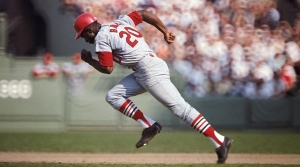
When a franchise executes a trade that is profoundly imbalanced, altering the entire course of its modern history, the transaction swiftly becomes a quintessential example of executive ill-gotten gains. In June 1964, the St. Louis Cardinals obtained an underperforming and structurally mismanaged outfielder from their longstanding adversaries, the Chicago Cubs, in a notorious multi-player deal centered on pitcher Ernie Broglio. Lou Brock did not merely experience a change of scenery in Missouri; he became an unstoppable force of high-velocity offense. By infusing the roster with a formidable combination of exceptional speed and aggressive contact hitting, the exceptionally swift left fielder…
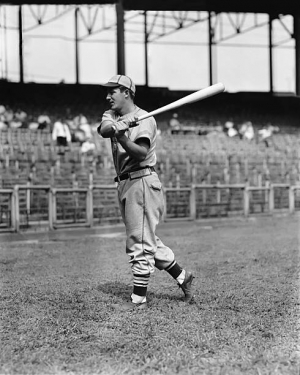
Debuting with the St. Louis Cardinals in 1932, Joe “Ducky” Medwick (thus nicknamed because he apparently walked like that aforementioned bird) would become a major star through the 1930s.  Before he was traded midway through the 1940 season he would have seven full seasons where he batted over .300 with four 200 Hit campaigns.  While in relative terms, Medwick was not known as an elite power hitter he did blast 152 dingers for St. Louis including a league-leading 31 in 1937.  We will get back to that year later.  In addition to decent power, he was a doubles leader three…
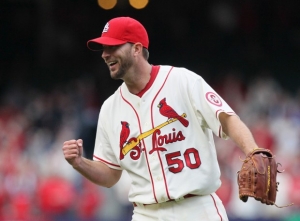
The modern history of the St. Louis Cardinals is closely linked to a highly loyal and dominant right-handed pitcher from Georgia. Originally drafted in the first round by the Atlanta Braves, Adam Wainwright was traded to Missouri in December 2003. This trade became one of the most significant and franchise-changing deals in baseball history. Known for his powerful sinker and a legendary 12-to-6 curveball called "Uncle Charlie," Wainwright spent over twenty years becoming a cornerstone of the team. He not only posted impressive stats but also demonstrated relentless competitive spirit and loyalty to the organization. Over time, he transformed from…
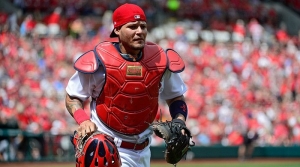
There is so much to love about Yadier Molina. A ferocious player when needed, Yadier Molina has been a clubhouse leader since he arrived to the St. Louis Cardinals, the only team he has played for in the Majors.  Early in his career, the Puerto Rican was universally regarded as being a really good defensive Catcher and a light hitter but in 2008 he improved his Batting Average to .308 and was locked in as the team’s starting Catcher. 
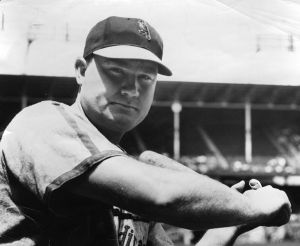
In chronicling the historic, multi-stage career of a baseball player, it is uncommon to encounter a legacy precisely segmented into three definitive acts of excellence. For John Robert Mize, his illustrious journey manifested through three distinct phases: as a structural powerhouse for the St. Louis Cardinals, as a prominent mid-career figure for the New York Giants, and as a distinguished late-career role player who contributed significantly to five consecutive World Series victories with the New York Yankees. However, an exclusive examination of his initial foundational act in eastern Missouri reveals an extraordinary peak of run production that exemplifies exemplary batting…
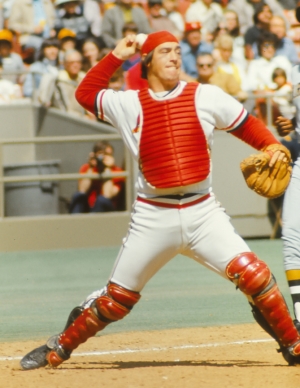
When modern baseball analysts look back at the 1970s, they often realize that traditional metrics overlooked a revolutionary offensive force behind the plate. For decades, Ted Simmons was viewed as an excellent player who shared an era with Johnny Bench and Carlton Fisk. But as sabermetrics changed how we value run production, the baseball world saw that the switch-hitter was one of the most productive offensive catchers ever. Selected by the front office in the first round of the 1967 draft, "Simba" quickly emerged as a hitting prodigy. He did not merely survive the grueling physical demands of catching; he…
Harry David Brecheen spent his early twenties climbing through the minor leagues with careful deliberate steps, but he joined the major league roster permanently in 1943 and immediately made a significant impact on the pitching staff. He was just 5'10" and 160 pounds, earning the long-lasting nickname "The Cat" for his quick, feline-like reflexes when fielding bunts off the mound. With a perfect combination of a screwball and curveball, the southpaw built a ten-year career of excellence, excelling as a consistent regular-season performer and becoming an immortal legend in the postseason. His early role as a key part of the…
Curt Flood, acquired from the Cincinnati Reds in late 1957, was a remarkable player. At 5’9'' and 165 pounds, he transformed outfield defense on the Senior Circuit by blending impressive lateral speed with perfect timing. During his 12 seasons in eastern Missouri, he did more than catch flies; he defined an era of elite outfield coverage, setting a high standard of durability that earned him seven consecutive National League Gold Glove Awards from 1963 to 1969. Flood’s masterclass defense on the grass was his signature move, but his offensive game quietly transformed from a low-order afterthought into a top-tier threat.…
Jim Bottomley entered the scene in eastern Missouri in late 1922, immediately bringing a sense of confidence to the franchise. Fondly known as "Sunny Jim" because of his consistently cheerful demeanor and genuine passion for the sport, he combined this vibrant personality with a powerful, high-volume left-handed batting style. He rapidly became the leading run-scorer for the team's initial generation of modern World Series champions, establishing a period of formidable middle-of-the-order hitting that made a lasting impact on the Senior Circuit. Becoming a regular in 1923 threw the entire league into an absolute frenzy. Bottomley turned hitting line drives off…
Assessing the baseball legends of the 1940s involves careful consideration, as World War II significantly changed the competitive landscape of major league baseball. Critics often question how much of the era's statistical success is due to real talent versus the impact of wartime depleted rosters, with icons like Ted Williams, Joe DiMaggio, and Hank Greenberg serving in the military. For right-hander Mort Cooper, that caveat is an important part of the discussion. Still, even when recognizing the wartime conditions, Cooper's impressive period of dominance clearly stands out as the key, championship-level foundation of one of the most notable dynasties in…
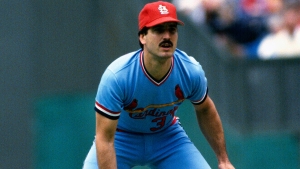
To many modern baseball fans and TV viewers, Keith Hernandez is primarily linked to the New York Mets, especially his key role in the 1986 "Bad Guys" team and his memorable pop-culture appearances. However, a closer look at the stats shows that his peak physical condition and most remarkable individual accomplishments happened when he played for the St. Louis Cardinals. Drafted unexpectedly in the 42nd round of the 1971 amateur draft, Hernandez exceeded all expectations, blending a graceful, disciplined left-handed swing with a revolutionary defensive approach that redefined the role of first base. His offensive peak was reached during the…