

 Not in Hall of Fame News
Yes, we know that this is taking a while! As many of…
 Not in Hall of Fame News
Yes, we know that this is taking a while! As many of…
 Not in Hall of Fame News
2002 SEMI-FINAL RESULTS: Thank you for your participation in the Pro Football…
 Not in Hall of Fame News
Yes, we know that this is taking a while! As many of…
 Not in Hall of Fame News
We are diligently working away at Notinhalloffame on revising our Football lists…
 Not in Hall of Fame News
We are diligently working away at Notinhalloffame on revising our Football lists…
 From the Desk of the Chairman
October baseball often turns individual pitching performances into lasting postseason memories. Strikeout…
 From the Desk of the Chairman
For decades, the sports debate ran on gut feeling. Barstool arguments, call-in…
 From the Desk of the Chairman
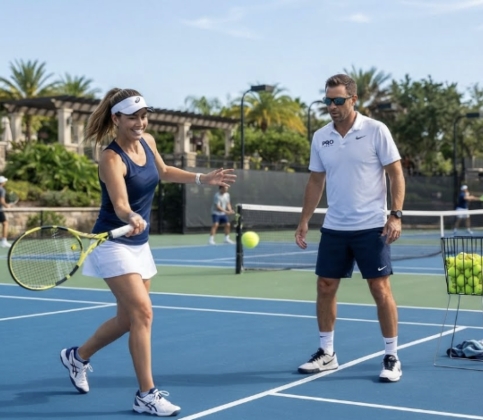
Introduction to Private Adult Tennis Camps in Prague Adult club players increasingly…
 From the Desk of the Chairman
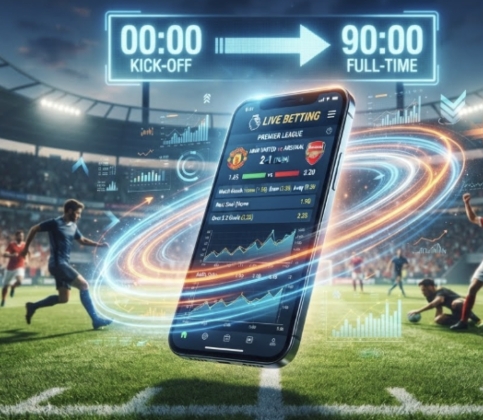
Unlike in the case of pre-match betting, where you have to pick…
 From the Desk of the Chairman
Kupu178 builds trust with people by using top-end end-to-end encryption. It checks…
 From the Desk of the Chairman
Sports fans thrive on calculating strategy, reading momentum, and maximizing every tactical…

100 Active Potential Football Hall of Famers
-
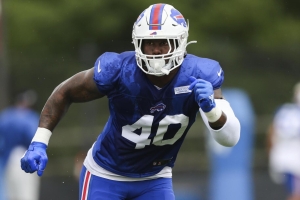 #8 Overall, Von Miller, Dallas Cowboys, #3 Defensive Lineman/Linebackers: Pass Rushers2025 Pre-Season Rank #6, 2024 Pre-Season Rank #7, 2023 Pre-Season Rank #4, 2022 Pre-Season Rank #7, 2021 Pre-Season Rank #8, 2020 Pre-Season Rank…
 -
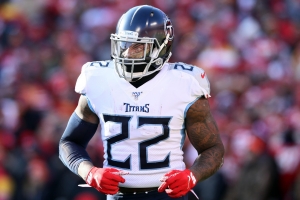 #11 Overall, Derrick Henry, Baltimore Ravens, #1 Running Back2025 Pre-Season Rank #11, 2024 Pre-Season Rank #23, 2023 Pre-Season Rank #39, 2022 Pre-Season Rank #47, 2021 Pre-Season Rank #70, 2020 Pre-Season Rank…
 -
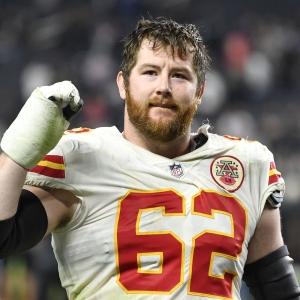 #41 Overall, Joe Thuney, Chicago Bears, Left Guard, #5 Offensive Lineman2025 Pre-Season Rank #64, 2024 Pre-Season Rank #75, 2023 Pre-Season Rank #120, 2022 Pre-Season Rank: #140. Peak Period: 2021-25 Over the last few…
 -
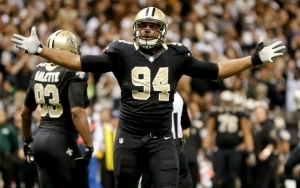 #15 Overall, Cameron Jordan, New Orleans Saints, Defensive End, #7 Defensive Lineman/Linebacker: Pass Rusher2025 Pre-Season Rank #14, 2024 Pre-Season Rank #21, 2023 Pre-Season Rank #27, 2022 Pre-Season Rank #25, 2021 Pre-Season Rank #36, 2020 Pre-Season Rank…
Visit the Fictitious Halls of Fame!

You May Also Like...
EDITOR’S CHOICE
 DDT's Pop Flies
When the veterans committee (VC), officially convening as the Contemporary Baseball Era…
 Live Music Head
Project/Objectan interview with André Cholmondeleyby Live Music HeadOriginally published at timessquare.com on…
LATEST RANKINGS

MOST POPULAR RANKINGS

Committee Chairman
7. Randy Jones
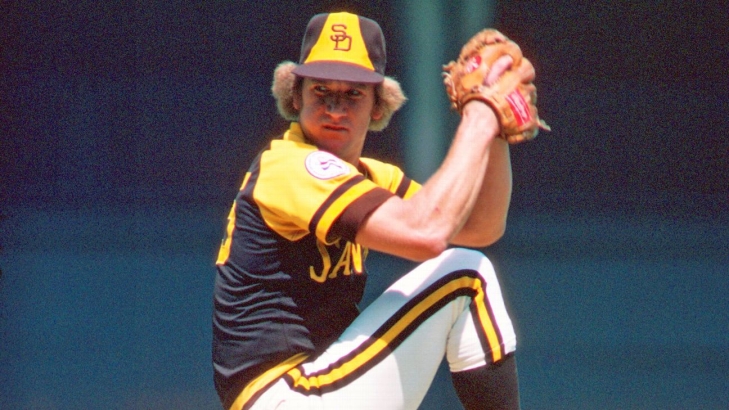
The early years of the San Diego Padres were marked by a lack of success during the expansion era, but they were occasionally broken up by a curly-haired left-hander who brought recognition to the team. Randy Jones stood out as the opposite of today's high-velocity pitchers. Known as "The Junkman," he relied on a heavy sinker, consistent pace, and precise control of the lower strike zone. During an era when radar guns were becoming a measure of a pitcher's worth, Jones was notable for his quick and efficient outings, often finishing games in less than two hours.
Making his major league debut in 1973 with a respectable 7–6 record, he quickly found himself at the mercy of a structurally weak team roster the following summer. Demonstrating how high volume can backfire on a poor team, Jones suffered through a terrible 1974 season, leading the National League with 22 losses despite pitching with more talent than his record showed. Instead of letting this setback derail his progress, the resilient southpaw returned in 1975 to deliver a season of exceptional performance. He confounded hitters in the Senior Circuit by changing his mechanics, lowering his ERA to a league-best 2.24, and posting an outstanding 156 ERA+. He earned 20 wins for a Padres team that finished below .500 and narrowly missed winning the Cy Young Award, finishing second to Tom Seaver in a competitive race. This would be a springboard for what was to come.
The 1976 campaign was a highlight of durability and precise, low-variance pitching. Jones’ dominance was evident as he tore through the first half of the season, tying a historic National League record by pitching 68 straight innings without giving up a walk. He headed into the All-Star break with an impressive 16–3 record. He also started and won the Midsummer Classic and finished the year leading the major leagues in wins (22), starts (40), complete games (25), and total innings (315.1). His outstanding performance earned him the National League Cy Young Award, making him the first in franchise history to win a major individual honor.
Sadly, the heavy workload of that famous 300-inning season took a significant physical toll. In his last start of 1976, Jones suffered a serious nerve injury in his throwing arm, which needed major surgery. He made a comeback with his characteristic determination but was unable to fully regain his top form, instead settling into a reliable, dependable starting role.
After gutting out three more high-volume campaigns, including a resilient 13-win bounce-back in 1978, the front office officially signaled a transition following the 1980 schedule, trading the veteran icon to the New York Mets. As a Padre, Jones had a 92-105 record with a 3.30 ERA and 677 strikeouts.
In 1999, the Padres enshrined Jones into their inaugural Hall of Fame Class two years after they retired his number 37.
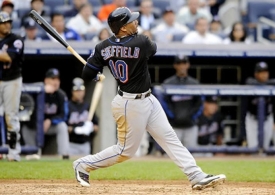
4. Dave Winfield
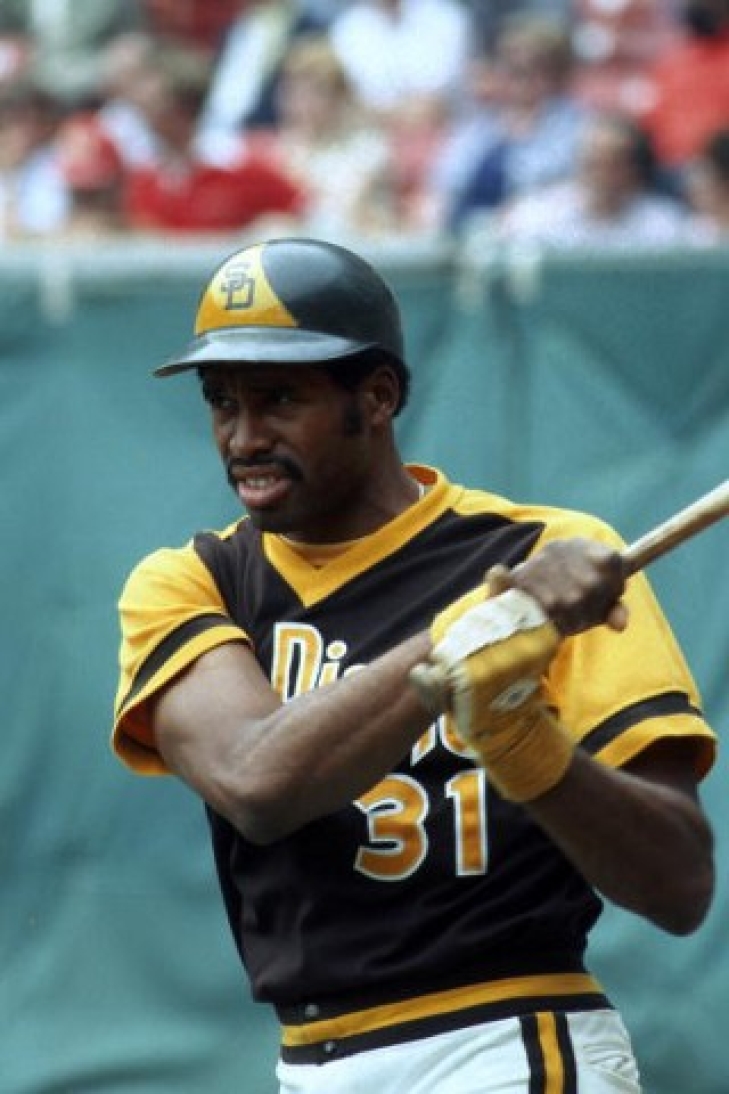
Before sports specialization limited athletes’ paths, some rare prodigies had an explosive physical toolkit that broke traditional boundaries. Dave Winfield exemplified this exceptional, multi-sport athleticism. Standing tall at the University of Minnesota, Winfield achieved the remarkable feat of being drafted by three different professional sports leagues: the NBA's Atlanta Hawks, the ABA's Utah Stars, and the NFL's Minnesota Vikings, despite never playing college football. Ultimately, he chose baseball, and the San Diego Padres eagerly used the fourth overall pick in the 1973 amateur draft to secure a pioneering power hitter for a new era.
His exceptional innate talent was evident to such a degree that management opted to bypass the minor leagues entirely, promoting the 21-year-old phenom directly to the major league roster. Although Winfield had distinguished himself as a dominant College World Series MVP pitcher for the Golden Gophers, the Padres front office was unwilling to risk his dynamic physical frame on the mound. Instead, they promptly assigned him to right field, a position in which he demonstrated remarkable proficiency with rapid mastery.
By the 1974 schedule, his long, high-velocity swing yielded 20 home runs, signaling the arrival of a premier middle-of-the-order threat. He methodically sharpened his approach over the subsequent summers, turning baseline run-production into an absolute regular-season routine.
His national breakthrough occurred in 1977, when he hit 25 home runs to secure his inaugural All-Star invitation, marking the beginning of a distinguished streak of twelve consecutive appearances in the Midsummer Classic. Following this achievement with a strong 24-homer season in 1978, Winfield reached the zenith of his tenure in Southern California during an exceptional 1979 season. He delivered a remarkable display of run production and batting.308, hitting 34 home runs, and leading the league with 118 runs batted in, anchoring the San Diego offense. His highly efficient performance further validated his dominant peak, as he led all National League position players with an outstanding 8.3 bWAR and finished third in the National League MVP voting.
The clock was ticking on his beach residency. After a productive 1980 campaign with 20 home runs and a second Gold Glove, his relationship with the financially constrained team ended. Frustrated by their small-market limits and inability to build a winning team, Winfield tested free agency and signed a record-breaking contract with the Yankees, becoming the highest-paid player at the time.
He departed Southern California, leaving behind 1,134 hits, 154 home runs, 185 doubles, and 626 RBIs alongside a highly respectable .284/.357/.464 slash line across 1,117 games.
In 2001, the Baseball Hall of Fame inducted Winfield into their Hall of Fame in his first year of eligibility, and the Padres retired his number 31 the same year. San Diego also inducted Winfield into their Hall of Fame the year before.
3. Jake Peavy
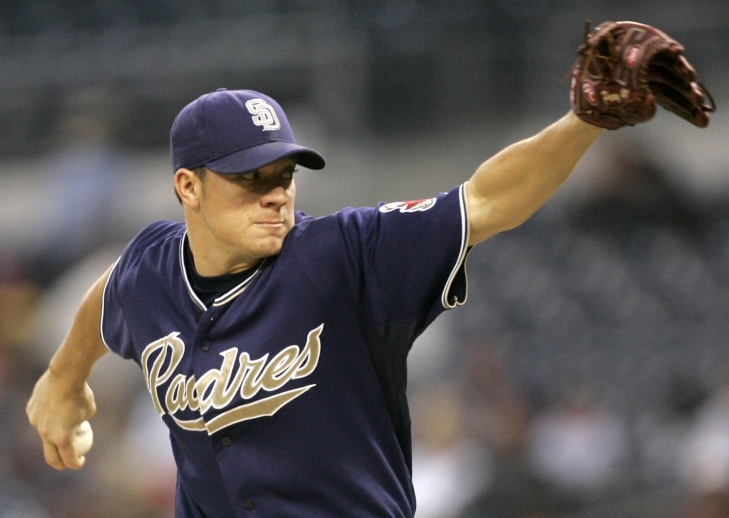
The profile of a top-tier, elite major league starter usually goes to celebrated first-round talents, but Jake Peavy distinguished himself in the baseball world through pure Southern grit. Drafted out of an Alabama high school in the 15th round of the 1999 amateur draft, many teams saw Peavy as mainly organizational depth. However, he defied these modest expectations, swiftly advancing through the minors to debut in the majors by summer 2002. With a fierce, highly competitive glare on the mound and a fast, crossfire delivery that posed a daunting sight for right-handed hitters, he spent the next seven seasons leading the starting rotation with relentless intensity and bravado.
By the 2004 season, the young right-hander had established himself as the team's leading pitcher. He consistently dominated in preventing runs, posting a remarkable 2.27 ERA over 166.1 innings, which earned him his first efficiency award. His success was not a fleeting peak; in 2005, Peavy earned his first All-Star spot, confirming his rising prominence. He continued to rack up impressive strikeout numbers using a powerful slider-fastball combo, finishing the year with a 2.88 ERA and leading the Senior Circuit with 216 strikeouts, thereby cementing his reputation on the national stage.
After a somewhat disappointing and uneven 2006 season marked by command problems, Peavy came back with a strong competitive drive for the 2007 pennant race. What followed was a showcase of pitching excellence. Peavy delivered an impressive performance, earning the National League Pitcher's Triple Crown by leading the league in wins (19), ERA (2.54), and strikeouts (240). His advanced efficiency metrics completely outperformed opponents, as he led the Senior Circuit in FIP (2.84), WHIP (1.061), and struck out an average of 9.7 batters per nine innings. Naturally, he was a unanimous selection for the 2007 National League Cy Young Award.
Sadly, the physical demands of his high-effort mechanics and ongoing tendon and shoulder injuries kept him from reaching those historic heights again in Southern California. By 2009, as the franchise shifted toward a complete rebuild in a small-market setting, the main goal was to unload Peavy's substantial contract. This led to a highly publicized saga: initially, the Padres agreed to send their ace to Chicago in May, but Peavy exercised his veto right, using his full no-trade clause to stay in the National League. The deadlock was eventually broken at the July 31 trade deadline. After injuring his ankle and aware that the cash-strapped Padres were determined to trade him, Peavy relented and waived his no-trade rights to join the Chicago White Sox.
With the Padres, Peavy posted a 92-68 record with 1,348 Strikeouts, which, as of this writing, is the franchise record.
2. Trevor Hoffman
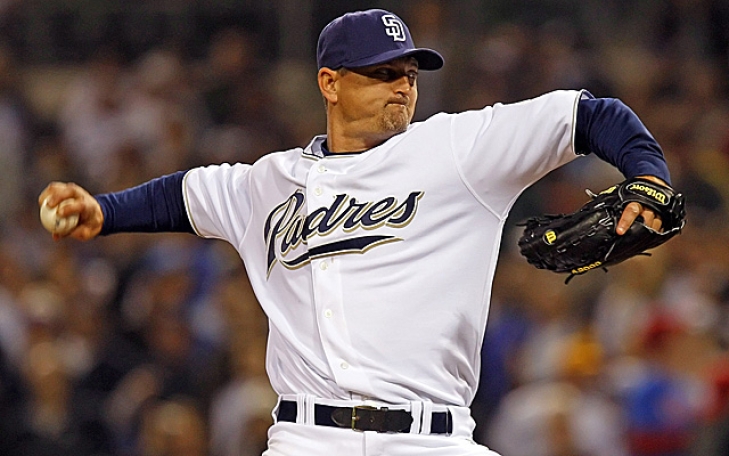
The loud groan that swept through San Diego in summer 1993 was entirely understandable. The Padres' management, amid a major salary dump, had just traded Gary Sheffield, the reigning batting champion and a franchise icon, to the Florida Marlins. Fans felt betrayed, but hidden within the traded players was a failed minor-league shortstop who became a rookie reliever and later transformed late-inning pitching. Trevor Hoffman didn't arrive as a top prospect, but over the next decade and a half, he became the gold standard for run prevention in the National League, anchoring the bullpen with a calm, relentless efficiency that redefined the closer role.
By 1994, Hoffman had fully established the role of the everyday closer, and the organization quickly recognized that they had found something extraordinary. Over time, his approach to games evolved into a true theatrical spectacle for stadium audiences.
As the stadium lights dimmed, AC/DC's "Hells Bells" echoed ominously through the ballpark, energizing the home fans and unsettling opposing teams. His true nightmare for hitters wasn't his fastball's velocity—often over 100 mph—but a powerful, high-concept changeup thrown with the same arm speed. The ball would vanish at the plate, leaving top sluggers lunging and off-balance.
Hoffman's emergence on the national stage was during the 1998 pennant race. He delivered an exceptional display of high-pressure performance, consistently shutting down National League batters to record a career-high 53 saves and a tiny 1.48 ERA. His steady hand in the ninth inning was the key driving force behind the Padres’ tough postseason run, leading them to their second National League pennant. Although they ultimately lost to the formidable Yankees in the World Series, Hoffman's reliable closing was vital in making October's journey possible.
Hoffman's impressive performance was not just a brief peak; he maintained his elite, low-variance output for more than ten years in Southern California. He made the ninth inning a daily, routine part of the regular season, leading the National League in saves again during a standout 2006 season. He also achieved nine seasons with at least 40 saves. His efficiency gains led to two second-place finishes in the National League Cy Young Award voting, including a very close result in 1998, and he was selected for seven All-Star Games, becoming a key representative of the franchise.
As he chased historic milestones, his unyielding longevity shattered the existing boundaries of baseball history. He became the very first pitcher to cross the mythical 500-save threshold, and though he would later collect his 600th career save while wearing a Milwaukee Brewers uniform at the twilight of his journey, the overwhelming volume of his historic footprint was compiled right by the beach.
Hoffman accumulated a staggering 552 of his 601 career saves representing San Diego, establishing a franchise record that may never be approached. San Diego retired his number 51 in 2011 and inducted Hoffman to their franchise Hall of Fame three years later. In 2018, Cooperstown came calling, inducting Hoffman in the third year of his eligibility. Appropriately, the player considered the best reliever in the NL now wins the Trevor Hoffman Award.
