
gold star for USAHOF

Top 50 Oakland Athletics

The history of the Athletics began in Philadelphia in 1901, where they were a charter member of the American League.  Under the tutelage of the legendary Connie Mack, the Athletics has two runs of glory.  The first in the second decade of the 1900s where they won the 1910, 1911 and 1913 World Series Titles. 

After years of futility, they reemerged in the late 1920s as an American League power.  They would win the 1929 and 1930 World Series, but that would be the end of their run as a power in the American League.  At least in Philadelphia anyway.

The A’s were bought and relocated to Kansas City in 1955, but they would be sold to Charlie Finlay in 1960.  After little success in KC, Finlay moved the team to California, and the Oakland Athletics were born.

Oakland would become one of the most intriguing teams in baseball both on the field and off of it, and they built a team that would win three straight World Series Titles (1972-74).  Free Agency rendered them a small market team, but they would eventually rebuild and won the World Series again in 1989.  They would follow the road of sabermetrics, and while that has not generated a title, it revolutionized the game.

Now, the Athletics are in limbo, playing in Sacramento while awaiting for their eventual move to Las Vegas.

This list is up to the end of the 2025 season.

Note: Baseball lists are based on an amalgamation of tenure, traditional statistics, advanced statistics, playoff statistics, and post-season accolades.
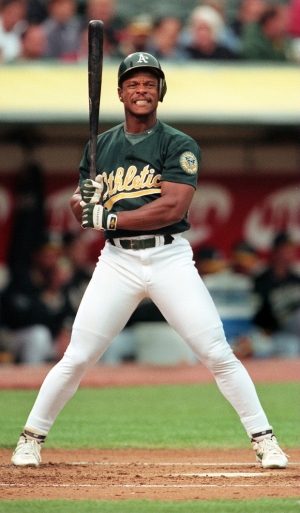
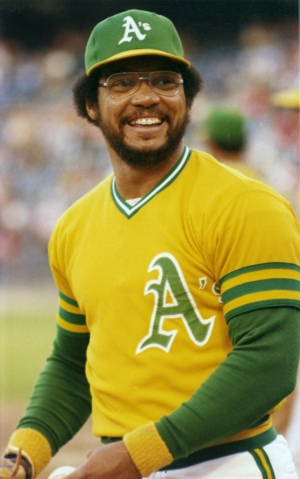
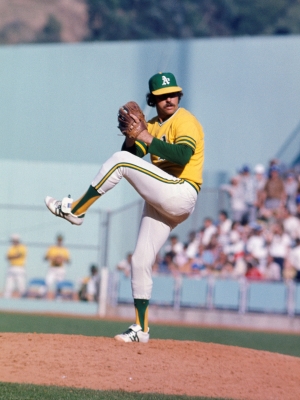
Rickey Henderson is a lot of things.  He is eccentric.  He often refers to himself in the third person.  He is the greatest leadoff hitter ever.  He is the ultimate base stealer.  He was a first ballot Hall of Famer. He is all of those things. Despite all of the other teams he played for (New York Yankees, Toronto, San Diego, Anaheim, New York Mets, Seattle, Boston, and Los Angeles), he is one other thing: an Oakland Athletic. Henderson debuted for Oakland in 1979, and in 1980 he would set the American League Stolen Base Record with 100 while going…
There were a lot of different players to consider when we were looking at the greatest Athletic of all-time.
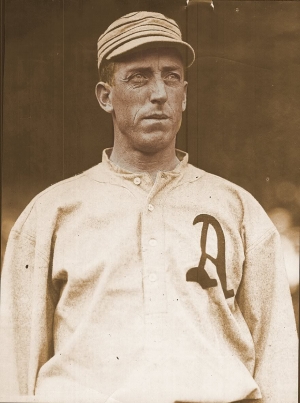
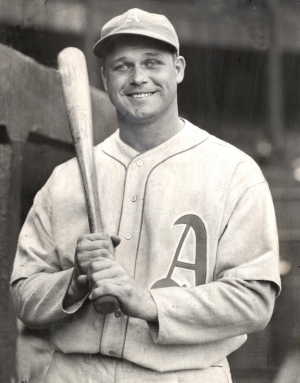
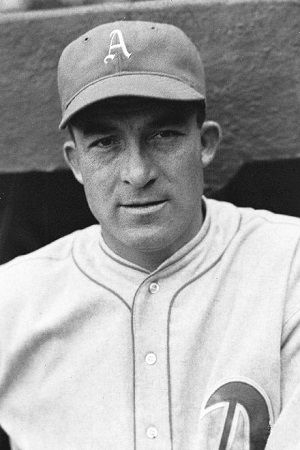
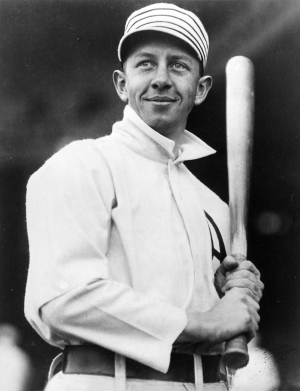
Eddie Plank arrived in Philadelphia in 1901, skipping the minor leagues to become a key part of Connie Mack’s famous pitching staff. As the leading left-hander of the Deadball Era, "Gettysburg Eddie" threw with a sidearm style and was known for a cross-fire motion that puzzled batters for more than ten years. Over 14 seasons with the Athletics, he was a central figure during multiple championship periods, setting franchise records for longevity and durability that still stand today. After a successful 17-win debut in 1901, Plank achieved a historic milestone by recording four straight 20-win seasons from 1902 to 1905.…
Jimmie Foxx came to Philadelphia in 1925 as a 17-year-old farm boy. He was signed by Connie Mack after being recognized as a local sensation in Maryland. Renowned for his extraordinary physical strength and a swing that generated legendary distance, he was considered the most formidable right-handed hitter of his time. During his 11 seasons with the Athletics, he functioned as the primary source of power for the concluding significant Philadelphia dynasty. In 1929, Foxx achieved a historic milestone by hitting 33 home runs and leading the league with a .463 on-base percentage. His clutch performance drove the Athletics to…
Al Simmons joined Philadelphia in 1924 after a standout run in the American Association, a right-handed outfielder with a peculiar "bucket-foot" hitting style that saw him step toward third base as he swung. While coaches initially tried to correct his localized mechanics, Connie Mack recognized a natural professional mainstay and let him be.  As often was the case, Mack was right. Following an impressive rookie campaign, Simmons achieved a historic milestone in 1925 by leading the American League with 253 hits and an exceptional .387 batting average. He concluded the season as the runner-up in the MVP race, solidifying his…
In 1906, Eddie Collins arrived in Philadelphia as a collegiate standout from Columbia University, signing under a local alias to protect his amateur eligibility.  By 1909, he had emerged as the tactical brain of Connie Mack’s "$100,000 Infield," a second baseman whose mental acuity was matched only by his physical speed. 1909 was his first full season as a professional athlete, and he made the most of it. Collins achieved a significant milestone by batting .347 and stealing 63 bases. He reached an even more exceptional level in 1910, leading the American League with a career-high 81 stolen bases, becoming…
Reggie Jackson joined the organization in 1967, bringing incredible talent right from the start. He made his debut during the team’s last days in Kansas City and quickly became the heart of the lively "Swingin' A's" era in Oakland. Famous for his powerful, corkscrew swing that either sent the ball soaring for a home run or led to a strikeout, Reggie was truly one of the most captivating personalities in baseball. Reggie Jackson came up with the A’s when they were still in Kansas City (1967), and he would become a starter the following year when the franchise relocated to…
George Edward “Rube” Waddell arrived in Philadelphia in June 1902 under the patient, paternal watch of manager Connie Mack, who had previously managed the brilliant left-hander in the minor leagues. The Athletics were well aware of his reputation as an unpredictable eccentric, but Mack also recognized that beneath the erratic behavior lived a southpaw with unparalleled talent. His time in Philadelphia was marked by an extraordinary ability to strike out batters, even in an era when contact was prioritized. Waddell set a historic standard by leading the American League in strikeouts during all six of his seasons with the team,…
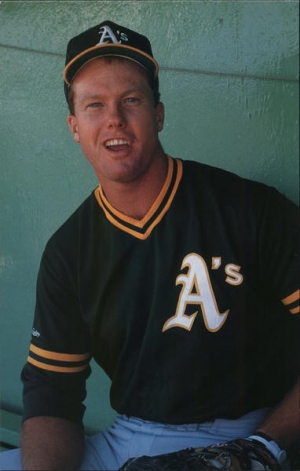
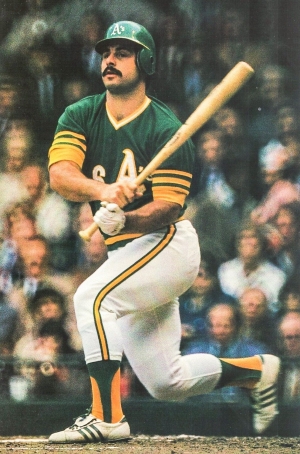
Mark McGwire first entered the Oakland Coliseum clubhouse in August 1986 as a tall, broad-shouldered first baseman, swiftly changing the competitive dynamics of the American League. While his legacy is often linked to his record-breaking single-season home run chase in St. Louis, it was in the East Bay that he truly became a cultural icon. Alongside Jose Canseco, as part of the legendary "Bash Brothers," McGwire was the key offensive force of a team that dominated the late 1980s. Following an 18-game debut in 1986, McGwire had a groundbreaking breakthrough in the 1987 season, setting a new major league record…
When Charles Albert Bender arrived in Philadelphia before the 1903 season, he brought to the American League one of the most remarkable strategic minds of the Deadball Era. Signed from semipro baseball at just 19, this young Ojibwe right-hander quickly secured a spot on a team already forming a dominant franchise. Under the careful guidance of Connie Mack, Bender quickly gained a reputation as a calm and thoughtful pitcher, using a sweeping breaking ball often recognized as the first slider. His early seasons established a standard of reliable and precise performance. As a teenager in 1903, he pitched 270 innings,…

2026 SEATTLE MARINERS FLEX MEMBERSHIPS

Jan 01, 1970

Buy your Tickets to see 2026 Seattle Mariners Flex Memberships HERE!

BALTIMORE ORIOLES VS. SEATTLE MARINERS

Jun 08, 2026

Buy your Tickets to see Baltimore Orioles vs. Seattle Mariners HERE!

TAMPA BAY RAYS VS. BOSTON RED SOX

Jun 08, 2026

Buy your Tickets to see Tampa Bay Rays vs. Boston Red Sox HERE!

CLEVELAND GUARDIANS VS NEW YORK YANKEES: PRIDE CELEBRATION

Jun 08, 2026

Buy your Tickets to see Cleveland Guardians vs New York Yankees: Pride Celebration HERE!

 
The Athletics’ move from Kansas City to Oakland in 1968 required a steady leadership. Sal Bando, picked in the sixth round of the 1965 draft from Arizona State, became that key figure. He secured the starting third baseman role just as the team settled in California, laying the groundwork for what would grow into one of the most formidable dynasties in modern baseball. By May 1969, manager Hank Bauer acknowledged Bando's internal leadership, appointing him as team captain. This coincided with his rise to national prominence. That summer, Bando received his first All-Star selection, hitting a career-high 31 home runs…
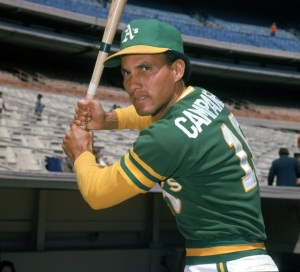
Bert Campaneris made his debut for the Kansas City Athletics in July 1964, providing an immediate boost to a team in trouble. At just 22, this Cuban shortstop announced his presence by hitting two home runs against Minnesota's Jim Kaat in his first game. While he showcased rare power early on, his main talent was in creating chaos with his speed and securing the infield with his glove. By his first full season in 1965, "Campy" had truly harnessed his exceptional speed, leading the American League with 12 triples and 51 stolen bases. That September, owner Charlie Finley organized an…
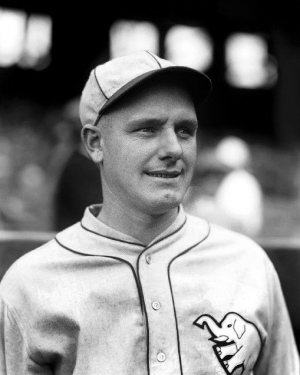
Connie Mack’s acquisition of Eddie Rommel prior to the 1920 season provided the Philadelphia Athletics with a pitcher who challenged the conventional mechanics of the period. Joining a roster still in the process of rebuilding following the disbandment of the 1910s dynasty, the right-hander brought with him an unconventional weapon: a dancing, unpredictable knuckleball. Unlike the high-velocity pitchers of the time, Rommel depended on exceptional precision and low spin, thereby introducing a style of play that transformed managerial strategies in utilizing their pitching staffs. His breakthrough occurred in 1922, a season during which he single-handedly maintained the competitiveness of a…
John Franklin Baker's arrival in Philadelphia before the 1908 season went unnoticed by most in Pennsylvania, with only quiet press mentions. He joined the Athletics as a minor league prospect to complete an earlier deal with Reading. However, everything changed in 1909 when manager Connie Mack gave the 23-year-old the starting role at third base. Baker brought a powerful, rare left-handed swing to the team, leading the American League with 19 triples as a rookie and quickly establishing himself as a distinctive talent. In the 1910s, Baker established himself as the key member of the famed and efficient "$100,000 Infield”…
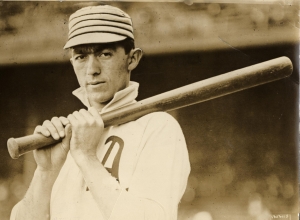
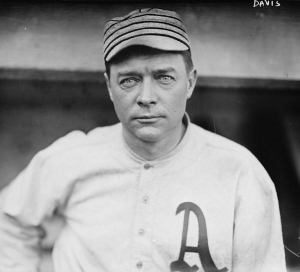
During the assembly of the original Philadelphia Athletics roster for the American League's inaugural season in 1901, Connie Mack looked to the minor leagues for a key addition. Harry Davis, aged 27 and seemingly prepared to retire after an inconsistent career across four National League clubs and a tenure with the Providence Grays, was identified as a promising talent. Mack recognized the potential in the right-handed infielder and persuaded Davis to relocate to Philadelphia. This decision catalyzed a revival, transforming Davis into one of the most formidable and enduring run producers of the dead-ball era. Initially positioned at first base,…
When Robert Lee "Indian Bob" Johnson made his debut as a 27-year-old rookie in 1933, he entered a team in decline. The renowned Philadelphia franchise, which had secured three consecutive pennants from 1929 to 1931, was being methodically dismantled by Connie Mack in an effort to prevent financial collapse. With legends such as Al Simmons and Jimmie Foxx departing, Johnson was tasked with carrying the responsibility for much of the team's offensive production alone, anchoring a roster that was rapidly deteriorating during a period of prolonged struggle in the American League. Despite the challenging team environment, Johnson quickly proved himself…
When Jim "Catfish" Hunter arrived in spring 1965, he had an interesting backstory and no minor league experience. Signed as an amateur free agent by Kansas City owner Charlie O. Finley, who quickly gave him the playful nickname because he thought the young pitcher lacked “character”, the 19-year-old right-hander didn't go through the usual farm system. Instead, he went straight to the big league mound, showing moments of precise control and steady confidence that would eventually make him a key player in a baseball dynasty. He adapted so well to the heavy workload that he earned consecutive All-Star nods in…
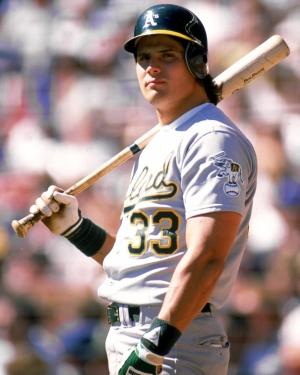
Let’s forget about some of the things that made Jose Canseco famous (or infamous).  The steroid use.  The admission of steroid use.  Throwing other players under the bus by (accusing) discussing their steroid use.  The boxing.  Madonna.  The baseball that bounced off his head for a Home Run. All true. What is also true is that in the late 80s, Jose Canseco was among the most famous athletes in sports and an elite baseball player. When the Oakland Athletics picked Jose Canseco in the 15th round of the 1982 draft, no one could have guessed they were discovering a powerful,…
When Vida Blue fully established himself in the Oakland rotation in 1971, he didn't just deliver an outstanding pitching season; he became a true pop culture sensation. With a blazing fastball in the high 90s that baseball fans admired as the most exciting left-handed pitch of his era, the 21-year-old pitcher captured the sports world's attention. He appeared on the covers of Time and Sports Illustrated and kept opposing batters on their toes with his energetic and swift pitching style. His 1971 campaign remains one of the most exceptionally brilliant single-season achievements within modern baseball history. Blue dominated the American…