

 Not in Hall of Fame News
Yes, we know that this is taking a while! As many of…
 Not in Hall of Fame News
Yes, we know that this is taking a while! As many of…
 Not in Hall of Fame News
2002 SEMI-FINAL RESULTS: Thank you for your participation in the Pro Football…
 Not in Hall of Fame News
Yes, we know that this is taking a while! As many of…
 Not in Hall of Fame News
We are diligently working away at Notinhalloffame on revising our Football lists…
 Not in Hall of Fame News
We are diligently working away at Notinhalloffame on revising our Football lists…
 From the Desk of the Chairman
October baseball often turns individual pitching performances into lasting postseason memories. Strikeout…
 From the Desk of the Chairman
For decades, the sports debate ran on gut feeling. Barstool arguments, call-in…
 From the Desk of the Chairman
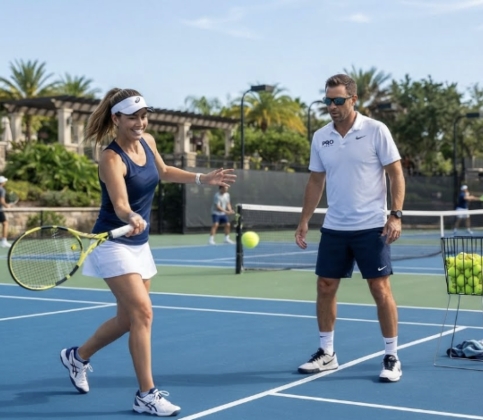
Introduction to Private Adult Tennis Camps in Prague Adult club players increasingly…
 From the Desk of the Chairman
Unlike in the case of pre-match betting, where you have to pick…
 From the Desk of the Chairman
Kupu178 builds trust with people by using top-end end-to-end encryption. It checks…
 From the Desk of the Chairman
Sports fans thrive on calculating strategy, reading momentum, and maximizing every tactical…

100 Active Potential Football Hall of Famers
-
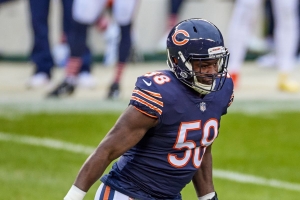 #31 Overall, Roquan Smith, Baltimore Ravens Linebacker, #3 Defensive Lineman/Linebacker: Interior Lineman2025 Pre-Season Rank #39, 2024 Pre-Season Rank #62, 2023 Pre-Season Rank #92, 2022 Pre-Season Rank #133, 2021 Pre-Season Rank #146. Peak Period: 2020-24…
 -
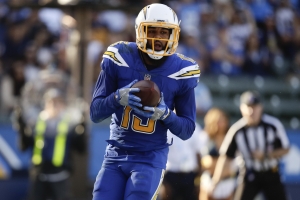 #49 Overall, Keenan Allen, Indianapolis Colts, #8 Wide Receiver2025 Pre-Season Rank #46, 2024 Pre-Season Rank #41, 2023 Pre-Season Rank #45, 2022 Pre-Season Rank #48, 2021 Pre-Season Rank #66, 2020 Pre-Season Rank…
 -
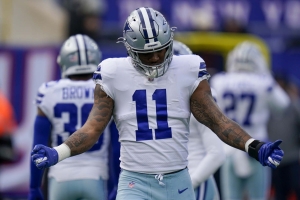 #29 Overall, Micah Parsons, Green Bay Packers, Linebacker, #10 Defensive Lineman/Linebacker: Pass Rusher2025 Pre-Season Rank #54, 2024 Pre-Season Rank #79, 2023: Pre-Season Rank #102. Peak Period: 2021-25 Here is what we wrote about Micah Parsons…
 -
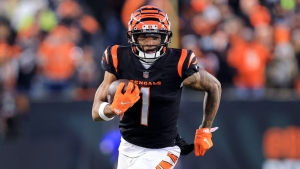 #42 Overall, Ja'Marr Chase, Cincinnati Bengals, #6 Wide Receiver2025 Pre-Season Rank #55, 2024 Pre-Season Rank #111, 2023 Pre-Season Rank #134, 2022 Pre-Season Rank #145. Peak Period: 2021-25* Ja’Marr Chase has been…
Visit the Fictitious Halls of Fame!

You May Also Like...
EDITOR’S CHOICE
 DDT's Pop Flies
When the veterans committee (VC), officially convening as the Contemporary Baseball Era…

 Live Music Head
Project/Objectan interview with André Cholmondeleyby Live Music HeadOriginally published at timessquare.com on…

LATEST RANKINGS

MOST POPULAR RANKINGS

Committee Chairman
Our All-Time Top 50 New York Yankees have been updated to reflect the 2021 Season
Yes, we know that this is taking a while!
As many of you know, we here at Notinhalloffame.com are slowly generating the 50 of each major North American sports team. That being said, we have existing Top 50 lists out and we always consistently look to update them when we can and based on necessity. As such, we are very happy to present our pre-2022 revision of our top 50 New York Yankees.
As for all of our top 50 players in baseball we look at the following:
1. Advanced Statistics.
2. Traditional statistics and how they finished in the American League.
3. Playoff accomplishments.
4. Their overall impact on the team and other intangibles not reflected in a stat sheet.
The Yankees had another playoff run in 2022, but when you are the most accomplished team in baseball, it takes a lot to move up this list or even debut on it. However, both of this did happen, with one debut and one elevation.
As always, we present our top five, which did not change.
1. Babe Ruth
2. Lou Gehrig
4. Joe DiMaggio
5. Derek Jeter
You can find the entire list here.
Brett Gardner moved up one spot to #35.
The new entry is current First Baseman, Aaron Judge, who comes in at #49.
Judge’s entry knocks Hank Bauer off of the list.
We welcome your input and comments and as always, we thank you for your support.
24. Heath Bell
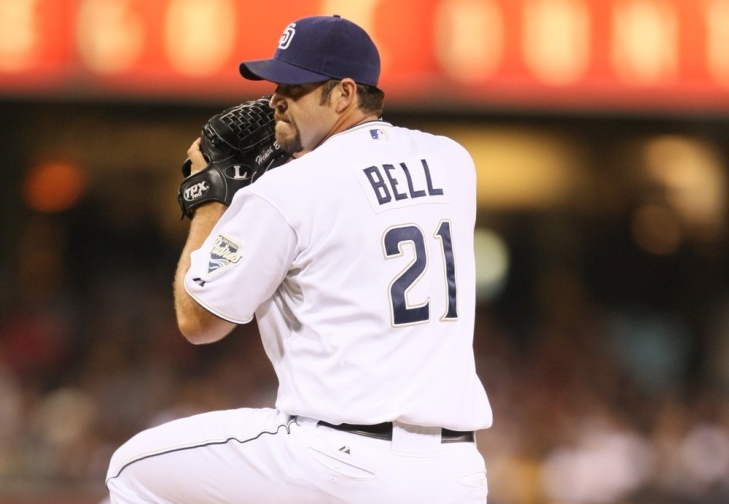
Inheriting the ninth-inning responsibilities from the greatest closer in National League history is arguably the most daunting, high-pressure assignment any relief pitcher could ever accept. Yet, when the legendary Trevor Hoffman departed for Milwaukee after the 2008 season, a charismatic, hard-charging right-hander didn't just fill those historic shoes; he sprinted out of the bullpen and slid directly into his own chapter of franchise lore. Acquired from the New York Mets in a low-profile trade following the 2006 calendar, Heath Bell completely transformed his professional identity in the SoCal, evolving from an unheralded middle-relief option into an absolute apex predator at the back end of the game.
His first introduction to the local fan base in 2007 showcased elite structural preparation. As Hoffman's main eighth-inning reliever, Bell delivered a remarkable, heavy workload season, making 81 appearances, striking out 102 batters in 93.2 innings, and posting a just 2.02 ERA.
Although his efficiency metrics saw a slight, temporary dip in 2008, his core skills remained strong. When the closer role opened up the next spring, Bell took the chance with intense, pure competitiveness, quickly transforming from a reliable setup man into a top-tier star.
His three-year stretch as the San Diego bullpen's undisputed leader showcased unmatched ninth-inning dominance. Between 2009 and 2011, Bell consistently turned save chances into a daily routine, posting seasons of 42, 47, and 43 saves, effectively halting opposing rallies. His outstanding 2010 season remains one of the top relief performances in Southern California history. He consistently dominated Senior Circuit hitters, going 6–1 with a 1.93 ERA over 67 high-pressure games, tying Hoffman's franchise record with 41 consecutive successful saves.
Bell achieved a complete sweep of National League All-Star selections during each of his three full summers as the closer. He consistently drew national attention, most notably when he sprinted from the bullpen and performed a full, head-first dive into the pitcher's mound during the 2011 mid-summer classic. He captured consecutive Rolaids Relief Man Awards in 2009 and 2010, alongside a highly prestigious eighth-place finish in the 2010 National League Cy Young Award balloting, verifying his status among the elite arms in the sport.
After 2011, Bell left San Diego via free agency, signing a lucrative multi-year deal with the Miami Marlins. Unlike Hoffman's lasting success, Bell’s move from Petco Park led to an immediate decline in performance. He struggled through brief, volatile stints with Miami, Arizona, and Tampa Bay, losing velocity and consistency before retiring before the 2015 season.
As a Padre, Bell finished 194 games, saved 134, and had a 2.53 ERA for the Padres.
32. Joey Hamilton
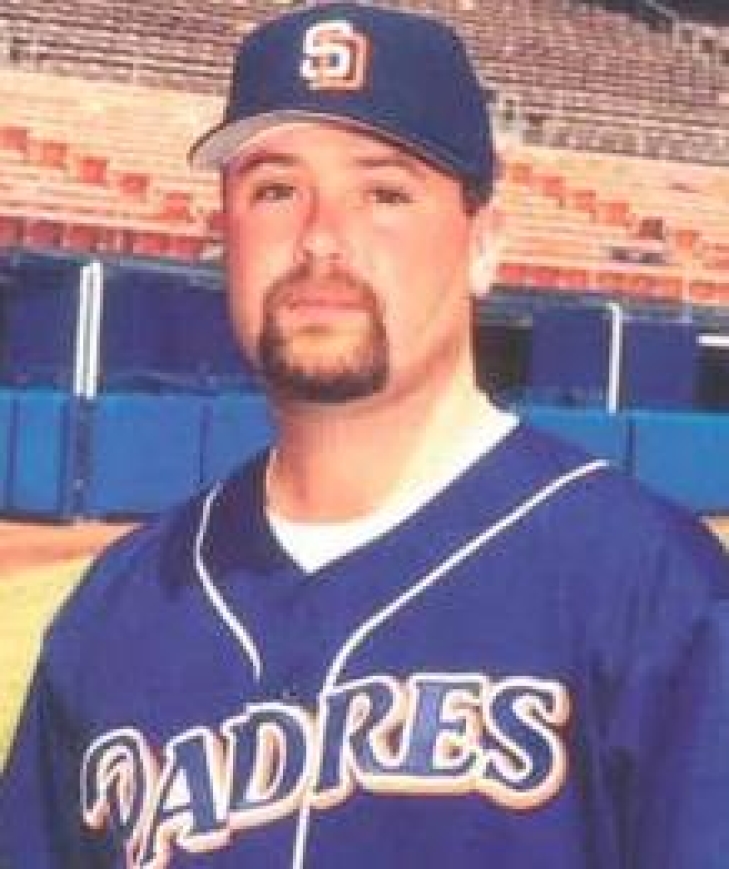
Joey Hamilton was selected eighth overall in the 1991 amateur draft from Georgia Southern University. He was considered a highly valuable player and, interestingly, caught the organization by surprise. According to Hamilton himself, the Padres hadn't shown much interest in scouting him before they called his name on draft day. Although his path to the majors had its challenges, he ultimately became a reliable and hardworking fixture in the middle of the San Diego rotation, especially during a time of big changes within the organization.
Hamilton finally broke through to the big leagues in May 1994, and his introductory phase was immediately impactful. He turned in a brilliant rookie campaign, posting a 9–6 record with a sharp 2.69 ERA across 108.2 innings to finish fifth in the National League Rookie of the Year balloting.
Over the next two summers, he proved himself as a top-tier, high-efficiency innings-eater. Despite finishing 6–9 in 1995, his advanced metrics remained impressive, ranking seventh in the National League with a bWAR of 4.6, thanks to his knack for limiting runs in an era favorable to hitters.
As the franchise shifted toward the high-leverage championship window of the late 1990s, Hamilton continued to provide critical durability. While his ERA climbed above the 4.00 threshold and his WHIP inflated as he relied more on run support, he remained a vital rotation stabilizer.
He was a key member of the staff that captured the 1998 National League pennant, famously stepping out of the bullpen to provide relief during the World Series against the New York Yankees.
With the organization looking to reallocate resources and shuffle the rotation, the front office engineered a definitive trade in December 1998, shipping their veteran starter to the Toronto Blue Jays in exchange for a package centered on Woody Williams, Carlos Almanzar, and Peter Tucci.
Over five seasons representing the Padres, he compiled a 55–44 record, a 3.75 ERA, and 639 strikeouts over 934.2 innings of work.
RIP: Ronnie Spector
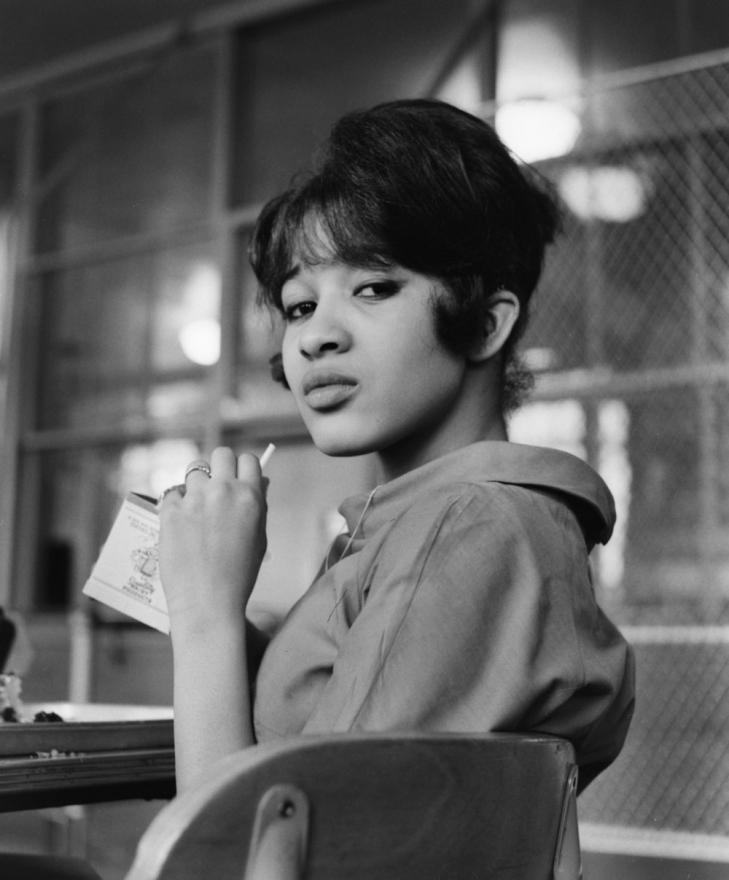
2022 feels a lot like 2021.
Rock and Roll Hall of Fame inductee, Ronnie Spector died today from cancer at the age of 78.
There were a lot of girl groups in the 60s, but none of them exuded the sexiness of Spector, the leader of the Ronettes. Under the guidance of her eventual husband, Phil Spector, the Ronettes had a three-year run of hits, most notably with the 1963 smash, “Be My Baby”. Ronnie married Phil in 1968, but the relationship became abusive, so much so, that Phil kept his wife as a virtual prisoner in their home. They would divorce in 1974, and she enjoyed a revival of sorts on the classic rock circuit as a solo artist.
The Ronettes were inducted into the Rock and Roll Hall of Fame in 2007.
We here at Notinhalloffame.com would like to extend our condolences to the fans, family and friends of Ronnie Spector.
