

Top 50 Milwaukee Brewers
The city of Milwaukee had a baseball team from 1953 to 1965 when the Braves played there. Wisconsin did not have to wait a long time to receive another team as the expansion Seattle Pilots moved there after one year of existence in 1970.Now named the Milwaukee Brewers, the “Blue Brew Crew” did not have a lot of success in the 1970s but would go to the World Series in 1982 with Hall of Famers Paul Molitor and Robin Yount, though they would go down to defeat in seven games to the St. Louis Cardinals.
They haven’t been to the World Series since.
Since that time, the Brewers have moved leagues from the American to the National but have yet to win the Pennant in their new league.
This list is up to the end of the 2025 Season.
Note: Baseball lists are based on an amalgamation of tenure, traditional statistics, advanced statistics, playoff statistics, and post-season accolades.
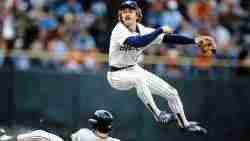
Robin Yount arrived in Milwaukee in 1974 as a startlingly young 18-year-old, a first-round pick who bypassed the seasoning of a traditional minor league apprenticeship to start on Opening Day. While he initially navigated the growing pains of a teenager in the American League, he quickly evolved into the heartbeat of the organization. For twenty seasons, he provided a brand of versatile brilliance that saw him master two distinct positions, standing as the definitive lifer and a foundational pillar who remains the undisputed benchmark for every player who has worn the Brewers' uniform. After breaking Mel Ott’s record for the…
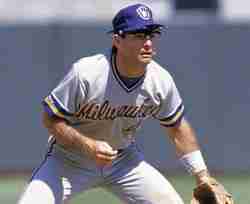
Paul Molitor arrived in Milwaukee in 1978, a first-round pick who skipped the minor leagues almost entirely to become the catalytic "Ignitor" of the Brew Crew. While he shared the clubhouse with larger-than-life power hitters, he provided a brand of scientific, high-frequency hitting that made him one of the most complete offensive forces in baseball history. In 1979, his first full season, Molitor demonstrated a high rate of finding gaps, batting .322, and recording 188 hits. He quickly proved to be a professional mainstay who could impact the game with his legs as much as his bat, reaching the 30-stolen…
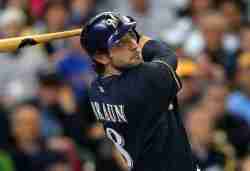
Ryan Braun arrived in Milwaukee in 2007 as a high-caliber prospect with a "five-tool" label that he spent the next fourteen seasons largely validating. While his defensive work at third base and later left field was often characterized as average, his offensive impact was immediate and staggering. Braun won the 2007 Rookie of the Year Award while setting a rookie record for slugging percentage (.634). He quickly proved to be a professional mainstay, earning the first of five consecutive Silver Slugger Awards and becoming a perennial fixture at the All-Star Game. This early stretch served as the formal introduction to…
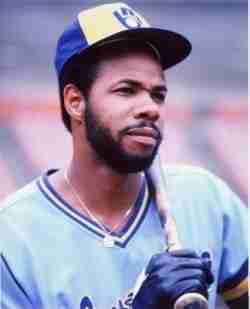
Cecil Cooper was a really good baseball player though it seemed that only people in Milwaukee were aware of it!
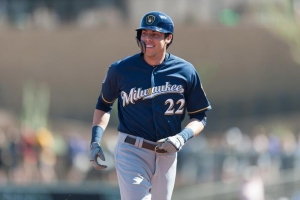
Before the 2018 season began, Christian Yelich arrived in Milwaukee as part of the Marlins’ consistent trend of unloading talent before they became too pricey. While he was already a respected outfielder in Miami, his arrival at Miller Park triggered an offensive evolution that had no precedent in Brewers history. The initial chapter of his tenure was a historic display of individual dominance that remains the gold standard for back-to-back performances in Milwaukee. In 2018, Yelich demonstrated a specialized mastery of the league to win the National League MVP, capturing the batting title (.326) and leading the circuit in slugging…
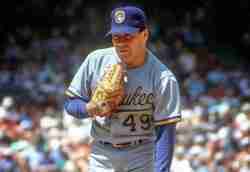
Teddy Higuera arrived in Milwaukee in 1985 as a skilled left-hander from Mexico with a deceptive delivery and high-velocity pitches, quickly overwhelming American League lineups. His major league career was cut short by injuries, but he delivered a brilliant pitching run, one of the franchise's best. Higuera wasted no time providing quality starts for the Brewers, finishing as the runner-up for the 1985 Rookie of the Year. Higuera demonstrated a high frequency of keeping hitters off-balance, recording 15 wins and a 3.90 ERA. He showed the organization he was a premier talent by following that debut with an even more…
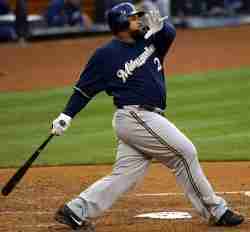
A highly touted first-round pick in 2002, Prince Fielder was a physically imposing left-handed slugger who had spent his childhood taking batting practice in big league stadiums alongside his father, Cecil. Debuting in 2005, he quickly became the centerpiece of a young, explosive core that aimed to bring winning baseball back to the shores of Lake Michigan. In 2007, his second full season, Fielder blasted 50 home runs, making him the youngest player in baseball history to reach that plateau and surpassing the franchise record previously held by Gorman Thomas. This early stretch served as the formal introduction to a…
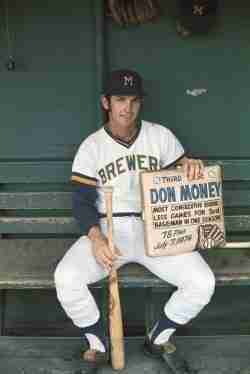
In 1973, Don Money joined the Brewers through a seven-player deal with the Phillies, significantly enhancing their infield stability. Known as "Brooks" for his ability to emulate Brooks Robinson's defensive skills at third base, Money became the franchise’s first real star during its early years. Over eleven seasons with the team, he served as a versatile and strategic player, smoothly transitioning between second, third, and first base, while maintaining a reliable and professional presence at the top of the batting order. In his first season with the club in 1973, Money topped the American League in fielding percentage at third…
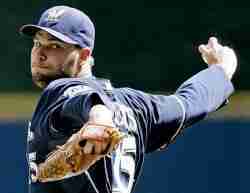
Ben Sheets arrived in Milwaukee as the tenth overall selection in the 1999 draft, but he earned national fame before ever throwing a pitch at Miller Park. After dominating the 2000 Sydney Olympics, where he tossed a three-hit shutout against Cuba to secure the first gold medal in U.S. Olympic baseball history, he made his debut in 2001. In 2001, Sheets demonstrated he belonged at the highest level, earning an All-Star selection as a rookie and finishing the year with 11 wins. While the Brewers struggled as a club during the early 2000s, he remained a professional mainstay, logging over…
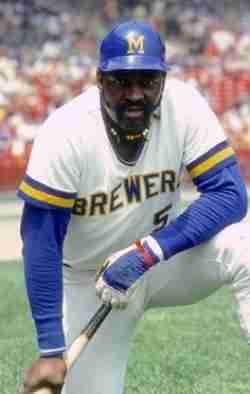
George Scott arrived in Milwaukee in late 1971 as part of a ten-player trade with the Red Sox, bringing a charismatic, powerful first baseman to the Brewers. Nicknamed "Boomer" for his power, Scott quickly became the team's offensive and defensive leader. Scott showcased a glove that was nearly a vacuum at first base, earning a Gold Glove each season he played for the Brewers (1972–1976). His defense was stellar, and his bat was also strong; he had over 150 hits and 20 home runs in his debut season. This period established him as an elite two-way player who earned MVP…
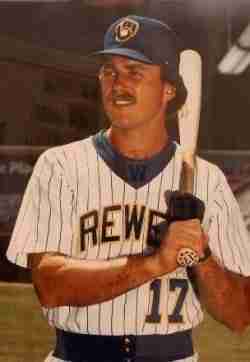
A 12th-round draft pick in 1974, Jim Gantner was a local kid from Fond du Lac who would eventually personify the grit of the franchise. Though he lacked Hall of Fame star power, he became the ultimate "Lifer," spending all 17 seasons with the Brewers. By the late 1970s, Gantner secured the second base position, providing dependable glove work that helped the Brewers become a dominant team. In 1980, he demonstrated his durability by playing 132 games, batting .282, and showing he could hold his own in a high-powered lineup. This era cemented his reputation as a reliable gap-to-gap hitter…
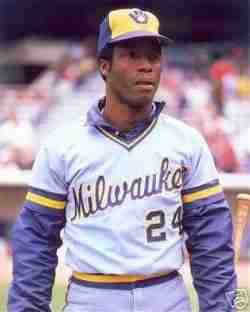
From Panama, Ben Oglivie joined the Brewers in late 1977 as part of a trade with the Detroit Tigers, a move that placed a thoughtful, cerebral power hitter into the heart of Milwaukee's emerging order. In his debut year at the club in 1978, Oglivie showcased his value with a .303 batting average and 142 hits. In 1979, he stepped up further by hitting 29 home runs, demonstrating that his slim build packed unexpected power. This period cemented his role as a reliable professional who could support a lineup alongside rising stars such as Robin Yount and Paul Molitor, offering…
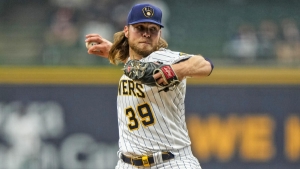
Corbin Burnes made the Milwaukee Brewers two years after he was drafted in the Fourth Round, and after he debuted in July of 2018, he rattled off seven wins out of the bullpen with a 2.61 ERA and earned a win in the clinching game of the NLDS. That promise unraveled in 2019, during a nightmare season in which he surrendered 11 home runs in his first three starts and finished with an 8.82 ERA and a WHIP of 1.837. Instead of folding, he used the 2020 shortened campaign to rebuild his approach, finishing sixth in the Cy Young voting and…
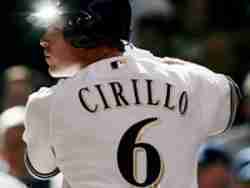
Jeff Cirillo, an 11th-round pick in 1991, was a steady right-handed hitter and a fixture at third base. Though he played for several teams, his time in Wisconsin marked him as one of the most consistent contact hitters for the Brewers. Debuting in 1994, Cirillo quickly rose to the top tier of American League hitters. From 1996 to 1998, he showed a thorough understanding of the strike zone, batting at least .321 twice and earning his first All-Star spot in 1997. He displayed a professional style centered on line drives and power between gaps, hitting 46 doubles in two consecutive…
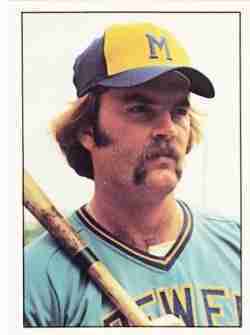
Gorman Thomas commenced his tenure in Milwaukee as the inaugural draft selection for the recently relocated franchise in 1969. He was a center fielder originating from South Carolina, characterized by an unwavering, all-or-nothing batting approach. Although the initial years of his career involved fluctuations between Major League Baseball and minor leagues, including an unusual 1977 season during which he was effectively concealed on the Rangers' roster through a paper transaction, he rejoined the team in 1978 to become the strategic power man of the most formidable lineup in the club’s history. In 1978, during his first season back with the…
2026 SEATTLE MARINERS FLEX MEMBERSHIPS
Jan 01, 1970
Buy your Tickets to see 2026 Seattle Mariners Flex Memberships HERE!
CHICAGO WHITE SOX VS. ATHLETICS
Jul 12, 2026
Buy your Tickets to see Chicago White Sox vs. Athletics HERE!
LOS ANGELES DODGERS VS. ARIZONA DIAMONDBACKS
Jul 12, 2026
Buy your Tickets to see Los Angeles Dodgers vs. Arizona Diamondbacks HERE!
TOURS: TRUIST PARK
Jan 01, 1970
Buy your Tickets to see Tours: Truist Park HERE!
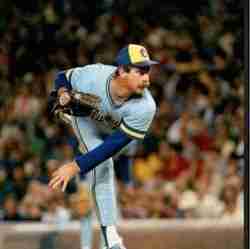
Acquired as a mid-season trade from Cincinnati, Mike Caldwell arrived in Milwaukee during the 1977 season. Caldwell was a left-handed sinkerballer who had bounced through three organizations in the early '70s. After settling in with a solid second half in his debut year, he transformed into the quintessential "Yankee Killer" and a tactical mainstay of the Brewers' rotation. In 1978, Caldwell produced a remarkable season, ending with a career-best 22 wins and a .710 winning percentage. He dominated opposing lineups by leading the American League with 23 complete games and achieving a notable 2.36 ERA. This outstanding performance earned him…
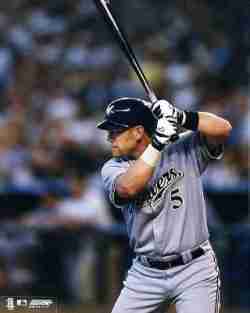
The ninth overall pick in the 1995 draft, Geoff Jenkins brought a violent, left-handed swing that looked tailor-made for the short porches of County Stadium and, later, Miller Park. Debuting for the Brewers in 1998, Jenkins broke through in 2000, when he was named the team MVP after a year in which he batted .303 with 34 homers and 94 RBIs. Jenkins had five consecutive seasons with at least 20 home runs to start the new millennium. While his journey faced a setback in 2002 due to a gruesome dislocated ankle, he returned with a vengeance in 2003, authoring a…
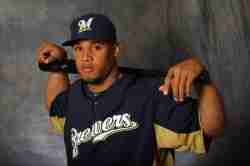
A raw athlete from the Twins organization, Carlos Gomez was traded to the Brewers in 2010, bringing with him unmatched speed but an undisciplined approach at the plate. In 2012, Gomez achieved a new level of production with 19 home runs and 37 stolen bases, highlighting his athleticism. He followed with a historic 2013 season, earning his first Gold Glove, the first Brewer in 31 years, and his first All-Star selection. He finished with a career-high 24 homers, 40 stolen bases, ranked 9th in MVP voting, and led the National League in bWAR (7.6). At this time, Jenkins was also…
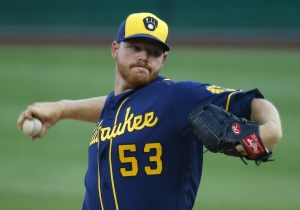
Brandon Woodruff debuted in Milwaukee in 2017, a power-pitching right-hander whose journey from a mid-round draft pick to a foundational anchor is a testament to the Brewers' development system. Known for a high-octane fastball and a physical presence on the mound, he evolved into one of the most efficient starters in the National League. After flashes of dominance in the 2018 postseason, including a historic home run off Clayton Kershaw, Woodruff reached his peak in 2019. He went 11-3 with a 3.62 ERA, made his first All-Star team, and became a key player for Milwaukee. The 2021 and 2022 seasons…
