

Top 50 Cincinnati Reds
This version of the Cincinnati Reds (there was one from 1876 to 1880 in the National League who were expelled for refusing to stop selling beer) can be traced to the American Association in 1892. They would win the pennant that year and would stick around there until they joined the National League in 1890.The Reds are a five-time World Series Champion (1919, 1940, 1975, 1976 & 1990) though they are mostly known for their success from the 1970s. Their 1919 win was known for the Chicago White Sox throwing the series, their 1990 win is more thought of Oakland choking and their 1940 title is hardly discussed at all.
Those 1970 wins are however likely never to be forgotten. “The Big Red Machine” boasted Hall of Famers, Pete Rose, Joe Morgan, and Johnny Bench, and a plethora of other great players who populate our list.
Cincinnati may not be a large market but will always be a baseball market.
Note: Baseball lists are based on an amalgamation of tenure, traditional statistics, advanced statistics, playoff performance, and post-season accolades. This is a list up to the end of the 2025 Season.
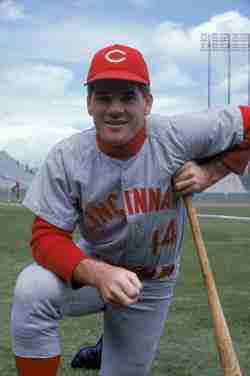
When Pete Rose burst onto the scene in 1963, he arrived with a head-first slide and a relentless motor that earned him the "Charlie Hustle" moniker. A local kid from Cincinnati, he didn't just play for the Reds; he personified the city's blue-collar work ethic. In his debut season, he claimed the National League Rookie of the Year award, signaling the start of a legendary pursuit of history. He was a human metronome of contact hitting, a switch-hitter who treated the baseball like a personal enemy that needed to be conquered four times a day. The middle chapter of his…
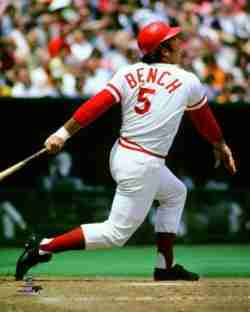
When Johnny Bench arrived in Cincinnati as a 19-year-old rookie in 1968, he didn't just win the Rookie of the Year award; he fundamentally changed how the position was played. Before Bench, catchers were often viewed as defensive specialists who provided little at the plate. Bench shattered that mold, wielding a bat that felt like a lightning bolt. He possessed a massive physical presence and a cannon for an arm that famously allowed him to throw out runners from a crouching position, a feat that terrified baserunners and anchored the Reds' defense for over a decade. The peak of his…
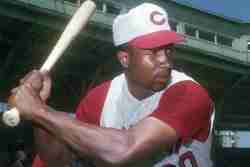
When Frank Robinson arrived in Cincinnati in 1956, he didn't just win the Rookie of the Year award; he staged a league takeover. At just 20 years old, he tied the then-record for home runs by a rookie with 38, signaling the arrival of a player who combined terrifying power with a relentless, aggressive plate presence. Robinson played with a chip on his shoulder, crowding the plate and daring pitchers to come inside—a tactical move that resulted in him leading the league in being hit by pitches seven times as a Red. He was the young, fiery engine of a…
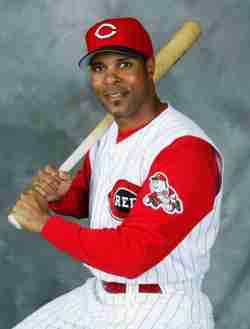
When Barry Larkin arrived on the South Side of Cincinnati in 1986, the city didn’t just gain a shortstop; it gained a favorite son. Born and raised in the area, Larkin played with a level of comfort and command that suggested he had been destined for the position since childhood. He wasn't the flashy, oversized shortstop of the future; he was a surgical, five-tool technician who combined elite speed with surprising power and a gold-glove caliber vacuum at the bag. He arrived as a high-pedigree prospect and immediately began a "Lifer" journey that would see him never wear another professional…
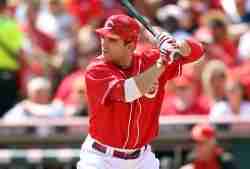
When Joey Votto arrived in Cincinnati in late 2007, he brought with him a cerebral approach to hitting that felt like a throwback to an era of pure contact, yet was powered by modern power. By 2010, he had evolved from a promising rookie into the undisputed king of the National League, capturing the MVP award and leading the Reds back to the postseason. He was a "Lifer" in the truest sense, a player who famously declared he would never want to play anywhere else, anchoring the middle of the Cincinnati order with a discipline that bordered on the obsessive.…
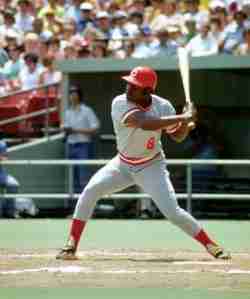
When Joe Morgan arrived in Cincinnati in 1971 as part of an eight-player blockbuster trade, many observers actually thought the Reds had lost the deal by giving up slugger Lee May. They couldn't have been more wrong. Morgan arrived with a "chicken-flap" arm waggle and a relentless focus that immediately reshaped the team's identity. He didn't just occupy second base; he patrolled it with a defensive urgency that earned him five consecutive Gold Gloves. From the moment he stepped into the clubhouse, he proved to own the soul of a winner, leading the majors in runs scored during his very…
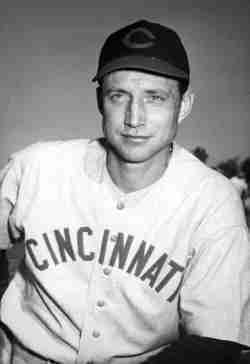
Considered by some to be a significant Hall of Fame snub, Bucky Walters was a dominating Pitcher for the Reds in the late 30’s and early 40’s.
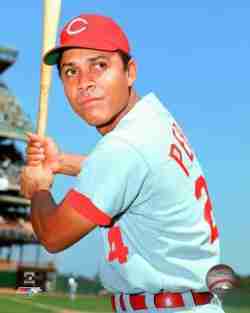
When Tony Pérez arrived in Cincinnati in 1964, he was a young, soft-spoken infielder from Cuba who had to navigate both a new language and a new position. While he broke in as a third baseman, his residency on the South Side of Cincinnati truly took flight when he transitioned to first base, forming a terrifying corner-infield duo with Lee May before eventually becoming the permanent fixture at the bag. He arrived as a promising prospect and quickly matured into a seven-time All-Star, providing the profile of a professional who never let the pressure of the moment alter his approach.…
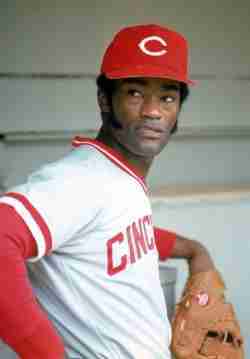
When George Foster arrived in Cincinnati via a trade from San Francisco in 1971, he was a talented outfielder searching for a permanent home on a crowded roster. It took a few seasons of refinement before he truly ignited, but once he locked down the starting job in left field, he became the ultimate deep threat. He joined the organization as a high-potential trade piece and matured into the most dangerous power hitter of the 1970s, with the guise of aquiet giant who let his black bat do all the talking. His tenure reached a historic crescendo in 1977. In…
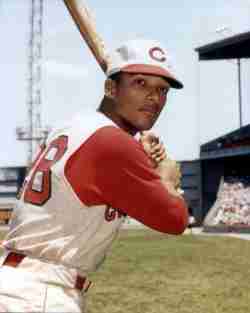
When Vada Pinson arrived in Cincinnati in 1958, he was a 19-year-old phenom who had reportedly considered a career as a trumpet player before his coach convinced him his future was on the grass. Pinson brought an immediate impact to the plate from his very first full season in 1959, leading the National League in runs (131) and doubles (47) while batting .316. He arrived as a kid with immense speed and immediately transformed into a high-volume producer. The peak of his residency, and the highlight of his career, arrived in 1961, as he helped lead the Reds to their…
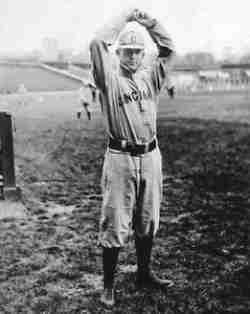
Cincinnati found a statistical titan in 1899 when a young Noodles Hahn debuted and immediately matured into the most feared strikeout artist in the National League. He arrived with a deceptive delivery and a relentless competitive streak, capturing the league's strikeout title in each of his first three seasons. His "Traditional Dominance" reached an iconic crescendo in 1901 when he etched his name into the history books by hurling the very first no-hitter of the 20th century. He wasn't just a part of the staff; he phenomenon who routinely shouldered a disproportionate share of the team's success. The true weight…
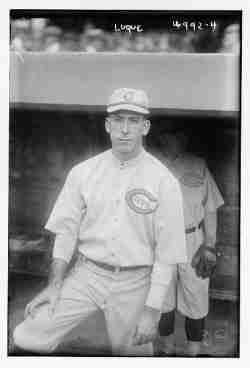
This is the story of a man who treated the batter’s box like a workstation, wielding a piece of lumber that looked more like a bridge timber than a baseball bat. Edd Roush didn’t just hit for the Reds; he mastered the art of contact with a relentless, decade-long consistency that defied the shifting tides of the Deadball and Live-ball eras. While his World Series ring is often discussed through the lens of history’s most famous scandal, his time in Cincinnati was defined by a surgical precision that made him the most feared pure hitter in the National League. A…
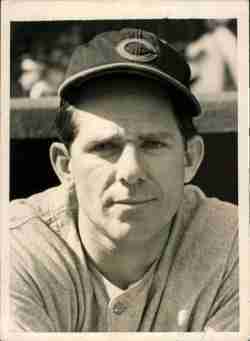
When the Reds acquired Derringer in 1933, they were gambling on a talent that had yet to find its consistency. That gamble paid off as Derringer matured into a surgical force, eventually winning 161 games in a Cincinnati uniform. He became a fixture in the All-Star game, earning six selections, including a run of five straight years, and authored four 20-win campaigns. His signature was a terrifying lack of charity; in an era of high-scoring offenses, Derringer’s refusal to walk batters made him one of the most efficient run-suppressors in the game. The peak of his dominance was recognized far…
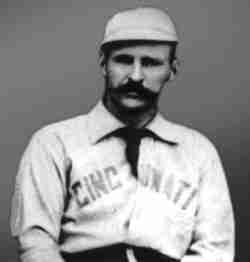
McPhee’s tenure in Cincinnati began in 1882, and over the next eighteen seasons, he became the ultimate lifer, never once donning another uniform. He was far more than a defensive specialist, accumulating 2,258 career hits and serving as a consistent leadoff threat with a keen eye and surprising power for the era. However, his true brilliance was found in the field. He famously resisted the introduction of the baseball glove until the very end of his career, claiming that the leather hindered his ability to feel the ball and make the lightning-fast transitions required at the keystone. The statistical evidence…
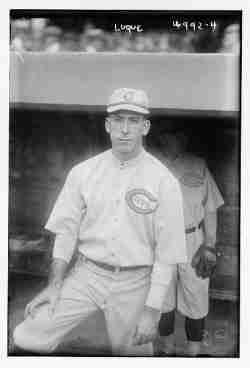
Dolf Luque’s journey to the Major Leagues was as much about navigating social hurdles as it was about mastering the strike zone. He matured into a cornerstone of the Cincinnati staff just as the Deadball Era gave way to the offensive explosion of the 1920s. A master of the breaking ball, Luque possessed a curve that buckled knees from New York to Chicago. He arrived as a young arm looking for a permanent home and quickly became the high-leverage anchor of the Reds' rotation, helping the club secure its first World Series title in 1919. The absolute pinnacle of his…
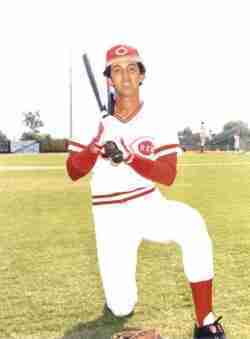
When Concepción arrived in 1970, he was a lean, athletic prospect tasked with manning the most demanding spot on the field for a team with championship aspirations. He matured instantly into a defensive wizard, famously pioneering the "one-hop" throw across the slick Cincinnati turf to beat runners to first base. This innovative approach helped him capture five Gold Glove Awards and earn nine All-Star selections, establishing him as the premier defensive shortstop of the 1970s. He wasn't just a cog in the machine; he was the steady hand that ensured the defense remained as potent as the lineup. The peak…
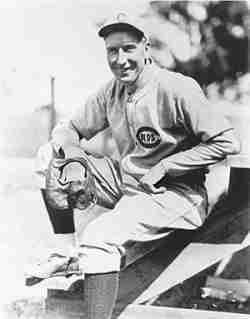
When the Reds acquired the man they called "Jeptha" in 1921, they were adding a veteran who was just beginning to touch his statistical ceiling. Rixey matured instantly into the staff's most reliable weapon, winning 179 games in a Cincinnati uniform and eventually setting the all-time mark for wins by a left-hander, a record that would stand until the arrival of Warren Spahn. He arrived as a respected arm and quickly became the high-leverage anchor of the rotation, rattling off three 20-win campaigns and leading the National League with 25 victories in 1922. The true genius of his game was…
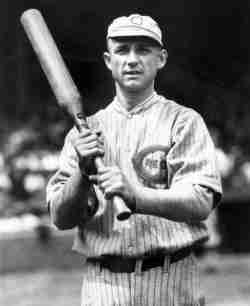
When Heinie Groh settled into the Reds' lineup in the mid-1910s, he brought a level of offensive ingenuity that quickly made him the premier leadoff threat in the National League. His signature bottle bat allowed him to control the zone with unparalleled precision, maturing into a master bunter and a high-contact hitter who simply refused to give away an at-bat. He was a nightmare for opposing pitchers, twice leading the league in on-base percentage and putting together four seasons with a batting average over .300. He arrived as a young talent and evolved into a foundational piece of the roster,…
TOURS: TRUIST PARK
Oct 05, 2026
Buy your Tickets to see Tours: Truist Park HERE!
CLASSIC TOUR AT YANKEE STADIUM
Jan 01, 1970
Buy your Tickets to see Classic Tour at Yankee Stadium HERE!
TOURS: TRUIST PARK
Oct 06, 2026
Buy your Tickets to see Tours: Truist Park HERE!
ATLANTA BRAVES NLDS HOME GAME 1
Oct 06, 2026
Buy your Tickets to see Atlanta Braves NLDS Home Game 1 HERE!
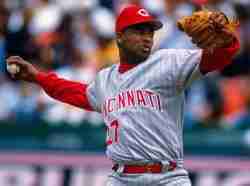
When Jose Rijo arrived in 1988, he was a pitcher looking to harness elite raw tools, but he quickly matured into a tactical ace who thrived under the brightest lights. Though surprisingly only recognized as an All-Star once, his efficiency was undeniable. He was a perennial fixture at the top of the leaderboards, finishing in the top five in ERA four times during his stay. He arrived as a hard-thrower and evolved into an efficiency machine, leading the National League in WHIP in 1991 and in strikeouts and overall bWAR for pitchers in 1993. The absolute pinnacle of his career,…
