
 Not in Hall of Fame News
The Baseball Hall of Fame announced their Modern Era Ballot, which included…
 Not in Hall of Fame News
2004 PRELIMINARY RESULTS: Thank you to all who participated in the Pro…
 Not in Hall of Fame News
Yes, we know that this is taking a while! As many of…
 Not in Hall of Fame News
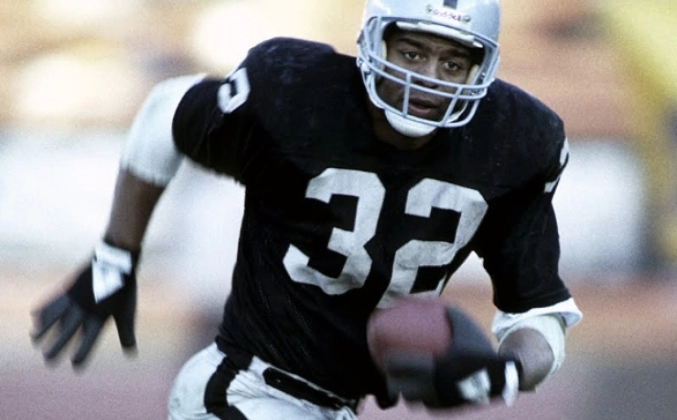
2003 Pro Football Hall of Fame Revisited Project Class. Here we are! …
 Not in Hall of Fame News
We are bringing it back! In previous years, we ran the Notinhalloffame…
 Not in Hall of Fame News
Yesterday, the Pro Football Hall of Fame announced the five contributor finalists…
 From the Desk of the Chairman
A club archive can preserve extraordinary achievements. It can also remind us…
 From the Desk of the Chairman
Three-part welcome package up to AU$3,000. Crypto withdrawals in under two hours.…
 From the Desk of the Chairman
Landed on BS96 Casino for the first time and the welcome package…
 From the Desk of the Chairman
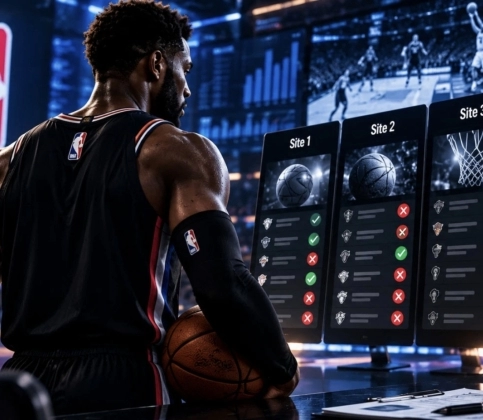
For anyone comparing NBA prediction sites, the most revealing page may not…
 From the Desk of the Chairman
October offers NHL fans an irresistible mixture of excitement and uncertainty. Fast…
 From the Desk of the Chairman
Almost everyone has imagined it at least once: a packed stadium chanting…


100 Active Potential Football Hall of Famers
-
 #26 Overall, George Kittle, San Francisco 49ers, #2 Tight End2025 Pre-Season Rank #34, 2024 Pre-Season Rank #42, 2023 Pre-Season Rank #59, 2022 Pre-Season Rank #74, 2021 Pre-Season Rank #86, 2020 Pre-Season Rank…in Tight Ends
-
 #30 Overall, Fred Warner, San Francisco 49ers Linebacker, #2 Defensive Lineman/Linebacker: Interior Lineman2025 Pre-Season Ranking #22, 2024 Pre-Season Rank #49, 2023 Pre-Season Rank #79, 2022 Pre-Season Rank #118, 2021 Pre-Season Rank #142. Peak Period: 2020-24…
-
 #25 Overall, Tyreek Hill, Free Agent, #3 Wide Receiver2025 Pre-Season Rank #18, 2024 Pre-Season Rank #8, 2023 Pre-Season Rank #28, 2022 Pre-Season Rank #35, 2021 Pre-Season Rank #53. Peak Period: 2019-23…
-
 #14 Overall, Calais Campbell, Baltimore Ravens, Defensive End, #6 Defensive Lineman/Linebacker: Pass Rusher2025 Pre-Seasn Rank #14, 2024 Pre-Season Rank #19, 2023 Pre-Season Rank #19, 2022 Pre-Season Rank #26 2021 Pre-Season Rank #28, 2020 Pre-Season Rank…
Visit the Fictitious Halls of Fame!


You May Also Like...
EDITOR’S CHOICE

 DDT's Pop Flies
When the veterans committee (VC), officially convening as the Contemporary Baseball Era…


 Live Music Head
Project/Objectan interview with André Cholmondeleyby Live Music HeadOriginally published at timessquare.com on…

LATEST RANKINGS




MOST POPULAR RANKINGS


The Baseball Hall of Fame announced their Modern Era Ballot, which included 13 holdovers and 14 first-timers. Over 400 Baseball Writers’ Association of America members will vote on this group, and any candidate who receives more than 75% of the vote will be inducted. A candidate who fails to reach 5% will be removed. The writers can vote for up to ten candidates.
The voters must return their ballots by December 31. The announcement will take place on the MLB Network on January 19.
The 13 returning candidates are:
Bobby Abreu: (8th year on the ballot, 30.8% last year). HOU 1996-97, PHI 1998-2006, NYY 2006-08, LAA 2008-12, LAD 2012 & NYM 2014.
Ahead of his time as an on-base and power-speed machine, Abreu compiled a statistical profile that looks stronger every year through modern analytics. In his 18 seasons—highlighted by nine stellar years in Philadelphia—the two-time All-Star posted a .291/.395/.475 slash line, 2,470 hits, 288 home runs, 400 stolen bases, and 1,476 walks, making him one of only a handful of players in MLB history to reach 250 homers and 400 steals. Despite lacking gaudy award hardware, his 60.2 bWAR and elite plate discipline have fueled steady upward momentum on the ballot.
Amazingly, he barely escaped his first ballot (5.5% in 2020), and without his significant jump last year from 19.5% to 30%, it would have been nearly impossible to envision a path. On this ballot, he should enjoy a double-digit jump, and he will have to, as he only has three years left.
Mark Buehrle (7th year on the ballot, 20% last year). CHW 2000-11, MIA 2012 & TOR 2013-15.
Working at a brisk tempo with pinpoint command rather than overpowering velocity, Buehrle was a model of consistency over 16 seasons with the White Sox, Marlins, and Blue Jays. The five-time All-Star and four-time Gold Glove winner logged at least 200 innings in 14 consecutive campaigns, threw both a no-hitter (2007) and a perfect game (2009), and played a vital role on Chicago's 2005 World Series championship team. Finishing with a 214–160 record, a 3.81 ERA, and 59.0 bWAR, he remains a favorite among voters who prize durability and run prevention.
The problem is that not many voters have come to that conclusion, as he finally made it to an even 20% on last year’s ballot. There is still a lot of time, and arguably there are no new pitchers on the ballot who should leapfrog him. A climb to 30% is not off the table for Buehrle.
Cole Hamels (2nd year on the ballot, 23.8 % last year). PHI 2006-14, TEX 2015-18, CHC 2018-19 & ATL 2020.
One of the premier left-handers of his era, Hamels combined a devastating changeup with big-game poise across 15 seasons with the Phillies, Rangers, Cubs, and Braves. He earned four All-Star selections, won both NLCS and World Series MVP honors during Philadelphia's 2008 championship run, and threw a no-hitter against the Cubs in 2015. Retiring with a 163–122 record, a 3.43 ERA (123 ERA+), 2,560 strikeouts, and 59.0 bWAR, Hamels debuted solidly on the 2026 ballot and enters his second year poised to build support.
Hamels had a good ballot debut with 23.8%, and that 2008 World Series performance still resonates. While he never won the Cy Young, he finished in the top ten four times and boasts 2,560 strikeouts. Many of the voters who will select Buehrle will likely do the same for Hamels, and if we are right about Buehrle, Hamels should break 30% this year.
Felix Hernandez (3rd year on the ballot, 46.1% last year). SEA 2005-19.
"King Félix" dominated the American League during a dazzling decade in Seattle, earning six All-Star selections, winning the 2010 AL Cy Young Award, and throwing the 23rd perfect game in major league history in 2012. Though injuries rapidly eroded his effectiveness in his early thirties and prevented him from reaching traditional counting milestones—finishing 169–136 with a 3.42 ERA, 2,524 strikeouts, and 49.8 bWAR—his peak brilliance and iconic status in Seattle have driven a rapid surge in voter support.
If this were ten years ago, Hernandez would not have made the first ballot, which would have been criminal. As it stands now, the sabermetrics show off the phenomenal seasons that traditional wins never could. King Felix jumped 26 percent last time, and in year three, he could do it again. Entering the Hall in year three is on the table.
Torri Hunter (6th year on the ballot, 8.7% last year). MIN 1997-2006, LAA 2008-12, DET 2013-14 & MIN 2015.
A dynamic center fielder renowned for robbing home runs at the wall, Hunter won nine consecutive Gold Gloves from 2001 through 2009 while anchoring the Minnesota Twins, Los Angeles Angels, and Detroit Tigers. Beyond his highlight-reel defense, he was a five-time All-Star and two-time Silver Slugger who amassed 2,452 hits, 353 home runs, 1,391 RBIs, and 195 stolen bases over 19 seasons. Hunter has consistently cleared the five-percent threshold to remain on the ballot, though his support has hovered in the single digits.
Hunter was one of the most electric players we ever saw, but that isn’t the main attribute Cooperstown looks for. He has been treading water and has yet to break 10%, and his highest vote total was in year one (9.5%). Hunter will survive again, but likely won’t gain much.
Dustin Pedroia (2nd year on the ballot, 20.7% last year) BOS 2006-19.
A fiery, undersized second baseman who maximized every ounce of talent, Pedroia spent his entire 14-year career with the Boston Red Sox, winning the 2007 AL Rookie of the Year Award and the 2008 AL MVP Award. The four-time All-Star and four-time Gold Glove winner helped Boston capture World Series titles in 2007 and 2013 while batting .299 with 1,805 hits and 51.8 bWAR. Although a severe knee injury effectively ended his career after age 33, his high peak and two-way excellence have earned him a steady foothold on the ballot.
Pedroia may not have the overall statistics of a Hall of Fame infielder, but he does have the HOF story and HOF heart. He has an excellent opportunity to see a significant jump.
Andy Pettitte (9th year on the ballot, 48.5% last year) NYY 1995-2003, HOU 2004-06, NYY 2007-10 & 2012-13.
Entering his penultimate year of BBWAA eligibility, Pettitte pairs a 256–153 regular-season record, 2,448 strikeouts, and 60.2 bWAR with an unmatched postseason legacy. Over 18 seasons with the New York Yankees and Houston Astros, the three-time All-Star left-hander won five World Series rings and set all-time major league playoff records for wins (19), starts (44), and innings pitched (276 2/3). While his admission of past HGH use slowed his early candidacy, his support has climbed steadily toward the 50-percent mark as his final ballots approach.
He was in the teens in voting from 2020 to 2024, then shockingly jumped to 27.9% in 2025, and then even more shockingly rocketed to near 50% last year. Is he forgiven, and does he have another jump in him in 2027?
Alex Rodriguez (6th year on the ballot, 40% last year) SEA 1994-2000, TEX 2001-03 & NYY 2004-16.
By purely on-field metrics, Rodriguez owns one of the greatest resumes in baseball history: 696 home runs, 3,115 hits, 2,086 RBIs, a .295/.380/.550 slash line, three AL MVP awards, 14 All-Star nods, two Gold Gloves at shortstop, a 2009 World Series title, and 117.4 bWAR. However, his repeated links to performance-enhancing drugs—culminating in a season-long suspension for the entire 2014 campaign—have kept his Hall of Fame vote share stalled around 40 percent through five appearances on the ballot.
This is the trick with A-Rod; he was popped for PEDs AFTER the union, and MLB agreed on suspensions for its use. While there are suspected PED users in the Hall, none of them ever tested positive in that time frame like Rodriguez. While he did reach 40% for the first time last year, he started at 34.3%, which doesn’t suggest many voters have changed their minds about his candidacy. They likely won’t this year either.
Francisco Rodriguez (5th year on the ballot, 11.8% last year) ANA/LAA 2002-08, NYM 2009-11, MIL 2011-13, BAL 2013, MIL 2014-15 & DET 2016-17.
Nicknamed "K-Rod," Rodríguez burst onto the national stage as a 20-year-old reliever during the Anaheim Angels' 2002 World Series championship run and became one of the most prolific closers of the 21st century. In 2008, he shattered the single-season major league record with 62 saves, part of a 16-year career that produced 437 saves (sixth all-time), six All-Star selections, a 2.86 ERA, and 1,142 strikeouts in 976 innings.
Despite his elite save totals and strikeout rate, he has remained in the low teens among Cooperstown voters, though his numbers are similar to Billy Wagner's. That said, Rodriguez’ numbers blow all other relievers away on this ballot, and he has an outside shot at exceeding 20% on the next vote.
Jimmy Rollins (6th year on the ballot, 25.4% last year) PHI 2000-14, LAD 2015 & CHW 2016.
The sparkplug of Philadelphia's golden era, Rollins combined power, speed, and Gold Glove defense at shortstop across 17 seasons, spending 15 of them with the Phillies. He won the 2007 NL MVP Award after becoming just the fourth player in MLB history to record 20 doubles, 20 triples, 20 home runs, and 20 stolen bases in a single season, and he led Philadelphia to a World Series title in 2008. Retiring with 2,455 hits, 231 home runs, 470 stolen bases, and four Gold Gloves, Rollins has built gradual support into the mid-20s.
Rollins had a nice jump last year (18.0 to 25.4) and will have to do that again to make a serious push.
Chase Utley (3rd year on the Ballot, 59.1% last year) PHI 2003-15 & LAD 2015-18.
The frontrunner among returning candidates after clearing 59 percent on the 2026 ballot, Utley defined hard-nosed, all-around excellence at second base for the Philadelphia Phillies and Los Angeles Dodgers. From 2005 through 2014, few players in baseball matched his combination of power, plate discipline, elite baserunning, and defensive range, earning him six All-Star selections, four Silver Sluggers, and a 2008 World Series ring. Although injuries limited his late-career counting totals to 1,885 hits and 259 homers, his 64.6 bWAR and 49.3 seven-year peak WAR align squarely with Hall of Fame standards.
While his numbers seem HOF-worthy based on bWAR, Utley’s path to Cooperstown has been remarkably quick thus far. This is not a shot at Utley, but the ballots haven’t been loaded while Utley has been on them. As the highest returnee, Utley should be able to enter the Hall in January. How is Lou Whitaker not in again?
Omar Vizquel (10th year on the ballot, 18.4% last year) SEA 1989-93, CLE 1994-2004, SFG 2005-08, TEX 2009, CHW 2010-11 & TOR 2012.
Making his tenth and final appearance on the BBWAA ballot, Vizquel built his candidacy on legendary defensive longevity at shortstop across 24 major league seasons. He won 11 Gold Gloves, collected 2,877 hits, stole 404 bases, and set all-time records for games played (2,709) and double plays turned at shortstop. After climbing past 52 percent of the vote earlier in his ballot run, Vizquel’s support plummeted into the teens following serious off-field domestic abuse and sexual harassment allegations, making his final ballot largely symbolic.
Vizquel’s fall from the ballot is the most dramatic in Baseball Hall history, and there is no chance that he appears on a senior ballot. None.
David Wright (3rd year on the ballot, 14.8% last year) NYM 2004-18
"Captain America" spent his entire 14-year career with the New York Mets, becoming the franchise's all-time position-player leader in hits (1,777), doubles (390), RBIs (970), runs (949), walks (762), and bWAR (49.2). Between 2005 and 2013, Wright was one of the National League’s premier third basemen, earning seven All-Star selections, two Gold Gloves, and two Silver Sluggers while posting a .296/.376/.491 career slash line. Spinal stenosis tragically cut short his prime after age 30, leaving voters to weigh a brilliant decade-long peak against truncated career totals.
Wright is another on the ballot who is a “lifer” who is beloved in his home base and respected universally, but without some serious hardware, it will be hard to make a huge jump, though this ballot helps him. If he can get to 20% on this vote, a climb to Cooperstown is possible, especially if most voters max out their ballot.
The 14 first-time candidates are:
Jake Arieta, BAL 2010-13, CHC 2013-17, PHI 2018-20, CHC 2021 & SDP 2021.
Arrieta authored one of the most remarkable mid-career turnarounds in modern pitching history. After struggling early in his career with the Baltimore Orioles, he emerged as an ace upon joining the Chicago Cubs. During a four-year peak from 2014 through 2017, he won the 2015 National League Cy Young Award with a 22–6 record and a 1.77 ERA, recorded two no-hitters, and anchored Chicago’s historic 2016 World Series championship rotation. Injuries and declining velocity later curtailed his effectiveness with Philadelphia and San Diego. He concluded his career with a 115–93 record, a 3.98 ERA, and 1,433 strikeouts across 12 major league seasons.
A forever legend in Wrigley? Absolutely! Hall of Fame worthy? Unlikely, but we expect him to get a handful of votes.
Jay Bruce, CIN 2008-16, NYM 2016-17, CLE 2017, NYM 2016, SEA 2019, PHI 2019-22 & NYY 2021.
Bruce provided reliable left-handed power over 14 major league seasons, primarily patrolling right field for the Cincinnati Reds before late-career stops with the Mets, Indians, Mariners, Phillies, and Yankees. A three-time All-Star and two-time Silver Slugger winner, he belted 319 career home runs, cleared the 20-homer mark 10 times, and topped 30 home runs in four separate campaigns while driving in 981 runs. Beyond his pull-side thunder, Bruce was a steady, durable defender who regularly ranked among National League leaders in outfield assists and putouts.
Bruce, a member of the 300-Home Run club who finished 10th in MVP voting twice, will be fortunate to receive at least five votes.
Asdrubal Cabrera, CLE 2007-14, WSN 2014, TBR 2015, NYM 2016-18, PHI 2019, TEX 2019, WSN 2019-20, ARI 2021 & CIN 2021.
A switch-hitting middle infielder known for smooth defensive actions—including an unassisted triple play in 2008—Cabrera enjoyed a productive 15-year career spanning nine franchises, highlighted by eight seasons in Cleveland. He earned consecutive American League All-Star nods in 2011 and 2012 and won a Silver Slugger in 2011 after setting a Cleveland shortstop record with 25 home runs. Later in his career, he transitioned seamlessly around the infield, played a key role in the Washington Nationals' 2019 World Series title run, and retired with 1,763 hits, 195 home runs, and a .266 batting average.
Cabrera had a nice career, with decent numbers, but unless he gets support from the Cleveland contingent, he is likely to get shut out.
Starlin Castro, CHC 2010-15, NYY 2016-17, MIA 2018-19 & WSN 2020-21.
Castro burst onto the scene in 2010 as a 20-year-old phenom for the Chicago Cubs, collecting 207 hits in his first full season to become the youngest player ever to lead the National League in hits. Across 12 seasons with the Cubs, Yankees, Marlins, and Nationals, he earned four All-Star selections and established himself as an aggressive, high-contact line-drive hitter at both shortstop and second base. Castro finished his career with 1,722 hits, 138 home runs, and a .280 batting average, though off-field legal issues and a suspension under MLB's domestic violence policy brought an abrupt end to his playing days in 2021.
That last sentence could be enough to prevent him from getting a vote, but he was a fringe candidate at best anyway.
Wade Davis, TBR 2009-12, KCR 2013-16, CHC 2017, COL 2018-20 & KCR 2021.
Originally a mid-rotation starter for Tampa Bay, Davis reinvented himself in Kansas City into one of the most untouchable relief weapons of the 2010s. As the anchor of the Royals' famed late-inning bullpen trio, he posted an astonishing 0.97 ERA over 140 regular-season innings from 2014 to 2015, finished in the top eight of AL Cy Young voting both years, and closed out Kansas City's 2015 World Series triumph. Davis earned three straight All-Star selections, led the National League with 43 saves for Colorado in 2018, and compiled a 1.80 ERA across 30 postseason appearances.
Does Davis’ heroics in Kansas City earn him a few votes? That is likely the best he can hope for.
Brett Gardner, NYY 2008-21.
Spending his entire 14-year career in pinstripes, Gardner embodied speed, patience, and rugged outfield defense for the New York Yankees from 2008 through 2021. A member of the 2009 World Series championship squad, he won a Gold Glove in left field in 2016, earned an All-Star nod in 2015, and led the American League in stolen bases (49 in 2011) and triples (10 in 2013). While rarely the loudest bat in New York's lineup, Gardner’s plate discipline, baserunning instincts, and durability generated 44.3 career bWAR—quietly outpacing several higher-profile contemporaries on the ballot.
Somehow, Gardner will get honored in New York, but for the Baseball Hall of Fame? He was productive, had his moments, but he stayed with one team (the biggest one) for 14 years. Could he get to five percent of the ballot? If he had the same career, but was a journeyman with more than four teams, there is no way he would.
Jon Lester, BOS 2006-13, OAK 2014, CHC 2015-20, WSH 2021 & STL 2021.
Lester combined big-game resilience with workhorse durability over 16 seasons with Boston, Oakland, Chicago, Washington, and St. Louis, finishing with a 200–117 record, a 3.66 ERA, and 2,488 strikeouts. After overcoming non-Hodgkin's lymphoma as a rookie in 2006, the five-time All-Star left-hander threw a no-hitter in 2008 and became the centerpiece of three World Series champions—winning twice with the Red Sox (2007, 2013) and helping end the Cubs' 108-year drought in 2016. His 2.51 ERA across 26 postseason appearances cemented his reputation as one of his generation's premier October starters.
Based on the pitchers we are seeing on the ballot, Lester’s chances are better than they would have been in any era, and he is in the right place at the right time. 200 wins and three World Series wins, especially considering he was the MVP of Chicago’s 2016 revival (and the other two titles were in Boston), and you could see him get over 20% in a debut. Again, right place, right time.
Andrew Miller, DET 2006-07, FLA 2008-10, BOS 2011-14, NYY 2015-16, CLE 2016-18 & STL 2019-21.
After struggling for years as a highly touted starting pitcher, Miller unlocked elite dominance once he moved permanently to the bullpen, riding a wipeout slider to become a quintessential multi-inning "fireman." He won the 2015 Mariano Rivera AL Reliever of the Year Award with the Yankees after saving 36 games with a 2.04 ERA, then revolutionized postseason bullpen usage with Cleveland in 2016, capturing ALCS MVP honors by striking out 30 batters in 19 1/3 playoff innings. Across 16 seasons, the two-time All-Star struck out 979 batters in 829 innings.
Miller had a nice career as a pitcher, but he was lucky to make the cut to reach this stage.
Buster Posey, SF 2009-21.
The clear headliner among the first-year candidates, Posey packed a Hall of Fame resume into 12 seasons spent entirely with the San Francisco Giants. The 2010 NL Rookie of the Year and 2012 NL MVP captured a batting title, seven All-Star selections, five Silver Sluggers, and a Gold Glove while posting a .302 career batting average, 1,500 hits, and 158 home runs. Just as vital was his mastery behind the plate—handling pitching staffs, framing pitches, and leading San Francisco to three World Series championships in 2010, 2012, and 2014—before retiring in 2021 at the top of his game.
As the undisputed top dog among the first-year eligibles, we wouldn’t be surprised if he vaults into the top spot for most voters. Posey could enter immediately, though let’s be honest, would this have happened in previous ballots? Doubtful, but the only reason that some voters may not check his box is if they don’t think he should be first ballot. This could finish anywhere from 55 to 85%.
Pablo Sandoval, SFG 2008-14, BOS 2015-17, SFG 2017-20 & ATL 2020-21.
Affectionately known as "Kung Fu Panda," Sandoval captivated San Francisco with his free-swinging bat-to-ball skills and agility at third base during three World Series title runs. While his regular-season career included two All-Star selections, a .278 batting average, and 153 home runs, Sandoval built his legend on baseball’s biggest stage, hitting .344 across 39 postseason games. He earned 2012 World Series MVP honors after blasting three home runs in Game 1 against Detroit and delivered clutch hits throughout the Giants' 2014 championship march before injuries and conditioning struggles derailed his tenure in Boston.
If this were a Hall of Fame of popularity in the Bay Area, then no question. It isn’t, so he will be one and done, with a vote or two.
Ervin Santana, LAA 2005-12, KCR 2013, ATL 2014, MIN 2015-18, CHW 2019 & KCR 2021.
Santana gave six franchises—most notably the Los Angeles Angels and Minnesota Twins—steady, inning-eating reliability across 16 major league seasons. A two-time All-Star who threw a no-hitter against Cleveland in July 2011, the right-hander topped 200 innings six times and finished his career with 151 victories, 1,978 strikeouts, and a 4.11 ERA over 2,486 2/3 innings. Though he lacked the peak dominance of Cooperstown aces, Santana's durability made him one of the American League's most dependable workhorses throughout the late 2000s and 2010s.
There is no doubt Santana had a very good career, but the numbers and moments aren’t there. One vote, maybe?
Kyle Seager, SEA 2011-21.
A fixture at the hot corner for the Seattle Mariners from 2011 through 2021, Seager quietly assembled one of the most productive careers in franchise history. He reached at least 20 home runs in every full season from 2012 through 2021, capping his career with a personal-best 35 homers and 101 RBIs in his final campaign. Earning an All-Star selection and a Gold Glove in 2014, Seager retired with 242 home runs, 1,395 hits, 807 RBIs, and 37.0 bWAR—ranking among Seattle’s all-time leaders in nearly every major offensive category.
Seager will eventually enter the Mariners Hall of Fame (and he should), but five votes on this ballot could be a ceiling.
Joakim Soria, KCR 2007-11, TEX 2013-14, DET 2014-15, PIT 2015, KCR 2016-17, CHW 2018, MIL 2018, OAK 2019-20, ARI 2021 & TOR 2021.
Nicknamed "The Mexicutioner," Soria established himself as one of baseball's premier closers early in his career with the Kansas City Royals, saving 160 games with a 2.40 ERA between 2007 and 2011. Following his second Tommy John surgery, the right-hander reinvented himself as a reliable late-inning setup man and spot closer across stints with eight additional clubs. A two-time All-Star who finished in the top 10 of AL Cy Young voting in 2010, Soria retired after 14 seasons with 229 career saves, a 3.11 ERA, and 831 strikeouts across 773 appearances.
Soria is another player who will likely make a franchise Hall of Fame (in this case, Kansas City), but anything more than two votes here will be a stretch.
Ryan Zimmerman, WSN 2005-21.
Known forever as "Mr. National," Zimmerman was the first draft pick in Washington Nationals history after the franchise relocated from Montreal and remained the face of the organization for 16 seasons. A two-time All-Star who won both a Gold Glove and a Silver Slugger at third base in 2009 before transitioning to first base, he ranks as Washington’s all-time leader in games, hits (1,846), home runs (284), and RBIs (1,061). Famous for his flair for the dramatic—including 11 career walk-off homers—Zimmerman capped his one-team career by helping deliver Washington its first World Series championship in 2019.
Zimmerman is an intriguing candidate, as he played his entire career with one franchise, won a World Series, but was never a superstar. A Hall of Very Good player? Sure, but he is likely to get maybe two to three percent here, though the weak ballot could somehow edge him through if a large number of votes max out.
The following played ten seasons to qualify but did not make the ballot:
Alex Avila, one-time All-Star and one-time Silver Slugger.
John Axford, one-time Reliever of the Year with 144 saves.
Trevor Bauer, one-time Cy Young winner with 1,416 strikeouts.
Dellin Betances, four-time All-Star with 36 saves.
Neftali Feliz, one-time All-Star with 107 saves.
Dexter Fowler, one-time World Series winner and one-time All-Star.
Todd Frazier, two-time All-Star.
J.A.Happ, one-time World Series winner, one-time All-Star with 133 wins and 1,661 strikeouts.
Will Harris, one-time World Series winner and one-time All-Star
Derek Holland, 1,241 strikeouts.
Jon Jay, one-time World Series winner.
Scott Kazmir, three-time All-Star with 1,618 strikeouts.
Jonathan Lucroy, two-time All-Star.
Wilson Ramos, two-time All-Star and one-time Silver Slugger.
Josh Reddick, one-time World Series winner and one-time Gold Glove.
Tony Watson, one-time All-Star with 32 saves.
Jordan Zimmerman, two-time All-Star with 1,281 strikeouts.
We here at notinhalloffame.com would like to congratulate those who made this ballot.
- baseball hall of fame
- Omar Vizquel
- buster posey
- ryan zimmerman
- joakim soria
- kyle seager
- andy pettitte
- alex rodriguez
- francisco rodriguez
- chase utley
- ervin santana
- pablo sandoval
- jon lester
- andrew miller
- david wright
- torii hunter
- brett gardner
- wade davis
- starlin castro
- asdrubal cabrera
- jay bruce
- jake arrieta
- jimmy rollins
- dustin pedroia
- cole hamels
- felix hernandez
- bobby abreu
- mark buehrle
