

 Not in Hall of Fame News
Yes, we know that this is taking a while! As many of…
 Not in Hall of Fame News
Yes, we know that this is taking a while! As many of…
 Not in Hall of Fame News
2002 SEMI-FINAL RESULTS: Thank you for your participation in the Pro Football…
 Not in Hall of Fame News
Yes, we know that this is taking a while! As many of…
 Not in Hall of Fame News
We are diligently working away at Notinhalloffame on revising our Football lists…
 Not in Hall of Fame News
We are diligently working away at Notinhalloffame on revising our Football lists…
 From the Desk of the Chairman
October baseball often turns individual pitching performances into lasting postseason memories. Strikeout…
 From the Desk of the Chairman
For decades, the sports debate ran on gut feeling. Barstool arguments, call-in…
 From the Desk of the Chairman
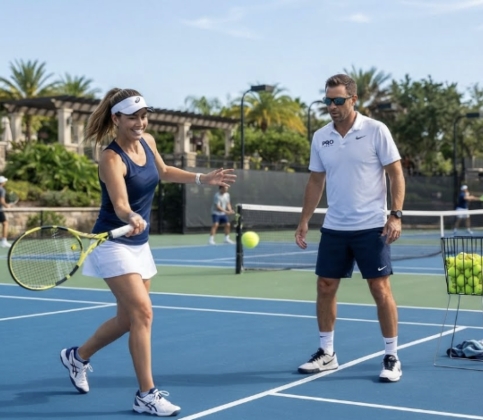
Introduction to Private Adult Tennis Camps in Prague Adult club players increasingly…
 From the Desk of the Chairman
Unlike in the case of pre-match betting, where you have to pick…
 From the Desk of the Chairman
Kupu178 builds trust with people by using top-end end-to-end encryption. It checks…
 From the Desk of the Chairman
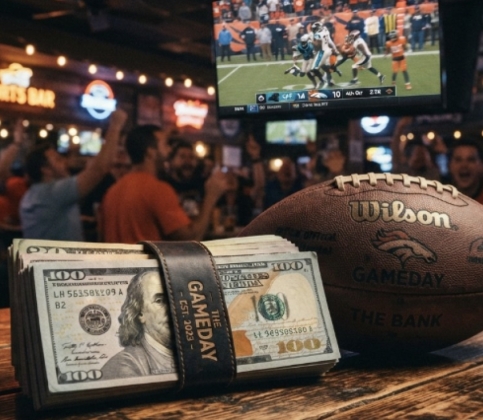
Sports fans thrive on calculating strategy, reading momentum, and maximizing every tactical…

100 Active Potential Football Hall of Famers
-
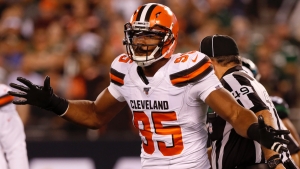 #7 Overall, Myles Garrett, Los Angeles Rams, Defensive End, #2 Defensive Lineman/Linebackers: Pass Rushers2025 Pre-Season Rank #9, 2024 Pre-Season Rank #17, 2023 Pre-Season Rank #34, 2022 Pre-Season Rank #53, 2021 Pre-Season Rank #99, 2020 Pre-Season Rank…
 -
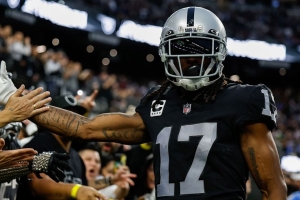 #21 Overall, Davante Adams, Los Angeles Rams, #2 Wide Receiver2025 Pre-Season Rank #23, 2024 Pre-Season Rank #27, 2023 Pre-Season Rank #24, 2022 Pre-Season Rank #43, 2021 Pre-Season Rank #67, 2020 Pre-Season Rank…
 -
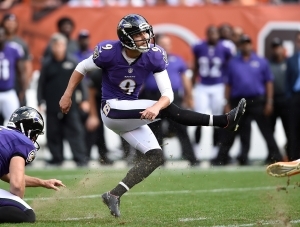 #36 Overall, Justin Tucker: Free Agent, Place Kicker, #1 Kickers & Special Teams2025 Pre-Season Rank #29, 2024 Pre-Season Rank #26, 2023 Pre-Season Rank #22, 2022 Pre-Season Rank #28, 2021 Pre-Season Rank #42, 2020 Pre-Season Rank…
 -
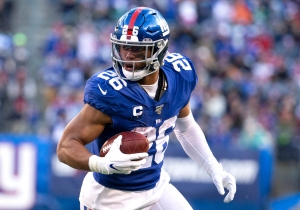 #45 Overall, Saquon Barkley, Philadelphia Eagles, #3 Running Back2025 Pre-Season Rank ##51, 2024 Pre-Season Rank #117, 2023 Pre-Season Rank #122, 2022 Pre-Season Rank #132 2021 Pre-Season Rank #101, 2020 Pre-Season Rank…
Visit the Fictitious Halls of Fame!


You May Also Like...
EDITOR’S CHOICE
 DDT's Pop Flies
When the veterans committee (VC), officially convening as the Contemporary Baseball Era…


 Live Music Head
Project/Objectan interview with André Cholmondeleyby Live Music HeadOriginally published at timessquare.com on…

LATEST RANKINGS



MOST POPULAR RANKINGS










Committee Chairman
19. Phil Nevin
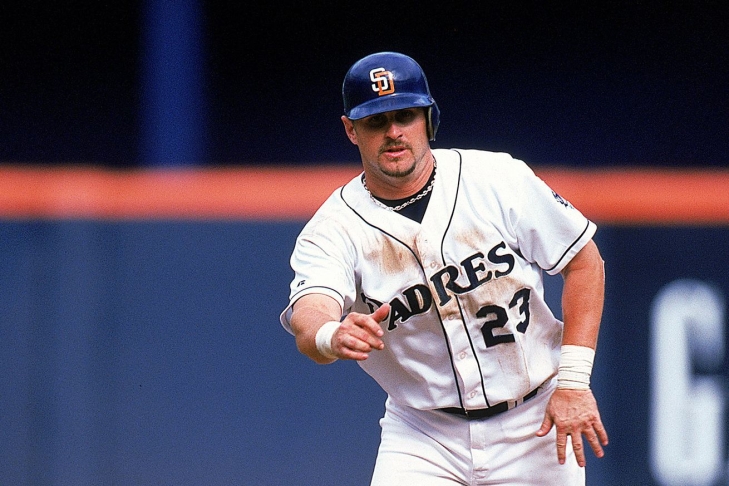
When evaluating the premier contributors to high-intensity offensive strategies at the turn of the century, few athletes in franchise history matched the raw, emotional intensity and multi-positional versatility of Phil Nevin. Selected as the first overall pick in the 1992 amateur draft by the Houston Astros, the former collegiate standout bore a substantial burden of public expectation that initially threatened to impede his career development. The Astros prematurely lost confidence in his progress, transferring him to Detroit in 1995, who subsequently traded him to Anaheim two winters later. Unable to secure a regular starting position at either franchise, his career path appeared perilously close to being labeled a failure until a spring trade in 1999 dispatched the disgruntled infielder to the San Diego Padres, a move that fundamentally transformed his professional trajectory.
He skillfully incorporated his powerful right-handed swing into the middle of the lineup, hitting an impressive 24 home runs in his debut 1999 season. He continued to build on that momentum into 2000, boosting his production with a remarkable 31 home runs and 107 RBIs. That summer also marked his first time hitting over .300, ending the season with a fantastic .303 batting average, solidifying his role as a key leader of the offense.
In 2001, Nevin had the best year of his life. He put on an unadulterated clinic in high-leverage situations, terrorizing National League pitching and establishing career watermarks across the board with 167 hits, 41 home runs, and a spectacular 126 runs batted in. His advanced efficiency filters were entirely unrivaled; he dominated deep counts to forge a magnificent .306/.388/588 slash line, marking his third consecutive summer with a slugging percentage above .500. For his efforts, he finished 21st in MVP voting.
Severe shoulder injuries sidelined him for his next two summers, limiting him to just 166 games in 2002 and 2003. However, showcasing his characteristic grit, Nevin made a remarkable comeback in 2004. He adapted well to Petco Park's large, pitcher-friendly gaps, leading the lineup with 26 home runs, 105 RBIs, and maintaining a solid .289 average over 147 games.
By the middle of the 2005 campaign, however, with the veteran approaching his mid-30s and the small-market organization pivoting toward younger financial structures, the inevitable business exit arrived. The front office traded the veteran slugger to the Texas Rangers in July, drawing a definitive curtain on his time in San Diego. He left the Padres with 156 home runs, 573 RBIs, and a slash line of .288/.359/.503.
5. Fernando Tatis Jr.
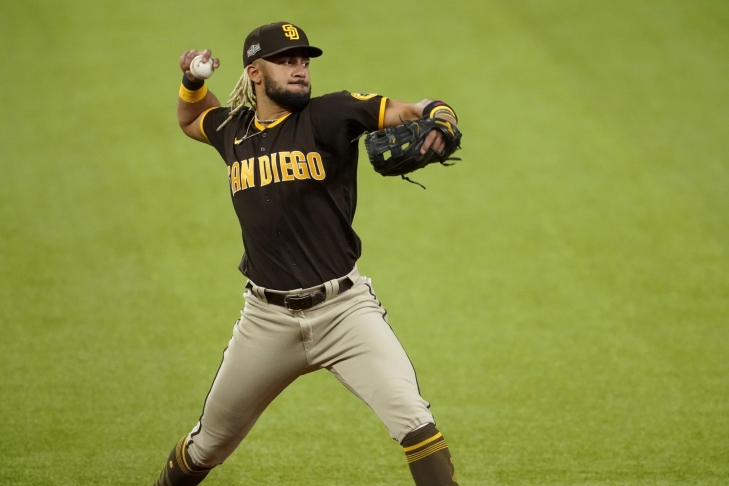
Few baseball archetypes evoke the raw electricity of a true cultural phenom, but Fernando Tatís Jr. has made Southern California his theater. Known as "El Niño," the Dominican superstar doesn't just play baseball; he injects it with swagger that demands attention. Son of 14-year MLB veteran Fernando Tatís, he was originally signed by the White Sox as an amateur free agent in 2015. Before playing an organized game, the White Sox traded him to San Diego in June 2016 for James Shields, a monumental, landscape-shifting deal that will haunt the South Side for decades. With explosive bat-speed and lightning-fast baserunning, Tatís quickly rose through the minors, debuting at 20 and setting the stage for a dramatic career.
His 2019 debut dramatically energized Petco Park, turning regular crowd noise into a nightly highlight of the season. Tatís showcased an outstanding rookie performance, hitting .317 with 22 homers in just 84 games, securing third place in the National League Rookie of the Year voting. Despite the disruptions caused by COVID-19 in 2020, Tatís maintained his high level of play. He became a prominent national figure, hitting .277 with 17 homers in 59 games during the shortened season. His achievements included winning his first Silver Slugger, finishing fourth in MVP voting, and earning a spot on the inaugural All-MLB First Team. He repeated as a Silver Slugger winner, secured another All-MLB First Team honor, and placed third in the NL MVP voting.
Heading into 2022, the sky seemed the limit, but an abrupt, permanent setback changed everything. Tatís suffered a fractured wrist in a winter motorcycle accident, sidelining him for the first half of the season. Just as he was approaching a comeback in August, Major League Baseball suspended him for 80 games due to a performance-enhancing drug violation. These two setbacks resulted in him playing no games in 2022 and abruptly halted his quick rise.
Returning to the active roster in late April 2023 after completing his ban, Tatís encountered significant public scrutiny and doubts about his performance. He responded by mastering positional adaptation, permanently transitioning from shortstop to right field to protect his health and adapt to roster changes. He then delivered an outstanding defensive performance.
What could have been a tough transition turned into a showcase of hardware-backed excellence. Harnessing a powerful arm and exceptional closing speed, Tatís excelled in advanced defensive metrics, recording 29 Defensive Runs Saved and a 2.3 defensive bWAR. Despite being overlooked for the midsummer classic, he posted a .257 batting average, hit 25 home runs, stole 29 bases, and earned both his first Gold Glove and the prestigious Platinum Glove award as the league's top defender.
However, his aggressive playing style faced more challenges during a difficult and injury-prone 2024 season, in which a serious femoral stress reaction in his right leg restricted him to 102 games. Despite this, he hit 21 home runs.
As the 2026 Major League Baseball season approaches, Tatís begins spring training following a highly disciplined and extremely durable 2025 season. That campaign established him as the franchise's key, versatile cornerstone. Demonstrating his long-term endurance, he played a career-high 155 games last summer, transforming his offensive output into a consistent daily presence.
7. Aaron Judge
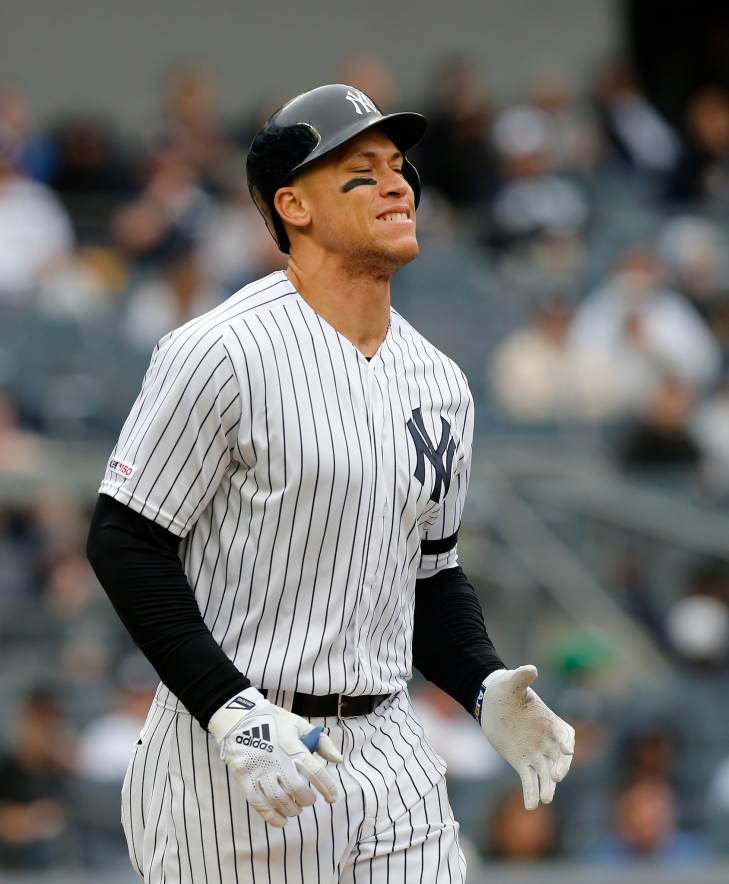
All rise!
Aaron Judge came to the Bronx in August 2016 as a towering, physically imposing outfielder whose commanding presence instantly changed the layout of the field. Although he kept his rookie status into the next spring, he has since been the undisputed focal point and leading offensive force of the team from his first full season.
His early pinstripe career was marked by a stunning 2017 AL Rookie of the Year win that shook Major League Baseball. That summer, Judge made a remarkable debut, breaking records by leading the American League in home runs (52), runs(128), and walks (127), earning a Silver Slugger and finishing as MVP runner-up. He proved this was no fluke by hitting 27 homers in 2018 and 2019, demonstrating strong power despite physical setbacks that limited his playing time.
Once fully healthy, Judge secured legendary, lasting greatness by leading a historic era of dominance that transformed the modern game. In 2022, he carried the franchise alone, earning his first AL MVP after hitting a spectacular 62 home runs, an American League record that broke Roger Maris’s 61-year-old mark. He maintained this extraordinary level of performance over the following two years, peaking in a remarkable 2024 season that helped the Yankees win their first American League pennant in 15 years. That summer, he won his second MVP, leading the league with 58 home runs and 144 RBIs, while achieving career-best on-base percentage (.458) and slugging (.701).
Any worries that Judge might have a typical hangover after his intense October 2024 run were completely eliminated during an extraordinary 2025 season. At the peak of his individual performance, he overcame a mid-season flexor strain to win his first Major League Batting Title with an impressive .331 average, making him the tallest batting champion in history. He combined this hitting precision with incredible power, smashing 53 home runs and driving in 114 runs, while leading the majors in on-base percentage (.457), slugging (.688), and posting a remarkable 1.145 OPS. His historic regular season earned him the 2025 American League MVP award, his second in a row and third overall in his career.
Judge continues to ascend the ranks of the sport’s greatest, possibly ranking among the top five Yankees of all time. Aaron Judge's greatness truly stands out.
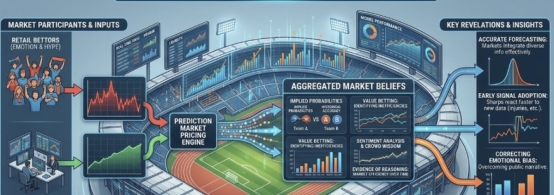
Online Sports Betting Sites: Are Their Prices Inelastic?

Many online sportsbooks in the U.S. today are marketing to recreational bettors. Offers like welcome bonuses and loyalty rewards may entice more people to consider betting online.
This strategy appears to be aimed at increasing the sportsbooks’ customer base. These offers may also affect the customers’ decision-making and betting behavior more than the pricing can.
With its legalization in the U.S. in 2018, sports betting has become more accessible to more people. Furthermore, the recent COVID-19 pandemic has driven more people to stay at home and spend more time and money on online betting.
In 2020, sports betting generated a $1 billion revenue in the U.S. At the beginning of 2021, 23.2 million Americans expressed interest in betting $4.3 billion on the Super Bowl alone, and 7.6 million people said they would bet online.
With this current landscape, online gambling may be expected to grow into a $100 billion industry by 2026.
As more sports betting sites appear, the need to offer competitive prices to bettors becomes paramount. In this case, will adjusting prices be enough to increase the demand for online betting?
This article discusses price elasticity in sports betting and the factors that affect sports betting demand in the U.S.
Price Elasticity in Online Sports Betting
Theoretically, if online sports betting prices were elastic, demand should change significantly with only a slight price change.
For example, a slight reduction in a bookmaker’s vig can narrow their profit margin. However, that reduction may significantly increase the number of bets. In this case, the bookmaker’s prices may be relatively elastic.
However, are price changes sufficient to significantly change the demand for sports betting in real-world scenarios? Put another way, do price changes even matter when sportsbooks try to market their products?
Below are some factors that can influence bettors’ preferences when it comes to online sports betting.
Factors Affecting Sports Betting Demand in the U.S.
Price
Historically, Las Vegas and U.S.-facing offshore sportsbooks significantly influenced how line prices were set.
Nowadays, because of U.S. market regulations, operators and sportsbook suppliers in large states are now playing a role in providing competitive prices.
In addition, the regulations ensure that the operators are pricing their lines competitively.
A sportsbook with a high price elasticity should experience a high surge in demand with just a slight reduction to its vig. Alternatively, bettors may shy away from the sportsbook if it were to increase its house take.
However, that scenario is only theoretical, and pricing is not the only factor influencing demand for online sports betting.
Brand Association
Bettors also look into an online sportsbook’s brand reputation and association. Most legally operating sportsbooks have partnerships with physical and online casinos, big sports betting brands, or other gambling entities that give the sportsbook more credibility.
This credibility is likely to increase the sportsbook’s value and make bettors trust the sportsbook more. This trust may influence the bettor’s behavior in favor of the sportsbook, dictated not only by the price but also by the brand.
For example, partnerships with major sports leagues mean the sportsbook is reliable enough to be recognized by those leagues.
Other betting sites may receive backing from big brands. If bettors prefer those brands, the sponsorship may increase the chances of the bettor favoring the sportsbook.
On-Par Product and Experience Delivery
Competitive pricing and reputable brand association may not be enough to influence demand. Bettors may also ask for products and services of equal or higher value to the sportsbooks’ prices.
One way for this strategy to work is to ensure that bettors experience the convenience worth their money. This way, pricing may matter less as long as the bettor experiences quality service.
For example, the bookmaker’s online platform must be user-friendly and navigable. Sportsbooks may also provide welcome bonuses and rewards for bettors to maximize their deposits.
If the sportsbook has a mobile app, that feature may be considered a plus for accessibility. Mobile apps allow bettors to place bets, even when traveling or watching a live game in a stadium.
Additional payment options other than credit cards can also favor both the bookmaker and the customer.
More options to fund betting accounts, like online payment gateways, provide more convenience to bettors, increasing customer demand for the bookmaker’s services.
Other features that can add to a sportsbook’s ability to deliver quality services include moderating a bettor’s gambling habits and protecting their personal information.
Bettors must know that their private data is safe or that the sportsbook cares enough to help them curb developing gambling problems. These efforts may help them associate a positive experience with the sportsbook.
Bookmakers can further improve customer experience if they have a connection with advocacy groups promoting responsible gambling. This connection shows that the sportsbook encourages bettors to have a healthy gambling lifestyle.
Legal vs. Offshore Operators
The issue between offshore and U.S.-based legal sportsbook operators is that the U.S. sportsbooks are regulated while the offshore ones are not. This situation puts the U.S. sportsbooks in a challenging position against their offshore counterparts.
U.S. operators may think of offering products and services at par with the offshore operators to remain competitive. However, bettors may see no incentive to prefer U.S. sportsbooks if this were the case.
Instead, U.S. operators need to offer better products and services than offshore sportsbooks’ to stay on top of the game.
Conclusion
Demand for online sports betting is unlikely to change by simply adjusting the prices offered by the bookmakers. For some people, this situation may be indicative of price inelasticity.
That said, other factors have to be considered, including brand association, product and experience delivery, and the choice between offshore and legal operators.
These factors may affect the bettors’ outlook toward the sportsbook and influence demand more than just price changes alone can do.
Individuals interested in online sports betting should check their local state laws if sports betting is legal in their area.
