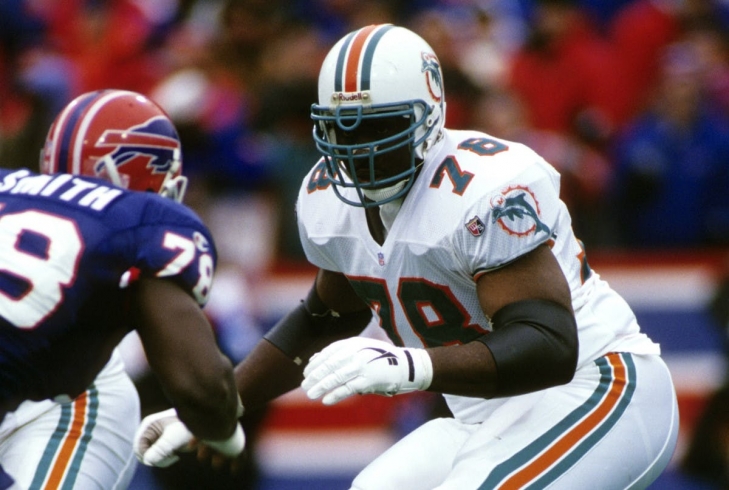

18. Paul Warfield

Plenty of people in Cleveland were stunned when the Browns traded Paul Warfield to the Miami Dolphins after the 1969 season. As a rookie in 1964, he had helped Cleveland win the NFL Championship, and he was coming off two straight Pro Bowl seasons. The Browns got the third overall pick in the deal and used it on Purdue quarterback Mike Phipps. Phipps lasted more than a decade in the league, but he never became the franchise quarterback they hoped for. Warfield, meanwhile, was about to have the most productive stretch of his career.
He spent five seasons with the Dolphins and made the Pro Bowl every year. He also earned first-team All-Pro honors twice. Miami was built around its defense and a heavy running game, but Warfield gave Bob Griese the deep threat the offense needed. He led the NFL with 11 touchdown receptions in 1971, averaged better than 20 yards per catch for most of his time in Miami, and helped the team reach three straight Super Bowls. They lost the first one and won the next two. Even in the undefeated 1972 season, when the Dolphins barely threw the ball, Warfield still averaged more than 20 yards per catch and made the Pro Bowl.
What made him special in those years was the combination of speed and route-running precision. Defenses often had to double him, and when they did not, he could take a short throw the distance or win on a deep ball. He was not the volume receiver later Dolphins stars became, but he was the big-play option who kept defenses honest while Larry Csonka, Mercury Morris, and Jim Kiick ran the ball. In the playoffs, he was even more dangerous, finishing with 717 yards in 11 postseason games with Miami.
Warfield left after the 1974 season and joined Larry Csonka with the Memphis Southmen of the World Football League. When that league folded, he returned to Cleveland for two final seasons before retiring. While in Miami, Warfield had 156 receptions, 3,355 receiving yards, and 33 receiving touchdowns.
For his work with both the Browns and the Dolphins, he was inducted into the Pro Football Hall of Fame in 1983. He was also part of the first group inducted into the Dolphins’ Honor Roll.
Warfield was the receiver who gave the early-1970s Dolphins their vertical threat. For five seasons, he was the deep option who made the running game even more effective, and the two rings plus the Hall of Fame still show how high that run went.
20. Ed Newman

Ed Newman had every reason to be happy when the Super Bowl VII champions drafted him in the sixth round out of Duke in 1973. He did not play much as a rookie, but he was on the roster when the Dolphins won Super Bowl VIII the next season. For the next few years, he stayed mostly on special teams and as a backup while the line was stocked with veterans like Larry Little and Bob Kuechenberg. He also dealt with thyroid cancer surgery in 1975, which set him back further before he could establish himself as a regular.
He did not become a regular starter until 1978. Once he locked in at right guard, the opportunity arrived to show what he could do. From 1981 through 1984, he made the Pro Bowl every year. The first three of those seasons brought second-team All-Pro honors, and in 1984 he earned first-team All-Pro while helping the Dolphins reach the Super Bowl. That year he posted an Approximate Value of 19, which ranked him third in the league. He was more technician than mauler, using leverage and positioning to handle bigger defensive linemen and keep the pocket clean for Dan Marino. Even after overcoming earlier health issues, he became one of the more reliable guards on one of the better lines of the early 1980s, starting 56 consecutive games at one point before injuries intervened.
The run ended quickly after that peak. A knee injury in the 1985 preseason kept him out the entire year, and he retired shortly afterward. Over 12 seasons with the Dolphins, he played in 167 games and started 113, with four Pro Bowls and the 1984 All-Pro season marking the high point. The Dolphins later added him to their Walk of Fame.
16. Sam Madison
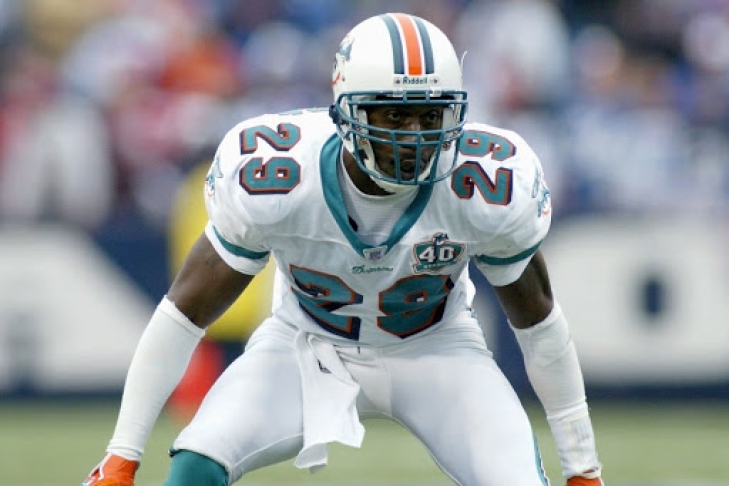
Sam Madison came out of Louisville as a second-round pick by the Miami Dolphins in 1997. He started only three games as a rookie and spent much of that first year on special teams, but the following season he took over as the full-time right cornerback. Once he got the job, he held onto it for most of the next decade.
The best years showed up in a hurry. Madison posted eight interceptions in 1998 and earned second-team All-Pro. Over the next couple of seasons, he reached first-team All-Pro and made the Pro Bowl, including a year in which he co-led the league with seven picks. From 1999 through 2002, he went to four straight Pro Bowls and ranked among the better cover corners in the league. Paired with Patrick Surtain on the other side, he gave the Dolphins a secondary that could take away the outside and force quarterbacks to look elsewhere. Miami made the playoffs regularly during that stretch, and the defense’s ability to limit big plays was a big reason why.
What stood out in those years was a mix of speed, technique, and ball skills. Madison was not the biggest corner, but he stayed close in man coverage, jumped routes, and turned potential completions into interceptions. Opposing receivers rarely got free releases against him, and when the ball was in the air, he was often in position to make the play. He also forced fumbles and recovered them, so his impact wasn’t limited to interceptions. Those four Pro Bowl seasons marked the high point of his time in Miami, and the secondary was at its best when he and Surtain were both locked in on the outside.
Madison stayed with the Dolphins through 2005. The team released him in 2006, and he signed with the New York Giants, where he played three more seasons and won a Super Bowl. The Dolphins later added him to their Walk of Fame. With Miami, he had 31 interceptions and 487 interception return yards, and would later be added to their Walk of Fame.
15. Cameron Wake
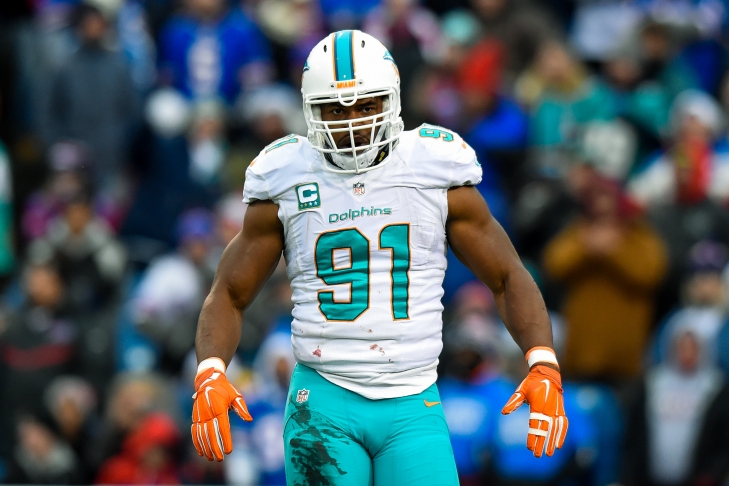
Cameron Wake had a solid career at Penn State, but he went undrafted in 2005. The New York Giants gave him a look, but he didn’t stick. Instead of walking away, he headed to the Canadian Football League and signed with the BC Lions. In two seasons there, he made the All-Star team both years and was named the league’s Most Outstanding Defensive Player both years. That kind of production got NFL teams interested, and the Miami Dolphins signed him in 2009 after he worked out for several clubs.
He started only once as a rookie, but the pass-rushing ability was obvious. The next two seasons he lined up at linebacker. In 2010, he made his first Pro Bowl and led the NFL in tackles for loss with 22. The Dolphins moved him to defensive end in 2012, and the production stayed high. He made the Pro Bowl in four of the next five years, earned first-team All-Pro in 2012 with a career-high 15 sacks, and finished with double-digit sacks four other times. Even in years when the rest of the roster was up and down, Wake was usually the one constant on the edge.
What made him effective in those peak years was his first-step quickness and the way he used his hands. He was not the biggest edge rusher, but he got off the line fast, converted speed to power, and finished rushes. Quarterbacks had to account for him on every dropback, and even when the rest of the defense was inconsistent, he kept creating pressure. The 15-sack season and the string of Pro Bowls marked the high point of his time in Miami, and he finished second on the franchise’s all-time sack list behind only Jason Taylor.
Wake left for the Tennessee Titans in 2019 after ten seasons with the Dolphins. He finished two sacks shy of 100 and three forced fumbles short of 20 with the Dolphins.
14. Mark Clayton
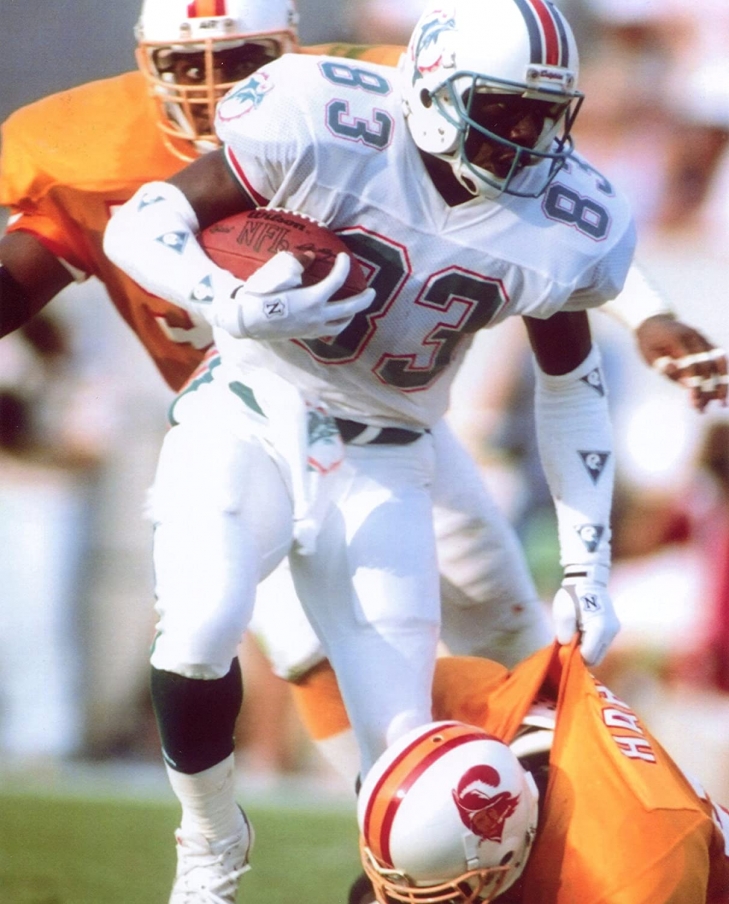
Dan Marino was a superstar quarterback with high-profile weapons around him, but none were better than Mark Clayton.
Clayton came out of Louisville as an eighth-round pick in 1983, and no one projected a star career. He made the team and spent most of his rookie year returning punts. That changed in year two.
1984 was Marino’s MVP season, and Clayton exploded for a career-best 1,389 receiving yards and 18 touchdowns, which led the NFL. The Dolphins reached the Super Bowl that year (they lost), but the Marino-Clayton connection became one of the most productive pairings of the 1980s. Clayton made five Pro Bowls overall, put up four more 1,000-yard seasons, and led the league in receiving touchdowns again in 1988 with 14. Alongside Mark Duper, he formed the “Marks Brothers,” and the two of them gave Marino vertical threats who could stretch the field and finish in the end zone.
What made Clayton special in his peak was the combination of speed and route-running precision. At 5-foot-9, he wasn’t the biggest receiver, but he got separation quickly, tracked the deep ball, and turned short catches into big gains. In 1984, he and Marino were nearly unstoppable, and even as defenses adjusted, Clayton kept producing for most of a decade. He was the kind of receiver who made a great quarterback look even better.
Clayton stayed with Miami through 1992, then signed with the Green Bay Packers for one final season in 1993 before retiring. With the Dolphins, Clayton had 550 receptions for 8,643 yards and 81 touchdowns. The Dolphins added him to their Honor Roll in 2003.
10. Bob Kuechenberg
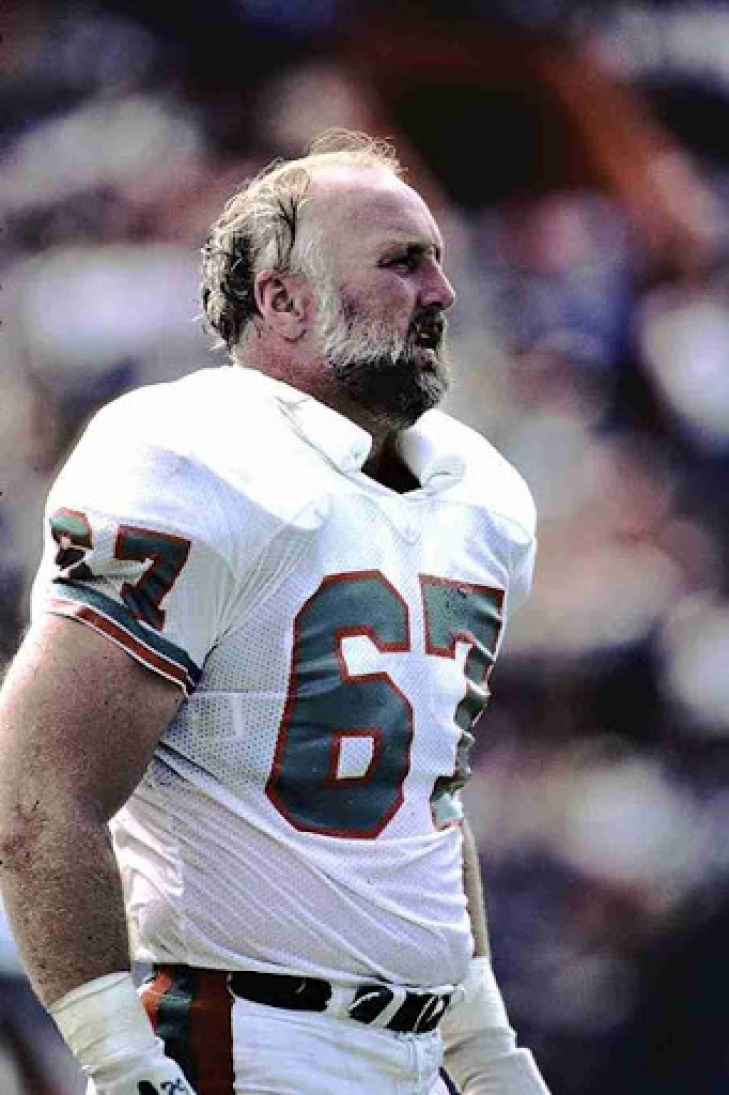
Bob Kuechenberg looked like a grizzled veteran long before he actually was one. The Notre Dame product was taken in the fourth round by the Philadelphia Eagles in 1969, but he quit during training camp and spent a year playing semi-pro. The Dolphins signed him in 1970, and he found a home in pro football for the next fourteen seasons.
Once he arrived in Miami he settled in as a starter on the left side of the line. He helped the Dolphins reach three straight Super Bowls in the early 1970s and win the last two. He made four Pro Bowls during that stretch of the decade and earned first-team All-Pro honors in 1978. Late in his career he returned to the Pro Bowl in his final two seasons, 1982 and 1983, and gave a rebounding team a steady presence on an offensive line that was otherwise turning over.
Kuechenberg could be difficult. Teammates and coaches described him as moody, and he was never shy about voicing his opinions. None of that changed the fact that he did the job well for a long time. He played through injuries, including a broken arm in Super Bowl VIII, and still held up against high-level defensive linemen. Don Shula later called him one of the toughest players he coached and noted how rarely he was flagged for holding across more than a decade of snaps.
He spent nearly his entire career in Miami, starting 176 of the 196 games he played and appearing in a franchise-record 19 playoff games at the time. The line around him changed, the quarterbacks changed, and the team’s window closed and reopened, but Kuechenberg kept lining up. When the Dolphins made it back to the Super Bowl in the strike-shortened 1982 season, he was still there.
He was a finalist for the Pro Football Hall of Fame eight times but never got the call. The Dolphins added him to their Honor Roll in 1995. He died in 2019 at age 71.
19. Bill Stanfill
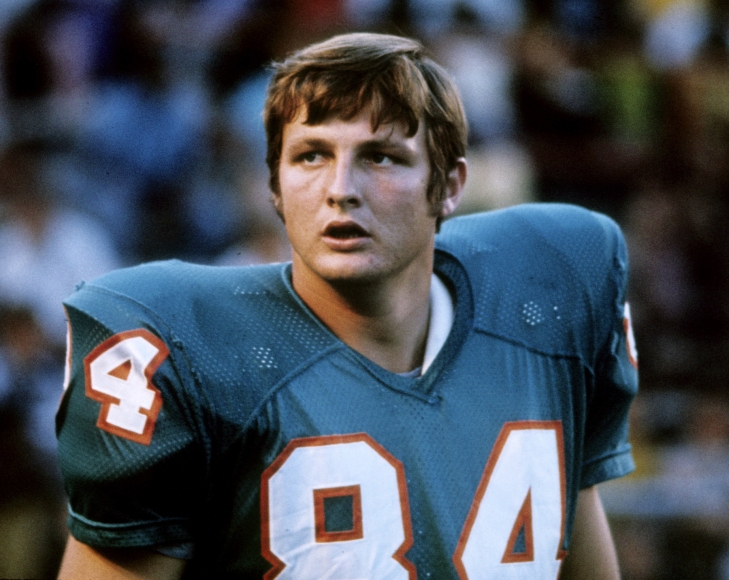
Bill Stanfill arrived in Miami already carrying a résumé. At Georgia, he helped the Bulldogs win the Cotton Bowl, earned All-American honors as a senior, and took home the Outland Trophy as the top interior lineman in college football. The Dolphins drafted him 11th overall in 1969, and he stepped into a defense still finding its identity but about to become one of the best in the league.
He made the AFL All-Star Game as a rookie and then settled into a four-year Pro Bowl run from 1971 through 1974. During that stretch, he was a constant on the right side of the line, part of the group that won Super Bowl VII and Super Bowl VIII. In 1972, he earned first-team All-Pro while the Dolphins went undefeated, and the following year he unofficially led the NFL with 18.5 sacks. Those peak seasons showed a defensive end who could rush the passer and hold the edge against the run, making him a steady piece of a unit that didn’t rely on one star.
What set Stanfill apart was the combination of size and quickness for the era. At 6-foot-5 and around 250 pounds, he was big enough to set the edge and disrupt running plays, yet he still got off the line fast enough to pressure the quarterback. He was not the flashiest rusher on those Dolphins teams, but he was consistent, and opposing offenses rarely found a soft side of the line when he was healthy. The unofficial sack total and the string of Pro Bowls reflected a player who was effective on both run and pass downs.
Knee and neck problems cut into his production in 1975 and 1976. He started fewer games, the sack numbers dropped, and by the end of the 1976 season it was clear the body was no longer cooperating. He retired before he turned 30, after eight seasons spent with the Dolphins. Sacks were not an official statistic at the time, but he is credited with 69.5 for his career, a total that stood as the franchise record for years. The Dolphins placed him on their Honor Roll in 2010.
12. Jake Scott
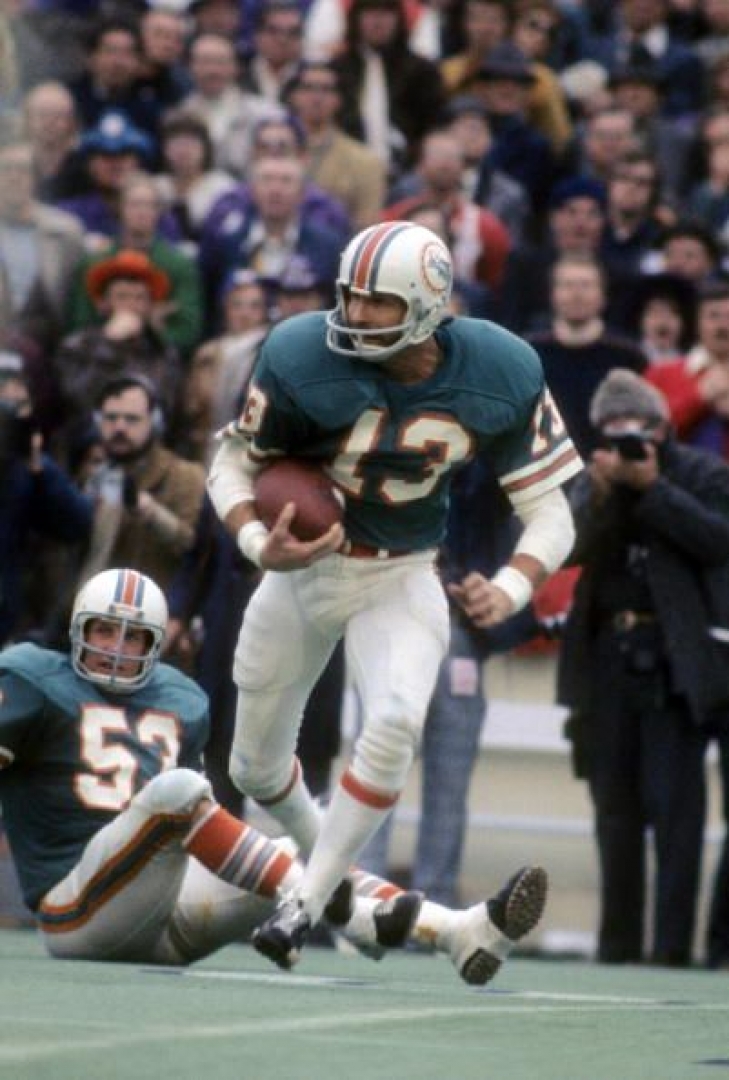
Jake Scott left the University of Georgia after his sophomore year and spent one season with the BC Lions in the Canadian Football League while he waited to become eligible for the NFL Draft. The Miami Dolphins took him in the seventh round in 1970.
He played six seasons in Miami and started every game. He recorded at least four interceptions in each of those seasons, and the last five earned him a trip to the Pro Bowl. In 1973 and 1974, he was also first-team All-Pro. Along with Dick Anderson, he formed one of the era’s better safety tandems, and he also doubled as a punt returner who rarely called for a fair catch.
What set Scott apart was the combination of range and toughness. He was not the biggest safety, but he covered ground quickly, arrived with bad intentions, and rarely missed a tackle in space. In the peak years from 1971 through 1974, he was consistently among the league’s best ballhawks while also returning punts with a willingness to take hits rather than signal for a fair catch. Opposing quarterbacks learned that throwing into his area often meant watching the ball go the other way, and the Dolphins’ secondary rarely gave up easy yards over the top when he was back there.
As a member of the Dolphins’ championship teams, he owns two Super Bowl rings. In Super Bowl VII, which capped the undefeated 1972 season, he intercepted two passes and was named the game’s MVP. One of those picks came in the fourth quarter and helped preserve the 14-7 win over the Washington Redskins. The following year, he also contributed to the Super Bowl VIII victory.
After the 1975 season, he joined the Washington Redskins and played three more years before retiring, and the Dolphins added him to their Honor Roll in 2010. His 35 interceptions remain a team record.
13. Dick Anderson
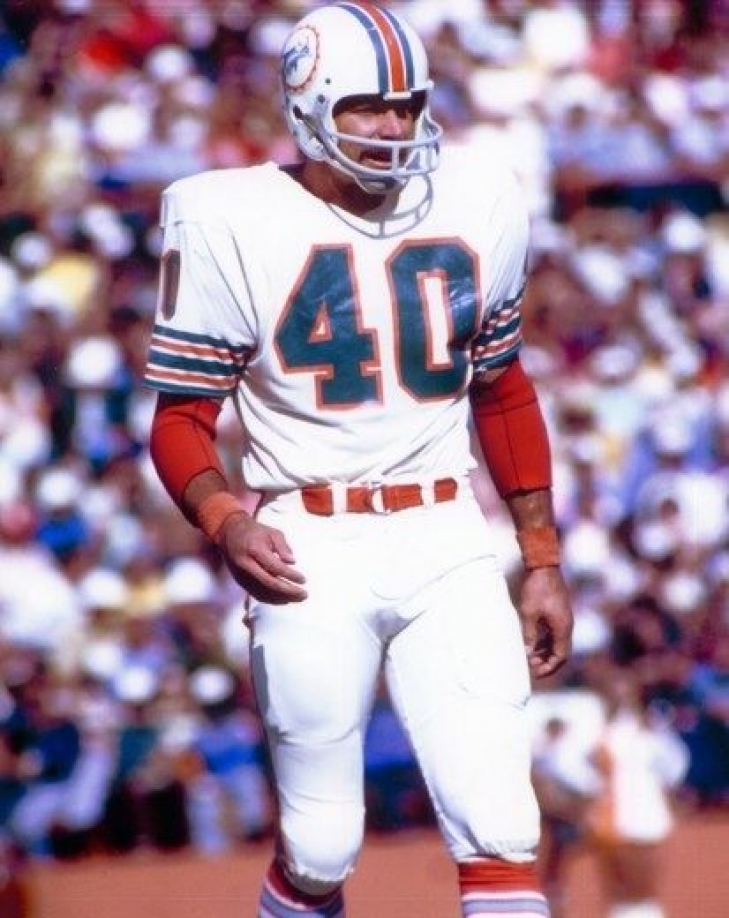
Dick Anderson never played anywhere else. The Dolphins took the strong safety out of Colorado in the third round in 1968, and he spent the rest of his career in South Florida.
He made an impression right away. As a rookie, he led the AFL in interception return yards and finished with eight picks, earning Defensive Rookie of the Year. Two years later he did it again, leading the NFL in interception return yards with another eight interceptions. Even early on, he could take the ball away and then make people pay for throwing it.
From 1972 to 1974, he went to the Pro Bowl every year. The first two of those seasons also brought first-team All-Pro honors, and they happened to be the years Miami won back-to-back Super Bowls. In 1973, he led the league with eight interceptions, including four in one game against the Steelers (two returned for touchdowns), and took home Defensive Player of the Year. He also returned punts here and there and finished his career with 1,338 all-purpose yards.
What set him apart in those peak years was how complete he was in the middle of the field. Anderson could cover ground, deliver hits, and turn takeaways into long returns. He was physical enough to handle tight ends and running backs in the box, yet still rangy enough to range over the top and take away deep throws. Next to Jake Scott he gave the Dolphins a safety pair that cleaned up mistakes by the front seven and created problems of their own. When the No-Name Defense was humming in 1972 and 1973, Anderson was right in the middle of it, and quarterbacks learned quickly that the middle of the field was not a safe place to throw.
A knee injury wiped out the entire 1975 season. He came back for two more years, but the burst was gone. He retired after 1977 with 34 interceptions and 792 interception return yards. The Dolphins put him on their Honor Roll in 2006.
5. Jim Langer
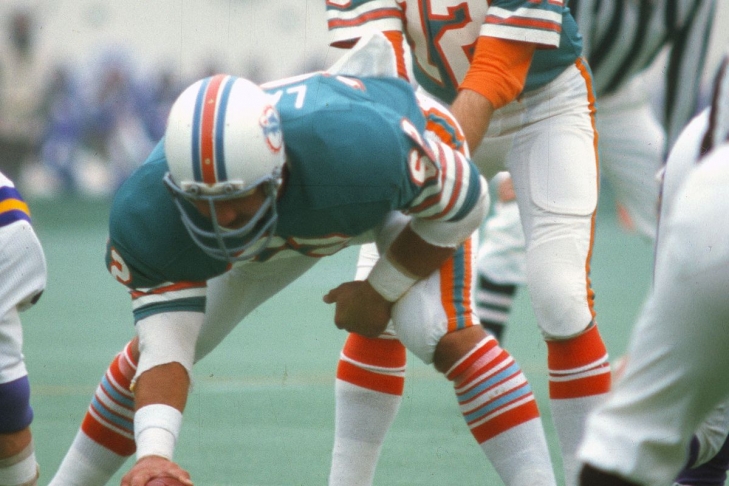
Undrafted out of South Dakota State in 1970, Jim Langer faced an uphill battle just to earn a spot on an NFL roster. After the Cleveland Browns cut him during training camp, the Miami Dolphins claimed him off waivers, and he spent his first two seasons primarily as a backup linebacker and interior offensive line reserve under head coach Don Shula.
Langer took over the starting center job in 1972 and immediately anchored one of the most legendary seasons in pro football history. Playing every single offensive snap during the Dolphins' perfect 17–0 campaign, he provided flawless pass protection and relentless run blocking for Larry Csonka and Mercury Morris, culminating in a victory over Washington in Super Bowl VII.
The dominant center elevated his play even further in 1973, helping Miami repeat as world champions with a convincing 24–7 victory over the Minnesota Vikings in Super Bowl VIII. That stellar championship season kicked off a six-year streak of Pro Bowl selections from 1973 through 1978, during which Langer was widely recognized as the NFL’s premier center.
Flanked by guard Larry Little and tackle Wayne Moore, Langer served as the brain center of Miami's famous "Offensive Machine." His combination of upper-body strength, quick footwork, and scheme intelligence earned him four First-Team AP All-Pro selections (1974, 1975, 1976, and 1977), making him a cornerstone of the franchise's 1970s dynasty.
After ten seasons in South Florida, Langer requested a trade back to his home region to finish his career. He played his final two professional seasons with the Minnesota Vikings (1980–1981) before retiring at age 33.
In 1987, Langer entered the Pro Football Hall of Fame in Canton in his first year of eligibility, one of few undrafted players elected on the first ballot. In 1990, he became an inaugural Miami Dolphins Honor Roll member.
6. Larry Little
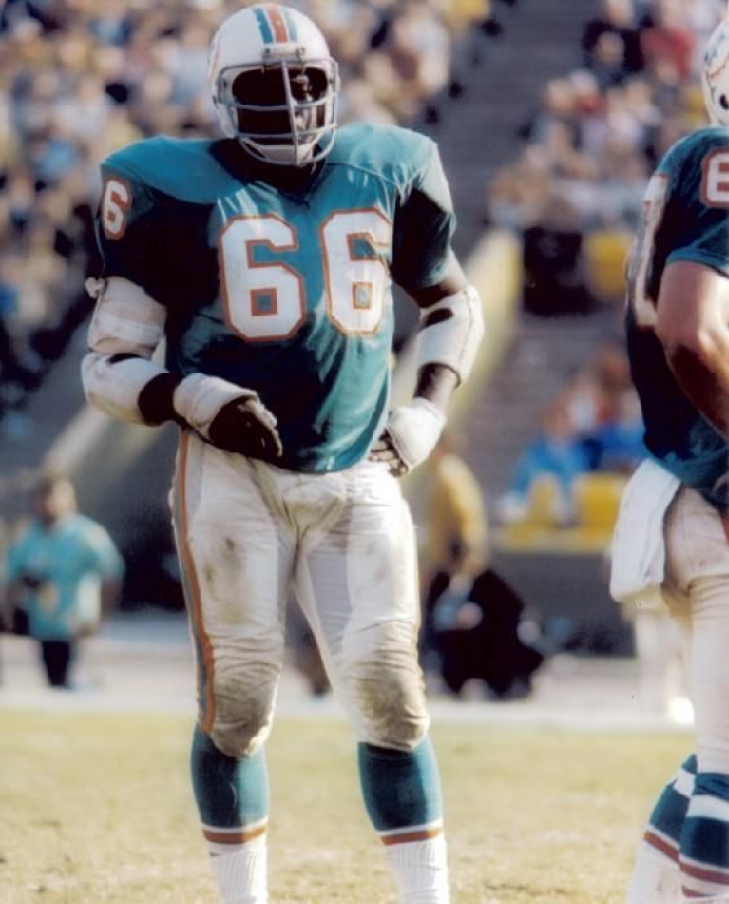
After two unremarkable seasons as a backup guard with the San Diego Chargers, Larry Little was traded to the Miami Dolphins for Mack Lamb. Little wasn’t thrilled. The Dolphins weren’t particularly good at the time, and he had no idea the franchise was about to start building something special. Lamb never played a down for the Chargers. We know who won that one.
Once he arrived in Miami, Little settled in at right guard and immediately looked like a different player. He made the AFL All-Star team in his first season with the Dolphins. From 1971 through 1975, he was first-team All-Pro every year, leading the sweeps and clearing the lanes for Larry Csonka, Mercury Morris, and the rest of that ground game. He was a central piece of the lines that won Super Bowls VII and VIII, including the perfect 1972 season. He was so good, he recieved MVP and Offensive Player of the Year votes. After that peak stretch, he still collected second-team All-Pro honors in 1977 and 1978, then played two more seasons before retiring in 1980. He was later named to the 1970s All-Decade Team.
What set Little apart was how he played the position. He wasn’t the biggest man on the field, but he was quick enough to get out and lead the sweeps that defined Miami’s attack, and strong enough to hold his ground when the play stayed between the tackles. Teammates and opponents both talked about the way he could erase a defensive end or linebacker on the move, then still be in position to finish the block. In an era when the Dolphins wanted to run the ball first and ask questions later, he made the math work. Don Shula later said Little’s combination of mobility and power was exactly what the offense needed once the coach decided to lean on the run.
He also lasted. Knee and ankle issues showed up, as they do for almost every lineman who plays that long, yet he missed only a handful of games across more than a decade in Miami. The line around him changed, the supporting cast changed, and the team’s window closed, but Little kept starting and kept getting recognition well after the back-to-back titles. That consistency is part of why the Hall of Fame voters eventually put him in, even if it took a few years after he became eligible.
The Chargers moved a young guard they weren’t sure about. Miami got a cornerstone of their best teams and a Hall of Famer. Again, who won the trade?
4. Bob Griese
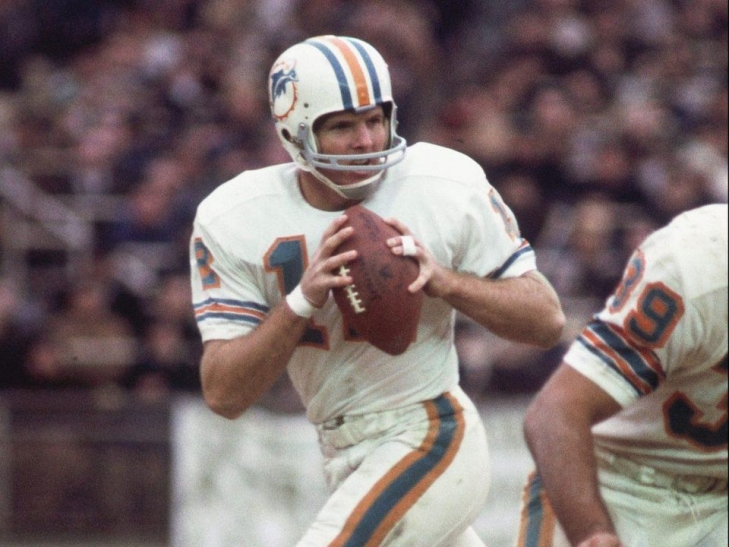
Fresh off the landmark 1970 AFL-NFL merger agreement, the Miami Dolphins utilized their high-value first-round pick (fourth overall) in the 1967 Common Draft to land Purdue signal-caller Bob Griese. The calculated move provided the infant franchise with an immediate field general. Throwing for over 2,000 yards in his debut season, the cool-headed rookie captured AFL All-Star recognition in both 1967 and 1968, laying the foundational brick for an emerging South Florida powerhouse.
The organization's trajectory shifted into overdrive in 1970 when head coach Don Shula arrived in Miami. Combining Shula's ironclad discipline with Griese’s sharp tactical mind, the duo unlocked a new ceiling for the franchise. Famous for calling his own plays at the line of scrimmage, Griese steered Miami to its first AFC Championship and an appearance in Super Bowl VI following the 1971 season. Despite a loss to Dallas in the big game, Griese’s stellar command earned him NFL MVP honors from the Newspaper Enterprise Association (NEA).
The 1972 campaign proved to be both his most testing and ultimate triumph. After breaking his leg in Week 5 against San Diego, Griese watched veteran backup Earl Morrall keep the win streak alive. Healthy enough to return during the postseason, Griese stepped back into the huddle for the AFC Championship Game and started Super Bowl VII, orchestrating a 14–7 victory over Washington to cap off a 17–0 march—the only unblemished, perfect season in NFL history.
Griese secured his place in gridiron history the following year by becoming the first quarterback to start three consecutive Super Bowls. In Super Bowl VIII against Minnesota, he executed Shula’s ground-and-pound strategy to absolute perfection, completing 6 of 7 passes while letting his backfield dismantle the Vikings in a 24–7 championship repeat.
Though Miami’s championship run eventually cooled, Griese remained an elite, calculating passer throughout the decade. He enjoyed an individual renaissance in 1977, winning the prestigious Bert Bell Award after leading the entire league with 22 passing touchdowns and an 87.8 passer rating. A six-time Pro Bowl selection during the 1970s, he capped his run by leading the league in completion percentage (63.0%) in 1978.
Griese retired after the 1980 season with 14 years at Miami, holding a 56.2% completion rate, 25,092 passing yards, 192 touchdowns, 172 interceptions, 994 rushing yards, and seven rushing touchdowns.
The Dolphins honored his legacy in 1982 by retiring his No. 12, the franchise's first. He was also an inaugural Miami Dolphins Honor Roll member in 1990. Canton enshrined Griese into the Hall of Fame that same year as part of the Class of 1990.
3. Zach Thomas

When the Miami Dolphins selected Zach Thomas in the fifth round (154th overall) of the 1996 NFL Draft, scouts brushed him off as an undersized middle linebacker out of Texas Tech who lacked the raw length and physical measurables to withstand professional blocking schemes. Standing 5-foot-11, Thomas quickly silenced every skeptic by unleashing an uncanny diagnostic instinct, relentless sideline-to-sideline pursuit, and an instinctual nose for the football that transformed him into one of the most prolific tackling artists in gridiron history.
Thomas exploded onto the scene as an immediate defensive catalyst during his 1996 debut campaign, racking up 154 combined tackles, three interceptions, and two sacks while claiming PFWA All-Rookie Team honors. That explosive entry was merely the foundation for a masterclass in elite consistency. Operating at the heart of Jimmy Johnson’s defense, Thomas established a decade-long siege on ball-carriers, consistently ranking among the NFL's elite in total tackles while anchoring a premier defensive unit alongside brother-in-law Jason Taylor.
From his 1996 rookie year through the 2006 season, Thomas was an immovable tackling machine, posting at least 128 combined tackles in every campaign in which he played more than 11 games. He topped the entire league in tackles twice—racking up 156 tackles in 2002 and a career-high 165 in 2006—and finished runner-up on two separate occasions. His extraordinary anticipation enabled him to diagnose plays before the ball was snapped, erasing running lanes and consistently driving offensive schemes into dead ends.
Accolades quickly followed for the Texas Tech product. Across his twelve years in South Florida, Thomas earned seven Pro Bowl invitations and was named a First-Team AP All-Pro five times (1998, 1999, 2002, 2003, and 2006), along with two Second-Team AP All-Pro honors (2001, 2005). Honored as a two-time NFL Alumni Linebacker of the Year, his sustained dominance at the peak of his career earned him selection to the official NFL 2000s All-Decade Team.
Beyond his staggering tackle volume, Thomas possessed a knack for swinging momentum with timely turnovers. A nightmare in pass coverage, he logged 17 interceptions in a Dolphins uniform, returning four of them for touchdowns—a franchise record for interceptions returned for scores by a defensive player. His football IQ and vocal leadership earned him the team's Leadership Award three separate times, making him the undisputed heartbeat of the locker room.
Thomas’s memorable South Florida chapter ended after the 2007 season when he was released during a roster rebuild. He played one last season in 2008 with the Dallas Cowboys, starting 14 games and making 94 tackles. Although he signed with the Kansas City Chiefs in 2009, a severe concussion in training camp sidelined him, ending his career early before he could play in Missouri.
With the Dolphins, he compiled 1,640 combined tackles (1,042 solo, 598 assists), 19.5 sacks, 17 interceptions (170 return yards, four returned for touchdowns), 17 forced fumbles, and seven fumble recoveries. The Dolphins organization honored his contributions by inducting him into the Miami Dolphins Honor Roll in 2012, and in 2023, the Pro Football Hall of Fame called him.
2. Jason Taylor
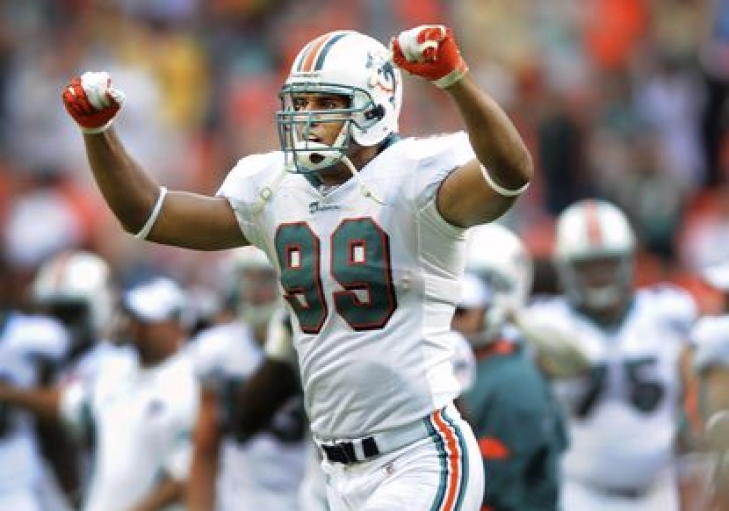
Selected in the third round (73rd overall) of the 1997 NFL Draft out of the University of Akron, Jason Taylor entered the professional ranks after earning two First-Team All-MAC selections as a Zip. The Dolphins saw immense raw potential in the 6-foot-6, 244-pound pass-rushing specialist, and he immediately validated their trust. Taylor recorded 5.0 sacks and two forced fumbles as a rookie, earning PFWA All-Rookie Team honors and laying the foundation for a legendary career in South Florida.
Over his first three professional seasons, Taylor established himself as a reliable, high-motor edge defender, posting 9.0 sacks in 1998 before breaking through to stardom. His signature breakout came in the 2000 campaign, when he recorded 14.5 sacks, four fumble recoveries, and a career-high 20 Approximate Value. That performance earned him his first of six Pro Bowl selections and his first First-Team AP All-Pro nod, signaling the arrival of an elite game-changer on Miami's defensive front.
Taylor built on that momentum with astonishing consistency, recording double-digit sack totals in six different seasons for the Dolphins. His explosive first step, long reach, and relentless strip-sacking technique made him a nightmare for opposing offensive tackles. In 2002, Taylor reached the peak of pass-rushing efficiency, leading the entire NFL with 18.5 sacks and forcing seven fumbles to capture his second First-Team All-Pro honor.
His finest individual campaign arrived in 2006, producing one of the most dominant single-season performances by a defensive lineman in league history. Taylor was a turnover-generating machine, causing a whopping nine forced fumbles while adding 13.5 sacks and returning two interceptions for touchdowns. His unmatched ability to turn defensive disruptions into instant points earned him the 2006 AP NFL Defensive Player of the Year Award.
Beyond his terrifying pass-rushing arsenal, Taylor was equally celebrated for his leadership and humanitarian efforts off the field. Following another standout 11.0-sack campaign in 2007 that earned him his sixth Pro Bowl invitation, he was named the 2007 Walter Payton NFL Man of the Year—a testament to his extensive charitable contributions through the Jason Taylor Foundation, supporting South Florida's vulnerable youth.
After 11 brilliant seasons anchoring Miami's defense, Taylor was traded to Washington in 2008, where he played one season before returning to South Florida. He signed back with the Dolphins as a free agent in 2009 for his second stint in aqua and orange, bringing veteran leadership and posting 7.0 sacks, a forced fumble, and a fumble recovery returned for a touchdown across 16 games.
Following that single-year homecoming, Taylor spent the 2010 season with the division-rival New York Jets, appearing in 16 games and helping drive New York to the AFC Championship Game. But his professional football story was destined to end where it began. In 2011, Taylor signed with Miami for a third and final stint, putting on the Dolphins helmet one last time to complete a storied 15-year career in front of the South Florida faithful.
Across his three stints with Miami, Taylor was the ultimate defensive disrupter. He generated a franchise-record 131.0 sacks in aqua and orange, while amassing 45 forced fumbles and 27 fumble recoveries. His career tally of nine defensive touchdowns—including six fumble returns for scores—stands as an NFL record for defensive linemen, cementing his legacy as one of the most lethal big-play defenders in gridiron history.
The Dolphins enshrined his legacy in 2012 by inducting him into the Miami Dolphins Honor Roll. In 2017, Taylor received top national recognition, being elected to the Pro Football Hall of Fame in his first year of eligibility and earning a spot on the NFL 2000s All-Decade Team.
11. Bob Baumhower
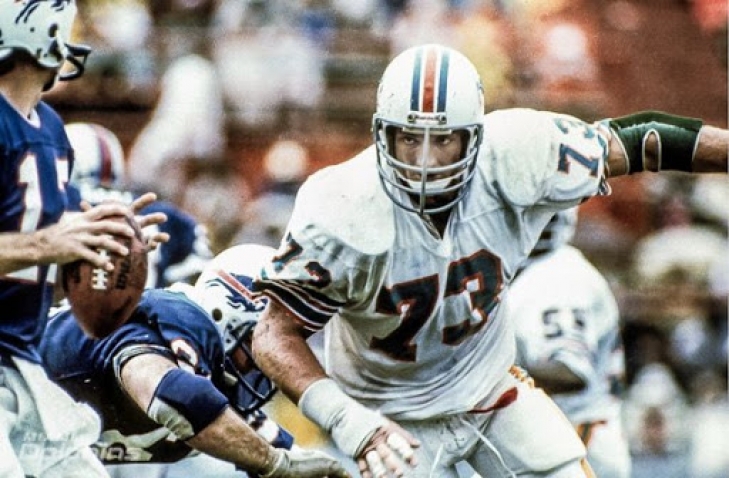
Bob Baumhower spent his entire pro career with the Miami Dolphins, and for most of those years, he anchored the defensive line. He arrived in 1977 as a second-round pick out of Alabama and stepped in at nose tackle right away. He started all but one of the 130 games he played.
He made the Pro Bowl in 1979, then strung together four more from 1981 through 1984. In each of those seasons he earned either first-team or second-team All-Pro recognition, with the first-team nod coming in 1983. That year Pro Football Weekly named him its Defensive Player of the Year. In the early 1980s, the Dolphins reached two Super Bowls, and Baumhower's work in the middle was a big part of how the defense held up against the run and created problems for opposing centers.
What made him effective was less about pure size and more about technique and leverage. At 6-foot-5, he was taller than many nose tackles of the era, but he used his length and quickness to clog the A-gaps and occupy blockers. Teammates on the “Killer B’s” defense said he consistently took on double teams and still managed to disrupt the play. The Dolphins’ defense led the league in total defense during the strike-shortened 1982 season, and Baumhower was the constant in that group.
Knee and ankle problems cost him the entire 1985 season. He returned for one more year in 1986, but his production dropped off, and he retired afterward. The Dolphins added him to their Honor Roll in 2008.
With Miami, Baumhower recorded 39.5 sacks and started all but one of his 130 games.
8. Dwight Stephenson
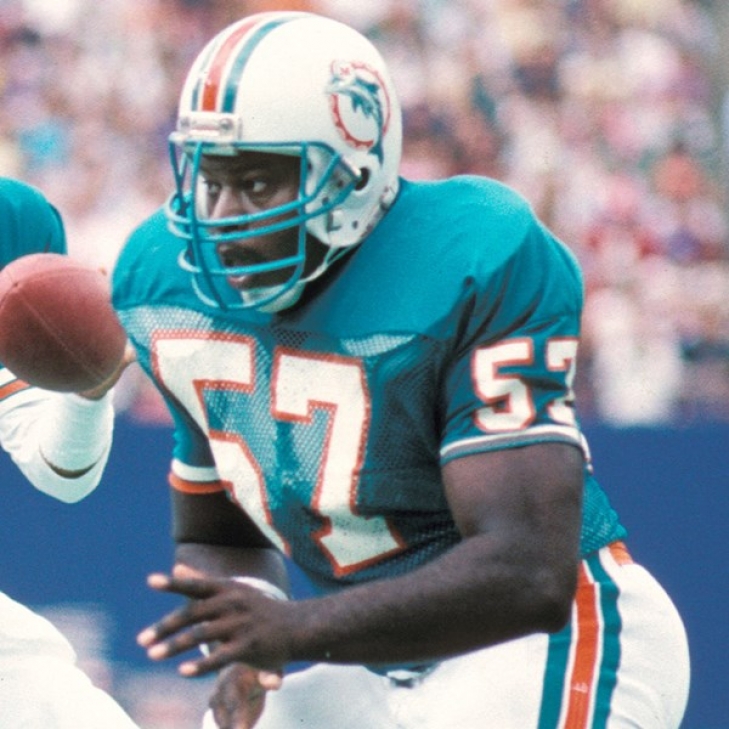
Dwight Stephenson arrived in Miami as a second-round pick out of Alabama in the 1980 Draft. He spent most of his first two seasons on special teams while he learned the pro game. By 1982, he had taken over at center and was ready to show what he could do.
From 1983 through 1987, he made the Pro Bowl every year. The timing lined up with Dan Marino’s arrival in 1983. As Marino became one of the league’s most dangerous passers, Stephenson was the man in the middle of the line protecting him. From 1984 to 1987, he was first-team All-Pro each season. Very few defensive players got through him cleanly, and even fewer managed it twice in the same game. Off the field, he was known for his community work and received the NFL Man of the Year Award in 1985.
What made Stephenson stand out was how he controlled the interior. He was not the biggest center in the league, but he was quick off the snap and rarely lost leverage. Teammates and opponents both talked about the way he could deliver a shot and then recover to stay in front of the play. With him in the lineup, the Dolphins’ offensive line allowed the fewest sacks in the NFL for six straight seasons from 1982 through 1987. That stretch covered Marino’s early peak and two Super Bowl trips.
Stephenson also started in three AFC Championship Games and in Super Bowls XVII and XIX. He was quiet by nature and preferred to stay out of the spotlight, but his consistency forced people to notice. Don Shula later said Stephenson always wanted to be the center, but never the center of attention. His reliability and technique made him the clear choice as the best center of his era.
A serious left-knee injury late in the 1987 season ended his run. He tried to return the next year, but the knee did not respond, and he retired. Even with a relatively short career, the quality of those peak seasons was enough for voters to put him in the Pro Football Hall of Fame in 1998. The Dolphins had already added him to their Honor Roll in 1994.
7. Richmond Webb
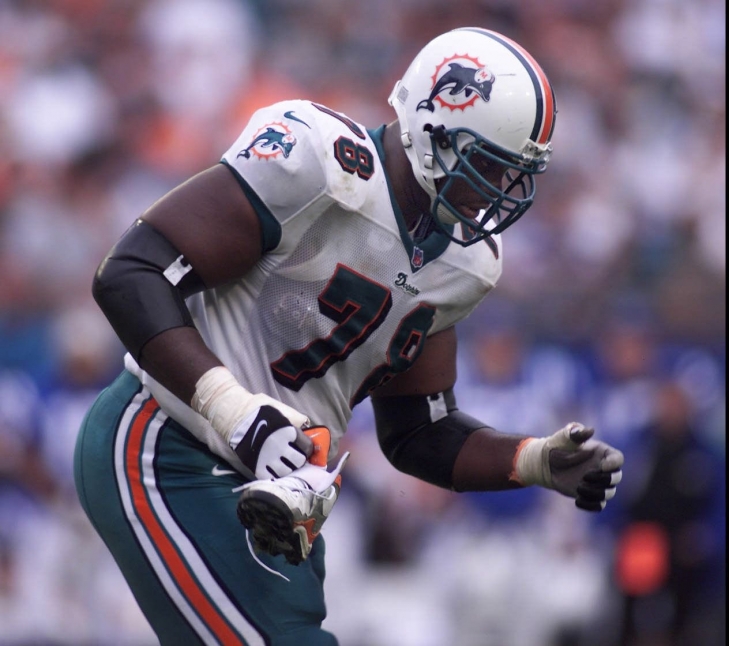
With the ninth overall pick in the 1990 Draft, the Miami Dolphins took the hulking Richmond Webb from Texas A&M for one clear reason: to keep Dan Marino upright on the left side. The former Aggie did exactly that.
Webb started in Week 1 as a rookie and never really stopped. He became the first Dolphin to reach the Pro Bowl in each of his first seven seasons, from 1990 through 1996. During those years, he was a two-time first-team All-Pro (1992, 1994) and a two-time second-team All-Pro (1993, 1995). At 6-foot-6 and well over 300 pounds, he gave Marino a consistent wall on the blind side while the offense kept throwing. He was later named to the 1990s All-Decade Team.
What made the early years stand out was how quickly he settled into the job. As a rookie, he started every game and helped the Dolphins allow only 16 sacks, the fewest in the league. Marino had the kind of protection that let him stay in the pocket and work through his progressions instead of constantly sliding or dumping the ball early. Webb wasn’t flashy, but he was reliable in pass protection and sturdy enough in the run game that teams couldn’t simply ignore the left side and overload the other edge. Year after year, the line stayed functional even as the supporting cast around him shifted.
He also showed the kind of durability left tackles are supposed to provide and rarely do for that long. Webb started 163 of the 164 games he played in Miami and put together a franchise-record streak of 118 consecutive starts. The Dolphins made the playoffs in eight of his eleven seasons with the team, and through most of that stretch the sack numbers stayed manageable even though Marino was still dropping back as often as anyone in the league. When the knees and the miles finally caught up, the production dipped, but the first seven years had already established him as the most consistent left tackle the franchise had ever had.
After eleven seasons in Miami, Webb signed with the Cincinnati Bengals and played two more years there before injuries slowed him. He signed a one-day contract with the Dolphins in 2005 so he could retire as a member of the team that drafted him. The Dolphins added him to their Honor Roll in 2006.
9. Larry Csonka
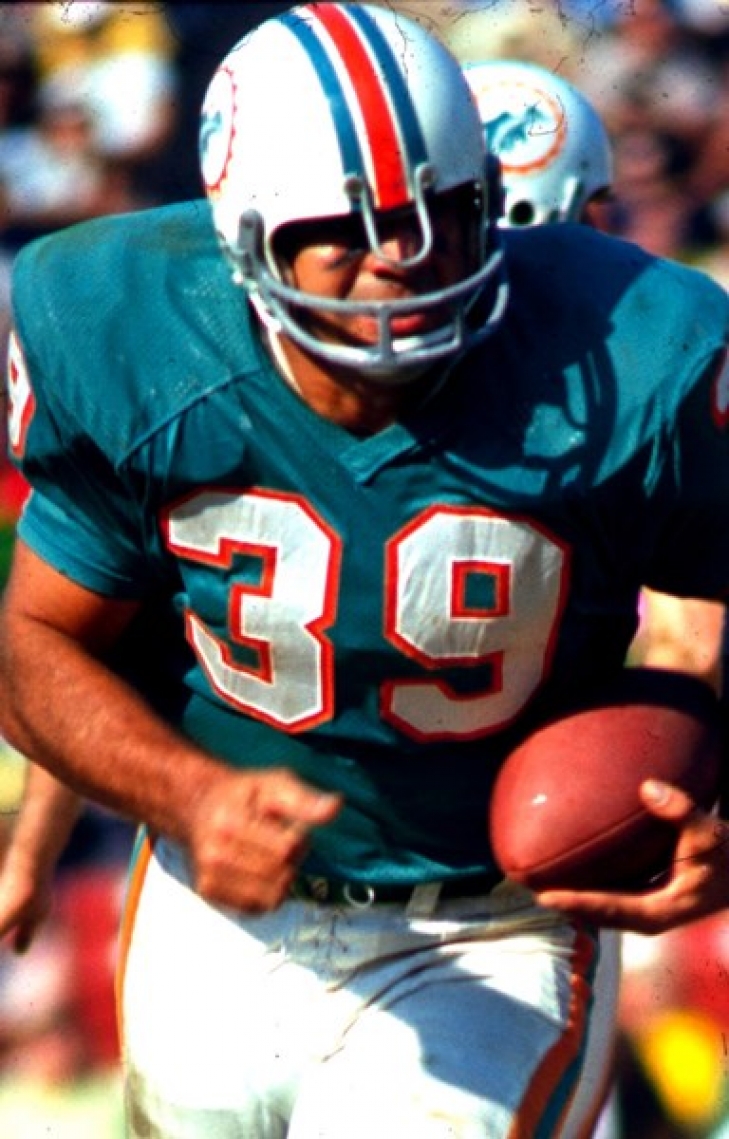
Larry Csonka was the first running back taken in the 1968 Draft, eighth overall by the Miami Dolphins out of Syracuse. The first two seasons were a struggle. Injuries limited him, and the team around him wasn't ready yet. The arrival of Don Shula in 1970 changed the picture.
Csonka got healthy, tightened his fundamentals, and developed the habit of delivering a forearm before defenders could get a clean shot. From 1970 through 1974, he made the Pro Bowl every year, with first-team All-Pro honors in 1971 and 1973. He rushed for more than 1,000 yards in 1971, 1972, and 1973. The runs from that stretch became the kind of footage NFL Films still shows: Csonka lowering a shoulder, dragging tacklers, and finishing the play on his feet more often than not. He was the centerpiece of a ground game that wore teams down long before anyone talked about “Beast Mode.”
He helped the Dolphins reach three straight Super Bowls and win the last two. In the perfect 1972 season, he carried for 112 yards in Super Bowl VII. The following year in Super Bowl VIII he set a then-record with 145 yards on 33 carries and was named the game’s MVP. Those two titles remain the only championships in franchise history, and Csonka made the ball-control plan work when the Dolphins needed it most.
After the 1974 season, he left for the World Football League along with Jim Kiick and Paul Warfield. When that league folded, he signed with the New York Giants and played three seasons there with mixed results. In 1979, he returned to Miami for one final year. He rushed for 837 yards and a career-high 12 touchdowns, earning the PFWA Comeback Player of the Year Award. He retired after that season.
Roughly 6,737 rushing yards and 53 rushing touchdowns in aqua and orange, five Pro Bowls (1970–1974), two first-team All-Pro selections (1971, 1973), Super Bowl MVP (VIII), two Super Bowl championships (VII, VIII), 1970s All-Decade Team.
Csonka entered the Pro Football Hall of Fame in 1987. The Dolphins added him to their Honor Roll in 1990 and retired his number 39 in 2002. He remains the franchise’s all-time leading rusher, the fullback who turned a power run game into the foundation of Miami’s only championship teams.
1. Dan Marino
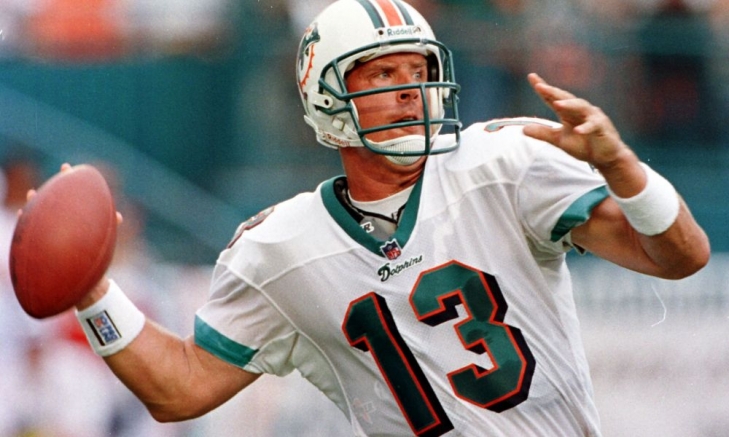
The 1983 NFL Draft lives in football lore as the legendary "Year of the Quarterback," a frantic first-round frenzy where five passers—John Elway, Todd Blackledge, Jim Kelly, Tony Eason, and Division II product Ken O'Brien—were swept off the board early. Sitting near the bottom of the round after coming off a Super Bowl appearance, the Miami Dolphins watched in absolute disbelief as Dan Marino, a consensus collegiate phenom out of Pittsburgh, unexpectedly plummeted down draft boards due to unproven rumors and pre-draft paranoia. When Miami snatched Marino with the 27th overall pick, they didn't just capitalize on one of the greatest draft-day steals in sports history; they reshaped the parameters of professional passing forever.
Marino made the teams that passed on him pay almost immediately. Taking over the starting quarterback role midway through his 1983 rookie campaign, he took the league by storm with a 7–2 starting record, 20 touchdown passes, a Pro Bowl selection, and PFWA All-Rookie Team honors. But that stellar introductory run was merely a prelude to the most explosive three-year passing stretch the gridiron had ever witnessed.
From 1984 to 1986, Marino accomplished a feat unmatched in NFL history, leading the league in completions, passing yards, and passing touchdowns in three consecutive seasons while earning First-Team AP All-Pro honors each year. His legendary 1984 sophomore campaign fundamentally altered the sport: Marino shattered existing aerial records by becoming the first quarterback to cross the 5,000-yard threshold (5,084) while throwing an unheard-of 48 touchdown passes. Named the NFL MVP and Offensive Player of the Year, he powered Miami to a 14–2 record and an AFC Championship title, driving the Dolphins to Super Bowl XIX.
Though Miami fell to San Francisco in the championship game, Marino established himself as the premier, undisputed passing force of his era. He followed up his historic MVP year by throwing for 4,137 yards and 30 touchdowns in 1985—handing the eventual champion 1985 Chicago Bears their lone defeat of the season—and backed that up with 4,746 yards and 44 touchdown passes in 1986.
Marino led the NFL in passing yards five separate times throughout his career and earned nine total Pro Bowl selections. Lacking mobility in the pocket, he never needed to run. Armed with the fastest, smoothest release in football history and unmatched downfield accuracy, Marino turned solid receivers like Mark Duper and Mark Clayton into lethal, perennial All-Pro weapons.
Throughout his 17-year run in South Florida, a consistent running game and elite defensive support rarely materialized around him. Yet despite those perpetual roster deficiencies, as long as No. 13 was behind center, the Dolphins were an immediate Super Bowl threat. His supernatural pocket instincts and quick release allowed him to neutralize pass rushes effortlessly, leading the NFL in lowest sack percentage in ten different seasons.
What Marino achieved in the 1980s and 1990s was entirely unprecedented, operating in a far more physical era for pass defenses before modern rules protected quarterbacks and receivers. While eventual rule changes allowed modern passers to challenge his single-season marks decades later, the sheer distance between Marino and his contemporaries during his prime remains utterly staggering.
When he finally hung up his cleats following the 1999 season, Marino stood alone at the summit of gridiron history as the all-time leading passer, holding every major cumulative throwing record, including completions (4,967), passing yards (61,361), and passing touchdowns (420). Marino never did win the Super Bowl, but nobody, and we mean nobody, ever placed the blame on the legendary quarterback.
Marino was inducted into the Pro Football Hall of Fame in 2005 during his first eligibility, and was later named to the NFL 100th Anniversary All-Time Team. The Dolphins retired his No. 13 jersey and added him to the Miami Dolphins Honor Roll in 2000.
The Buck Stops Here -- Interview with Richmond Webb