

13. Chris Sale
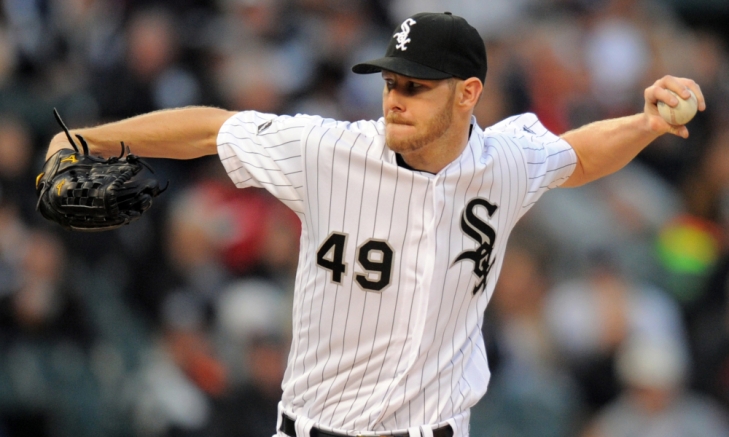
When Chris Sale was drafted 13th overall in 2010, the White Sox weren't interested in the traditional developmental curve. He arrived in Chicago just two months after being drafted—the first member of his class to reach the majors. Standing 6'6" and seemingly composed entirely of long, whip-like limbs, he earned the nickname "The Condor." To hitters, his delivery was a nightmare of shifting angles that made his 98-mph heater feel like it was being released from behind their own ears. He spent his first full year in 2011 as a dominant relief weapon, but everyone in the organization knew that his wingspan was meant for the starting rotation.
The transition to the rotation in 2012 was an immediate, resounding success. Sale didn't just survive as a starter; he thrived, bringing a lethal slider that left the best hitters in the American League swinging at shadows. He rattled off 17 wins and earned the first of what would become seven consecutive All-Star selections in a White Sox uniform. For the next five years, Sale was the undisputed ace of the South Side, finishing in the top six of the Cy Young voting every single season. He was a metronome of high-strikeout efficiency, a man who treated the 200-strikeout mark not as a goal, but as a baseline.
The statistical peak of his residency arrived in 2015, a season where he etched his name into the franchise record books. Sale fanned 274 batters that year, finally eclipsing the 107-year-old single-season record held by the legendary Ed Walsh. He led the league in strikeouts and strikeout-to-walk ratio, carving through lineups with a surgical precision that belied his aggressive, max-effort appearance. Even during lean years for the team, Sale remained the primary reason for fans to head to the ballpark, a walking highlight reel who consistently ranked among the league leaders in ERA, WHIP, and bWAR.
His departure in December 2016 was a seismic shift for the franchise. Looking to jumpstart a complete rebuild, Chicago traded their ace to the Boston Red Sox in a blockbuster deal that brought back a haul of elite prospects. While the trade was designed to usher in a new era of contention, the results were frustratingly hollow; while Sale went on to win a World Series in Boston and eventually a Cy Young in Atlanta, the White Sox’s rebuild largely faltered, resulting in more "retooling" than championships.
Sale left the White Sox with a 74-50 record and a clean 3.00 ERA, but his legacy is best measured in the smoke he left in the catcher’s mitt. He arrived as a skinny college kid with a funky delivery and left as the greatest strikeout artist in the history of the organization. He was the Condor of the South Side, a rare, dominant bird of prey who made missing bats look like an art form.
12. Mark Buehrle
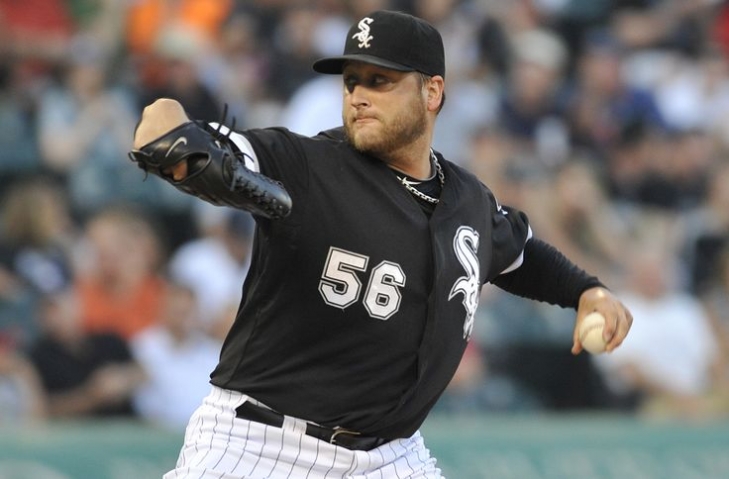
When Mark Buehrle was drafted in the 38th round in 1998, nobody expected him to become the cornerstone of a championship rotation. He arrived in the majors in 2000 as a soft-tossing southpaw with a pace of play that felt like he had a dinner reservation he was running late for. By 2001, he had already surged into the upper echelon of American League starters, posting a 16-8 record and leading the league with a 1.066 WHIP. He didn't blow hitters away; he simply refused to let them get comfortable, relying on pinpoint finesse and a competitive rhythm that got batters to hit themselves out before they could even adjust their batting gloves.
The peak of his Chicago residency arrived during the historic 2005 campaign. Buehrle was the undisputed ace of the staff, earning an All-Star nod and a fifth-place Cy Young finish, but his true legacy was forged in October. During the White Sox’s first World Series title run since 1917, Buehrle etched his name into the record books as the first pitcher to start a game and then earn a save in the very next one. It was a display of selfless versatility that mirrored his entire approach to the game—whatever the team needed, Buehrle delivered with a minimum of fuss and a maximum of results.
The middle years of his journey were characterized by a staggering, metronomic consistency. From 2001 to 2011, he was the model of durability, rattling off 11 consecutive seasons of at least 10 wins and over 200 innings pitched. He became the franchise’s ultimate "big game" hunter, tossing a no-hitter in 2007 and achieving baseball immortality with a perfect game in 2009. His value wasn't just in his arm, either; he was a defensive wizard on the mound, claiming three Gold Gloves in a White Sox uniform and turning the pitcher's mound into a fifth infielder's position.
His walk toward the exit came after the 2011 season, when he departed as a free agent to join the Miami Marlins. He left the South Side with 161 wins, a championship ring, and two of the most iconic pitching performances in the city's history. While his name continues to be debated on the national Hall of Fame ballot, his status in Chicago was never in doubt. The White Sox wasted little time in honoring his decade of excellence, hoisting his number 56 to the rafters in 2017. He arrived as a long-shot prospect and left as a permanent icon, the man who proved that the fastest way to franchise immortality was to never let the hitter breathe.
50. Buck Weaver
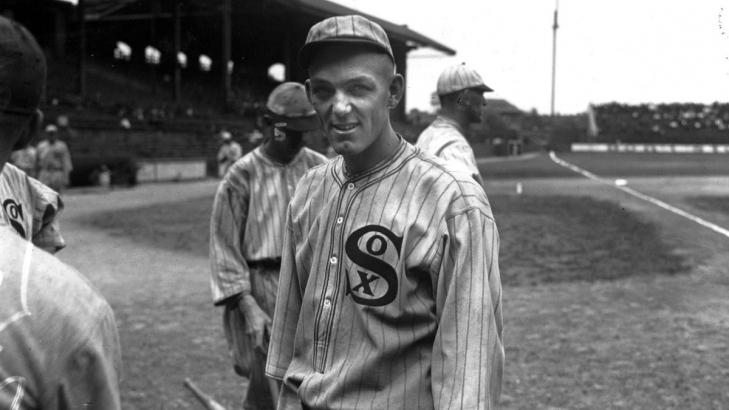
Arriving in the Chicago lineup in 1912, Buck Weaver rapidly established himself as a fixture of the infield. He arrived with a reputation for a relentless, aggressive style of play, transitioning from shortstop to third base, where his range and arm strength became a cornerstone of the club’s run prevention. He was a model of defensive reliability, never posting a negative defensive bWAR throughout his nine seasons and consistently shrinking the field for opposing hitters. He was the rare talent who understood the nuances of the "deadball" era, twice leading the American League in sacrifice hits and swiping 173 bases during his tenure.
The true magnitude of his value was on full display during the franchise's most successful stretch. Weaver was a primary catalyst for the 1917 World Series champions, providing the veteran poise and defensive stability that allowed the Pale Hose to capture the crown. His game reached a new level of sophistication by 1919; he had matured into a dangerous high-frequency hitter, and during the infamous World Series of that year, he was arguably the best player on the field. He recorded 11 hits and played flawless defense, a performance that remains the central piece of evidence for those who argue he never participated in the fix.
His presence was defined by a jovial, competitive nature that made him a favorite among both fans and peers. Weaver remained a standout through the 1920 campaign, authoring a career-high .331 batting average and accumulating over 1,300 hits before the legal and administrative storm broke over the club. Whether he was charging a bunt to cut down a runner or lacing a line drive into the gap, he competed with a visible joy that made his sudden exile all the more tragic. He proved that a player could anchor a championship team through a rare combination of grit, speed, and tactical intelligence.
His playing career reached a sudden, forced conclusion after the 1920 season. Despite his stellar play and his insistence that he had no part in the conspiracy, Commissioner Kenesaw Mountain Landis banned him for life for his "guilty knowledge" of the scandal. He left the organization as a statistical titan of the era, a man who spent his entire professional life in a White Sox uniform only to be cast out in his athletic prime.
With the White Sox, Weaver compiled 1,308 hits, 173 stolen bases, and 563 runs scored with a .272 batting average.
47. Jim Landis
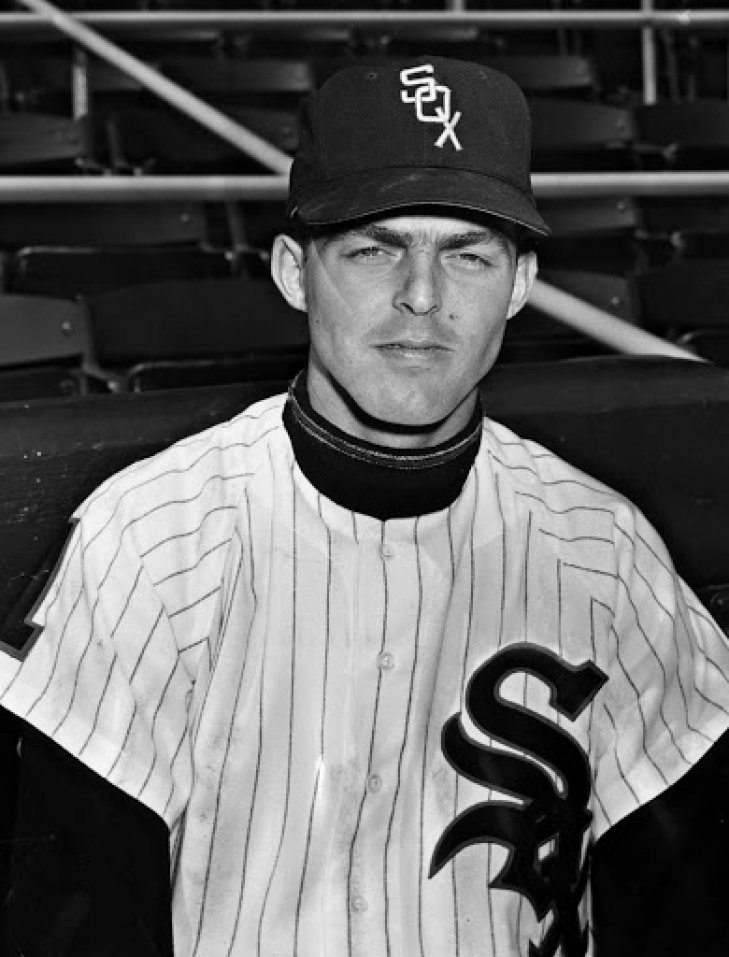
Landis emerged in the Chicago lineup in 1957 and matured into the premier defensive presence of the era by the following spring. He possessed a specialized ability to read the ball off the bat, a gift that allowed him to patrol the vast gaps of Comiskey Park with a grace that few could replicate. During the historic 1959 campaign, he became the engine of the "Go-Go" spirit, leading the American League with 25 Total Zone Runs while adding a dynamic spark to the offense with 140 hits and 20 stolen bases. He was the rare talent who could win a game with his legs in the eighth inning and save it with a diving catch in the ninth.
The most impressive aspect of his career was the iron-clad grip he held on the American League's defensive awards during the early 1960s. Landis authored a remarkable five-year run of Gold Glove excellence, securing the trophy annually from 1960 through 1964. He was a master of the "uncomfortable" out, a technician who shrank the field for opposing hitters and provided the White Sox pitching staff with a massive margin for error. His craftsmanship reached a peak in 1962, a season in which he was officially recognized as an All-Star and hit a career-high 15 home runs, proving that his game had matured into a well-rounded force.
In 1965, Landis was traded to the Kansas City Athletics. He left the organization having established himself as perhaps the finest defensive outfielder to ever wear the South Side pinstripes. With Chicago, Landis compiled 892 hits, 83 home runs, 127 stolen bases, and five Gold Glove Awards.
45. Lance Johnson
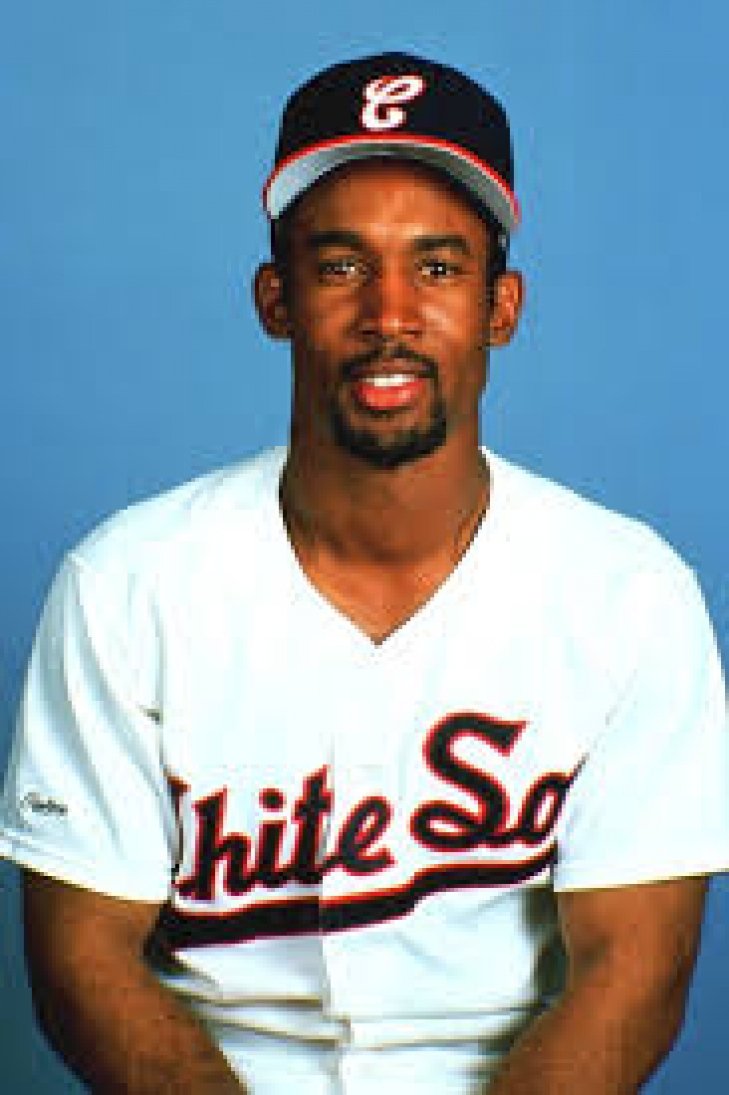
Johnson’s path to Chicago was the result of a lopsided 1987 swap with the St. Louis Cardinals, a deal that sent Jose DeLeon to the Senior Circuit. While the trade was headlined by other names at the time, it was Johnson who matured into the ultimate prize of the transaction. He emerged as a regular in 1990 and quickly became the premier leadoff threat for a surging squad. He possessed a "slap-and-run" style that relied on elite acceleration and a clinical ability to find holes in the defense, turning the trade from a simple roster move into a franchise-altering steal.
The most impressive aspect of his career was his total command of the basepaths and the gaps. Between 1991 and 1994, he authored a feat of speed-based dominance rarely seen in the modern era, leading the American League in triples for four consecutive summers. He was a model of specialized efficiency, proving that a hitter didn’t need over-the-fence power to dismantle an opposing pitching staff. This culminated in a 1995 campaign where he stood as the undisputed hit king of the American League, racking up 186 hits and showcasing a relentless approach that kept pressure on every battery he faced.
His stay in Chicago ended after that spectacular 1995 season, when he signed with the New York Mets as a free agent. He left the organization as a statistical pillar of the 1990s, having established himself as one of the most prolific speedsters to ever wear the uniform.
With the White Sox, Johnson compiled 1,018 hits, 77 triples, and 226 stolen bases with a .286 batting average.
46. Alex Fernandez
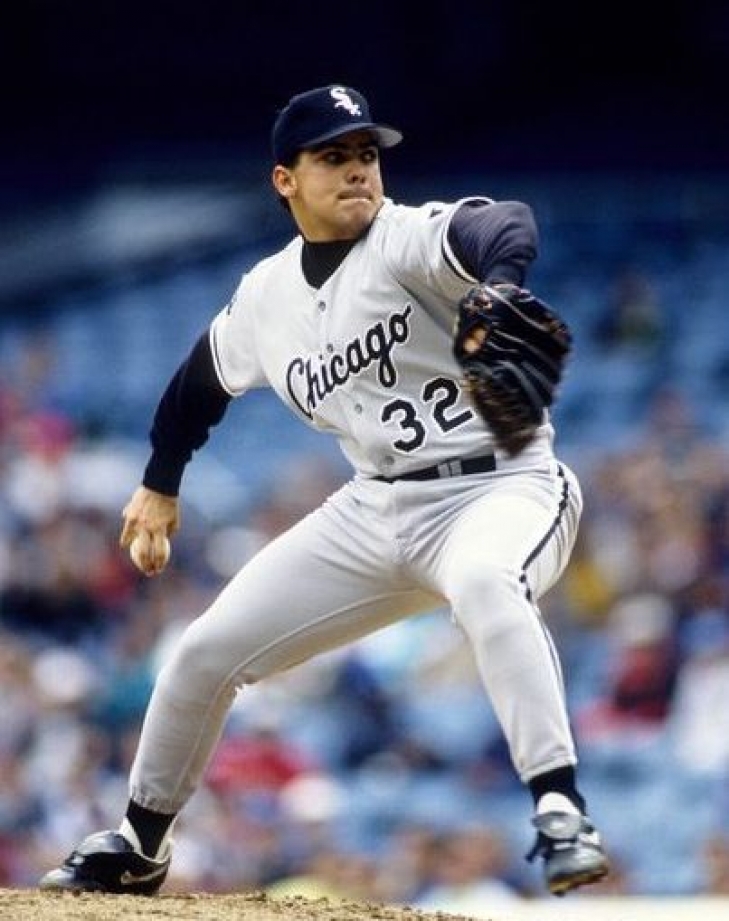
Alex Fernandez surfaced in Chicago during a whirlwind 1990 campaign, making his Major League debut just months after being selected fourth overall and sweeping the Golden Spikes and Dick Howser awards at the University of Miami. While his initial transition to the professional ranks required a brief period of adjustment, he matured into a cornerstone of the staff by 1993. That summer, he emerged as a premier force in the Junior Circuit, authored by an 18–9 record and a .313 ERA. He was a model of specialized control from the start, proving that his game was built on a sophisticated ability to outthink and out-execute the best hitters in the game.
The most impressive aspect of his tenure was the sustained excellence he maintained at the front of the Chicago rotation. Between 1993 and 1996, Fernandez established himself in the elite tier of American League hurlers, consistently finishing in the top ten in both WHIP and strikeout-to-walk ratio. He was a master of efficiency, possessing a workhorse mentality that allowed him to navigate the high-stakes environment of the mid-90s with professional poise. He reached a new ceiling in 1996, his final season with the club, when he eclipsed the 200-strikeout plateau for the first time and finished sixth in the Cy Young voting, showcasing a rare balance of power and precision.
His presence was defined by a quiet, steely resolve and a tactical brilliance that stabilized the Chicago staff during the 1993 division title run. Fernandez was a fixture of the South Side rotation for seven seasons, using a specialized repertoire to remain a high-leverage producer through some of the most offense-heavy years in the sport's history.
After the 1996 season, Fernandez returned to his home state to sign with the Florida Marlins, where he would eventually capture a World Series ring. With the White Sox, Fernandez compiled a 79-63 record with 951 strikeouts and a 3.70 ERA across 1,281.1 innings.
16. Jose Abreu
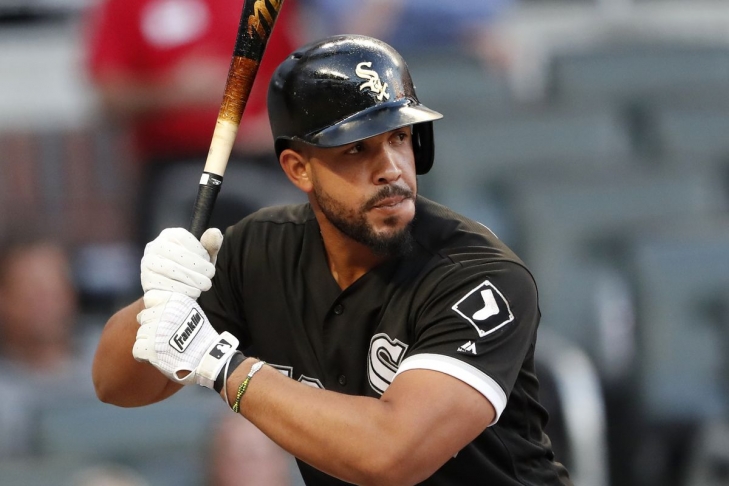
The middle of his Chicago residency was defined by a level of "Traditional Dominance" that was almost metronomic. From 2014 to 2017, Abreu was a lock for 25 home runs and 100 RBIs every single summer, batting at least .290 along the way. While the team around him underwent a painful and protracted rebuilding process, Abreu remained the steady hand in the middle of the order. He was a three-time All-Star who led by example, playing through injuries and serving as a mentor to the influx of young Cuban talent that followed in his footsteps. His 2019 season served as a loud reminder of his elite status, as he paced the American League with 123 RBIs.
The pinnacle of his tenure came during the chaotic, shortened 2020 season. In a year where every game felt like a playoff atmosphere, Abreu was the league's most dangerous weapon. He captured the American League MVP award, leading the circuit in hits (76), RBIs (60), and slugging (.617). It was the definitive proof he wasn't just about volume, but about high-leverage impact. He followed that up with another 30-home run campaign in 2021, proving that even as he entered his mid-30s, his bat remained as lethal as the day he stepped off the plane from Havana.
The final walk toward the exit came as a shock to the South Side faithful after the 2022 season. Despite batting over .300 in his final year with the Sox, Abreu departed as a free agent to join the Houston Astros in early 2023. It was a departure that felt like the closing of a significant chapter for the organization. He left the White Sox with 1,445 hits, 245 home runs, and a career .292 average.
30. Magglio Ordonez
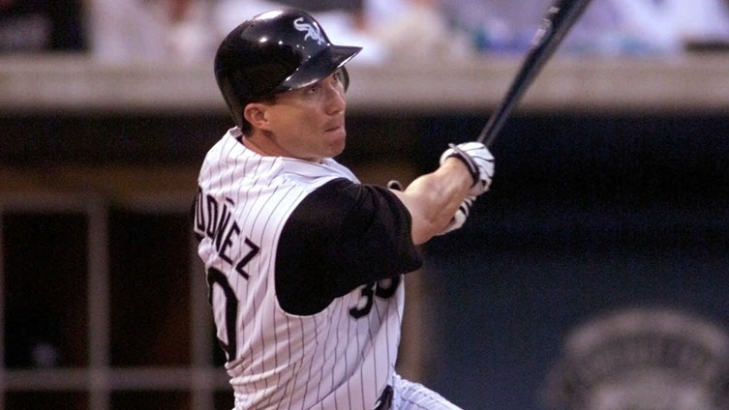
The long road from being a 1991 amateur signing finally reached its destination in 1997, but it was the 1999 campaign where Ordóñez truly matured into a franchise cornerstone. He took over right field and immediately brought a level the organization hadn't seen at the position in years. From 1999 to 2002, he was a model of run production, annually clearing the benchmarks of 30 home runs and 110 RBIs. He arrived as a prospect with high-ceiling potential and quickly became the high-leverage bat that opposing pitchers most feared in the Chicago order.
Efficiency was the hallmark of his game throughout the peak of his residency. Ordóñez wasn't a "three-true-outcomes" slugger; he was a surgical hitter who maintained a batting average over .300 for five consecutive seasons starting in '99. He earned him four All-Star selections and two Silver Slugger awards in a White Sox uniform, proving that his Advanced Quality was rooted in a rare combination of contact and power. He possessed a gap-to-gap approach that allowed him to anchor the middle of the order, serving as the primary engine for an offense that was consistently among the most dangerous in the junior circuit.
Whether he was driving a double into the left-center gap or launching a ball over the wall, Ordóñez played with a calm intensity that resonated with the South Side faithful. He concluded his Chicago chapter with 1,167 hits and 187 home runs, leaving the team with a stellar .307 career average. However, the final walk toward the exit was clouded by a complex set of circumstances.
The conclusion of his time in Chicago was as abrupt as it was painful. A collision with second baseman Willie Harris in May 2004 led to a significant left knee injury and bone marrow edema, a medical mystery that sidelined him for the majority of the season. With his contract expiring and concerns lingering about the long-term stability of his knee, the White Sox opted not to re-sign their star outfielder. Ordóñez entered free agency under a cloud of physical uncertainty, ultimately signing a massive deal with the Detroit Tigers in 2005.
25. Reb Russell
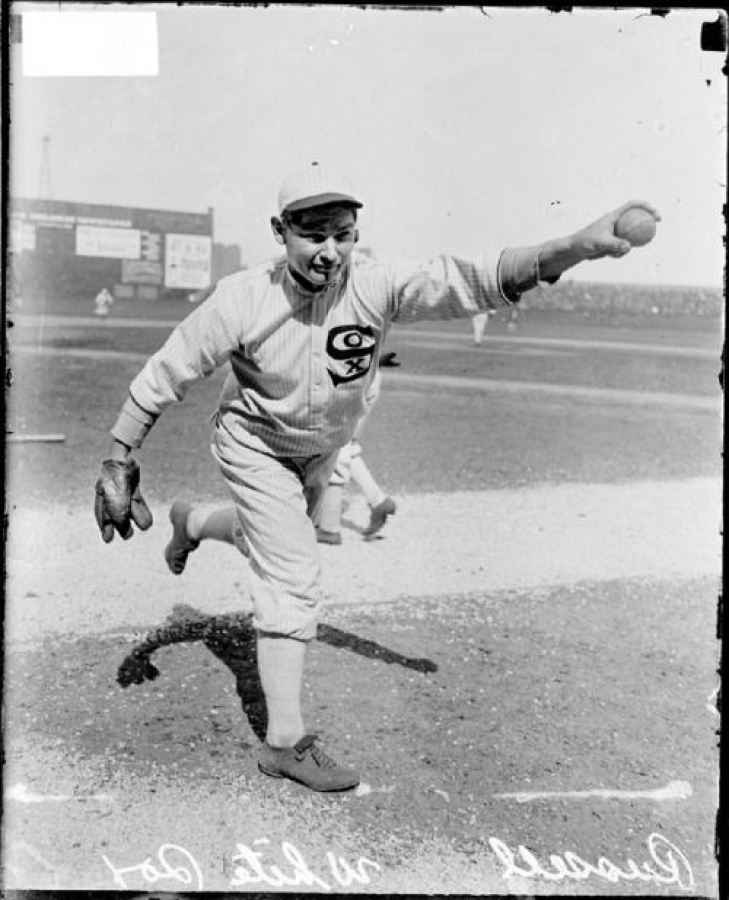
Scouted out of the Texas League and snatched up in the 1912 Rule 5 Draft, Reb Russell bypassed the traditional developmental curve to stage a rookie season for the ages in 1913. He emerged as a high-volume workhorse immediately, leading the American League with 52 appearances while posting a staggering 22-16 record and a microscopic 1.90 ERA. He arrived as an unheralded addition and matured instantly into the staff's most versatile weapon.
Reliability and precision became his calling cards as the residency progressed. Russell was a master through elite control, consistently suppressing runs with a style that never saw his season ERA climb above 3.00 in a White Sox uniform. In 1916, he led the American League with a league-best 1.053 WHIP, proving that he hated to give up the free pass. This surgical efficiency served as a primary engine for the 1917 squad, where he played a vital role in delivering a World Series title to Chicago, cementing his role as a big-game winner.
The tactical value of his tenure was further enhanced by his prowess at the plate, a hint of the second career he would eventually forge as an outfielder in the National League. For the White Sox, however, he was the ultimate left-handed hammer, concluding his pitching residency with an 80-59 record and a stellar 1.080 career WHIP. Even when arm trouble began to shadow his performance in 1918, his reputation as a competitor remained untarnished. He left the organization following the 1919 season, a casualty of physical decline rather than a lack of talent.
His transition to a full-time hitter later in his career with Pittsburgh only serves to highlight the raw athletic skills he brought to the South Side. He proved that he wasn't just a pitcher, but a ballplayer in the truest sense of the word.
14. Doc White
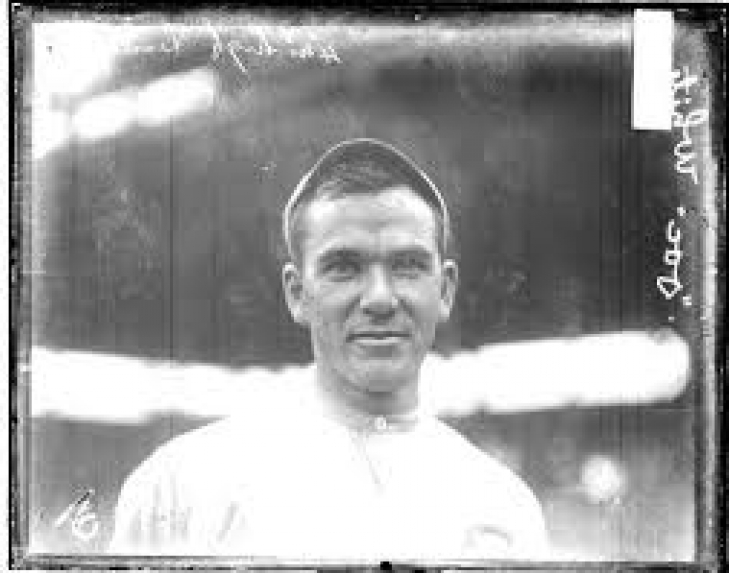
Doc White arrived on the South Side in 1903 following a brief but brilliant stint with the Philadelphia Phillies. A graduate of Georgetown’s dental school, White brought a clinical precision to the mound that immediately translated to the American League. While he lacked the overwhelming power of some of his contemporaries, he was a master of the sinker, the curve, and the spitball, utilizing a cerebral approach to keep hitters off-balance. His residency in Chicago began with a literal bang; in 1904, he set a Major League record by tossing five consecutive shutouts, a feat of durability and dominance that stood for 64 years until it was eclipsed by Don Drysdale.
The pinnacle of his career arrived in 1906, when he served as a primary architect of the White Sox's first World Series championship. That season, White was nearly untouchable, leading the American League with a microscopic 1.52 ERA and a league-best WHIP. During the historic crosstown World Series against the 116-win Cubs, White etched his name into the record books twice: first by recording the first save in World Series history (retroactively calculated) and then by winning the clinching Game 6. He was the high-efficiency engine of a staff that had to be perfect to compensate for the team's anemic offense.
The momentum of the championship season carried directly into 1907, which stands as the statistical masterpiece of his tenure. White led the league with 27 wins and displayed a level of control that bordered on the impossible, issuing only 38 walks in 291 innings. He even authored an American League record by pitching over 65 consecutive innings without allowing a single walk. He was a master of the "short game," working quickly and efficiently, often finishing games in under 90 minutes. At this apex, he was widely considered the premier left-hander in the game, a technician who had turned pitching into a science.
However, the bill for those high-workload seasons eventually came due. Following a solid 18-win campaign in 1908, White began a gradual, painful descent. By 1909, the junk that had frustrated hitters for years started to lose its bite, and his ERA began a steady climb. While he managed one final 15-win season in 1910, the remainder of his journey was marked by a struggle to regain the elite form of his youth. The transition from superstar to veteran mentor was difficult, and by 1913, his arm had finally reached its limit.
Doc White’s walk toward the exit came after the 1913 season, concluding an eleven-year residency that saw him accumulate 159 wins in a White Sox uniform. He left the organization as a World Series hero and a statistical outlier whose records for shutouts and control would stand for generations. He arrived as a young dentist with a nasty sinker and left as a permanent fixture of South Side lore, the man who proved that sometimes, the smartest player on the field is the most dangerous one.
33. Jim Scott
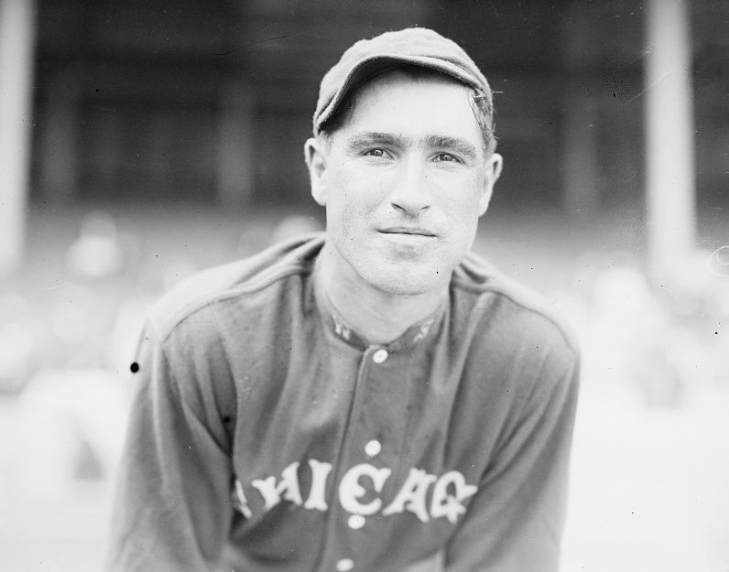
Arriving from the rugged landscape of Deadwood, South Dakota, Jim Scott debuted in 1909 and matured instantly into a reliable workhorse for the White Sox. He was the definition of a worker from the start, logging over 220 innings in each of his first three seasons. He arrived with a "clockspring" delivery that baffled hitters and quickly became the arm the organization leaned on to navigate the grind of the American League schedule. Though he suffered through a "hard luck" reputation, frequently victimized by a stagnant Chicago offense, his ability to consistently take the ball and keep his team in the game was the hallmark of his early years.
The absolute pinnacle of his career arrived in two distinct bursts of dominance. In 1913, after returning from an injury-shortened season, Scott authored a marathon campaign, pitching 312 innings and posting a sparkling 1.90 ERA. Despite his 20-21 record, MVP voters recognized his value, placing him 14th on the ballot for a season in which he allowed three or fewer earned runs in 39 consecutive starts—a Major League record at the time. He followed this in 1915 with his most decorated season, winning 24 games and leading the American League with seven shutouts, tying the great Walter Johnson for the league lead.
His identity was that of a quiet, intrepid professional who found unique ways to stay ahead of the game. Scott was a master of the breaking ball and was known to sportswriters as a wizard with the curve, using his legendary "mudball" to force hitters into weak contact. Whether he was stopping a 35-game hitting streak by Ty Cobb or throwing nine no-hit innings only to lose in the tenth, he played with a grit that earned him the respect of the entire league.
The chapter of his baseball life reached an abrupt and patriotic conclusion in 1917. While the White Sox were marching toward a World Series title, Scott left the team in mid-August to join the military after the United States entered World War I. He traded the mound for the uniform of his country, and while he technically shared in the 1917 championship, he spent the fall preparing for a different kind of service. He never returned to the Major Leagues as a player, but he left behind a career 2.30 ERA, a number that still ranks among the top twenty in the history of the sport.
26. Joe Horlen
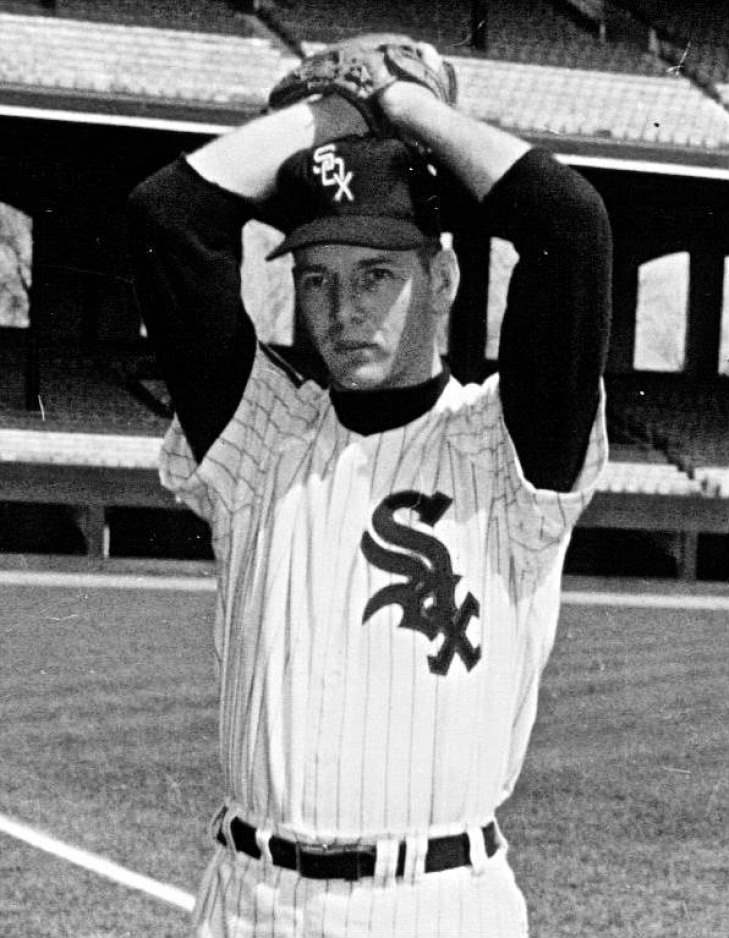
A debut in 1961 offered only a glimpse of the tactical master Horlen would become, but by 1963, he had secured his place as a primary pillar of the Chicago rotation. He matured into a frontline starter during the 1964 campaign, a remarkable season where he posted a microscopic 1.88 ERA. The year was best illustrated by his league-leading 0.935 WHIP and a staggering 6.1 H/9 innings, the best mark in the junior circuit. He arrived as a young prospect and instantly became the pitcher that opposing managers feared most when a low-scoring game was on the line.
The pinnacle of his career arrived in 1967, a season in which he ascended to the very top of the pitching world. Horlen captured the American League ERA title with a 2.06 mark and claimed his second WHIP crown, earning his first All-Star nod in the process. He was the outlier of the summer, finishing second in the Cy Young voting and fourth in the MVP race. His ability to suppress runs was nearly unmatched; he maintained an ERA under 2.90 for three consecutive seasons, serving as the high-leverage anchor for a staff that specialized in run prevention.
Consistency and durability defined him throughout the decade. While his eventual 113-113 record in a White Sox uniform was often a byproduct of the team's struggling offense, his 1,007 strikeouts and relentless efficiency told a much different story. He was a volume-dense workhorse who took the ball in the most critical matchups, providing a decade of stability on the South Side. Even as his ERA began to climb toward the end of his tenure in 1970, his reputation as a big-game specialist remained intact.
The organization moved in a different direction just before the 1972 season, leading Horlen to a final chapter with the Oakland A’s, where he added a World Series ring to his resume.
27. George Davis
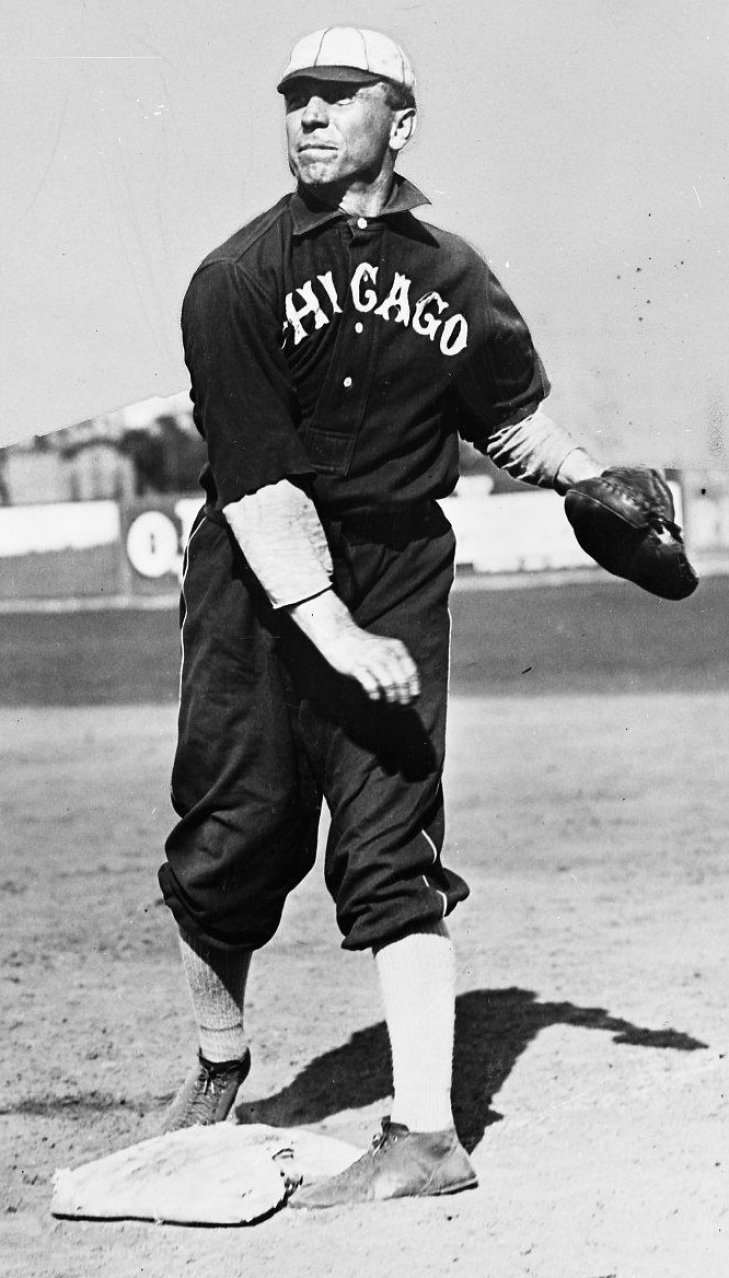
The landscape of professional baseball shifted in 1902 when Davis jumped from the Giants to the White Sox, seeking the superior paydays of the new American League. He matured instantly into the centerpiece of the Chicago lineup, batting .299 and driving in 93 runs during his debut season. However, his tenure was interrupted by a bizarre 1903 campaign, marked by legal battles and league-jumping disputes, which forced him to sit out most of the year. He returned to the South Side once the peace agreement between the leagues was brokered, providing the "Franchise Identity" of a battle-tested leader who was ready to anchor a burgeoning dynasty.
Defensive excellence became the hallmark of his second act in Chicago. While his offensive output naturally declined from his younger days in New York, Davis reinvented himself as a vacuum at shortstop, providing a level of glovework in the field that few could replicate. He led the American League in defensive bWAR in both 1904 and 1905, following those campaigns with top-three finishes in the two years that followed. This run prevention was the primary engine for the 1906 squad, as Davis’s glove and veteran poise guided the "Hitless Wonders" to a massive upset over the Cubs in the World Series.
Reliability in the field was paired with a steady, if diminished, presence at the plate. From 1904 to 1906, he remained a modest hitting threat by generating at least 134 hits per year, serving as a high-leverage stabilizer for a team that prioritized pitching and defense above all else. He concluded his Chicago residency with 785 hits and a staggering 15.2 defensive bWAR, a volume of defensive production that underscored his status as the best all-around shortstop of the decade. He wasn't just a part of the rotation; he was the glue that held the infield together during the most successful era in the franchise's early history.
The final seasons of his career saw him provide a veteran bridge for the next generation of White Sox talent before he retired following the 1909 campaign. He left the city as a world champion and a pioneer of the shortstop position, a man who proved that a great ballplayer can adapt his game to meet his team's needs.
Recognition for his historic career arrived in 1998, when the Veterans Committee elected Davis to the Baseball Hall of Fame. It was a long-overdue tribute to a man who arrived as a superstar and left as the defensive architect of a champion.
40. Johnny Rigney
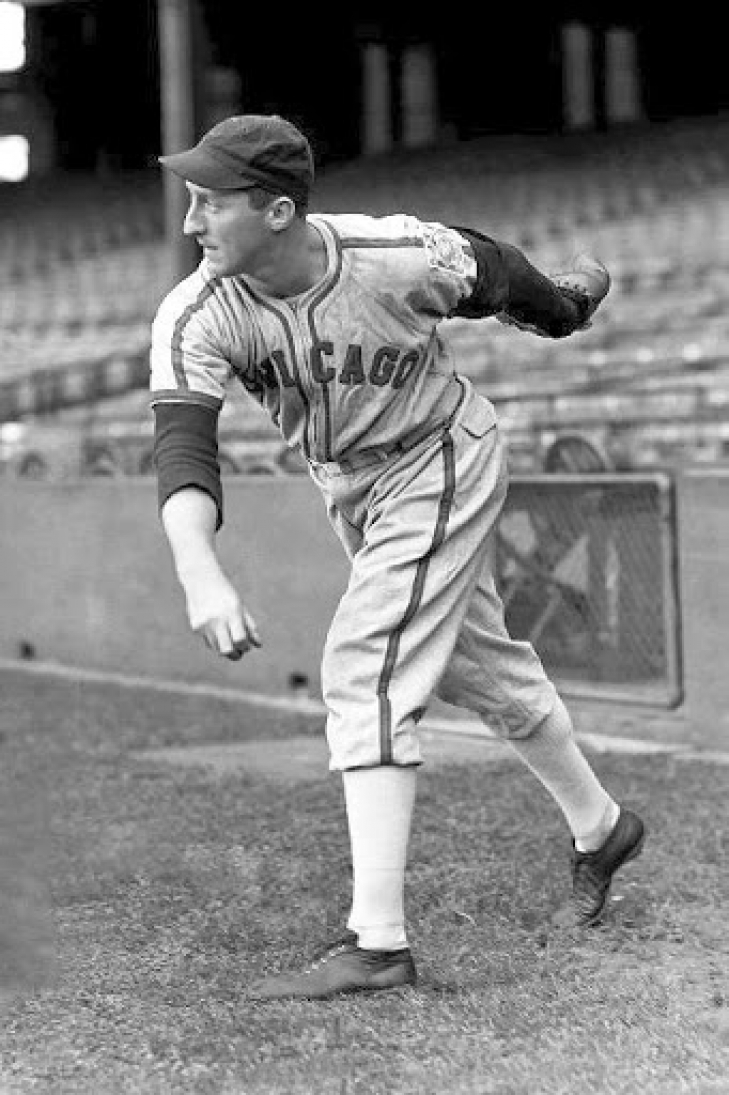
Johnny Rigney’s journey in Chicago began in 1937, but it was the 1939 campaign when he instantly matured into a cornerstone of the franchise. He arrived with a "live" arm and a clinical approach to hitters, evolving from a prospect into a statistical titan by the time he was 24. Between 1939 and 1941, Rigney was a model of consistency, winning at least 13 games in each of those three seasons while serving as the tactical heartbeat of a White Sox staff that relied on his ability to miss bats.
The absolute pinnacle of his career was marked by a rare, high-ceiling efficiency that made him a perennial threat in the American League. During that dominant three-year stretch, Rigney was a master of run suppression, consistently finishing in the top ten in WHIP and the top four in strikeouts. Most impressively, he maintained a sophisticated control of the strike zone, finishing sixth in strikeout-to-walk ratio in each of those campaigns. He wasn't just a thrower; he was a high-leverage technician who used his power to navigate the dangerous lineups of the late 1930s, accumulating 605 strikeouts during his stay and proving that his value was rooted in a rare balance of raw strength and professional poise.
His identity was synonymous with a quiet, career-long loyalty to the organization, but the momentum of his career reached a sudden crossroads in 1942. Like so many of his contemporaries, Rigney traded his White Sox pinstripes for a U.S. Military uniform, sacrificing four of his prime athletic years to the war effort. When he finally returned to the mound in 1946, the time away had taken its toll; the "lightning" that once defined his fastball had faded, and he managed only two more seasons before retiring in 1947. He concluded his journey with 63 wins, a total that remains a testament to what he achieved, and a poignant reminder of what might have been had history not intervened.
43. Chico Carrasquel
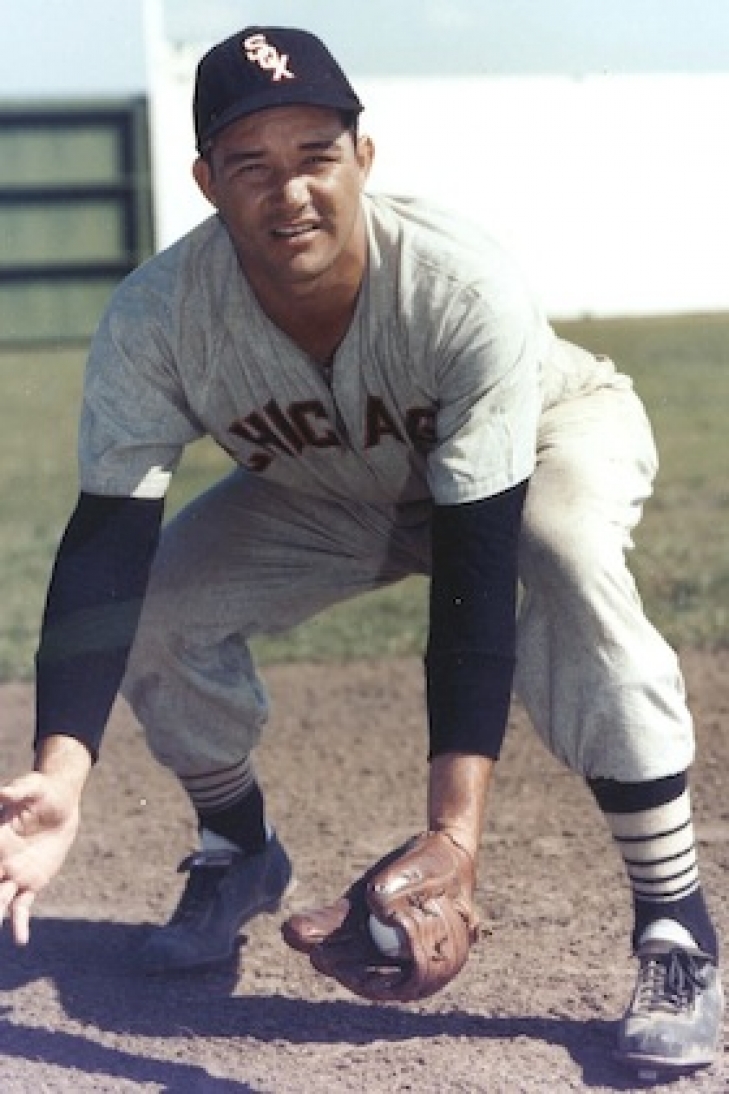
In 1950, Chico Carrasquel arrived in Chicag with a flair for the spectacular, possessing a "vacuum" of a glove and a lightning-fast release that turned certain hits into routine outs. His impact was felt immediately across the league; in 1951, he made history as the first Venezuelan player ever selected for the All-Star Game. He was a model of consistency from his first day on the dirt, providing a specialized level of run prevention that allowed the White Sox pitching staff to attack the strike zone with complete confidence.
The most impressive aspect of his tenure was the sustained defensive brilliance he displayed over six seasons. Carrasquel was a master of positioning and range, leading the American League in defensive bWAR in both 1951 and 1954. He remained a perennial fixture at the top of the leaderboards, finishing in the top four for defensive value in five of his six years with the club. While he wasn't known as a power threat, he remained a professional and reliable presence at the plate, maintaining a respectable .265 batting average and recording nearly a hit per game throughout his stay in the Windy City.
His time with the club was defined by a charismatic, smooth style of play that resonated with a growing international audience. Carrasquel was the defensive heartbeat of the "Go-Go" White Sox, earning four All-Star selections in a five-year span. Whether he was diving into the hole to take away a base hit or orchestrating a seamless double play, he competed with a grace that made him a local favorite and a national standout. He proved that a player could become a cornerstone of a franchise through defensive wizardry and a trailblazing spirit.
After the 1955 season, Carrasquel was traded to the Cleveland Indians, a move that famously cleared the path for his successor and protégé, Luis Aparicio. In 837 games with the White Sox, Carrasquel compiled 825 hits, 153 doubles, and maintained a .968 fielding percentage at shortstop.
1. Frank Thomas
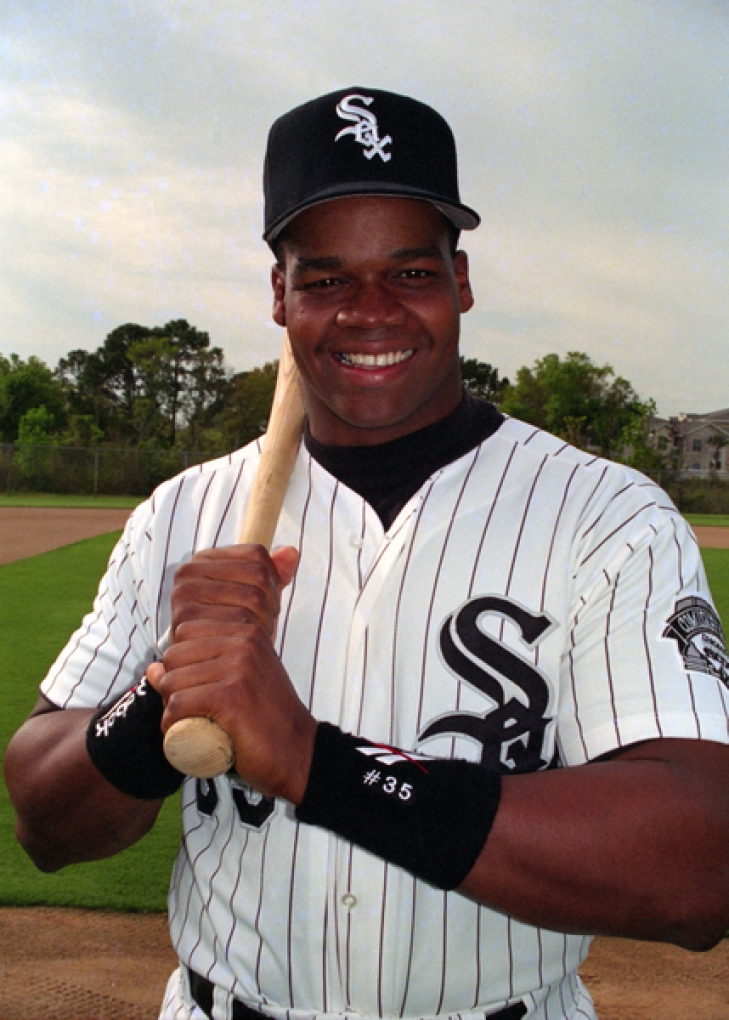
When Frank Thomas took his first hacks at Comiskey Park in 1990, the baseball world wasn't quite prepared for the paradox he represented. He was a 6'5", 240-pound mountain of a man who looked like he belonged on a football field, and indeed, he had played tight end at Auburn. But unlike Oakland’s Bash Brothers (Jose Canseco and Mark McGwire) of the era, who relied on raw, unrefined strength, Thomas arrived with the most sophisticated hitting eye in the American League. He didn't just want to hit the ball over the wall; he wanted to dominate the pitcher intellectually. For the fans on the South Side, the 60-game debut in 1990 wasn't just a preview; it was a warning shot.
The ensuing seven-year run from 1991 to 1997 is a stretch of offensive geography that has few neighbors in the history of the sport. Thomas turned the batter's box into a personal laboratory, conducting a relentless experiment in elite production. In every single one of those years, he hit at least .300, maintained an on-base percentage of .425 or higher, and slugged at a minimum of .530. He became the only player in the history of the game to put up seven consecutive seasons with 20-plus homers, 100 RBIs, 100 walks, and 100 runs scored while hitting .300. It wasn't just a "hot streak"; it was a decade of perfection. During this apex, he claimed back-to-back MVP awards in 1993 and 1994, and truthfully, he could have made a compelling case for a third or fourth.
As the 90s transitioned into the new millennium, the narrative around Thomas began to shift toward his role as a Designated Hitter. Traditionalists grumbled about his lack of a glove, but the reality was that his bat was so vital it would have been a crime to risk his health in the field. Even as his batting average began its natural, age-related dip, the power remained terrifying. In 2000, he staged a massive "second act," crushing 43 home runs and driving in a career-high 143 runs to finish as the MVP runner-up. He proved that even as his game evolved, his presence in the heart of the order remained the gravity that held the White Sox together.
The sunset of his tenure in Chicago was tinged with the bittersweet reality of professional sports. By 2004 and 2005, the "Big Hurt" was finally feeling the hurt himself, as foot injuries began to rob him of the stability that powered his legendary swing. When the White Sox finally broke their 88-year championship drought in 2005, Thomas was a veteran mentor in the dugout, but his injury kept him off the postseason roster. It was a difficult way to see a legend's run conclude, watching from the sidelines as the team he had carried for fifteen years finally reached the summit. When the front office chose not to re-sign him following that World Series win, it marked the end of the greatest individual era in franchise history.
Frank Thomas left the South Side as the undisputed king of the record books. He remains the all-time leader in runs scored (1,327), doubles (447), home runs (448), RBIs (1,468), and walks (1,466). His career Sox slash line is .307/.427/.568, which serves as a statistical masterpiece that may never be touched. He was a first-ballot Hall of Famer who didn't just hurt the opposition; he dismantled them with a blend of discipline and power that redefined the modern hitter. When his number 35 was retired in 2010, it was a formal acknowledgement of what every pitcher from that era already knew: there was only one Big Hurt, and there will never be another.
5. Red Faber
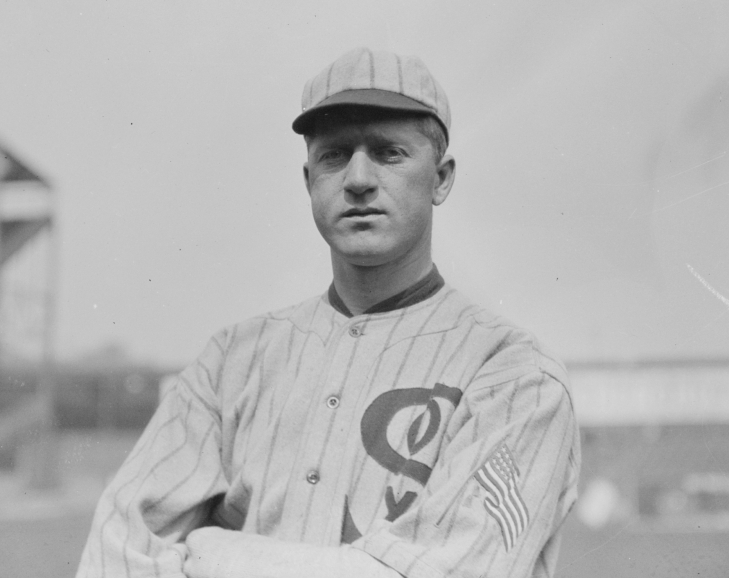
Urban "Red" Faber arrived in Chicago in 1914 and wasted little time proving he belonged in the upper echelon of American League arms. By his second season, he was a 24-win force, utilizing a deceptive spitball that would eventually make him one of the last "legal" practitioners of the pitch after it was banned in 1920. His early career reached a fever pitch in 1917, when he spearheaded the White Sox’s march to a World Series title, capturing three victories in the Fall Classic and establishing himself as the staff’s big-game engine.
The trajectory of Faber’s career was nearly derailed by the chaos of the late 1910s. After serving in the Navy during World War I, he returned to a team that was beginning to fracture. A bout of the flu and an ankle injury sidelined him for the infamous 1919 World Series, a "what if" that has haunted South Side historians for a century. As one of the few players whose integrity was never questioned, many believe that had Faber been healthy enough to take his regular turn on the mound, the Black Sox scandal might never have had the room to breathe.
As the franchise collapsed under the weight of the banned "Eight Men Out," Faber became the solitary pillar of the organization’s recovery. From 1920 to 1922, he entered a period of localized dominance that rivaled any pitcher in the game. He rattled off three consecutive 20-win seasons, capturing back-to-back ERA and WHIP titles in 1921 and 1922. While the team around him was tarnished and in the process of rebuilding, Faber was a model of precision and class, providing the South Side with a reason to keep coming to the ballpark.
The final decade of his Chicago journey was a testament to his versatility and clubhouse influence. Though the velocity of his youth faded, he remained a viable starter and a respected dugout mentor until his release in 1933. He walked away with 254 wins and over 4,000 innings pitched—all in a White Sox uniform. Faber’s legacy as the uncompromised star of a dark era was officially immortalized in 1964, when he was inducted into Cooperstown. He arrived as a young spitballer and left as the conscience of the franchise, the man who kept the light on during the team's darkest hour.
2. Ed Walsh
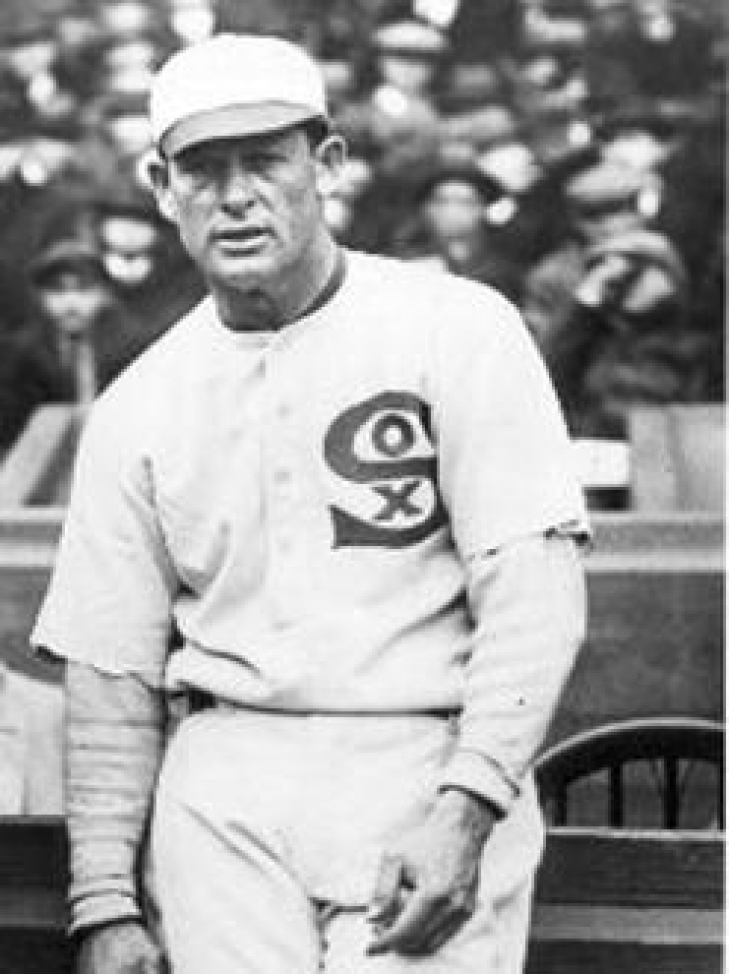
When "Big Ed" Walsh broke into the White Sox rotation in 1906, he brought with him a devastating new toy: the spitball. He had learned the pitch from teammate Elmer Stricklett, but Walsh refined it with a terrifying level of control, claiming he could "hit a tack on a wall" with it. That season, he pitched the "Hitless Wonders" to a World Series title over the crosstown Cubs, striking out 12 in a single game and proving that he was the premier big-game hunter in the city. It was the beginning of a seven-year stretch where Walsh tested the very limits of human endurance.
The 1908 season stands as Walsh’s masterpiece, a campaign so massive it feels like a tall tale. He won 40 games, a post-1900 record shared only with Jack Chesbro. But the volume-dense reality was even more staggering: he pitched 464 innings, completed 42 games, and saved six others. He was a one-man pitching staff, leading the league in nearly every meaningful category and carrying the Sox to the brink of a pennant. To this day, he remains the last pitcher to ever reach the 40-win plateau, a benchmark that has become functionally impossible in the modern era.
Perhaps the most defining chapter of his tenure was the 1910 season, a year that serves as the ultimate case study in "Lack of Run Support." Walsh turned in a career-best 1.27 ERA and a microscopic 0.820 WHIP, yet he became the only pitcher in history to lead the league in ERA while losing 20 games. He was perfect, but his team was silent. Undeterred, he returned to win 27 games in both 1911 and 1912, leading the league in innings and games pitched once again. He was the "Sox's Architect," a man who refused to take a day off until his arm simply had nothing left to give.
By the spring of 1913, the bill for those 3,000 innings finally came due. The dead arm that had been looming for years finally arrived, and Walsh’s career effectively ended at age 31. He had given the White Sox every ounce of his physical prime, retiring with a 1.82 career ERA—the lowest in the history of Major League Baseball. He arrived as a raw spitballer and left as the statistical gold standard of the mound. Inducted into Cooperstown in 1946 and later honored in the first class of the White Sox Hall of Fame, "Big Ed" remains the towering figure of South Side pitching, a monument to an era where the mound belonged to one man.
9. Minnie Minoso
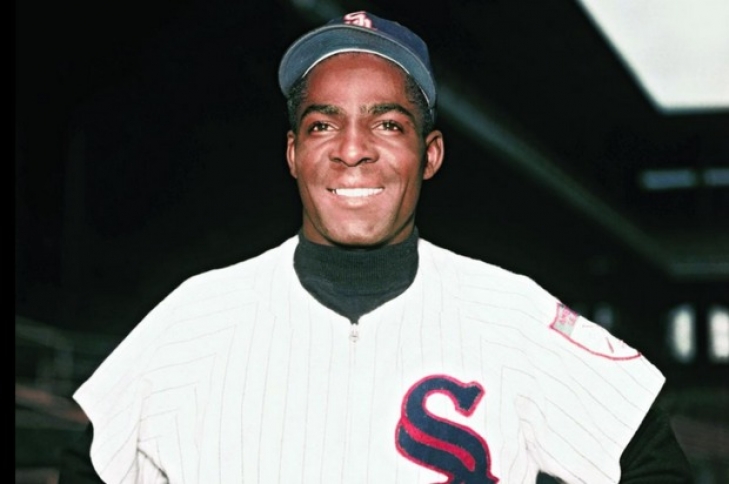
In terms of iconic figures, would have been wrong if we placed Minnie Minoso at number one? Clearly, we didn't, but the native of Havana, Cuba, will always be one of the most revered athletes in the history of Chicago.
6. Billy Pierce
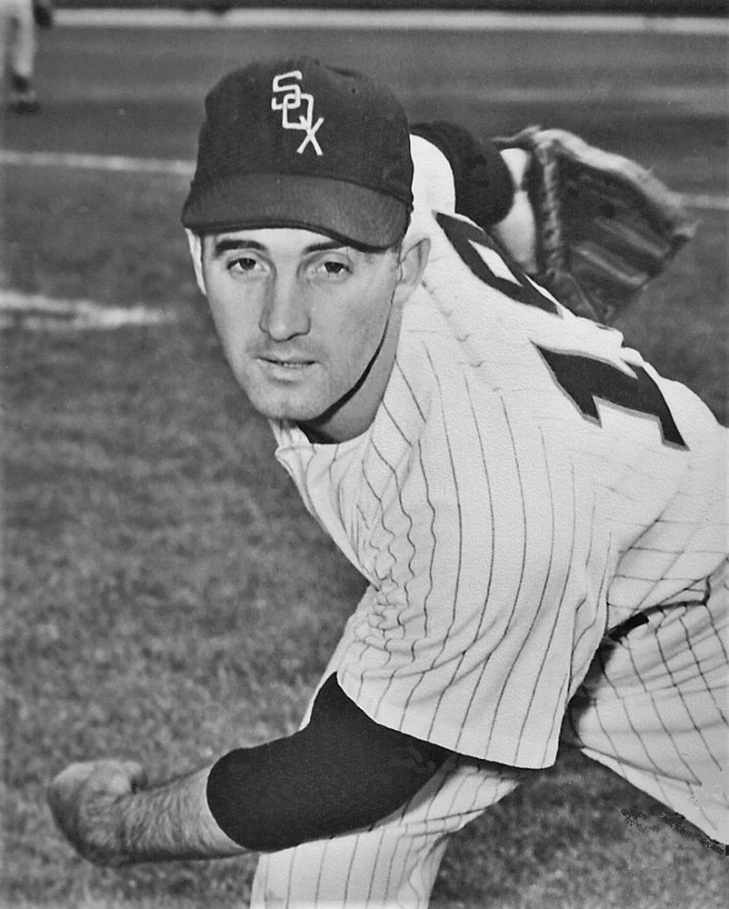
When Billy Pierce arrived in Chicago in 1949 via a trade with the Detroit Tigers, he was a slight, 160-pound left-hander with a live arm and a questionable sense of control. The Tigers thought he was too small to handle a starter’s workload; the White Sox saw a diamond in the rough. Over the next thirteen seasons, Pierce would prove Detroit’s front office wrong in historic fashion, evolving from a wild young prospect into the most dominant southpaw in the history of the franchise.
His tenure was defined by an elite blend of velocity and a devastating slider that made him a perennial All-Star. Throughout the 1950s, Pierce was the anchor of the "Go-Go Sox" pitching staff, rattling off seven All-Star nods and leading the American League in strikeouts in 1953. His 1955 campaign was a masterclass in efficiency, as he claimed the league’s ERA title with a career-best 1.97. He was the rare pitcher who could overpower the heavy hitters of the Yankees while maintaining a surgical precision that kept the ball in the yard.
The emotional peak of his time in Chicago arrived in 1957, when he won 20 games and helped signal the team’s rise toward their eventual 1959 pennant. Though he was famously skipped in the 1959 World Series rotation in favor of more rested arms—a decision that remains a point of debate for South Side historians—Pierce remained the emotional heartbeat of the organization. He was a three-time league leader in complete games, a testament to his "Iron Man" durability that defied his small stature.
By the time he was traded to the San Francisco Giants after the 1961 season, Pierce had amassed 186 wins and 1,796 strikeouts in a White Sox uniform. He departed as a franchise icon, the man who bridged the gap between the lean years of the 40s and the championship aspirations of the late 50s. The White Sox rightfully retired his number 19 in 1987 and later immortalized him with a statue at the ballpark, ensuring that the "Little Fireballer" would always have a permanent home on the South Side.
