


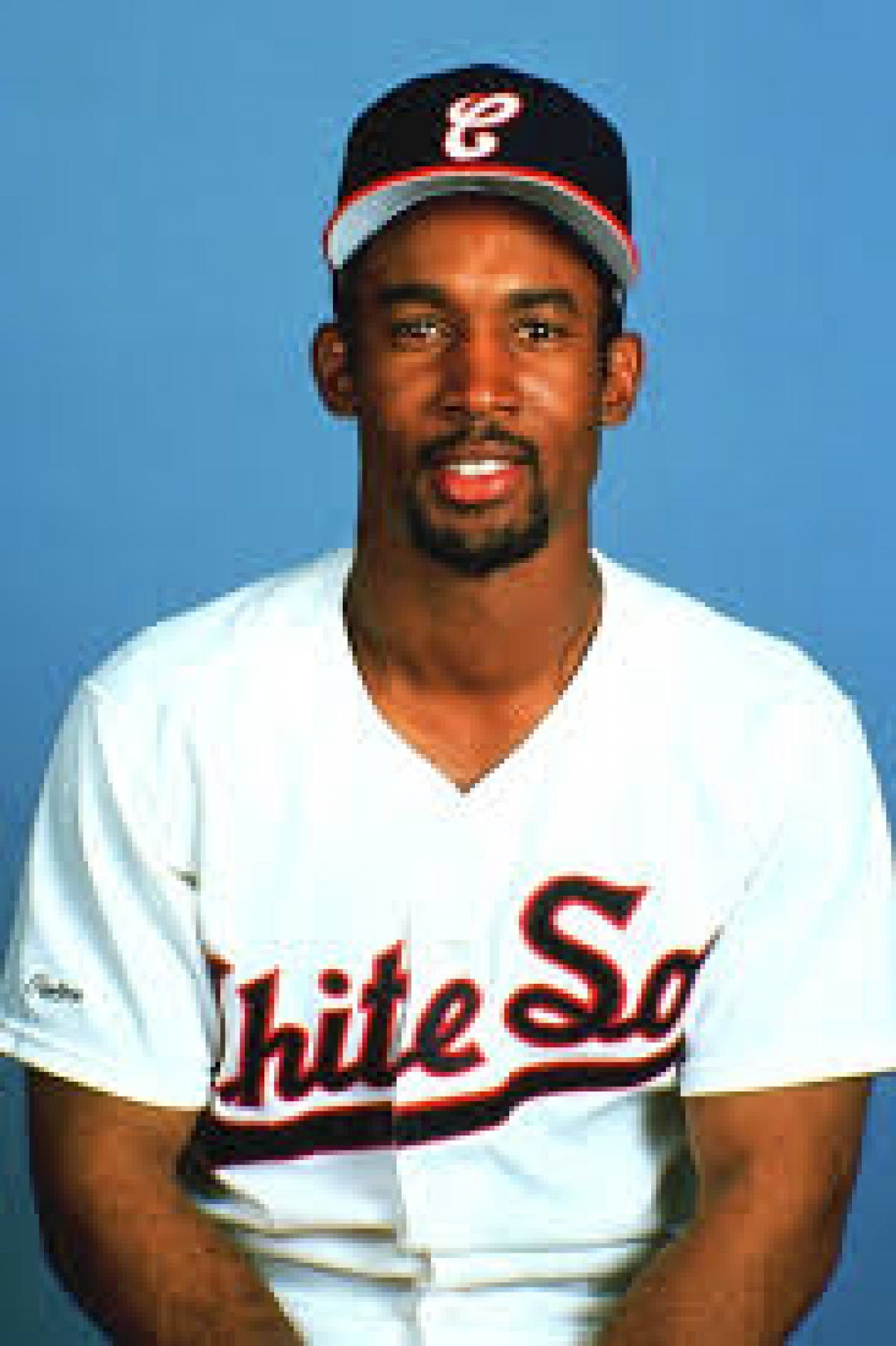

Johnson’s path to Chicago was the result of a lopsided 1987 swap with the St. Louis Cardinals, a deal that sent Jose DeLeon to the Senior Circuit. While the trade was headlined by other names at the time, it was Johnson who matured into the ultimate prize of the transaction. He emerged as a regular in 1990 and quickly became the premier leadoff threat for a surging squad. He possessed a "slap-and-run" style that relied on elite acceleration and a clinical ability to find holes in the defense, turning the trade from a simple roster move into a franchise-altering steal.
The most impressive aspect of his career was his total command of the basepaths and the gaps. Between 1991 and 1994, he authored a feat of speed-based dominance rarely seen in the modern era, leading the American League in triples for four consecutive summers. He was a model of specialized efficiency, proving that a hitter didn’t need over-the-fence power to dismantle an opposing pitching staff. This culminated in a 1995 campaign where he stood as the undisputed hit king of the American League, racking up 186 hits and showcasing a relentless approach that kept pressure on every battery he faced.
His stay in Chicago ended after that spectacular 1995 season, when he signed with the New York Mets as a free agent. He left the organization as a statistical pillar of the 1990s, having established himself as one of the most prolific speedsters to ever wear the uniform.
With the White Sox, Johnson compiled 1,018 hits, 77 triples, and 226 stolen bases with a .286 batting average.

Comments powered by CComment