


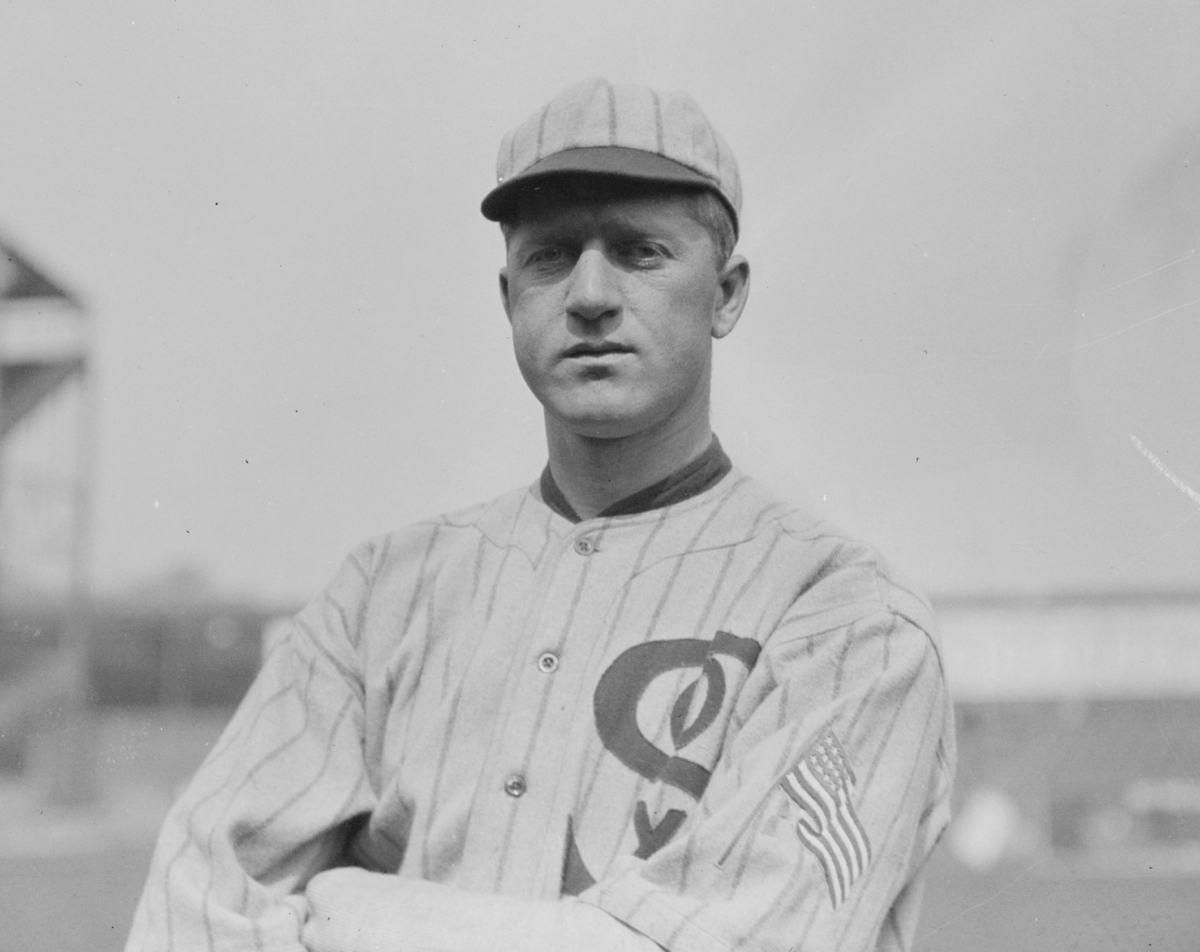

Urban "Red" Faber arrived in Chicago in 1914 and wasted little time proving he belonged in the upper echelon of American League arms. By his second season, he was a 24-win force, utilizing a deceptive spitball that would eventually make him one of the last "legal" practitioners of the pitch after it was banned in 1920. His early career reached a fever pitch in 1917, when he spearheaded the White Sox’s march to a World Series title, capturing three victories in the Fall Classic and establishing himself as the staff’s big-game engine.
The trajectory of Faber’s career was nearly derailed by the chaos of the late 1910s. After serving in the Navy during World War I, he returned to a team that was beginning to fracture. A bout of the flu and an ankle injury sidelined him for the infamous 1919 World Series, a "what if" that has haunted South Side historians for a century. As one of the few players whose integrity was never questioned, many believe that had Faber been healthy enough to take his regular turn on the mound, the Black Sox scandal might never have had the room to breathe.
As the franchise collapsed under the weight of the banned "Eight Men Out," Faber became the solitary pillar of the organization’s recovery. From 1920 to 1922, he entered a period of localized dominance that rivaled any pitcher in the game. He rattled off three consecutive 20-win seasons, capturing back-to-back ERA and WHIP titles in 1921 and 1922. While the team around him was tarnished and in the process of rebuilding, Faber was a model of precision and class, providing the South Side with a reason to keep coming to the ballpark.
The final decade of his Chicago journey was a testament to his versatility and clubhouse influence. Though the velocity of his youth faded, he remained a viable starter and a respected dugout mentor until his release in 1933. He walked away with 254 wins and over 4,000 innings pitched—all in a White Sox uniform. Faber’s legacy as the uncompromised star of a dark era was officially immortalized in 1964, when he was inducted into Cooperstown. He arrived as a young spitballer and left as the conscience of the franchise, the man who kept the light on during the team's darkest hour.

Comments powered by CComment