

4. Ted Lyons
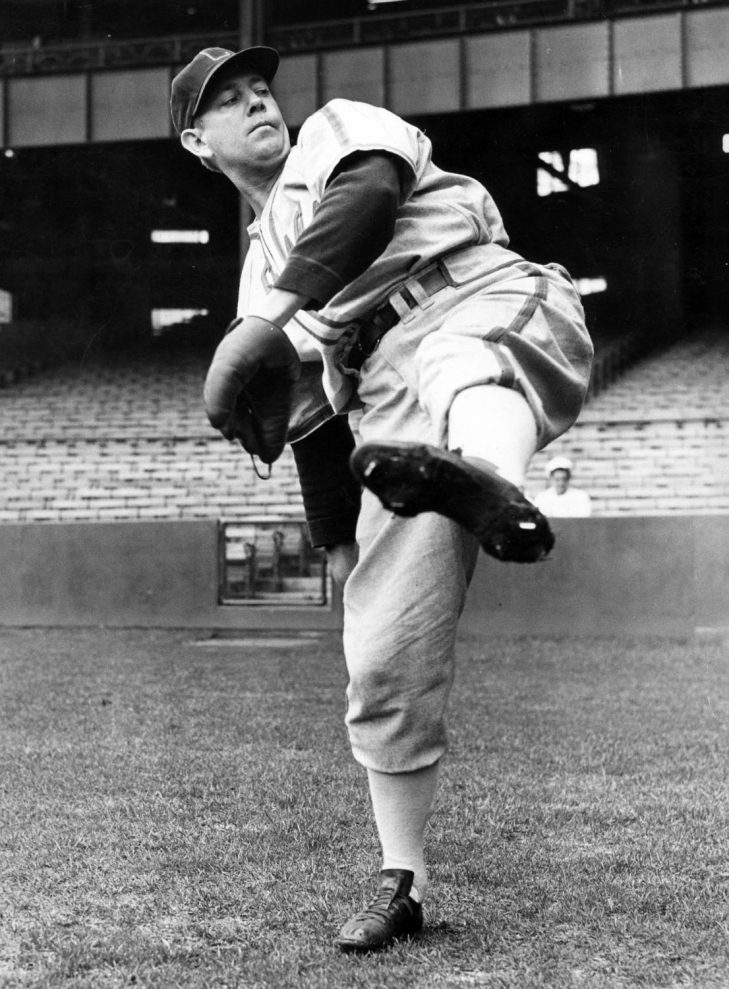
Ted Lyons arrived in Chicago in 1923 straight from the campus of Baylor University, trading a future law degree for a baseball glove. In a feat that remains almost unheard of in the modern era, Lyons bypassed the minor leagues entirely, making his professional debut at the Major League level. He spent his first two seasons acclimatizing in the bullpen before finding his stride as a starter in 1925. In those early years, he was a traditional power pitcher, racking up two 20-win seasons by the time he was 26. He was the young, hard-throwing future of the South Side, leading the American League in wins twice before the 1920s were out.
However, his run took a dramatic turn when the heavy workload began to take its toll. As arm injuries robbed him of his velocity, Lyons was forced into a total career reinvention. He didn't fade away; instead, he mastered the knuckleball and a diverse array of off-speed pitches, transforming into one of the most intelligent hurlers in the game. His control became his greatest weapon; he led the American League in the fewest walks per nine innings four times. He became so efficient that manager Jimmy Dykes famously pitched him only on Sundays, giving his aging arm a full week of rest, earning him the moniker "Sunday Teddy."
Lyons’ late-career peak is a masterclass in veteran savvy. At the age of 41, when most of his contemporaries had long since retired, Lyons authored his masterpiece: a 1942 season where he claimed his first and only ERA title with a career-best 2.10. He was a master of the "complete game," often finishing what he started in under two hours. Just as he reached this unexpected plateau, he traded his pinstripes for a military uniform and served three years in the Marines during World War II. He returned for one final, symbolic season at age 45, putting the finishing touches on a franchise-record 260 wins.
Ted Lyons left the game having never played for another organization, a lifer who bridged the gap between the post-Black Sox era and the post-war boom. He was inducted into Cooperstown in 1955, and the White Sox eventually retired his number 16 in 1987. He arrived as a college kid with a fastball and left as the winningest pitcher in South Side history, proving that in baseball, as in law, the smartest man in the room usually wins.
10. Eddie Cicotte
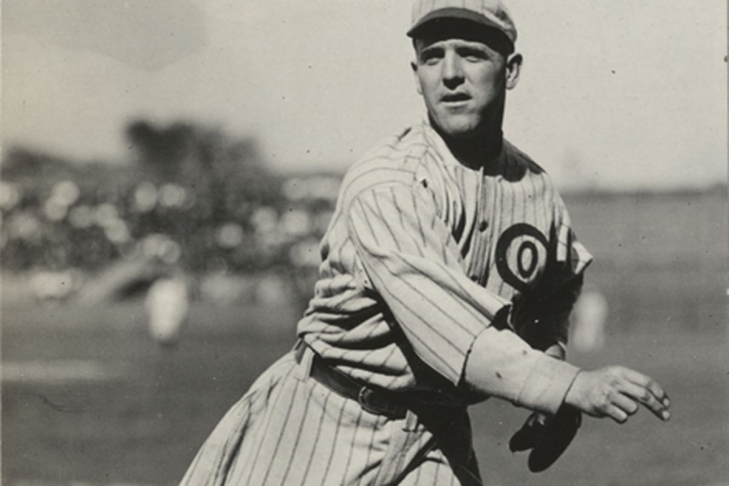
When Eddie Cicotte arrived in Chicago during the 1912 season, he was viewed as a talented but erratic castoff from the Boston Red Sox. Management in Boston had grown tired of his inconsistency, but the change of scenery provided the spark for one of the great pitching transformations of the Deadball Era. Cicotte became a true student of the craft, perfecting the knuckleball and later adding a "shine ball" and a spitball to a repertoire that kept hitters in a state of permanent confusion. By 1913, he was already emerging as a premier arm, posting a microscopic 1.58 ERA and proving that his Boston struggles were firmly in the rearview mirror.
The pinnacle of Cicotte’s journey arrived in 1917, when he reigned as the undisputed king of the American League. He spearheaded the White Sox’s march to a World Series title by leading the league in wins (28), ERA (1.53), and innings pitched (346.2). He was a metronome of efficiency, capping the year with a dominant performance in the Fall Classic against the Giants. At that moment, Cicotte was more than just a pitcher; he was the primary architect of a Chicago juggernaut that looked poised to dominate the decade.
However, the narrative took a dark, irreversible turn in 1919. Despite a spectacular regular season where he won 29 games and led the Sox back to the World Series, Cicotte became the first domino to fall in the Black Sox conspiracy. Driven by resentment toward owner Charles Comiskey's frugal salary practices, Cicotte famously took the mound in Game 1 and hit the leadoff batter, the signal to the gamblers that the fix was on. While he would actually pitch well in a Game 7 victory, his early-series performance and uncharacteristic fielding lapses in Game 4 helped seal the team's fate.
The final chapter was a brief, haunting coda. Cicotte returned in 1920 and pitched at an elite level, winning 21 games as if the scandal weren't looming over his head. But the reckoning arrived before the season could even conclude. Following his grand jury confession, Cicotte was banned for life from Major League Baseball, along with seven of his teammates. He left the South Side with 156 wins and a 2.25 ERA, statistics that would normally point toward Cooperstown but instead serve as a reminder of a legacy traded away. He arrived as a Red Sox castoff searching for a home and left as a ghost of the game, a master of deception who ultimately fooled no one but himself.
8. Nellie Fox
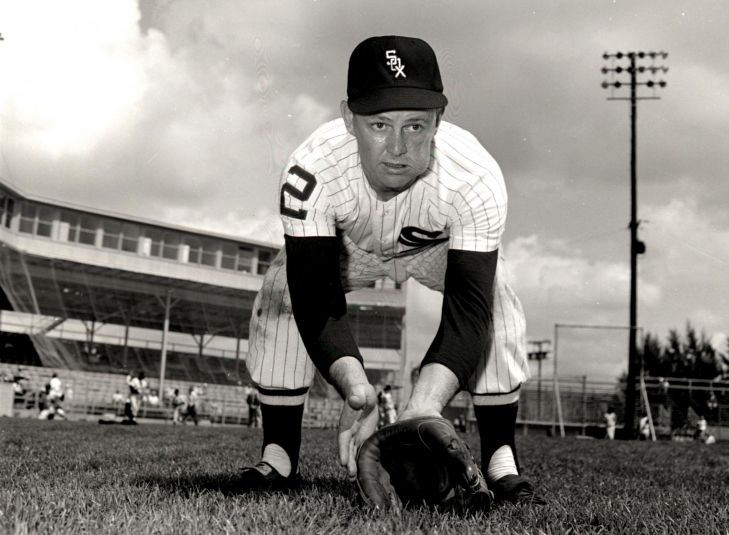
When the White Sox sent Joe Tipton to the Philadelphia Athletics in exchange for Nellie Fox following the 1949 season, they weren't just making a trade; they were altering the course of their franchise history. While Tipton faded into obscurity, Fox arrived on the South Side and immediately set up a permanent residence at second base. He was a small man with a giant wad of tobacco in his cheek and a bottle-shaped bat that he used to torment American League pitchers for the next fourteen years. He didn't just play for the Sox; he personified the scrappy, high-octane brand of baseball that became the team's trademark.
The middle chapter of Fox’s career saw him evolve into a certifiable hitting machine. From 1951 to 1961, he was an annual fixture at the All-Star Game, a high-contact specialist who led the league in hits four separate times. He was the most difficult man in the sport to strike out, a bat-control wizard who once went nearly 100 consecutive games without fanning. The pinnacle of his tenure arrived in 1959, a magical season where Fox captured the American League MVP award and willed the White Sox to their first pennant in forty years. Though the team fell short in the World Series, Fox remained untouchable on the big stage, batting a blistering .375 in the Fall Classic.
Defensively, Fox was the gold standard of his era. While the Gold Glove award didn't exist for the first half of his career, he dominated every defensive metric available, eventually claiming three of the trophies once they were established in 1957. He led the league in fielding percentage six times and was the master of the double play, serving as the defensive anchor for a pitching staff that relied on his vacuum-like range. He played with a durable, blue-collar intensity that made him the most beloved figure on the South Side, missing only a handful of games over a twelve-year span.
The final walk toward the exit came in 1963, when his legendary residency in Chicago finally concluded. Seeking a fresh start in the National League, Fox headed south to join the Houston Colt .45s, where he would provide veteran leadership for the young expansion club in his final two seasons. He left the White Sox with 2,470 hits in a Sox uniform and a reputation as the ultimate competitor. His journey to Cooperstown was a long one, finally culminating in a posthumous induction in 1997, nineteen years after the team hoisted his number 2 to the rafters. He arrived as an unheralded trade piece and left as the permanent face of South Side grit.
7. Eddie Collins
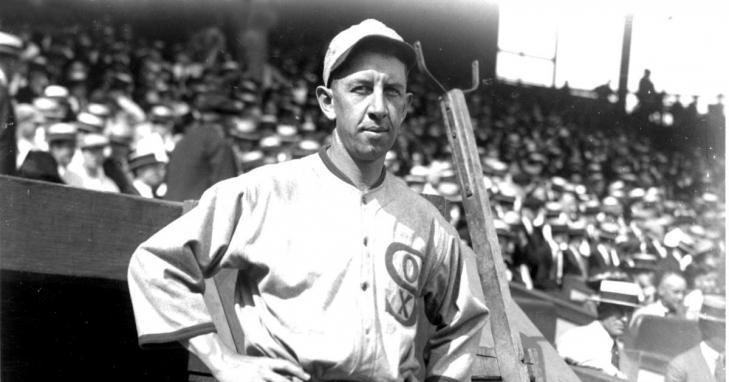
When Eddie Collins stepped off the train in Chicago in 1915, he was the most expensive piece of baseball real estate in the country. The White Sox had shelled out a staggering $50,000 to pry him away from the Philadelphia Athletics, essentially buying the reigning American League MVP to anchor their infield. Collins didn't just meet the lofty expectations; he redefined them. He arrived as a finished product—a cerebral, high-contact second baseman who played the game like a grandmaster moving chess pieces.
His early years in Chicago were defined by championship efficiency. Collins was the tactical engine of the 1917 World Series team, hitting over .300 and providing the veteran poise that helped the Sox claim the title. He was the rare player who could dominate a game without hitting a home run, using his elite speed and a preternatural ability to read a pitcher's delivery. By the time 1919 rolled around, he had helped guide the team back to the Fall Classic, but he was about to enter a nightmare he hadn't bargained for.
As the Black Sox scandal unfolded and the integrity of the franchise collapsed around him, Collins stood as a solitary island of reputational safety. He was one of the few stars completely untouched by the "fix," a fact that allowed him to serve as the bridge between a disgraced past and an uncertain future. While the team was decimated by lifetime bans, Collins responded by entering the most prolific offensive stretch of his career. Beginning in 1920, he embarked on a seven-year run where he refused to bat lower than .324, peaking with a sensational .372 campaign. He became a human metronome, turning the second base bag into his personal office and accumulating 2,007 hits in a Sox uniform.
The final chapter of his Chicago tenure saw him take on the mantle of player-manager, attempting to steer a gutted organization back toward respectability. While the teams of the mid-20s lacked the depth of his early championship squads, Collins remained an elite performer well into his late 30s. He eventually departed after the 1926 season to return to Philadelphia, leaving behind a .331 career average and a legacy of unwavering professionalism. When he was inducted into Cooperstown in 1939 as part of its fourth-ever class, it was a tribute to a man who arrived as a $50,000 gamble and left as the ultimate symbol of South Side stability.
3. Luke Appling
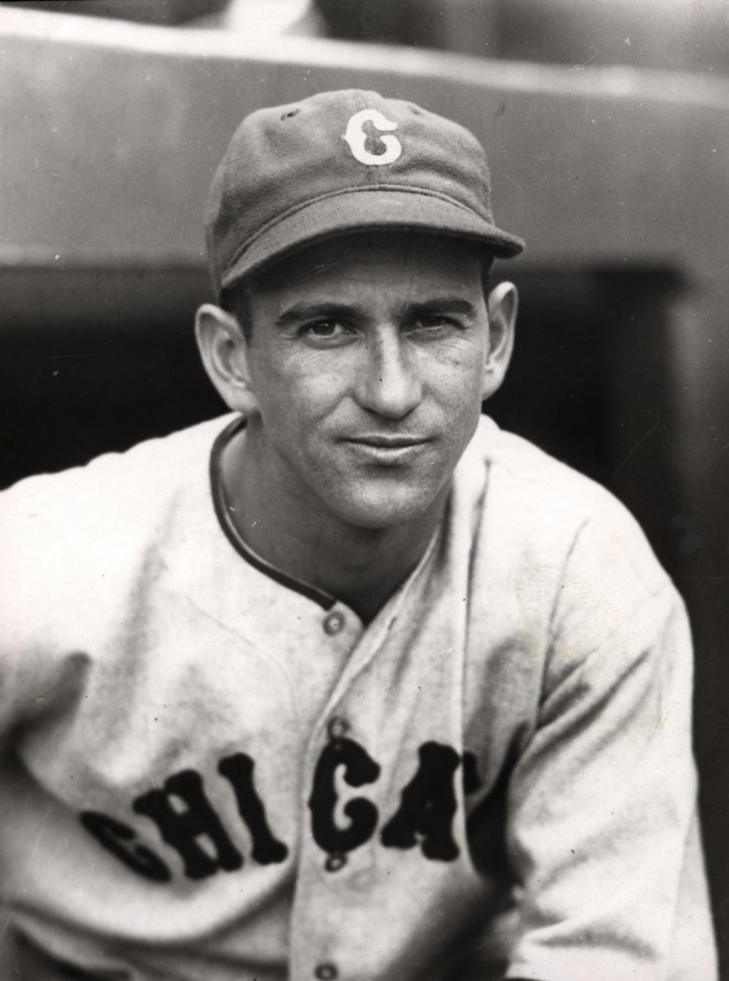
When Luke Appling arrived in Chicago in 1930, he didn't exactly set the world on fire. Purchased from Atlanta for a modest sum, he spent his first few years struggling to adjust to Big League pitching, batting a mere .232 in his first full season. However, by 1932, the White Sox handed him the keys to the shortstop position and the leadoff spot, beginning a transformation from a struggling prospect into the most difficult "out" in the American League. Appling developed a legendary, almost irritating ability to spoil good pitches, fouling off ball after ball until he got exactly what he wanted.
The peak of this "nuisance" style arrived in 1936, a season that remains arguably the greatest offensive year ever recorded by a modern shortstop. Appling flirted with the magic .400 mark all summer, eventually settling for a staggering .388 batting title and a .474 on-base percentage. He finished second in the MVP race to Lou Gehrig that year, proving that you didn't need to hit home runs to be a superstar; you just needed to never stop touching first base. Even his defense, which was often criticized for a high error count, was secretly elite; modern metrics suggest his range and speed allowed him to reach balls other shortstops wouldn't even smell, leading the league in assists multiple times.
The middle of his story was interrupted by the call of duty, as Appling spent nearly two years in the military during World War II. While many expected a player in his late 30s to return a shell of his former self, "Old Aches and Pains" defied the aging curve. He returned in 1945 and continued to hit well over .300 into his 40s. His nickname was a testament to his personality—he famously grumbled about every minor ailment, from a sore thumb to a head cold, yet he somehow managed to play 2,422 games in a White Sox uniform, a franchise record that still stands today.
Appling’s run with the team ended in 1950, marking a 20-year journey during which he collected a franchise-record 2,749 hits. He arrived as a raw kid from the Southern Association and left as "Mr. White Sox." His legacy was eventually immortalized in Cooperstown in 1964, and with the retirement of his number 4 in 1975. He proved that durability often wears a cranky face, and that there was no better way to lead a franchise than by simply refusing to go away.
The Chicago White Sox Retire Mark Buehrle's Number
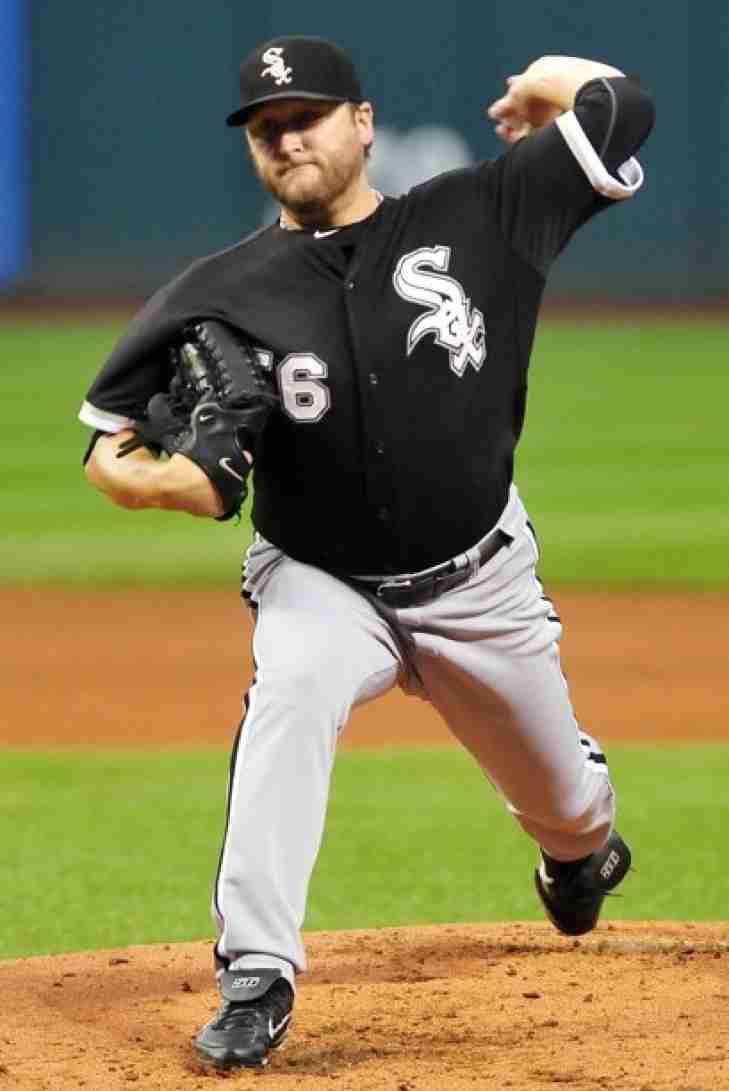
The lefthander made his debut in 2000 for Chicago where he would send the next twelve seasons of his career. With the Chi-Sox, Buehrle would go to four All Star Games and would win 161 Games and fan 1,396 batters. He would help Chicago win the 2005 World Series.
Buehrle becomes the 11th White Sox player in team history to have his number retired joining Nellie Fox (#2), Harold Baines (#3), Luke Appling (#4), Minnie Minoso (#9), Luis Aparicio (#11), Paul Konerko (#14), Ted Lyons (#16), Billy Pierce (#19), Thomas (#35) and Carlton Fisk (#72).
We here at Notinhalloffame.com would like to congratulate Mark Buehrle for achieving this honor.
63. Mark Buehrle
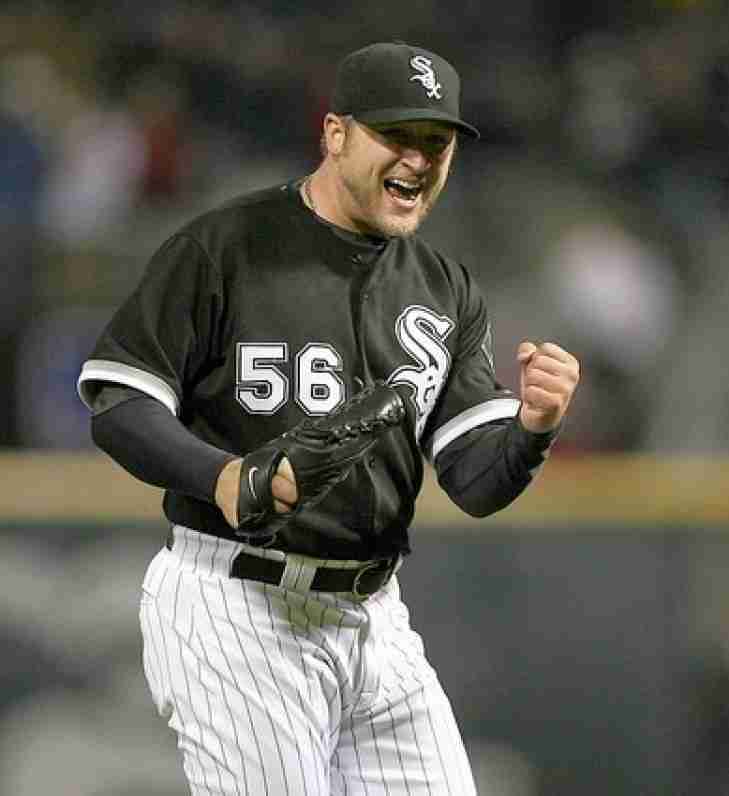
For over a decade, Mark Buehrle was either considered an ace or a player close to the top of the rotation. Five times, Buehrle was named an All-Star and is a member of the 200 Win club, a mark that is becoming increasingly elusive. A finesse pitcher with a wide arsenal to use, Buehrle’s best season was in 2005, when he finished 5th in Cy Young voting and helped the Chicago White Sox win the World Series.
Buehrle was also known for his defensive skills, as he was a four-time All-Star and had a career bWAR of nearly 60.
102. Paul Konerko
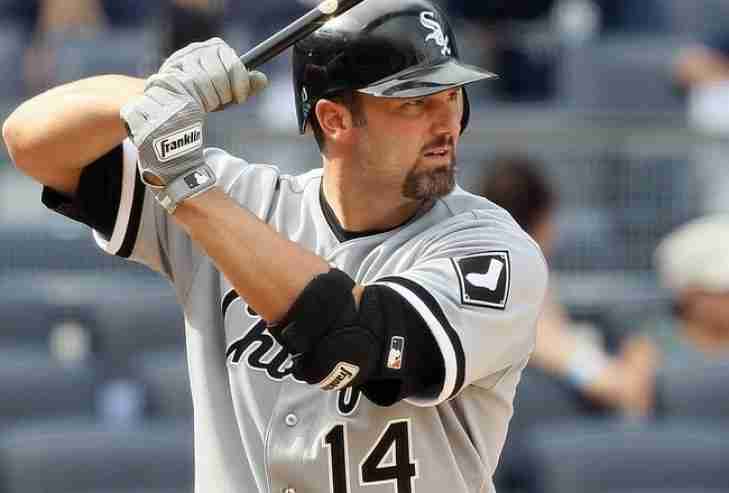
Paul Konerko is one of the most revered Chicago White Sox players of all-time, and he should be. Konerko was the heart of a team that won the 2005 World Series and won the ALCS MVP in the process. Konerko could hit for power (439 Home Runs), had 2,340 Hits, 1,412 RBIs, and a .486 Slugging Percentage.
That is the good news.
Konerko’s defense was very poor, as was his speed, and he finished his career with a good (though far from Hall of Fame) bWAR of 27.6. Still, this is a popular player with a solid career, and he received 2.5% of the vote in 2020. He may never appear on a Veteran's Committee ballot, but he has a statue erected on the South Side, and in terms of “fame," he had it.
47. Billy Pierce
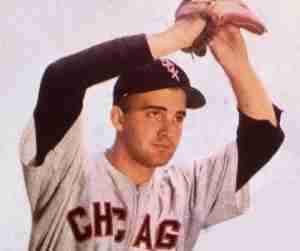
Regardless of the era, it is an impressive feat to be a key member of Chicago's rotation for a decade. The Chicago White Sox may not have won a World Series in the ’50s, but they were a good team, and much of their success was due to the pitching of Billy Pierce.
Through the decade of the ’50s, few were more dependable on the mound than Billy Pierce. The southpaw won 154 games that decade and was constantly pitted against aces of other staffs. Pierce was occasionally the victim of poor run support from his own team, but was still very much a winner. He had a wide assortment of pitches and an excellent fastball that shockingly came from his thin frame.
As a great pitcher for Chicago, he was part of a very good team that won the pennant only once. Pierce himself was also very good, but he played at the same time with other good pitchers, and the Sporting News Awards was all he was able to win. Pierce has been largely forgotten, even in Chicago. He deserves a lot better than that.
Should Billy Pierce be in the Hall of Fame?
Is Mark Buehrle retiring?

Should this be the end of the road for Buehrle, his Hall of Fame case is aided by a few realities. Currently, the hurler is first among active Pitchers in bWAR and is 64th overall in that category, a number that is above many HOFers but lower than the average. His JAWS places him only at 89th overall (47.1) but his traditional 214 Wins is a very impressive number in this era. He does have one intangible, while rarely discussed, might make his case for induction a lot stronger, his fielding.
Buehrle, a four time Gold Glove winner, has been regarded as one of the best fielding Pitchers throughout his career, and furthermore, the amount of baserunners who dare to try run off him is minimal. This is not often discussed with the Hall of Fame candidacy of Pitchers, but here we have a fielder worth discussing!
So what do you think?
If Mark Buehrle does retire at this time, is he a Baseball Hall of Famer?
Let us know!
RIP: Billy Pierce
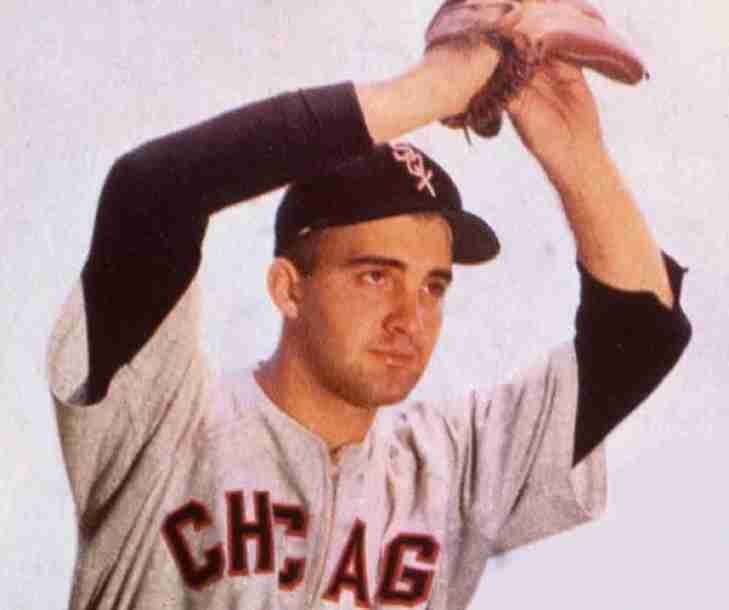
Pierce would spend the majority of his eighteen year career with the Chicago White Sox, where the southpaw would make all of his seven All Star Teams and was a two time 20 Game winner. His best season would be in 1955 where he would lead the American League in Earned Run Average, FIP, ERA+, WHIP and SO/BB. In other years he would lead the AL in Wins (1957) and in Strikeouts (1953).
The Pitcher would complete his career with a record of 211 and 169, 1,999 Strikeouts and a bWAR of 53.1.
The highest that Pierce has ever received in Hall of Fame voting was a miniscule 1.9 percent in 1971, however as recent as 2014, he was on the Hall of Fame Veteran’s ballot, indicating he may yet have a shot one day. We here at Notinhalloffame.com have him ranked at #64 on our latest baseball list.
We would like to extend our condolences to the friends and family of Billy Pierce at this time.
5. Shoeless Joe Jackson
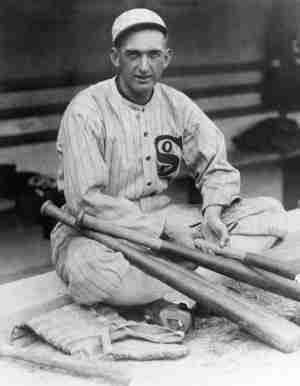
Did he or didn’t he conspire to fix the 1919 World Series? Over eighty years after the fact, there is still a sizable debate as to whether “Shoeless” Joe Jackson was involved in the “Black Sox” scandal that saw the Chicago White Sox throw the World Series for financial gain against the Cincinnati Reds.
Prior to his expulsion from baseball, Jackson had already proved himself Hall of Fame worthy. In ten full Major League seasons, Shoeless Joe had over 1,700 hits and had a career batting average of .356. The latter remains iconic as this puts him third all-time. Jackson was easily among the hardest workers in baseball, and his passion for the game was unequalled. He was in his prime when he was suspended, and he clearly had many more great seasons ahead of him.
Where it gets murky is his participation in throwing the Series. Evidence points to the fact that he was aware of it, but after his Grand Jury Testimony, in which he claimed involvement, he proclaimed his innocence for years thereafter. Jackson may have been a great player, but he was not an educated man and, by many accounts, naïve. It is very possible that he was unaware of the ramifications of testifying that he received $5,000 to help throw the Series.
As he claimed his innocence, he had the stats to back it up. He batted .375 in the Series and made no errors in the field. If anything, the box scores show the efforts of a man who played to win. As seen with Rose, Major League Baseball has a zero-tolerance policy for gambling, and there are many reasons to think that this will not change in the near or distant future. Saying that, Rose, Jackson, and all of the others who were associated with the “Black Sox” had the ban lifted, and this means Jackson is now eligible to appear on his first ballot (which will be the Veterans) since he was on the 1946 Nominating vote.
This does not guarantee that his name will appear, but now, it is possible
