


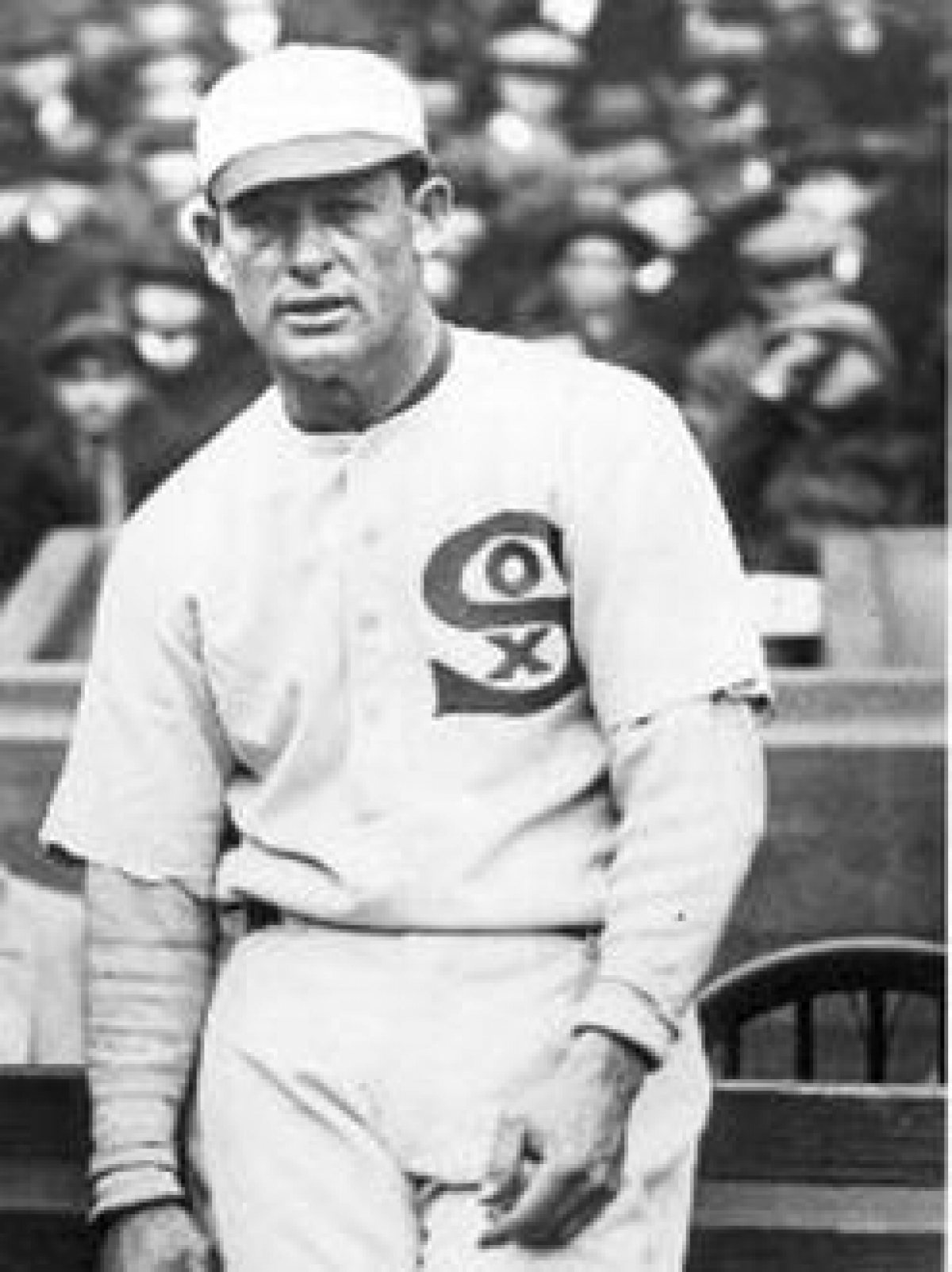


When "Big Ed" Walsh broke into the White Sox rotation in 1906, he brought with him a devastating new toy: the spitball. He had learned the pitch from teammate Elmer Stricklett, but Walsh refined it with a terrifying level of control, claiming he could "hit a tack on a wall" with it. That season, he pitched the "Hitless Wonders" to a World Series title over the crosstown Cubs, striking out 12 in a single game and proving that he was the premier big-game hunter in the city. It was the beginning of a seven-year stretch where Walsh tested the very limits of human endurance.
The 1908 season stands as Walsh’s masterpiece, a campaign so massive it feels like a tall tale. He won 40 games, a post-1900 record shared only with Jack Chesbro. But the volume-dense reality was even more staggering: he pitched 464 innings, completed 42 games, and saved six others. He was a one-man pitching staff, leading the league in nearly every meaningful category and carrying the Sox to the brink of a pennant. To this day, he remains the last pitcher to ever reach the 40-win plateau, a benchmark that has become functionally impossible in the modern era.
Perhaps the most defining chapter of his tenure was the 1910 season, a year that serves as the ultimate case study in "Lack of Run Support." Walsh turned in a career-best 1.27 ERA and a microscopic 0.820 WHIP, yet he became the only pitcher in history to lead the league in ERA while losing 20 games. He was perfect, but his team was silent. Undeterred, he returned to win 27 games in both 1911 and 1912, leading the league in innings and games pitched once again. He was the "Sox's Architect," a man who refused to take a day off until his arm simply had nothing left to give.
By the spring of 1913, the bill for those 3,000 innings finally came due. The dead arm that had been looming for years finally arrived, and Walsh’s career effectively ended at age 31. He had given the White Sox every ounce of his physical prime, retiring with a 1.82 career ERA—the lowest in the history of Major League Baseball. He arrived as a raw spitballer and left as the statistical gold standard of the mound. Inducted into Cooperstown in 1946 and later honored in the first class of the White Sox Hall of Fame, "Big Ed" remains the towering figure of South Side pitching, a monument to an era where the mound belonged to one man.

Comments powered by CComment