


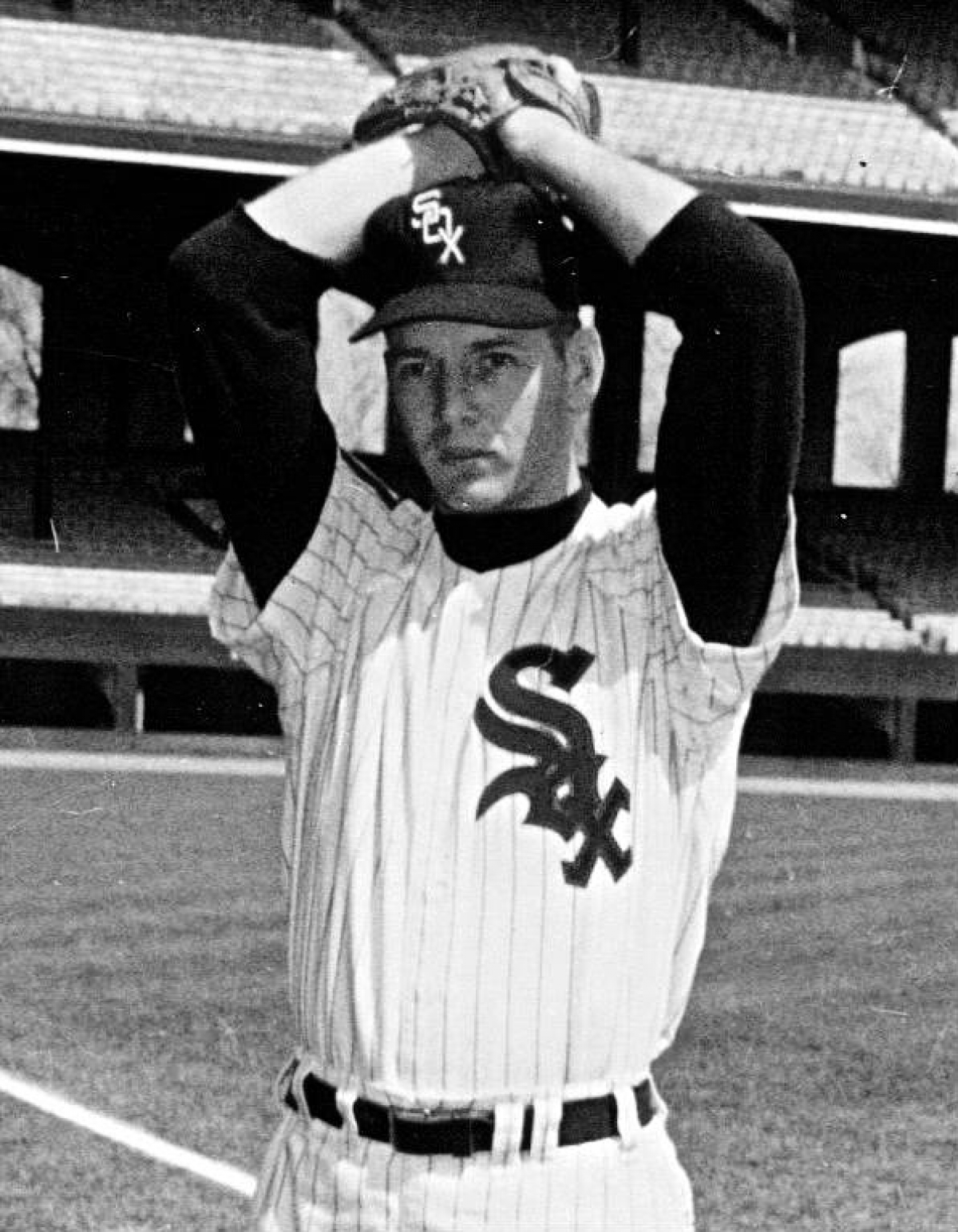


A debut in 1961 offered only a glimpse of the tactical master Horlen would become, but by 1963, he had secured his place as a primary pillar of the Chicago rotation. He matured into a frontline starter during the 1964 campaign, a remarkable season where he posted a microscopic 1.88 ERA. The year was best illustrated by his league-leading 0.935 WHIP and a staggering 6.1 H/9 innings, the best mark in the junior circuit. He arrived as a young prospect and instantly became the pitcher that opposing managers feared most when a low-scoring game was on the line.
The pinnacle of his career arrived in 1967, a season in which he ascended to the very top of the pitching world. Horlen captured the American League ERA title with a 2.06 mark and claimed his second WHIP crown, earning his first All-Star nod in the process. He was the outlier of the summer, finishing second in the Cy Young voting and fourth in the MVP race. His ability to suppress runs was nearly unmatched; he maintained an ERA under 2.90 for three consecutive seasons, serving as the high-leverage anchor for a staff that specialized in run prevention.
Consistency and durability defined him throughout the decade. While his eventual 113-113 record in a White Sox uniform was often a byproduct of the team's struggling offense, his 1,007 strikeouts and relentless efficiency told a much different story. He was a volume-dense workhorse who took the ball in the most critical matchups, providing a decade of stability on the South Side. Even as his ERA began to climb toward the end of his tenure in 1970, his reputation as a big-game specialist remained intact.
The organization moved in a different direction just before the 1972 season, leading Horlen to a final chapter with the Oakland A’s, where he added a World Series ring to his resume.

Comments powered by CComment