

Our All Time Top 50 San Francisco Giants have been revised to reflect the 2025 Season

Yes, we know that this is taking a while!
As many of you know, we at Notinhalloffame.com are slowly generating the top 50 of each major North American sports team. That being said, we maintain and update our existing Top 50 lists annually. We are pleased to present our pre-2026 revision of our top 50 San Francisco Giants.
As for all of our top 50 players in baseball, we look at the following:
1. Duration and Impact.
2. Traditional statistics and how they finished in the Major League Baseball.
3. Advanced Statistics.
4. Playoff performance.
5. Their respective legacy on the team.
6. How successful the team was when he was there.
7. Respecting the era in which they played.
Criteria 1-4 will make up the lion’s share of the algorithm. Please note that we have implemented this for the first time. This has changed the rankings all throughout the board.
Last year, the Giants had a .500 record (81-81) and failed to make the playoffs. There was one new entrant based on last year, and the new algorithm brought in another name.
As always, we present our top five, which saw one change.
1. Willie Mays
2. Barry Bonds
3. Christy Mathewson
4. Mel Ott
5. Carl Hubbell
You can find the entire list here.
According to the new algorithm, Christy Mathewson and Mel Ott switched their #3 and #4 rankings.
Tatis Jr., who was an All-Star and Gold Glove winner last season, moved from #7 to #5. He was also 8th in MVP voting last year.
Logan Webb makes his debut at #46.
Kevin Mitchell returns to the list due to the new algorithm.
Notably, Brandon Belt and George Van Halten fell off the list.
We thank you for your continued support of our lists on Notinhalloffame.com.
The Contemporary Era Committee elects Jeff Kent into the Baseball Hall of Fame Class of 2026

The Baseball Hall of Fame Contemporary Era Veterans Committee has announced tht Jeff Kent is the lone man to have obtained the necessarry 75% to join the Baseball Hall of Fame Class of 2026.
Kent received 14 of the 18 votes, and the man with the most Home Runs among any Second Baseman (351 of his career 377). A five-time All-Star, Kent won the 2000 NL MVP and earned four Silver Sluggers. Kent also had 2,461 Hits and 1,518 RBIs.
Three other players will be eligible for the Baseball Hall of Fame on the next Contemporary Ballot.
Carlos Delgado received nine votes and Don Mattingly and Dale Murphy earned six.
As a new wrinkle, players who received five or fewer votes will not be on the next Contemporary Ballot in 2029. This means that Barry Bonds, Roger Clemens, Gary Sheffield and Fernando Valenzuela will not be considered for that ballot.
Notably, this year’s committee consisted of Hall of Fame Fergie Jenkins, Jim Kaat, Juan Marichal, Tony Perez, Ozzie Smith, Alan Trammell and Robin Yount; major league executives Mark Attanasio, Doug Melvin, Arte Moreno, Kim Ng, Tony Reagins and Terry Ryan; and veteran media members/historians Steve Hirdt, Tyler Kepner and Jayson Stark.
Over the next five years, the respective committees will be voting for:
2027-Contemporary Baseball Managers/Executives/Umpires; 2028-Classic Baseball; 2029-Contemporary Baseball Players; 2030-Contemporary Baseball Managers/Executives/Umpires; 2031-Classic Baseball.
Please note that we will be revising our Notinhalloffame Baseball List once we know the Writers' elect for the Class of 2026.
We here at notinhalloffame.com would like to congratulate Jeff Kent for his impending induction.
P
Baseball Hall of Fame 2026: Contemporary Baseball Era Committee, Players

When the veterans committee (VC), officially convening as the Contemporary Baseball Era Committee for players, meets December 7 at the Winter Meetings in Orlando, Florida, the only burning question is whether it will elect Don Mattingly, Dale Murphy, or both to the National Baseball Hall of Fame since this ballot repeats the VC's 2023 charade of gaming that ballot to ensure that Fred McGriff was elected to Cooperstown.
Joining this anointed pair are Barry Bonds and Roger Clemens, who had joined the M & M boys on the 2023 VC ballot, along with first-timers Carlos Delgado, Jeff Kent, Gary Sheffield, and Fernando Valenzuela. Kent and Sheffield recently exited the Baseball Writers' Association of America (BBWAA) ballot after ten fruitless years, with Delgado a one-and-done in 2015 and Valenzuela, who died in 2024 at age 63, gone in 2004 after two marginal appearances.
The Baseball Hall of Fame names its eight Contemporary Era Nominees

The Baseball Hall of Fame has announced the eight names who will be on the Contemporary Baseball Era ballot. This Era focuses on players whose primary contributions occurred after 1980.
To gain induction, the candidate must receive 75% of the ballots cast among the 16-member committee. That committee has yet to be announced.
The candidates are:
Barry Bonds, PIT 1986-92 & SF 1993-2007, Outfield. Bonds is one of the greatest position players the game has ever seen. The all-time leader in Home Runs (762) also boasts the single-season mark with 73. The longtime Outfielder is also the all-time leader in bWAR (162.8), Walks (2,558), and MVPs (7), and he won two Batting Titles, 10 OBP Titles, seven Slugging Titles, and nine OPS Titles. His trophy case also boasts 12 Silver Sluggers and eight Gold Gloves. Bonds peaked on the regular ballot with 66% in his final year in 2022, and was on the Veterans ballot the year after, though did not receive enough support for his tally to be announced. His issue, like many, is his suspected PED use, which has kept him out of Cooperstown.
Roger Clemens, BOS, 1984-96, TOR 1997-98, NYY 1999-2003 & 2007, & HOU 2004-06, Pitcher. Clemens is the Pitching equivalent of Bonds regarding the Hall of Fame, as they joined the modern ballot together, left the modern vote together, and were also on the 2023 Senior Ballot, where, like Bonds, he did not receive enough votes for his tally to be revealed. Clemens won an MVP, seven Cy Youngs, seven ERA Titles, five Strikeout Titles, and compiled a record of 354-184 with 4,672 Strikeouts. There is no way anyone on this committee should vote for Bonds without Clemens or vice versa.
Carlos Delgado, TOR 1993-2004, FLA 2004 & NYM 2006-09, First Base. Delgado was a two-time All-Star who powered 473 Home Runs with 1,502 RBIs while also securing three Silver Sluggers. While Delgado did not win an MVP, the Sporting News named him the 2003 Major League Player of the Year. On the Modern ballot, Delgado lasted only one year (3.8% in 2015), but that ballot included 13 players who made the Hall, including Bonds, Clemens, Kent, Sheffield, Curt Schilling, Mark McGwire, and Sammy Sosa.
Jeff Kent, TOR 1992, NYM 1992-96, CLE 1996, SFG 1997-2002, HOU 2003-04 & LAD 2005-08, Second Base. A five-time All-Star, Kent won the 2000 NL MVP and earned four Silver Sluggers. Kent smacked 377 Home Runs with 2,461 Hits and 1,518 RBIs. On the Modern ballot, Kent finished as high as 46.5% (his last time on the ballot), and this is his Senior ballot debut.
Don Mattingly, NYY, 1982-95, First Base. Mattingly was one of the best hitters in the 1980s, batting over .300 for six consecutive seasons (1984-89) and winning the 1984 AL Batting Title. A six-time All-Star and three-time Silver Slugger recipient, Mattingly also won nine Gold Gloves. Injuries derailed him by 1990, and his Hall of Fame candidacy went off the track with it. Mattingly still had 2,153 Hits and 222 Home Runs, and he later became a Coach and Manager, and won the 2020 NL Manager of the Year. The highest he finished on the Modern ballot was his first attempt (28.2% in 2001), but in 2023, on his third Veteran’s ballot, he had 50% of the votes.
Dale Murphy, ATL 1976-87, PHI 1990-92 & COL 1993, Outfield. Murphy won back-to-back National League MVPs (1982 & 1983), was a two-time Home Run champion, and went yard 398 times. The seven-time All-Star won four Silver Sluggers, five Gold Gloves, but never made it to 30%. He has, however, been in the Senior vote three times, and in 2023, he had 37.5% of the tally.
Gary Sheffield, MIL 1988-91, SDP 1992-93, FLA 1993-98, LAD 1998-2001, ATL 2002-03, NYY 2004-05, DET 2007-08, & NYM 2009 Outfield. A member of the 500 Home Run club (509), Sheffield went to the All-Star game nine times, won five Silver Sluggers, and a Batting Title. A World Series Champion with the Marlins, Sheffield finished with 63.9% in his final year on the ballot (2024), and is on his first Senior ballot.
Fernando Valenzuela, LAD 1980-90, CAL 1991, BAL 1993, PHI 1994, SDP, 1995-97 & STL 1998, Pitcher, Fernandomania took over the sports world in 1981, when Valenzuela won the Rookie of the Year, the Cy Young, and led the Dodgers to a World Series win. He was also a six-time All-Star and had a record of 173-153 with 2,074 Strikeouts. Previously, he was on the ballot for only two years and had never been on a Senior Ballot.
The results will be announced on December 7 at 7:30 EST on the MLB Network.
Our All Time Top 50 San Francisco Giants have been revised to reflect the 2024 Season
Yes, we know that this is taking a while!
As many of you know, we at Notinhalloffame.com are slowly generating the top 50 of each major North American sports team. That being said, we have existing Top 50 lists and consistently look to update them when necessary and based on necessity. As such, we are delighted to present our post-2024 revision of our top 50 San Francisco Giants.
As for all of our top 50 players in baseball, we look at the following:
1. Advanced Statistics.
2. Traditional statistics and how they finished in the National League.
3. Playoff accomplishments.
4. Their overall impact on the team and other intangibles that are not reflected in a stat sheet.
Please note that our algorithm has changed, which yielded minor changes throughout the baseball lists.
Last year, the Giants went 80-82 and were fourth in the NL West. There were no new entrants, except for one who debuts based on the new algorithm,
As always, we present our top five, which saw one change based on the new algorithm.
1. Willie Mays
2. Barry Bonds
3. Mel Ott
4. Christy Mathewson
5. Carl Hubbell
You can find the entire list here.
The only new addition was George Van Haltren, who as discussed above, enters via the new system.
We thank you for your continued support of our lists on Notinhalloffame.com.
Barry Bonds seems to have let the Hall of Fame go
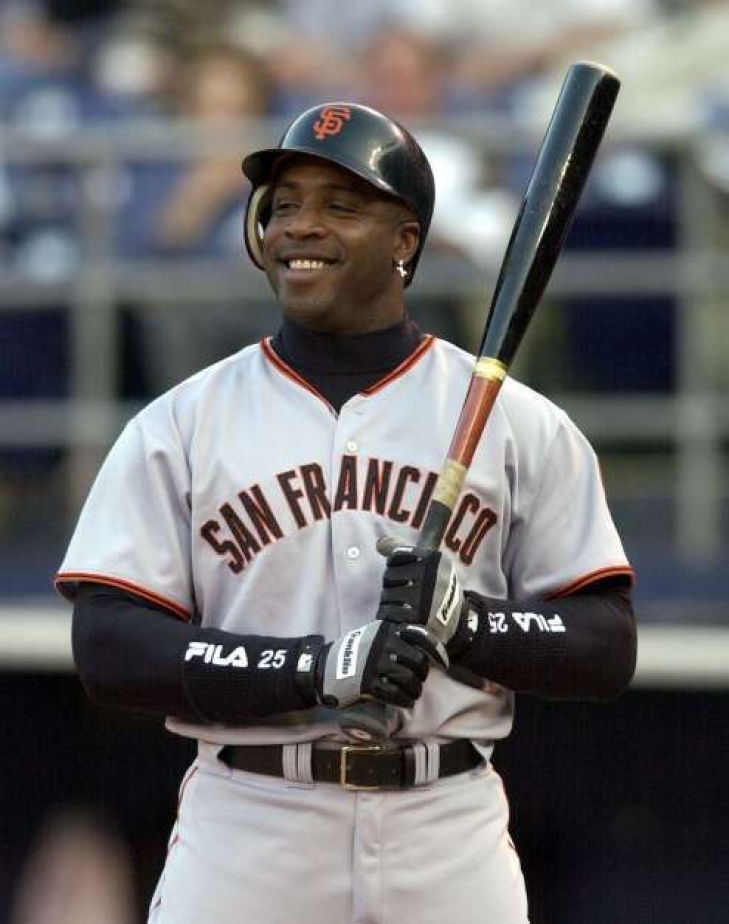
Two weeks ago, Barry Bonds was inducted into the Pittsburgh Pirates Hall of Fame along with Jim Leyland and Manny Sanguillen. Naturally, reports would ask him about the Baseball Hall of Fame afterward. Bonds tone was a lot different than it had been in previous years:
“I don’t have to worry about those things no more. I want to hang around my grandchildren and children. Those hopes? I don’t have them anymore.”
Bonds, who failed to make it into the Baseball Hall of Fame via the writer’s ballot, appeared on his first senior's ballot, where he received so little support that his vote total was not publicized. This indicates that the respective senior’s committee holds him in less regard than the writers did, thus leaving him worse off than before.
Bonds seems at peace with that.
He remains #1 on our Notinhalloffame Baseball list of those to consider for the Baseball Hall, and it looks like he will stay there for a long time.
The Pittsburgh Pirates announce their Hall of Fame Class of 2024
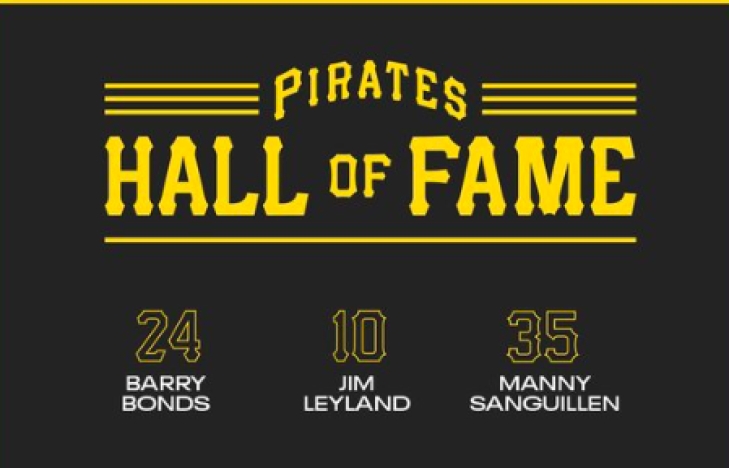
Regular visitors of Notinhalloffame.com know that we are slowly working on the top 50 of every major team in the NHL, NBA, NFL, and MLB. Once that is done, we will look at how each team honors its past players, coaches, and executives. As such, it is important to us that the Pittsburgh Pirates have announced that Barry Bonds, Jim Leyland and Manny Sanguillen to their franchise Hall of Fame,
This will be the third class, and the trio will be officially inducted during their home game on August 24.
Bonds was drafted in the first round in 1985 and made his Pirates debut the following year. Blasting 176 Home Runs with 556 RBIs for Pittsburgh, he propelled them to three straight playoffs (1990-92), and won the MVP in 1990 and 1992, with a second-place finish in 1991. In addition, from ’90 to ’92, Bonds led the NL in bWAR, and won each year's Silver Slugger and Gold Glove. He went on to win five more MVPs with the San Francisco Giants.
Bonds enters with his longtime manager, Jim Leyland, who months earlier was selected by the Veteran’s Committee to enter the Baseball Hall of Fame. Leyland was their manager from 1986 to 1996, and had a record of 851-863, which was impressive considering that he did have a lot of talent to work with.
A Pirate for 12 of his 13 MLB Seasons, Sanguillen had 1,343 Hits, was a three-time All-Star and won two World Series rings with the club.
We here at Notinhalloffame.com would like to congratulate Bonds, Leyland and Sanguillen for this impending honor.
Our Notinhalloffame.com List has been revised for 2025!
Happy Opening Day!
What better way to celebrate today’s festivities than by unveiling the Notinhalloffame.com Baseball list of those to consider for the Baseball Hall of Fame for 2025?
You can see the entire list of 300 players here, but this is the new Top 10.
This is based on your votes, new entrants, and a blanket look at the candidates.
At #1 is Barry Bonds, the seven-time MVP and all-time leader in Home Runs. The man was a hitting God but was beset with PED allegations and snubbed by both the Baseball Voters and Seniors. Bonds may hold #1 on this list forever.
Lather, rinse, repeat. Roger Clemens is the pitching equivalent of Bonds. He was the best hurler of his generation, but he has the same PED stink that Bonds does. He is ranked #2.
Alex Rodriguez did not fare well in the votes, but we kept him at #3. The three-time MVP and statistical juggernaut was caught with PEDs, leading to two suspensions, but we are giving him a short leash next year. If his voting numbers (by all of you) do not improve, he will plummet from his #3.
At #4 is another controversial figure, Pete Rose. The “Hit King” is banned from the Hall, but stranger things have happened (see Ohtani, Shohei), and a loud contingent wants him inducted.
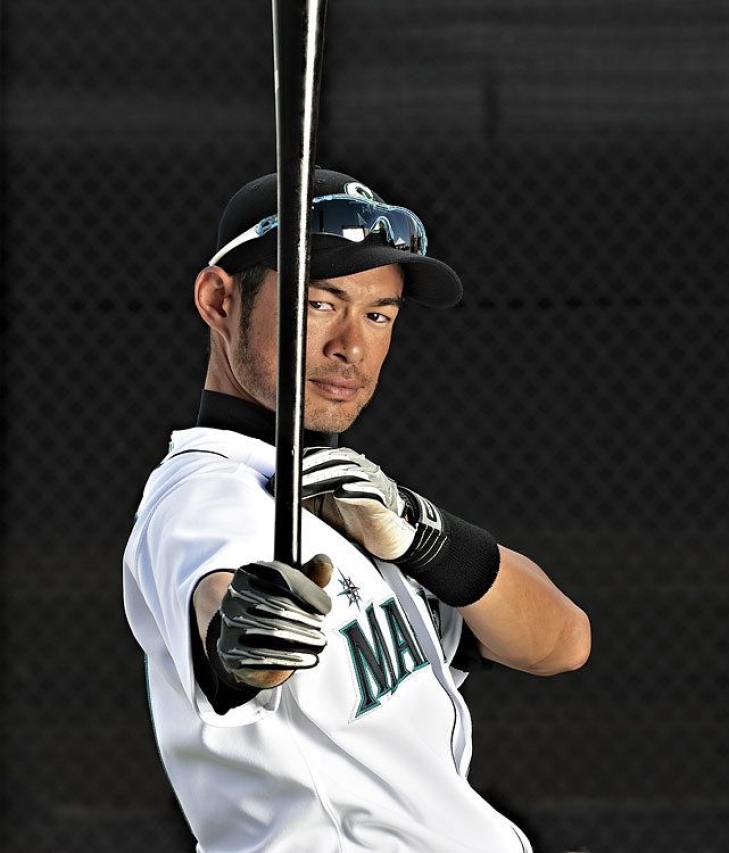
At #5, the highest debut (and likely first-ballot inductee) is Ichiro Suzuki, who has more Hits than Rose if you combine the Japanese League. Suzuki WILL become the first Japanese player to enter Cooperstown in 2025.
The #6 player is another banned player, “Shoeless” Joe Jackson. He was banned for allegedly participating in the 1919 “Black Sox” Scandal.
Career Detroit Tiger Infielder Lou Whitaker is at #7 and late-1800’s Pitcher Jim McCormick finally breaks the top ten at #8.
The Top Ten concludes with Bill Dahlen and Dwight Evans.
You know what we want you to do!
Take a look at the names and cast your votes and opinions!
As always, we here at Notinhalloffame.com thank you for your support.
Our All-Time Top 50 San Francisco Giants have been revised (sort of) to reflect the 2023 Season
Yes, we know that this is taking a while!
As many of you know, we here at Notinhalloffame.com are slowly generating the top 50 of each major North American sports team. That being said, we have existing Top 50 lists out, and we always consistently look to update them when we can and based on necessity. As such, we are very happy to present our post-2023 revision of our top 50 San Francisco Giants.
As for all of our top 50 players in baseball, we look at the following:
1. Advanced Statistics.
2. Traditional statistics and how they finished in Major League Baseball.
3. Playoff accomplishments.
4. Their overall impact on the team and other intangibles that are not reflected in a stat sheet.
Last year, the Giants failed to make the playoffs, and as this team is over a century old, it takes a lot to break into this list. Nobody did in 2023, and there were no changes, but we always want to acknowledge that we took the last season into consideration.
As always, we present our top five, which (obviously) saw no changes:
1. Willie Mays
2. Barry Bonds
4. Mel Ott
5. Carl Hubbell
You can find the entire list here.
We thank you for your continued support of our lists on Notinhalloffame.com.
We have revised our Notinhalloffame Baseball 300 list to reflect 2024.
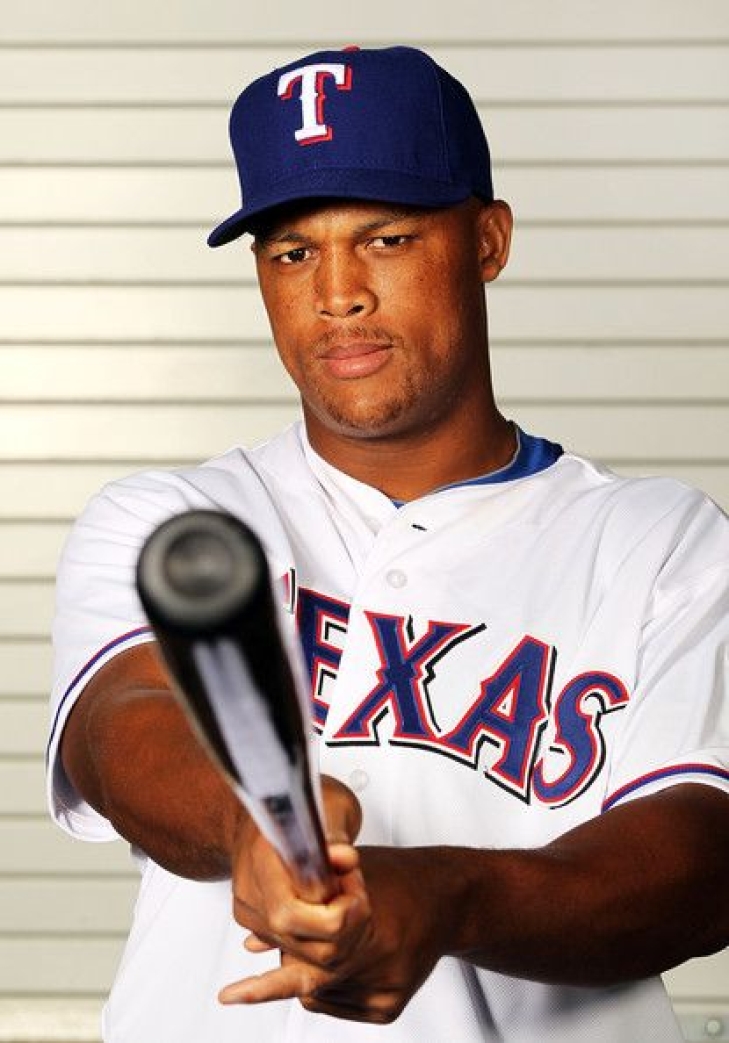
Last month, the Baseball Hall of Fame elected Scott Rolen into their midst; a month after the Veteran’s Committee unanimously chose Fred McGriff for the Class of 2023.
This means that for us at Notinhalloffame.com, it is time to revise one of our most important lists, the top 300 Baseball players who we feel are deserving for a look at enshrinement in Cooperstown.
Our list looks at the following criteria:
- Traditional and advanced statistics.
- Playoff performance.
- Impact and influence.
- Your votes and comments.
We take all of these factors into consideration (especially your input), but as years go by, it becomes more difficult to rank players, especially since many of those eligible are tainted with activity that has kept them out. Regardless of how Baseball may have decreased in popularity over the past decades, this is still the pre-eminent sports Hall of Fame in North America, and the standard by which all others are judged.
Specifically for the 2023 list, adjustments were made by removing Rolen and McGriff, factoring in your collective input, and adding former players who are eligible for the 2024 vote.
Our entire list of 300 can be found here, but below, we are pleased to present the Notinhalloffame.com Baseball top 20.
Remaining at #1 is Barry Bonds, the all-time leader in Home Runs (762) and is a seven-time MVP. Controversy overshadows the power hitter, who is universally believed to have taken PEDs, though never tested positive. Bonds concluded his ten years on the modern era ballot with 66%, and had there been 15 years like there were previously, he might have made it. He was on the recent Veteran’s Committee ballot that included McGriff, though Bonds failed to gain the minimum votes needed to even have his number made public. Bluntly, this means that Bonds is further than ever for Hall of Fame induction, as his peers do not view him as worthy. We suspect that Bonds will forever be the most potent hitter to never see a plaque in the Hall, and could remain #1 here for decades (unless, your votes and comments plumet him from the top spot.
Roger Clemens also remains fixed at #2, and most of what we said about Bonds, applies to Clemens, only that he is a Pitcher. A seven-time Cy Young winner, the “Rocket” never was suspended for PEDs, but the clouds around him are ominous, and he also did not win over a lot of friends in the media. Just like Bonds, Clemens had his highest total on his last year of modern eligibility, and did not gain enough votes on his first Veteran Ballot for his tally to be known.
Remaining at #3 is Alex Rodriguez, who was arguably the top player of the 2000s, and he will enter his third year of Modern eligibility. There was nobody (Bonds and Clemens included) whose first year on the ballot intrigued us the most. Unlike Bonds and Clemens, A-ROD DID test positive and served the longest suspension in MLB history. At one time, he was the most hated man in all of sports, yet here we are in 2023 where he has a job with Fox Sports, and was in a high-profile relationship with Jennifer Lopez. His marginal improvement in the 2023 vote does not forecast a Hall of Fame for Rodriguez.
With Pete Rose staying at #4, we have another player who looks to be forever to remain on the outside-looking-in. Baseball’s all-time hit king was banned from Baseball for gambling on the sport, though he has recently made some appearances. The Baseball Hall of Fame has followed the edict of MLB (although they don’t actually have to) and never added him to a ballot of any kind. Even if he is reinstated, he would still have to appear on a Veteran’s Committee ballot, and that group would have to choose him.
With “Shoeless” Joe Jackson at #5, we have a top five (our only) where it is likely that none will ever receive the call. Banned in 1920 for allegedly conspiring to throw the World Series from the year before, Jackson maintained his innocence, and there many suspect that the Outfielder, who may have known about it, did not participate, which reflects his 1919 postseason statistics.
This takes us to #6, Adrian Beltre, who enters his first year on the ballot, and is a bona fide threat to enter on his first attempt. He brings a resume of 3,166 Hits, 477 Home Runs, four All-Stars, four Silver Sluggers and five Silver Sluggers.
Falling one spot to #7 is he former career-Tiger, Lou Whitaker. The Second Baseman and World Series Champion was a one-and-done on his only year on the ballot and is one of the most egregious omissions from the multi-ballot club.
Bill Dahlen, a previous Veterans Committee nominee, is at #8. We expect that he will be on the next one for his respective era.
Dropping one to #9 is Curt Schilling, whose war with the media (and possibly his right-wing politics) resulted in his perpetual snub. At the end of his run on the Modern Era ballot, the Pitcher asked the voters not to select him, and many acquiesced. Schilling was on the same Veteran’s Committee ballot that Bonds and Schilling was on, and though he also was denied induction, he fared much better, gaining 6 votes.
Rounding out the top ten is Manny Ramirez, who though is still on the ballot is running out of time. If Alex Rodriguez is unlikely to get elected, Ramirez has no shot, as he too was suspended, and has weaker (though Hall of Fame worthy) stats than A-Rod.
Todd Helton stays at #11. The “Toddfather” missed out on Cooperstown this year with 72.2 of the vote, but next year on 2024 looks promising for Helton, who enters year number six on the ballot.
Boston’s most wanted for the Hall of Fame, Dwight Evans, holds firm at #12.
Pre-1900 Pitcher, Jim McCormick, advances two spots to #13.
Carlos Beltran had a bit of tumble from #10 to #14. Like others above, Beltran has the stats, but is paying a penance for his prominent role in the 2017 Houston Astros cheating scandal. He received only…. 1st And we suspect that many voters wanted to make him wait a year. Beltran will likely jump significantly on his second vote.
Tommy John, whose career-saving surgery named after him is recognized by the Hall, fell one spot to #15.
The final five of the top twenty all hold the same positions as last year, respectively being; Roger Maris (#16), Dick Allen (#17), Mark McGwire, (#18), Dave Parker (#19) and Rafael Palmeiro (#20).
There are other new entries on our list. They are:
Chase Utley (#28), Joe Mauer (#37), Bartolo Colon (#77), David Wright (#89), Jose Bautista (#220) and Jose Reyes (#271)
We are now going to begin work on revising or Notinhalloffame.com Football 300, where we rank those to consider for the Pro Football Hall of Fame.
As always, we thank you for your support, and ask you to continue with your votes and comments.
Our All-Time Top 50 San Francisco Giants are now up

Yes, we know that this is taking a while!
As many of you know, we here at Notinhalloffame.com are slowly generating the 50 of each major North American sports team. We have a new one to unveil today, that of the San Francisco Giants.
The franchise began in 1883 as the New York Gothams, changing their name to the Giants shortly after. In the pre-modern World Series era, New York won the 1888 and 1889 Pennants, and in 1905, they captured their first World Series. The Giants won the World Series again in 1921, 1922, 1933, and 1954, but like the Brooklyn Dodgers, the Giants were not going to be the top dog in NYC, and they moved to San Francisco in 1956.
Even though they had Willie Mays in tow, it would take long after he left until the turn of the century for the Giants to win another title. San Francisco won the 2010, 2012 & 2014 World Series, giving them eight in total.
This list is up to the end of the 2022 regular season.
Our Top 50 lists in Baseball look at the following:
1. Advanced Statistics.
2. Traditional statistics and how they finished in the National League.
3. Playoff accomplishments.
4. Their overall impact on the team and other intangibles not reflected in a stat sheet.
Remember, this is ONLY based on what a player does on that particular team and not what he accomplished elsewhere and also note that we have placed an increased importance on the first two categories.
This list is updated up until the end of the 2022 Season.
The complete list can be found here, but as always, we announce our top five in this article. They are:
1. Willie Mays
2. Barry Bonds
4. Mel Ott
5. Carl Hubbell
We will continue our adjustments on our existing lists and will continue developing our new lists.
Look for our more material coming soon!
As always, we thank you for your support.
2. Barry Bonds
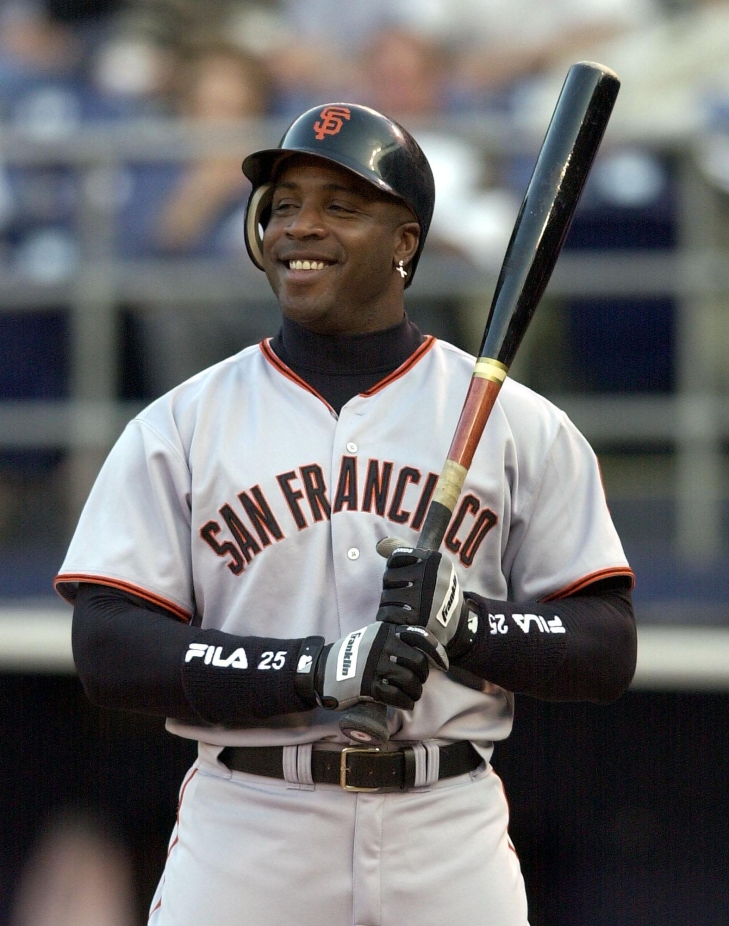
Creating a historical hierarchy for a Major League franchise involves delicately separating pure individual performance from the often polarizing public opinion. This is particularly challenging when evaluating Barry Bonds. When he arrived in Northern California before the 1993 season, he was already a two-time National League MVP and a superstar with the Pittsburgh Pirates. However, what he achieved over the next 15 years under the bay winds goes beyond typical statistics. With an incredibly compact, high-velocity swing and a nearly telepathic sense of the strike zone, Bonds transformed the batter's box into a laboratory of offensive mastery, reaching a peak that redefined the sport’s physics.
The subsequent stretch from 1994 through 1999 cemented his standing as the premier five-tool weapon in professional baseball, even as external forces began shifting the sport's landscape. During the strike-shortened 1994 calendar, Bonds refused to let the labor stoppage halt his elite consistency, batting .312 with 37 home runs and a league-leading 74 walks in just 112 games to secure a fourth-place finish in the MVP voting. He backed that up in 1995 by crossing the century mark in runs batted in once again, lashing 33 home runs and driving home 104 runs despite a down year for the club's overall offense.
His absolute physical peak of the decade erupted during a magnificent 1996 showcase. Bonds put on an unadulterated display of historical, multi-dimensional artistry, exploding for 42 home runs while drawing a spectacular, league-leading 151 walks to fuel a massive .461 on-base percentage. Showing he was still a lethal, high-velocity engine on the basepaths, he swiped 40 bases to become only the second player in major league history to register a 40-home run, 40-stolen base season—joining Jose Canseco and matching the deep, versatile athletic bloodline of his father, Bobby Bonds.
He maintained that hardware-certified authority through the late 1990s, capturing consecutive Gold Gloves and Silver Sluggers across the 1997 and 1998 campaigns. The 1997 season saw him crush 40 homers and drive in 101 runs to carry the Giants back to the postseason, while his 1998 run secured his place in the record books as the founding, lone member of the mythical 400-home run, 400-stolen base club. Yet, despite his relentless excellence, the sport was rapidly fracturing around him; the game was evolving into a high-scoring, muscle-bound era where rival sluggers were visibly altering their physiques and dominating national headlines with astronomical home run totals.
Following an injury-shortened 1999 campaign where a bone spur in his elbow limited him to 102 games—though he still managed a robust 34 home runs—Bonds returned to the rubber with a transformed frame and a fierce competitive chip on his shoulder. At age 35, his body appeared to be changing, and any remaining doubts that his game had entered a completely detached, supernatural dimension were permanently shattered during a historic 2001 regular-season masterpiece.
The 2001 campaign stands as the absolute structural zenith of individual dominance in baseball history. Bonds put on an unbelievable display of offensive violence, shattering Mark McGwire’s single-season record by launching a breathtaking 73 home runs. He walked away with his fourth career MVP, and regardless of the growing skepticism from national writers or the vitriol directed at him from opposing fans, he established himself as the most feared offensive entity to ever look at a baseball. Opposing managers completely abandoned traditional tactical logic, treating him with an unprecedented level of caution that frequently resulted in him being intentionally walked even with the bases loaded.
What followed from 2001 through 2004 was a four-year run of hitting success that will likely never be replicated as long as the sport exists. Bonds turned run production into a strict, everyday routine, sweeping four consecutive National League Most Valuable Player Awards while leading the major leagues in on-base percentage, slugging percentage, and OPS every single summer. His advanced efficiency filters reached a comical peak during the 2004 schedule, where he batted a blistering .362 and drew an astronomical, record-shattering 232 walks—including 120 intentional free passes—to post a mind-bending .609 on-base percentage.
As natural physical wear and tear and severe knee issues mounted in the post-2004 twilight of his career, Bonds became increasingly injured, yet his internal efficiency filters remained completely unstoppable whenever he could hobble up to the plate. He continued to pass historic milestones on a regular basis, ultimately surpassing Hank Aaron on August 7, 2007, to secure the sport’s ultimate career crown. Following the expiration of his contract at the conclusion of that 2007 schedule, the front office officially signaled a structural transition, and with a cloud of legal scrutiny and corporate blackballing hovering over his name, no other major league club offered him an opportunity to extend his journey.
Following his contract's expiry, neither the Giants nor any other club offered him an opportunity. He would retire, belting 586 Home Runs, 1,440 RBI, and recording a Slash Line of .312/.477/.666 for San Francisco.
Controversy or not, there will never be another hitter like Barry Bonds again.
The Baseball Hall of Fame may never call his name, but the Giants inducted him into their Wall of Fame in 2017.
Fred McGriff elected to the Baseball Hall of Fame
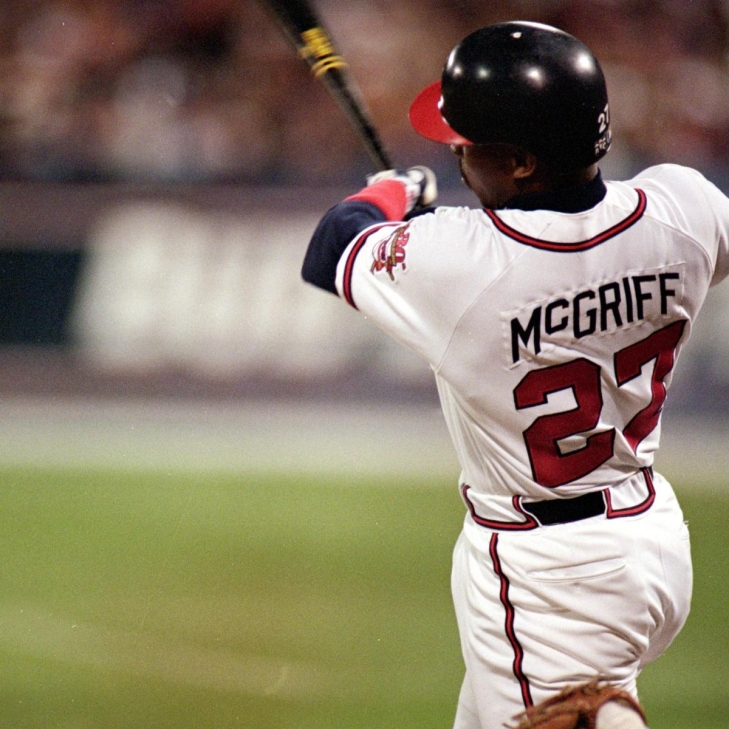
Today the Contemporary Baseball Veterans Committee met and voted on, and elected Fred McGriff unanimously, receiving all sixteen votes.
The committee was comprised of Hall of Fame platers, Greg Maddux, Jack Morris, Ryne Sandberg, Lee Smith, Frank Thomas, Alan Trammell, Executives, Paul Beeston, Theo Epstein, Derrick Hall, Arte Moreno, Kim Ng, Dave St. Peter, Ken Williams and Veteran Media Members/Historians Steve Hirdt, LaVelle Neal and Susan Slusser.
McGriff, who played First Base, was a five-time All-Star, received 39.8 percent in 2019, his last year on the writer’s ballot, but this committee is more player driven. He had 493 Home Runs, and likely would have had 500 had there not been a strike in 1994, likely would have had 500. McGriff’s induction was largely predicted my many (including us), though the 100% tally is a little bit of a surprise.
Finishing second was Don Mattingly, who had eight votes. Arguably the greatest New York Yankee to have never won a World Series Ring in the Bronx, Mattingly won a Batting Title (1985), twice led the AL in Hits, and had a lifetime Batting Average of .307. He is also a nine-time Gold Glove winner and three-time Silver Slugger. Ranked #35 on Notinhalloffame.com, “Donnie Baseball” was on the ballot for 15 years with his peak coming in year one (28.2%) in his first year (2001).
Curt Schilling was in third with seven votes. Likely ousted on the regular ballot due to his anti-media stance and right-wing beliefs, Schilling failed to make it past the ten years on the ballot, peaking on his penultimate year, 2021 with 71.1%.
Former two-time MVP, Dale Murphy has six votes. Ranked #30 on Notinhalloffame.com, Murphy was on the ballot for 15 years, with his highest tally coming in 2000 (23.2%), Murphy’s second year on the ballot.
Albert Belle, Rafael Palmeiro, Barry Bonds and Roger Clemens received four or less votes. We do not know how many (if any) these former players received. In the case of the latter three, it is an indictment that the PED-associated players have an even tougher road than they had with the writers.
McGriff will be inducted along with the rest of the inductees this summer. Please note that we will not be revising our Notinhalloffame.com Baseball list until the conclusion of the Modern Ballot.
We here at Notinhalloffame.com would like to congratulate Fred McGriff for earning this prestigious honor.
The Baseball Hall of Fame Contemporary Baseball Committee names their Finalists
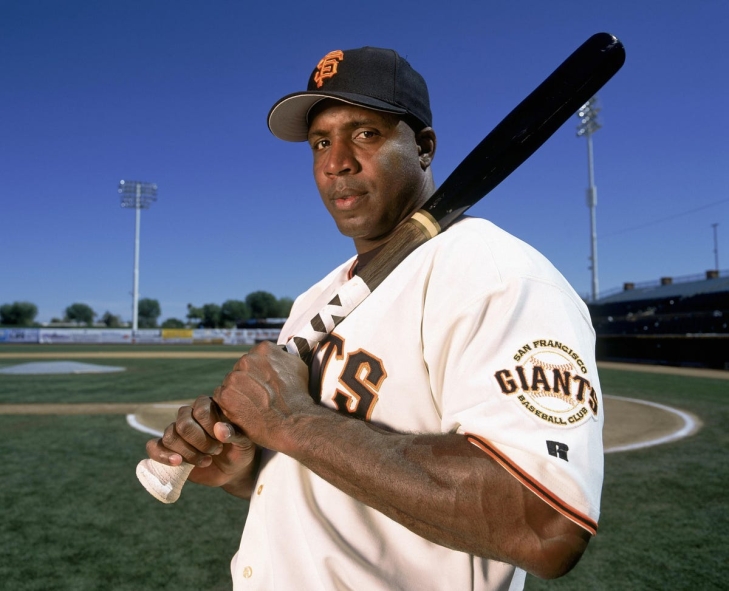
Days after the Houston Astros were crowned the 2022 World Series Champions, the Baseball Hall of Fame announced the eight Contemporary Baseball Hall of Fame ballot candidates.
Of the former players nominates, should any of the receive at least 75% of the vote from the 16-member Committee, they will enter Cooperstown! The Committee will be meeting on December 4.
Here are the nominees:
Albert Belle: Belle was a five-time All-Star and Silver Slugger and was named by The Sporting News as the Player of the Year in 1995. He had 381 Home Runs and a lifetime Slugging Percentage of .564. Ranked #61 on Notinhalloffame.com and was on the ballot for two years, peaking a 7.7% in his first year in 2006.
Barry Bonds: The controversial slugger set the all-time mark for Home Runs (762) and in a single season (73) while winning seven MVP Awards. A 14-time and 12-rime Silver Slugger, Bonds is also the all-time leader in Walks (2,558) and boasts a lifetime OPS of 1.051. Ranked #1 on Notinhalloffame.com and was on the ballot for ten years, finishing as high as 66.0% in his final year, 2022.
Roger Clemens: Clemens has the same level of polarization that Bonds has, only he was a Pitcher. A seven-time Cy Young winner and 12-time All-Star, Clemens has the World Series Rings (2) that Bonds does not have, and we think it is a safe bet that he will be the last 350-Win Pitcher in Baseball. Clemens, who also has 4,672 Strikeouts, is also a two-time Major League Player of the Year. Ranked #2 on Notinhalloffame.com and was on the ballot for ten years, with his highest total coming in 2022, 65.2%, his last year on the ballot.
Don Mattingly: Arguably the greatest New York Yankee to have never won a World Series Ring in the Bronx, Mattingly won a Batting Title (1985), twice led the AL in Hits, and had a lifetime Batting Average of .307. He is also a nine-time Gold Glove winner and three-time Silver Slugger. Ranked #35 on Notinhalloffame.com, “Donnie Baseball” was on the ballot for 15 years with his peak coming in year one (28.2%) in his first year (2001).
Fred McGriff: The “Crime Dog” is not closely associated with one team, which overall hurts his Hall of Fame chances, nor does the fact that he played in an era with offensively charged First Basemen, hence why he is “only” a five-time All-Star. McGriff had 493 Home Runs, and had he made 500, would we be having this conversation? Ranked #27 on Notinhalloffame.com, McGriff was on the ballot for ten years with his highest tally coming in 2019, 39.8%, his last year of eligibility.
Dale Murphy: Murphy won the National League MVP in both 1983 and 1984, where the seven-time All-Star smacked 398 Home Runs over his career. Ranked #30 on Notinhalloffame.com, Murphy was on the ballot for 15 years, with his highest tally coming in 2000 (23.2%), Murphy’s second year on the ballot.
Rafael Palmeiro: Palmeiro is one of only three players who had 3,000 Hits and 500 Home Runs over his career, and he was named the Major League Player of the Year in 1999. The First Baseman was a four-time All-Star and two-time Silver Slugger, and like others on this list, he is associated with PEDs, though unlike others, he was caught. Ranked #20 on Notinhalloffame.com, Palmeiro was only on the ballot for four years, with the highwater mark in 2012 (12.5%), his second year of eligibility.
Curt Schilling: Schilling might be the most contentious former player of this group and think of what that means! Likely ousted on the regular ballot due to his anti-media stance and right wing beliefs, Schilling failed to make it past the ten years on the ballot, peaking on his penultimate year, 2021 with 71.1%.
We here at Notinhalloffame.com would like to congratulate the former baseball stars who have made it to this stage.
Baseball Hall of Fame 2023: Contemporary Baseball Era Committee
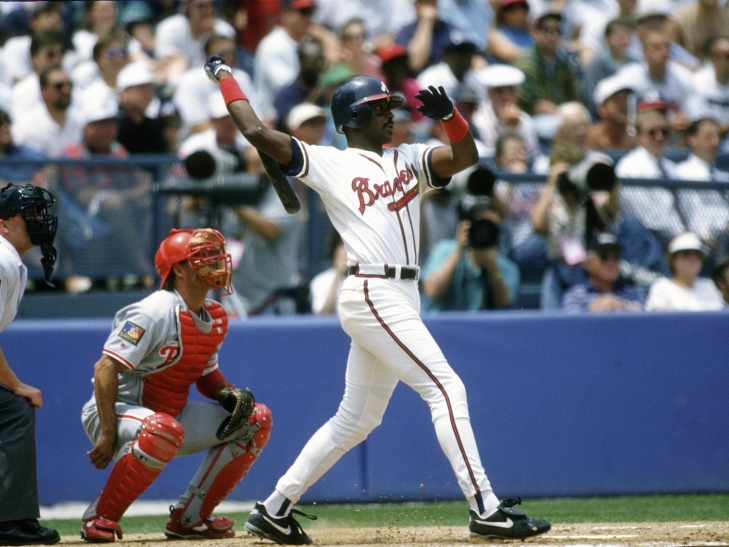
By paring the number of candidates to be considered by the Contemporary Baseball Era Committee to a lean-and-mean eight, and if trends by recent iterations of the National Baseball Hall of Fame Veterans Committee continue, the odds look very good for Fred McGriff to be making an induction speech in Cooperstown, New York, in July 2023 when the committee announces its results during the baseball winter meetings to be held on December 4, 2022.
Why should McGriff start preparing his induction speech? Because the Screening Committee that selected the eight players whose careers began after 1980 to be considered by the Contemporary Baseball Era Committee of the Hall of Saints—sorry, make that the Hall of Fame—have gamed the ballot to, in essence, eliminate half of its candidates right off the bat, leaving the slugging first baseman as the most viable candidate for consideration ahead of, in order of descending likelihood, Don Mattingly, Dale Murphy, and Albert Belle.
Major Update: Our Baseball List has been revised for the 2023 Vote.
Is it that time again!
One of our core lists on Notinhalloffame.com, our Baseball list of those to consider for the Baseball Hall of Fame has been revised.
The steps in our revisions are basic:
-Remove all of those who were inducted. This included David Ortiz (#8), Gil Hodges (#11), Minnie Miniso (#14), Jim Kaat (#20) and Tony Oliva (#27).
-Input those we think worthy who are now eligible.
-Adjust rankings based on your votes and comments.
Before we announce our top ten, note that we did one major change. We used to have three number ones, with Pete Rose and “Shoeless” Joe Jackson appearing as 1A and 1B since our inception, as both were deemed ineligible. We have altered this with no multiples at the top, and although Rose and Jackson are still not welcome into Cooperstown, we disagree, and will keep them ranked.
The entire list can be found here, but here is our new top ten:
#1. Barry Bonds. Bonds’ ten years of eligibility may have ended a few months ago, but the all-time leader in Home Runs leader won seven MVPs, despite there being a cloud of PED suspicion around him. His chances now lie with the Veteran’s Committee. Bonds was ranked at 1C last year.
#2. Roger Clemens. Clemens is like Bonds, in that he too ended his regular stay on the ballot, and was likely excluded due to the belief that he might have used PEDs. Clemens won the Cy Young seven times, and remains at #2.
#3. Alex Rodriguez. Unlike Bonds and Clemens, Rodriguez DID test positive for PEDs, which happened after the 2004 agreement between the players and MLB that outlawed the enhancers. A-Rod was on his first year of eligibility, drawing only 34.3% of the vote, despite being a three-time MVP. He holds the same rank as last year.
#4. Pete Rose. Rose is the all-time leader in Hits, but he has been from baseball for gambling on the sport. Ranked at #1A last year, Rose drops considerable on this list, but despite the issues of the players of above him, Rose actually has a significantly lower bWAR than Bonds, Clemens and Rodriguez.
#5. “Shoeless” Joe Jackson. Ranked #1B last year, Jackson is ineligible for the Hall due to his possible participation in the throwing of the 1919 World Series. That being said, there are many, including us, who feel that he belongs.
#6. Lou Whitaker. The former Tigers Second Baseman might not have lasted more than one year on the Hall of Fame ballot, but he was once on the Veteran’s Ballot, and is considered one of the more egregious snubs by sabremetricians. He was ranked #4 last year.
#7. Bill Dahlen. Dahlen was a previous Veteran’s Committee Nominee, and that is still the route in which he needs to gain entry to Cooperstown. The Shortstop was a two-time leader in Defensive bWAR and won a World Series Ring with the Giants in 1905. He was ranked #5 last year.
8. Curt Schilling. Schilling asked to be removed off of the ballot, and that didn’t happen, and many of the voters acquiesced to his later request to be removed from consideration. On his last year on the ballot, Schilling dropped from 71.1 to 58.6, and despite his resume, it is conceivable that he will never see a Veteran’s Committee ballot.
9. Manny Ramirez. Ramirez entered the ballot in 2017, and offensively he statistically had a better resume than Ivan Rodriguez and Vladimir Guerrero, both of which are now in Cooperstown. He is in the same vein as A-Rod, as he was popped for PEDs as a player. Ramirez will enter his seventh year on the ballot, but has yet to crack 30%.
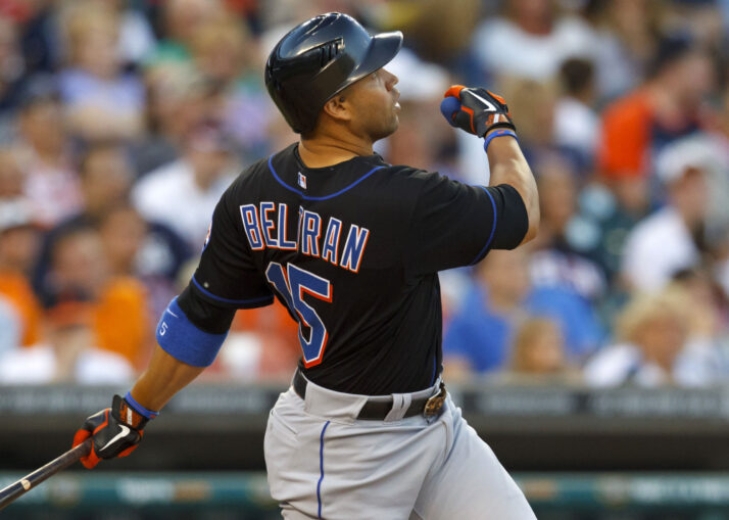
10. Carlos Beltran. Beltran is the only new entry in his first year of eligibility, and the nine-time All-Star has the stats for the Hall, but his recent scandal involving the Astros World Series win, could cost him some votes.
There were other new entries, including closer, Francisco Rodriguez, who debuts at #172. To close off the list, a new #300 had to come in, which was Derrek Lee.
Thank you all for your support, and we encourage you to cast your votes and offer your opinions.
David Ortiz elected the Baseball Hall of Fame
We love this day!
Though, that does not mean, we always love the results.
The Baseball Hall of Fame announced the results of the Class of 2022, and it ends an era of sorts as many of the controversial PED associated players are off the ballot.
Let’s get right into it.
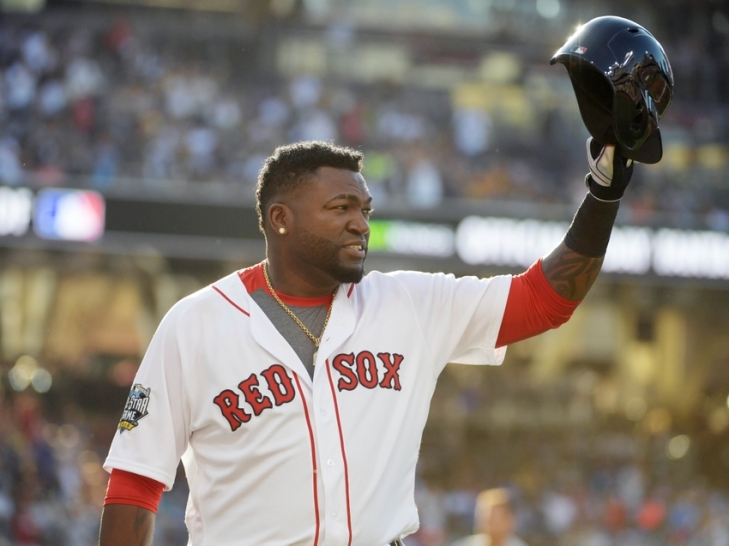
The Baseball Hall of Fame elected one player this year, which was David Ortiz, who enters on his first year with 77.9%. The long-time Designated Hitter led the Red Sox to three World Series Championships, and had 541 Home Runs, 1,768 RBIs and went to ten All-Star Games. Ortiz becomes the first predominant DH to enter the Hall in his first year.
Here is a look at the rest of the vote:
Barry Bonds. 66.0%, 10th and Final Year: Bonds was a seven-time MVP, and let’s be frank: We all knew that he was using PEDs, and so did the people who kept voting him as an MVP. Saying that, Bonds is one of the greatest offensive baseball players that the game ever saw, and is the game’s all-time leader in Home Runs (762) and Walks (2,558), and has a career Slash Line of .298/.444/.607. Statistically speaking, we know that Bonds belongs in the Hall, and we also know why the voters kept him out. He climbed from 61.8% from last year.
Roger Clemens. 65.6%, 10th and Final Year: We could “lather, rinse, repeat” with Clemens in regards to Bonds, as he is also a generational superstar who won seven Cy Youngs. Like Bonds, Clemens was surly, but also was never officially popped for PEDs by Major League Baseball. Clemens has every Hall of Fame stat you can think of, and shatters many of the inductees, but he will have to exist in an island with Bonds of players that eclipse the actual Hall of Famers. Clemens reached his highest total, increasing from last year’s 61.6%.
Scott Rolen. 63.2%, 5th Year: Rolen, continues to rocket up the votes. Debuting with only 10.2% in 2018, Rolen had 52.9% last year, and is poised to enter in 2023 with this result. We would bet on it!
Curt Schilling. 58.6%, 10th and Final Year. Schilling told voters not to vote for him, and that is exactly what he got, as he dropped from 71.1% from last year. While we think he has the resume for Cooperstown, his off-field feud with the media did him no favors. This was his last year on the ballot, debuting at 38.8% in 2013, and peaking at 71.1% in 2021. Frankly, we feel that this elevates his fame, rather than decreases it, and a martyr factor now exists with Schilling. His only path is the Veteran’s Committee, and it is likely that he will feel the same when he is eligible in those forums.
Todd Helton. 52.0%, 4th Year: Helton has now gone from 16.5 in Year one to looking like he is one or two years away. We recently named Helton the greatest Colorado Rockies player of all-time.
Billy Wagner. 51%, 7th Year: Wagner is the top closer on this ballot, and considering his first three years he was barely over 10%, his ascension has been more than impressive. This is his first year exceeding 50%.
Andruw Jones. 41.1%, 5th Year: Jones did not have double-digits if Hall of Fame votes in his first two years, but made it to 33.9% last year and cracks 40% this year.
Gary Sheffield. 40.6%, 8th Year: Sheffield has all of the Hall of Fame metrics, but lacks the name, the team, and the notoriety. It was a little surprising he got to 40 percent last year, and he has the exact same number this year. This is not boding well for Sheffield.
Alex Rodriguez. 34.3%, 1st Year: We said this for years, in that we were most intrigued of any player in any potential Hall to see where he would finish in terms of his first year of eligibility. A-Rod was popped for PEDs, was at one time massively unpopular, but only Bonds had better stats of any position player on this ballot, and he is among the top ten ever in terms of skills and stats. Bluntly, this is way lower than we thought.
Jeff Kent. 32.7%, 9th Year: Kent is a former MVP but never got past 30 percent on the ballot until last year (32.4). A rise of less than half a percent tells us all we need to know about his chances.
Manny Ramirez. 28.9%, 6th Year: Unlike other PED-associated players on this list, Ramirez WAS popped and suspended for steroids. He only climbs up .7% from last year.
Omar Vizquel. 23.9%. 5th Year: Ouch!!!! While we don’t this for sure, has anyone fallen worse than Vizquel? Since the last vote, he was accused of domestic violence, and it has shattered his chances. Considering he debuted at 37.0, and he is now double digits lower than this, what chance does he have? He drops from 49.1% and 52.6% from 2020.
Sammy Sosa. 18.5%, 10th and Final Year: Say what you want about Sosa, but this is a player who at one point was considered to be one of the top five players in the game for a half-decade, and was in the upper-echelon in terms of popularity. For what it is worth, this was the highest result that Sosa received.
Andy Pettitte. 10.7%, 4th Year: Pettitte has a lot of the numbers you need, but is an admitted PED user. For whatever reason, Pettitte dropped from 13.7%.
Jimmy Rollins. 9.4%, 1st Year: Rollins enters the ballot and survives to see another day.
Bobby Abreu. 8.6%, 3rd Year. Abreu still has not reached ten percent, but he hasn’t dipped below five either. He had 8.7% last year.
Mark Buehrle. 5.8%, 2nd Year. Buehrle hangs on, but plummets from 11.0% from last year.
Torii Hunter. 5.3%, 2nd Year. Hunter is clinging to life on this ballot, and like Buehrle, he suffered a similar drop. He had 9.5% last year.
The following did not receive the 5% needed to remain on the ballot:
Joe Nathan (4.3%), Tim Hudson (3.0%), Tim Lincecum (2.3%), Ryan Howard (2.0%), Mark Teixeira (1.5%), Justin Morneau (1.3%), Jonathan Papelbon (1.3%), Prince Fielder (0.5%), A.J. Pierzynski (0.5%), Carl Crawford (0.0%) and Jake Peavy (0.0%).
We will rework our Notinhalloffame.com Baseball list of those to consider for the Baseball Hall of Fame by the end of February. This will involve removing those who were inducted, and added those worthy and eligible.
We here at Notinhalloffame.com would like to congratulate David Ortiz.
10. Barry Bonds
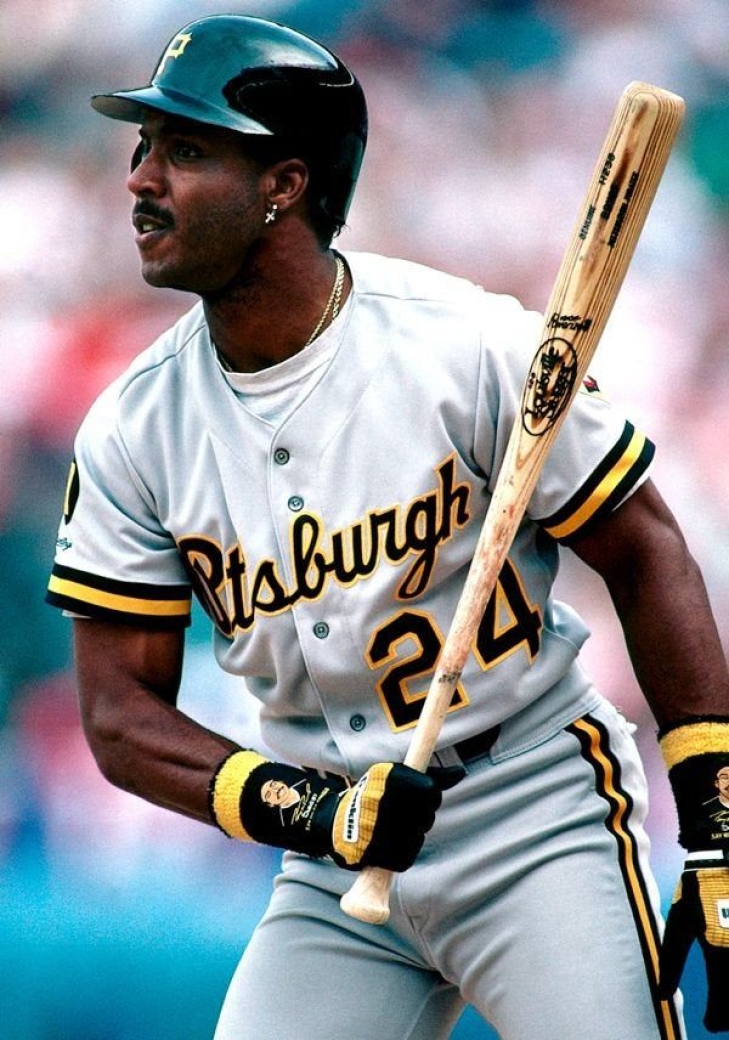
Many in the baseball community often see Barry Bonds as a figure surrounded by heated debates, mainly focusing on his transformation during his late years in San Francisco. But before he became one of the most controversial and dynamic players of the modern game, he spent seven summers in western Pennsylvania building a very different kind of legacy. In Pittsburgh, Bonds wasn't just a towering slugger; he was a slim, incredibly fast, five-tool talent who blended amazing athletic skill with a sharp, instinctive eye. His efforts helped lift a struggling small-market team from the bottom of the National League standings into a long, exciting period of championship chase.
Drafted sixth overall in 1985, Bonds inherited incredible talent from his father, Bobby Bonds, and his legendary godfather, Willie Mays. He quickly advanced through the minor leagues and made his major league debut the next summer. By the start of the 1987 season, he had earned the regular spot in left field, ready to shine.
Although his initial campaigns from 1987 to 1989 were undoubtedly effective, they occasionally failed to meet the expectations of a local fan base and media that anticipated immediate, generational excellence. Additionally, his confrontational and highly defensive interactions with journalists and management swiftly created an impression that he was exceedingly difficult to handle behind the scenes.
His career's key turning point occurred during a historic 1990 breakout season, when his raw talent finally transformed into remarkable efficiency. Bonds delivered an outstanding multi-faceted performance that earned him his first National League MVP Award. He hit .301, led the league in slugging percentage (.565), and had an OPS of .970. He also hit 33 home runs, drove in 114 RBIs, stole 52 bases, and played Gold Glove defense, helping the Pirates win their first National League East division title in over ten years.
Far from being just a one-summer anomaly, Bonds spent the following two years dominating National League pitching staffs. He narrowly missed the MVP award in 1991, finishing as the runner-up after leading the league with a .410 on-base percentage, and then delivered an exceptional performance in the 1993 season.
In the impressive 1992 regular season, Bonds earned his second MVP award by hitting 34 home runs, driving in 103 runs, and drawing a league-high 127 walks. He dominated advanced analytics by leading all of baseball in on-base percentage (.456), slugging (.624), and OPS (1.080), while also earning his third straight Gold Glove and Silver Slugger awards.
Despite leading the team to three straight National League Championship Series, underlying tensions persisted. The fans, often alienated by his distant attitude and disappointed by his postseason struggles, never truly warmed up to him. Given the harsh financial constraints of small-market baseball, everyone in Pittsburgh knew the front office could never offer him the lucrative contract available in free agency.
Bonds signed with San Francisco in 1993, and he became the most feared offensive player, perhaps ever. Over his tenure in Pittsburgh, Bonds smacked 176 Home Runs, 556 RBI, with a sick Slash Line of .275/.380/.503. As of this writing, Bonds is the only two-time MVP in franchise history.
If I Had a Vote in the 2022 Baseball Hall of Fame Election
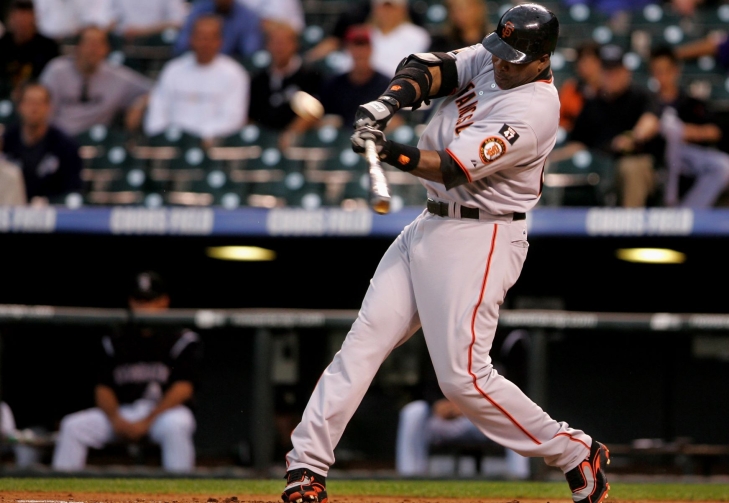
On a ballot packed with qualified candidates for the National Baseball Hall of Fame, is it possible that none of them will be elected this year?
If that happens, as it did last year, it would be the third time in the last decade that the qualified voters of the Baseball Writers' Association of America (BBWAA) have thrown a shutout at the Hall of Fame. This is an odd paradox considering that after the Big Zilch of 2013, the BBWAA in subsequent years went on to elect 22 players across the next seven ballots, with the various guises of the veterans committee voting in another five players (and six non-players) during that seven-year span. (In 2013, the veterans committee did elect three candidates to the Hall.)
Last year, Curt Schilling, who had garnered 70 percent of the vote on the previous ballot, seemed to be a lock for election. Instead, he stalled with a negligible increase in support, then threw a social-media Trumper tantrum declaring that he wanted to be removed from this year's ballot. The Hall of Fame quickly responded that it would not do so.
The 2022 Baseball HOF ballot is officially out
It’s on!
The 2022 Baseball Hall of Fame ballot is officially out with seventeen returning players and thirteen new first year eligible names.
To return on the ballot, a player must be within their ten years of eligibility and received at least 5% of the vote.
The returning former players are: (with their year of eligibility and last year’s result)
Curt Schilling: 10th Year, 71.1%
Barry Bonds: 10th Year, 61.8%
Roger Clemens: 10th Year, 61.6%
Scott Rolen: 5th Year, 52.9%
Omar Vizquel, 5th Year, 49.1%
Billy Wagner, 7th Year, 46.4%
Todd Helton,4th Year, 44.9%
Gary Sheffield, 8th Year, 40.6 %
Andruw Jones, 5th Year, 33.9%
Jeff Kent, 9th Year, 32.4%
Manny Ramirez, 6th Year, 28.2%
Sammy Sosa, 10th Year, 17.0%
Andy Pettitte, 4th Year, 13.7%
Mark Buehrle, 2nd Year, 11.0%
Torii Hunter, 2nd Year, 9.5%
Bobby Abreu, 3rd Year, 8.7%
Tim Hudson, 2nd Year, 5.2%
The new former players are:
Carl Crawford
Prince Fielder
Ryan Howard
Tim Lincecum
Justin Morneau
Joe Nathan
David Ortiz
Jonathan Papelbon
Jake Peavy
A.J. Pierzynski
Alex Rodriguez
Jimmy Rollins
Mark Teixeira
Notably Coco Crisp, Marlon Byrd, Michael Bourn, Kyle Lohse, Angel Pagan, Omar Infante, Matt Thornton, Billy Butler, Colby Lewis, Jeff Francoer, Javier Lopez and Ryan Vogelsong were eligible this year, but were not included on the ballot.
The results will be announced on January 25, 2022.
