
gold star for USAHOF

Top 50 Pittsburgh Pirates

One of the oldest teams in Major League Baseball, the Pittsburgh Pirates, began in the American Association as the Pittsburgh Alleghenys in 1881.  They joined the National League in 1887 and changed their name to the Pirates four years later.

Pittsburgh won their first World Series in 1909, with Honus Wagner leading the way.  A second title came in 1925, but it would not be until 1960 when they won their third, punctuated by Bill Mazeroski’s Game 7 walk-off Home Run.  Led by Roberto Clemente, they won a fourth World Series in 1971, and their fifth came in 1979 with Willie Stargell and the “We Are Family” team.

This list is up to the end of the 2025 regular season.

Note: Baseball lists are based on an amalgamation of tenure, traditional statistics, advanced statistics, playoff statistics, and post-season accolades.
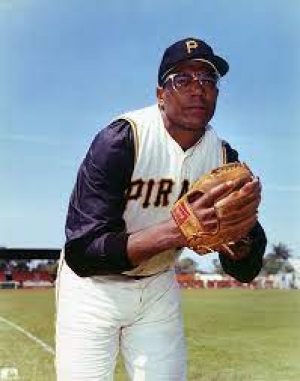
The 1960s are rightly celebrated as a golden age of pitching dominance, marked by legends who intimidated batters through their commanding presence and fast, high-velocity pitches. Bob Veale, a towering 6-foot-6, 230-pound southpaw from Alabama, exemplified this raw physical intimidation. Not only did he throw with formidable power, but his pitches also carried an unpredictable, terrifying movement that visibly unsettled batters. Due to severe Nearsightedness, Veale wore thick-rimmed glasses, which sometimes made it difficult to see the catcher's signs clearly, adding a psychological edge and high-stakes tension for opponents. For seven outstanding years, he was the leading strikeout pitcher in…
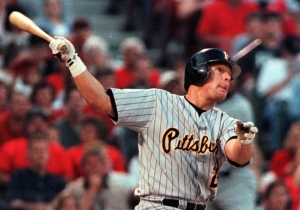
At the turn of the millennium, Western Pennsylvania baseball faced tough times with many losing seasons and the closure of Three Rivers Stadium. Despite this, a powerful, compact outfielder emerged, delivering some of the most spectacular and efficient offensive displays the city had seen. Acquired from the Cleveland Indians before the 1999 season, Brian Stephen Giles immediately rose to prominence at the peak of his physical condition. Holding a crouched, ready stance from the left side, he was not only a volume hitter but also had a modern, analytical profile combining impressive power with sharp plate discipline, making run production…
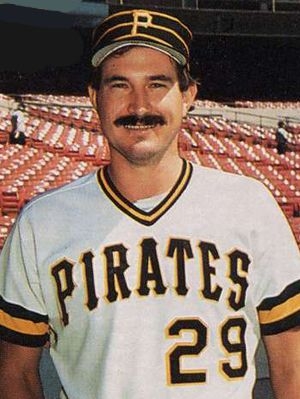
The blueprint of a top league pitcher is usually based on health and velocity, but Rick Rhoden's career was built on hard work. After shining with the Dodgers and helping them win consecutive NL pennants, shoulder issues led to a trade to the Pirates before 1979. Skeptics were right; Rhoden’s arm was so bad he played only one game during the 1979 championship run. However, unlike others, the Pirates waited patiently, a display of athletic resilience. Once his shoulder finally stabilized, Rhoden made durability a regular part of his season under the lights at Three Rivers Stadium. With a strategic,…
The early history of baseball features many modest, low-velocity pitchers who quietly filled rotation spots, but Frank DeHaas Killen seemed like he was built in a laboratory for the 1890s. Standing 6-foot-1 with a lean, athletic frame, the left-hander from Pittsburgh had a commanding presence, easily fitting into the modern game. His raw, high-velocity talent was paired with a notoriously explosive, hyper-emotional temperament. Killen was a mercurial, cocky figure who often lost control on the mound, creating a tense show that frustrated management. After a spectacular 29-win rookie season for Washington in 1892, the Senators' front office traded him to…
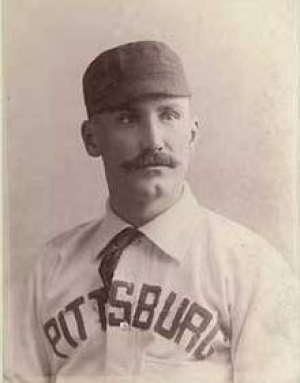
The modern Major League Baseball has a history of labor battles, but the pioneer of player autonomy, Jake Beckley—known as "Eagle Eye" for his strike zone judgment—was a foundational figure in late-19th-century baseball. Purchased by the Pittsburgh Alleghenys in 1888, the left-handed first baseman quickly became a star in Western Pennsylvania. Beckley was known for his low-variance hitting and durability, leaving a legacy of hitting milestones and challenging the sport's financial hierarchy. His debut appearance after arriving in town during the 1888 season showcased top-tier talent, with the 20-year-old rookie posting an impressive .343 batting average over 71 games. He…
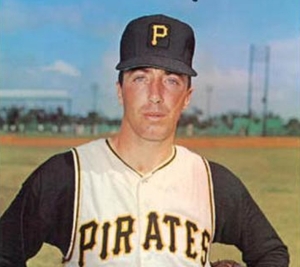
The 1960s and 1970s "Lumber Company" of Pittsburgh is famous for its home runs and offensive pressure, but securing those rosters needed a top defensive anchor. Gene Alley was that anchor, signed in 1959. As a shortstop, he brought sharp instinct and consistent defense, focusing on stopping running games and turning tough grounders into outs, and he became one of the era's top defensive players. His first appearance was in brief auditions in 1963, but Alley secured the starting shortstop position during the 1965 season. He excelled at run prevention, quickly establishing himself as a defensive force with a leading…
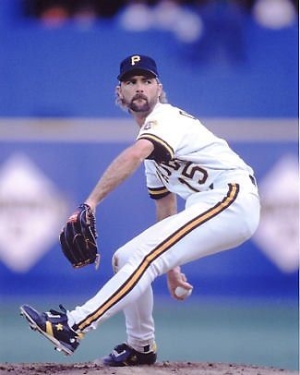
Modern analytics formulas are excellent at analyzing efficiency but sometimes overlook the emotional essence of a franchise's peak years. For example, a sabermetric review of the early 1990s Pittsburgh Pirates might suggest that the team’s core was elsewhere, based on data alone. However, anyone who watched games at Three Rivers Stadium or visited that clubhouse knew otherwise: Doug Drabek was the dominant force on the staff and the driving force behind their three straight appearances in the National League Championship Series. His path to becoming a regular starter began with a historic trade that changed the landscape. Once a young…
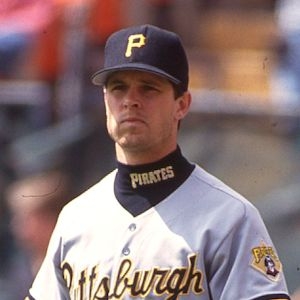
The early-1990s Pittsburgh Pirates featured flashy stars, but the team’s core was a smart, selfless player who understood his role. Acquired from Cleveland in 1989 as the player to be named later in the Felix Fermín trade, Jay Bell didn't rely on raw athleticism. Instead, he used his mental acuity, positional awareness, and situational skills to produce consistently excellent plays, thriving under manager Jim Leyland. His initial appearance over 70 games in 1989 set the stage for him to take on the full-time starting shortstop position before the historic 1990 pennant race. He quickly established a reliable infield routine that…

2026 SEATTLE MARINERS FLEX MEMBERSHIPS

Jan 01, 1970

Buy your Tickets to see 2026 Seattle Mariners Flex Memberships HERE!

BALTIMORE ORIOLES VS. CHICAGO WHITE SOX

Jun 29, 2026

Buy your Tickets to see Baltimore Orioles vs. Chicago White Sox HERE!

PHILADELPHIA PHILLIES VS. PITTSBURGH PIRATES

Jun 29, 2026

Buy your Tickets to see Philadelphia Phillies vs. Pittsburgh Pirates HERE!

NEW YORK YANKEES V. DETROIT TIGERS * PREMIUM SEATING *

Jun 29, 2026

Buy your Tickets to see New York Yankees v. Detroit Tigers * Premium Seating * HERE!

 
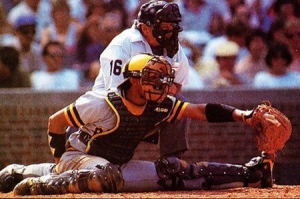
Tony Peña, who signed out of the Dominican Republic as an amateur free agent in 1975, didn't just keep runs from scoring; he revolutionized the catcher role into a showcase of athleticism and charisma. Known for his distinctive crouch, stretching his left leg flat on the dirt with no runners on base, Peña offered pitchers a precise target while maintaining a quick, explosive first step. After steadily advancing through the minor leagues and making his debut with the main team in 1980, this lively catcher revitalized the franchise with a mix of solid contact hitting and dazzling defensive skills, becoming…
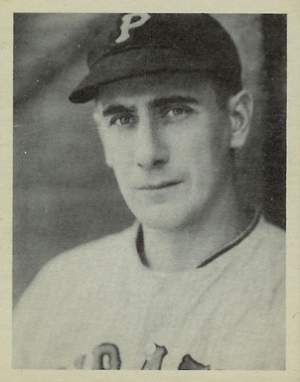
The 1930s National League is often remembered for its powerful offenses, but surviving that era's run-heavy style needed pitchers who could avoid giving up free passes. Bill Swift was the steady pitcher for the Pittsburgh Pirates—a versatile, control-focused thrower who pioneered the modern "swingman" role before it was named. Debuting in 1932, the Pennsylvania native lacked overwhelming stuff but had unshakeable strike zone control. By refusing to grant free passes, Swift became manager Pie Traynor's safety net, pitching whenever needed. His debut campaign in 1932 immediately demonstrated his precise control. As a 24-year-old rookie entering the major leagues, Swift made…
The early-20th-century baseball landscape was marked by a focus on run prevention, but few pitchers employed the Deadball Era's tactics as effectively as Vic Willis. Coming to the Pirates before the 1906 season through a major trade with the Boston Beaneaters, the tall right-hander featured a sweeping overhand drop curve that baffled hitters. Known as "The Delaware Peach," Willis had an exceptional, low-variance pitching style and remarkable durability. While his last years in New England were hampered by poor run support—including a record 29-loss summer in 1905- his move to Pittsburgh sparked one of the franchise's most dominant, efficient pitching…
The mid-1920s saw a surge in offensive play across Major League Baseball, but few players, like Kiki Cuyler, matched the speed of that era. He not only hit well but also raced around bases with relentless speed, earning the nickname "The Flint Flash." For a brief, intense period at Forbes Field, Cuyler was at the top of the sport, combining contact hitting with exceptional speed to help lead his team to a championship. Following a handful of brief September look-ins at the start of the decade, Cuyler fully broke into the everyday starting lineup as a rookie during the 1924…