


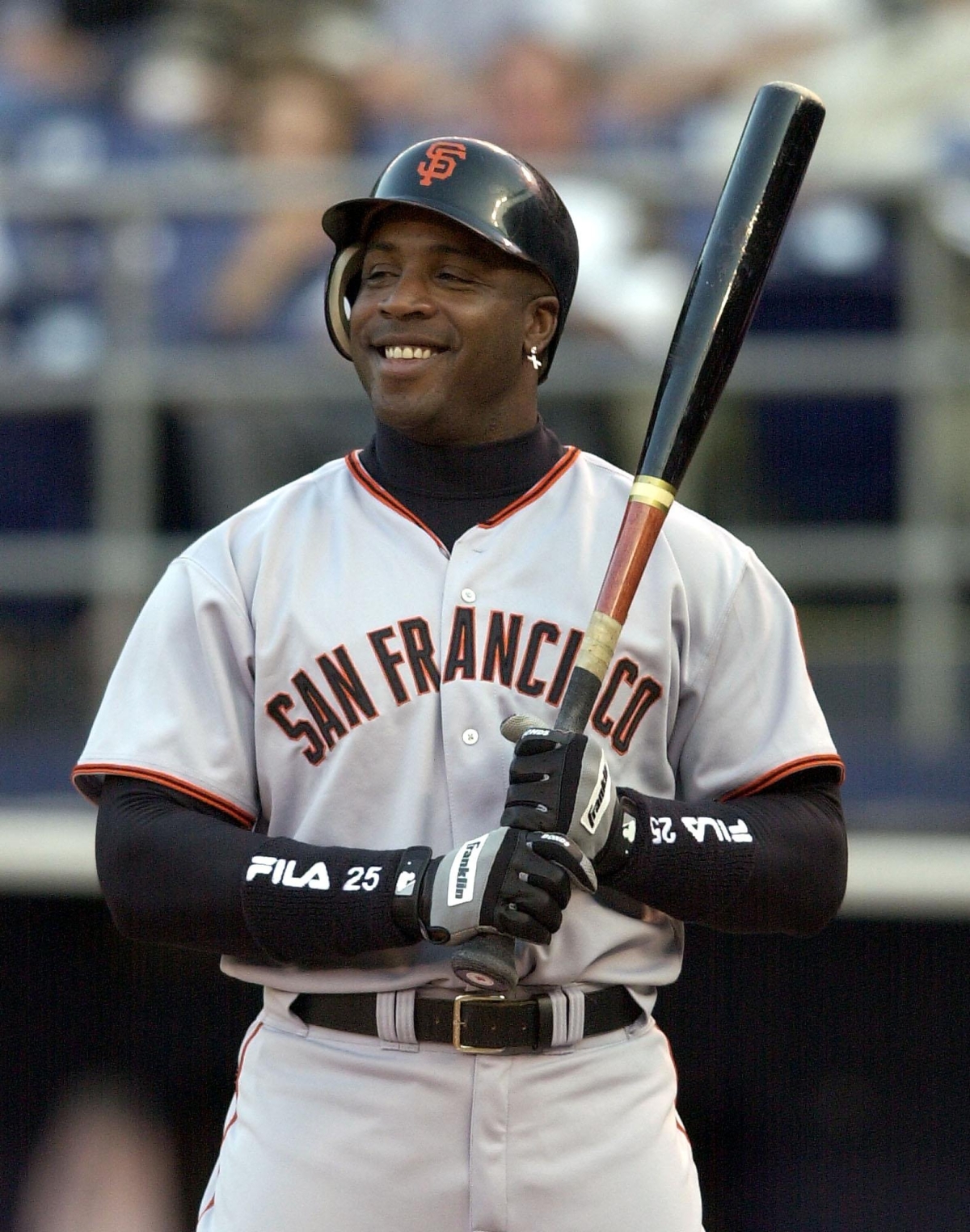

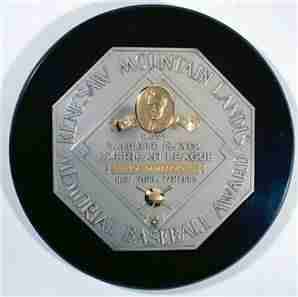







Creating a historical hierarchy for a Major League franchise involves delicately separating pure individual performance from the often polarizing public opinion. This is particularly challenging when evaluating Barry Bonds. When he arrived in Northern California before the 1993 season, he was already a two-time National League MVP and a superstar with the Pittsburgh Pirates. However, what he achieved over the next 15 years under the bay winds goes beyond typical statistics. With an incredibly compact, high-velocity swing and a nearly telepathic sense of the strike zone, Bonds transformed the batter's box into a laboratory of offensive mastery, reaching a peak that redefined the sport’s physics.
The subsequent stretch from 1994 through 1999 cemented his standing as the premier five-tool weapon in professional baseball, even as external forces began shifting the sport's landscape. During the strike-shortened 1994 calendar, Bonds refused to let the labor stoppage halt his elite consistency, batting .312 with 37 home runs and a league-leading 74 walks in just 112 games to secure a fourth-place finish in the MVP voting. He backed that up in 1995 by crossing the century mark in runs batted in once again, lashing 33 home runs and driving home 104 runs despite a down year for the club's overall offense.
His absolute physical peak of the decade erupted during a magnificent 1996 showcase. Bonds put on an unadulterated display of historical, multi-dimensional artistry, exploding for 42 home runs while drawing a spectacular, league-leading 151 walks to fuel a massive .461 on-base percentage. Showing he was still a lethal, high-velocity engine on the basepaths, he swiped 40 bases to become only the second player in major league history to register a 40-home run, 40-stolen base season—joining Jose Canseco and matching the deep, versatile athletic bloodline of his father, Bobby Bonds.
He maintained that hardware-certified authority through the late 1990s, capturing consecutive Gold Gloves and Silver Sluggers across the 1997 and 1998 campaigns. The 1997 season saw him crush 40 homers and drive in 101 runs to carry the Giants back to the postseason, while his 1998 run secured his place in the record books as the founding, lone member of the mythical 400-home run, 400-stolen base club. Yet, despite his relentless excellence, the sport was rapidly fracturing around him; the game was evolving into a high-scoring, muscle-bound era where rival sluggers were visibly altering their physiques and dominating national headlines with astronomical home run totals.
Following an injury-shortened 1999 campaign where a bone spur in his elbow limited him to 102 games—though he still managed a robust 34 home runs—Bonds returned to the rubber with a transformed frame and a fierce competitive chip on his shoulder. At age 35, his body appeared to be changing, and any remaining doubts that his game had entered a completely detached, supernatural dimension were permanently shattered during a historic 2001 regular-season masterpiece.
The 2001 campaign stands as the absolute structural zenith of individual dominance in baseball history. Bonds put on an unbelievable display of offensive violence, shattering Mark McGwire’s single-season record by launching a breathtaking 73 home runs. He walked away with his fourth career MVP, and regardless of the growing skepticism from national writers or the vitriol directed at him from opposing fans, he established himself as the most feared offensive entity to ever look at a baseball. Opposing managers completely abandoned traditional tactical logic, treating him with an unprecedented level of caution that frequently resulted in him being intentionally walked even with the bases loaded.
What followed from 2001 through 2004 was a four-year run of hitting success that will likely never be replicated as long as the sport exists. Bonds turned run production into a strict, everyday routine, sweeping four consecutive National League Most Valuable Player Awards while leading the major leagues in on-base percentage, slugging percentage, and OPS every single summer. His advanced efficiency filters reached a comical peak during the 2004 schedule, where he batted a blistering .362 and drew an astronomical, record-shattering 232 walks—including 120 intentional free passes—to post a mind-bending .609 on-base percentage.
As natural physical wear and tear and severe knee issues mounted in the post-2004 twilight of his career, Bonds became increasingly injured, yet his internal efficiency filters remained completely unstoppable whenever he could hobble up to the plate. He continued to pass historic milestones on a regular basis, ultimately surpassing Hank Aaron on August 7, 2007, to secure the sport’s ultimate career crown. Following the expiration of his contract at the conclusion of that 2007 schedule, the front office officially signaled a structural transition, and with a cloud of legal scrutiny and corporate blackballing hovering over his name, no other major league club offered him an opportunity to extend his journey.
Following his contract's expiry, neither the Giants nor any other club offered him an opportunity. He would retire, belting 586 Home Runs, 1,440 RBI, and recording a Slash Line of .312/.477/.666 for San Francisco.
Controversy or not, there will never be another hitter like Barry Bonds again.
The Baseball Hall of Fame may never call his name, but the Giants inducted him into their Wall of Fame in 2017.

Comments powered by CComment