

 Not in Hall of Fame News
Yes, we know that this is taking a while! As many of…
 Not in Hall of Fame News
Yes, we know that this is taking a while! As many of…
 Not in Hall of Fame News
2002 SEMI-FINAL RESULTS: Thank you for your participation in the Pro Football…
 Not in Hall of Fame News
Yes, we know that this is taking a while! As many of…
 Not in Hall of Fame News
We are diligently working away at Notinhalloffame on revising our Football lists…
 Not in Hall of Fame News
We are diligently working away at Notinhalloffame on revising our Football lists…
 From the Desk of the Chairman
October baseball often turns individual pitching performances into lasting postseason memories. Strikeout…
 From the Desk of the Chairman
For decades, the sports debate ran on gut feeling. Barstool arguments, call-in…
 From the Desk of the Chairman
Introduction to Private Adult Tennis Camps in Prague Adult club players increasingly…
 From the Desk of the Chairman
Unlike in the case of pre-match betting, where you have to pick…
 From the Desk of the Chairman
Kupu178 builds trust with people by using top-end end-to-end encryption. It checks…
 From the Desk of the Chairman
Sports fans thrive on calculating strategy, reading momentum, and maximizing every tactical…






100 Active Potential Football Hall of Famers
-
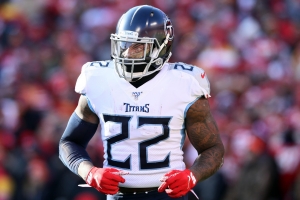 #11 Overall, Derrick Henry, Baltimore Ravens, #1 Running Back2025 Pre-Season Rank #11, 2024 Pre-Season Rank #23, 2023 Pre-Season Rank #39, 2022 Pre-Season Rank #47, 2021 Pre-Season Rank #70, 2020 Pre-Season Rank…
 -
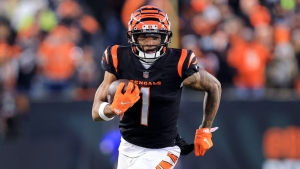 #42 Overall, Ja'Marr Chase, Cincinnati Bengals, #6 Wide Receiver2025 Pre-Season Rank #55, 2024 Pre-Season Rank #111, 2023 Pre-Season Rank #134, 2022 Pre-Season Rank #145. Peak Period: 2021-25* Ja’Marr Chase has been…
 -
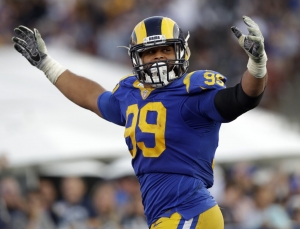 #1 Overall, Aaron Donald: Los Angeles Rams, Defensive End, #1 Defensive Lineman/Linebackers/Pass Rushers2020 Pre-Season Rank #15, 2021 Pre-Season Rank #5, 2022 Pre-Season Rank #3, 2023 Pre-Season Rank #2. PEAK 2017-21 Well, look who’s back! When…
 -
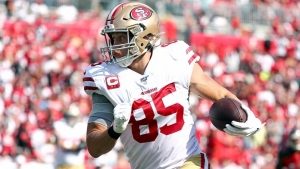 #26 Overall, George Kittle, San Francisco 49ers, #2 Tight End2025 Pre-Season Rank #34, 2024 Pre-Season Rank #42, 2023 Pre-Season Rank #59, 2022 Pre-Season Rank #74, 2021 Pre-Season Rank #86, 2020 Pre-Season Rank…in Tight Ends
Visit the Fictitious Halls of Fame!


You May Also Like...
EDITOR’S CHOICE

 DDT's Pop Flies
When the veterans committee (VC), officially convening as the Contemporary Baseball Era…



 Live Music Head
Project/Objectan interview with André Cholmondeleyby Live Music HeadOriginally published at timessquare.com on…

LATEST RANKINGS





MOST POPULAR RANKINGS
















Committee Chairman
43. Steve Cishek
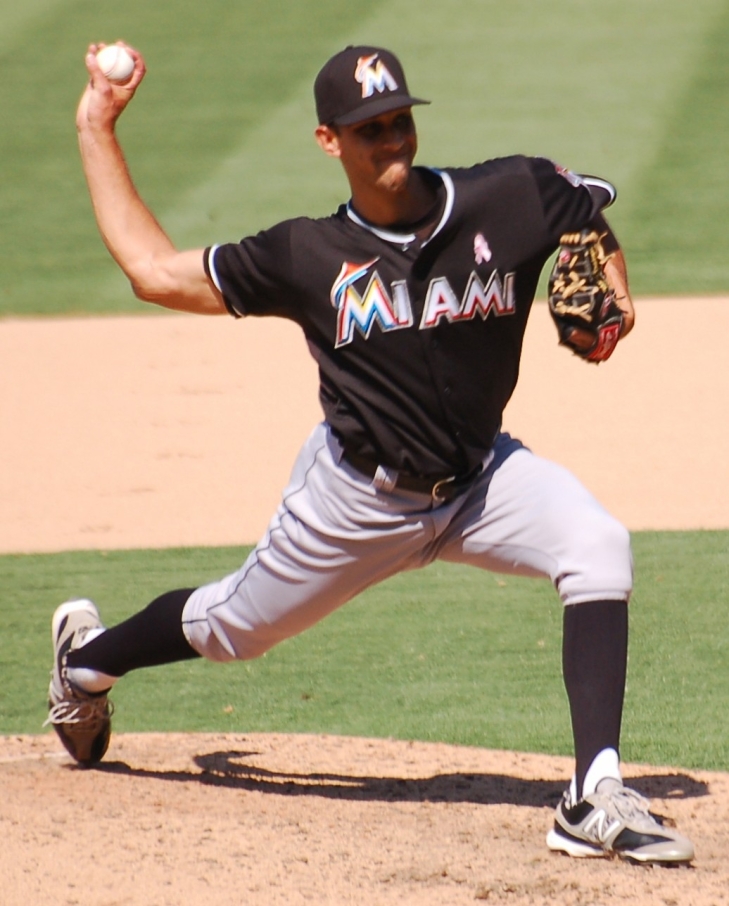
Steve Cishek arrived in Miami as a fifth-round pick in 2007, a gangly right-hander whose sidearm delivery and sinking velocity made him an immediate intrigue for the organization's bullpen. After a brief run in 2010, in which he threw over four scoreless innings, he returned in 2011 to become a permanent fixture in the late innings.
While he showcased an ability to induce ground balls and missing bats, his 2012 transition to closer sealed his status as a top late-inning reliever. Taking over for struggling Heath Bell, Cishek led the National League with 62 games finished, recording 15 saves. His funky delivery proved a reliable asset against top hitters in high-pressure situations.
During 2013-2014, he showed consistency, converting 34 of 36 saves in '13 with a 2.33 ERA, and set an MLB record for saves on a team losing 100 games. In 2014, he hit a career-high 39 saves and achieved 33 consecutive saves, marking historic milestones.
After a tough start that lowered his efficiency, the organization traded him mid-season to the St. Louis Cardinals for prospect Kyle Barraclough. Cishek finished 191 Games for the Marlins with 94 Saves.
40. Alex Gonzalez
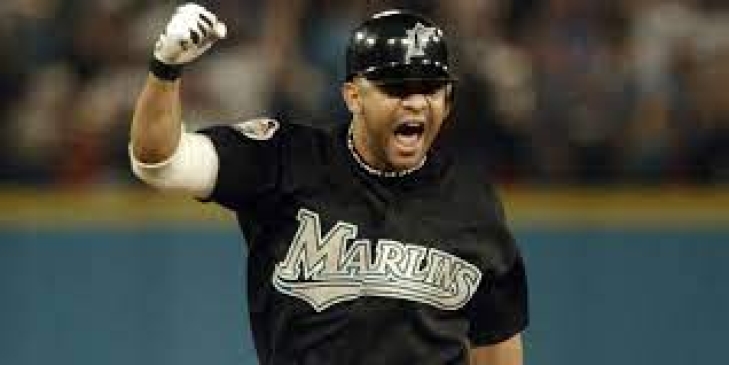
Alex Gonzalez arrived in Miami in late 1998, stepping into a clubhouse still smelling of the championship champagne from the year before, and the fire sale that followed. He was the young, slick-fielding prospect meant to solidify the shortstop position for a new era of Marlins baseball.
In 1999, Gonzalez quickly rose to success, making the All-Star Team as a 22-year-old rookie. He combined gap power and defensive range that the organization believed would make him a star. However, early on, a key flaw emerged: complete resistance to the walk. That season, he had a career-high 155 hits but a low .291 OBP due to his inability to reach base via walks, affecting his stats for the rest of his career.
Gonzalez celebrated a remarkable highlight in the 2003 World Series. His regular season featured consistent offense, with 18 home runs and 33 doubles, but his true legacy was cemented in Game 4. With the series at a critical point, he delivered a dramatic moment by hitting a walk-off home run in the 12th inning off Jeff Weaver, tying the series at two games each. This pivotal moment was a key factor in the Marlins' surprising victory over the Yankees.
Although Gonzalez hit a career-high 23 home runs in 2004, his defensive performance was inconsistent, with only one season in Florida where his Defensive bWAR exceeded 1.0. His power was balanced by high strikeout rates and ongoing discipline issues at the plate, resulting in a career Marlins bWAR below 2.0. He was traded to Boston after the 2005 season and accumulated 788 hits for the Fish.
39. Kevin Millar
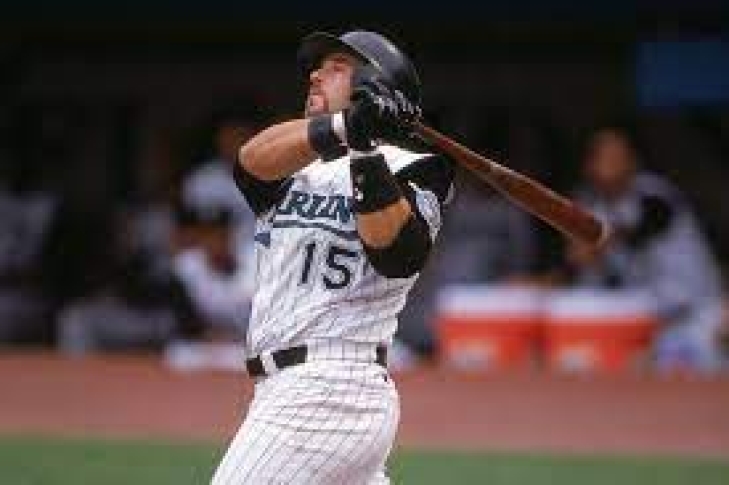
Kevin Millar arrived in Miami in 1998 as the ultimate baseball outcast. Undrafted and forced to start his professional journey in the independent leagues, he famously served as a replacement player during the 1995 spring training, a decision that permanently barred him from the Major League Baseball Players Association. Despite this "union-less" status, he operated with a specialized, blue-collar intensity that transformed him from a $5,000 minor-league purchase into one of the most reliable bats in South Florida.
After a brief stint in the Majors in 1998, Millar reached a plateau of efficiency as a part-time player, eventually forcing his way in the daily lineup by 1999. He demonstrated excellent control of the strike zone, hitting .285 during his first full season and improving to .300 in 2000. He wasn't only a morale booster in the clubhouse; he was a significant presence in the batting order, with 14 home runs in limited opportunities, confirming that his rise from the St. Paul Saints to the major leagues was truly earned.
During the 2001 and 2002 seasons, he posted consistent batting averages of .314 and .306, slugging over .500 both years. In 2001, he hit 20 home runs and received the "Charlie Hough Good Guy Award" for his professionalism. That year, he had a career-high 25-game hitting streak, becoming a key player for a Marlins team building towards its next championship.
In 2002, South Florida's journey hit a strange crossroads. The team planned to sell his contract to Japan's Chunichi Dragons, but after the Red Sox claimed him on waivers, breaking an unspoken rule, a complex deal ensued. Millar returned to Miami, then was traded to Boston for cash. He became a global star as the "idiot" who helped break the Curse of the Bambino.
Millar compiled 443 hits, 59 home runs, and a .296 batting average as a Marlin.
38. Preston Wilson
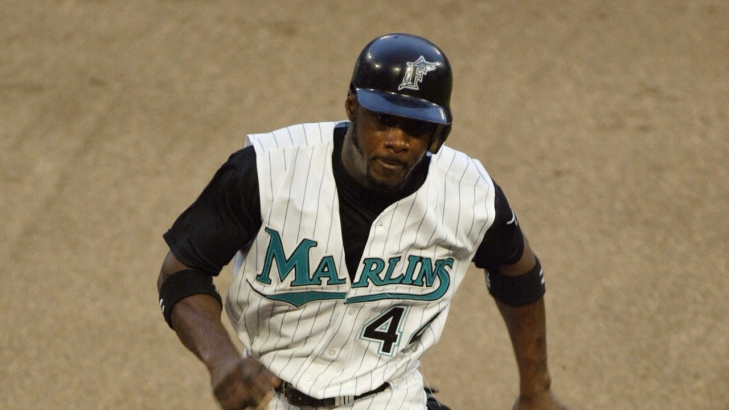
Preston Wilson arrived in South Florida in 1998, a centerpiece of the blockbuster trade that sent Mike Piazza to New York. As a former High School Player of the Year and a first-round talent, he carried the expectations of a franchise cornerstone during a period of massive transition for the Marlins.
No pressure, right?
After a brief coffee break in 1998, Wilson earned the starting center field position in 1999 and produced one of the team's most impressive rookie seasons. He hit .280 with 26 home runs, finishing as the runner-up for the National League Rookie of the Year award. He soon became a key player, demonstrating a unique talent for hitting to all fields while keeping the speed that kept him dangerous on the bases.
In the 2000 season, Wilson achieved a peak in individual performance. He joined the exclusive 30/30 club by hitting 31 home runs and stealing 36 bases, while also driving in 121 runs. Although he led the National League in strikeouts with 187, just short of the then record, his ability to produce runs was a key strength for the Marlins. He maintained this momentum into the 2001 and 2002 seasons, each with 23 home runs, confirming that his power was a consistent presence in the lineup.
In the 2002 off-season, Wilson was traded to the Colorado Rockies as part of a six-player deal. Wilson had 104 Home Runs, 87 Stolen Bases, and 549 Hits with the Marlins.
