

From the Desk of the Chairman
The Rapid and Random History of the Royal Rumble Match
The Rapid and Random History of the Royal Rumble Match
In 2021, the Royal Rumble match will take place for the first time since its creator, WWE Hall of Famer, the late Pat Patterson passed away. For over 30 years, this battle royale with a twist has been delighting fans of pro wrestling each and every January.
First held in 1988 when “Hacksaw” Jim Duggan won after entering at number 13, early editions of the Royal Rumble were a vehicle used to get big babyfaces over. Hulk Hogan became the first wrestler to win the match more than once with consecutive successes in 1990 and 1991.
The stakes with the Royal Rumble really kicked up at notch the following year when the vacant WWE Championship was up for grabs. Hogan and The Undertaker had traded the world title in controversial circumstances towards the end of 1991, but the match and belt went to “Nature Boy” Ric Flair.
Every year after 1992 with the exception of 2016 when the WWE Championship was on the line again, the winner of the Royal Rumble received a world title match at the next major event, WrestleMania. In 1994, the match was declared a draw when Bret “Hitman” Hart and Lex Luger eliminated one another.
WWE hasn’t always taken a consistent attitude to that. Although the 1994 finish was planned, the 2005 Royal Rumble saw John Cena and Batista, the intended winner, accidentally both go over the top rope and hit the floor together.
An infuriated Vince McMahon tore both his quads when getting into the ring and ordering the match to be restarted, so it could reach its intended conclusion. Speaking of the WWE chairman, he entered and won the 1999 Royal Rumble but relinquished any WrestleMania championship opportunity.
“Stone Cold” Steve Austin, the only three-time winner of the match to date, was stripped of his title match in 1997 after referees missed the fact he was eliminated. The Texas Rattlesnake managed to slither back into the ring before the officials noticed.
Getting the push
Austin and Shawn Michaels had never been WWE Champion before winning two Royal Rumbles each. This shows how the match can be used to elevate wrestlers into major title contenders, but it has also been used to catapult those returning from injury back into the spotlight.
A first Royal Rumble win in 2002 for Triple H following the first of two quad tears and Edge coming back from an Achilles problem in 2010 show how the match works that dynamic. Surprise entrants, including wrestlers making comebacks or debuts, are all part of the fabric of this.
Royal Rumble pushes come in many forms. Besides the shock return, there is also a common angle where a wrestler takes out many opponents but doesn’t win the match with Kane setting a then record of 11 eliminations in 2001.
Usually speaking, the Royal Rumble has 30 entrants in it but in 2011 – perhaps to reflect the ever-expanding WWE roster – there were 40 competitors. Alberto Del Rio became the first wrestler born from outside the USA or Canada to win the match.
In the last decade, entrants from the UK, Ireland and Japan have all been crowned Royal Rumble winners. A women’s only match was introduced in 2018, although female wrestlers had competed on occasion against the men with Chyna blazing that trail back in 1999.
Destined for greatness
You would think winning the Royal Rumble would help to secure a place in the Hall of Fame, but as yet wrestling icons like The Undertaker, successful in 2007, and Dwayne “The Rock” Johnson who was victorious in 2000 don’t have spots. That may only just be a matter of time. Speaking of The Rock, there is plenty of speculation about him returning to WWE soon. Always a monster box office draw whether acting in a movie or stepping back inside the ring, the latest Betway betting on headlining WrestleMania in 2021 has him at 4/1 to battle cousin Roman Reigns as of December 30.
Using the Royal Rumble to start that program with the current Universal Champion could bring mainstream attention on WWE in the coming months. Seeing The Rock win another world title is precisely the kind of feelgood moment pro wrestling can go for in the main event of a major pay-per-view.
WWE has been willing to put its top titles on part-time wrestlers in recent years. See 2003 Royal Rumble winner Brock Lesnaror Goldberg for evidence of that. From Kofi Kingston’s acrobatics to the emotional 2006 win for Rey Mysterio, even smaller competitors can get in on the act, and that is what keeps us still watching the Royal Rumble now into its fifth different decade.
Casinos And Positive Reviews

Introduction
Like all other businesses, online casino websites also receive their fair share of public opinions and varying reviews. Some of these reviews may be biased towards negativity and disapproval as customers tend to be more critical of any bad experiences. However, this doesn’t mean that all online casinos with bad reviews are bad; you may just be surprised at the inaccuracy of some personal reviews.
Luckily, newer reviews are becoming more and more reliable compared to the past as the positivity of these reviews are often supported with research and figures. In addition, the industry has seen many new changes such as for ownership, licensing, regulations, and more. With better responsibility on the customers, we have started to see better reliability on reviews and ratings as well. And for fans of online casinos, be sure to find sites where you can play for free on registration for the best deals.
Development of online casino reviews
Early years
In the beginnings of online gaming casinos, the industry was flooded with various types of gambling websites for their respective providers. While some gambling sites tried to stay, most of them would obtain the money and disappear. These rogue casinos spurred on an era of cash-grabbing casinos with unfair practices and payout problems. In addition, the aspect of customer service was missing.
Wave of positive change
As a response to these rogue gambling sites, customers took it upon themselves by setting up reviews and posting their opinions of various online casinos. These lead to the birth of review sites and eventually, a system for reporting and blackmailing any unfair or shady practices. This helped to reform online gambling sites and brought about positive change as they were unable to hide any problems or unlawful acts.
Prevalent reviews
While there are definitely lesser rouge sites right now, one still needs to be careful of online gambling sites even if they have received good reviews. However, the chances of stumbling upon a good and reliable site is much higher now.
Legitimacy of online casino reviews
Details
Look for reviews that include as many details as possible, describing any fees or important information. A good review should encompass the customer’s experience in a way that is not only personal but also useful for others who are looking into the service. Avoid reviews that are oversimplified.
Facts
A good review also includes reliable facts rather than just personal preferences. Some important facts that should be included in a review are the user’s first impressions, the customer service, types of games, and the site’s reputation. For those who are concerned about the financial reliability of the place, look out for details on deposits and payouts, bonuses and promotions as well as other gambling details to take note of.
Beyond the rating
Remember that the rating of a review does not represent the quality of the online gambling site as these can be subjective. One may decide to give a lower or higher star rating depending on what is more important to their experience. Hence, it is still most important to read unbiased and in-depth reviews as well as from multiple sources.
Las Atlantis
For an online casino which began in 2020, Las Atlantis does not have payout track records nor player feedback to reference from. Regardless, the site has managed to keep good reviews and ratings. This is due to the impressive casino design that Las Atlantis offers consisting of free deposits and payouts, an estimated 250 games, mobile pay, and bonus incentives. The casino also has proper licensing and offers customer service in multiple ways. Just for the unique and well-thought-through user experience, the new casino has managed to garner quite a few positive feedback from customers.
Super Slots
Likewise, Super Slots is another new casino which began in 2020. It is a sister site to a few other gambling websites such as BetOnline sportsbook and Wild Casino, giving it the advantage of adopting past review material. In addition, although the gambling site is independent, it’s evaluation still depends on the other websites as they are all operating under the same umbrella. This has helped grow positive reviews for Super Slots. The site also boosts licensed software as well as two live casinos, allowing users to pick from cryptocurrencies to traditional banking routes. Mobile play is also available.
Red Dog Casino
While Red Dog Casino does not belong under the BetOnline umbrella, it is affiliated to well-known sister sites such as El Royale and Slots Empire. What makes Red Dog Casino stand out is the VIP atmosphere that each of the sites oozes, along with licensed RealTime Gaming slots, various interesting games, and a live casino. Not to mention, the promotions and opportunities given out are very generous. But the main highlight of Red Dog Casino is the ability to accept credit cards in both directions, allowing payouts back to credit cards. For those who prefer the banking route, they might just leave the site with a high rating and review.
Vegas Casino Online
Accessibility to cash will always garner a gambling site’s high reviews as customers always treasure the ability to cash in and out of their accounts as fast as possible. Vegas Casino Online offers a low minimum deposit and does not charge extra fees for payouts in either direction. With only five dollars in Bitcoin, one can give this casino a try; not to mention it is also a low price of twenty dollars for the traditional credit card route. For those who want to give online casinos a try without making a big investment, Vegas Casino Online is one of the best ways for recreational players and beginners to get started.
Wild Casino
With a unique theme, easy to use interface and a $5,000 bonus for new players to get started with, it is no wonder that Wild Casinos receives such positive reviews. While a significant amount of positive feedback may come from its sister website BetOnline, Wild Casino also uses Betsoft Gaming which includes games such as Frankenslots Monster and Good Girl-Bad Girl. As public information on the games are easily accessible by customers, this could have boosted their reviews as well. However, for those who are interested in banking, Wild Casino does not offer a menu that is as attractive as Vegas Casino Online or Red Dog Casino.
Conclusion
While it is clear that a lot of reviews are subjective, the importance of good reliable reviews is that they help to weed out rogue casinos which can potentially land your finances in danger with their questionable practices. An unbiased and in-depth review of a service can also help customers understand the site better and deem it by their own standards if it is to their taste or not. Always make sure to read from a wide variety of sources as well to get the full picture.
Awards = HOF?: Part Fifty-Eight: Mariano Rivera/Trevor Hoffman Award
We here at Notinhalloffame.com thought it would be fun to take a look at the major awards in North American team sports and see how it translates into Hall of Fame potential.
Needless to say, different awards in different sports yield hall of fame potential. In basketball, the team sport with the least number of players on a roster, the dividend for greatness much higher. In baseball, it is not as much as a great individual season does not have the same impact.
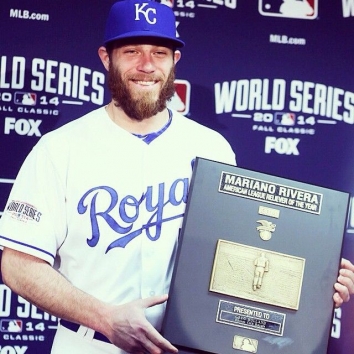
Last time, we looked at the now defunct Delivery Man of the Year, a trophy that only existed from 2005 to 2013. We also looked at recently the Rolaids Reliever of the Year, which was mathematically calculated to honor the best closer. In 2014, a new award, which will likely be the gold standard for closers arrived, the Mariano Rivera AL Reliever of the Year and Trevor Hoffman NL Reliever of the Year.
These awards honor the best modern closers after being named after two Hall of Famers.
Yes, we know that this is embryonic, but that will only be temporary, so we know that this won’t yield anyone…for now.
So how many Mariano Rivera AL Reliever of the Year and Trevor Hoffman NL Reliever of the Year winners have made the Baseball Hall of Fame?
Let’s find out!
The following are the past players who have won either the Mariano Rivera AL Reliever of the Year and Trevor Hoffman NL Reliever of the Year who are eligible for the Baseball Hall of Fame and have been enshrined.
None
The following are the players who have won the Mariano Rivera AL Reliever of the Year and Trevor Hoffman NL Reliever of the Year who are eligible for the Baseball Hall of Fame and have not been selected:
None.
Let’s update our tally, shall we?
|
Award in Question |
Percentage of recipients who have entered the HOF |
Percentage of recipients by year who have entered the HOF. |
|
NBA MVP |
100% |
100% |
|
NHL Art Ross |
100% |
100% |
|
NHL Hart Trophy |
93.6% |
96.3% |
|
NBA Finals MVP |
91.3% |
94.9% |
|
NHL Norris |
90.5% |
96.4% |
|
NHL Ted Lindsay Award |
90.0% |
|
|
NBA All-Star Game MVP |
89.5% |
91.7% |
|
NHL Conn Smythe |
74.2% |
85.4% |
|
NFL Bert Bell Award |
73.7% |
71.4% |
|
NFL AP Offensive Player of the Year |
73.1% |
79.4% |
|
NFL AP MVP |
68.3% |
74.0% |
|
NFL Walter Payton Man of the Year |
66.7% |
66.7% |
|
NHL Lady Byng |
63.8% |
76.0% |
|
NFL Defensive Player of the Year |
60.8% |
71.1% |
|
NFL Super Bowl MVP |
60.6% |
64.9% |
|
NHL Mark Messier Leadership Award |
60.0% |
60.0% |
|
NBA Defensive Player of the Year |
58.3% |
56.5% |
|
NHL Vezina |
57.1% |
66.3% |
|
NBA Rookie of the Year |
56.5% |
56.5% |
|
MLB MVP |
55.0% |
60.2% |
|
NFL Pro Bowl MVP |
52.3% |
54.8% |
|
MLB Lou Gehrig Award |
51.9% |
51.9% |
|
MLB Roberto Clemente Award |
47.4% |
47.4% |
|
NHL Calder Trophy |
46.5% |
46.5% |
|
NBA J. Walter Kennedy Citizenship Award |
46.0% |
46.0% |
|
MLB/NL/AL Cy Young Award |
44.4% |
55.4% |
|
MLB Babe Ruth Award |
37.0% |
39.3% |
|
NHL King Clancy Award |
36.8% |
36.8% |
|
NHL Frank J. Selke Trophy |
33.3% |
36.7% |
|
MLB World Series MVP |
33.3% |
36.8% |
|
MLB Hutch Award |
33.1% |
33.1% |
|
NFL Offensive Rookie of the Year |
28.6% |
28.6% |
|
NHL Bill Masterton Memorial Trophy |
27.9% |
27.9% |
|
MLB Edgar Martinez Award |
26.7% |
17.2% |
|
MLB Delivery Man of the Year |
25.0% |
50.0% |
|
MLB (NL/AL) Silver Slugger (Designated Hitter) |
25.0% |
30.8% |
|
MLB Comeback Player of the Year |
25.0% |
25.0% |
|
MLB (NL/AL) Silver Slugger (Shortstop) |
23.5% |
52.6% |
|
MLB (NL/AL) Gold Glove |
21.7% |
36.8% |
|
NHL William M. Jennings Trophy |
20.7% |
40.4% |
|
NFL Defensive Rookie of the Year |
20.6% |
20.6% |
|
MLB (NL/AL) Silver Slugger (Catcher) |
20.0% |
22.5% |
|
MLB (NL/AL) Gold Glove (Second Base) |
18.8% |
39.8% |
|
MLB Rolaids Reliever of the Year |
18.6% |
33.3% |
|
MLB (NL/AL) Gold Glove (Shortstop) |
18.2% |
35.1% |
|
MLB (NL/AL) Silver Slugger (Pitcher) |
18.2% |
20.1% |
|
MLB (NL/AL) Silver Slugger (Second Base) |
16.7% |
32.7% |
|
MLB (NL/AL) Gold Glove (Outfield) |
16.7% |
30.1% |
|
MLB (NL/AL) Silver Slugger (Outfield) |
15.7% |
25.2% |
|
MLB (NL/AL) Gold Glove (Third Base) |
14.3% |
14.3% |
|
MLB (NL/AL) Silver Slugger (Third Base) |
13.6% |
14.3% |
|
MLB (NL/AL) Silver Slugger (First Base) |
13.6% |
13.3% |
|
MLB (NL/AL) Rookie of the Year |
13.3% |
13.3% |
|
MLB (NL/AL) Gold Glove (Catcher) |
10.3% |
15.2% |
|
NBA Most Improved Player of the Year |
5.3% |
3.2% |
|
MLB (NL/AL) Gold Glove (First Base) |
3.8% |
3.2% |
|
NFL AP Comeback Player of the Year |
0.0% |
0.0% |
So, who is up next?
The following are the players who have won the Mariano Rivera AL Reliever of the Year and Trevor Hoffman NL Reliever of the Year in MLB who have retired but have not met the mandatory years out of the game to qualify for the Baseball Hall of Fame:
None.
The following are the players who have won the Mariano Rivera AL Reliever of the Year and Trevor Hoffman NL Reliever of the Year in MLB who are still active.
Greg Holland, Kansas City Royals: 1-3, 46 Saves, 1.44 ERA, 90 SO, 2014, AL
Greg Holland was in his fifth year in the Majors, all of which were in Kansas City. An All-Star in 2013, Holland was so again in 2014, and posted a 1.44 ERA with a 0.914 WHIP. Holland was ninth in Cy Young voting this year, and he helped the Royals win the American League Pennant. The Royals won the World Series in 2015, but Holland had to leave late in the season for Tommy John Surgery. He came back in 2016, but with St. Louis. Holland came back in 2020 to the Royals.
35 Years Old, Playing for the Kansas City Royals.
Craig Kimbrel, Atlanta Braves: 0-3, 47 Saves, 1.61 ERA, 95 SO, 2014, NL
By this point, Craig Kimbrel already won the Rookie of the Year, and was the final NL Rolaids Reliever of the Year and Delivery Man of the Year. Kimbrel fittingly became the first Trevor Hoffman National League Reliever of the Year, and this was his fourth consecutive season leading the NL in Saves. He notably was named the TSN Pitcher of the Year, the second straight time that Kimbrel won that award. Kimbrel was ninth in Cy Young voting.
33 Years Old, Playing for the Chicago Cubs.
Andrew Miller, New York Yankees: 3-2, 36 Saves, 2.04 ERA, 100 SO, 2015, AL
It didn’t take long for a Yankee to win an award named after a Yankee, but it did take Miller long to win an award of any kind as a Major League Pitcher. Miller debuted in 2006 for Detroit, and he would later play for Florida, Boston and Baltimore, joining the Yankees in 2015. This was his only year as a closer, and only full year with the Yankees, as he was traded to Cleveland during the 2016 Season. Miller finished ninth in Cy Young voting this year and had a 0.859 WHIP.
36 Years Old, Playing for the St. Louis Cardinals.
Mark Melancon, Pittsburgh Pirates: 3-2, 51 Saves, 2.23 ERA, 62 SO, 2015, NL
Mark Melancon began his career with the New York Yankees, and he would later throw for Houston and Boston before becoming a Pittsburgh Pirate in 2013. An All-Star in 2013, Melancon was so again in 2015, where he led the National League in Saves (51) where he was eighth in Cy Young voting. He led the NL in Games Finished (67) the following year, though he split the season with the Pirates and Washington.
36 Years Old, Playing for the Atlanta Braves.
Zack Britton, Baltimore Orioles: 2-1, 47 Saves, 0.54 ERA, 74 SO, 2016, AL
Zack Britton began his career with the Baltimore Orioles in 2011, and he would be promoted to the team’s closer in 2014. Britton was an All-Star in 2015, leasing the American League in Games Finished (58), with 46 Saves and a 1.92 ERA, but he took that good number and sliced by nearly two-thirds with a 0.54 ERA. Britton led the AL in Games Finished that year (63) and Saves (47) and was an All-Star for the second time as well as the fourth-place finisher for the Cy Young.
33 Years Old, Playing for the New York Yankees.
Kenley Jansen, Los Angeles Dodgers: 3-2, 47 Saves, 1.83 ERA, 104 SO, 2016, NL
Kenley Jansen debuted in the Majors for the Dodgers in 2010 where the native of Curacao has spent his entire career in the bullpen. Jansen became the closer in 2012, and in 2016, he was an All-Star for the first time on the strength of his 47 Saves, 1.83 ERA and 0.670 WHIP. His 13.6 SO/9 was also among the best in Baseball.
33 Years Old, Playing for the Los Angeles Dodgers.
Craig Kimbrel, Boston Red Sox: 5-0, 35 Saves, 1.43 ERA, 126 SO, 2017, AL (2)
Kinbrel joined the Boston Red Sox in 2016, going to his fifth All-Star Game. This was best year in Boston, as he was an All-Star again where he again won the TSN Pitcher of the Year, and was sixth in Cy Young voting. Kimbrel became the first player to win the Hoffman and Rivera Award. He won a World Series Ring the following year, and he would leave Boston for the Cubs, going three-for-three in All-Star Games.
33 Years Old, Playing for the Chicago Cubs.
Kenley Jansen, Los Angeles Dodgers: 5-0, 41 Saves, 1.32 ERA, 109 SO, 2017, NL (2)
Jansen followed up his 2016 Hoffman winning year with another one, and did so at an even higher level. Jansen dropped his ERA to 1.32, had a WHIP of 0.746 and posted a blistering of SO/BB of 15.57. Jansen was fifth in Cy Young voting that year.
33 Years Old, Playing for the Los Angeles Dodgers.
Edwin Diaz, Seattle Mariners: 0-4, 57 Saves, 1.96 ERA, 124 SO, 2018, AL
Edwin Diaz may not have won a game this year, but who cares? He led the AL in Saves (57), and Games Finished (65) and he matched his sub-2 ERA with an even more impressive WHIP of 0.791. Diaz, who went to the All-Star Game this year, was eighth in Cy Young voting.
26 Years Old, Playing for the New York Mets.
Josh Hader, Milwaukee Brewers: 6-1, 12 Saves, 2.43 ERA, 143 SO, 2018, NL
From the 12 Saves, you could see that Hader was not the primary closer, but as relief pitching changes, so do stats for an award such as this. Hader fanned 143 batters, a filthy amount considering he only threw 81.1 Innings. His 15.8 SO/9 and 0.811 WHIP were incredible, and he was named to the All-Star Game in what was his second year in the Majors. He was also seventh in Cy Young in voting.
27 Years Old, Playing for the Milwaukee Brewers.
Aroldis Chapman, New York Yankees: 6-1, 12 Saves, 2.43 ERA, 143 SO, 2019, AL
A four-time All-Star with the Cincinnati Reds and World Series winner with the Chicago Cubs, Chapman later became a Yankee (twice actually) and in 2018 he was an All-Star for the first time in the American League. 2019 was Chapman’s sixth All-Star year, but first winning any individual award with his 37-Save year.
33 Years Old, Playing for the New York Yankees.
Josh Hader, Milwaukee Brewers: 3-5, 37 Saves, 2.63 ERA, 138 SO, 2019, NL (2)
Hader was a more traditional closer this year, but his Strikeout rate remained astronomical with a 16.4 SO/9. An All-Star for the second straight year, Hader had another great WHIP with a 0.806. He would become the first back-to-back Hoffman Award winner.
27 Years Old, Playing for the Milwaukee Brewers.
Liam Hendriks, Oakland Athletics: 3-1, 14 Saves, 1.78 ERA, 37 SO, 2020, AL
The native of Perth, Australia, Liam Hendriks was in his tenth season, and his second as a closer. In the COVID-19 stricken year, Hendricks also posted a WHIP of 0.671 and was ninth in Cy Young voting.
32 Years Old, Free Agent.
Devin Williams, Milwaukee Brewers: 4-1, 0 Saves, 0.33 ERA, 53 SO, 2020
For the first time in the history of the award, we have a winner who was not a closer, so much so that he had ZERO Saves. Devin Williams was incredible this year, allowing only one Run in his 27 Innings Pitched. He was so good in this season, that he had a SO/9 of 17.7 with a WHIP of 0.630. Amazingly, Williams was a rookie, and also won the Rookie of the Year Award. He also finished seventh in Cy Young Award voting.
26 Years Old, Playing for the Milwaukee Brewers.
We can’t wait to see how this award plays out in the future.
So, what is up next?
We go back to the baseball playoffs, and the ALCS and NLCS MVPs.
As always, we thank you for your support, and look for that soon.
Awards = HOF?: Part Fifty-Six: The Rolaids Reliever of the Year
We here at Notinhalloffame.com thought it would be fun to take a look at the major awards in North American team sports and see how it translates into Hall of Fame potential.
Needless to say, different awards in different sports yield hall of fame potential. In basketball, the team sport with the least number of players on a roster, the dividend for greatness much higher. In baseball, it is not as much as a great individual season does not have the same impact.
Last time, we looked at the William M. Jennings Trophy, which is given to the Goalie(s) who allowed the fewest Goals for their team. That was our last hockey award, as we return to Baseball, specifically the Relief Pitchers, which will be a little complicated as you will see with the next paragraphs.
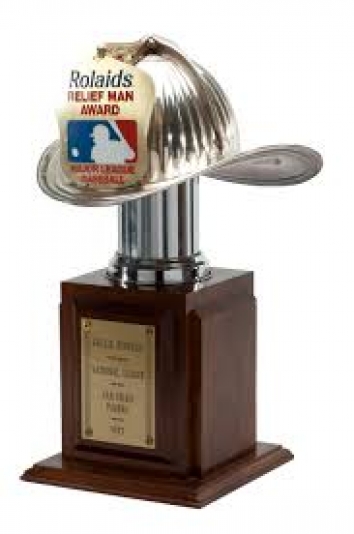
The Rolaids Reliever of the Year first came to existence in 1976, and was sponsored by the antiacid product, Rolaids. At the time, the slogan for the product was “ROLAIDS spells Relief”, so it was a perfect pairing.
This is the first time that we are looking at a defunct award, as when the new parent company of Rolaids opted to not continue the award, it ended in 2012. It would be replaced in 2014 with the Mariano Rivera AL Reliever of the Year and Trevor Hoffman NL Reliever of the Year. Coincidentally, there was a separate reliver award that began in 2005, The Delivery Man of the Year, which ran from 2005 to 2013.
Specifically, with the Rolaids Relief Award, it was awarded on a point system, tabulating Wins, Saves, Losses and Blown Saves.
Nevertheless, these were significant awards in our eyes, and we plan to look at them all!
So how many Rolaids Reliever of the Year winners have made the Baseball Hall of Fame?
Let’s find out!
The following are the past players who have won the Rolaids Reliever of the Year Award who are eligible for the Baseball Hall of Fame and have been enshrined.
Rollie Fingers, San Diego Padres: 8-9, 35 Saves, 2.99 ERA, 113 SO, NL 1977
This was Fingers’ first season in San Diego and the closer had already gone to four All-Star Games and won three World Series Rings with the Oakland Athletics. This year, Fingers topped the NL in Saves (35), Games Pitched (78), and Games Finished (69), and he was 14thin MVP voting.
Inducted into the Hall of Fame in 1992.
Rich Gossage, New York Yankees: 10-11, 27 Saves, 2.01 ERA, 122 SO, AL 1978
Prior to what was his first year with the Yankees, Gossage already was a three-time All-Star, two with the Chicago White Sox, and one with the Pittsburgh Pirates. This year, “Goose” led the AL in Saves (27) and Games Finished (55), and was fifth in Cy Young Voting. Gossage also helped New York win the World Series that year. As All-Star in 1978, Gossage had five more All-Star appearances, three with the Yanks and two with San Diego. He retired in 1994 following runs with San Francisco, New York (again), Texas, Oakland and Seattle and had 310 career Saves.
Inducted into the Hall of Fame in 1992.
Rollie Fingers, San Diego Padres: 6-13, 37 Saves, 2.52 ERA, 72 SO, NL 1978 (2)
Fingers went to the All-Star Game for the fifth time, and his 37 Saves would not only lead the NL, but would be a personal high. He was eighth for the Cy Young and 14thfor the MVP this year.
Inducted into the Hall of Fame in 2008.
Bruce Sutter, Chicago Cubs: 6-6, 37 Saves, 2.22 ERA, 110 SO, NL 1979
Bruce Sutter was already a two-time All-Star at this point, and in what was his third consecutive All-Star year, Sutter began a four-year streak of leading the National League in Saves. The flamethrower had a WHIP of 0.977, and he would win the Cy Young with a seventh place finish for the MVP.
Inducted into the Hall of Fame in 2006.
Rollie Fingers, San Diego Padres: 11-9, 23 Saves, 2.80 ERA, 69 SO, NL 1980 (3)
This was Fingers’ last year with San Diego, and he went three for four for Rolaids Reliever of the Year Awards.
Inducted into the Hall of Fame in 1992.
Rollie Fingers, Milwaukee Brewers: 6-3, 28 Saves, 1.04 ERA, 61 SO, AL 1981 (4)
Fingers returned to the American League, where in the strike-shortened 1981 Season he had his best year of his li6e. He was first in the AL in Saves (28), and he had the best ERA (1.04) and WHIP (0.872) and he became the first Rolaids Reliever winner to win both the Cy Young and the MVP. Fingers had three more seasons in the Majors with 341 Saves.
Inducted into the Hall of Fame in 1992.
Bruce Sutter, St. Louis Cardinals: 3-5, 25 Saves, 2.62 ERA, 57 SO, NL 1981 (2)
Sutter was now a St. Louis Cardinal, and his skill as the top closer in the National League remained intact. Sutter was fifth for the Cy Young and eighth in MVP voting.
Inducted into the Hall of Fame in 2006.
Bruce Sutter, St. Louis Cardinals: 9-8, 36 Saves, 2.90 ERA, 61 SO, NL 1982 (3)
Sutter was not an All-Star this year, but he finished strong again finishing first in Saves (36). He would be third for the Cy Young and fifth for MVP and in that post-season, Sutter helped the Redbirds win the World Series.
Inducted into the Hall of Fame in 2006.
Bruce Sutter, St. Louis Cardinals: 5-7, 45 Saves, 1.54 ERA, 77 SO, NL 1984 (4)
This was the last great year for Sutter, and coincidentally his final one with St. Louis. Sutter led the National League in Saves (45) and Games Finishes (63), both of which were career-highs, and he was also third for the Cy Young and sixth in MVP voting. He played three more years in the Majors, all with Atlanta. Sutter retired with an even 300 Saves.
Inducted into the Hall of Fame in 2006.
Dennis Eckersley, Oakland Athletics: 4-2, 45 Saves, 2.35 ERA, 70 SO, AL 1988
Dennis Eckersley converted from a starter to reliever the year before, but this was the year where he proved that this was what he was meant to be. Eckersley led the AL in Saves (45) this year with a WHIP of 0.867. The A’s made it to the World Series that year, and he was second for the Cy Young and fifth for the MVP.
Inducted into the Hall of Fame in 2004.
Lee Smith, St. Louis Cardinals: 6-3, 47 Saves, 2.34 ERA, 67 SO, NL 1991
Lee Smith was already a Major Leaguer since 1980, and he already had nine 25-plus Save campaigns. The Cardinals were his third team, (following Chicago and Boston) and this season he set a personal record with 47 Saves (also league-leading) as well as finishing first in Games Finished (61). He finished second for the Cy Young and eighth in MVP voting.
Inducted into the Hall of Fame in 2019.
Dennis Eckersley, Oakland Athletics: 7-1, 45 Saves, 1.91 ERA, 93 SO, AL 1992 (2)
In the three years between Rolaids Reliever of the Year wins, Eckersley won a World Series, and had 124 Saves. This year, Eckersley was first for the second time in Saves (51) and first time in Games Finished (65). Eckersley won the Cy Young and MVP, and cemented his place in the Baseball Hall of Fame.
Inducted into the Hall of Fame in 2004.
Lee Smith, St. Louis Cardinals: 4-9, 43 Saves, 3.12 ERA, 60 SO, NL 1992 (2)
Smith led the NL in Saves for the second straight season, and was fourth for the Cy Young this year. He would also go to his fourth All-Star Game, and his fifth would come the following year.
Inducted into the Hall of Fame in 2019.
Lee Smith, Baltimore Orioles: 1-4, 33 Saves, 3.29 ERA, 42 SO, AL 1994 (3)
Smith was only with the Baltimore Orioles for one season, and it was a good one where he won not only the Rolaids Reliever of the Year, but was an All-Star for the sixth time. Smith led the AL in Saves (33) and was fifth in Cy Young voting. Smith joined the California Angels the following year and had one more All-Star year with him. He retired in 1997 after stops in Cincinnati and Montreal with 478 career Saves, which was then the all-time record.
Inducted into the Hall of Fame in 2019.
Trevor Hoffman, San Diego Padres: 4-2, 53 Saves, 1.48 ERA, 86 SO, NL 1998
Trevor Hoffman had been the Padres closer since 1994, and this was the year he let everyone in the baseball world know he was elite. Hoffman was an All-Star for the first time and his league-leading 53 Saves, 1.48 ERA, and 0.849 WHIP landed him second in Cy Young voting and seventh in MVP voting.
Inducted into the Hall of Fame in 2018.
Mariano Rivera, New York Yankees: 4-3, 45 Saves, 1.83 ERA, 52 SO, AL 1999
Mariano Rivera was already established as an elite reliever in the American League, and had already won two World Series Championships. This year, Rivera won his first of five Rolaids Reliever of the Year Awards, and he led the AL in Saves (45) with a 1.83 ERA and a 0.884 WHIP. Rivera was third in Cy Young voting, and he helped the Yankees win the World Series, winning the World Series MVP.
Inducted into the Hall of Fame in 2019.
Mariano Rivera, New York Yankees: 4-6, 50 Saves, 2.34 ERA, 83 SO, AL 2001 (2)
Rivera was an All-Star for the fourth time this year, and the season before he won his fourth World Series. Rivera again had a WHIP under 1.000 (0.905), and was eleventh in MVP voting.
Inducted into the Hall of Fame in 2019.
John Smoltz, Atlanta Braves: 3-2, 55 Saves, 3.25 ERA, 85 SO, NL 2002
Prior to taking on the role of the Braves’ closer, Smoltz was a top starter for years, going to four All-Star Games, winning a World Series Ring and earning a Cy Young. Smoltz excelled in this role too, with his 55 Saves leading the NL and finishing third in Cy Young voting. He would later go back to being a starter, and would retire in 2009, with his final year being split between Boston and St. Louis. Smoltz had a lifetime record of 213-155 with 3,084 Strikeouts and 154 Saves.
Inducted into the Hall of Fame in 2015.
Mariano Rivera, New York Yankees: 5-2, 40 Saves, 1.66 ERA, 63 SO, AL 2003 (3)
Another spectacular season happened for Rivera, whose 1.63 was the second lowest of his career. In the playoffs, Rivera won the ALCS MVP, but the Yankees lost to the Marlins in the World Series.
Inducted into the Hall of Fame in 2019.
Mariano Rivera, New York Yankees: 7-4, 43 Saves, 1.38 ERA, 80 SO, AL 2005 (4)
Rivera was electric again this year, posting his all-time best ERA (1.38) with a phenom20al WHIP of 0.868. Rivera was second for the Cy Young to Bartolo Colon of Cleveland and was ninth in MVP voting. Rivera also won the Delivery Man of the Year Award, which was in its first year of existence.
Inducted into the Hall of Fame in 2019.
Trevor Hoffman, San Diego Padres: 0-2, 46 Saves, 2.14 ERA, 50 SO, NL 2006 (2)
Hoffman went to his second, third and fourth All-Star Game in between his Rolaids Reliver wins, and was an All-Star again this year. Hoffman led the NL in Saves (46) and had a sub 1.000 WHIP. He was again second in Cy Young voting. Hoffman went to two more All-Stars, the last one as a Milwaukee Brewer. He retired in 2010 with 601 career Saves.
Inducted into the Hall of Fame in 2018.
Mariano Rivera, New York Yankees: 3-3, 44 Saves, 1.76 ERA, 72 SO, AL 2009 (5) Co-Winner
This was Rivera’s fifth and final Rolaids Reliever of the Year Award, and he would also win his third Delivery Man of the Year (he won his second in 2006). Rivera would later take the Yankees to another World Series win, his fifth. He played until 2013, was a thirteen-time All-Star, and retired with 652 Saves, the most all-time. Rivera entered the Baseball Hall of Fame with a perfect ballot, the first man to do so.
Inducted into the Hall of Fame in 2019.
The following are the players who have won the Rolaids Relief Award who are eligible for the Baseball Hall of Fame and have not been selected:
Bill Campbell, Minnesota Twins: 17-5, 20 Saves, 3.01 ERA, 115 SO, AL 1976
This was Campbell’s final season in Minnesota, and he would not only win the inaugural American League Rolaids Relief Award, he was the league-leader in Games Pitched (78) and Gamed Finished (68). Campbell finished seventh for the Cy Young and eighth for the MVP.
Eligible since 1993. Campbell was on the ballot for one year and received 0.2% of the vote. Unranked on Notinhalloffame.com
Rawly Eastwick, Cincinnati Reds: 11-5, 26 Saves, 2.09 ERA, 70 SO, AL 1976
The rookie and sophomore seasons of Rawly Eastwick are forgotten gems in the lore of the Cincinnati Reds. As a rookie, he led the NL in Saves (22) and was third in Rookie of the Year voting while helping the Reds win the World Series. This season, he was even better with a career-high 26 Saves and was fifth in Cy Young voting and thirteenth for the MVP, and he was again a part of the Reds World Series win. His career regressed after that, and he bounced around to St. Louis, New York (AL), Philadelphia, Kansas City and Chicago (NL) with his Major League career coming to an end in 1981. He had 68 career Saves, with 48 coming in 1975 and 1976.
Eastwick did not play the mandatory ten years to qualify for the Hall of Fame. Unranked on Notinhalloffame.com
Bill Campbell, Boston Red Sox: 13-9, 31 Saves, 2.96 ERA, 114 SO, AL 1977 (2)
Campbell signed with Boston this year and arguably, this was his last real good season in the Majors, though he played until 1987 with stops in Chicago (NL), Philadelphia, St. Louis, Detroit and Montreal. This year, Campbell led the AL in Saves (32) and Games Finished (60), and was fifth for the Cy Young and tenth for the MVP. Campbell had 126 career Saves.
Eligible since 1993. Campbell was on the ballot for one year and received 0.2% of the vote. Unranked on Notinhalloffame.com.
Jim Kern, Texas Rangers: 13-5, 29 Saves, 1.57 ERA, 136 SO, AL 1979
Jim Kern went to three straight All-Star Games, with this year being his third. Also in his first season in Texas (he was with Cleveland before), Kern had his best year by far in the Majors. In addition to his personal best 29 Saves, he also set career-highs in Games Played (71), Games Finished (57), and was fourth in Cy Young voting and eleventh in MVP voting. Kern never had a year close to this again, and he bounced around to Cincinnati, Chicago (AL), Philadelphia, Milwaukee and Cleveland before his career ended in 1986. He had 88 career Saves.
Eligible since 1992. Despite being Hall of Fame eligible in 1992, he was not on the ballot. Unranked on Notinhalloffame.com.
Dan Quisenberry, Kansas City Royals: 12-7, 33 Saves, 3.09 ERA, 37 SO, AL 1980
This was Quisenberry’s breakout year where the submarine-style Pitcher led the AL in Saves (33), Gamed Finished (68) and Games Pitched (75). Quisenberry was fifth in Cy Young and eighth in MVP voting, and he helped Kansas City reach the World Series.
Eligible since 1996. Quisenberry was on the ballot for one year and received 3.8% of the vote in 1996. Ranked #94 on Notinhalloffame.com.
Dan Quisenberry, Kansas City Royals: 9-7, 35 Saves, 2.57 ERA, 46 SO, AL 1982 (2)
“Quiz” was finally an All-Star, and he did what he did in 1980, which was lead the AL in Saves (35) and Games Finished (68). He was third for the Cy Young and ninth for the MVP, and this began a four-year streak of top three Cy Young finishes.
Eligible since 1996. Quisenberry was on the ballot for one year and received 3.8% of the vote in 1996. Ranked #94 on Notinhalloffame.com.
Dan Quisenberry, Kansas City Royals: 5-3, 45 Saves, 1.94 ERA, 46 SO, AL 1983 (3)
Quisenberry’s 45 Saves not only led the American League but it would be a personal best for the closer. He was also first in the AL in Games Pitched (69) and Games Finished (62), and the “Quiz” was the runner-up for the 7y Young with a sixth-place finish in MVP voting.
Eligible since 1996. Quisenberry was on the ballot for one year and received 3.8% of the vote in 1996. Ranked #94 on Notinhalloffame.com.
Al Holland, Philadelphia Phillies: 8-4, 25 Saves, 2.26 ERA, 100 SO, NL 1983
After playing in San Francisco for four years, he joined Philadelphia in 1983, and became their closer. Holland help take the Phillies to the World Series that year but they lost to Baltimore Orioles in five. The southpaw was an All-Star the following year, and exceeded his Saves mark to 2, but he was used in middle relief afterward, and later played for Pittsburgh, California and the New York Yankees. He only had 78 career Saves.
Eligible since 1993. Despite being Hall of Fame eligible in 1993, he was not on the ballot. Unranked on Notinhalloffame.com.
Dan Quisenberry, Kansas City Royals: 6-3, 44 Saves, 2.64 ERA, 41 SO, AL 1984 (4)
Quisenberry was an All-Star for the third and last time, but he was on year three of four straight Save-leading seasons. He was again the second-place finisher for the Cy Young, and he was third for the MVP, his highest ever finish.
Eligible since 1996. Quisenberry was on the ballot for one year and received 3.8% of the vote in 1996. Ranked #94 on Notinhalloffame.com.
Dan Quisenberry, Kansas City Royals: 8-9, 37 Saves, 2.37 ERA, 54 SO, AL 1985 (5)
Quisenberry secured his fifth and final Rolaids Relief Award, and it is also marked the last of five times he was the American League leader in Saves (37), the third and final time in Games Pitched (84) and fourth and final time in Games Finished (37). He played with the Royals until 1988, winning a World Series Ring in 1985, and he later joined St. Louis and San Francisco. He retired with 244 career Saves.
Eligible since 1996. Quisenberry was on the ballot for one year and received 3.8% of the vote in 1996. Ranked #94 on Notinhalloffame.com.
Jeff Reardon, Montreal Expos: 2-8, 41 Saves, 3.18 ERA, 67 SO, NL 1985
Jeff Reardon had at least 20 Saves in the three years before, but he improved that total to 41 this year, which was the only time he ever finished first in his respective league. He was seventh in Cy Young voting and two years later he helped the Minnesota Twins win the 1987 World Series. A four-time All-Star, Reardon would later play for Boston, Atlanta, Cincinnati and New York (AL), and he amassed 367 Saves.
Eligible since 2000. Reardon was on the ballot for one year in 2000 and received 4.8% of the vote. Unranked on Notinhalloffame.com.
Dave Righetti, New York Yankees: 8-8, 46 Saves, 2.45 ERA, 83 SO, AL 1986
Dave Righetti began his career as a starter where he was the 1981 American League Rookie of the Year. Three years later he was moved to the bullpen and after two good years in that role, he was named to the All-Star team with league leading numbers in Saves (46) and Games Finished (68). Righetti was fourth for the Cy Young and tenth for the MVP.
Eligible since 2001. Righetti was on the ballot for one year in 2001 and received 0.4% of the vote. Unranked on Notinhalloffame.com.
Todd Worrell, St. Louis Cardinals: 9-10, 36 Saves, 2.08 ERA, 73 SO, NL 1986
1986 was the best year of Todd Worrell’s career, which coincidentally was also his rookie year. Not only would he win the Rolaids Reliever of the Year, he was also the Rookie of the Year. Worrell led the NL in Saves (36), Games Finished (60), and he was fifth for the Cy Young. Worrell would later be an All-Star in 1988, and twice for the Los Angeles Dodgers (1995-96). He retired in 1997 with 256 Saves.
Eligible since 2003. Worrell was on the ballot for one year in 2003 and received 0.0% of the vote. Unranked on Notinhalloffame.com.
Dave Righetti, New York Yankees: 8-6, 31 Saves, 3.41 ERA, 77 SO, AL 1987 (2)
Righetti was an All-Star again, which would be the second and last time. He would have at least 24 Saves over the next four years, and he also played for San Francisco, Oakland, Toronto and the Chicago White Sox. He accrued 252 total Saves.
Eligible since 2001. Worrell was on the ballot for one year in 2001 and received 0.4% of the vote. Unranked on Notinhalloffame.com.
Steve Bedrosian, Philadelphia Phillies: 5-3, 40 Saves, 2.83 ERA, 74 SO, NL 1987
Bedrosian was a Relief Pitcher for most of his career, and his best year by far at it was 1987, where his 40 Saves were league-leading. An All-Star this year, Bedrosian won the Cy Young Award, which was coincidentally the only year he would get a vote. Bedrosian would later win a World Series Ring with the Minnesota Twins in 1991, and he had 184 career Saves.
Eligible since 2001. Worrell was on the ballot for one year in 2001 and received 0.2% of the vote. Unranked on Notinhalloffame.com.
John Franco, Cincinnati Reds: 6-6, 39 Saves, 1.57 ERA, 46 SO, NL 1988
Franco was an All-Star in the two years before, and he led the NL in Games Finished (60) with 32 Saves the year before. This season, his 39 Saves topped the National League and his 61 Games Finished were also atop the leaderboard. Franco was an All-Star the next year, and joined the Mets in 1990.
Eligible since 2011. Franco was on the ballot for one year in 2011 and received 4.6% of the vote. Unranked on Notinhalloffame.com.
Jeff Russell, Texas Rangers: 6-4, 38 Saves, 1.98 ERA, 77 SO, NL 1989
Over Jeff Russell’s 14-year career, he was predominantly used in relief, but this would be the first season he became a closer. Russell led the AL in Saves (38) and Games Finished (66), and would me ninth for the Cy Young. Russell later played for Oakland, Boston and Cleveland before returning to Texas and closing his career in 1996 with 186 career Saves.
Eligible since 2002. Franco was on the ballot for one year in 2002 but did not receive any votes. Unranked on Notinhalloffame.com.
Mark Davis, San Diego Padres: 4-3, 44 Saves, 1.85 ERA, 92 SO, NL 1989
Mark Davis made his Major League debut in 1980 with the Philadelphia Phillies, and he would later play for San Francisco before joining the Giants in 1987. Davis was anointed the team’s closer in 1988 and was an All-Star, but he had the season of his life in 1989 where he was again an All-Star and led the NL in Saves (44) and Games Finished (65). He would win the Cy Young while also finishing sixth for the MVP. Davis signed with Kansas City afterward but he never had a season like 1989 again. He went on to play for Atlanta, Philadelphia with a return to San Diego. Davis retired for good after a brief comeback in 1997 with the Brewers.
Eligible since 2003. Davis was on the ballot for one year in 2003 and received 0.2% of the vote. Unranked on Notinhalloffame.com.
Bobby Thigpen, Chicago White Sox: 4-6, 57 Saves, 1.83 ERA, 70 SO, NL 1989
Bobby Thigpen had already been the primary closer for the ChiSox for the past two years, but this year he set a then Major League record in Saves with 57, while also leading the American League in Games Pitched (77) and Games Finished (73). He only had two more seasons where he had at least 20 Saves, but his skills were eroding quickly and he was out of Baseball by 1994.
Thigpen did not play the minimum ten years to qualify for the Hall of Fame. Unranked on Notinhalloffame.com.
John Franco, New York Mets: 5-3, 33 Saves, 2.53 ERA, 56 SO, NL 1990 (2)
This was Franco’s first of 14 years as a Met, and it was also his last All-Star year. Franco led the NL in Saves for the second time, and later on in 1994, he would again with 30 Saves, but he was not a Rolaids winner that year. He finished his career with a season in Houston in 2005, and retired with 424 Saves.
Eligible since 2011. Franco was on the ballot for one year in 2011 and received 4.6% of the vote. Unranked on Notinhalloffame.com.
Bryan Harvey, California Angels: 2-4, 46 Saves, 1.60 ERA, 101 SO, AL 1991
This Harvey’s best season in the Majors, where his 46 Saves led the AL, as did his 63 Games Finished; both of which were career-highs. Harvey finished fifth in Cy Young voting, and was an All-Star. While this was his only Rolaids win, two years ago he had another All-Star season, albeit with the Florida Marlins in a World Series winning year. Harvey had 177 career Saves.
Harvey did not play the minimum ten years to qualify for the Hall. Unranked on Notinhalloffame.com.
Jeff Montgomery, Kansas City Royals: 7-5, 45 Saves, 2.27 ERA, 66 SO, AL 1993
Montgomery went to three All-Star Games over his career, which was all but 14 Games as a Kansas City Royal. A late-inning reliever for most of career, Montgomery had four 30-plus Save years, with the 45 this year being league-leading and his career-high. Montgomery retired in 1999 with 304 Saves.
Eligible Since 2005. Montgomery was on the ballot for one year in 2005 and received 0.4% of the vote. Unranked on Notinhalloffame.com.
Randy Myers, Chicago Cubs: 2-4, 53 Saves, 3.11 ERA, 86 SO, NL 1993
Before he was a Chicago Cub, Randy Myers was a New York Met, a Cincinnati Red, where the closer was an All-Star and World Series Champion and a San Diego Padre. With the Cubs, Myers went to two All-Star Games and in 1993, won the Saves Title (53) while also finishing eighth for the Cy Young. He would again lead the NL in Saves (38) in 1995 and the American League with 45 in 1997 as a Baltimore Oriole. Myers finished his career in 1998, splitting his time with Toronto and San Diego and would amass 347 total Saves.
Eligible Since 2004. Myers was on the ballot for one year in 2005 and received 0.2% of the vote. Unranked on Notinhalloffame.com.
Rod Beck, San Francisco Giants: 2-4, 28 Saves, 2.77 ERA, 39 SO, NL 1994
Rod Beck was in his fourth season of Major League service and it was his second straight year as an All-Star. In this strike-shortened year, Beck led the NL in Games Finished (47) for the second consecutive year, and he would later do so again two more times. Beck would overall go three All-Star Games, and later play for the Chicago Cuba, Boston Red Sox and San Diego Padres. Beck retired with 286 Saves.
Eligible Since 2008. Beck was on the ballot for one year in 2005 and received 0.4% of the vote. Unranked on Notinhalloffame.com.
Jose Mesa, Cleveland Indians: 3-0, 46 Saves, 1.13 ERA, 58 SO, AL 1995
From the Dominican Republic, Jose Mesa had a 19-year career in the Majors, where he was mostly used coming out of the bullpen. This season, Mesa led the AL in Saves (46) and Games Finished (57), and he was an All-Star for the first time. Mesa was second this year for the Cy Young and fourth for the MVP and he secured 321 career Saves in 1,022 Games Pitched.
Eligible Since 2013. Mesa was on the ballot for one year in 2013 but did not receive any votes. Unranked on Notinhalloffame.com.
Tom Henke, St. Louis Cardinals: 1-1, 36 Saves, 1.82 ERA, 48 SO, NL 1995
Tom Henke won a World Series Rings with the Toronto Blue Jays, where he led the AL in Saves in 1987. After leaving the Jays for Texas in 1993, he played two years before going to St. Louis in the NL for his lone year there, where he had his best ERA (1.82), and the second of two All-Star campaigns. Henke retired on top, as he elected to retire at the end of the season.
Eligible Since 2001. Henke was on the ballot for one year in 2001 and received 1.2% of the vote. Unranked on Notinhalloffame.com.
John Wetteland, New York Yankees: 2-3, 43 Saves, 2.83 ERA, 69 SO, AL 1996
John Wetteland had at least 25 or more Saves in the four years before this season, three with Montreal and one with the Yankees. In this baseball campaign, Wetteland led the American League in Saves (43) in what was his first of three All-Star years. Wetteland helped the Yankees win the World Series that year while winning the World Series MVP, and after he was a Texas Ranger for his last four years. He had 330 career Saves.
Eligible Since 2006. Wetteland was on the ballot for one year in 2006 and received 0.8% of the vote. Unranked on Notinhalloffame.com.
Jeff Brantley, Cincinnati Reds: 1-2, 44 Saves, 2.41 ERA, 76 SO, NL 1996
Jeff Brantley was an All-Star in 1990 as a San Francisco Giant, but it was in Cincinnati where the reliever had his best year. Brantley led the NL in Saves (44), which was the only time that would happen. He would late play for St. Louis, Philadelphia and Texas and managed 172 career Saves.
Eligible Since 2007. Brantley was eligible for the Hall in 2007 but was not on the ballot. Unranked on Notinhalloffame.com.
Randy Myers, Baltimore Orioles: 2-3, 45 Saves, 1.51 ERA, 56 SO, AL 1997 (2)
Myers would again lead the league (American) with 45 in 1997 as a Baltimore Oriole. Myers finished his career in 1998, splitting his time with Toronto and San Diego and would amass 347 total Saves.
Eligible Since 2004. Myers was on the ballot for one year in 2005 and received 0.2% of the vote. Unranked on Notinhalloffame.com.
Jeff Shaw, Cincinnati Reds: 4-2, 42 Saves, 2.38 ERA, 74 SO, NL 1997
For the first time, we have a back-to-back winner from a team who was not the same player. Jeff Brantley won it in 1996, as opposed to Jeff Shaw this year, who was the National League Leader in Saves with 42. He had more in 48 the year after, but it was a season split between the Reds and the Dodgers. Shaw had 203 career Saves.
Eligible Since 2007. Shaw was eligible since 2007 but was not on the ballot. Unranked on Notinhalloffame.com.
Tom Gordon, Boston Red Sox: 7-4, 46 Saves, 2.72 ERA, 78 SO, AL 1998
After eight years in Kansas City, Tom Gordon became the Red Sox’ primary closer in his third year in Boston. This was arguably Gordon’s best season in Baseball, and it would be the first of three All-Star Game appearances for “Flash”, with the others coming as a Yankee and as a Phillie. Gordon led the AL in Saves (46) and Games Finished (69), and had a sparkling WHIP of 1.008. Gordon played 21 seasons and retired with a record of 138-126 with 158 Saves and 1,928 Strikeouts.
Eligible Since 2015. Gordon was on the ballot for one year in 2015 and received 0.4% of the vote. Unranked on Notinhalloffame.com.
Billy Wagner, Houston Astros: 4-1, 39 Saves, 1.57 ERA, 124 SO, NL 1998
Wagner was a Strikeout machine this year for Houston with a 14.9 SO/9 with a 0.777 WHIP. This year saw Wagner go to his first of seven All-Star Games, and while he never led his league in Saves, he compiled 422 over his career. He also played for Philadelphia, New York (NL), Boston and Atlanta.
Eligible Since 2016. Wagner has been on the ballot for five years finishing as high as 31.7% in 2020. Unranked on Notinhalloffame.com.
Antonio Alfonseca, Florida Marlins: 5-6, 45 Saves, 4.24 ERA, 47 SO, NL 2000
Alfonseca led the National League in Saves (45), but his ERA was 4.24, his WHIP was over 1.500, and his bWAR was 0.5. He is arguably the worst recipient of this award. He would later play for Chicago (NL), Atlanta, Texas and Philadelphia and had 126 career Saves.
Eligible Since 2012. Although Alfonseca was Hall of Fame eligible in 2012 he was not on the ballot. Unranked on Notinhalloffame.com.
Todd Jones, Detroit Tigers: 2-4, 42 Saves, 3.52 ERA, 67 SO, AL 2000
Todd Jones was a journeyman reliever over his career, often in a closing capacity. This was his best year, going to his lone All-Star Game and leading the AL in Saves with 42. Jones would accumulate 319 Saves over 16 years.
Eligible Since 2014. Jones was on the ballot for one year in 2014 but he did not receive any votes. Unranked on Notinhalloffame.com.
Armando Benitez, New York Mets: 6-4, 43 Saves, 3.77 ERA, 93 SO, NL 2001
Armando Benitez had his second consecutive 40 Save year with the Mets, and would have another one in 2004 with 47 as a Marlin that led the NL. Benitez had 289 Saves over a career that also saw time spent with Baltimore, Seattle, San Francisco and Toronto.
Eligible Since 2014. Benitez was on the ballot for one year in 2014 and received 0.2% of the vote. Unranked on Notinhalloffame.com.
Billy Koch, Oakland Athletics: 11-4, 44 Saves, 3.27 ERA, 93 SO, AL 2002
Billy Koch had at least 31 Saves over his first three years in the Majors which was in Toronto. The Jays traded Koch to Oakland, and he had the best year of his career, securing 44 Saves and leading the AL in Games Pitched (84) and Games Finished (79). Despite that, he was dealt to the White Sox, but he floundered after that and was out of the Majors by 2004.
Koch did not play the minimum ten years to qualify for the Hall of Fame. Unranked on Notinhalloffame.com.
Keith Foulke, Oakland Athletics: 9-1, 43 Saves, 2.08 ERA, 88 SO, AL 2003
Foulke arrived in Oakland when he was traded for Billy Koch, the Rolaids Reliever of the Year winner the year before. Foulke won it this year with a league-leading 43 Saves and 67 Games Finished, with a seventh-place finish in Cy Young voting. This was his last year in Oakland, as he signed with Boston and won a World Series. He retired in 2008 with 191 career Saves.
Eligible since 2014. Although Foulke was eligible for the Hall of Fame in 2014 he was not on the ballot. Unranked on Notinhalloffame.com.
Eric Gagne, Los Angeles Dodgers: 2-3, 55 Saves, 1.20 ERA, 137 SO, NL 2003
The numbers for Gagne were staggering, as he built upon his 52 Save season in 2002 with a 55 Save, 67 Games Finished performance that led both categories. Gagne’s anemic 1.20 ERA was matched by an even more impressive 0.692 WHIP and 15.0 SO/9. Gagne would also win the Cy Young this season and
Eligible since 2014. Gagne was on the ballot for one year in 2014 and received 0.4% of the vote. Unranked on Notinhalloffame.com.
Eric Gagne, Los Angeles Dodgers: 7-3, 45 Saves, 2.19 ERA, 114 SO, NL 2004 (2)
Gagne went back-to-back with Rolaids wins, and while his numbers were still good, they were not at the 2003 level. Gagne was seventh in Cy Young voting and he had his third consecutive All-Star year. This was it for Gagne, who had arm trouble and was never the same again. Gagne bounced to Texas, Boston and Milwaukee and retired in 2008 with 187 Saves.
Eligible since 2014. Gagne was on the ballot for one year in 2014 and received 0.4% of the vote. Unranked on Notinhalloffame.com.
Chad Cordero, Washington Nationals: 2-4, 47 Saves, 1.82 ERA, 61 SO, NL 2005
Cordero was only in the Majors for seven years (six with Washington) and this was easily his best year. Cordero’s 47 Saves led the NL, and this was the only year he had an ERA under two and WHIP under one. He had 128 career Saves.
Cordero did not play the minimum ten seasons required to qualify for the Hall of Fame. Unranked on Notinhalloffame.com.
J.J. Putz, Seattle Mariners: 6-1, 40 Saves, 1.38 ERA, 82 SO, NL 2007
Putz was the Mariners closer for three years and he led the American League in Games Finished (65) and the All-Star had a spectacular 0.698 WHIP. Putz later played for New York (NL), Chicago (AL) and Arizona and would have 189 career Saves.
Eligible since 2020. Putz was on the ballot for one year and had 0.3% of the vote. Unranked on Notinhalloffame.com.
Jose Valverde, Arizona Diamondbacks: 1-4, 47 Saves, 2.56 ERA, 78 SO, NL 2007
Valverde had a breakout year here he led the NL in Saves (47) went to the All-Star Game, and was sixth for Cy Young voting. Despite that, Valverde was traded to Houston and led the NL in Saves (44) again.
Eligible since 2020. Valverde was on the ballot for one year in 2020 but did not receive any votes. Unranked on Notinhalloffame.com.
Brad Lidge, Philadelphia Phillies: 2-0, 41 Saves, 1.95 ERA, 92 SO, NL 2008
After six years with the Houston Astros, Brad Lidge was traded to the Houston Astros where in his first year, he was an All-Star for the second time, won the Rolaids Relief Award, and helped the Phillies win the World Series. He would also finish fourth in Cy Young voting. Lidge played five more years, but it was up and down, and he never came close to his 2008 season again. He retired with 225 Saves.
Eligible since 2018. Lidge was on the ballot for one year on 2018 but did not receive any votes. Unranked on Notinhalloffame.com.
Heath Bell, San Diego Padres: 6-4, 42 Saves, 2.71 ERA, 79 SO, NL 2009
This was Bell’s sixth year in the Majors and third in San Diego, but it would be his first as a closer. Bell rose to the occasion, leading the National League in Saves (42) and he was an All-Star for the first time.
Eligible since 2020. Bell was on the ballot for one year on 2020 but did not receive any votes. Unranked on Notinhalloffame.com.
Heath Bell, San Diego Padres: 6-1, 47 Saves, 1.93 ERA, 86 SO, NL 2010 (2)
Bell went back-to-back for the Rolaids Award, exceeding his 42 Save mark to 47. This would be the only year where he dropped his ERA to below two, and he was an All-Star again. Bell had 43 Saves in 2011, and was an All-Star for the third straight year. His All-Star runs were over, as was his stay in San Diego. Bell played three more seasons, one with Miami, Arizona and Tampa Bay, and accrued 168 Saves over his career.
Eligible since 2020. Bell was on the ballot for one year on 2020 but did not receive any votes. Unranked on Notinhalloffame.com.
Jose Valverde, Detroit Tigers: 2-4, 49 Saves, 2.56 ERA, 78 SO, AL 2011 (2)
Joining the Detroit Tigers in 2010, Valverde led the AL in Saves (49), Games Finished (70) and Games Pitched (75) this season. He would also win the Delivery Man of the Year Award, and was fifth in Cy Young voting. Valverde played until 2014, with a final year as a Met, and he accrued 288 Saves.
Eligible since 2020. Valverde was on the ballot for one year but did not receive any votes. Unranked on Notinhalloffame.com.
Let’s update our tally, shall we?
|
Award in Question |
Percentage of recipients who have entered the HOF |
Percentage of recipients by year who have entered the HOF. |
|
NBA MVP |
100% |
100% |
|
NHL Art Ross |
100% |
100% |
|
NHL Hart Trophy |
93.6% |
96.3% |
|
NBA Finals MVP |
91.3% |
94.9% |
|
NHL Norris |
90.5% |
96.4% |
|
NHL Ted Lindsay Award |
90.0% |
|
|
NBA All-Star Game MVP |
89.5% |
91.7% |
|
NHL Conn Smythe |
74.2% |
85.4% |
|
NFL Bert Bell Award |
73.7% |
71.4% |
|
NFL AP Offensive Player of the Year |
73.1% |
79.4% |
|
NFL AP MVP |
68.3% |
74.0% |
|
NFL Walter Payton Man of the Year |
66.7% |
66.7% |
|
NHL Lady Byng |
63.8% |
76.0% |
|
NFL Defensive Player of the Year |
60.8% |
71.1% |
|
NFL Super Bowl MVP |
60.6% |
64.9% |
|
NHL Mark Messier Leadership Award |
60.0% |
60.0% |
|
NBA Defensive Player of the Year |
58.3% |
56.5% |
|
NHL Vezina |
57.1% |
66.3% |
|
NBA Rookie of the Year |
56.5% |
56.5% |
|
MLB MVP |
55.0% |
60.2% |
|
NFL Pro Bowl MVP |
52.3% |
54.8% |
|
MLB Lou Gehrig Award |
51.9% |
51.9% |
|
MLB Roberto Clemente Award |
47.4% |
47.4% |
|
NHL Calder Trophy |
46.5% |
46.5% |
|
NBA J. Walter Kennedy Citizenship Award |
46.0% |
46.0% |
|
MLB/NL/AL Cy Young Award |
44.4% |
55.4% |
|
MLB Babe Ruth Award |
37.0% |
39.3% |
|
NHL King Clancy Award |
36.8% |
36.8% |
|
NHL Frank J. Selke Trophy |
33.3% |
36.7% |
|
MLB World Series MVP |
33.3% |
36.8% |
|
MLB Hutch Award |
33.1% |
33.1% |
|
NFL Offensive Rookie of the Year |
28.6% |
28.6% |
|
NHL Bill Masterton Memorial Trophy |
27.9% |
27.9% |
|
MLB Edgar Martinez Award |
26.7% |
17.2% |
|
MLB (NL/AL) Silver Slugger (Designated Hitter) |
25.0% |
30.8% |
|
MLB Comeback Player of the Year |
25.0% |
25.0% |
|
MLB (NL/AL) Silver Slugger (Shortstop) |
23.5% |
52.6% |
|
MLB (NL/AL) Gold Glove |
21.7% |
36.8% |
|
NHL William M. Jennings Trophy |
20.7% |
40.4% |
|
NFL Defensive Rookie of the Year |
20.6% |
20.6% |
|
MLB (NL/AL) Silver Slugger (Catcher) |
20.0% |
22.5% |
|
MLB (NL/AL) Gold Glove (Second Base) |
18.8% |
39.8% |
|
MLB Rolaids Reliever of the Year |
18.6% |
33.3% |
|
MLB (NL/AL) Gold Glove (Shortstop) |
18.2% |
35.1% |
|
MLB (NL/AL) Silver Slugger (Pitcher) |
18.2% |
20.1% |
|
MLB (NL/AL) Silver Slugger (Second Base) |
16.7% |
32.7% |
|
MLB (NL/AL) Gold Glove (Outfield) |
16.7% |
30.1% |
|
MLB (NL/AL) Silver Slugger (Outfield) |
15.7% |
25.2% |
|
MLB (NL/AL) Gold Glove (Third Base) |
14.3% |
14.3% |
|
MLB (NL/AL) Silver Slugger (Third Base) |
13.6% |
14.3% |
|
MLB (NL/AL) Silver Slugger (First Base) |
13.6% |
13.3% |
|
MLB (NL/AL) Rookie of the Year |
13.3% |
13.3% |
|
MLB (NL/AL) Gold Glove (Catcher) |
10.3% |
15.2% |
|
NBA Most Improved Player of the Year |
5.3% |
3.2% |
|
MLB (NL/AL) Gold Glove (First Base) |
3.8% |
3.2% |
|
NFL AP Comeback Player of the Year |
0.0% |
0.0% |
So, who is up next?
The following are the players who have won the Rolaids Reliever of the Year Award in MLB who have retired but have not met the mandatory years out of the game to qualify for the Baseball Hall of Fame:
Francisco Rodriguez, Los Angeles Angels: 2-3, 47 Saves, 1.73 ERA, 98 SO, NL 2006
Already a World Series Champion as a rookie, Rodriguez led the AL for the second straight year. He was fourth in Cy Young voting and posted a 12.1 SO/9
Eligible in 2023.
Francisco Rodriguez, Los Angeles Angels: 2-3, 62 Saves, 2.24 ERA, 77 SO, NL 2008 (2)
Rodriguez became the first player to record over 60 Saves (62), and he also led the AL in Games Pitched (76) and Games Finished (69). The Cy Young voters had him in third with him also placing him sixth in MVP voting. This would be K-Rod’s last year as an Angel as he signed with the New York Mets as a Free Agent. Later, he had two All-Star years with the Milwaukee Brewers, and he retired after two seasons with the Detroit Tigers. Rodriguez had 437 career Saves.
Eligible in 2023.
Joe Nathan, Minnesota Twins: 2-2, 47 Saves, 2.10 ERA, 89 SO, AL 2009
Joe Nathan was already an established closer, and this was his sixth consecutive season securing at least 36 Saves. Nathan who was an All-Star this year, would be one six times over his career and accumulate 377 career Saves.
Eligible in 2022.
Rafael Soriano, Tampa Bay Rays: 3-2, 45 Saves, 1.73 ERA, 57 SO, AL 2010
Rafael Soriano was in the Majors for 14 seasons, with only one as a Tampa Bay Ray. That lone year in Tampa, was his best, as this was the only year he was a league-leader in Saves (45) and had a sub-2 ERA. Soriano also played for Seattle, Atlanta, New York (AL), Washington and Chicago (NL) and had 207 Saves.
Eligible in 2021.
John Axford, Milwaukee Brewers: 2-2, 46 Saves, 1.95 ERA, 86 SO, NL 2011
This was John Axford’s third season and the best year of his career. Axford led the NL in Saves this year (46) and was also ninth in Cy Young voting. Axford would later play for St. Louis, Cleveland, Pittsburgh, Colorado, Oakland, Toronto and Los Angeles and had 144 Saves over his career.
Eligible in 2024.
Jim Johnson, Baltimore Orioles: 2-1, 51 Saves, 2.49 ERA, 41 SO, AL 2012
Johnson was a closer for the first time in his career, and he responded by leading the American League in Saves (51). He led the AL in the same metric the year after (50) as well as finishing atop the AL leaderboard in Games Finished (63). He was not an elite closer afterward, playing for Oakland, Atlanta, Los Angeles, and the Angels, ending his career with 178 Saves.
Eligible in 2024.
The following are the players who have won the Rolaids Reliever of the Year who are still active.
Craig Kimbrel, Atlanta Braves: 3-1, 42 Saves, 1.01 ERA, 116 SO, NL 2012
In the season before, Craig Kimbrel won the National League Rookie of the Year while leading the NL in Saves (46). Kimbrel’s save totals were a little less this year (42), but was still league-leading. What was really eye-popping was his ERA (1.01), SO/9 (16.7), SO/BB (8.29) and WHIP (0.654). Kimbrel was fifth in Cy Young voting this year and he also led the NL in Saves the next two seasons. Kimbrel would later win the Delivery Man of the Year of the Award (2013) and Trevor Hoffman Award (2017).
33 Years Old, Playing for the Chicago Cubs.
The Rolaids Reliever of the Year yielded a higher percentage than you would think considering that the Hall of Fame does not have that many Relief Pitchers in the Hall. As this is now a defunct award, this total is no likely to change much.
So, what is up next?
We are not venturing to far, as we look at another defunct award for Relief Pitchers, the MLB Delivery Man of the Year.
As always, we thank you for your support, and look for that soon.
Hall of Famer Brian McBride made baseball-mad Ohio fall in love with soccer
Hall of Famer Brian McBride made baseball-mad Ohio fall in love with soccer
The criteria for getting into the National Soccer Hall of Fame means that it will stay an incredibly exclusive club, reserved for only the most distinguished pros from the United States. If you haven't represented the US more than 20 times or played at least five seasons in a United States first division professional league, and then been a postseason league all-star at least once, then don’t bother waiting for a letter in the post. It ain’t coming.
But perhaps there is an exception to be made. And that exception is the player to capture the hearts and minds of a baseball-mad (or mad for any sport other than soccer) state. As it happens, and luckily for the NSHOF Board of Directors, Brian McBride would go on to have one of the most accomplished careers any player from the USA has had, so there wasn’t any need for a special category - we're just spitballing with that exception, just in case. Indeed, Brian McBride was the first-ever pick in the MLS draft in 1996 and it would be 18 years later that he would be inducted into the National Soccer Hall of Fame.
The Columbus Crew had 160 other players to choose from but they made McBride the first pick of the 1996 draft and, in the process, set the striker on his way to becoming one of the all-time greats in the MLS. Following the draft, McBride spent eight years in Ohio and made a name for himself in a state that is obsessed with baseball, which it must be said, is no small feat.
For anyone unfamiliar with the state's connection to baseball, there are two teams that compete in the MLB from Ohio and, before McBride arrived in the Buckeye State, there was very little space in the hearts of Ohioans for any other sporting interests. The Cincinnati Reds had, after all, won the World Series three times in twenty years before McBride's draft pick in 1996 and the Cleveland Indians were runners up in 1995 and 1997. These days it's the Indians who are the Ohio favorites to win another World Series as their MLB odds on bet365 see them at +900 to win the state’s first World Series since 1990. But the point stands: even if it's been a while since any team in Ohio took home a World Series, back in the mid-90s, they were the teams to beat and their news took up all the sports pages.
Needless to say, McBride didn’t have a captive audience on his hands when he arrived but, over the eight years, his 72 goals in 177 appearances slowly brought Ohioans to the soccer table.
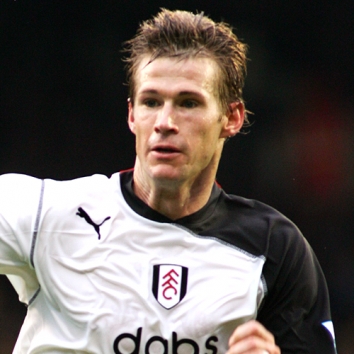
The center-forward was so prolific in the MLS for the Columbus Crew that he earned himself a transfer to the English Premier League, the world’s most competitive soccer league. After a short spell at Everton, McBride joined Fulham and the cult status he enjoyed in Ohio soon spread to southwest London, with the forward becoming a legend at Craven Cottage.
The American would eventually leave Europe and head back to the states in 2008 after he joined the Chicago Fire but it was his influence in Ohio that makes him the fabled player that he is today.
The Outlook of the NFL Postseason
THE OUTLOOK OF THE NFL POSTSEASON
The NFL season is slowly grinding out into the postseason, and it won’t be long now until we know who is making it into the New Year with a championship to play for.
There have been a lot of surprises, changes, evolutions, and even “as expected” this season in the NFL, and despite the fears and pressure of the coronavirus, the league has held its own and teams have shown the requisite resilience. With the season set to roll into the New Year and in a new playoff format, there is all the excitement and competition to look forward, including quite a lucrative time to be had for those who love a flutter and do not mind investing some hard-earned greens and time. For those rooting for the Giants, or pretty much anyone who needs some incentive, the bonus code SugarHouse will be a big boost to their first go.
The NFC
For a number of seasons now the NFC has been a very competitive conference with the NFC West being the pick of the lot. However, the Seahawks are coming out on top, thanks to an MVP-level of play from quarterback Russell Wilson. Despite being 8-3, a tie with the Green Bay Packers and one step back from the New Orleans Saints (9-2), the Seahawks are still expected to be the name out of the conference when the bowl comes around. The New York Giants are having a resurgence with a winning streak that is taking them into the postseason. At 4-7, the Giants are tied with Washington (4-7) but hold a head-to-head advantage over them. Tom Brady has not had the easiest of seasons in Tampa Bay, but he still has the team in a wildcard spot, alongside the Rams and Cardinals, but only temporarily. Despite their poor season, the 49ers are still in the running for a wildcat spot, including eight other teams, amongst which are the Eagles (3-7-1), Cowboys (3-8) and Falcons (4-7).
The AFC
The Steelers have been so shockingly dominating, it has been both awesome and crazy to watch. At 11-0, the Steelers have looked steady all season long and are already assured to make the playoffs, and the Kansas City Chiefs are not letting them off the hook at 10-1.Patrick Mahomes has not been loudest best his play has been stellar and looks paced for the postseason. The Titans (8-3) and Bills (8-3) have been equally as impressive and are looking sure to be in the postseason. The conference is so competitive, the Browns at 8-3 can only manage a wildcat spot at the moment, but they have looked even more sure-footed without Odell Beckham Jr. The Patriots have had a season to forget, but their greatness still has them fighting for a wildcat spot at 5-6. This would be quite an achievement for the rebuilding patriots and not a very bad start to Cam Newton’s start in New England. The Ravens, Raiders, Broncos, Texans, Chargers, and Bengals are all in the mix.
Is Roman Reigns Worthy of a Spot in the WWEs Hall of Fame?
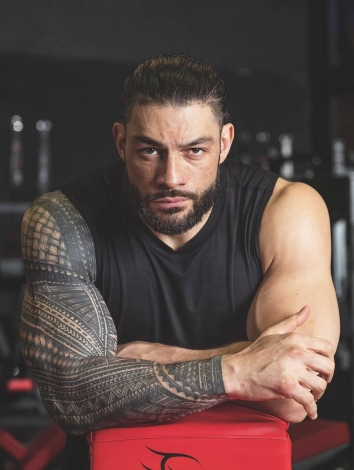
In August 2010, Roman Leakee made his professional debut with World Wrestling Entertainment. Two years later, and following the rebrand of the Florida Championship Wrestling to NXT, the competitor’s ring name changed to Roman Reigns. Since then, the organization has had a superstar on their hands. Although there are debates regarding WWEs marketing of Reigns, few can argue that he hasn’t been one of the promotion's go-to athletes for the best part of the past decade. So, let’s take a look at whether the 35-year-old will end up in the company’s Hall of Fame.
Competing Against the Best Since 2010
Throughout the bulk of his professional wrestling career with the WWE, Reigns has proved to be a divisive character. That said, irrespective of whether you love him or hate him, his in-ring success speaks for itself. To date, the Florida-born competitor has held the WWE Championship on three separate occasions. Additionally, he has also clinched the Intercontinental Championship, United States Championship, and Universal Championship.
Given the longevity that Reigns enjoyed throughout the 2010s, it’s surprising to learn that he only lost one of his many singles titles on five separate occasions, as per www.sportskeeda.com. Perhaps the WWE Universe’s perception of the 35-year-old is why this record is often overlooked. Due to this, the organization has to take responsibility for failing to market the Big Dog effectively. However, his recent link-up with Paul Heyman appears to have been a masterstroke. Since returning to the WWE at SummerSlam, Reigns has lived up to his motto of “wreck everything and leave”. As such, he’s received credit from Hall of Famers. JBL, for example, labeled the Florida-born competitor as the “most compelling character” of the last 20 years, according to https://wrestletalk.com.
A Career-Defining Promotion
Fundamentally, it’s a testament to Reigns’ mental strength that he overcame personal and professional adversity on his path to success. Although it’s difficult to pinpoint the exact period where the 35-year-old's in-ring fortunes changed, his improved ability to cut promotions certainly helped. For someone who has headlined four straight WrestleMania pay-per-view events, his microphone work can’t be too shoddy. Following The Undertaker’s initial retirement in 2017, Reigns declared that the ring was now his yard, inferring that he was stepping up to fill The Deadman’s shoes, as per https://bleacherreport.com. Interestingly, his improved promotional skills have seen Mick Foley compare his progression to the likes of Kurt Angle and The Rock.
Regarding the 35-year-old's marketability, his heightened microphone skills have undoubtedly enhanced his reputation. Thanks to this, he now plays a pivotal role in spearheading the rise of digital wrestling-themed developments across the globe. This is evident by his position as a cover star, along with Becky Lynch, on the WWE 2K20 video game.
Not only that, but he’s also a leading figure in expanding WWE’s appeal among American audiences through diverse entertainment streams. Recently, Bluberi has partnered with the WWE in an effort to create wrestling-themed video slots that will feature a number of stars, including Reigns. Interestingly, this style of sporting expansion has occurred in the past with the Ultimate Fighting Championship. At Unibet, which is one of the bonus-offering platforms listed at https://www.bonusfinder.com/free-spins-no-deposit, prospective players can immerse themselves in It’s Time. The six-reel, Relax Gaming creation focuses on the UFC’s Bruce Buffer and incorporates an array of features, such as the Fighter and Buffer bonuses.
It’s Hard to Deny Reigns
Love him or hate him, Reigns has been at the forefront of WWEs storylines for over a decade. While he’ll never be the company’s most-loved wrestler, he’s past the point where he needs to obtain that status. For as long as the 35-year-old is spearheading the organization’s modern-day plots, it’s troublesome to deny that he’s a future Hall of Famer.
Rock 'n' Roll Musicians & Muses
Rock 'n' roll Musicians & Muses
Rock' n' roll musicians are known for their hard-living and their desire to love women. Many of the most famous songs ever written were about being in love with a certain kind of gal. That being said, these musicians and their muses come in all shapes and sizes, and the songs reflect the subjects' unique qualities. Here is what you need to know about some of the famous music couples out there.
How passionate relationships with women inspire musicians to create songs
Think about some of the most famous rock songs out there. Songs like I Believe in a Thing Called Love, Nothing Else Matters, Is This Love, Angel, and many others were not just spontaneously thought of by the singers. They had to have some kind of inspiration that convinced them to write about this thoughtful, vulnerable topic. The right kind of relationship will make a man think about the circumstances that he's in and how he responded. Sometimes, the relationships have ended well, and other times they didn't. That's reflected in the individual songs, but it's clear that the right woman can make a man sing about their love in all the best ways. Their inspiration will make them compose thoughtful lyrics and take a break from the heavy, partying subject matter to show a little bit of their soft side. A perfect example of this is when Metallica released Nothing Else Matters, a song that contrasts so sharply with their thrash metal image that it made people do a double-take of the band's talent!
The "fatale women" of the real "bad guys":
When you start looking at why the rocking singers began to change their ways or sing about love, it's important to examine the women who stand behind them. We're going to look at the Femme Fatales behind these tough guys to show you how the right woman can help a rocker come to grips with their feelings of love.
- Ozzy Osbourne and Sharon Arden
Ozzy and Sharon appeared to make no sense from the outside of the relationship. He was a rocker who could have had just about any lady he wanted, but he went with Sharon and stayed with her for decades. While it's true that they have had their ups and downs, she has become a prominent part of his life, even managing many of his efforts to this day. Although she was overweight, he still loved every part of her as she learned how to manage her health. She's been a force to be reckoned with in the world of business, and that didn't help her as she struggled with weight. Now that she has a new appreciation for her health and lifestyle, she has a healthy figure. BBW looking for men have the perception that men are afraid of dating curvy girls in real life. But Ozzy proved that not all men are subject to such prejudices.
- Bon Jovi and Dorothea Hurley
Bon Jovi is a very attractive and successful singer. He got together with Dorothea Hurley in 1989, and they never looked back. They're the same age and from the same state, but they are worlds apart in terms of work. Still, her lifestyle and elegance have inspired many songs from Bon Jovi!
- David Bowie and Iman
Some rockers love to be with someone that has the same high energy as them. That appears to be the case with David Bowie and Iman. She's a model, actress, and entrepreneur. She was a partner with David Bowie for decades!
- Bono and Ali Hewson
Bono and Ali Hewson go together so well because they're so dedicated to causes around the world. Both are activists, and she is listed as the inspiration on many songs, including "Sweetest Thing."
- Keith Richards and Patti Hensen
Although nobody is surprised that Keith Richards married a model, everyone is stunned by their longevity. Although they have a small age disparity, they are a very successful and loving couple.
Famous men find women of all types to be with. Without the constraints of normal living, most of them find that they have the chance to be with someone that fulfills the needs of their soul instead of finding someone to date based on their lifestyle alone. That is why you'll see rockers with dates of different ages, sizes, and backgrounds. Also, it's why we're blessed with so much beautiful music about these loving ladies.
Rock 'n' Roll legends write songs about women all the time. Most people don't realize that these guys tend to stick with these ladies long after the song's release. Look at the list of people we've mentioned here, and you can see that the crazy rocker lifestyle isn't enough to pull a man away from the love of a great woman!
Awards = HOF?: Part Fifty-Five: The William M. Jennings Trophy
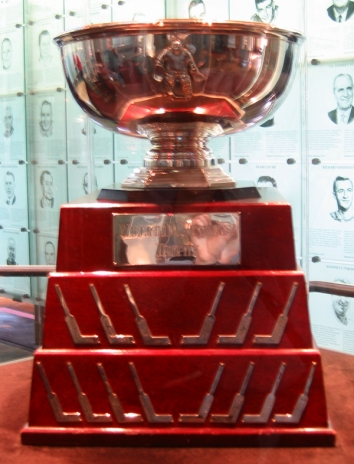
We here at Notinhalloffame.com thought it would be fun to take a look at the major awards in North American team sports and see how it translates into Hall of Fame potential.
Needless to say, different awards in different sports yield hall of fame potential. In basketball, the team sport with the least number of players on a roster, the dividend for greatness much higher. In baseball, it is not as much as a great individual season does not have the same impact.
Last time, we looked at the Mark Messier Leadership Award, it is designed to honor an individual who leads by positive example through on-ice performance, motivation of team members and a dedication to community activities and charitable causes. We stay on the ice with the newest award, the William M. Jennings, which was first awarded in 1981-82.
Specifically, the Jennings replaced the Vezina Trophy, which had been given to the goalie(s) of the team that allowed the fewest Goals. The Vezina was reworked to honor the best Goalie in the NHL, and the Jennings was created to follow along the Vezina’s previous guidelines.
It is named after Jennings, who was the longtime President of the New York Rangers.
So how many William M. Jennings winners have made the Pro Hockey Hall of Fame?
Let’s find out!
The following are the past players who have won the William M. Jennings Trophy who are eligible for the Hockey Hall of Fame and have been enshrined.
Billy Smith, New York Islanders: 18-14-7, 2.87 GAA, 9.1 PS 1983 Co-Winner
The Islanders won four consecutive Stanley Cups (1980-83), with this being the final one of the dynasty. Smith was there for all of them, winning the Vezina the year before and Conn Smythe this year. He continued to play in the NHL until 1989, retiring with a 305-233-105 record.
Inducted into the Hall of Fame in 1993.
Patrick Roy, Montreal Canadiens: 22-16-6, 2.94 GAA, 7.7 PS 1987 Co-Winner
Patrick Roy was already an established legend before he turned 21, as the year before he won the Conn Smythe when he took the Canadiens to an unexpected Stanley Cup win. Roy won his first of three Jennings Trophies, and was tenth for the Vezina.
Inducted into the Hall of Fame in 2006.
Patrick Roy, Montreal Canadiens: 23-12-9, ,2.90 GAA, 8.7 PS 1988 Co-Winner (2)
Along with his co-winner, Brian Heyward, Roy became the first player to win the Jennings in consecutive years. He was named a Second Team All-Star and was eighth for the Vezina.
Inducted into the Hall of Fame in 2006.
Patrick Roy, Montreal Canadiens: 33-5-6, ,2.47 GAA, 9.3 PS 1989 Co-Winner (3)
Roy made history as the first player to win the Jennings in three straight years, and he was also the first to win the Jennings and the Vezina in the same season. The Goalie also led the NHL in Save Percentage (.908) and GAA (2.74).
Inducted into the Hall of Fame in 2006.
Ed Belfour, Chicago Blackhawks: 43-19-7, ,2.47 GAA, 14.0 PS 1991
Ed Belfour seemed to come out of nowhere as in his rookie year he won the Calder, the Vezina and the Jennings the first player to do so. Belfour led the NHL in Wins (43), Save Percentage (.910) and GAA (2.47).
Inducted into the Hall of Fame in 2011.
Patrick Roy, Montreal Canadiens: 36-22-8, ,2.36 GAA, 13.5 PS 1992 (4)
Roy became the first player to win the fourth Jennings and his third Vezina, and in regards to the Hart, he was the runner-up. He was also the NHL leader in Save Percentage for the fourth time (.914) and GAA for the second time (2.36). Roy would lead Montreal to another Stanley Cup win in 1993. Notably, this would be the first time that the award was given to just one Goalie.
Inducted into the Hall of Fame in 2006.
Ed Belfour, Chicago Blackhawks: 41-18-11, ,2.59 GAA, 13.0 PS 1993 (2)
Belfour won his second Jennings Trophy in the same year as he won his second Vezina. “The Eagle” led the league in Shutouts (7) and was a First Team All-Star for the second time.
Inducted into the Hall of Fame in 2011.
Grant Fuhr, Buffalo Sabres: 13-12-3, ,3.69 GAA, 3.9 PS 1994 Co-Winner
A member of five Stanley Cup Championships with the Edmonton Oilers, Grant Fuhr won the Vezina in 1988, but it was with Buffalo that he would win his first and only Jennings Award. He later played for Los Angeles, St. Louis, and Calgary and had 403 career Wins.
Inducted into the Hall of Fame in 2003.
Dominik Hasek, Buffalo Sabres: 30-20-6, ,1.95 GAA, 13.1 PS 1994 Co-Winner
This was Hasek’s breakout year as he not only won the Jennings, but he also won the Vezina and was the runner-up for the Hart. Hasek led the NHL in Save Percentage (.930), GAA (1.95) and Shutouts (7).
Inducted into the Hall of Fame in 2014.
Ed Belfour, Chicago Blackhawks: 22-15-3, ,2.28 GAA, 6.0 PS 1995 (3)
Belfour led the NHL is Shutouts for the fourth straight season, and was named a Second Team All-Star. He finished second for the Vezina that year.
Inducted into the Hall of Fame in 2011.
Martin Brodeur, New Jersey Devils: 37-14-13, ,1.88 GAA, 12.4 PS 1997 Co-Winner
Martin Brodeur is considered one of the greatest Goalies of all-time, and in terms of the William M. Jennings, he is one of the most decorated netminders ever with five wins. Prior to his first win, Brodeur already won the Calder and won his first Stanley Cup. This year, Brodeur was also a Second Team All-Star, was second for the Vezina, fourth for the Hart, and he led the NHL in GAA (1.88).
Inducted into the Hall of Fame in 2018.
Martin Brodeur, New Jersey Devils: 43-17-8, ,1.89 GAA, 11.1 PS 1998 (2)
Brodeur won his second straight Jennings Trophy, with similar accolades in his first win. He was again second for the Vezina, fourth for the Hart, and a Second Team All-Star. This year began a four-year streak of leading the NHL in Wins.
Inducted into the Hall of Fame in 2018.
Ed Belfour, Dallas Stars: 35-15-9, ,1.99 GAA, 9.1 PS 1999 Co-Winner (4)
Now a Dallas Star, Belfour was seventh in Vezina voting but he had his most rewarding NHL year as he helped Dallas win the Stanley Cup. This was the only Jennings win where Belfour shared it with another Goalie. Belfour went on to play for Toronto and Florida, retiring in 2007 with a career record of 484-320-125.Inducted into the Hall of Fame in 2011.
Dominik Hasek, Buffalo Sabres: 37-24-4, ,2.11 GAA, 13.9 PS 2001 (2)
In between Hasek’s first and second Jennings win, Hasek won four Vezinas, two Harts and two Lester B. Pearson Awards. Hasek won his sixth Vezina this year, which would also be his final one as a Sabre.
Inducted into the Hall of Fame in 2014.
Patrick Roy, Colorado Avalanche: 32-23-8, ,1.94 GAA, 13.2 PS 2002 (5)
Patrick Roy forced a trade out of Montreal in 1996, and the team where he landed, Colorado, won a Stanley Cup with him in net that year. Roy won his fourth Cup in 2001, and this season, he won his fifth (and final) Jennings, while earning a First Team All-Star selection and was also second for the Vezina and third for the Hart. Roy played one more year before he retired as one of the most decorated players in hockey.
Inducted into the Hall of Fame in 2006.
Martin Brodeur, New Jersey Devils: 41-23-9, ,2.02 GAA, 11.4 PS 2003 (3)
In between Brodeur’s second and third Jennings win, he won a Stanley Cup (2000) and never finished less than fifth for the Vezina. This year, he not only won he Jennings, he captured a third Stanley Cup ring, and won his first Vezina. Brodeur was also third in Hart balloting, and he began his second four-year streak of leading the NHL in Wins. It is worth noting that this was the only year in which the Jennings was shared between two teams, as Roman Cechmanek and Robert Esche of the Philadelphia Flyers also won.
Inducted into the Hall of Fame in 2018.
Martin Brodeur, New Jersey Devils: 38-26-11, ,2.03 GAA, 12.5 PS 2004 (4)
Brodeur repeated as a dual winner of the Jennings and Vezina and like the season before he finished in third place for the Hart. He would win two more Vezina Trophies, 2007 and 2008, and was second in 2006.
Inducted into the Hall of Fame in 2018.
Dominik Hasek, Detroit Red Wings: 27-10-3, ,2.14 GAA, 4.5 PS 2008 Co-Winner (3)
Hasek forced a trade out of Buffalo and promptly won his coveted Stanley Cup that year. He won another this year, in what was his final NHL season. “The Dominator” won 389 Games with a career GAA of 2.20.
Inducted into the Hall of Fame in 2014.
Martin Brodeur, New Jersey Devils: 38-26-11, ,2.03 GAA, 12.5 PS 2010 (5)
With his fifth Jennings win, Brodeur tied Patrick Roy for the most all-time. Brodeur was third in Vezina voting, which would be the last time he received a vote for that award. He played until 2013, accumulating an all-time record of 691 Wins.
Inducted into the Hall of Fame in 2018.
The following are the players who have won the William M. Jennings Trophy who are eligible for the Hockey Hall of Fame and have not been selected:
Rick Wamsley, Montreal Canadiens, 23-7-7, 2.75 GAA, 9.2 GPS 1982 Co-Winner
It is fitting that the first ever winner of a major award played for Montreal, and in the case of Rick Wamsley, this would be the only individual award he won. He would later win a Stanley Cup with Calgary in 1989, and he retired with a 204-131-46 Record.
Eligible since 1996. Unranked on Notinhalloffame.com
Denis Herron, Montreal Canadiens 12-6-8, 2.64 GAA 6.6 PS 1982 Co-Winner
Denis Herron won the Vezina the year before under the Vezina’s last year of following the format of the William M. Jennings. Herron’s .911 Save Percentage led the NHL, which was the second time he did so. He was traded to the Pittsburgh Penguins in the off-season, and he finished his career there, retiring with 146 Wins against 203 Losses.
Eligible since 1989. Unranked on Notinhalloffame.com
Roland Melanson, New York Islanders 24-12-5, 2.66 GAA 10.2 PS 1982 Co-Winner
Melanson was the back-up for eventual Hall of Famer, Billy Smith, but Melanson saw his share of playing time in three Stanley Cup wins, this year being the last one. Melanson led the NHL in Save Percentage this season (.909), and did again the year after (.902). He later played for Minnesota, Los Angeles, New Jersey and Montreal, and left the game with 125 Wins.
Eligible since 1995. Unranked on Notinhalloffame.com
Al Jensen, Washington Capitals 25-13-3, 2.92 GAA 5.8 PS 1984 Co-Winner
Jensen led the NHL in Shutouts (4) and was third in Vezina Trophy voting this year. He would arguably have one more good year, and he only had 179 career NHL games.
Eligible since 1990. Unranked on Notinhalloffame.com
Pat Riggin, Washington Capitals 21-14-2, 2.67 GAA 6.0 PS 1984 Co-Winner
Riggin led the NHL in Goals Against Average (2.67) this year and his four Shutouts tied his teammate, Al Jensen, for the league-lead. The Goalie was a Second Team All-Star this year and was third (again tied with Jensen) for the Vezina. Riggin was fourth for the Vezina the year after, but this ended his run as an elite Goalie. He had a record of 153-120-52.
Eligible since 1991. Unranked on Notinhalloffame.com
Tom Barrasso, Buffalo Sabres 25-18-10, 2.67 GAA 8.1 PS 1985 Co-Winner
Barrasso won the Vezina and Calder the year before, and this season he was second for the Vezina, but won the Jennings and was a Second Team All-Star. He would have an up and down career, winning two Stanley Cups with Pittsburgh and winning 369 Games in between the pipes.
Eligible since 2006. Ranked #16 on Notinhalloffame.com
Bob Sauve, Buffalo Sabres 13-10-3, 3.23 GAA 2.3 PS 1985 Co-Winner
Sauve was previously a co-winner for the Vezina in 1980, and this was his second and last individual award in the NHL. It was also his last year as a Sabre, as he joined Chicago the year after. He retired in 1989, after two years with New Jersey.
Eligible since 1992. Unranked on Notinhalloffame.com
Bob Froese, Philadelphia Flyers 31-10-3, 2.55 GAA 9.9 PS 1986 Co-Winner
This was by far Froese’s best year in the National Hockey League, where he led the NHL in Wins (31), Save Percentage (.909), GAA (2.55) and Shutouts), and he was a Second Team All-Star who was second for the Vezina. Froese never approached that year again, finishing with the New York Rangers for four years with a career record of 128-72-20
Eligible since 1993. Unranked on Notinhalloffame.com
Darren Jensen, Philadelphia Flyers 15-9-1, 3.69 GAA 9.9 PS 1986 Co-Winner
A star at the University of North Dakota, this was Jensen’s second and final NHL season, as he was sent to the minors after. Realistically, he barely qualified for this award and won it as a second banana Goalie in a high-scoring era. His 3.69 is toed for the worst of ant winner.
Eligible since 1989. Unranked on Notinhalloffame.com
Brian Heyward, Montreal Canadiens 19-13-4, 2.82 GAA 6.2 PS 1987 Co-Winner
After four seasons in Winnipeg, Heyward was noa a competent backup for Patrick Roy in Montreal. In Heyward’s 37 Games this year, he was first in the NHL in GAA (2.82) and was sixth in Vezina voting.
Eligible since 1996. Unranked on Notinhalloffame.com
Brian Heyward, Montreal Canadiens 19-13-4, 2.82 GAA 6.2 PS 1988 Co-Winner (2)
Along with Patrick Roy, Heyward became the first back-to-back winner of the Jennings Trophy. He might have been a back-up, but he wasn’t done making history.
Eligible since 1996. Unranked on Notinhalloffame.com
Brian Heyward, Montreal Canadiens 19-13-4, 2.82 GAA 6.2 PS 1989 Co-Winner (3)
Patrick Roy and Brian Heyward were the first players to win the William M. Jennings Trophy three years in a row, and this is arguably the only player to win three significant awards in a row, who has zero chance for their respective Hall of Fame.
Eligible since 1996. Unranked on Notinhalloffame.com
Reggie Lemelin, Boston Bruins 22-15-2, 2.80 GAA 6.2 PS 1990 Co-Winner
Prior to this season, Lemelin had four top-ten finishes for the Vezina, and this year would be his last one as he was fourth. He played until 1993, accumulating 236 Wins over a 15-year career.
Eligible since 1996. Unranked on Notinhalloffame.com
Andy Moog, Boston Bruins 24-10-7, 2.89 GAA 7.3 PS 1990 Co-Winner
Andy Moog won three Stanley Cups with the Edmonton Oilers before arriving in Boston, and in this season, he was third in Vezina voting, which was the highest of his career. He had seven other top ten finishes for the Vezina.
Eligible since 2001. Ranked #26 on Notinhalloffame.com
Chris Osgood, Detroit Red Wings 39-6-5, 2.17 GAA 6.6 PS 1996 Co-Winner
Osgood had his breakout season where he also was a Second Team All-Star and was the runner-up for the Vezina behind Dominik Hasek. The Goalie also led the NHL in Wins this year with 39. Osgood won the Stanley Cup in the next two years with Detroit.
Eligible since 2014. Ranked #22 on Notinhalloffame.com
Mike Vernon, Detroit Red Wings 21-7-2, 2.26 GAA 4.2 PS 1996 Co-Winner
Mike Vernon was a Second Team All-Star and Stanley Cup winner with the Calgary Flames in 1989. Vernon joined Detroit in 1994, and won the Jennings with Chris Osgood, with whom he took the Red Wings to a Stanley Cup win in 1997. Vernon won the Conn Smythe that year, which was also his last in Detroit. He finished his career with San Jose, Florida, and closed his career as a Flame.
Eligible since 2005. Ranked #13 on Notinhalloffame.com
Mike Dunham, New Jersey Devils 8-7-1, 2.55 GAA 2.6 PS 1997 Co-Winner
This was Dunham’s rookie year, and he played in 26 Games, just enough to qualify for the Jennings Award, which was the only individual accolade he ever won. After two years with New Jersey, Dunham was traded to Nashville, and he later played for Atlanta and both New York teams.
Eligible since 2010. Unrankedon Notinhalloffame.com.
Roman Turek, Dallas Stars 16-3-3, 2.29 GAA 3.7 PS 1999 Co-Winner
Turek played just enough to qualify for the Jennings, and as Ed Belfour’s backup, he won not only the Jennings but the Stanley Cup. This was his last year in Dallas, as he was traded to St. Louis the following year.
Eligible since 2010. Unrankedon Notinhalloffame.com.
Roman Turek, St. Louis Blues 42-15-9, 1.95 GAA 10.2 PS 2000 (2)
Turek went back-to-back in Jennings wins, but was the first to do it with different teams. This time, Turek was a first string Goalie, and he had the best year of his life, finishing second in Vezina voting, sixth for the Hart and was a Second Team All-Star. His played one more season with the Blues before moving on to Calgary for three years.
Eligible since 2010. Unrankedon Notinhalloffame.com.
Roman Cechmanek, Philadelphia Flyers 33-15-10, 1.83 GAA 10.9 PS 2003 Co-Winner
Roman Cechmanek had a brief NHL career, consisting of only four seasons, and he was a former Second Team All-Star. Cechmanek was third in Vezina voting this year, which would be his penultimate NHL campaign.
Eligible since 2012. Unranked on Notinhalloffame.com.
Robert Esche, Philadelphia Flyers 12-9-3, 2.20 GAA 3.8 PS 2003 Co-Winner
Esche played eight years in the NHL, usually as a backup, and this was his lone season where he would win an award. He had a lifetime record of 78-64-22.
Eligible since 2015. Unranked on Notinhalloffame.com.
Miikka Kiprusoff, Calgary Flames 42-20-11, 2.07 GAA 16.2 PS 2006
This was the best season of Kiprusoff’s career where he not only won the Jennings, but was the Vezina Trophy winner and was third for the Hart. He also led the NHL in Goals Against Average (2.07) and Shutouts (10), and played until 2013, finishing with a 305-192-68 record.
Eligible since 2016. Ranked #189 on Notinhalloffame.com.
Niklas Backstrom, Minnesota Wild 23-8-6, 1.97 GAA 9.0 PS 2007 Co-Winner
Esche played eight years in the NHL, usually as a backup, and this was his lone season where he would win an award. He had a lifetime record of 78-64-22.
Eligible since 2015. Unranked on Notinhalloffame.com.
Manny Fernandez, Minnesota Wild 22-16-1, 2.55 GAA 7.8 PS 2007 Co-Winner
Fernandez was a late bloomer, as his best pro seasons in hockey came in the latter half of his career. This was Fernandez’ first individual award.
Eligible since 2012. Unranked on Notinhalloffame.com.
Chris Osgood, Detroit Red Wings 27-9-4, 2.09 GAA 6.6 PS 2008 Co-Winner (2)
Sharing the netminding duties with Dominik Hasek, Osgood won his lone GAA title this year. Osgood won his third Stanley Cup this year, and he played until 2011, retiring with 401 Wins, 317 of which were as a Red Wing. His 12 years between Jennings wins is the longest.
Eligible since 2014. Ranked #22 on Notinhalloffame.com
Manny Fernandez, Boston Bruins 16-8-3, 2.59 GAA 4.9 PS 2009 Co-Winner (2)
Fernandez became the second player to win the Jennings with two different teams, and he did so in what turned out to be his last NHL season. He had a career record of 143-123-35.
Eligible since 2012. Unranked on Notinhalloffame.com.
Tim Thomas, Boston Bruins 36-11-7, 2.10 GAA 14.7 PS 2009 Co-Winner
If his teammate, Manny Fernandez, was a late bloomer, then what do you call Tim Thomas, who first became a bona fide presence in the NHL in his early 30s? Thomas would also win the Vezina, and was the league leader in Save Percentage (.933) and Goals Against Average (2.10). Two years later, Thomas led the NHL again in Save Percentage and GAA, while also winning the Vezina. More importantly, he would backstop the Bruins to a Stanley Cup win.
Eligible since 2017. Ranked #77 on Notinhalloffame.com.
Ray Emery, Chicago Blackhawks: 17-1-0, 1.94, 3.4 PS 2013 Co-Winner
Emery lost only one game all year, and he was seventh in Vezina voting, though he did not see much action in the playoffs that year. Nevertheless, Emery won the Stanley Cup this year, giving him a ring. Emery had played for Ottawa, Philadelphia and Anaheim before this year, and he was in the NHL for two more years afterward, back as a Flyer.
Eligible since 2018. Unranked on Notinhalloffame.com.
Let’s update our tally, shall we?
|
Award in Question |
Percentage of recipients who have entered the HOF |
Percentage of recipients by year who have entered the HOF. |
|
NBA MVP |
100% |
100% |
|
NHL Art Ross |
100% |
100% |
|
NHL Hart Trophy |
93.6% |
96.3% |
|
NBA Finals MVP |
91.3% |
94.9% |
|
NHL Norris |
90.5% |
96.4% |
|
NHL Ted Lindsay Award |
90.0% |
|
|
NBA All-Star Game MVP |
89.5% |
91.7% |
|
NHL Conn Smythe |
74.2% |
85.4% |
|
NFL Bert Bell Award |
73.7% |
71.4% |
|
NFL AP Offensive Player of the Year |
73.1% |
79.4% |
|
NFL AP MVP |
68.3% |
74.0% |
|
NFL Walter Payton Man of the Year |
66.7% |
66.7% |
|
NHL Lady Byng |
63.8% |
76.0% |
|
NFL Defensive Player of the Year |
60.8% |
71.1% |
|
NFL Super Bowl MVP |
60.6% |
64.9% |
|
NHL Mark Messier Leadership Award |
60.0% |
60.0% |
|
NBA Defensive Player of the Year |
58.3% |
56.5% |
|
NHL Vezina |
57.1% |
66.3% |
|
NBA Rookie of the Year |
56.5% |
56.5% |
|
MLB MVP |
55.0% |
60.2% |
|
NFL Pro Bowl MVP |
52.3% |
54.8% |
|
MLB Lou Gehrig Award |
51.9% |
51.9% |
|
MLB Roberto Clemente Award |
47.4% |
47.4% |
|
NHL Calder Trophy |
46.5% |
46.5% |
|
NBA J. Walter Kennedy Citizenship Award |
46.0% |
46.0% |
|
MLB/NL/AL Cy Young Award |
44.4% |
55.4% |
|
MLB Babe Ruth Award |
37.0% |
39.3% |
|
NHL King Clancy Award |
36.8% |
36.8% |
|
NHL Frank J. Selke Trophy |
33.3% |
36.7% |
|
MLB World Series MVP |
33.3% |
36.8% |
|
MLB Hutch Award |
33.1% |
33.1% |
|
NFL Offensive Rookie of the Year |
28.6% |
28.6% |
|
NHL Bill Masterton Memorial Trophy |
27.9% |
27.9% |
|
MLB Edgar Martinez Award |
26.7% |
17.2% |
|
MLB (NL/AL) Silver Slugger (Designated Hitter) |
25.0% |
30.8% |
|
MLB Comeback Player of the Year |
25.0% |
25.0% |
|
MLB (NL/AL) Silver Slugger (Shortstop) |
23.5% |
52.6% |
|
MLB (NL/AL) Gold Glove |
21.7% |
36.8% |
|
NHL William M. Jennings Trophy |
20.7% |
40.4% |
|
NFL Defensive Rookie of the Year |
20.6% |
20.6% |
|
MLB (NL/AL) Silver Slugger (Catcher) |
20.0% |
22.5% |
|
MLB (NL/AL) Gold Glove (Second Base) |
18.8% |
39.8% |
|
MLB (NL/AL) Gold Glove (Shortstop) |
18.2% |
35.1% |
|
MLB (NL/AL) Silver Slugger (Pitcher) |
18.2% |
20.1% |
|
MLB (NL/AL) Silver Slugger (Second Base) |
16.7% |
32.7% |
|
MLB (NL/AL) Gold Glove (Outfield) |
16.7% |
30.1% |
|
MLB (NL/AL) Silver Slugger (Outfield) |
15.7% |
25.2% |
|
MLB (NL/AL) Gold Glove (Third Base) |
14.3% |
14.3% |
|
MLB (NL/AL) Silver Slugger (Third Base) |
13.6% |
14.3% |
|
MLB (NL/AL) Silver Slugger (First Base) |
13.6% |
13.3% |
|
MLB (NL/AL) Rookie of the Year |
13.3% |
13.3% |
|
MLB (NL/AL) Gold Glove (Catcher) |
10.3% |
15.2% |
|
NBA Most Improved Player of the Year |
5.3% |
3.2% |
|
MLB (NL/AL) Gold Glove (First Base) |
3.8% |
3.2% |
|
NFL AP Comeback Player of the Year |
0.0% |
0.0% |
So, who is up next?
The following are the players who have won the William M. Jennings Trophy in the NHL who have retired but have not met the mandatory years out of the game to qualify for the Hockey Hall of Fame:
Niklas Backstrom, Minnesota Wild 23-8-6, 1.97 GAA 9.0 PS 2007 Co-Winner
This was Backstrom’s rookie year, though the Swedish Goalie was already 27. Backstrom led the NHL in Save Percentage (.929), GAA (1.97) and was sixth in Vezina voting. He played with the Wild until 2015, and finished his NHL run with Calgary before returning to Europe and playing in the Finnish League.
Eligible in 2022.
Roberto Luongo, Vancouver Canucks 38-15-7, 2.11 GAA 13.6 PS 2011
A Second Team All-Star twice before in his career, Luongo led the NHL in Wins for the only time in his career. He also was third in Vezina voting. Luongo would take the Canucks to the Stanley Cup Finals, but they went down to the Boston Bruins. Later on, Luongo returned to Florida, playing until 2019 and retiring with 489 Wins.
Eligible in 2022.
The following are the players who have won the William M. Jennings Trophy who are still active.
Cory Schneider, Vancouver Canucks 16-4-2, 2.23 GAA 5.6 PS, 2011 Co-Winner
Cory Schneider played the minimum 25 Games to qualify for what is to date, his only individual accolade in his career.
34 Years Old,Playing for the New Jersey Devils.
Brian Elliott, St. Louis Blues: 23-10-4, 1.56, 9.0 PS 2012 Co-Winner
Brian Elliott’s 1.56 GAA is by far the lowest among William M. Jennings Award winners, which was league-leading as was his .940 Save Percentage. Elliott was fifth in Vezina voting that year.
35 Years Old,Playing for the Philadelphia Flyers.
Jaroslav Halak, St. Louis Blues: 26-12-7, 1.97, 9.0 PS 2012 Co-Winner
What an incredible tandem that Elliott and Halak made. Both had GAAs under 2.00, and he finished sixth for the Vezina while Elliot was fifth.
35 Years Old,Playing for the Boston Bruins.
Corey Crawford, Chicago Blackhawks: 19-5-5, 1.94, 6.0 PS 2013 Co-Winner
Crawford was eighth for the Vezina this year, and in the post-season, he was the main Goalie in their Stanley Cup win.
36 Years Old,Playing for the Chicago Blackhawks.
Jonathan Quick, Los Angeles Kings: 27-17-4, 2.07, 7.4 PS 2014
Two years before, Quick was a Second Team All-Star and he led the Kings to a Stanley Cup win while winning the Conn Smythe. This year, Quick again won the Cup, while finishing fifth in Vezina voting.
35 Years Old,Playing for the Los Angeles Kings.
Corey Crawford, Chicago Blackhawks: 32-20-5, 2.27, 11.9 PS 2015 Co-Winner (2)
In Crawford’s second Jennings win, he was again the primary Goalie for the Blackhawks in a Stanley Cup win. Crawford was also sixth for the Vezina this year. Crawford tied with Carey Price of Montreal for this award.
36 Years Old,Playing for the Chicago Blackhawks.
Carey Price, Montreal Canadiens: 44-16-6, 1.96, 16.2 PS 2015 Co-Winner
Carey Price had the best season of his career where he not only won the Jennings, but also captured the Vezina, Hart, and the Ted Lindsay Award. If Price gets into the Hockey Hall of Fame, this was the year that did it.
33 Years Old,Playing for the Montreal Canadiens.
Frederik Andersen, Anaheim Ducks: 22-9-7, 2.30, 7.0 PS 2016 Co-Winner
Two years away from being named an All-Rookie, Frederik Andersen won the William M. Jennings Trophy. This was his last year in Anaheim as he was traded to Toronto in the off season.
31 Years Old,Playing for the Toronto Maple Leafs.
John Gibson, Anaheim Ducks: 21-13-4, 2.07, 6.5 PS 2016 Co-Winner
This was officially Gibson’s rookie year and he was seventh in both the Calder and the Vezina.
27 Years Old,Playing for the Anaheim Ducks.
Braden Holtby, Washington Capitals: 42-13-6, 2.20, 12.3 PS 2017
Holtby won the Vezina the season before and was second for that prestigious award this year, while also earning a Second Team All-Star Selection. He would win the Stanley Cup the following year aiding the Caps in their first league title.
27 Years Old,Playing for the Washington Capitals.
Jonathan Quick, Los Angeles Kings: 33-28-3, 2.40, 12.2 PS 2018 (2)
Finishing ninth for the Vezina this year, Quick was again the lone Jennings winner in his second win.
35 Years Old,Playing for the Los Angeles Kings.
Thomas Greiss, New York Islanders: 23-14-2, 2.28, 8.7 PS 2019 Co-Winner
As of this writing, the Jennings trophy in 2019 is the only individual trophy he has won in the NHL, and he is currently two Wins away from 250.
34 Years Old,Playing for the New York Islanders.
Robin Lehner, New York Islanders: 25-13-5, 2.13, 10.2 PS 2019 Co-Winner
Lehner had a great year where he also won the Bill Masterton Memorial Trophy and was third for the Vezina. This would be his only year in New York as he signed with the Chicago Blackhawks as a Free Agent.
29 Years Old,Playing for the Vegas Golden Knights.
Jaroslav Halak, Boston Bruins: 18-6-6, 2.39, 6.1 PS 2020 Co-Winner (2)
In between his first and second Jennings win, Halak would have stints in Washington and the New York Islanders before joining the Bruins. Backing up Tuukaa Rask, Halak had to take over for the Bruins in the playoffs when Rask left the COVID-19 mandated bubble. Halak became the third player to win the Jennings with two different teams.
35 Years Old,Playing for the Boston Bruins.
Tuukka Rask, Boston Bruins: 26-8-6, 2.12, 9.1 PS 2020 Co-Winner
Rask won the Vezina in 2014, and this year he was second for the Award, and was named a Second Team All-Star. Rask would however leave the COVID-19 bubble early in the playoffs.
35 Years Old,Playing for the Boston Bruins.
The William M. Jennings Trophy has been awarded to legends and journeyman, and there is no reason to think that won’t continue in the future.
This concludes our hockey portion.
So, what is up next?
We go back to the diamond for the Relief Pitcher of the Year, a specialty position that has not generated a lot of success for Cooperstown.
As always, we thank you for your support, and look for that soon.
Awards = HOF?: Part Fifty-Four: The Mark Messier Leadership Award
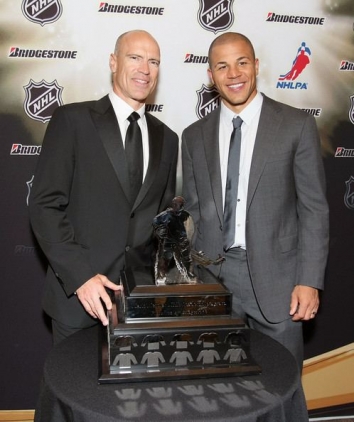
We here at Notinhalloffame.com thought it would be fun to take a look at the major awards in North American team sports and see how it translates into Hall of Fame potential.
Needless to say, different awards in different sports yield hall of fame potential. In basketball, the team sport with the least number of players on a roster, the dividend for greatness much higher. In baseball, it is not as much as a great individual season does not have the same impact.
Last time, we looked at the Lester B. Peasrson, awarded annually to the top MVP as voted on by the players of the National Hockey League. We stay on the ice with the newest award, the Mark Messier Leadership Award, which was first awarded in 2007-08. Named after Hall of Famer, Mark Messier, it is designed to honor an individual who leads by positive example through on-ice performance, motivation of team members and a dedication to community activities and charitable causes.
So how many Mark Messier Leadership winners have made the Pro Hockey Hall of Fame?
Let’s find out!
The following are the past players who have won the Mark Messier Leadership Award who are eligible for the Hockey Hall of Fame and have been enshrined.
Chris Chelios, Detroit Red Wings, Defense: 11 G, 11 A, 22 P, 3.3 PS 2007
At age 45, Chelios had literally been a leader for decades, and despite his age, he was in the NHL for three more seasons. The American Defenseman had won three Norris Trophies, was a five-time First Team All-Star, and won three Stanley Cups; one with Montreal and two with Detroit. It is hard to debate that this award did not get off to a perfect start.
Inducted into the Hall of Fame in 2013.
Mats Sundin, Toronto Maple Leafs, Center: 32 G, 46 A, 78 P, 9.8 PS 2008
This was Sundin’s penultimate year in the NHL, and his last with the Toronto Maple Leafs. A Maple Leaf since 1994, Sundin was a leader on the ice since day one, and was Toronto’s best player for over a decade. He had previously been a Second Team All-Star twice.
Inducted into the Hall of Fame in 2012.
Jarome Iginla, Calgary Flames, Right Wing 35 G, 54 A, 89 P, 9.5 PS 2009
Iginla was not just Calgary’s leader, but had been the Flames best player for years. This was his third First Team All-Star season, and seven years before he was the winner of both the Art Ross and Lester B. Pearson Award. Iginla would later play for Pittsburgh, Boston, Colorado and Los Angeles.
Inducted into the Hall of Fame in 2020.
The following are the players who have won the Mark Messier Leadership Award who are eligible for the Hockey Hall of Fame and have not been selected:
Shane Doan, Phoenix Coyotes, Right Wing: 22 G, 28 A, 50 P, 5.0 PS 2012
Since the franchise relocated from Winnipeg to Phoenix, Shane Doan was the best and most important player for the franchise when they were in Arizona. Doan led the Coyotes to a Conference Final this year, and he was with Phoenix for his entire 21-year career.
Eligible since 2020. Ranked #56 on Notinhalloffame.com.
Daniel Alfredsson, Ottawa Senators, Right Wing: 10 G, 16 A, 26 P, 2.7 PS 2013
Alfredsson was in his 17thand final year as an Ottawa Senator, and while he couldn’t lead them to a Stanley Cup, he was the leader on many good Senator teams. He played one more year in Detroit, and scored 1157 career Points.
Eligible since 2017. Ranked #5 on Notinhalloffame.com.
Let’s update our tally, shall we?
|
Award in Question |
Percentage of recipients who have entered the HOF |
Percentage of recipients by year who have entered the HOF. |
|
NBA MVP |
100% |
100% |
|
NHL Art Ross |
100% |
100% |
|
NHL Hart Trophy |
93.6% |
96.3% |
|
NBA Finals MVP |
91.3% |
94.9% |
|
NHL Norris |
90.5% |
96.4% |
|
NHL Ted Lindsay Award |
90.0% |
|
|
NBA All-Star Game MVP |
89.5% |
91.7% |
|
NHL Conn Smythe |
74.2% |
85.4% |
|
NFL Bert Bell Award |
73.7% |
71.4% |
|
NFL AP Offensive Player of the Year |
73.1% |
79.4% |
|
NFL AP MVP |
68.3% |
74.0% |
|
NFL Walter Payton Man of the Year |
66.7% |
66.7% |
|
NHL Lady Byng |
63.8% |
76.0% |
|
NFL Defensive Player of the Year |
60.8% |
71.1% |
|
NFL Super Bowl MVP |
60.6% |
64.9% |
|
NHL Mark Messier Leadership Award |
60.0% |
60.0% |
|
NBA Defensive Player of the Year |
58.3% |
56.5% |
|
NHL Vezina |
57.1% |
66.3% |
|
NBA Rookie of the Year |
56.5% |
56.5% |
|
MLB MVP |
55.0% |
60.2% |
|
NFL Pro Bowl MVP |
52.3% |
54.8% |
|
MLB Lou Gehrig Award |
51.9% |
51.9% |
|
MLB Roberto Clemente Award |
47.4% |
47.4% |
|
NHL Calder Trophy |
46.5% |
46.5% |
|
NBA J. Walter Kennedy Citizenship Award |
46.0% |
46.0% |
|
MLB/NL/AL Cy Young Award |
44.4% |
55.4% |
|
MLB Babe Ruth Award |
37.0% |
39.3% |
|
NHL King Clancy Award |
36.8% |
36.8% |
|
NHL Frank J. Selke Trophy |
33.3% |
36.7% |
|
MLB World Series MVP |
33.3% |
36.8% |
|
MLB Hutch Award |
33.1% |
33.1% |
|
NFL Offensive Rookie of the Year |
28.6% |
28.6% |
|
NHL Bill Masterton Memorial Trophy |
27.9% |
27.9% |
|
MLB Edgar Martinez Award |
26.7% |
17.2% |
|
MLB (NL/AL) Silver Slugger (Designated Hitter) |
25.0% |
30.8% |
|
MLB Comeback Player of the Year |
25.0% |
25.0% |
|
MLB (NL/AL) Silver Slugger (Shortstop) |
23.5% |
52.6% |
|
MLB (NL/AL) Gold Glove |
21.7% |
36.8% |
|
NFL Defensive Rookie of the Year |
20.6% |
20.6% |
|
MLB (NL/AL) Silver Slugger (Catcher) |
20.0% |
22.5% |
|
MLB (NL/AL) Gold Glove (Second Base) |
18.8% |
39.8% |
|
MLB (NL/AL) Gold Glove (Shortstop) |
18.2% |
35.1% |
|
MLB (NL/AL) Silver Slugger (Pitcher) |
18.2% |
20.1% |
|
MLB (NL/AL) Silver Slugger (Second Base) |
16.7% |
32.7% |
|
MLB (NL/AL) Gold Glove (Outfield) |
16.7% |
30.1% |
|
MLB (NL/AL) Silver Slugger (Outfield) |
15.7% |
25.2% |
|
MLB (NL/AL) Gold Glove (Third Base) |
14.3% |
14.3% |
|
MLB (NL/AL) Silver Slugger (Third Base) |
13.6% |
14.3% |
|
MLB (NL/AL) Silver Slugger (First Base) |
13.6% |
13.3% |
|
MLB (NL/AL) Rookie of the Year |
13.3% |
13.3% |
|
MLB (NL/AL) Gold Glove (Catcher) |
10.3% |
15.2% |
|
NBA Most Improved Player of the Year |
5.3% |
3.2% |
|
MLB (NL/AL) Gold Glove (First Base) |
3.8% |
3.2% |
|
NFL AP Comeback Player of the Year |
0.0% |
0.0% |
So, who is up next?
The following are the players who have won the Mark Messier Leadership Award Trophy in the NHL who have retired but have not met the mandatory years out of the game to qualify for the Hockey Hall of Fame:
None.
The following are the players who have won the Ted Lindsay who are still active.
Sidney Crosby, Pittsburgh Penguins, Center: 51 G, 58 A, 109 P, 14.7 PS, 2010
At age 23, it will be difficult to envision another Mark Messier Leadership Award winner to be younger than Sidney Crosby. This season, Crosby was in his fifth NHL season, and was a Second Team All-Star and a Rocket Richard winner. He was already a Hart Trophy winner, and would be again four years later. Crosby is a three-time Stanley Cup Champion.
33 Years Old,Playing for the Pittsburgh Penguins.
Zdeno Chara, Boston Bruins, Defense: 14 G, 30 A, 44 P, 10.0 PS 2011
A Second Team All-Star this year, Chara was the Norris Trophy winner two years previous, and he was a First Team All-Star and Second Team All-Star twice before. Chara led by example, and the Bruins won the Stanley Cup this year, largely on what the big man did.
43 Years Old,Playing for the Boston Bruins.
Dustin Brown, Los Angeles Kings, Right Wing: 15 G, 12 A, 27 P, 3.1 PS 2014
Dustin Brown helped lead the Kings to a Stanley Cup in 2012, and he did it again this season. Brown was an All-Star in 2009.
36 Years Old,Playing for the Los Angeles Kings.
Jonathan Toews, Chicago Blackhawks, Center: 28 G, 38 A, 66 P, 9.4 PS 2015
This season Toews led Chicago to their third (and his) Stanley Cup win of the decade. The Center had previously been named a Second Team All-Star (2013), a Conn Smythe winner (2010) and Frank J. Selke Trophy winner (2013).
32 Years Old,Playing for the Chicago Blackhawks.
Shea Weber, Nashville Predators, Defense: 20 G, 31 A, 51 P, 9.5 PS 2016
Weber had been the core player in Nashville for years by this time and prior to this Mark Messier Award, he was twice a First Team All-Star, twice a Second Team All-Star, and had five top-four finishes for the Norris Trophy.
35 Years Old,Playing for the Montreal Canadiens.
Nick Foligno, Columbus Blue Jackets, Left Wing: 26 G, 25 A, 51 P, 5.9 PS, 2017
Foligno also won the King Clancy Award this year, marking the first time that a Blue Jacket won either.
33 Years Old,Playing for the Columbus Blue Jackets.
Deryk Engelland, Vegas Golden Knights, Defense: 5 G, 18 A, 23 P, 4.5 PS, 2018
For the second year in a row, the winner of the Mark Messier Leadership Award also won the King Clancy. Engelland was the first Golden Knight to win this trophy.
38 Years Old,Free Agent.
Wayne Simmonds, Philadelphia Flyers and Nashville Predators, Right Wing: 17 G, 13 A, 30 P, 1.9 PS, 2019
This is the first and to date only Mark Messier Leadership winner who split his award-winning season between two years. Simmonds was dealt from Philadelphia to Nashville for their playoff run, and this was mostly due to his overall contributions as a Flyer.
32 Years Old,Playing for the Buffalo Sabres.
Mark Giordano, Calgary Flames, Defense: 5 G, 26 A, 31 P, 5.4 PS, 2020
Giordano is a late-bloomer of sorts, winning his first Norris Trophy at age 35 and setting personal statistical bests. To date, Giordano has played his entire career with Calgary, and has been their leader for years.
37 Years Old,Playing for the Calgary Flames.
Leadership in team sports is important, and as we see, they are often from players who could be considered the best player on the team.
So, what is up next?
We have one NHL Award left, the William M. Jennings, which is awarded annually to the team of Goalies that have the fewest Goals Against.
As always, we thank you for your support, and look for that soon.
The Most Popular Sports to bet on in the United States
The United States is well-known for its love of sports. You’ll find fans of just about every sport out there, both domestically and abroad. But when it comes to placing sports bets, there are a few sports in particular that really seem to capture people’s attention. Whether you’re new to sports betting or you’re a seasoned pro, there’s a good chance these are the sports that stick out in your mind, and for good reason.
Here’s a look at the most popular sports to bet on in the United States.
Football
When it comes to the number one sport to place a bet on, football – more specifically the NFL, takes the top spot. In fact, no other sport even comes close to taking this one out of the top spot. A big part of why this sport draws the most bets is because many would argue that this is America's most favorite sport all-round. It's a classic game, it signals the start of fall, and is really something that millions of people look forward to each year.
Where this one differs from some of the other professional sports is that there aren’t many games in the season. There are 32 different teams that have been divided into eight different divisions. Each of those teams then plays 16 games during the season. The season leads up to the ultimate event of the year – the Superbowl Championship.
Basketball
Then we’ve got basketball, or the NBA. This is another very popular sport to bet on in the United States. With 30 teams located in the United States and Canada, the season is plenty long enough with lots of games leading up to the NBA playoffs. Teams will play a total of 41 games at home and then 41 games away.
What helps to make this such a fun sport to bet on is the fact you can place so many different kinds of bets. These include such things as which team will win, of course, as well as things like how many points will be scored, how many points the team will win by, and so on. It adds an extra element of challenge and fun. This sportsbook reviews blog really breaks it down so you can find the best online options for placing your bets.
Baseball
Then we have the sport of baseball (MLB), commonly referred to as “America’s pastime”. Unlike the other two sports listed, baseball has a more relaxed speed and feel about it, but that doesn’t mean it doesn’t feel competitive. The season is plenty long, meaning there are lots of opportunities to place bets, and you’ve got teams all across the United States and in Canada.
Dip Your Toes in All of Them
If you’re having a hard time deciding which sport you want to place a sports bet on, there’s nothing to stop you from dipping your toes in each one. You may just find that you do better in one over the others, or that you find one sport a bit more exciting to follow.
What Games Do People Play in Their Free Time

What Games Do People Play in Their Free Time
Playing games has a long time been considered a waste of time. However, the benefits of playing games are numerous. First of all, gaming helps people release stress and free their minds. Games are the perfect time-killers that people enjoy playing while on-the-go, during office breaks, or at home using a PC setup. And now you can even Buy MTG Arena codes hassle free from the Online Shop – MTGA Codes.
Mobile gaming is becoming more and more popular because of the advantages of portable devices that makes it easy to play your favorite games no matter where you are. There is a number of games on the online market that don’t require people to use special equipment, and all it takes to gain access to online games is to open your browser and choose a game on some of the online gaming sites.
Online Gambling
Online gambling is one of the gaming industries that has been a trend for quite a time. Gambling enthusiasts like the idea of the gambling possibility in the comfort of your own home. Online slots successfully transfer the player in the world of gambling, and players have the feeling like they’re sitting in some of the land-based casinos across the world.
Playing casino games is an activity known for the high level of excitement because of the unpredictability of the game’s outcome. There is a variety of online slots available on the market and players can easily signup at Casimba to try out a casino game, while themed slots and live dealer roulette are some of the most advanced games in terms of technology.
Social Games vs Video Games
Online slots are not the only games that people enjoy playing in their free time. People who enjoy spending time outdoors prefer playing chess or monopoly together with their friends. On the other hand, gamers would rather play their favorite video game using a PC setup. No matter what the reason for playing games is, it’s definitely one of the activities that people opt for when it comes to making a decision on how they’re going to spend their free time. Playing games is not an activity associated only with children but adults enjoy doing it too.
The Benefits of Playing Games
There are numerous reasons why people choose to play games in their free time. First of all, gaming helps people forget about everyday troubles and dive into the world of gaming. Games nowadays offer a number of extra features like multiplayer gaming. It connects people together, and it’s an argument against those who believe that gaming is an antisocial activity. Playing games is an activity that activates both visual and auditory stimuli, and the whole gaming experience affects your body and brain.
Instead of sitting in front of the TV for hours or watching Netflix movies, people can do something more adventurous and something that fits their personality in a better way. From video games to social games, people do have a choice when it comes how they’re going to organize their free time. Playing games also fills you with positive energy and it makes you happier.
Our First Ever NIHOF Mock Football HOF Committee Synopsis
Why didn’t we do this before?
Allow me to pull back the curtain here at Notinhalloffame.com.
Notinhalloffame.com grew from a simple idea; rank those who are not in various Halls of Fame from the world of sports and music and create a platform for individuals to campaign for their favorite musician/athlete, or at the very least, reminisce.
As it grew, we had the opportunity to interact with other people about the various Halls of Fame, what we like, what we don’t like, and changes we would like to see made. Since, we aren’t privy to what the actual committees discuss, why not make one of our own? That is what we did.
Through Twitter, this is the group that was assembled:
@notinhalloffame (Official Twitter site of Notinhalloffame.com and run by Kirk Buchner)
@2ndHandBurrito (Evan Nolan, co-host of the Hall of Fame Show)
@konadreamssssss (Glen Pawlowski, triathlete from Buffalo)
@vancemeek (Vance Meek has blogged about the Bengals and has been a guest on our podcast.
@readjack (Jack M. Silverstein, Sports Historian and writer from Chicago)
@lhd_on_sports (David Whitlock is a blogger and commentator on lhd-on-sports.com.
@tedcrocketiiil (Ted Crockett is a veteran and follows all sports halls.
@ThomasHallNFL (Thomas Hall follows the Denver Broncos and is the host of Convincing Numbers, a show on Football Analytics. He also contributes to @milehighhuddle.
@Profhofcantonf (As his Twitter handle will tell you, Paul Lawrence has been studying the process of the Pro Football Hal of Fame for years.
@VinLospinuso91 (Vinny Lospinuso studies journalism at Hofstra, and is a regular guest on our shows.
This was a group that comes from varying fan bases and differing perspectives. As we progress, we hope to expand it, adding more people from different parts of the United States, and beyond.
Please note that in our Zoom discussion, Vance and Paul were unable to attend, but their initial votes were counted. We hope to have them on for future roundtables.
As this was the first time, we had ever done this, we decided not to record and air our discussion. As the Philadelphia 76ers management says, “Trust the Process”, and in the future, we will air our meetings to keep everything transparent.
Here was our process:
Step One: Automatic Elimination, Part One.
Each person was asked to submit their 25 selections.
If a former player received no votes, they would not be discussed, and were automatically eliminated from consideration.
Those players were:
QB Drew Bledsoe
QB Jake Delhomme
QB Jeff Garcia
QB Dave Krieg
FB Mike Alstott
RB Tiki Barber
RB Earnest Byner
RB Larry Centers
RB Eddie George
RB Jamal Lewis
RB Glyn Milburn
WR Chad Johnson
WR Derrick Mason
WR Mushin Muhammad
WR Roddey White
TE Dallas Clark
TE Brent Jones
TE Heath Miller
TE Jeremy Shockey
TE Wesley Walls
OL Matt Birk
OL D’Brickashaw Ferguson
OL Kevin Glover
OL Jordan Gross
OL Chris Samuels
OL Chris Snee
OL Brian Waters
OL Erik Williams
DL La’Roi Glover
DL Michael Dean Perry
DL Justin Smith
DL Greg Townsend
LB Seth Joyner
LB Jarod Mayo
LB Willie McGinest
LB Chris Spielman
LB Takeo Spikes
LB Darryl Talley
DB Nick Collins
DB Merton Hanks
DB James Hasty
DB Albert Lewis
DB Tim McDonald
DB Allen Rossum
DB Bob Sanders
DB Adrian Wilson
K David Akers
K Gary Anderson
K Jason Elam
K Jason Hanson
K John Kasay
K Ryan Longwell
K Nick Lowery
P Jeff Feagles
P Sean Landeta
P Rohn Stark
P Matt Turk
KR/PR Josh Cribbs
Takeaway:
There was no visceral reaction from any of us regarding those shut out of the vote. Perhaps with Chad Johnson, but we went through this stage was very quickly.
Step One: Automatic Elimination, Part Two.
If a player received all ten votes, they would not be discussed, and they automatically advanced to our list of Semi-Finalists.
Those players were:
QB Peyton Manning
WR Calvin Johnson
OL Alan Faneca
DB Charles Woodson
Takeaway:
Many of us thought there would be more unanimous picks, but it was a quick reminder why we do this, and how much fun this was going to be. It is also very clear at this time that this was a group that wanted to discuss who should be in the Pro Football Hall of Fame; possibly more than those who get to make those selections. Manning, Woodson and Johnson are on their first ballot. Faneca has been a Finalist for the fifth straight year.
Step Two: Almost Unanimous
Once we determined who we would not discuss, we decided to alternated to the remaining vote getters from highest to lowest, and “sandwich” our way to the middle.
Those players were:
WR Torry Holt
OT Tony Boselli
DB LeRoy Butler
DB John Lynch
Takeaway:
We asked each other a simple question. Do we have any objection, if we put all of these men through to the Semi-Final round? Nobody had an issue, and all four of the above, all of which are former Finalists advanced.
Step Three: One and done?
There was a glut of former players who only received one vote. They were:
QB Steve McNair
RB Steven Jackson
RB Eddie George
RB Priest Holmes
RB Eric Metcalf
RB Warrick Dunn
FB Lorenzo Neal
WR Jimmy Smith
WR Donald Driver
WR Rod Smith
TE Ben Coates
OL Willie Anderson
OL Kent Hull
OL Olin Kreutz
DL Ray Childress
DL Casey Hampton
DL Justin Tuck
DL Simeon Rice
DL Leslie O’Neal
DL John Abraham
LB Cornelius Bennett
LB Tedy Bruschi
LB Joey Porter
LB London Fletcher
DB Asante Samuel
DB Charles Tillman
DB Troy Vincent
DB Rodney Harrison
KR Mel Gray
P Reggie Roby
We asked people if they wanted to make a push for one of these players, and Thomas Hall made an incredible case for Tom Nalen, the former Broncos Center. It swayed many of us, who were previously on the fence about him, and elevated him many of our minds, that it was Nalen, on not Jeff Saturday, who is the best Center available. Hall had a great piece that he wrote for Broncos Wire, that best sums up his cause.
Jack Silverstein trumpeted the pure role of a Fullback that former Charger, Lorenzo Neal, brought to the table, but it was his push of Charles “Peanut” Tillman, and reminding us all about the “Peanut Punch”, and how he helped to evolve Defensive Backs.
Everyone was then asked to submit three votes, with the top three vote-getters advancing to the round of those receiving two votes. Nalen, Tillman and Simeon Rice advanced. Others receiving consideration were Lorenzo Neal, Jimmy Smith, Donald Driver, Willie Anderson, Leslie O’Neal, John Abraham, London Fletcher, Rodney Harrison, Reggie Roby and Steve McNair.
Takeaway:
I think we would all agree that this was the round where we enjoyed the most. A free exchange of ideas and opinions and we all left re-thinking how we viewed selective players. This is what it was all about.
Step Five: Those with 80%, so still an “A”.
Back to the top, we had three who received all but two votes. They were:
WR Reggie Wayne
LB Zach Thomas
LB Patrick Willis
This was another rapid conversation, as nobody had any overt objection to push them through. Willis’s name did illicit a mild surprise that he was not a Finalist last year.
Takeaway:
Wayne and Thomas were both Finalists last year, with Willis making the Semi-Finals. Since this part was moving so quickly, we decided to continue on with the upper half of the ledger.
This brought our total to 11.
Step Six: Completing the “Upper Part of the Sandwich”
There were six players who had either seven, six or five votes. They were:
RB Shaun Alexander (7)
DL Jared Allen (7)
DL Richard Seymour (7)
LB Sam Mills (5)
DB Ronde Barber (6)
ST Steve Tasker (6)
We went with five of these players. Seymour was a Finalist last year, and is likely to be so again, and there was no concern among our group to place him through to the next round. Barber has yet to be a Finalist, but has been a Semi-Finalist. While none of us disagreed that Barber should advance, it brought up a conversation on just how good Tampa’s defence was back in the early 2000s. So far, two Hall of Famers (Warren Sapp and Derrick Brooks) and counting.
Allen is on his first ballot, and many project him to be a Semi-Finalist, though based on reading the room, we may not push him further in our next meeting. As for Alexander, the Running Back and former MVP, has never been a Semi-Finalist, and has been eligible since 2014. He might be under 10,000 career Rushing Yards, but the former Seahawk is one of nine players to have 100 TDs on the ground. Alexander is the only eligible player not to be enshrined.
The love of our group for Tasker was unanimous, and those who did not vote for him initially had no problem putting him through to our Semi-Finals. Tasker was a Semi-Finalist last year, and this is his penultimate year of Modern Era eligibility.
This brings us to Sam Mills, a Finalist last year. While the respect was there for Mills, most of agreed that as good as he was, this was a very good player with an excellent story. He did not advance, and was placed in the middle section; ie; the “meat of our Hall of Fame conversation.”
Takeaway:
While the discussion on Sam Mills brought up apathy, did any of us really think that we wouldn’t put him through the Semi-Finals?
Step Seven: Two Votes
We go back to bottom with those who received two votes. As mentioned before, Nalen, Tillman and Rice advanced to this conversation. We did the same thing and opened up the floor to anyone who wanted to make a statement on these players. Those in this round are:
RB Corey Dillon
RB Herschel Walker
RB Fred Taylor
TE Keith Jackson
OL Tom Halen (advanced from previous round)
OL Logan Mankins
DL Kevin Williams
DL Simeon Rice (advanced from previous round)
LB Lance Briggs
DB Charles Tillman (advanced from previous round)
KR Brian Mitchell
The Chairman (Kirk) pushed for Herschel Walker, citing his USFL stats, and that it is a “Pro” Football Hall of Fame. Evan made a case for Kevin Williams, citing advanced analytics. Like the previous round, each person could vote on three people, with the top three voters advancing. Those were Nalen, Williams and Tillman.
Takeaway:
Taylor might have been a Semi-Finalist last year, but along with Dillon, the belief is that 10,000 Rushing Yards do not hold the same cache they used to. Shaun Alexander might not have five digits in Rushing Yards, but he was without question the best Running Back at one time. Taylor and Dillon were not. Mankins received respect in our discussion, as did Lance Briggs, as we were trying to decipher his overall impact. Brian Mitchell also received consideration.
Step Eight: The Meat of the Hall of Fame Sandwich
Here we go.
What we have left are those who received three or four votes in our original tally, and the one who fell (Mills), and the three who advanced (Nalen, Williams and Tillman).
We had nine spots left with 19 remaining candidates. They are:
QB Donovan McNabb (4)
QB Randall Cunningham (4)
RB Ricky Watters (4)
WR Hines Ward (4)
WR Henry Ellard (3)
OL Jeff Saturday (4)
OL Steve Wisnieuski (4)
OL Richmond Webb (4)
OL Lomas Brown (3)
OL Ruben Brown (3)
OL Tom Nalen (Advanced from 1 & 2)
DL Neil Smith (4)
DL Bryant Young (3)
DL Kevin Williams (Advanced from 2)
LB Sam Mills (5) (Demoted from previous round)
LB Clay Matthews (3)
LB Pat Swilling (3)
DB Eric Allen (3)
DB Charles Tillman (3)
In this final round, we opened up the floor. Here are some notes on some of the players not yet discussed.
Former Philadelphia Eagles Quarterbacks, McNabb and Cunningham were at the forefront. Neither have been a Semi-Finalist, and both have unique cases. McNabb led the Eagles to four straight NFC Championship Games, winning the fourth, but losing the Super Bowl. Randall Cunningham is a three-time Bert Bell Award winner, who was a large link in the evolution of Quarterbacks.
Lomas Brown, a nine-time Pro Bowler who recently was not even on the Preliminary Candidate list, blocked for Barry Sanders. Somebody had to help Sanders during those years right? Glenn, our Bills fan, was the biggest supporter of Richmond Webb, a seven-time Pro Bowler with the Dolphins.
Ward might have been a Semi-Finalist, but we were looking more at Henry Ellard, who at the time of his retirement was third all-time in Receiving Yards.
There was a groundswell for Swilling over Mills, for the the detitle of the defacto “Most deserving New Orleans Saint.” As for Clay Matthews, the former Cleveland Brown who is now on his last year of eligibility, was deemed to be “very good”, and nothing more.
For his round, each voter could assign three votes for their top choice, two for their second, and one vote for the next five. The results we had saw Cunningham, Webb, L. Brown, Nalen, Williams, Swilling, Ellard, Wisnieuski and Tillman advance as our Semi-Finalists.
Takeaway:
Our selection of Nalen, Williams and Tillman came out of nowhere, and proves the power of conversation. While Sam Mills is probable to be a Finalist again, it did not prevent him from falling out of our Semi-Finalists.
Just for fun, we voted as to who would be our last “five out”. They were McNabb, R. Brown, Smith, Saturday and Watters.
Summing Up:
Our 25 Semi-Finalists are:
QB Peyton Manning
QB Randall Cunningham
RB Shaun Alexander
WR Calvin Johnson
WR Torry Holt
WR Reggie Wayne
WR Henry Ellard
OL Alan Faneca
OL Tony Boselli
OL Steve Wisnieuski
OL Richmond Webb
OL Lomas Brown
OL Tom Nalen
DL Jared Allen
DL Richard Seymour
DL Kevin Williams
LB Zach Thomas
LB Patrick Willis
LB Pat Swilling
DB Charles Woodson
DB LeRoy Butler
DB John Lynch
DB Ronde Barber
DB Charles Tillman
ST Steve Tasker
Will this be the group that the Pro Football Hall of Fame Selection Committee actually puts through?
Probably not.
While we are not making public our Zoom discussion, we intend to that in the future so that all conversations on the Hall will be transparent. We ask that of the various Halls, so we will work towards providing the same. As it stands now, you know much more about our process!
We hope you enjoyed this, and if you have any questions, please contact us. It is a conversation that we all welcome.
For more on this, on our upcoming “The Buck Stops Here: Hall of Fame Show”, Kirk and Evan go into a deep conversation as to what was discussed. Look for that soon.
What comes next?
In November, the Pro Football Hall will announce their Semi-Finalists, so we will reconvene, and see how they compared to ours. We will then take their 25, and reduce them to 15, the same way that the PFHOF does.
Thank you to everyone who participated, and we look to do more of these in the future.
How to Find the Right Sports Betting Site
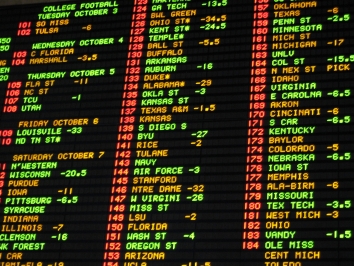
If you want to bet on sports, you will need to find a bookie to take your bet. There are plenty of online casinos and other websites that enable users to bet on a range of sports, but finding the best one can be challenging. Here’s what you need to know to hone straight in on the best betting sites available.
Look to Trusted Websites
Even if you are new to the world of betting, there are almost certainly some bookmakers you have already heard of. As with any industry, there is a handful of betting providers who stand head and shoulders above the rest and have come to dominate the industry. The biggest names in this space are all trustworthy. That doesn't mean that you should restrict yourself only to these behemoths. However, they are the best starting point for new players.
If you aren't sure where to begin your search for trusted websites, there are numerous review aggregators online that will provide you with detailed information about betting providers. Online reviews are an excellent way of evaluating the quality of any website. However, you should remember that the source of a review is just as important as the review itself.
Get Your Odds Elsewhere
Many gamblers advise on using separate websites to find odds and place bets. This is generally out of an abundance of caution. It could be argued that it is in the interests of an online casino to give misleading odds to gamblers.
For example, you can find NFL Odds Online at Odds Shark, while using a completely different website to place the bets.
Consult with Other Punters
If you know anyone else who engages in sports betting, asking them about their provider can significantly speed up your search. Their first-hand experiences are always going to be worth more than an anonymous online review. A key advantage of asking people you know about their experiences is that you have the opportunity to ask any follow-up questions you might have.
Look for Promotions and Special Offers
Now and then, sports betting services will run special offers and other promotions. For example, many online casinos support sports betting. Their special offers often include free credits for players who make a qualifying deposit.
Taking advantage of these special offers whenever you come across them enables you to indulge in sports betting for a fraction of what it would otherwise cost you.
Make Sure They Support the Sport You Want to Bet On
This might sound obvious, but you would be surprised by how many people go through the trouble of signing up to an online casino before they realize that it doesn't even offer the kind of betting that they want. Don’t invest time and money on a website that can’t give you what you need.
If you want to bet on sports online, it is worth taking the time to find a suitable and trustworthy website. There are numerous sports betting websites available online today. Unfortunately, not all of them offer the same level of service. Stick to the advice above, and you should have no trouble avoiding the more unscrupulous providers out there.
How the Patriots can win without Tom Brady in 2021 Super Bowl
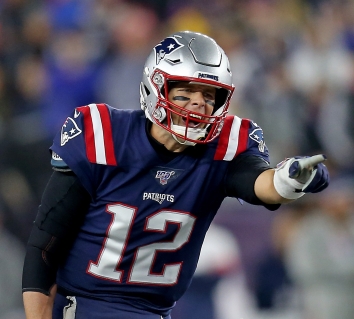
How the Patriots can win without Tom Brady in 2021 Super Bowl
The Patriots have enjoyed Tom Brady for 19 seasons and 5 Super Bowl championships. They’ve won their league 11 times in a row and have gained a reputation as being nearly invincible.
But, 2019 was a change of pace, for the first time the Patriots do longer seemed invincible and they barely came close to the Super Bowl title.
Tom Brady made the move to the Tampa Bay Buccaneersand will surely hope to make the Super Bowl this season.
But, where does that leave the Patriots, should you be checking out free pokiesand put your money on Tampa Bay, or on the Patriots again?
Here’s why it could be worth bucking the trend and putting your money on the Patriots again.
Everything To Prove
For the first time in a long time, the Patriots are not the favorites for a division win. The 2021 season sees them as co-favorites. The Buffalo Bills are in with equally as good a shot.
That simply means the Patriots have everything to prove, that’s a great incentive for upping the game and confirming that they’re a great team, even without Brady.
As an added bonus the final three games of the season will be against the main foes in their division, that’s going to give them a great opportunity to either seal the deal or create a last-minute surprise. With the right attitude, this should be more than possible.
The New Brady
Brady is an icon and a legend. But, he’s also in his forties and nearing the end of his playing days. The Patriots knew they only had him for a limited number of years and his leaving could turn out to be perfect timing.
Cam Newton is currently on a one-year signing with the Patriots. He hasn’t played since 2018 due to a shoulder injury but, keeping COVID-19 aside, he has the potential to lift the Patriot’s game.
He’s known as one of the best running quarterbacks in the game. It will change the way the Patriots play, they’ll need to adopt a ground-and-pound approach. But, that change in style and tactics could be just what the team needs. In short, it will place opponents, still accustomed to Brady’s style, on the wrong foot. The Patriots will have an advantage.
Of course, if Newton doesn’t live up to expectations it’s likely Jarrett Stidham will step up, he has the potential to be the new Tom Brady.
The Team
One element that is easily overlooked is the rest of the team. Brady is amazing but he can’t win any Super Bowl without a solid team. The Patriots offensive and defensive elements work well together. That isn’t going to change with Brady’s departure.
Of course, it’s taken a shaky off-season for them to find their new groove. However, it is extremely likely that we’re going to see a lot more action centered in the defensive line, propelling their game forward. It’s generally considered as the base of the team and will be essential to driving the Patriots to yet another Super Bowl.
Is Derrick Rose a Hall of Famer?
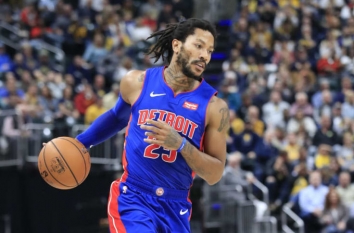
Is Derrick Rose a Hall of Famer?
Derrick Rose was on the path to superstardom in the NBA after being named the MVP of the 2010/11 campaign. The point guard was irrepressible, averaging 25 points per game to become, at the age of 22, the youngest recipient of the award in the history of the game. Rose’s talent brought back shades of Michael Jordan for Chicago Bulls supporters that had been starved of success since the departure of Air Mike and Phil Jackson in 1998.
The Bulls won 62 games in that campaign and were on the path to the NBA Finals, only to be crushed by the big three; LeBron James, Chris Bosh, and Dwyane Wade, at the Miami Heat 4-1 in the Eastern Conference Finals. Rose performed well throughout the postseason, averaging 27.1 points per game to take the fight to the dominance of the Heat, but even the MVP was overwhelmed on the court in the end. However, given Rose's young age there was great hope for his future along with that of the Bulls – with the point guard subsequently signing a five-year $94.8m contract extension in the middle of the following campaign.
Chicago overlooked early injuries that limited Rose to only 39 regular-season games in the 2011/12 season. Disaster then loomed in the first game of the playoffs as the point guard suffered a torn ACL, ruling him out of action for 18 months. He returned for the start of the 2013/14 campaign, but his struggles were evident on the court. No one expected Rose to be dominant straight away and accepted there would a settling in period once again. Luck was to torment the former MVP just when it appeared he was on the right track, falling victim to another serious knee injury. It would be the blow that would end the notion of Rose becoming one of the NBA’s all-time greats.
The Bulls have not recovered since losing the dominance of their point guard. In contrast to the team that lost to the Heat in 2011 in the Eastern Conference Finals, Chicago have not sniffed the Finals since. Miami are competing in the Finals, ironically against LeBron and the Los Angeles Lakers, who are the leading contenders in the odds on NBA betting with bet365 for the title. It was not meant to be for Chicago, who saw a potential all-time talent snatched away due to the cruel fate of injury.
Rose has managed to remain at the court, but not at the standard of the early stages of his career. He has been a useful operator for the Minnesota Timberwolves and last season with the Detroit Pistons in a limited role. He has made the most out of his minutes, notching 18 points per game and using his intelligence and guile to increase the level of his assists. It remains a sad state of affairs that a generational talent has been sidelined to a role off the bench at middling outfits.
The debate whether he will be in the Hall of Fame will be an interesting one. He certainly had an outstanding three-year run that was at the standard required to qualify for the Hall, winning the MVP and three All-Star berths. However, the injuries prevented him from sustaining that level. Perhaps if he could have stretched out a five-year tilt with a couple more All-Star nods then maybe it might have been enough. But on the basis of his current career – Rose will just fall short. It’s an injustice to his talent, but availability and longevity are valuable attributes just as much as quality.
Awards = HOF?: Part Fifty-Two: The Hart Trophy
We here at Notinhalloffame.com thought it would be fun to take a look at the major awards in North American team sports and see how it translates into Hall of Fame potential.
Needless to say, different awards in different sports yield hall of fame potential. In basketball, the team sport with the least number of players on a roster, the dividend for greatness much higher. In baseball, it is not as much as a great individual season does not have the same impact.
Last time, we looked at the Calder Trophy, awarded annually to the top rookie of the year in the NHL. This time we stayed with hockey, with the Hart Trophy, which is their version of the MVP.
So how many Hart Trophy winners have made the Pro Hockey Hall of Fame?
Let’s find out!
The following are the past players who have won the Hart Trophy who are eligible for the Hockey Hall of Fame and have been enshrined.
Frank Nighbor, Ottawa Senators, Center: 11 G, 6 A, 18 P, 3.3 PS 1924
The first Hart Trophy goes to the Ottawa Senators with Frank Nighbor, who prior to the win had led the Sens to two Stanley Cup victories. Nighbor would be a one-time winner of the prestigious Hart, but he won the Lady Byng Trophy the next two seasons, and was third in voting in 1925-26. The following year, Nighbor hoisted the Cup again. The Center’s last NHL Game was in 1930 after finishing up with the Toronto Maple Leafs, and he would have 237 career Points.
Inducted into the Hall of Fame in 1947.
Billy Burch, Hamilton Tigers, Centre: 20 G, 6 A, 26 P, 5.9 PS 1925
In what turned out to be the last year of existence for the Hamilton Tigers, Billy Burch won the only Hart Trophy in franchise existence following a 20 Goal year. Burch and the rest of the Tigers were upset that year that they were not compensated for the expanded season (24 Games to 30), and they demanded $200 compensation or they would not participate in the playoffs. They did not get it, and the Tigers were disqualified. The team basically folded, but the players were sold to a New York group forming the Americans. Burch was heavily marketed in NYC, as he was born in Yonkers (but was raised in Canada), and he won the Lady Byng in 1927. Burch would later play for Boston and Chicago and scored 196 total Points.
Inducted into the Hall of Fame in 1974.
Nels Stewart, Montreal Maroons, Centre: 34 G, 8 A, 42 P, 11.8 PS 1926
Perhaps because the team in which he did this is now defunct (the Montreal Maroons) the rookie year of Nels Stewart is not nearly as celebrated as it should be. Winning the Hart in his rookie year, Stewart became the first player to do so, and he also was atop the NHL leaderboard in Goals (34) and Points (26). He capped off this spectacular regular season by leading the Maroons to the Stanley Cup that year.
Inducted into the Hall of Fame in 1952.
Herb Gardiner, Montreal Canadiens, Defense: 6 G, 7 A, 13 P, 7.7 PS 1927
The Montreal Canadiens first Hart Trophy winner also was the first Defenseman to win this award. Gardiner was technically a rookie, as he was playing in the Western Canada Hockey League for many years with the Calgary Tigers, and at age 35, he is one of the oldest players to win the Hart. Gardiner only played a few more years in the NHL before finishing his playing career in the American Hockey League.
Inducted into the Hall of Fame in 1958.
Howie Morenz, Montreal Canadiens, Centre: 33 G, 18 A, 51 P, 15.9 PS 1928
Morenz was in his fifth season in the NHL (all with the Habs), and he had already won the Stanley Cup as a rookie, and was the Hart runner-up in 1924-25. This season, Morenz was also third in Lady Byng voting, and he was the NHL-leader in Goals (33), Assists (18), Points and (Point Shares (15.9). Morenz’ 15.9 Point Shares was the most by any Hart winner until Bobby Orr in 1970.
Roy Worters, New York Americans, Goalie: 16-12-10 Record 1.15 GAA, 8.2 GPS 1929
Roy Worters played his first three years in the NHL with the Pittsburgh Pirates, but he was one of many players that the soon to fold Pirates sold due to financial problems. Worters, who was the runner-up for the Hart the year before, won the Hart in his first season as a New York American and would have a career-best 1.15 GAA. Worters would later win a Vezina and was a two-time Second Team All-Star.
Inducted into the Hall of Fame in 1969.
Nels Stewart, Montreal Maroons, Centre: 39 G, 16 A, 55 P, 10.1 PS 1930 (2)
Following his rookie year and Hart win, Stewart remained a top NHL Center, but he was not posting the same type of numbers. This was not the case in the 1929-30 season, where he had what was a career-high 39 Goals. Stewart was fifth in Hart voting the year after. Stewart was bever in Hart consideration again, but he did lead the NHL in Goals again in 1936-37, a season split between the Boston Bruins and New York Americans. Stewart’s NHL career ended in 1940, and he had 515 career Points.
Inducted into the Hall of Fame in 1952.
Howie Morenz, Montreal Canadiens, Centre: 28 G, 23 A, 51 P, 10.5 PS 1931 (2)
In between his first and second Hart win, Morenz had a 40 Goal year (1929-30) and was seventh in Hart Voting. Last season and this season, he led Montreal to a Stanley Cup Title, and he was named a First Team All-Star, the first time that this was awarded.
Inducted into the Hall of Fame in 1945.
Howie Morenz, Montreal Canadiens, Centre: 24 G, 25 A, 49 P, 8.2 PS 1932 (3)
Morenz became the first man to win the Hart for the third time, and this would be his last. Named a First Team All-Star this year, Morenz was a Second Team All-Star the year after, and he later played for Chicago and the New York Rangers before returning to Montreal in 1936. He only played 30 Games in his return as he broke his leg, only to die from complications from blood clots. Morenz scored 476 career Points.
Inducted into the Hall of Fame in 1945.
Eddie Shore, Boston Bruins, Defense: 8 G, 27 A, 35 P, 9.8 PS 1933
A Stanley Cup Champion with the Bruins in 1929, Shore was third in Hart voting in both 1927-28 and 1928-29 and was second in 1930-31. This season, Shore was a First Team All-Star for the third year in a row.
Inducted into the Hall of Fame in 1947.
Aurele Joliat, Boston Bruins, Left Wing: 21 G, 15 A, 36 P, 6.5 PS 1934
This was Joliat’s 12thyear in the NHL, and he would play his entire 16 seasons with the Canadiens. The Left Wing had previously won three Stanley Cups, and was a Second Team All-Star this season as he was two years before. The season before that, he was a First Team All-Star for what would be the only time. After his Hart win, Joliat was a Second Team All-Star and he was fifth in Hart voting. Joliat played until 1938, and he finished his NHL career with 463 Points.
Inducted into the Hall of Fame in 1947.
Eddie Shore, Boston Bruins, Defense: 7 G, 26 A, 33 P, 7.7 PS 1935 (2)
Shore was a First Team All-Star for the fourth time and he was a Second Team All-Star the season before. This would mark the first time a Defenseman repeated as the Hart trophy winner.
Inducted into the Hall of Fame in 1947.
Eddie Shore, Boston Bruins, Defense: 3 G, 16 A, 19 P, 6.8 PS 1936 (3)
Shore became the first Defenseman to win three Harts, this was his first back-to-back win. Shore was a First Team All-Star for the fifth time.
Inducted into the Hall of Fame in 1947.
Babe Siebert, Montreal Canadiens, Left Wing/Defense: 8 G, 20 A, 28 P, 3.1 PS 1937
This was the twelfth of fourteen NHL Seasons for the versatile Siebert, who was the first player to win the Hart playing two positions (Left Wing and Defense). Siebert was a First Team All-Star as a Boston Bruin the year before, and this was his second of three straight such honors. Siebert, who had previously won two Stanley Cups (one with the Montreal Maroons and the other with the Rangers), was the second runner-up for the Hart the season after. Siebert had one more NHL season, and he totaled 294 career Points.
Inducted into the Hall of Fame in 1964.
Eddie Shore, Boston Bruins, Defense: 3 G, 14 A, 17 P, 6.3 PS 1936 (4)
Shore’s win made him the first player to win the Hart Trophy, and this was the third season where he led the NHL in Defensive Point Shares. Shore, who was a First Team All-Star for the sixth time, captured that honor again the following year where he was fifth in Hart voting and helped the Bruins win the Stanley Cup. Finishing his NHL career with a brief stint with the New York Americans, Shore had 284 career Points.
Inducted into the Hall of Fame in 1947.
Toe Blake, Montreal Canadiens, Left Wing: 24 G, 23 A, 47 P, 5.7 PS 1939
The Montreal Canadiens became the first team to have five different Hart Trophy winners, with Toe Blake’s lone win in 1939. The Left Wing played his first year with the cross-town Maroons before joining the Canadiens in 1935-36. In 1937-38, Blake was a Second Team All-Star, and he won the Hart the year after where he led the NHL in scoring (47) and earned the first of what would be three First Team All-Stars. Blake would later earn another Second Team All-Star and won a Lady Byng the same year. Blake’s NHL playing career ended in 1948, and he scored 529 Points and won three Stanley Cups as a player. He would later become the Head Coach of the Habs where he led them to eight more Cups.
Inducted into the Hall of Fame in 1966.
Ebbie Goodfellow, Detroit Red Wings, Defense: 11 G, 18 A, 29 P, 6.1 PS 1940
Goodfellow became the first Red Wing to win the Hart, and the career-Red Wing accomplished this in his eleventh of what would be 14 NHL seasons. The blueliner was a First Team All-Star for the second (and last) time, and he would score 326 career Points and win two Stanley Cups.
Inducted into the Hall of Fame in 1963.
Bill Cowley, Boston Bruins, Center: 17 G, 47 A, 64 P, 7.4 PS 1941
Bill Cowley broke in with the St, Louis Eagles as a rookie, but that was the last year of existence for the Eagles, and Cowley was taken by the Boston Bruins in the Dispersal Draft. Cowley’s skills improved as a Bruin and in 1938-39, he was a First Team All-Star, led the NHL in Assists, and led the Bruins to a Stanley Cup win. This year, Cowley was a again a First Team All-Star, and was first in Assists (47) and Points (64). Cowley again took Boston to a Championship this year.
Inducted into the Hall of Fame in 1968.
Bill Cowley, Boston Bruins, Center: 27 G, 48 A, 72 P, 6.3 PS 1943 (2)
World War II took away a lot of the NHL talent, but Cowley was not one of them. This season, Cowley won his third Assists title, was a First Team All-Star for the third time and he led the NHL in Power Play (9) and Game-Winning (6) Goals. Cowley was a First Team All-Star the next two seasons, with him finishing second in Hart voting (1943-44). Cowley was in the NHL until 1947, finishing up with the Bruins and he had 549 career Points in the same amount of Games.
Inducted into the Hall of Fame in 1968.
Babe Pratt, Toronto Maple Leafs, Defense: 17 G, 41 A, 58 P 8.7 PS 1944
Babe Pratt played his first seven years in the NHL with the New York Rangers, where the Defenseman won a Stanley Cup in 1940. Pratt was traded to the Maple Leafs during the 1942-43 season, and in the World War II depleted NHL, he had his best year ever winning the Hart and earning a First Team All-Star nod. Pratt was a Second Team All-Star in 1945 and he helped anchor Toronto win the Stanley Cup. He only played two more years in the NHL, the last as a Boston Bruin and he had 293 career Points.
Inducted into the Hall of Fame in 1966.
Elmer Lach, Montreal Canadiens, Center: 26 G, 45 A, 80 P 7.7 PS 1945
This was the fifth season of Lach’s 14-year career, all of which was as a Montreal Canadian. Lach’s Hart Trophy coincide with him leading the NHL in Assists and Points, and the year was sandwiched in between Second Team All-Star and Stanley Cup wins. Lach would win two more Assists Titles, an Art Ross, two First Team All-Stars and another Stanley Cup before he retired in 1954. He would score 623 Points over his career.
Inducted into the Hall of Fame in 1966.
Max Bentley, Chicago Blackhawks, Center: 31 G, 30 A, 67 P 6.7 PS 1946
It took until this year for a member of the Chicago Blackhawks to win the Hart, which certainly reflects the lack of success Chicago had up to this time. Bentley was in his fourth NHL season, and he was coming off a Lady Byng win. This season, Bentley led the NHL in scoring (61) and Power Play Goals (10), and he was a First Team All-Star for the first and only time. Bentley was a Second Team the year after, and he would later win three Stanley Cups as a member of the Toronto Maple Leafs.
Inducted into the Hall of Fame in 1966.
Maurice Richard, Montreal Canadiens, Right Wing: 31 G, 30 A, 67 P 6.7 PS 1947
We have another Hab who won the Hart, but for many, this is THE HAB. Richard practically owned the Province of Quebec and he had already set the 50 Goal in 50 Games mark in 1944-45, as the game’s first 50 Goal Scorer. He had also already led Montreal to two Stanley Cups, and he was the runner-up for the Hart in that 1944-45 campaign. This season, Richard led the NHL in Goals again (43), and was a First Team All-Star. While Richard never won another Hart, from the 1943-44 Season to the 1956-57 Season, he was either a First Team or Second Team All-Star. He was second in Hart voting twice, was third three times, and he was a four-time Goal Scoring leader. Richard also won six more Stanley Cups, giving him eight in total and he amassed 544 Goals over his career, which was spent entirely with the Canadiens.
Inducted into the Hall of Fame in 1961.
Buddy O’Connor, New York Rangers, Center: 24 G, 36 A, 60 P 6.3 PS 1948
Buddy O’Connor played for Montreal in the six years before where he helped them win two Stanley Cups. 1947-48 was the first season for O’Connor in New York who was traded there in the summer, and he put forth the best year of his life. He posted career highs in Goals (24), Assists (36) and Points (60), and O’Connor.
Inducted into the Hall of Fame in 1988.
Sid Abel, Detroit Red Wings, Center: 28 G, 26 A, 54 P, 7.3 PS 1949
Abel made his NHL debut in the 1938-39 and in 1941-42, he was named a Second Team All-Star. The Center helped the Red Wings win the Stanley Cup the following season, and Abel missed the next two years due to World War II. Abel returned in 1946, and in his Hart Trophy winning year, he was named a First Team All-Star while leading the NHL in Goals (28) and Power Play Goals (8). Abel followed that with a second straight First Team All-Pro, a fourth place finish in Hart voting and helped Detroit win the Cup. Abel won a third Cup in 1952, and played two final NHL seasons with Chicago, concluding a career with 472 Points.
Inducted into the Hall of Fame in 1969.
Chuck Rayner, New York Rangers, Goalie: 28-30-11, 12.3 PS 1950
Chuck Rayner debuted for the New York Americans in 1940, and when the renamed Brooklyn Americans folded, Rayner left the NHL to serve Canada in World War II. Rayner returned in 1945 as a New York Ranger, but like the Americans with whom he played before, the Rangers were not particularly good. The Goalie had a three-year streak from 1948-49 to 1950-51, and his Hart win was in the center year of that run. A knee injury ended his NHL run in 1953, and he while his record was a losing one (138-197-78), he kept many bad teams competitive.
Inducted into the Hall of Fame in 1973.
Milt Schmidt, Boston Bruins, Center: 22 G, 39 A, 61 P, 7.0 PS 1951
Playing his entire career with the Boston Bruins, Schmidt debuted in 1936, and would win the scoring title in 1939-40. Before his Hart win, Schmidt was named a First Team All-Star twice (1940 & 1947) and won two Stanley Cups and had three top five Hart finishes. In his Hart Trophy win, Schmidt was a First Team All-Star, which he followed by a Second Team All-Star with a fourth place Hart finish. Schmidt played three more seasons in the NHL, and would have 575 career Points
Inducted into the Hall of Fame in 1961.
Gordie Howe, Detroit Red Wings, Right Wing: 47 G, 39 A, 86 P, 13.1 PS 1952
This was the sixth NHL season for the legendary Gordie Howe, who had already won a Stanley Cup two years earlier. The Right Wing was a Second Team All-Star in both the 1948-49 and 1949-50 Seasons, the latter of which seeing him win his first Stanley Cup. Howe was a First Team All-Star the year before, and this was his second one. Howe was also on his second straight Art Ross Trophy win this year and would take Detroit to another Stanley Cup Title.
Inducted into the Hall of Fame in 1972.
Gordie Howe, Detroit Red Wings, Right Wing: 49 G, 46 A, 95 P, 15.5 PS 1953 (2)
Following Howe’s first Hart Trophy win, the Right Wing won his third straight Art Ross, and in this year, Howe had a career high in Points with 95. Howe was also on his third straight First Team All-Star and would win the scoring title the year after.
Inducted into the Hall of Fame in 1972.
Ted Kennedy, Toronto Maple Leafs, Center: 10 G, 42 A, 52 P, 5.3 PS 1954
Playing his entire career with the Toronto Maple Leafs, Ted Kenendy was in his 13thof what would be 14 NHL Seasons. Prior to this year, Kennedy was a five-time Stanley Cup Champion, three-time Second Team All-Star, and he led the NHL in Assists in 1950-51. Kennedy was a surprise winner for the Hart this year and with all due respect to Kennedy, this award was more the result of a “lifetime achievement award”, as statistically speaking there were better candidates. Kennedy was also the first Hart winner in the era of post-season All-Star awards not to be named to either a First or Second Team. He retired after the Hart win, but did briefly come back the year after only to retire again. Kennedy left the sport with 560 career Points.
Inducted into the Hall of Fame in 1966.
Jean Beliveau, Montreal Canadiens, Center: 47 G, 41 A, 88 P, 13.0 PS 1956
The year before, Jean Beliveau established himself as a star, winning a First Team All-Star spot. This season, the Center did it again, also capturing the Art Ross Trophy with 88 Points and leading the NHL in Goals (47). In Beliveau’s first Hart Trophy win, he would win the first of what would be ten Stanley Cups.
Inducted into the Hall of Fame in 1972.
Gordie Howe, Detroit Red Wings, Right Wing: 44 G, 45 A, 89 P, 11.8 PS 1957 (3)
In between his second and third Hart Trophy, Howe led the Red Wings to two Stanley Cup Championships. The man who was half-scorer and half/bruiser also had another First and Second Team All-Star in his resume, and this year he secured his fifth First Team All-Star.
Inducted into the Hall of Fame in 1972.
Gordie Howe, Detroit Red Wings, Right Wing: 33 G, 44 A, 77 P, 8.8 PS 1958 (4)
Howe made history in the NHL as the first player regardless of position to be a four-time Hart Trophy winner. This also coincided with his sixth First Team All-Star Selection.
Inducted into the Hall of Fame in 1972.
Andy Bathgate, New York Rangers, Right Wing: 40 G, 48 A, 88 P, 9.9 PS 1959
Bathgate was in his seventh NHL campaign, which up until this time had all been with the New York Rangers. Bathgate was a Second Team All-Star the year before and was also the runner-up for the Hart. This season he was a First Team All-Star, and his 88 Points would be a career-high. Bathgate was again a First Team All-Star in 1962, and a Second Team All-Star in 1963, but he was traded the year after to Toronto where he won his first and only Stanley Cup. Bathgate later played for Detroit and Pittsburgh, and a brief return in Vancouver of the WHA. Overall, Bathgate scored 973 Points.
Inducted into the Hall of Fame in 1978.
Gordie Howe, Detroit Red Wings, Right Wing: 28 G, 45 A, 73 P, 7.4 PS 1960 (5)
Who better than Gordie Howe to become the first Hart Trophy winner of the 1960s? Howe was a Second Team All-Star in between his fourth and fifth Hart win, and he was the first player to be a five-time Hart Trophy winner.
Inducted into the Hall of Fame in 1972.
Bernie Geoffrion, Montreal Canadiens, Right Wing: 50 G, 45 A, 95 P, 11.6 PS 1961
Bernie Geoffrion won the Calder Trophy in 1952, and he was a Second Team All-Star and Art Ross winner in 1954-55. The Right Wing had to wait four more years before he was a post-season All-Star (Second Team in 1959-60), and this season he was finally a First Team All-Star, winning his second Art Ross and first and only Hart. Geoffrion also led the NHL in Goals (50), the second team he accomplished that feat. A six-time Stanley Cup winner, Geoffrion played until 1968, with his last two years playing for the New York Rangers. Geoffrion scored 822 Points over 883 Games.
Inducted into the Hall of Fame in 1972.
Jacques Plante, Montreal Canadiens, Goalie: 42-12-14 Record, 2.37 GAA, 15.6 PS 1962
Jacques Plante made history as the first Goalie in history to wear a facemask but this player was more than just a man who had a footnote in hockey history. Plante was in his tenth season in Montreal where he won his sixth Vezina Trophy, and this was his third First Team All-Star win. Already a six-time Stanley Cup Champion, Plante tied his career-high 42 Wins, and he won his sixth GAA Titles (2.37). His 15.6 Goalie Point Shares, also tied his previous best. Plante played one more year with Montreal and two more with the Rangers for two years before he retired in 1965. Three years later, he came out of retirement with the St. Louis Blues where he won another Vezina. He joined the Toronto Maple Leafs in 1971, where at age 42, he was a Second Team All-Star. Plante finished off his career with stints with Boston and Edmonton in the WHA. He had 437 career Games.
Inducted into the Hall of Fame in 1978.
Gordie Howe, Detroit Red Wings, Right Wing: 38 G, 48 A, 86 P, 9.5 PS 1963 (6)
In what would be the sixth and final Hart trophy win for Gordie Howe, the legend secured had a pair of Second Team All-Star Selections in between his fifth and sixth win. Howe won the Art Ross for the final time in his career and he would later be named a First Team All Star four more times and a Second Team All-Star three more times. Following his last Hart win, Howe had five more Hart Trophy top-five finishes. He retired in 1971, and was inducted into the Hockey Hall the year after, but he would join his sons later in the World Hockey Association, where the HOFer was twice an WHA First Team All-Star. Howe’s last year happened in 1980 when his Hartford Whalers were now in the NHL.
Inducted into the Hall of Fame in 1972.
Jean Beliveau, Montreal Canadiens, Center: 28 G, 50 A, 78 P, 8.7 PS 1964 (2)
In between Beliveau’s first and second Hart win, the Center would be named to four more First Team All-Stars, a Second Team All-Star and would help lead Montreal to four more Stanley Cups. This season, Beliveau was a Second Team All-Star (Stan Mikita was the First Team Center), and even though he was getting older (32), he had a lot left to offer. He played until 1971, winning five more Stanley Cups, earning two more Second Team All-Star selections, and won the Conn Smythe in 1965. Beliveau played his entire career with Montreal and scored 1,219 Points.
Inducted into the Hall of Fame in 1972.
Bobby Hull, Chicago Blackhawks, Left Wing: 39 G, 32 A, 71 P, 9.0 PS 1965
The “Golden Jet” had better seasons before he won his first Hart Trophy, but this doesn’t take away from what was another good year by Bobby Hull. Prior to this win, Hull led the NHL in Goals three times, won the Art Ross twice, and this was his fourth First Team All-Star Selection. Hill also won the Lady Byng this year for the first and only time in his career.
Inducted into the Hall of Fame in 1983.
Bobby Hull, Chicago Blackhawks, Left Wing: 54 G, 43 A, 97 P, 10.6 PS 1966 (2)
Hull went to back-to-back in Hart Trophy wins, and he would again lead the NHL in Goals (54) and won his third and final Art Ross with a 97 Point year. Hull was a First Team All-Star again, and he would be a ten-time First Team All-Star overall. Hull also finished in the top five in Hart voting five other times. In 1972, Hull stunned the hockey world when he signed with the Winnipeg Jets of the World Hockey Association, and he was a three-time First Team All-Star in that league. He was still with the Jets when they merged with the NHL, and he finished off that year with a brief stint as a Hartford Whaler.
Inducted into the Hall of Fame in 1983.
Stan Mikita, Chicago Blackhawks, Center: 35 G, 62 A, 97 P, 10.2 PS 1967
Stan Mikita helped the Blackhawks win the Stanley Cup in 1961 and this was his ninth year of what would be a 22-year run in hockey. Mikita had already been a First Team All-Star four times, and an Art Ross winner twice, and he repeated both of those honors while adding the Lady Byng.
Inducted into the Hall of Fame in 1983.
Stan Mikita, Chicago Blackhawks, Center: 40 G, 47 A, 87 P, 10.0 PS 1968 (2)
Like he did the year before, Mikita won the Hart, Art Ross and Lady Byng, marking the first time that a player did that back-to-back. This was the last season that Mikita was named a First Team All-Star, but he would be a Second Team All-Star in 1970. Mikita played until 1980 in a career spent entirely with Chicago accumulating 1,467 Points.
Inducted into the Hall of Fame in 1983.
Phil Esposito, Boston Bruins, Center: 49 G, 77 A, 126 P, 15.1 PS 1969
Phil Esposito’s 1968-69 season gave fits to the Chicago Blackhawks. Why? Because they traded away the first man to score 100 Points in the NHL two years before. Esposito did not just become the first player to get three digits, he shattered it with 126 Points! He set a then record in Assists (77), and he also led the NHL in Plus/Minus (55). Esposito was a Second Team All-Star the year before, was a First Team All-Star this season, and he added the Art Ross to that trophy case.
Inducted into the Hall of Fame in 1984.
Bobby Orr, Boston Bruins, Defense: 33 G, 87 A, 120 P, 19.5 PS 1970
There have been Defenseman who won the Hart before Bobby Orr, but none of them revolutionized the position. We will go one step further. Orr rewrote the game of hockey. In his fourth pro year, Orr won his third Norris Trophy, and he was the first Defenseman to score 100 Points, and the first to win the Art Ross. He would lead the Bruins to a Stanley Cup win, while also being named the Conn Smythe Trophy winner as the playoff MVP. As spectacular as this year was, the best was yet to come.
Inducted into the Hall of Fame in 1979.
Bobby Orr, Boston Bruins, Defense: 37 G, 102 A, 139 P, 22.8 PS 1971 (2)
Bobby Orr and the Bruins did not repeat as Stanley Cup champions, nor did he win the Art Ross, despite having 139 Points, a career-high, and the all-time record for a Defenseman. What he did do was become the first player to have over 100 Assists (102), and he remains one of two players to do so (the other is Wayne Gretzky). Orr also became the first player to have at least 100 in Plus/Minus, and his +124 is the best all-time. He would also set another record with 22.8 Point Shares, again making him the first player to have 20 in that category and it is also a number that has yet to be matched. The more we look at this year, the more our jaws drop to the floor.
Inducted into the Hall of Fame in 1979.
Bobby Orr, Boston Bruins, Defense: 37 G, 80 A, 117 P, 20.1 PS 1972 (3)
Orr pulled the “three-peat” with the Hart, and of course, he won the Norris Trophy. This was also the third year for Orr where he led the NHL in Assists, and he would do so again in 1973-74 and 1974-75. Orr led the Bruins to another Stanley Cup, where he also grabbed his second Conn Smythe. Over the next three seasons, Orr won his sixth, seventh and eighth Norris Trophy, and he was third for the Hart in all of those years. He would win his second Art Ross trophy in 1974-75, and to date he was the first, last and only blueliner to win that honor. A knee injury derailed his career, and he only scored 55 Points over his final three years in hockey, the latter two being in a Blackhawks uniform. He was fast-tracked into the Hall, and there will never be another Defenseman like him again.
Inducted into the Hall of Fame in 1979.
Bobby Clarke, Philadelphia Flyers, Center: 37 G, 67 A, 104 P, 10.3 PS 1973
For the first time, an expansion team had a player win the Hart when Bobby Clarke took it for the first of three times. The Center, who had won the Bill Masterton Award the year before, was the Second Team All-Star behind Phil Esposito, but bested the Bruin as much of Philadelphia’s success this season was led by Clarke, but the best was coming for Philadelphia and the “Broad Street Bullies”
Inducted into the Hall of Fame in 1987.
Phil Esposito, Boston Bruins, Center: 68 G, 77 A, 145 P, 17.0 PS 1974 (2)
This was Esposito’s second Hart Trophy and had it not been for his teammate, Bobby Orr, he would have easily won at least another. In between his two Hart wins, Esposito won two Stanley Cups, three Art Ross Trophies and he set what seemed at the time to be an unreachable mark of 76 Goals in a season. That year was arguably better than this year, where Esposito won his fifth Art Ross Trophy, was a First Team All-Star for the sixth time, and was also the winner of the Lester B. Pearson. Esposito was also the NHL’s Goal leader for the sixth consecutive season, and this was also the fifth straight year a Bruin won the Hart. The charismatic Center was a Second Team All-Star the year after, and he was then traded to the New York Rangers where he played until he retired in 1981. Esposito accumulated 717 Goals and 1,590 Points over his career.
Inducted into the Hall of Fame in 1984.
Bobby Clarke, Philadelphia Flyers, Center: 27 G, 89 A, 116 P, 11.2 PS 1975 (2)
In between Clarke’s first and second Hart win, Clarke was a Second Team All-Star, but more importantly his Philadelphia Flyers made history as the first expansion team to win the Stanley Cup. Clarke would take them to a second Cup this year, while earning First Team All-Star accolades for the first time. The man with the most famous missing front teeth led the NHL in Assists for the first time with 89.
Inducted into the Hall of Fame in 1987.
Bobby Clarke, Philadelphia Flyers, Center: 30 G, 89 A, 119 P, 11.7 PS 1976 (3)
The Flyers did not win a third Stanley Cup, but Clarke repeated many of his regular season honors from the season before. The Center was a First Team All-Star, again led the NHL in Assists with 89, and he had a career-high in points with 119. Also, for the first time, he was first in the league in Plus/Minus with +83. Clarke was the runner-up for the Hart the year after, and he played the entirety of his career with Philadelphia, retiring in 1984 with 1,210 career Points.
Inducted into the Hall of Fame in 1987.
Guy Lafleur, Montreal Canadiens, Right Wing: 56 G, 80 A, 136 P, 15.7 PS 1977
The Montreal Canadiens were in year two of their four-year dynasty in winning Stanley Cups, and it was Gut Lafleur who was their offensive leader. Lafleur, who also won his second straight Lester B. Pearson Award, captured his second Art Ross and third First Team All-Star Selection. This would be the only season where he won the Conn Smythe as well as leading the league in Assists (80).
Inducted into the Hall of Fame in 1988.
Guy Lafleur, Montreal Canadiens, Right Wing: 60 G, 72 A, 132 P, 15.8 PS 1978 (2)
Lafleur was named a First Team All-Star for the fourth of what would be six straight selections, and would also mark his third and final Art Ross and Lester B. Pearson Award. The Right Wing played with Montreal until he was forced to retire in the 1984-85 Season. After being inducted into the Hockey Hall of Fame, he came out of retirement for three seasons, one with the New York Rangers and two with Quebec. He would retire for good in 1991, leaving the NHL with 1,353 Points.
Inducted into the Hall of Fame in 1988.
Bryan Trottier, New York Islanders, Center: 47 G, 87 A, 134 P, 13.6 PS 1979
Bryan Trottier became the first player in Islanders history to win the Hart Trophy, and you could say it was the siren of what was to come for the franchise. Winning the Calder three years before, Trottier was a First Team All-Star for the second straight year, though this would be the last time he would be one. Nevertheless, Trottier would help lead the Islanders to the four Stanley Cups (1980-83) and was a Second Team All-Star twice. Trottier would later aid the Pittsburgh Penguins win their first two Stanley Cups. He would have 1,425 career Points in the NHL.
Inducted into the Hall of Fame in 1997.
Wayne Gretzky, Edmonton Oilers, Center: 51 G, 86 A, 137 P, 12.6 PS 1980
Buckle up. This is going to take a while as we begin to look at the most prolific Hart Trophy winner ever, Wayne Gretzky. Along with three other WHA teams, the Edmonton Oilers joined the NHL, and with them was Wayne Gretzky, who had only played one year of professional hockey but was already “The Great One”. In his first NHL year, Gretzky led the NHL in Assists (86) and was a Second Team All-Star behind Marcel Dionne, who beat him for the Art Ross (they tied in Points, but Dionne had more Goals). Gretzky also won the Lady Byng this year.
Inducted into the Hall of Fame in 1999.
Wayne Gretzky, Edmonton Oilers, Center: 51 G, 86 A, 137 P, 14.3 PS 1981 (2)
Gretzky might have had stiff competition in Marcel Dionne for the Hart in 1980, but this year he erased all doubt. The Center built on his numbers from the previous year, and he became the second player to accumulate over 100 Assists, with 109, a new record. He missed out on the Art Ross last year, but not this season, winning his first, and along with it, his first First Team All-Star Selection.
Inducted into the Hall of Fame in 1999.
Wayne Gretzky, Edmonton Oilers, Center: 92 G, 120 A, 212 P, 19.7 PS 1982 (3)
92 Goals. When Phil Esposito lit the lamp 76 times, that record seemed unbreakable, but this year, Gretzky had 92 Goals and hit the 50 Goal mark after only 39 Games! Not only the Gretzky set new records in Goal scoring, he broke his own Assists mark (120), and broke the 200 Point plain with his personal best 212. Gretzky also for the first time was the NHL leader in Plus/Minus (+80). This was Gretzky’s second Art Ross and First Team All-Star, but for the first time he won the Lester B. Pearson Award, meaning his peers could no longer deny his talent.
Inducted into the Hall of Fame in 1999.
Wayne Gretzky, Edmonton Oilers, Center: 71 G, 125 A, 196 P, 18.0 PS 1983 (4)
Gretzky was again an offensive juggernaut, and for the third year in a row, he broke the single-season Assists mark. He repeated the awards he won last year, with an Art Ross, Lester B. Pearson and First Team All-Star, but this year he led the Oilers to their first Stanley Cup appearance. They lost to the New York Islanders, but we knew was set to come. Notably, Gretzky became the first player to win the Hart four years in a row.
Inducted into the Hall of Fame in 1999.
Wayne Gretzky, Edmonton Oilers, Center: 87 G, 118 A, 205 P, 19.6 PS 1984 (5)
Imagine having a season where you score 87 Goals, 118 Assists and 205 Points, and none of those are personal highs. Gretzky was just that good. This was Gretzky’s fifth straight Hart (becoming the first to do have five straight), and he also won his fourth Art Ross and First Team All-Star, and he captured his third Lester B. Pearson Award. The coup de gras for Gretzky was leading Edmonton to their first Stanley Cup win.
Inducted into the Hall of Fame in 1999.
Wayne Gretzky, Edmonton Oilers, Center: 73 G, 135 A, 208 P, 19.6 PS 1985 (6)
Gretzky matched his idol’s (Gordie Howe) mark in Hart wins, but unlike Howe, Gretzky did it in six consecutive years. This would be the fourth straight year the Gretzky led the NHL in Goals, and he also set a career-high in Plus/Minus with +100. In regards to his trophy case, Gretzky repeated as the Art Ross winner, Lester B. Pearson winner and First Team All-Star, but this time he added a new award, the Conn Smythe Trophy, as the Oilers won their second Stanley Cup.
Inducted into the Hall of Fame in 1999.
Wayne Gretzky, Edmonton Oilers, Center: 52 G, 163 A, 215 P, 17.0 PS 1986 (7)
Seven straight years. Seven Hart Trophies. A new record for obtaining Hockey’s greatest individual honor. As what was typical for Gretzky, he set another record this season with the most Assists and Points in a season, and does it look like this record has any chance of being broken. Gretzky once again was a First Team All-Star and won the Art Ross again. Sadly, for the Oilers, they were upset along the way in the playoff by the Calgary Flames.
Inducted into the Hall of Fame in 1999.
Wayne Gretzky, Edmonton Oilers, Center: 62 G, 121 A, 183 P, 17.6 PS 1987 (8)
Gretzky did it again with an unprecedented eighth Hart Trophy, and he did so while collecting yet another First Team All-Star and Art Ross while leading the NHL in Goals for the fifth and final time. Gretzky took the Oilers to their third Stanley Cup win, and he would also win the Lester B. Pearson for the fifth and final time.
Inducted into the Hall of Fame in 1999.
Mario Lemieux, Pittsburgh Penguins, Center: 70 G, 98 A, 168 P, 16.2 PS 1988
How do you break an eight-year streak of Hart Trophies by a legend? By inserting a legend. Mario Lemieux brought the Pittsburgh Penguins their first Hart Trophy winner, and playing at Center, he did the unthinkable by unseating Gretzky as the First Team All-Star. Lemieux led the NHL in Goals for the first time, and this year he also notched his first Art Ross and Lester B. Pearson Award.
Inducted into the Hall of Fame in 1997.
Wayne Gretzky, Los Angeles Kings, Center: 54 G, 114 A, 168 P, 14.1 PS 1989 (9)
Gretzky did not win the Hart the year before, which turned out to be the last one in an oilers uniform. He was traded to the Los Angeles Kings, and this was his first year playing in California, where in his ninth (and final) Hart, he also became the first player to win the Hart for two different teams. This season, Gretzky was a Second Team All-Star (behind Mario Lemieux). Gretzky went on to win three more Art Ross Trophies, one more First Team All-Star, four more Second Team All-Stars and four Lady Byngs. After a brief stint with St. Louis in 1996 and three final years with the Rangers, Gretzky retired as the all-time leader in Goals (894), Assists (1,963) and Points (2,857).
Inducted into the Hall of Fame in 1999.
Mark Messier, Edmonton Oilers, Center: 45 G, 84 A, 129 P, 11.3 PS 1990
The Edmonton Oilers traded Wayne Gretzky to the Los Angeles Kings, which meant that Mark Messier would become the Oilers’ leader. Messier did what Gretzky couldn’t without the other…win the Stanley Cup. Messier’s 129 Points were a career-high, and he was named a First Team All-Star this year. What Messier this season should be celebrated a lot more than it is.
Brett Hull, St. Louis Blues, Right Wing: 86 G, 45 A, 131 P, 15.4 PS 1991
Brett Hull led the NHL in Goals for three seasons in a row, and in all three of them, he had at least 70. This was Hull’s highwater mark, and he would also secure the Lester B. Pearson Award. A three-time First Team All-Star, Hull later won a Stanley Cup as a Dallas Star in 1999 and a Detroit Red Wing in 2002. Retiring in 2006, Hull had 527 career Goals.
Inducted into the Hall of Fame in 2009.
Mark Messier, New York Rangers, Center: 35 G, 72 A, 107 P, 9.9 PS 1992 (2)
Messier followed his former teammate, Wayne Gretzky, as a Hart Trophy winner for two different teams. Messier was now the leader of the Rangers, and he was also the winner of the Lester B. Pearson Award and a First Team All-Star. Messier’s leadership would take the Rangers to a 1994 Stanley Cup, and he was so good at that role, that the National Hockey League would create a “Mark Messier Leadership Award”. When he retired, Messier scored 1,887 career Points.
Inducted into the Hall of Fame in 2007.
Mario Lemieux, Pittsburgh Penguins, Center: 69 G, 91 A, 160 P, 16.2 PS 1993 (2)
Before we get to what Lemieux accomplished this season, Lemieux probably should have won the Hart in Gretzky’s last Hart win. The French Canadian was the First Team All-Star, and he was one Point shy of 200 with 85 Goals. Nevertheless, Lemieux went on to win the 1991 and 1992 Stanley Cup, and injuries prevented him from full seasons, which kept the Hart from his grabs. This year, he only played 60 Games, but he won the Art Ross with 160 Points and led the NHL in Plus/Minus (+55). Lemieux would also win the Lester B. Pearson, was a First Team All-Star and he was the Bill Masterton Award winner. Why did he only play 60 Games? Lemieux was diagnosed with Hodgkin’s lymphoma, yet came back to finish the season.
Inducted into the Hall of Fame in 1997.
Sergei Fedorov, Detroit Red Wings, Center: 56 G, 64 A, 120 P, 13.8 PS 1994
Making history as the first non-Canadian and first European to win the Hart, Sergei Fedorov was in his fourth NHL season and this was best statistical season by far. Fedorov was a First Team All-Star, Lester B. Pearson and Frank J. Selke winner this year, and he would later win three Stanley Cups for Detroit. The Russian later won another Selke Trophy and he would later play for Anaheim, Columbus and Washington. Fedorov scored 1,179 career Points.
Inducted into the Hall of Fame in 2015.
Eric Lindros, Philadelphia Flyers, Center: 29 G, 41 A, 70 P, 8.8 PS 1995
The Philadelphia Flyers gave an awful lot to get Eric Lindros, and while it might not have been worth it, it was still a Hart winner. Lindros was a First Team All-Star this year as well as Lester B. Pearson Award winner in this strike-shortened year. Lindros also won his only Art Ross this year, and he was a 1.14 PPG player over his 13 NHL Seasons.
Inducted into the Hall of Fame in 2016.
Mario Lemieux, Pittsburgh Penguins, Center: 69 G, 91 A, 160 P, 16.2 PS 1996 (3)
Before we get to what Lemieux accomplished this season, Lemieux probably should have won the Hart in Gretzky’s last Hart win. The French Canadian was the First Team All-Star, and he was one Point shy of 200 with 85 Goals. Nevertheless, Lemieux went on to win the 1991 and 1992 Stanley Cup, and injuries prevented him from full seasons, which kept the Hart from his grabs. This year, he only played 60 Games, but he won the Art Ross with 160 Points and led the NHL in Plus/Minus (+55). Lemieux would also win the Lester B. Pearson, was a First Team All-Star and he was the Bill Masterton Award winner. Why did he only play 60 Games? Lemieux was diagnosed with Hodgkin’s lymphoma, yet came back to finish the season.
Inducted into the Hall of Fame in 1997.
Dominik Hasek, Buffalo Sabres, Goalie 37-20-10 Record P, 17.2 GPS 1997
Dominik Hasek was already considered one of the best Goalies in Hockey, but this year he was elevated to the best player in the world. This season, Hasek won his third Vezina Trophy and earned his third First Team All-Star, and he was also named the Lester B. Pearson Award winner. Hasek was also first in Save Percentage for the fourth year in the row. He also made history as the first Czech player to win the Hart.
Inducted into the Hall of Fame in 2014.
Dominik Hasek, Buffalo Sabres, Goalie 33-23-13 Record P, 18.6 GPS 1998 (2)
In terms of accolades, Hasek repeated his efforts of 1997 with a Hart, Lester B. Pearson, a Vezina and a First Team All-Star, and he again led the NHL in Save Percentage. Hasek would later win two more Vezina Trophies. In 1999, Hasek took Buffalo on his back and carried them to a Stanley Cup Final. The Czech Goalie grew frustrated and asked for a trade, which he got when he was sent to Detroit. He would win two Stanley Cups with Detroit and then played in Europe, retiring in 2011.
Inducted into the Hall of Fame in 2014.
Chris Pronger, St. Louis Blues, Defense 14 G, 48 A, 62 P, 14.8 PS 2000
Pronger debuted in the NHL with the Hartford Whalers in 1994, and two years later he was a St. Louis Blue and, on his way, to becoming a star. A Second Team All-Star in 1997-98, and two years later he won the Hart and Norris and was a First Team All-Star for the first and only time. Pronger was a Second Team All-Star again in 2003-04, and he joined the Edmonton Oilers as a Free Agent, but he was unhappy there and looked for a trade. He was dealt to Anaheim and helped them win a Stanley Cup and was a Second Team All-Star in 2007. Pronger played until 2012, with his last three years coming as a Flyer. He would accumulate 698 career Points.
Inducted into the Hall of Fame in 2015.
Joe Sakic, Colorado Avalanche, Center 54 G, 64 A, 118 P, 15.9 PS 2001
Sakic was the first Nordiques/Avalanche player to win the Hart, which he did in his 13thseason. Sakic had a career-high 54 Goals, was the NHL leader in Plus/Minus (+45) and he was also the winner of the Lady Byng and the Lester B. Pearson Award. This year, Sakic and the Avs won the Stanley Cup, which was their second, having won it in 1996. The Center was also named a First Team All-Star, and would be again in two of the next three years. Sakic played his entire career with Quebec/Colorado, retiring in 2009 with 1,641 Points.
Inducted into the Hall of Fame in 2015.
Peter Forsberg, Colorado Avalanche, Center 29 G, 77 A, 106 P, 13.6 PS 2003
A Calder winner in 1995, Forsberg had already won two Stanley Cups and was already twice a First Team All-Star. This year, Forsberg was a First Team All-Star for the third and final time, and he was the league-leader in Assists (77), Points (106) and Plus/Minus (+52). He would later play for Philadelphia, Nashville and Colorado before retiring in 2011 with 885 Points in 708 Games.
Inducted into the Hall of Fame in 2014.
Martin St. Louis, Tampa Bay Lightning, Right Wing 38 G, 56 A, 94 P, 13.2 PS 2004
It was a breakout campaign for St. Louis who was in his sixth season, and fourth in Tampa Bay after playing for Calgary in seasons one and two. St. Louis became the first Lightning player to win the Hart, and he also won the Art Ross, was a First Team All-Star and was the NHL leader in Plus/Minus (+35). St. Louis led Tampa to the Stanley Cup that year. After this year, St. Louis was a Second Team All-Star four times, won another Art Ross and would also win three Lady Byng Trophies. He played until 2015, after a year and a half with the Rangers.
Inducted into the Hall of Fame in 2018.
The following are the players who have won the Hart Trophy who are eligible for the Hockey Hall of Fame and have not been selected:
Tom Anderson, Brooklyn Americans, Defense: 12 G, 29 A, 41 P, 6.0 PS 1942
The New York Americans were rebranded the Brooklyn Americans for the 1941-42 Season, and the team was on life support. This would be the final year of existence for the Americans, and they produced an unlikely Hart Trophy winner in Defenseman, Tom Anderson. If Anderson’s numbers seem high for a blueliner, he was also playing at Left Wing. Anderson first made the NHL in 1934 with the Red Wings, but he was with the Americans since 1935. Following the folding of the Americans, Anderson returned to Canada (Calgary) to play semi-pro. Anderson is not only the first player to win the Hart who is not in the Hockey Hall of Fame (we feel safe to say that he won’t ever) but was the first to win the Hart who never played in the NHL in the year after he won it.
Eligible since 1946. Unranked on Notinhalloffame.com.
Al Rollins, Chicago Blackhawks, Goalie: 12-43-7 Record 3.21 GAA, 4.3 PS 1954
Rollins was a Stanley Cup Champion with the Toronto Maple Leafs and he joined the Chicago Blackhawks in 1952. The Goalie joined a bad team, and in this season, he led the NHL in Losses (47) but was the only reason that Chicago was even worse.
Eligible since 1956. Ranked #103 on Notinhalloffame.com.
Jose Theodore, Montreal Canadiens, Goalie: 30-24-10 Record 2.11 GAA, 17.4 PS 1954
This was easily Jose Theodore’s best year in hockey, as not only did the Goalie win the Hart and the Vezina, it was the only time over his career where he finished in the top ten for those awards. Interesting enough, despite winning both the Vezina and Hart, he was a Second Team All-Star at Goalie behind Patrick Roy. Theodore played until 2013, and he was also a member of Colorado, Washington, Minnesota and Florida.
Eligible since 2016. Ranked #184 on Notinhalloffame.com.
Let’s update our tally, shall we?
|
Award in Question |
Percentage of recipients who have entered the HOF |
Percentage of recipients by year who have entered the HOF. |
|
NBA MVP |
100% |
100% |
|
NHL Art Ross |
100% |
100% |
|
NHL Hart Trophy |
93.6% |
96.3% |
|
NBA Finals MVP |
91.3% |
94.9% |
|
NHL Norris |
90.5% |
96.4% |
|
NBA All-Star Game MVP |
89.5% |
91.7% |
|
NHL Conn Smythe |
74.2% |
85.4% |
|
NFL Bert Bell Award |
73.7% |
71.4% |
|
NFL AP Offensive Player of the Year |
73.1% |
79.4% |
|
NFL AP MVP |
68.3% |
74.0% |
|
NFL Walter Payton Man of the Year |
66.7% |
66.7% |
|
NHL Lady Byng |
63.8% |
76.0% |
|
NFL Defensive Player of the Year |
60.8% |
71.1% |
|
NFL Super Bowl MVP |
60.6% |
64.9% |
|
NBA Defensive Player of the Year |
58.3% |
56.5% |
|
NHL Vezina |
57.1% |
66.3% |
|
NBA Rookie of the Year |
56.5% |
56.5% |
|
MLB MVP |
55.0% |
60.2% |
|
NFL Pro Bowl MVP |
52.3% |
54.8% |
|
MLB Lou Gehrig Award |
51.9% |
51.9% |
|
MLB Roberto Clemente Award |
47.4% |
47.4% |
|
NHL Calder Trophy |
46.5% |
46.5% |
|
NBA J. Walter Kennedy Citizenship Award |
46.0% |
46.0% |
|
MLB/NL/AL Cy Young Award |
44.4% |
55.4% |
|
MLB Babe Ruth Award |
37.0% |
39.3% |
|
NHL King Clancy Award |
36.8% |
36.8% |
|
NHL Frank J. Selke Trophy |
33.3% |
36.7% |
|
MLB World Series MVP |
33.3% |
36.8% |
|
MLB Hutch Award |
33.1% |
33.1% |
|
NFL Offensive Rookie of the Year |
28.6% |
28.6% |
|
NHL Bill Masterton Memorial Trophy |
27.9% |
27.9% |
|
MLB Edgar Martinez Award |
26.7% |
17.2% |
|
MLB (NL/AL) Silver Slugger (Designated Hitter) |
25.0% |
30.8% |
|
MLB Comeback Player of the Year |
25.0% |
25.0% |
|
MLB (NL/AL) Silver Slugger (Shortstop) |
23.5% |
52.6% |
|
MLB (NL/AL) Gold Glove |
21.7% |
36.8% |
|
NFL Defensive Rookie of the Year |
20.6% |
20.6% |
|
MLB (NL/AL) Silver Slugger (Catcher) |
20.0% |
22.5% |
|
MLB (NL/AL) Gold Glove (Second Base) |
18.8% |
39.8% |
|
MLB (NL/AL) Gold Glove (Shortstop) |
18.2% |
35.1% |
|
MLB (NL/AL) Silver Slugger (Pitcher) |
18.2% |
20.1% |
|
MLB (NL/AL) Silver Slugger (Second Base) |
16.7% |
32.7% |
|
MLB (NL/AL) Gold Glove (Outfield) |
16.7% |
30.1% |
|
MLB (NL/AL) Silver Slugger (Outfield) |
15.7% |
25.2% |
|
MLB (NL/AL) Gold Glove (Third Base) |
14.3% |
14.3% |
|
MLB (NL/AL) Silver Slugger (Third Base) |
13.6% |
14.3% |
|
MLB (NL/AL) Silver Slugger (First Base) |
13.6% |
13.3% |
|
MLB (NL/AL) Rookie of the Year |
13.3% |
13.3% |
|
MLB (NL/AL) Gold Glove (Catcher) |
10.3% |
15.2% |
|
NBA Most Improved Player of the Year |
5.3% |
3.2% |
|
MLB (NL/AL) Gold Glove (First Base) |
3.8% |
3.2% |
|
NFL AP Comeback Player of the Year |
0.0% |
0.0% |
So, who is up next?
The following are the players who have won the Hart Trophy in the NHL who have retired but have not met the mandatory years out of the game to qualify for the Hockey Hall of Fame:
Henrik Sedin, Vancouver Canucks, Center: 29 G, 83 A, 113 P, 13.5 PS, 2010
Along with his twin brother, Daniel, Henrik Sedin played his entire 17-year career with the Vancouver Canucks, with his best season coming right in the middle of it. Sedin led the NHL in Assists (83) and won his first Art Ross Trophy while earning First Team All-Star honors. Sedin was a First Team All-Star the year later, and he finished with 1,070 Points.
Eligible in 2021.
The following are the players who have won the Hart Trophy who are still active.
Jaromir Jagr, Pittsburgh Penguins, Right Wing 44 G, 83 A, 127 P, 14.6 PS 1998
This was Jagr’s ninth season in the NHL, and they were all spent with the Pittsburgh Penguins. Winning his third Art Ross Trophy, Jagr had career highs in Assists (83) and Points (127), and he was also the Lester B. Pearson winner, an honor he won twice more. The two-time Stanley Cup champion would later play for Washington, New York Rangers, Philadelphia, Dallas, Boston, New Jersey, Florida and Calgary. Still playing in Europe, Jagr scored 1,921 Points in the NHL.
48 Years Old,Playing in Europe.
Joe Thornton, Boston Bruins & San Jose Sharks, Centre: 29 G, 96 A, 125 P, 13.3 PS 2006
In his seventh NHL Season, the Boston Bruins felt that Joe Thornton was not the leader they needed, and Thornton believed that the Bruins brass were not committed to winning. 23 Games into the 2005-06 season, Thronton was traded to San Jose, and he finished the season winning the Art Ross and leading the NHL in Assists. Named a First Team All-Star this year, Thornton had two Second Team All-Star years after this one.
41 Years Old,Playing for the San Jose Sharks.
Sidney Crosby, Pittsburgh Penguins, Center: 36 G, 84 A, 120 P, 13.3 PS, 2007
“Sid the Kid” did not win the Calder, as that went to his longtime rival, Alex Ovechkin. Crosby would however beat him to a Hart win, which he collected in his sophomore season. Crosby would also win his first Art Ross, was named a First Team All-Star, and his peers named him their MVP, when he won the Lester B. Pearson Award. There was a lot more to come for Crosby.
33 Years Old,Playing for the Pittsburgh Penguins.
Alex Ovechkin, Washington Capitals, Left Wing: 65 G, 47 A, 112 P, 17.2 PS 2008
Ovechkin won his first Hart Trophy in his third season, which was also the first by a Washington Capital. A First Team All-Star in all of his seasons to date, Ovechkin also won the Lester B. Pearson Award, the Art Ross Trophy, and the Rocket Richard Award for his 65 Goals.
35 Years Old,Playing for the Washington Capitals.
Alex Ovechkin, Washington Capitals, Left Wing: 56 G, 54 A, 110 P, 14.5 PS 2009 (2)
The Russian Center repeated most of his honors in his back-to-back Hart win. Ovechkin repeated as the Rocket Richard winner, and was a First Team All-Star for his fourth consecutive season. He would also win the Lester B. Pearson Award.
35 Years Old,Playing for the Washington Capitals.
Corey Perry, Anaheim Ducks, Right Wing: 50 G, 48 A, 98 P, 13.3 PS 2011
Perry won the Stanley Cup in his second season, and this, his sixth season in hockey was by far his best. Perry won the Hart, was a First Team All-Star, the Rocket Richard winner, and the first ever Duck to win the MVP. The Right Wing was a First Team All-Star again in 2014, and he played with the Ducks until 2019 where he joined the Dallas Stars afterward.
35 Years Old,Playing for the Dallas Stars.
Evgeni Malkin, Pittsburgh Penguins, Center: 50 G, 59 A, 109 P, 13.4 PS 2012
The first three seasons for Evgeni Malkin was nothing short of stunning. Malkin won the Calder in 2006-07, was a First Team All-Star in all three years, and was the Art Ross Winner in 2008-09, while winning the Stanley Cup and the Conn Smythe. Malkin’s two years after was riddled with injuries, but he made up for it in 2011-12 with a second Art Ross, and his first Hart. Malkin was a First Team All-Star for the fourth time, and he also won the Ted Lindsay Award. He would go on to win two more Cups with Pittsburgh.
34 Years Old,Playing for the Pittsburgh Penguins.
Alex Ovechkin, Washington Capitals, Left Wing: 32 G, 24 A, 56 P, 8.0 PS 2013 (3)
When Ovechkin won his second Hart Trophy in 2009, he was already established as the top goal scorer in hockey. In his third Hart win for years later, nothing had changed. Ovechkin led the NHL in Goals for the third time, and would over the next three years. In 2018, he achieved the ultimate goal and led the Capitals to their first Stanley Cup.
35 Years Old,Playing for the Washington Capitals.
Sidney Crosby, Pittsburgh Penguins, Center: 36 G, 84 A, 120 P, 13.3 PS, 2014 (2)
It was a seven-year gap between Crosby’s first and second Hart Trophy, but he accomplished a lot in that span. Crosby won a Stanley Cup in 2009, and added another First Team All-Star (2013), a Second Team All-Star (2010), a Mark Messier Leadership Award (2010), a Rocket Richard Trophy (2009), and his second Lester B. Pearson (2013), which was now named the Ted Lindsay Award. This season he collected another Art Ross, a Ted Lindsay, and a First Team All-Star Selection. Crosby later won two more Stanley Cups with the Pens in 2016 and 2017.
33 Years Old,Playing for the Pittsburgh Penguins.
Corey Price, Montreal Canadiens, Goalie: 44-16-5 Record, 1.96 GAA, 16.2 PS, 2015
This was the eighth NHL season for Price, who as of this writing has only played for the Montreal Canadiens. Price led the NHL in Wins (44), Save Percentage (.933) and Goals Against Average (1.96), and he not only won the Hart, he also captured the Vezina, William M. Jennings, Ted Lindsay Award, and he was also a First Team All-Star. This is the only year that Price was a post-season All-Star.
33 Years Old,Playing for the Montreal Canadiens.
Patrick Kane, Chicago Blackhawks, Right Wing: 46 G, 60 A, 106 P, 15.0 PS, 2016
This was Kane’s ninth season in the NHL and the Chicago Blackhawk had already accomplished so much before his Hart win. Kane won the Calder, and was already a two-time First Team All-Star, and a three-time Stanley Cup winner. This season, Kane was a First Team All-Star for a third time, and also won his first Art Ross and Ted Lindsay Award. Kane has been a First Team All-Star for a fourth time and earned a Second Team All-Star. He is already a member of the 1,000 Point club.
31 Years Old,Playing for the Chicago Blackhawks.
Connor McDavid, Edmonton Oilers, Center: 30 G, 70 A, 100 P, 12.8 PS, 2017
McDavid was in his second season, where he not only won the Hart, but was the winner of the Art Ross and the Ted Lindsay. This season also brought in the first of three First Team All-Stars and while he was not the Hart winner in 2017-18, he won the Ted Lindsay and Art Ross that year.
24 Years Old,Playing for the Edmonton Oilers.
Taylor Hall, New Jersey Devils, Left Wing: 39 G, 54 A, 93 P, 12.2 PS, 2018
It could be argued that Hall’s Hart Trophy was a bit of a surprise as he while he was a very good player in his first seven seasons, a Hart was not pegged for him by many pundits. This season he was also a First Team All-Star, and he brought the Devils their first Hart Trophy.
28 Years Old,Playing for the Arizona Coyotes.
Nikita Kucherov, Tampa Bay Lightning, Right Wing: 41 G, 87 A, 128 P, 14.6 PS, 2019
Kucherov was in his sixth NHL season (all with Tampa) and he would win not only the Hart but his first Art Ross and Ted Lindsay Award. Kucherov was a First Team All-Star for the Second straight time and the year after he was a Second Team All-Star and led the Lightning win the Stanley Cup in 2020.
27 Years Old,Playing for the Tampa Bay Lightning.
Leon Draisaitl, Edmonton Oilers, Center: 43 G, 67 A, 110 P, 12.8 PS, 2020
Draisaitl’s Hart Trophy win marked the first time that a German player won the most coveted individual award in Hockey. Draisaitl was in his sixth season in hockey (all with Edmonton) and this year he also won the Ted Lindsay, Art Ross, and was a First Team All-Star.
25 Years Old,Playing for the Edmonton Oilers.
For the most part, the Hart Trophy is a way to punch your ticket into the Hockey Hall of Fame.
So, what is up next?
We stay with the NHL and look at the trophy that means just as much as the Hart, and for some players, even more. The Ted Lindsay Award, which is the MVP as voted by the players.
As always, we thank you for your support, and look for that soon.
10 Celebrities with the Most Instagram Followers in 2020
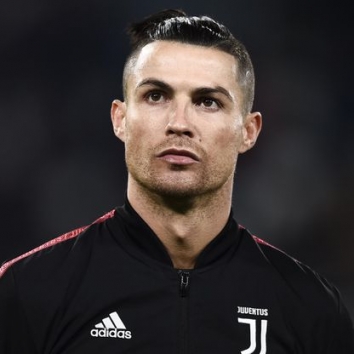
10 Celebrities with the Most Instagram Followers in 2020
There have been lots of changes in almost all areas of people’s lives due to technology. Apart from the emergence of online casino, social media platforms like Instagram are also indicators of how technology has transformed human life. Several celebrities command a massive following because of the content that they post for their followers. These are the top ten celebrities with the most Instagram followers in 2020:
10. Taylor Swift
Taylor Swift is famous for singing and being a cat lady. She is one of the top cat ladies on Instagram and likes posting photos. She is also known to love communicating with her fans through cryptic, hidden terms in her posts. Taylor Swift has got 140.6 million followers.
9. Neymar
Neymar plays as a forward for the Brazil national team and Paris Saint-Germain. He is known to be very down-to-earth and posts lots of memorable shots and gym photos that have attracted many followers to his page. Some of his posts also have his family and friends’ photos. He has 142.4 million followers.
8. Selena Gomez
Selena Gomez is known for being a great singer and actress. She is also known for being a voice over mental health. She has not been so active this year, but you will find many advertisements on her posts. The advertisements are for brands that she always partners with, e.g., Puma and Coach. She has 153.7 million followers.
7. Beyonce
Beyonce is a well-known name in the music industry. She keeps most of her life and family private. You are not likely to find anything personal about her family on her Instagram posts. Most of her posts are photos of her in her best looks. She has 154.9 million followers.
6. Leonel Messi
Messi plays for the Argentina national team and Barcelona as a forward. From his posts on Instagram, you can tell that he is a family man. Messi also loves posting football shots. He has got 167.1 million followers.
5. Kim Kardashian
Kim Kardashian is a celebrity that is known for her long-running reality TV show. Many people know her for her memorable fragrance launches. Kim Kardashian has lots of followers who are always thrilled with her sometimes- naked selfies on Instagram. She also posts pictures of her family. She has 189.2 million followers.
4. Dwayne Johnson “The Rock”
“The Rock,” as he is commonly known, is famous for wrestling and acting. Many people like him because he is down-to-earth. He is also renowned for his body that is so “hard,” and hence the name “Rock.” He always updates his followers on Instagram on his workout program. He has 199.4 million followers.
3. Kylie Jenner
Kylie Jenner is famous for being in the show, ‘Keeping up with the Kardashians.” She is also known to have featured in “Lip Kits”, “Secret Pregnancies” and “Empire-running”. Most of her Instagram photos are completely about her lifestyle, defined by private jets, pools, Lambos, and mansions. She has 196.6 million followers.
2. Ariana Grande
Ariana Grande is famous for acting, singing, and whirlwind romance. She posts pictures that are black and white and vintage. Most of her posts are about concerts and campaigns. She has 203.2 million followers.
1.Cristiano Ronaldo
Cristiano Ronaldo is an international football superstar that is famous for his handsome looks. He has achieved so much in his football career that many believe he will join the contenders’ list for the greatest footballer of all time. He also does suits in his photos that leave him stunning and hence a considerable following that has placed him in the first position this year. He has 238.5 million followers.
Awards = HOF?: Part Fifty-One: The Calder Trophy
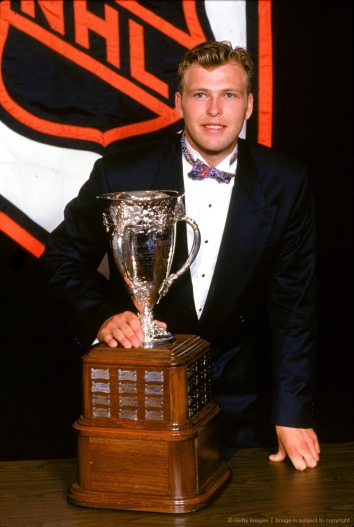
We here at Notinhalloffame.com thought it would be fun to take a look at the major awards in North American team sports and see how it translates into Hall of Fame potential.
Needless to say, different awards in different sports yield hall of fame potential. In basketball, the team sport with the least number of players on a roster, the dividend for greatness much higher. In baseball, it is not as much as a great individual season does not have the same impact.
Last time, we looked at the Walter Payton Man of the Year Award in the NFL. This time we went back to hockey, with the Calder Trophy, given annually to the NHL Rookie of the Year.
So how many Calder Trophy winners have made the Pro Hockey Hall of Fame?
Let’s find out!
The following are the past players who have won the Calder Trophy who are eligible for the Hockey Hall of Fame and have been enshrined.
Carl Voss, New York Rangers & Detroit Red Wings, Center: 8 G, 16 A, 24 P, 2.8 PS 1933
You could argue that we are starting this one with an asterisk, as Voss was not inducted into the Hall of Fame as a player, but as a builder for his work as an Administrator in various minor leagues of hockey. Having said that, don’t sleep on his career as the American born-Canadian raised player was a great athlete, who prior to his NHL career won the Grey Cup in 1924 with Queen’s College and in the minors was a leading scorer (IHL in 1932). Voss had played for the Toronto Maple Leafs for 14 Games in the late 20s, but he finally became a regular on the roster of the New York Rangers for in 1932. Ten Games into the season, he was sold to the Detroit Red Wings, where he proved his worth in the NHL, and was the first ever rookie of the year. Voss later played for the Ottawa Senators, St. Louis Eagles, New York Americans, Montreal Maroons and Chicago Blackhawks, where in his final NHL game, he scored the Stanley Cup winning goal to seal the deal for the 1938 Title. Forced to retire afterward due to a knee injury, Voss would begin his career as an administrator.
Inducted into the Hall of Fame in 1974.
Sweeney Schriner, New York Americans, Left Wing: 18 G, 22 A, 40 P, 4.5 PS 1935
Sweeney Schriner goes down in history as the only Calder Trophy winner in the history of the New York Americans. The Left Wing would lead the NHL in scoring the next two seasons, where he was a First Team All-Star and Second Team All-Star respectively. Later in his career, he was traded to the Toronto Maple Leafs where he won two Stanley Cups and was again a First Team All-Star. Schriner played until 1946, retiring with 407 Points in 484 Games.
Inducted into the Hall of Fame in 1962.
Syl Apps, Toronto Maple Leafs, Centre: 16 G, 29 A, 45 P, 6.1 PS 1937
Apps played all of his career with the Leafs and in his rookie year, he led the NHL in Assists. He did that again as a sophomore, where he was a Second Team All-Star, an accolade he repeated twice more. Apps was also a First Team All-Star twice, a Lady Byng winner, and he was second in Hart Trophy voting three times. The Centre helped to lead Toronto to the Stanley Cup three times and he scored 432 Points in 423 Games.
Inducted into the Hall of Fame in 1961.
Frank Brimsek, Boston Bruins, Goalie: 33-9-1 Record, 1.56 GAA, 11.3 GPS 1939
Frank Brimsek became the second American Goalie to win the Calder, but he shattered the overall success of his predecessor. The Minnesotan was the first player to win the Calder and the Vezina in the same year, and also the first to win the Calder and Stanley Cup in the same season. He led all Goalies in Wins (33), GAA (1.56), Shutouts (10), and Point Shares (11.3), and he was named a First Team All-Star. Brimsek would later win a second Vezina, was a First Team All-Star one more time, a Second Team, All-Star six times and won another Cup in 1941. Brimsek would also play for the Blackhawks, and he retired with 252 Wins and a career 2.70 GAA.
Inducted into the Hall of Fame in 1961.
Edgar Laprade, New York Rangers, Center: 15 G, 19 A, 34 P, 2.9 PS 1946
Laprade played the entirety of his NHL career with the New York Rangers, which would span ten seasons. A clean player, Laprade would win the Lady Byng in 1949/50, and he was seventh in Hart Trophy voting that year. He scored 280 Points, which may not seem like a lot but he was also a skilled defensive forward.
Inducted into the Hall of Fame in 1993.
Terry Sawchuk, Detroit Red Wings, Goalie: 44-12-13 Record, 1.97 GAA, 17.0 PS 1951
The 1950/51 season began one of the most phenomenal half-decades that a Goalie ever had in the NHL. Terry Sawchuk would not only win the Calder in his rookie year, he would also lead the NHL in Wins (44), Goalie Point Shares (17.0), and was a First Team All-Star. Over the next four seasons, the Red Wings Goalie won three Stanley Cups, three Vezinas, two First Team All-Star Selections, two GAA Titles, and four more league-lead in Wins. Following that incredible run, Sawchuk was still a very good Goalie, winning a Vezina in 1964/65, another Stanley Cup in 1967 with Toronto and two Second Team All-Star nods. Over his career, Sawchuk also played for Boston, Los Angeles and New York, and he retired with 350 career Wins.
Inducted into the Hall of Fame in 1971.
Bernie Geoffrion, Montreal Canadiens, Right Wing: 30 G, 24 A, 54 P, 7.4 PS 1952
Geoffrion led the NHL in Power Play Goals as a rookie (10), and he went on to have a long and prosperous career with the Canadiens. The French-Canadian went on to win six Stanley Cups, two Goal Scoring Titles, two Art Ross Trophies and the Hart Trophy in 1961. Geoffrion scored 822 Points over a 883-Game career.
Inducted into the Hall of Fame in 1972.
Gump Worsley, New York Rangers, Goalie: 44-12-13 Record, 1.97 GAA, 17.0 PS 1953
Worsley did the best he could on a poor Rangers team, but the hockey world recognized that the “Gump” was a talented Goalie. Worsley played until the mid-70s, and he would win four Stanley Cups with Montreal where he was also a two-time Vezina Trophy winner. Worlsey played into his mid-40s, where he the charismatic Goalie played for the Minnesota North Stars for his last four years.
Inducted into the Hall of Fame in 1980.
Glenn Hall, Detroit Red Wings, Goalie: 30-24-16 Record, 2.10 GAA, 14.5 PS 1956
How do you replace a legend like Terry Sawchuk? With a legend like Glenn Hall. As a rookie, Hall was a Second Team All-Star, and he led the NHL in Shutouts (12). Hall was a First Team All-Star in his second season, but despite this he was traded to the Chicago Blackhawks after the season. Hall played for Chicago for a decade where he won two Vezinas, was a First Team All-Star five times, and backstopped the Blackhawks to a Stanley Cup win in 1961. Hall joined the expansion St. Louis Blues in 1967 and immediately made them relevant, bringing them to three Stanley Cup appearances, and while they lost them all, Hall was the Conn Smythe winner in 1968. He also won a third Vezina playing in St. Louis. The Goalie played until 1971, and retired with a record of 279-229-107.
Inducted into the Hall of Fame in 1975.
Frank Mahovolich, Toronto Maple Leafs, Left Wing: 20 G, 16 A, 36 P, 4.9 PS 1958
Nicknamed the “Big M”, Mahovolich had a decent rookie year, but would morph into one of the leaders of a powerful Toronto squad that won four Stanley Cups in the 1960s. In this period, Mahovolich was a two-time First Team All-Star and four-time Second Team All-Star, and had two top-five finishes for the Hart. Following Toronto’s last Cup win in 1967, Mahovolich was traded to Detroit during the 1967/68 season, and he added a pair of Second Team All-Stars in Motown. He later played for Montreal, where he won the Stanley Cup twice more with another First Team All-Star etched on his resume. Mahovolich had 1,103 Points in the NHL, and he also had four pro seasons in the WHA where he scored 232 Points.
Inducted into the Hall of Fame in 1981.
Bill Hay, Chicago Blackhawks, Centre: 18 G, 37 A, 55 P, 4.9 PS: 1960
Hay did well as a rookie, and played a significant role on the Chicago team that won the Stanley Cup the year after. Hay eclipsed his 55 Point Rookie year three times and led the NHL in Assists per Game in 1961/62. Hay played his entire NHL career with the Blackhawks, collecting 386 career Points. We will count this as while Hay did not have a Hall of Fame career as a player, he was inducted as a builder for his work as the past President and CEO of the Calgary Flames and as the Hockey Hall of Fame Chairman.
Inducted into the Hall of Fame in 2015 as a Builder.
Dave Keon, Chicago Blackhawks, Centre: 20 G, 25 A, 45 P, 4.2 PS: 1961
After Keon’s Calder winning season, he became a core part of the Maple Leafs squad that won four Stanley Cups, so much so that he won the Conn Smythe Trophy in 1967 as the playoff MVP. Keon would be a two-time Second Team All-Star, and he won the Lady Byng in consecutive seasons in 1962 and 1963. Keon bolted for the WHA in 1975, playing for Minnesota, Indiana and New England, rejoining the NHL, when the Whalers were one of the four teams that merged with the senior hockey circuit. Keon retired in 1982 with 986 NHL Points and 291 WHA Points..
Inducted into the Hall of Fame in 1986.
Jacques Laperriere, Montreal Canadiens, Defenseman: 2 G, 28 A, 30 P, 6.7 PS: 1964
Laperriere had a great rookie campaign as he not only won the Calder but was named a Second Team All-Star. Playing all 12 years of his NHL career with the Habs, the Defenseman was a First Team All-Star the two years after his rookie season, and was the Norris Trophy winner in 1965/66. Laperriere helped Montreal win five Stanley Cups, and was a one-time leader in Plus/Minus.
Inducted into the Hall of Fame in 1987.
Bobby Orr, Boston Bruins, Defenseman: 13 G, 28 A, 30 P, 6.7 PS: 1964
Orr was a Second Team All-Star in his rookie season and was third in Norris Trophy voting. It was a good year, but it did not accurately foreshadow what Orr would accomplish. Over the next eight seasons, Orr was an annual First Team All-Star and Norris Trophy winner. He won three straight Hart Trophies (1970-72), two Stanley Cups, and was the first Defenseman to lead the NHL in scoring; which he did twice! Orr transformed what Defenseman could do, and some will argue that he is not just the greatest blueliner of all-time, but the best hockey player ever!
Inducted into the Hall of Fame in 1979.
Tony Esposito, Chicago Blackhawks, Goalie: 38-17-8 Record, 2.17 GAA, 14.7 GPS: 1970
Esposito played 13 Games the previous year with the Montreal Canadiens and the Blackhawks claimed him in the Intraleague Draft (basically, waivers). Esposito had a monster rookie year where he led the NHL in Wins (38), Save Percentage (.932) and Shutouts (15) and he was a First Team All-Star and a Vezina Trophy win. Esposito played his entire career with Chicago and he went on to win two more Vezina, two First Team All-Stars and two Second Team All-Stars. The Goalie would have 302 career Wins.
Inducted into the Hall of Fame in 1988.
Gilbert Perreault, Buffalo Sabres, Centre: 38 G, 34 A, 72 P, 6.5 GPS: 1971
Perreault was the first Buffalo Sabre to win the Calder, and two years later he won the Lady Byng. The French-Canadian played his entire career with Buffalo where he was a two-time Second Team All-Star and exceed the 100 Point mark twice. Perreault scored 1,326 Points over 1,191 Games.
Inducted into the Hall of Fame in 1990.
Ken Dryden, Montreal Canadiens, Goalie: 39-8-15 Record, 2.24 GAA, 15.0 GPS: 1972
Dryden did this backwards, as he was already a legend BEFORE he completed his rookie year. Late in the 1970/71 season, he replaced the injured Rogie Vachon, and he was astounding. Dryden backstopped the Habs to a Stanley Cup win where he won the Conn Smythe, thus becoming the first player to win the Conn Smythe before the Calder. In that Calder Trophy winning season, he was a Second Team All-Star, the runner-up for the Hart and the league-leader in Wins (39). Dryden played until 1979 where he led the NHL three more times in Wins, five First Team All-Stars, five Vezinas, and five more Stanley Cups. Dryden was the top Goalie of the 1970s and he had a career record 258-57-74 with a 2.24 GAA.
Inducted into the Hall of Fame in 1983.
Denis Potvin, New York Islanders, Defenseman: 17 G, 37 A, 54 P, 8.7 PS: 1974
Easily the best Defenseman in Islanders history, Potvin was the first player in Long Island to win the Calder and he was the first building block that would become the Islanders dynasty in the early 1980s. Potvin played all 15 years of his career with New York, was a First Team All-Star five times, two Second Team All-Stars and won three Norris Trophies. He scored 1,052 career Points.
Inducted into the Hall of Fame in 1991.
Bryan Trottier, New York Islanders, Centre: 32 G, 63 A, 95 P, 8.6 PS: 1976
Above was the first piece of the Islanders dynasty, Denis Potvin. Here is the second one, Bryan Trottier. The Centre set a then record for rookies with 95 Points, and he would become one of the top scorers in the NHL. Trottier would win the Hart and Art Ross in 1978/79, and the year after he won the Conn Smythe in New York’s first of four straight Stanley Cups. A two-time First Team and two-time Second Team All-Star, Trottier played the late stages of his career with the Pittsburgh Penguins, where he won two Stanley Cups as an elder statesman. Trottier scored 524 Goals and 1,425 Points.
Inducted into the Hall of Fame in 1997.
Mike Bossy, New York Islanders, Right Wing: 32 G, 63 A, 95 P, 8.6 PS: 1976
This of this for a second. With the Calder win of Bossy, there were three Islander Calder winners in a five-year period, all of whom would enter the Hockey Hall of Fame. Is it any wonder that this trio led the Islanders a four-Cup dynasty? Bossy was the first Calder winner to net over 50 Goals, and was a Second Team All-Star. Bossy went on to win two Goal-scoring titles, five First Team All-Stars, three Lady Byngs and a Conn Smyth. Injuries forced him out at the age of 30, but he still retired with 573 Goals and 1,126 Points.
Inducted into the Hall of Fame in 1990.
Ray Bourque, Boston Bruins, Defenseman: 32 G, 63 A, 95 P, 8.6 PS: 1980
Bourque was a First Team All-Star as a rookie, and he earned that honor 12 more times in his career. Also, a three-time Second Team All-Star, Bourque won the Norris Trophy five times, and he NEVER had a year where he did not finish at least seventh in voting. Bourque was Boston hockey for nearly two decades, but he never won the Stanley Cup as a Bruin. In what would be his penultimate NHL season, Bourque was traded to Colorado to chase the Holy Grail of Hockey. The season after that trade, Bourque and the Avalanche won the Cup, and as happy as Denver was, Boston fans were just as happy for their beloved former star. In a 21-year career, the Montreal native scored 1,579 Points, the most ever by a Defenseman.
Inducted into the Hall of Fame in 2004.
Peter Stastny, Quebec Nordiques, Centre: 39 G, 70 A, 109 P, 8.6 PS: 1981
This was a groundbreaking Calder Trophy win. Peter Stastny was the first Quebec Nordique/Colorado Avalanche to win, the first from a former WHA team to win, the first to score over 100 Points, but most importantly, he was the first European to win the Calder. Stastny was a superstar for the Czechoslovakian National Team and he defected to Canada to play for the Nordiques. Stastny had six more 100 Point years (all with Quebec) and had 1,239 over his 15 NHL seasons.
Inducted into the Hall of Fame in 1998.
Dale Hawerchuk, Winnipeg Jets, Centre: 45 G, 58 A, 103 P, 8.6 PS: 1981
From one former WHA team to another we go from Quebec City to Winnipeg, with Dale Hawerchuk, the first superstar for the team in their NHL era. Hawerchuk had 103 Points as a rookie, and hit the three-digit Point mark five more times, all as a Jet. Hawerchuk was a Second Team All-Star in 1984/85 and he was second behind Wayne Gretzky for the Hart. Also playing for Buffalo, St. Louis and Philadelphia, Hawerchuk scored 1,409 Points in 1,188 Games.
Inducted into the Hall of Fame in 2001.
Mario Lemieux, Pittsburgh Penguins, Centre: 43 G, 57 A, 100 P, 7.5 PS: 1985
Mario Lemieux is a player who saved an NHL franchise twice. The first was in his Calder season where he instantly lived up to the hype, and became at one time the best player in the league. Remember, this was no small task, as it was Wayne Gretzky who he had to dethrone. Lemieux captured the Hart Trophy three times, the Art Ross six times, and was a First Team All-Star five times. Lemieux took the Pens to two Stanley Cup wins, he overcame cancer, and then he saves the team again. With the Penguins in financial despair, he worked out the remaining money owed to him and worked out a deal to buy the team. He played again, becoming the first owner/player in the modern era, and as an owner he won three more Cups. Lemieux scored 1,723 Points in 915 Games.
Inducted into the Hall of Fame in 1997.
Luc Robitaille, Los Angeles Kings, Left Wing: 45 G, 39 A, 84 P, 6.8 PS: 1985
Robitaille was a Second Team All-Star as a rookie, and he would be a First Team All-Star five of the next six seasons. The Left Wing exceeded the 100 Point plateau four times and while he played most of his career with Los Angeles, he won a Stanley Cup with the Detroit Red Wings in 2002. Robitaille also played for the Penguins and the Rangers, and he scored 1,394 career Points, 1,154 of which as a King.
Inducted into the Hall of Fame in 2009.
Joe Niewendyk, Calgary Flames, Centre: 51 G, 41 A, 92 P, 8.7 PS: 1988
It is possible to claim that Nieuwendyk’s Calder winning season was his best regular season in hockey. He scored 51 Goals, his career-best and he tied that mark as a sophomore. Nieuwendyk also was first in Power Play Goals as a rookie. If it is in fact the case that Nieuwendyk never matched his skill level in his first two years like other Calder winners, the Centre did however remain at a high tier for years and he amassed a long career where he scored 1,126 Points. Niewendyk helped take Calgary to a Stanley Cup win in 1989 and later in a renaissance performance in 1999, he won the cup again as a Dallas Star where he won the Conn Smythe. He also played for New Jersey, Toronto and Florida.
Inducted into the Hall of Fame in 2011.
Brian Leetch, New York Rangers, Defense: 23 G, 48 A, 71 P, 9.0 PS: 1989
One of the best American Defenseman in hockey history, Leetch was also the best blueliner in the team history of the New York Rangers. With New York, Leetch was a two-time Norris Trophy winner, was a two-time First Team All-Star and a three-time Second Team All-Star. These were great things to put in a trophy case, but it was the Conn Smythe Trophy he won when he anchored that Rangers to the 1994 Stanley Cup. Leetch would play until 2006 and scored 1,028 Points, 981 of which were as a Ranger.
Inducted into the Hall of Fame in 2009.
Sergei Makarov, Calgary Flames, Right Wing: 24 G, 62 A, 86 P, 6.8 PS: 1990
It was not that Sergei Makarov did not deserve the Calder. Statistically speaking, he did. The backlash was that he as 31 Years Old, and a top flight player from the Soviet Red Army, so his experience level was through the roof. Makarov is the only player to win the Calder Trophy, who did so AFTER his peak. He played in the NHL until 1997 with 384 career Points. Makarov entered the Hockey Hall but it was mostly for his work in the former Soviet Union.
Inducted into the Hall of Fame in 2016.
Ed Belfour, Chicago Blackhawks, Goalie: 43-19-7 Record, 2.47 GAA, 14.0 GPS: 1991
Belfour’s rookie season would not just see him win the Calder, as he was also the Vezina Trophy winner, William M. Jennings winner, and a First Team All-Star. Belfour led all the Goalies in Wins (43), Saves (1,713), Save Percentage (.910) and Goals Against Average (2.47). Belfour went on to win another Vezina, three more Jennings, a First Team All-Star, a Second Team All-Star and a Stanley Cup with the Dallas Stars. The Goalie also played for San Jose, Toronto and Florida. Belfour had a career record of 484-320-126.
Inducted into the Hall of Fame in 2011.
Pavel Bure, Vancouver Canucks, Right Wing: 34 G, 26 A, 60 P, 5.7 PS: 1992
After a good rookie year, Bure but up back-to-back 60 Goal years, the second one being good enough to lead the NHL, and land him a First Team All-Star nod. Bure later played for Florida, where he had two more league-leading seasons in Goals, both of which were Second Team All-Star worthy. Bure finished his NHL career in 2003, and he had 779 Points in only 702 Games.
Inducted into the Hall of Fame in 2012.
Teemu Selanne, Winnipeg Jets, Right Wing: 76 G, 56 A, 132 P, 13.4 PS: 1993
A case can be made that Teemu Selanne’s debut season was the best ever by a non-Gaolie. Selanne set a rookie record with 76 Goals, and he was a First Team All-Star. Selanne never matched that total, but he had a long and fruitful career, where he led the NHL twice more in Goals, was a First Team All-Star a second time, was a two-time Second Team All-Star, and a Stanley Cup Champion with the Ducks. Selanne also played for San Jose and Colorado, and would score 1,457 Points over his 21-year career.
Inducted into the Hall of Fame in 2017.
Martin Brodeur, New Jersey Devils, Goalie: 27-11-8 Record, 8.9 GPS: 1994
The career of Martin Brodeur is nothing short of outstanding. Following his Calder win, he captured three Stanley Cups, four Vezina Trophies, five William M. Jennings Trophies, and was a three-time First Team and Second Team All-Star. Brodeur led the NHL in Wins nine times, and was the league-leader in GAA once. When Brodeur retired, he had the “W” 691 times, more than anyone Goalie. And he is also the all-time leader in Saves (28,928), Shutouts (125) and Minutes Played (74,439).
Inducted into the Hall of Fame in 2018.
Peter Forsberg, Quebec Nordiques, Centre: 15 G, 35 A, 50 P, 5.0 GPS: 1995
Eric Lindros refused to play for the Quebec Nordiques when they drafted him and after sitting out a year, Quebec traded him to Philadelphia for a glut of picks, players and the rights to a Swedish Center named Peter Forsberg. We can argue that Forsberg was the best player in the transaction. Forsberg went on to help Colorado (Quebec relocated) win two Stanley Cups and individually he won the Hart and Art Ross Trophy in 2002/03. He was also a three-time First Team All-Star and he retired with 885 Points in only 708 Games. Forsberg also played for Philadelphia and Nashville.
Inducted into the Hall of Fame in 2014.
The following are the players who have won the Calder Trophy who are eligible for the Hockey Hall of Fame and have not been selected:
Russ Blinco, Montreal Maroons, Center: 14 G, 9 A, 23 P, 4.1 PS 1934
Unless the Montreal Maroons are suddenly resurrected, Russ Blinco will be the only member of this long defunct franchise to win the Calder. Blinco would help the Maroons win the Stanley Cup the following year, where he was also the runner-up for the Lady Byng. He played for Montreal three more years, and had one more season with the Chicago Blackhawks before he retired. Blinco had 125 Points over his six-year career.
Eligible since 1942. Unranked on Notinhalloffame.com.
Mike Karakas, Chicago Blackhawks, Goalie: 21-19-8 Record, 1.85 GAA, 9.5 GPS 1936
Karakas made history as the first American born and raised to win the Calder, and he was also the first Goalie to win the award. For that matter, he was also the first American born and raised Goalie in the NHL. Karakas would play until 1946, with all but five of his games played in a Chicago uniform. He won a Stanley Cup in 1938.
Eligible since 1949. Unranked on Notinhalloffame.com.
Cully Dahlstrom, Chicago Blackhawks, Centre: 10 G, 9 A, 19 P, 1.3 PS 1938
Dahlstrom made it back-to-back for American born Calder winners, and the Centre would play his entire eight-year career with the Blackhawks. The Calder would be the only individual honor that Dahlstrom would win on the professional level, but his name was etched on the Stanley Cup when Chicago won it all in 1938. Dahlstrom scored 206 Points in 345 career Games.
Eligible since 1948. Unranked on Notinhalloffame.com.
Kilby MacDonald, New York Rangers, Centre: 15 G, 13 A, 28 P, 3.8 PS 1938
The sky might have seemed to be the limit for Kilby MacDonald, as he not only won the Calder Trophy, he also hoisted the Stanley Cup over his head in his rookie season. That would not be the case for MacDonald, who never matched his rookie year, and was sent down to the minors shortly after before joining the Canadian Army. He made it back to the Rangers in 1943, playing two more years before going back to the minors. MacDonald only had 79 career Points.
Eligible since 1948. Unranked on Notinhalloffame.com.
John Quilty, Montreal Canadiens, Centre: 18 G, 16 A, 34 P, 3.9 PS 1941
Quilty’s rookie year was by far his best, as he never came close to these numbers again. World War II would see Quilty leave the NHL for the Canadian Army, and he missed several years, returning for three Games in 1946-47. He played only one more year in the NHL, splitting time between Montreal and Boston, but he was not playing at an NHL worthy level. A compound fracture of his leg resulted in his retirement, and Quilty would only have 70 career Points.
Eligible since 1951. Unranked on Notinhalloffame.com.
Grant Warwick, New York Rangers, Right Wing: 16 G, 17 A, 33 P, 3.0 PS 1942
Like the previous two Calder winners, Grant Warwick likely won’t get into the Hockey Hall of Fame, however unlike those two individuals, Warwick did not peak as a rookie. The Saskatchewan native would not miss time due to World War II, and he exceeded his rookie Point total six times. Warwick would also play for Boston and Montreal in his career, and in 1955, he was the player/coach on the Canadian Team that won the World Hockey Championship. The Right Wing scored 289 career Points.
Eligible since 1953. Unranked on Notinhalloffame.com.
Gaye Stewart, Toronto Maple Leafs, Left Wing: 24 G, 23 A, 47 P, 4.0 PS 1943
After Gaye Stewart won the Calder (and the Stanley Cup), he went into the Canadian Military to serve in World War II. The Left Winger came back for the 1945/46 Season and promptly built on his rookie year as if he never left, leading the NHL in Goals (37) was a First Team All-Star, and was the runner-up for the Hart. Stewart’s production dipped the following year, but he helped Toronto win another Stanley Cup. After a poor start in 1947/48 he was traded to Chicago and rebounded with a Second Team-All-Star nod, which was the last one he had. He would later play for Detroit, New York and Montreal, and had 344 Points in his nine-year career.
Eligible since 1956. Ranked #145 on Notinhalloffame.com.
Gus Bodnar, Toronto Maple Leafs, Centre: 22 G, 40 A, 62 P, 4.5 PS 1944
Bodnar likely got an early opportunity to earn an NHL spot due to the World War II depletion of talent. That might be why he never eclipsed his rookie totals, but he had a long 12-year career and won two Stanley Cup Rings (1945 & 1947) with the Toronto Maple Leafs. Bodnar also played for Chicago and Boston, and he would accumulate 397 Points.
Eligible since 1958. Unranked on Notinhalloffame.com.
Frank McCool, Toronto Maple Leafs, Goalie: 24-22-4, 3.22 GAA, 10.1 GPS 1945
There may never be another player who won the Calder Trophy who had a career as brief as Frank McCool. Playing at Goalie, McCool was the third straight Maple Leaf to win the Calder, and this year he backstopped Toronto to a Stanley Cup win. He played only 22 Games the following year, only to retire abruptly due to severe ulcers. We can’t imagine another Calder winner with only 72 Games Played in his career.
Eligible since 1949. Unranked on Notinhalloffame.com.
Howie Meeker, Toronto Maple Leafs, Right Wing: 27 G, 18 A, 45 P, 5.3 GPS: 1947
Meeker was the fourth Maple Leaf in five years to win the Calder, and his 45 Point year turned out to be the best of his career. Meeker would win the Stanley Cup as a rookie, and twice again in 1948 and 1951. Meeker would go onto greater fame as a broadcaster in Hockey night in Canada as an analyst for over twenty-five years. He would score 185 Points over 346 Games.
Eligible since 1958. Unranked on Notinhalloffame.com.
Jim McFadden, Detroit Red Wings, Centre: 24 G, 24 A, 48 P, 5.7 GPS: 1948
McFadden became the first Detroit Red Wing to win the Calder, and like so many before him, the Centre set personal bests in scoring (48) as a rookie. McFadden won the Stanley Cup with Detroit in 1950, and he would also play for the Blackhawks. His NHL career ended in 1954, and he would score 226 Points over seven seasons.
Eligible since 1957. Unranked on Notinhalloffame.com.
Pentti Lund, New York Rangers, Right Wing: 14 G, 16 A, 30 P, 2.6 PS: 1949
Here is something you wouldn’t think was true. The first Scandinavian born player to win a major individual award took place before 1950. Granted, that player was Finnish-born Pentti Lund, who immigrated to Canada as a six-year-old, so it doesn’t count for the most part, but he was the first nevertheless. Lund never won another accolade in the NHL, and he lasted a total of five seasons, three with New York and two with Boston. He would score 77 Points in his career.
Eligible since 1956. Unranked on Notinhalloffame.com.
Jack Gelineau, Boston Bruins, Goalie: 22-30-15, 3.28 GAA, 7.3 GPS: 1950
Gelineau played four games for the Bruins in 1948/49 and took over as the top netminder for the Boston Bruins the following year, where despite the losing record, he had a good rookie year keeping the Bruins competitive. Gelineau had an even better sophomore year, but when he sought a raise from Bruins ownership he was rebuffed. Rather than stay in Boston, he returned to his native province of Quebec, where he played a few years in the provincial league for a few seasons, save for two games in 1954 with Chicago.
Eligible since 1956. Unranked on Notinhalloffame.com.
Camille Henry, New York Rangers, Centre: 24 G, 15 A, 39 P, 5.4 PS: 1954
20 of Henry’s 24 Goals were on the power play, and it was enough to lead the NHL. Henry struggled the next two seasons, and was demoted to the minors. He returned to again lead the NHL in Power Play Goals twice, and in 1957/58 he was a Second Team All-Star and Lady Bing winner. Henry played most of his career with New York, finishing his professional run with Chicago and St. Louis. He would have 478 Points.
Eligible since 1973. Ranked #201 on Notinhalloffame.com.
Ed Litzenberger, Montreal Canadiens and Chicago Blackhawks, Centre: 23 G, 28 A, 51 P, 5.8 PS: 1955
It was a unique rookie year for Litzenberger, who began the year as a Montreal Canadian, but was donated early in the season to the Chicago Blackhawks in an effort to help save the team from folding. Litzenberger played 29 Games that year in Montreal, scoring 11 Points, but he went on to have 40 Points in 44 Games to conclude the season in Chicago. Litzenberger went on to have three 60-plus years with the Blackhawks, and would win four Stanley Cups; one with Chicago and three with the Toronto Maple Leafs. He retired with 416 career Points.
Eligible since 1967. Ranked #190 on Notinhalloffame.com.
Ralph Backstrom, Montreal Canadiens, Centre: 18 G, 22 A, 40 P, 3.8 PS: 1959
In Backstrom’s Calder Trophy winning year with the Montreal Canadiens, he was a member of the Stanley Cup Championship Team. Providing good two-way hockey for years, Backstrom won five more Cup with the Habs. He would later play for Los Angeles and Chicago, before moving to the WHA with stints with Chicago, Denver, Ottawa and New England. Backstrom had 639 NHL Points and 253 WHA Points.
Eligible since 1980. Ranked #33 on Notinhalloffame.com.
Bobby Rousseau, Montreal Canadiens, Right Wing: 21 G, 24 A, 45 P, 4.5 PS: 1962
In his rookie year, Bobby Rousseau had four Short-Handed Goals, which was enough to lead the NHL. Rousseau did not do that again, but he found a niche in the powerful Montreal Canadiens team that won four Stanley Cups in the 1960s. During his stint in Montreal, Rousseau was a Second Team All-Star and league-leader in Assists in 1965/66. When the decade ended, Rousseau was a Minnesota North Star for one season and a New York Ranger for four before retiring in 1975. Bobby Rousseau Rousseau scored 703 Points over a 942-Game career.
Eligible since 1978. Ranked #158 on Notinhalloffame.com.
Kent Douglas, Toronto Maple Leafs, Defenseman: 7 G, 15 A, 22 P, 6.6 PS: 1963
It took 30 years for the Calder Trophy to be awarded to a Defenseman, and again it went to a Toronto Maple Leaf. A relatively late arrival to the NHL (he was 26), Douglas led the NHL in Defensive Point Shares as a rookie (5.1), but it would be the only time he would do so. Douglas won the Stanley Cup as a rookie, and technically did two more times, but he was not on those post-season rosters, which reflects that his best season was as a rookie. He would also play for Oakland, Detroit and the New York Raiders of the WHA.
Eligible since 1976. Unranked on Notinhalloffame.com
Roger Crozier, Detroit Red Wings, Goalie: 40-22-7 Record, 2.42 GAA, 14.4 PS: 1965
Roger Crozier did not just win the Calder, as he was a First Team All-Star, and the NHL leader in Wins (40), Shutouts (6) and Goalie Point Shares (14.4). The Red Wings Goalie would take the Red Wings to the Stanley Cup Finals the next season against the heavily favored Montreal Canadiens. Montreal won, but Crozier was spectacular and he became the first Conn Smythe winner on a losing team. Crozier’s career went downhill after, but he played until 1977 with stints in Buffalo and Washington. He had a career record of 206-194-72.
Eligible since 1980. Unranked on Notinhalloffame.com
Brit Selby, Toronto Maple Leafs, Left Wing: 14 G, 13 A, 27 P, 2.0 PS: 1966
While there were many Calder winners who had much shorter careers than Brit Selby, it is hard to argue that he was the worst player to win the award. With only 2.0 Point Shares in his Calder year (nearly half of his career 4.3), Selby was sent back to the minors and was not a member of the Leafs 1967 Stanley Cup win. The next year, he was a member of the expansion Philadelphia Flyers, and he would later play again for Toronto, St. Louis and the WHA’s Quebec Nordiques, New England Whalers and Toronto Toros. He would have 117 career NHL Points and 74 Points in the WHA.
Eligible since 1978. Unranked on Notinhalloffame.com
Derek Sanderson, Boston Bruins, Centre: 24 G, 25 A, 49 P, 4.8 PS: 1968
After his good Calder year, Sanderson would have a long career (mostly with the Boston Bruins), and while he was a good player, the tough guy’s good looks and fame were much higher than his on-ice skill. He would help Boston win two Stanley Cups. His hard-partying lifestyle held his career back, but he did score 452 Points in a career that also saw Sanderson play for the New York Rangers, St. Louis, Vancouver and Pittsburgh.
Eligible since 1981. Unranked on Notinhalloffame.com.
Danny Grant, Minnesota North Stars, Left Wing: 34 G, 31 A, 65 P, 5.6 PS: 1969
Grant played 22 Games the year before with Montreal, where he was a member of the Canadiens’ Stanley Cup Championship Team. He did not exceed rookie limits, thus was able for the Calder in 1969, though he was now a Minnesota North Star, as the Hans had traded him. With this Calder win, Grant was the first Calder winner from an Expansion Team. Grant would go on to play in three All-Star Games, scoring 536 Points in a career that also extended to Detroit and Los Angeles.
Eligible since 1982. Unranked on Notinhalloffame.com.
Steve Vickers, New York Rangers, Left Wing: 30 G, 23 A, 53 P, 5.9 PS: 1973
Vickers played his entire NHL career with the New York Rangers, and had at least 30 Goals in his first four seasons. Two seasons after his Calder Trophy win, Vickers was a Second Team All-Star, and would score 586 career Points over a ten-year career.
Eligible since 1985. Ranked #247 on Notinhalloffame.com.
Eric Vail, Atlanta Flames, Left Wing: 39 G, 21 A, 60 P, 6.1 PS: 1975
In between the Calder wins of Hall of Famers, Denis Potvin and Bryan Trottier was Eric Vail, the first of two Calder winners when the Flames were located in Atlanta. Vail had a decent career with three 60-plus Point years in his career that generated 476 Points.
Eligible since 1985. Unranked on Notinhalloffame.com.
Willi Plett, Atlanta Flames, Right Wing: 33 G, 23 A, 66 P, 4.8 PS: 1977
Plett became the second Atlanta Flame, and also the second Flame to earn the Calder in between future Islanders Hall of Famers (Trottier and Mike Bossy). While Plett went on to score a respectable 437 Points in the NHL, he would be known more for his pugilistic skills, amassing 2,570 Penalty Minutes.
Eligible since 1991. Unranked on Notinhalloffame.com.
Bobby Smith, Minnesota North Stars, Centre: 30 G, 44 A, 74 P, 5.0 PS: 1979
A four-time All-Star, Smith had a good career, peaking with a 114-Point year in 1981-82. The Centre had nine 70-plus years and would have a Stanley Cup win with the Montreal Canadiens in 1996. Smith had 1,036 career Points in 1,077 Games.
Eligible since 1985. Ranked #31 on Notinhalloffame.com.
Steve Larmer, Chicago Blackhawks, Right Wing: 43 G, 47 A, 90 P, 8.4 PS: 1983
Larmer was with Chicago for all but his last two seasons, and the Right Wing would tie or exceed his 90 Point rookie year total tice more and from 1982/83 to 1992/93 he would also have at least 70 Points. Larmer accumulated 1,012 Points.
Eligible since 1998. Ranked #32 on Notinhalloffame.com.
Tom Barrasso, Buffalo Sabres, Goalie: 26-12-3 Record, 7.5 PS: 1984
Barrasso had a phenomenal rookie campaign where he not only won the Calder, he was a Vezina winner and First Team All-Star. The American Goalie was a Second Team All-Star and a William M. Jennings winner in his second season, and he was only 20! Barrasso had a long career afterward, though he was never again won a Vezina. Barrasso would win two Stanley Cups with Pittsburgh, and he was also a Second Team All-Star there. The Goalie also played for Ottawa, Carolina, Toronto and St. Louis and he had a career record of 369-277-86.
Eligible since 2006. Ranked #18 on Notinhalloffame.com.
Gary Suter, Calgary Flames, Defense: 18 G, 50 A, 68 P, 8.0 PS: 1986
Gary Suter was the first of two Calgary Flames to win the Calder in the 1980s (the other being Joe Nieuwendyk) and he was the first American blueliner to win the trophy. Suter helped Calgary win the Stanley Cup in 1989, and the year before he was a Second Team All-Star. Suter also played with Chicago and San Jose, and he would have 844 Points over his 17 NHL seasons.
Eligible since 2005. Ranked #35 on Notinhalloffame.com.
Daniel Alfredsson, Ottawa Senators, Right Wing: 26 G, 35 A, 61 P, 5.3 PS: 1996
Daniel Alfredsson was the first Calder winner for the Ottawa Senators, and is safe to say that he was the best player in the team’s resurrection. Alfredsson was a Second Team All-Star in 2005/06, and he would also win the King Clancy and Mark Messier Leadership Award. With the exception of his final season in Detroit, Alfredsson was a career Senator and he scored 1,157 Points in his career.
Eligible since 2017. Ranked #5 on Notinhalloffame.com.
Bryan Berard, New York Islanders, Defense: 8 G, 40 A, 48 P, 7.6 PS: 1997
Berard played ten years in the NHL, which was incredible considering he almost lost an eye early in his career. That injury occurred early in his career, and impeded what could have been a great career. Still, the Defenseman had 323 career Points and won the Bill Masterton Award in 2004.
Eligible since 2011. Unranked on Notinhalloffame.com.
Sergei Samsonov, Boston Bruins, Left Wing: 22 G, 25 A, 47 P, 5.5 PS: 1998
From Moscow, Samsonov never ascended to superstar status, but this was a really good player for a long time. The Left Wing played for Boston, Edmonton, Montreal. Chicago, Carolina and Florida and scored a respectable 571 career Points.
Eligible since 2014. Ranked #282 on Notinhalloffame.com.
Chris Drury, Colorado Avalanche, Centre: 20 G, 24 A, 44 P, 5.0 PS: 1999
Two years after he won the Calder, Drury helped the Avalanche win their second NBA Title. Drury was a good two-way player, and he also played for Buffalo and the New York Rangers over a 615-Point career.
Eligible since 2014. Ranked #296 on Notinhalloffame.com.
Scott Gomez, New Jersey Devils, Centre: 19 G, 51 A, 70 P, 7.3 PS: 2000
Gomez would win the Stanley Cup as a rookie, and again in 2003, both of which with the New Jersey Devils. The Alaskan would also play for the Rangers, Montreal, San Jose, Florida, St. Louis and Ottawa with 655 career Points.
Eligible since 2019. Ranked #249 on Notinhalloffame.com.
Evegeni Nabokov, San Jose Sharks, Goalie: 32-21-7 Record, 11.7 PS: 2001
Nabokov became the first San Jose Shark and the first Russian Goalie to win the Calder. Nabokov was a First Team All-Star in 2008, and would have a career record of 353-227-86 in a career mostly with San Jose.
Eligible since 2018. Ranked #122 on Notinhalloffame.com.
Dany Heatley, Atlanta Thrashers, Right Wing: 26 G, 41 A, 67 P, 6.8 PS: 2002
Heatley will go down in history as the only Atlanta Thrasher to win the Calder. He was the driver in an accident that killed his teammate, and needing a change of scenery, he was traded to the Ottawa Senators where he a one-time First Team and Second Team All-Star. Heatley also played for San Jose, Minnesota and Anaheim and had 791 Points.
Eligible since 2018. Ranked #108 on Notinhalloffame.com.
Barrett Jackman, St. Louis Blues, Defense: 3 G, 16 A, 19 P, 5.4 PS: 2003
The Calder Trophy would be the only award that Jackman would win, or even receive a vote for, but this was stay-at-home defenseman who knew his role and did it well. The Defenseman played 13 years with the Blues, and one final one with Nashville.
Eligible since 2019. Unrankedon Notinhalloffame.com.
Andrew Raycroft, Boston Bruins, Goalie: 29-18-9 Record, 2.05 GAA, 12.6 PS: 2004
This was the best season of Raycroft’s career, and he only ever had one good year again, which was when he was with Toronto. Raycroft also played for Colorado, Vancouver and Dallas, and had a record of 113-114-27 upon retirement.
Eligible since 2015. Unrankedon Notinhalloffame.com.
Let’s update our tally, shall we?
|
Award in Question |
Percentage of recipients who have entered the HOF |
Percentage of recipients by year who have entered the HOF. |
|
NBA MVP |
100% |
100% |
|
NHL Art Ross |
100% |
100% |
|
NBA Finals MVP |
91.3% |
94.9% |
|
NHL Norris |
90.5% |
96.4% |
|
NBA All-Star Game MVP |
89.5% |
91.7% |
|
NHL Conn Smythe |
74.2% |
85.4% |
|
NFL Bert Bell Award |
73.7% |
71.4% |
|
NFL AP Offensive Player of the Year |
73.1% |
79.4% |
|
NFL AP MVP |
68.3% |
74.0% |
|
NFL Walter Payton Man of the Year |
66.7% |
66.7% |
|
NHL Lady Byng |
63.8% |
76.0% |
|
NFL Defensive Player of the Year |
60.8% |
71.1% |
|
NFL Super Bowl MVP |
60.6% |
64.9% |
|
NBA Defensive Player of the Year |
58.3% |
56.5% |
|
NHL Vezina |
57.1% |
66.3% |
|
NBA Rookie of the Year |
56.5% |
56.5% |
|
MLB MVP |
55.0% |
60.2% |
|
NFL Pro Bowl MVP |
52.3% |
54.8% |
|
MLB Lou Gehrig Award |
51.9% |
51.9% |
|
MLB Roberto Clemente Award |
47.4% |
47.4% |
|
NHL Calder Trophy |
46.5% |
46.5% |
|
NBA J. Walter Kennedy Citizenship Award |
46.0% |
46.0% |
|
MLB/NL/AL Cy Young Award |
44.4% |
55.4% |
|
MLB Babe Ruth Award |
37.0% |
39.3% |
|
NHL King Clancy Award |
36.8% |
36.8% |
|
NHL Frank J. Selke Trophy |
33.3% |
36.7% |
|
MLB World Series MVP |
33.3% |
36.8% |
|
MLB Hutch Award |
33.1% |
33.1% |
|
NFL Offensive Rookie of the Year |
28.6% |
28.6% |
|
NHL Bill Masterton Memorial Trophy |
27.9% |
27.9% |
|
MLB Edgar Martinez Award |
26.7% |
17.2% |
|
MLB (NL/AL) Silver Slugger (Designated Hitter) |
25.0% |
30.8% |
|
MLB Comeback Player of the Year |
25.0% |
25.0% |
|
MLB (NL/AL) Silver Slugger (Shortstop) |
23.5% |
52.6% |
|
MLB (NL/AL) Gold Glove |
21.7% |
36.8% |
|
NFL Defensive Rookie of the Year |
20.6% |
20.6% |
|
MLB (NL/AL) Silver Slugger (Catcher) |
20.0% |
22.5% |
|
MLB (NL/AL) Gold Glove (Second Base) |
18.8% |
39.8% |
|
MLB (NL/AL) Gold Glove (Shortstop) |
18.2% |
35.1% |
|
MLB (NL/AL) Silver Slugger (Pitcher) |
18.2% |
20.1% |
|
MLB (NL/AL) Silver Slugger (Second Base) |
16.7% |
32.7% |
|
MLB (NL/AL) Gold Glove (Outfield) |
16.7% |
30.1% |
|
MLB (NL/AL) Silver Slugger (Outfield) |
15.7% |
25.2% |
|
MLB (NL/AL) Gold Glove (Third Base) |
14.3% |
14.3% |
|
MLB (NL/AL) Silver Slugger (Third Base) |
13.6% |
14.3% |
|
MLB (NL/AL) Silver Slugger (First Base) |
13.6% |
13.3% |
|
MLB (NL/AL) Rookie of the Year |
13.3% |
13.3% |
|
MLB (NL/AL) Gold Glove (Catcher) |
10.3% |
15.2% |
|
NBA Most Improved Player of the Year |
5.3% |
3.2% |
|
MLB (NL/AL) Gold Glove (First Base) |
3.8% |
3.2% |
|
NFL AP Comeback Player of the Year |
0.0% |
0.0% |
So, who is up next?
The following are the players who have won the Calder Trophy in the NHL who have retired but have not met the mandatory years out of the game to qualify for the Hockey Hall of Fame:
Steve Mason, Columbus Blue Jackets, 33-20-7 Record, 2.29 GAA, 11.2 GPS, 2009
In his rookie season, Mason was a Second Team All-Star, was the runner-up for the Vezina and was fourth in Hart voting. Mason never replicated that year, but did have a ten-year run where he also played for Philadelphia and Winnipeg. He retired with a career record of 205-183-64.
Eligible in 2021.
The following are the players who have won the Calder Trophy who are still active.
Alex Ovechkin, Washington Capitals, Centre: 52 G, 54 A, 106 P, 12.7 PS 2006
The Russian is easily the best European star of his generation and he was a First Team All-Star as a rookie. Since that time, he has been a First Team All-Star five times and won the Hart three times. The future Hall of Famer took the Capitals to their first Stanley Cup in 2018.
34 Years Old,Playing for the Washington Capitals.
Evgeni Malkin, Pittsburgh Penguins, Centre: 52 G, 54 A, 106 P, 12.7 PS 2007
Malkin was the second Russian Centre to win the Calder in a row, and how fitting is that Malkin played for Pittsburgh, a rival of Alex Ovechkin’s Washington Capitals. Since his Calder win, Malkin has won three Stanley Cups, a Hart and two Art Ross Trophies. He is already a member of the 1,000 Point club.
33 Years Old,Playing for the Pittsburgh Penguins.
Patrick Kane, Chicago Blackhawks, Right Wing: 21 G, 51 A, 72 P, 7.2 PS, 2008
Since his Calder win, Kane won the Hart Trophy and led Chicago to three Stanley Cups. Kane is already a member of the 1,000 Point Club, has three First Team All-Stars, and an Art Ross Trophy on his mantle.
32 Years Old,Playing for the Chicago Blackhawks.
Tyler Myers, Buffalo Sabres, Defense: 11 G, 37 A, 48 P, 9.8 PS, 2010
After that good rookie year, Myers has yet to replicate that success and his 48 Points and 9.8 Point Shares remain career-highs.
30 Years Old,Playing for the Vancouver Canucks.
Jeff Skinner, Carolina Hurricanes, Left Wing: 31 G, 32 A, 63 P, 8.1 PS, 2011
Jeff Skinner has matched his rookie output of 63 Points twice but has yet to exceed it.
28 Years Old,Playing for the Buffalo Sabres.
Gabriel Landeskog, Colorado Avalanche, Left Wing: 22 G, 30 A, 52 P, 6.8 PS, 2012
Gabriel Landeskog has had a good career thus far that has been spent entirely with the Avalanche. He has had six 50-plus Point years, but nothing higher than 75 Points.
28 Years Old,Playing for the Colorado Avalanche.
Jonathan Huberdeau, Florida Panthers, Center: 14 G, 17 A, 31 P, 3.3 PS, 2013
Jonathan Huberdeau is the first Panther to win the Calder and he was an All-Star in 2020.
27 Years Old,Playing for the Florida Panthers.
Nathan MacKinnon, Colorado Avalanche, Center: 24 G, 39 A, 63 P, 7.7 PS, 2014
Since his Calder season, MacKinnon went on a current three-year 90-Point streak. He was an All-Star in 2002, and was the runner-up for the Hart in 2018.
25 Years Old,Playing for the Colorado Avalanche.
Aaron Ekblad, Florida Panthers, Defense: 12 G, 27 A, 39 P, 8.5 PS, 2015
Aaron Ekblad became the second Florida Panther in three seasons to win the Calder. He has participated in two All-Star Games since.
24 Years Old,Playing for the Florida Panthers.
Artemi Panerin, Chicago Blackhawks, Left Wing: 30 G, 47 A, 77 P, 9.8 PS, 2016
Following his rookie year, Panerin was a Second Team All-Star and is coming off of a 95 Point season in his first year in New York.
29 Years Old,Playing for the New York Rangers.
Auston Matthews, Toronto Maple Leafs, Center: 40 G, 29 A, 69 P, 9.7 PS, 2017
In Matthews’ rookie year, his 32 Even-Strength Goals led the NHL. He would do so again with 35 in 2019-20.
22 Years Old,Playing for the Toronto Maple Leafs.
Matthew Barzal, New York Islanders, Center: 22 G, 63 A, 85 P, 8.2 PS, 2018
Barzal’s Calder Trophy winning season is to date his best in his young NHL career.
23 Years Old,Playing for the New York Islanders.
Elias Pettersson, Vancouver Canucks, Center: 28 G, 38 A, 66 P, 7.8 PS, 2019
Pettersson has been with the Canucks for two seasons and played in the All-Star Game in both years.
22 Years Old,Playing for the Vancouver Canucks.
Doesn’t it feel like the Calder means more than other league Rookies of the Year?
For the most part, winning the Calder reflects a great player, especially in the second half of this awards existence.
So, what is up next?
We stay with the NHL and look at the most important individual award in the NHL. The Hart Trophy.
As always, we thank you for your support, and look for that soon.
Understanding the Importance of Sports Influence

One of the greatest entertainment aspects that the majority of people enjoy is definitely the sports segment. This broad aspect of sports consist of different kinds of segments that are suited for various people, so no matter your particular interest you will be sure to find something you enjoy in the sports hall of fame. This rather interesting term refers to the latest news that is happening in this particular world where you, as a viewer and a fan, would have the chance to explore and enjoy your free time.
Sports have been around for ages now this indicates that their impact is often a subject of discussion as many people are trying to understand how it actually influences our everyday life. There have been so many interesting approaches over the years that are trying to explain this major influence, so in order to make things easier for you, we have created this article with the sole purpose of helping you understand the importance of the sports influence. So, continue reading to find out more regarding this subject.
The Offseason Entertainment Opportunities
If you are familiar with the statement that sport is more than just a hobby for many people that are not professional players you might get confused. This is the case just because their passion for this activity translates onto their everyday lives making them look for ways to spend their offseason period.
No matter what sport you like to watch, there is a time in the season where all of the sports activities take a break. This period is commonly known as the offseason. Here you are facing a lack of your favourite activity so you searching for ways to incorporate the fun and excitement that watching your favourite team play. As one of the most popular segments when it comes to these offseason entertainment opportunities is playing online casino games. If you visit casino.netbet.com you will find a number of sports-related games that perfectly depict your favourite sport giving you the chance to place your bet and enjoy a round of entertainment.
This is just one of the most recent forms of entertainment where you can clearly see the sports influence, especially in the break period. This way people are still getting a chance to enjoy their favourite activity but from a new and exciting perspective.
Helping You Build Community Relations
There is nothing more exciting than finding people that share the same passion for a particular sport the same amount as you. The sports influence is really changing the way people connect and form relations based on the things that they enjoy doing in their free time. Oftentimes, various sports teams and leagues form communities where sports enthusiasts can share their love and support for the team they root for.
The age of technology is offering you easier access to the latest sports news where you will get a chance to look into every single detail of the greatest achievements of football players that deserve a place in the hall of fame. These rankings often establish the basis of a particular community where sports enthusiasts can exchange their passion and knowledge.
The Bottom Line
Seeing how the entertainment world is changing and how people are forming their relationships is a fascinating thing. When you look at the sports industry you can see that this activity, in particular, has become a regular part of people’s everyday lives and will continue to hold its steady place in the years to come. Keeping all of this in mind, you can actually create a unique entertainment approach that will correspond with all of your specific entertainment preferences and at the same time will help you enjoy your favourite sport from a new and exciting perspective. This only implies that you, as the viewer have a lot more chances to be a part of your favourite sport.
