

 Not in Hall of Fame News
Yes, we know that this is taking a while! As many of…
 Not in Hall of Fame News
Yes, we know that this is taking a while! As many of…
 Not in Hall of Fame News
2002 SEMI-FINAL RESULTS: Thank you for your participation in the Pro Football…
 Not in Hall of Fame News
Yes, we know that this is taking a while! As many of…
 Not in Hall of Fame News
We are diligently working away at Notinhalloffame on revising our Football lists…
 Not in Hall of Fame News
We are diligently working away at Notinhalloffame on revising our Football lists…
 From the Desk of the Chairman
October baseball often turns individual pitching performances into lasting postseason memories. Strikeout…
 From the Desk of the Chairman
For decades, the sports debate ran on gut feeling. Barstool arguments, call-in…
 From the Desk of the Chairman
Introduction to Private Adult Tennis Camps in Prague Adult club players increasingly…
 From the Desk of the Chairman
Unlike in the case of pre-match betting, where you have to pick…
 From the Desk of the Chairman
Kupu178 builds trust with people by using top-end end-to-end encryption. It checks…
 From the Desk of the Chairman
Sports fans thrive on calculating strategy, reading momentum, and maximizing every tactical…






100 Active Potential Football Hall of Famers
-
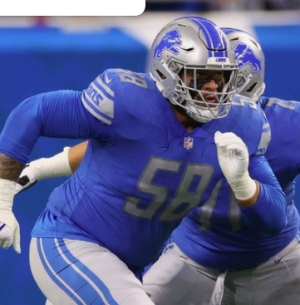 #38 Overall, Penei Sewell, Detroit Lions, Tackle, #4 Offensive Lineman2025 Pre-Season Rank #68, 2024: Pre-Season Rank: #121. Peak Period: 2021-25*Standing at 6'5” and 330 pounds, Penei Sewell can state that going into…
 -
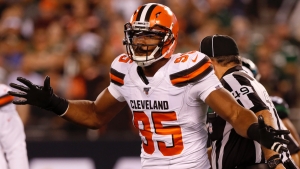 #7 Overall, Myles Garrett, Los Angeles Rams, Defensive End, #2 Defensive Lineman/Linebackers: Pass Rushers2025 Pre-Season Rank #9, 2024 Pre-Season Rank #17, 2023 Pre-Season Rank #34, 2022 Pre-Season Rank #53, 2021 Pre-Season Rank #99, 2020 Pre-Season Rank…
 -
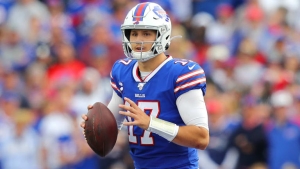 #16 Overall, Josh Allen, Buffalo Bills, #5 Quarterback2025 Pre-Season Rank #17, 2024 Pre-Season Rank #39, 2023 Pre-Season Rank #69, 2022 Pre-Season Rank #98, 2021 Pre-Season Rank #117. Peak Period: 2020-24.…in Quarterbacks
 -
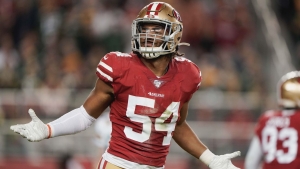 #30 Overall, Fred Warner, San Francisco 49ers Linebacker, #2 Defensive Lineman/Linebacker: Interior Lineman2025 Pre-Season Ranking #22, 2024 Pre-Season Rank #49, 2023 Pre-Season Rank #79, 2022 Pre-Season Rank #118, 2021 Pre-Season Rank #142. Peak Period: 2020-24…
Visit the Fictitious Halls of Fame!


You May Also Like...
EDITOR’S CHOICE

 DDT's Pop Flies
When the veterans committee (VC), officially convening as the Contemporary Baseball Era…


 Live Music Head
Project/Objectan interview with André Cholmondeleyby Live Music HeadOriginally published at timessquare.com on…

LATEST RANKINGS





MOST POPULAR RANKINGS
















Committee Chairman
21. Hanford Dixon
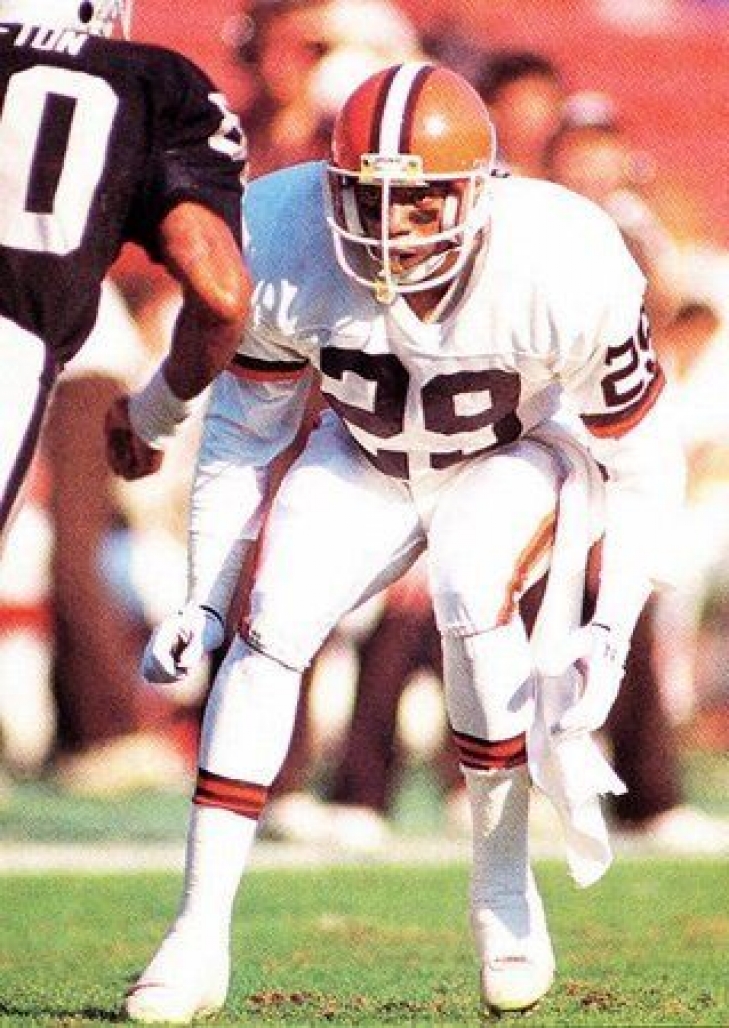
With the 22nd overall pick in the first round of the 1981 NFL Draft, the Browns selected Hanford Dixon out of Southern Mississippi who was heralded as a fierce, physical cornerback with exceptional closing speed. Over nine seasons in the orange and brown, Dixon locked down the right side of the secondary, starting 128 of his 131 regular-season games and creating a cultural movement that defined the franchise for generations.
Dixon quickly established himself as a starter, bringing an aggressive, press-man style to the boundary. Alongside Frank Minnifield, Dixon formed what many analysts consider the premier cornerback duo of the late 1980s. At 5 feet 11 inches and 186 pounds, Dixon operated with a lethal blend of trail-technique recovery, violent jam-at-the-line aggression, and elite closing speed. In an era when receivers were granted far more leeway, Dixon bullied split ends at the line of scrimmage, throwing off the timing of route trees and forcing opposing quarterbacks to look elsewhere.
His peak came during the 'Bernie Kosar era,’ when he earned three straight Pro Bowl selections from 1986 to 1988 and received First-Team All-Pro honors in 1986 and 1987. In 1986, he led a defense that finished 12-4 and made the playoffs, intercepting five passes and dominating his side of the field so thoroughly that opposing offensive coordinators often avoided throwing to his area. During the strike-shortened 1987 season, he recorded three interceptions in 12 games, followed by four interceptions in 1988.
With both Dixon and Minnifield possessing elite cover skills, defensive coordinator Marty Schottenheimer was free to leave both cornerbacks on single-coverage islands. This allowed the Browns to stack the box against the run and dial up creative blitzes with linebackers Clay Matthews and Chip Banks, serving as a cornerstone for Cleveland's run to three AFC Championship Game appearances. Quarterbacks who dared to test Dixon during this three-year window were met with tightly contested throwing lanes and punishing hits along the sideline.
Beyond his coverage skills, Dixon earned an enduring spot in team lore as the founding father of the "Dawg Pound." During training camp, Dixon began barking at defensive linemen to get them fired up, a ritual that quickly spread to the bleachers at Municipal Stadium and gave rise to one of the most famous fan sections in professional sports.
Retiring after the 1989 season, Dixon spent his entire professional career in Cleveland. Overall, he played in 131 regular-season games and nine postseason contests, recording 26 interceptions and two fumble recoveries. The franchise Dixon by inducting him into the Cleveland Browns Legends in 2003.
20. Ray Renfro
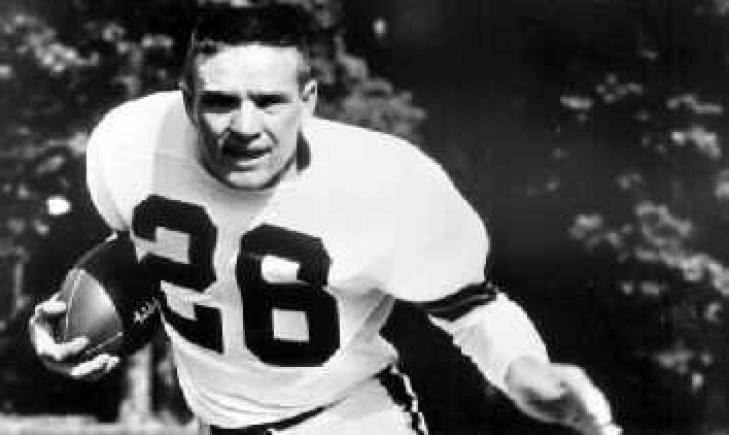
From North Texas State, Ray Renfro was drafted in the fourth round (48th overall) of the 1952 NFL Draft and emerged as one of Paul Brown's classic small-school discoveries. Armed with track-star sprinter speed and fluid open-field acceleration, Renfro stepped onto the field as a dual-threat weapon before evolving into one of the most explosive deep-ball flankers of the 1950s.
Renfro broke into the league as a halfback and kick returner, showcasing his game-breaking gear by leading the NFL with a 30.1-yard kickoff return average as a rookie. Once the coaching staff transitioned him full-time to flanker, his vertical speed unlocked a whole new dimension for Otto Graham's passing attack. He served as a primary perimeter target on back-to-back title squads, catching a 35-yard touchdown in the 1954 NFL Championship Game rout of Detroit and hauling in a 50-yard strike in the 1955 title victory over Los Angeles.
Renfro’s best season came in 1955, when he led the NFL with 60.3 receiving yards per game and averaged a staggering 21.3 yards per reception to earn his first Pro Bowl selection. He went on to collect two more Pro Bowl nods in 1957 and 1960, consistently blowing the top off defensive coverages and stretching the field for Milt Plum and the Cleveland offense.
After hanging up his pads following the 1963 season, Renfro transitioned into coaching and eventually earned a Super Bowl ring as the quarterbacks and wide receivers coach for Tom Landry's Dallas Cowboys.
Across 12 seasons spent entirely in Cleveland (1952–1963), Renfro appeared in 130 regular-season games and seven NFL Championship Games. He compiled 281 receptions, 5,508 receiving yards, and 50 receiving touchdowns, averaging a phenomenal 19.6 yards per catch for his career. The franchise officially recognized his place in team history by naming him a Cleveland Browns Legend in 2001.
18. Mike McCormack
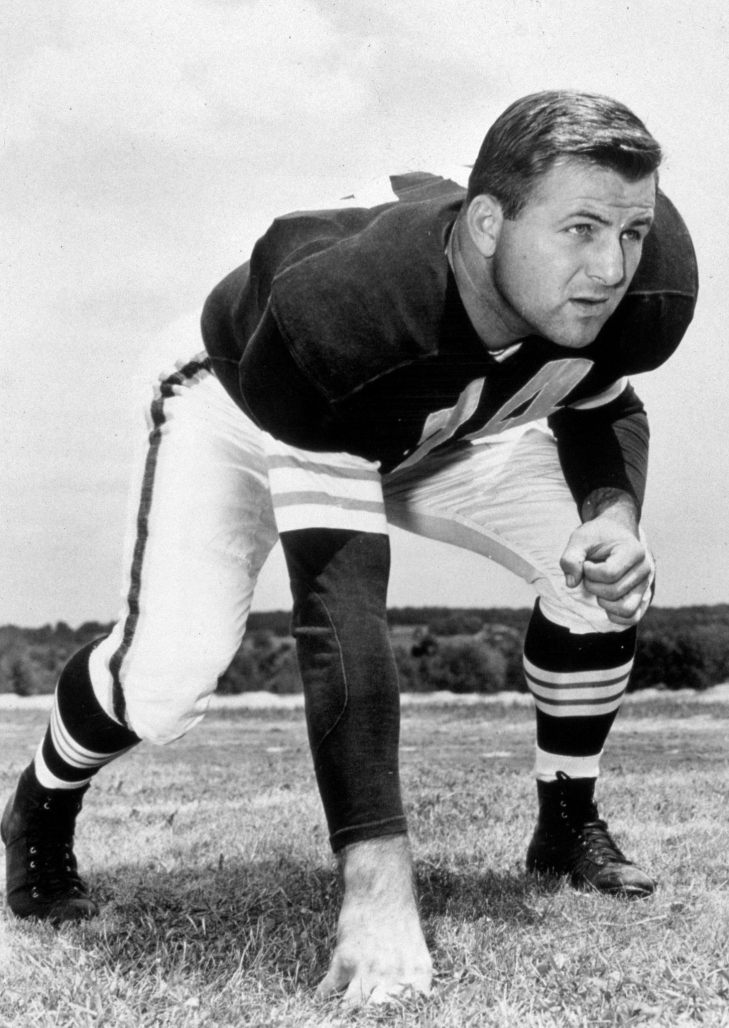
Drafted in the third round of the 1951 NFL Draft out of Kansas, Mike McCormack began his professional career with the New York Yanks before stepping away to serve his country in the Korean War. By the time he returned from military service, the Yanks franchise had folded, and its assets were transferred to the newly formed Baltimore Colts. Legendary head coach Paul Brown had kept a close eye on the physical lineman and orchestrated a multi-player trade to acquire him before he ever suited up in Baltimore, bringing McCormack to Cleveland in 1954.
The transaction paid immediate dividends. McCormack stepped straight into the starting lineup at middle guard, famously securing a game-changing fumble recovery in the 1954 NFL Championship Game victory over Detroit. He transitioned to right tackle the following season, anchoring the offensive front for Otto Graham and clearing lanes for a powerful ground attack as Cleveland repeated as NFL Champions in 1955.
Over the next eight seasons, McCormack established himself as the premier offensive tackle of his era. Combining exceptional footwork with relentless leverage, he anchored the right side of the Browns' line through 1962, earning six Pro Bowl selections and four All-Pro honors during his tenure in Cleveland. Paul Brown famously called McCormack the finest offensive lineman he ever coached—high praise considering the hall-of-fame talent that passed through Brown's locker rooms.
McCormack retired after the 1962 season, following nine stellar years in Cleveland, having played in 108 regular-season games for the franchise and appearing in four NFL Championship Games.
His dominant career in the trenches was immortalized with induction into the Pro Football Hall of Fame in 1984, followed by his enshrinement in the inaugural class of the Cleveland Browns Ring of Honor in 2010.
19. Bill Willis
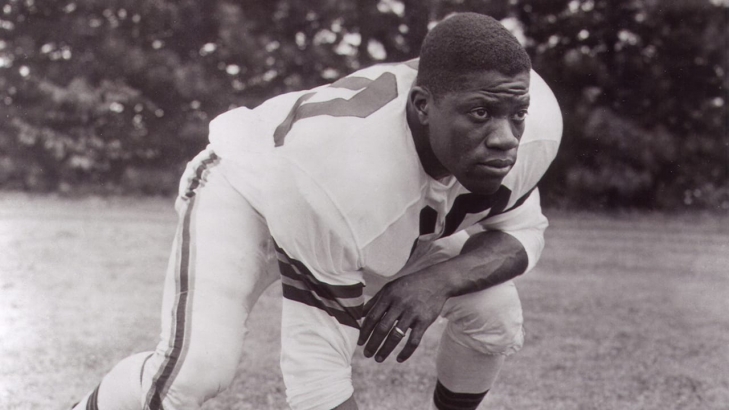
A standout two-way player and a core part of Ohio State's 1942 national championship squad, Bill Willis wanted to continue playing football after graduating in 1945. At the time, an unspoken color barrier kept African-Americans out of the National Football League, leaving him with no professional path forward until the creation of the All-America Football Conference.
When Paul Brown took over the newly formed Cleveland Browns in 1946, he brought Willis in for a tryout. Willis made the roster, breaking professional football's color barrier alongside teammate Marion Motley and reshaping the sport forever.
Willis possessed explosive quickness and relentless lateral agility that completely redefined the guard position. He anchored the trenches during Cleveland's absolute dominance of the AAFC, helping the franchise capture all four league championships (1946–1949). While officially listed as an offensive guard, Willis wreaked havoc on defense, utilizing his speed to chase down ball carriers and disrupt backfields in an era before tackles and sacks were officially tracked.
When the Browns transitioned to the NFL in 1950, Willis didn't miss a beat. He earned three consecutive Pro Bowl selections and three First-Team All-Pro nods from 1950 to 1952, helping Cleveland capture the 1950 NFL title and reach three more championship games. His unique combination of speed, technique, and defensive dominance forced opponents to completely alter their blocking schemes.
Willis retired after the 1953 season, playing 75 AAFC and 39 NFL games for the Browns. His significant impact on football led to his 1977 Pro Football Hall of Fame induction as a pioneer and legend. The Browns also honored him in 2010 in the Ring of Honor, solidifying his legacy as a key figure in professional football.
