

 Not in Hall of Fame News
Yes, we know that this is taking a while! As many of…
 Not in Hall of Fame News
Yes, we know that this is taking a while! As many of…
 Not in Hall of Fame News
2002 SEMI-FINAL RESULTS: Thank you for your participation in the Pro Football…
 Not in Hall of Fame News
Yes, we know that this is taking a while! As many of…
 Not in Hall of Fame News
We are diligently working away at Notinhalloffame on revising our Football lists…
 Not in Hall of Fame News
We are diligently working away at Notinhalloffame on revising our Football lists…
 From the Desk of the Chairman
October baseball often turns individual pitching performances into lasting postseason memories. Strikeout…
 From the Desk of the Chairman
For decades, the sports debate ran on gut feeling. Barstool arguments, call-in…
 From the Desk of the Chairman
Introduction to Private Adult Tennis Camps in Prague Adult club players increasingly…
 From the Desk of the Chairman
Unlike in the case of pre-match betting, where you have to pick…
 From the Desk of the Chairman
Kupu178 builds trust with people by using top-end end-to-end encryption. It checks…
 From the Desk of the Chairman
Sports fans thrive on calculating strategy, reading momentum, and maximizing every tactical…




100 Active Potential Football Hall of Famers
-
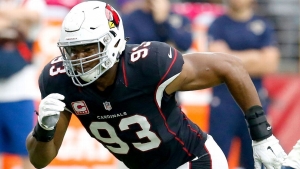 #14 Overall, Calais Campbell, Baltimore Ravens, Defensive End, #6 Defensive Lineman/Linebacker: Pass Rusher2025 Pre-Seasn Rank #14, 2024 Pre-Season Rank #19, 2023 Pre-Season Rank #19, 2022 Pre-Season Rank #26 2021 Pre-Season Rank #28, 2020 Pre-Season Rank…
 -
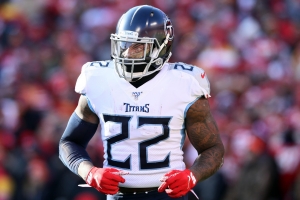 #11 Overall, Derrick Henry, Baltimore Ravens, #1 Running Back2025 Pre-Season Rank #11, 2024 Pre-Season Rank #23, 2023 Pre-Season Rank #39, 2022 Pre-Season Rank #47, 2021 Pre-Season Rank #70, 2020 Pre-Season Rank…
 -
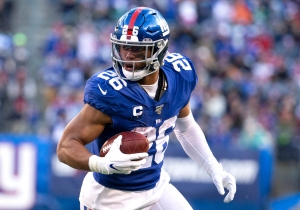 #45 Overall, Saquon Barkley, Philadelphia Eagles, #3 Running Back2025 Pre-Season Rank ##51, 2024 Pre-Season Rank #117, 2023 Pre-Season Rank #122, 2022 Pre-Season Rank #132 2021 Pre-Season Rank #101, 2020 Pre-Season Rank…
 -
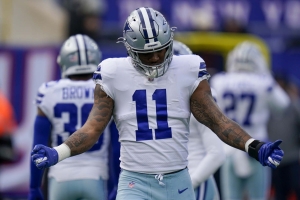 #29 Overall, Micah Parsons, Green Bay Packers, Linebacker, #10 Defensive Lineman/Linebacker: Pass Rusher2025 Pre-Season Rank #54, 2024 Pre-Season Rank #79, 2023: Pre-Season Rank #102. Peak Period: 2021-25 Here is what we wrote about Micah Parsons…
Visit the Fictitious Halls of Fame!


You May Also Like...
EDITOR’S CHOICE
 DDT's Pop Flies
When the veterans committee (VC), officially convening as the Contemporary Baseball Era…



 Live Music Head
Project/Objectan interview with André Cholmondeleyby Live Music HeadOriginally published at timessquare.com on…

LATEST RANKINGS


MOST POPULAR RANKINGS



Committee Chairman
24. Bob Gain
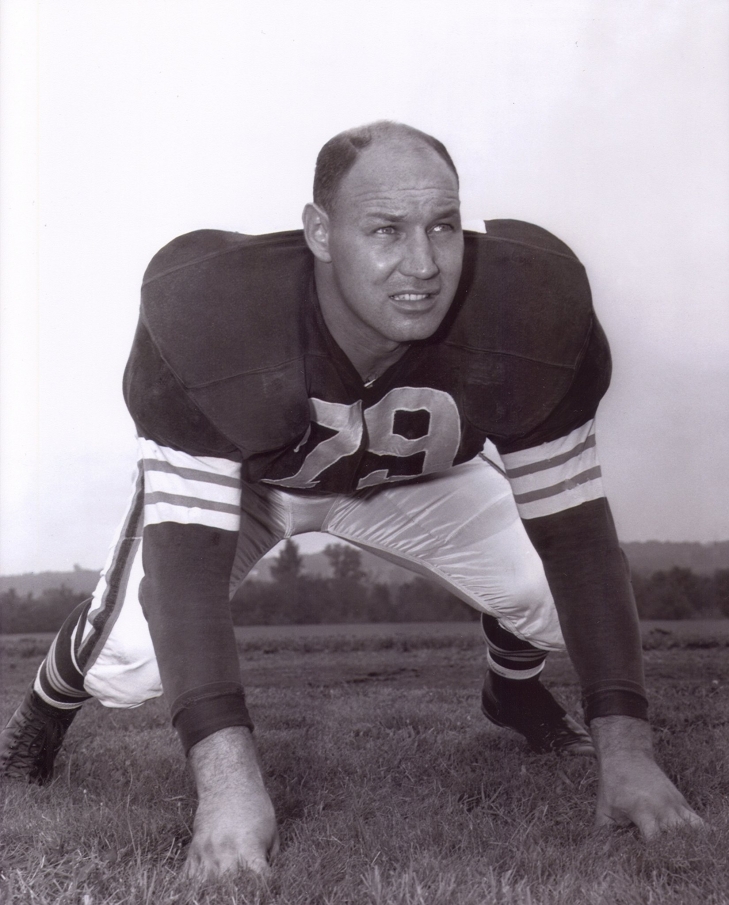
Taking a non-traditional route to the NFL, Kentucky standout and Outland Trophy winner Bob Gain was selected fifth overall in 1951 by Green Bay, but chose to spend his first pro season north of the border with the Ottawa Rough Riders. By 1952, the Cleveland Browns secured his NFL rights, bringing the Akron native back to his home state. Gain missed the entire 1953 season while serving as a First Lieutenant in the U.S. Air Force during the Korean War, but returned to the field in 1954 without missing a beat.
Plugging directly into the interior of Paul Brown’s defense, Gain established himself as an unyielding force at defensive tackle. He provided the physical muscle inside that helped propel Cleveland to back-to-back NFL Championships in 1954 and 1955. At 6 feet 3 inches and over 250 pounds, he controlled the line of scrimmage against the run while generating relentless push against opposing passers.
His individual recognition peaked during a dominant six-year stretch from 1957 through 1962, during which Gain earned five Pro Bowl selections and three Second-Team All-Pro honors. A broken leg derailed his 1963 campaign, but he battled back to play a crucial rotation role in 1964, helping the Browns secure another NFL Championship with a shutout victory over Baltimore.
Gain closed out his career after the 1964 title run, wrapping up a 12-season tenure spent entirely in Cleveland uniform colors. Across 126 regular-season games, he served as a cornerstone for three championship defenses. The franchise honored his decades of interior dominance by naming him to the Cleveland Browns Legends in 2003.
29. Esa Lindell
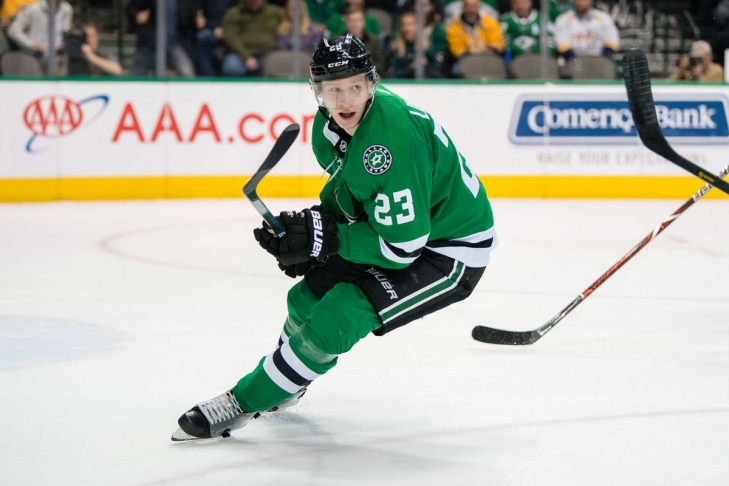
From Finland, Esa Lindell was a Third Round pick in 2012, and the Defenseman would make his way to the United States two years later. After two years in the AHL, Lindell made it to the Dallas Stars, where he remains today.
A big man at over 6'3”, Lindell rarely draws penalties and can anchor a power play when called upon. Excellent on the offensive rush, Lindell has not yet received national acclaim for his work, having only received Norris votes twice, with a peak eleventh-place finish in the 2019-20 season. In terms of Defensive Point Shares, Lindell has been in the top ten four times, and led the NHL in that advanced metric in 2018-19.
As of this writing, the criminally underrated Lindell is still with Dallas and should rise on this list.
23. Gary Collins
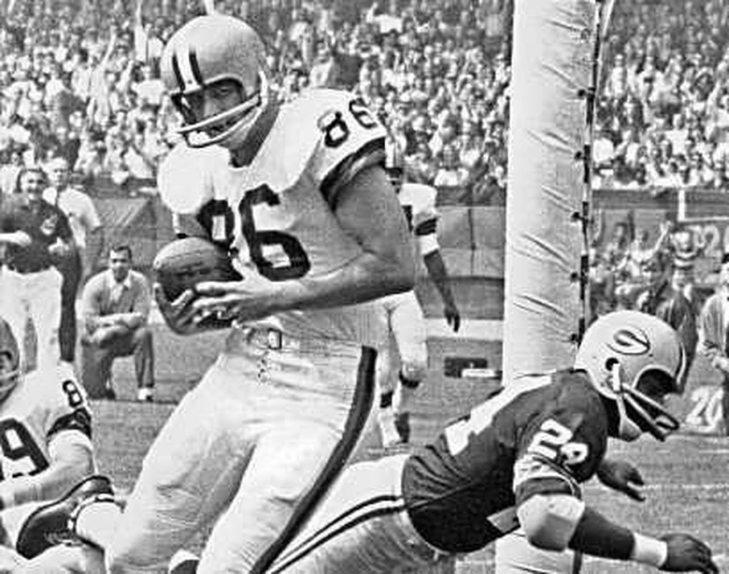
Fresh off an All-American run at Maryland, Gary Collins landed in Cleveland with high expectations when the team picked him fourth overall in 1962. His rookie season didn't feature a massive passing workload—he managed only 11 catches—because special teams needed him first. Collins immediately stepped in as the starting punter, establishing a dual role that peaked in 1965 when he topped the entire NFL with a 46.7-yard punting average.
The real offensive spark came in 1963. Collins grabbed 43 passes and paced the league with 13 receiving touchdowns, becoming Frank Ryan’s favorite target in tight quarters. That set up his iconic performance a year later in the 1964 NFL Championship Game against the Baltimore Colts. After a scoreless first half, Collins took over the game, catching three touchdown passes to break things open and power Cleveland to a 27-0 championship victory while earning game MVP honors.
He kept up that high-level play through the mid-1960s, pulling in back-to-back Pro Bowl selections in 1965 and 1966. Heavy usage eventually caught up to him, however. A severe shoulder injury in 1968 sidelined him for most of that year, though he bounced back with 54 catches and 11 touchdowns in 1969. By 1970, a rash of nagging injuries—particularly painful rib damage—hampered his movement and slashed his production to 26 receptions. He suited up for a final 13 games in 1971 before calling it a career.
When Collins left after ten seasons in Cleveland, he was the franchise's all-time leader with 70 touchdown catches, 331 receptions, 5,299 yards, and nearly 13,800 punting yards. He was inducted into the Cleveland Browns Legends in 2004.
22. Jim Ray Smith
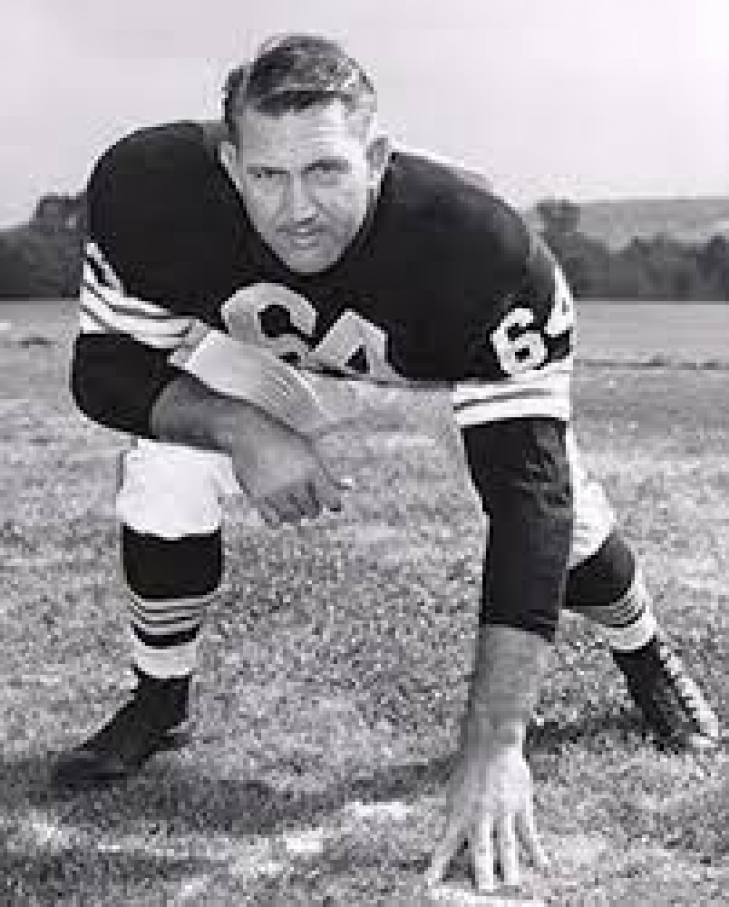
Drafted in the sixth round (64th overall) of the 1954 NFL Draft out of Baylor, Jim Ray Smith arrived in Cleveland as an accomplished collegiate tackle who began his professional career along the defensive line. Smith served in a rotational role at defensive end as a rookie, but head coach Paul Brown quickly realized his rare athletic gifts were suited for a higher calling on the offensive front.
Brown shifted Smith to the offensive line, where he logged six starts at right guard in 1957 before settling permanently at left guard in 1958. That position change unlocked a Hall-of-Fame-caliber talent. Armed with explosive pull-block speed, exceptional balance, and leverage, Smith became the premier interior run-blocker in professional football, pulling across the formation to clear massive lanes for Jim Brown and Bobby Mitchell.
From 1958 through 1962, Smith went on an absolute tear, earning five consecutive Pro Bowl selections alongside five straight All-Pro nods (First-Team honors in 1959, 1960, and 1961). His ability to blow open defensive fronts on sweep plays powered Cleveland's record-setting rushing attacks throughout the late 1950s and early 1960s.
Believing he was ready to step away from the game, Smith briefly retired after the 1962 season. The Dallas Cowboys coaxed him back to the field, acquiring his rights via trade and securing two final seasons of his veteran leadership before he hung up his cleats for good after 1964.
In his seven seasons with the Browns (1956–1962), Smith played in 82 regular-season games and appeared in the 1957 NFL Championship Game. The organization honored his dominant reign at guard by inducting him into the Cleveland Browns Legends in 2005.
