

 Not in Hall of Fame News
Yes, we know that this is taking a while! As many of…
 Not in Hall of Fame News
Yes, we know that this is taking a while! As many of…
 Not in Hall of Fame News
2002 SEMI-FINAL RESULTS: Thank you for your participation in the Pro Football…
 Not in Hall of Fame News
Yes, we know that this is taking a while! As many of…
 Not in Hall of Fame News
We are diligently working away at Notinhalloffame on revising our Football lists…
 Not in Hall of Fame News
We are diligently working away at Notinhalloffame on revising our Football lists…
 From the Desk of the Chairman
October baseball often turns individual pitching performances into lasting postseason memories. Strikeout…
 From the Desk of the Chairman
For decades, the sports debate ran on gut feeling. Barstool arguments, call-in…
 From the Desk of the Chairman
Introduction to Private Adult Tennis Camps in Prague Adult club players increasingly…
 From the Desk of the Chairman
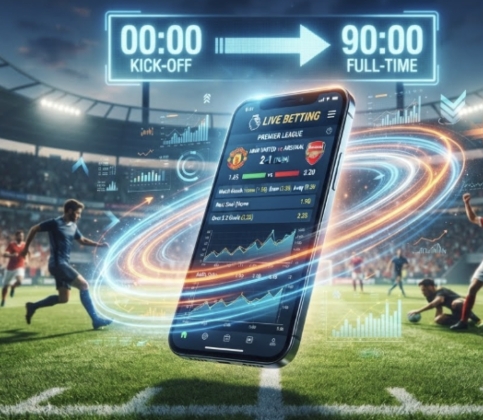
Unlike in the case of pre-match betting, where you have to pick…
 From the Desk of the Chairman
Kupu178 builds trust with people by using top-end end-to-end encryption. It checks…
 From the Desk of the Chairman
Sports fans thrive on calculating strategy, reading momentum, and maximizing every tactical…

100 Active Potential Football Hall of Famers
-
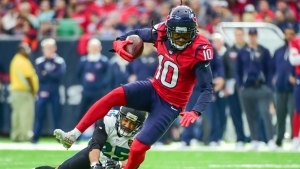 #27 Overall, DeAndre Hopkins, Free Agent, #4 Wide Receiver2025 Pre-Season Rank, #24, 2024 Pre-Season Rank #24, 2023 Pre-Season Rank #20, 2022 Pre-Season Rank #28, 2021 Pre-Season Rank #30, 2020 Pre-Season Rank…
 -
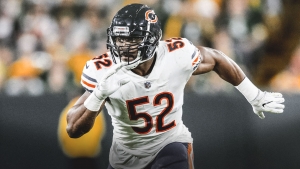 #13 Overall, Khalil Mack: Los Angeles Chargers, #5 Defensive Lineman/Linebacker: Pass Rusher2025 Pre-Season Rank #8, 2024 Pre-Season Rank #12, 2023 Pre-Season Rank #14, 2022 Pre-Season Rank #19, 2021 Pre-Season Rank #26, 2020 Pre-Season Rank…
 -
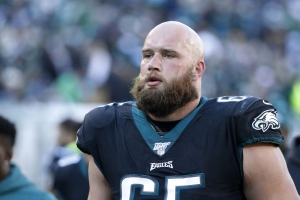 #34 Overall, Lane Johnson, Philadelphia Eagles, Right Tackle, #3 Offensive LinemanPre-Season Rank #27, 2024 Pre-Season Rank #40, 2023 Pre-Season Rank #57, 2022 Pre-Season Rank #107, 2021 Pre-Season Rank #143. Peak Period 2017-18/2022-24 When…
 -
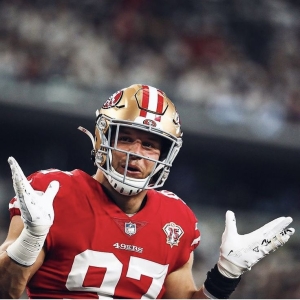 #39 Overall, Nick Bosa, San Francisco 49ers, #12 Defensive End: Defensive Linemen/Linebackers: Pass Rushers2025 Pre-Season Rank #42, 2024 Pre-Season Rank #52, 2023: Pre-Season Rank #83. Peak Period: 2019-23 The explosive Nick Bosa is one of a…
Visit the Fictitious Halls of Fame!


You May Also Like...
EDITOR’S CHOICE
 DDT's Pop Flies
When the veterans committee (VC), officially convening as the Contemporary Baseball Era…

 Live Music Head
Project/Objectan interview with André Cholmondeleyby Live Music HeadOriginally published at timessquare.com on…

LATEST RANKINGS

MOST POPULAR RANKINGS

Committee Chairman
30. Brian Sipe
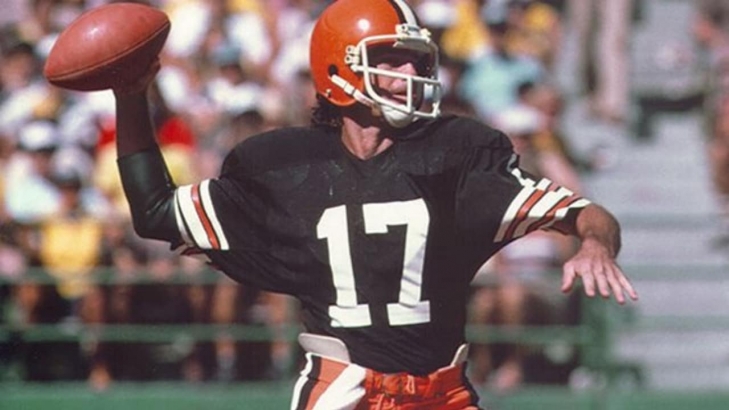
Selected in the 13th round of the 1972 NFL Draft out of San Diego State, Brian Sipe faced a long, unheralded path to NFL stardom. He spent his first two years tucked away on Cleveland's taxi squad before earning a spot on the active roster, serving strictly as a backup for two more seasons while making just seven sporadic starts.
Promoted to full-time starter status in 1976, Sipe endured several years of mid-table results before hitting his stride at age 30. His true breakout arrived in 1979, when he paced the NFL with 28 touchdown passes while throwing for 3,793 yards. Armed with a penchant for fourth-quarter magic, Sipe directed late-game comeback after late-game comeback, birthing the beloved "Kardiac Kids" era that electrified Northeast Ohio.
Everything clicked at a historical level in 1980. Sipe put together one of the finest passing seasons of his era, throwing for 4,132 yards, 30 touchdowns, and just 14 interceptions while leading the league with a 91.4 passer rating. Behind his calm demeanor in high-leverage moments, Cleveland captured the AFC Central crown, and Sipe was rewarded with First-Team All-Pro honors, a Pro Bowl selection, and the NFL Most Valuable Player award.
The team regressed over the next few seasons, and a strike-shortened 1982 campaign saw Sipe temporarily benched. He rebounded in 1983, throwing for 3,566 yards and 26 touchdowns, but contract negotiations stalled after the season. Sensing a shift within the organization, Sipe opted to sign with the New Jersey Generals of the upstart USFL, ending his decade-long run in Cleveland and retiring from football a year later.
Over 10 seasons in Cleveland (1974–1983), Sipe started 112 games and compiled 23,713 passing yards and 154 touchdown passes, retiring as the franchise's all-time leader in both categories. The Browns permanently celebrated his legacy by naming him a Cleveland Browns Legend in 2002.
29. Joe DeLamielleure
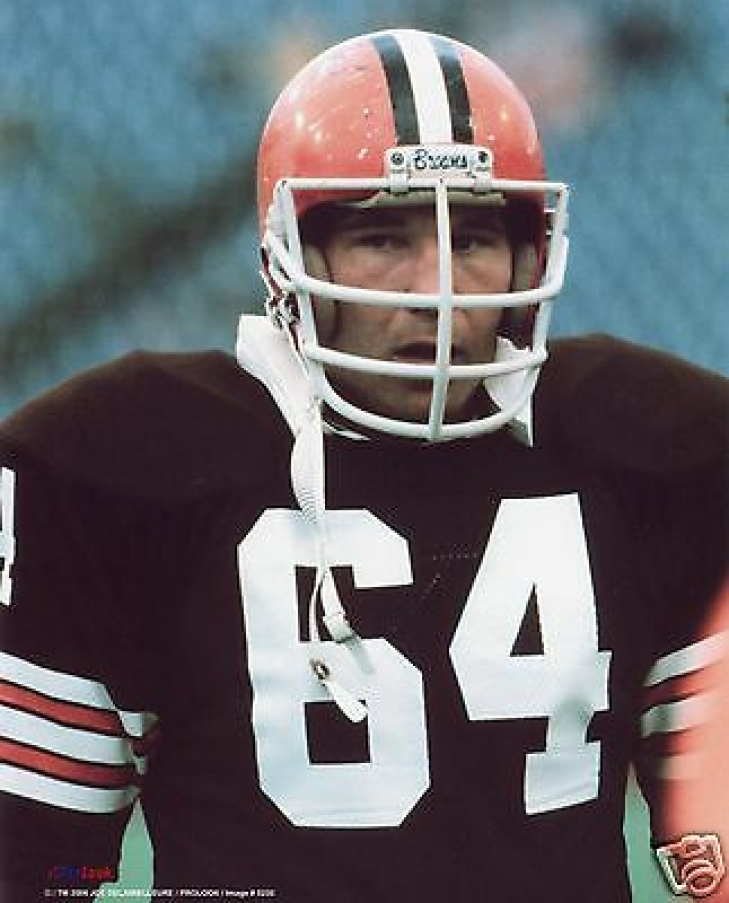
After building a Hall-of-Fame resume in the 1970s as a core member of Buffalo's famous "Electric Company" offensive line, Joe DeLamielleure headed west to Cleveland before the 1980 season in a high-profile trade.
The veteran guard made an immediate, history-making impact in his new uniform. In his first year with the Browns, DeLamielleure anchored the interior pass protection for Brian Sipe during his NFL MVP campaign. In doing so, he achieved a unique milestone in league history: becoming the first offensive lineman to block for both a 2,000-yard rusher (O.J. Simpson in 1973) and a 4,000-yard passer (Sipe in 1980). His elite play earned him his sixth consecutive Pro Bowl selection alongside a Second-Team All-Pro nod, helping push the "Kardiac Kids" to the AFC Central division title.
DeLamielleure’s blue-collar work ethic and durability fit seamlessly into Cleveland's football culture. He served as a steadying force on the offensive line over the next four seasons, earning another Second-Team All-Pro selection in 1983 while mentoring younger linemen in the locker room.
Following his release ahead of the 1985 season, DeLamielleure returned to Buffalo for one final year before retiring from professional football.
Across five seasons in Cleveland (1980–1984), he started all 73 regular-season games he appeared in, bringing an intense, steady presence to the Browns' offensive front. His combined legacy across both franchises culminated in his induction into the Pro Football Hall of Fame in 2003, and the Browns permanently recognized his contributions by inducting him into the Cleveland Browns Ring of Honor.
26. Frank Ryan
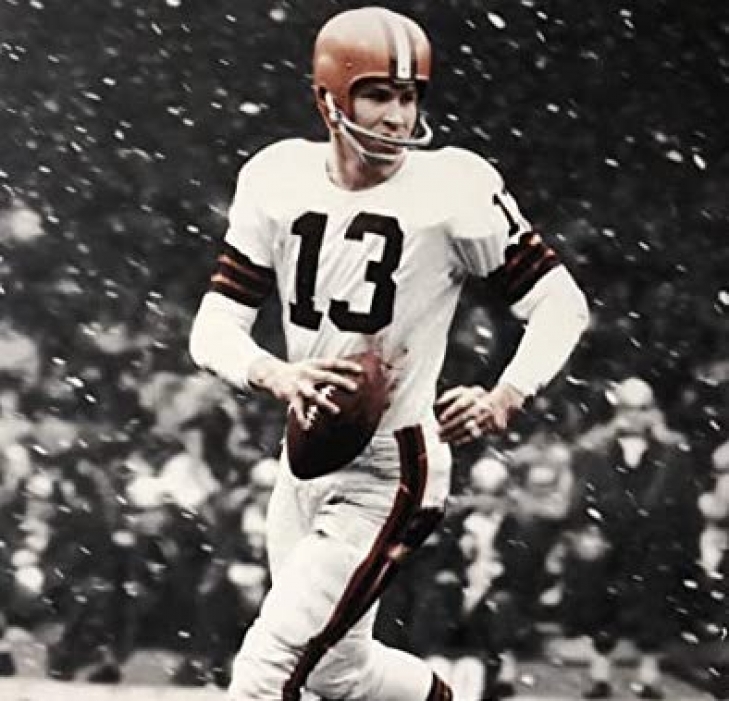
Acquired from the Los Angeles Rams in 1962, Frank Ryan came to Cleveland with a reputation as a brainy, talented backup waiting for an opportunity. Over four seasons in L.A., Ryan had flashed potential, but the Rams' decision to draft Roman Gabriel made him expendable. Cleveland traded for him, initially envisioning him as depth behind starter Jim Ninowski.
An injury to Ninowski midway through the 1962 season pushed Ryan into the starting huddle. He seized the job and never gave it back, developing into one of the most effective and efficient signal-callers of the 1960s. Armed with a doctorate in mathematics from Rice University—earning him the nickname "Dr. Frank"—Ryan brought an analytical sharpness to Paul Brown's and Blanton Collier's offenses, blending cerebral pre-snap reads with a deep, accurate throwing arm.
In 1964, Ryan achieved the pinnacle of his career, leading the NFL with 25 touchdown passes in the regular season, which helped Cleveland finish 10-3-1 and reach the NFL Championship Game. During the final against the favored Baltimore Colts, Ryan delivered a masterful performance, throwing three second-half touchdown passes to Gary Collins, resulting in an unexpected 27-0 shutout victory. This championship marked a high point of the era, making Ryan the second—and to this day, the last—quarterback to guide the Cleveland Browns to a league title, after Otto Graham.
He maintained his high level of play over the next several seasons, earning three consecutive Pro Bowl selections from 1964 to 1966. In 1966, Ryan again led the league in touchdown passes, throwing a career-high 29 touchdowns against just 14 interceptions—a remarkable ratio for an era defined by aggressive downfield passing and tough defensive-coverage rules.
A series of nagging injuries, including severe shoulder and knee issues, began to limit his availability toward the end of the decade, prompting his departure from Cleveland after the 1968 season. He spent his final three years as a backup in Washington before retiring in 1971.
As a Brown, Ryan compiled a 52-22-2 record as a starter, throwing for 13,361 yards, 134 touchdowns, and 88 interceptions. The organization officially named him a Cleveland Browns Legend in 2005.
25. Michael Dean Perry
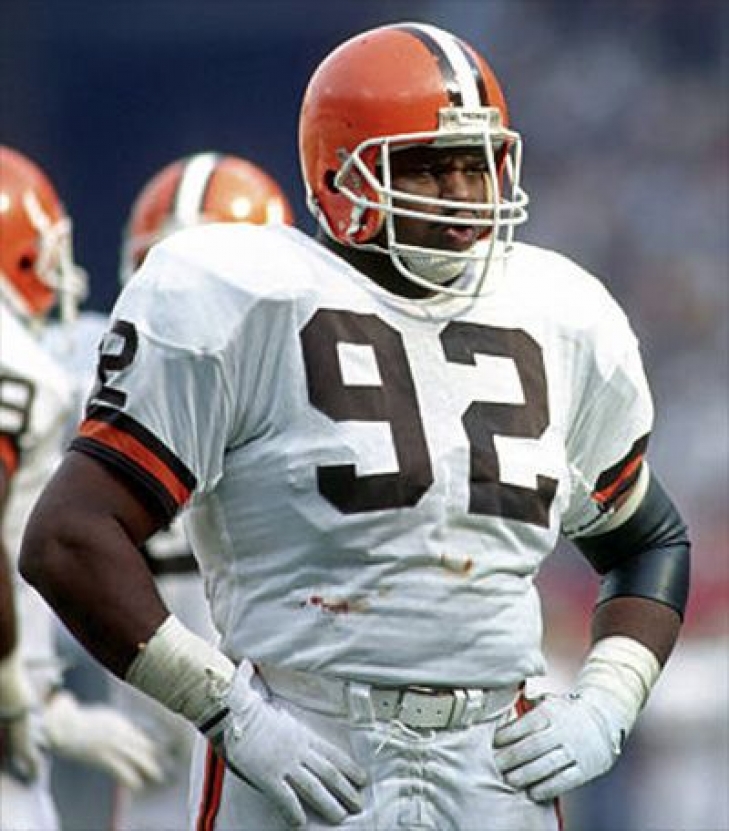
Few players captured the hearts of Cleveland fans in the late 1980s quite like Michael Dean Perry. Drafted out of Clemson in the second round of the 1988 NFL Draft, the younger brother of William "The Refrigerator" Perry quickly established a colossal identity all his own along the Browns' defensive front. His popularity exploded so fast that local McDonald's franchises in Northeast Ohio even named a multi-patty burger after him—the "MDP"—to match his larger-than-life persona.
On the field, Perry was a disruptive force at defensive tackle, blending explosive quickness off the snap with immense lower-body power. After earning All-Rookie honors in 1988, he delivered a transcendent sophomore campaign in 1989. Racking up a career-high seven sacks and collapsing pockets weekly, Perry was named the 1989 AFC Defensive Player of the Year, secured his first Pro Bowl selection, and earned a First-Team All-Pro nod.
That breakout season marked the start of a six-year period in which Perry was the cornerstone of Cleveland's defense. During his time in Ohio, he was chosen for five Pro Bowls (1989, 1990, 1991, 1993, and 1994), earned a First-Team All-Pro honor in 1990, and received two Second-Team All-Pro selections. His presence on the field forced opposing offensive lines to double-team him constantly, creating rushing opportunities for linebackers and playing a key role in Cleveland reaching the 1989 AFC Championship Game and making a playoff run in 1994 under coach Bill Belichick.
After the 1994 season, salary cap constraints and structural changes led to his departure, and he spent his remaining NFL years with Denver, where he added a sixth career Pro Bowl selection before retiring in 1997.
Across seven seasons in Cleveland (1988–1994), Perry played 109 games, with 42.5 sacks, becoming one of the franchise's top interior pass-rushers. In 2001, the organization honored him by naming him to the first class of Cleveland Browns Legends.
