

 Not in Hall of Fame News
Yes, we know that this is taking a while! As many of…
 Not in Hall of Fame News
Yes, we know that this is taking a while! As many of…
 Not in Hall of Fame News
2002 SEMI-FINAL RESULTS: Thank you for your participation in the Pro Football…
 Not in Hall of Fame News
Yes, we know that this is taking a while! As many of…
 Not in Hall of Fame News
We are diligently working away at Notinhalloffame on revising our Football lists…
 Not in Hall of Fame News
We are diligently working away at Notinhalloffame on revising our Football lists…
 From the Desk of the Chairman
October baseball often turns individual pitching performances into lasting postseason memories. Strikeout…
 From the Desk of the Chairman
For decades, the sports debate ran on gut feeling. Barstool arguments, call-in…
 From the Desk of the Chairman
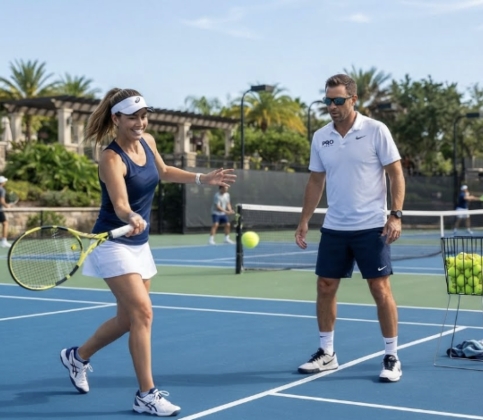
Introduction to Private Adult Tennis Camps in Prague Adult club players increasingly…
 From the Desk of the Chairman
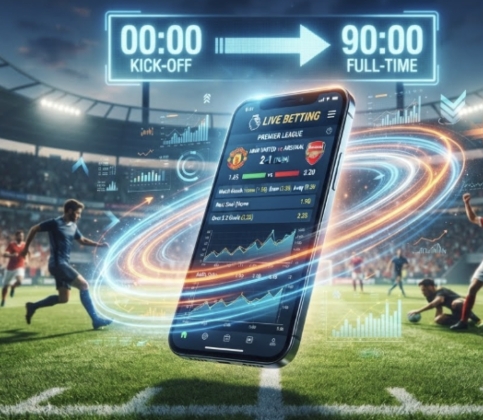
Unlike in the case of pre-match betting, where you have to pick…
 From the Desk of the Chairman
Kupu178 builds trust with people by using top-end end-to-end encryption. It checks…
 From the Desk of the Chairman
Sports fans thrive on calculating strategy, reading momentum, and maximizing every tactical…
100 Active Potential Football Hall of Famers
-
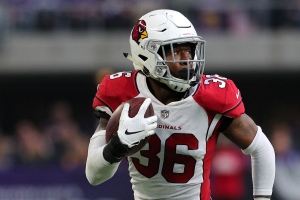 #24 Overall, Budda Baker, Arizona Cardinals, Free Safety, #1 Safety2025 Pre-Season Rank #28, 2024 Pre-Season Rank #43, 2023 Pre-Season Rank #78, 2022 Pre-Season Rank #86, 2021 Pre-Season Rank #113, 2020 Pre-Season Rank…in Safeties
 -
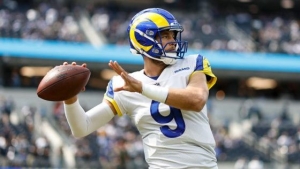 #9 Overall, Matthew Stafford, Los Angeles Rams, #3 Quarterback2025 Pre-Season Rank #26, 2024 Pre-Season Rank #31, 2023 Pre-Season Rank #37, 2022 Pre-Season Rank #37, 2021 Pre-Season Rank #59, 2020 Pre-Season Rank…in Quarterbacks
 -
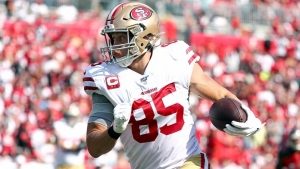 #26 Overall, George Kittle, San Francisco 49ers, #2 Tight End2025 Pre-Season Rank #34, 2024 Pre-Season Rank #42, 2023 Pre-Season Rank #59, 2022 Pre-Season Rank #74, 2021 Pre-Season Rank #86, 2020 Pre-Season Rank…in Tight Ends
 -
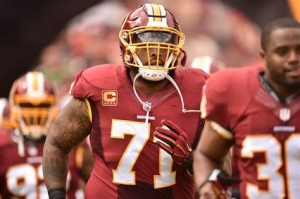 #6 Overall, Trent Williams, San Francisco 49ers, Offensive Tackle, #1 Offensive Lineman2025 Pre-Season Rank #5, 2024 Pre-Season Rank #6, 2023 Pre-Season Rank #6, 2022 Pre-Season Rank #20, 2021 Pre-Season Rank #33, 2020 Pre-Season Rank…
Visit the Fictitious Halls of Fame!

You May Also Like...
EDITOR’S CHOICE
 DDT's Pop Flies
When the veterans committee (VC), officially convening as the Contemporary Baseball Era…

 Live Music Head
Project/Objectan interview with André Cholmondeleyby Live Music HeadOriginally published at timessquare.com on…

LATEST RANKINGS

MOST POPULAR RANKINGS

Committee Chairman
28. Frank Minnifield
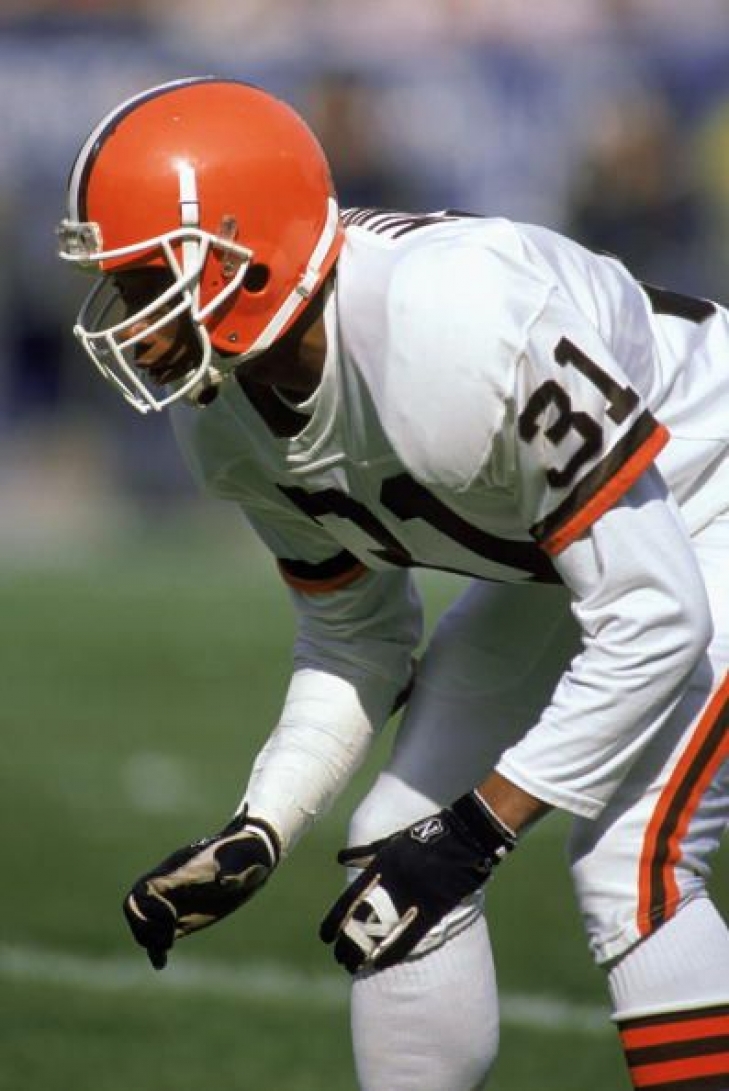
Frank Minnifield, initially overlooked by NFL teams from Louisville, took an unconventional path to professional football. He began in the USFL with the Chicago Blitz and Arizona Wranglers, demonstrating early on that his 5-foot-9 stature did not hinder his ability to excel in pass defense. During contract disputes, Minnifield filed and won a lawsuit against the USFL, which nullified his contract and allowed him to sign with Cleveland as a free agent in 1984.
The Browns put him on the field right away, and Minnifield responded with an All-Rookie campaign at cornerback. Playing with an ultra-physical, press-man style, he made up for his modest stature with fiery aggression, incredible leaping ability, and a willingness to deliver bone-jarring hits on boundary receivers and ball carriers alike.
By 1986, Minnifield had become a household name, earning four consecutive Pro Bowl selections from 1986 to 1989. Alongside Hanford Dixon on the opposite side, they formed the league's top cornerback duo. Defensive coordinator Marty Schottenheimer often relied on single coverage for both, freeing the front seven to focus on stopping the run. Minnifield’s career peaked in 1988 when he received First-Team All-Pro honors, with Second-Team All-Pro recognition in 1987 and 1989.
Alongside Dixon, Minnifield helped birth a franchise identity when the two began barking at their defensive teammates during training camp drills. That energy spilled directly into the bleachers at Municipal Stadium, creating the legendary "Dawg Pound" culture that remains the heart and soul of the fan base to this day.
A severe knee injury limited Minnifield to just seven games in 1990, stripping away some of his signature suddenness. He fought through injuries over his final two campaigns, serving as a respected veteran leader before hanging up his pads after the 1992 season.
Across nine seasons spent entirely in Cleveland (1984–1992), Minnifield picked off 20 passes and recovered seven fumbles. The team named him a Cleveland Browns Legend in 2005.
32. Bernie Kosar
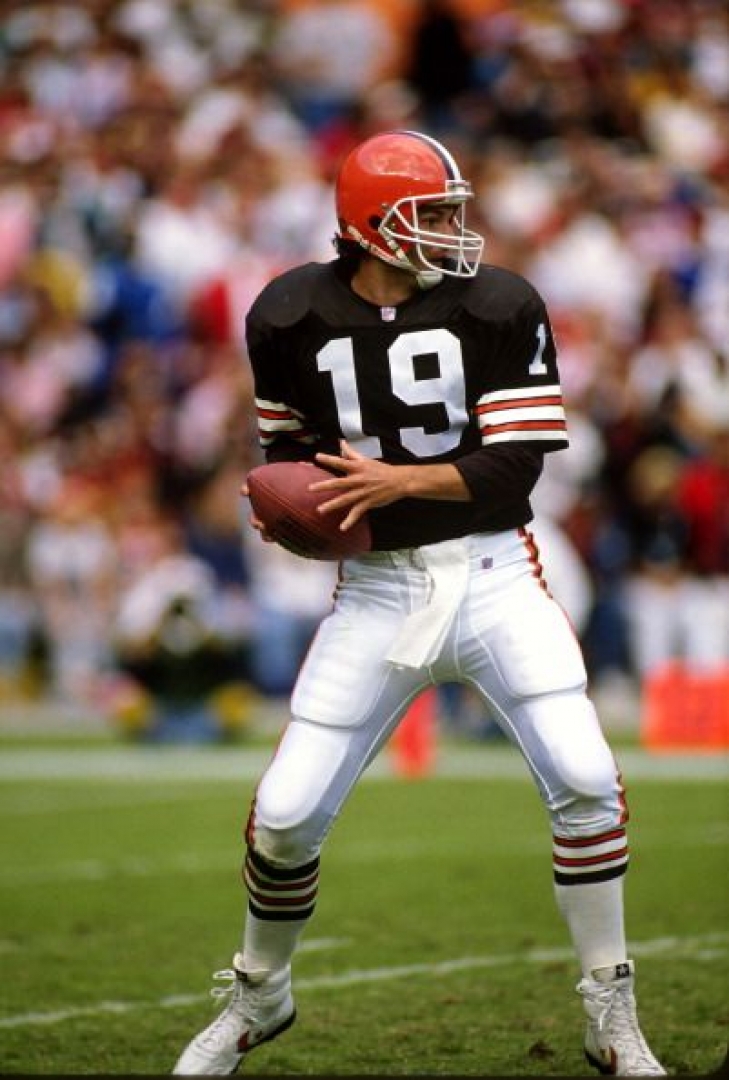
His arrival in 1985 wasn't just a football transaction; it was a cultural event in Northeast Ohio. By bypassing the traditional NFL draft to force his way home to Cleveland, the local kid from Boardman High School instantly became a symbol of hometown pride. Kosar’s mastery of the pre-snap line-of-scrimmage check—dubbed "Bernie-ball"—gave the Browns a cerebral edge that compensated for his lack of foot speed. He dissected defenses with an unorthodox sidearm delivery, throwing receivers open before they even broke. Under his stewardship, Municipal Stadium transformed into an electric venue, and Kosar’s signature No. 19 jersey became the undisputed uniform of the region.
Drafted out of Miami via the 1985 Supplemental Draft, Bernie Kosar arrived in Cleveland as the savior-in-waiting for his boyhood team. He sat behind veteran Gary Danielson for the first month of his rookie season, but an injury to Danielson in Week 5 thrust the 21-year-old into the starting spot. Despite a rigid pocket presence and awkward mechanics, Kosar processed coverage packages at lightning speed, steering the Browns to an 8-8 record and a playoff berth while establishing himself as the undisputed leader of the offense.
With Kosar at the helm, Cleveland transitioned into a pass-oriented power during the peak of the Marty Schottenheimer era. His finest individual campaign came in 1987, when he threw for 3,030 yards and a career-best 22 touchdowns in only 12 games during a strike-shortened season, earning his lone Pro Bowl selection and leading Cleveland back to the AFC Title Game. He posted two more 3,000-yard passing seasons in 1989 and 1991, cementing his reputation as one of the most intelligent field generals in football.
The emotional intensity of those late-1980s playoff games only strengthened the special bond between Kosar and the city. Fans fondly remember his thrilling matchups against John Elway’s Denver Broncos in the 1986, 1987, and 1989 AFC Championship Games. Even during tough losses—like the memorable 1986 "Drive" game, where Kosar threw for 259 yards, and the 1987 "Fumble" game, where he amazed everyone with 356 yards and three touchdowns—Kosar always played with remarkable composure and determination under huge pressure. He wasn’t just a quarterback managing the game; he was like an on-field coach, carrying the hopes of a city eager for a championship, in a time when quarterbacks didn’t often have that kind of influence.
His tenure in Cleveland ended abruptly and emotionally. Tensions flared after Bill Belichick took over as head coach in 1991, as Belichick's rigid, control-oriented system collided with Kosar's audibling style. After benching Kosar for Vinny Testaverde midway through the 1993 season, Belichick cut the veteran quarterback outright in November—a move that shocked the fan base. Kosar quickly caught on with the Dallas Cowboys, stepping in to win a crucial game in relief of an injured Troy Aikman and earning a Super Bowl XXVIII ring before closing out his career in Miami as Dan Marino's backup.
As a Brown, Kosar started 105 games, compiling 21,904 passing yards, 116 touchdowns, and 87 interceptions while bringing the franchise to five consecutive postseason appearances. The team inducted him into the inaugural class of the Cleveland Browns Legends in 2001.
31. Bobby Mitchell
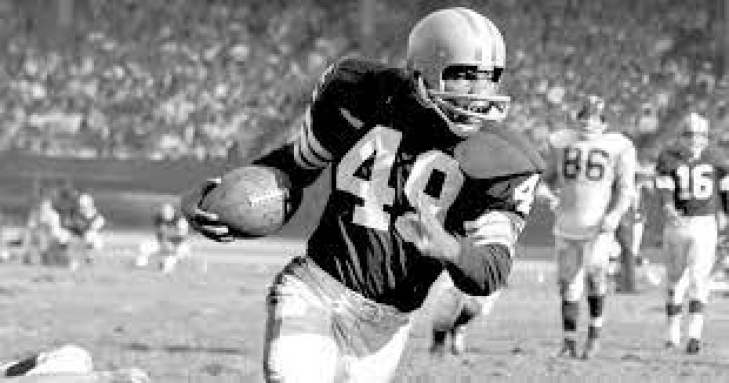
Selected in the seventh round of the 1958 NFL Draft out of Illinois, Bobby Mitchell became another iconic discovery by head coach Paul Brown. Boasting electric 9.5-second 100-yard-dash speed, Mitchell immediately stepped into the Cleveland backfield alongside Jim Brown, creating one of the most explosive, dynamic rushing duos in football history.
Cleveland utilized Mitchell as a versatile and multifaceted player. Capable of scoring at any moment he possessed the ball, he positioned himself at halfback, extended out wide as a pass receiver, and served as the team's primary kick and punt return specialist. During his four seasons in Ohio, Mitchell accumulated an impressive total of 5,916 all-purpose yards, consistently ranking within the top six league-wide in all-purpose yards each season. His exceptional speed on the periphery complemented Jim Brown's formidable interior power, propelling the Browns' offense to consecutive winning seasons and securing a place in the 1957 NFL Championship Game.
Despite his significant productivity and popularity, Mitchell was traded after the 1961 season. In pursuit of a formidable full-time fullback to complement Jim Brown, Cleveland exchanged Mitchell to Washington for the rights to Heisman Trophy recipient Ernie Davis. Tragically, Davis was diagnosed with leukemia shortly after the trade, which prevented him from ever participating in an NFL game. Concurrently, the transaction bore substantial historical significance: Washington was the last remaining segregated team in the NFL, and owner George Preston Marshall faced substantial pressure from the federal government to desegregate. Mitchell thus became the first African American star in the history of the Washington franchise.
Switching to a full-time flanker in his new environment, Mitchell achieved a Hall of Fame level, leading the league in receiving yards twice and earning four Pro Bowl selections. Over four seasons with Cleveland (1958–1961), he played 48 games, totaling 2,297 rushing yards, 1,462 receiving yards, and 38 touchdowns.
27. Walt Michaels
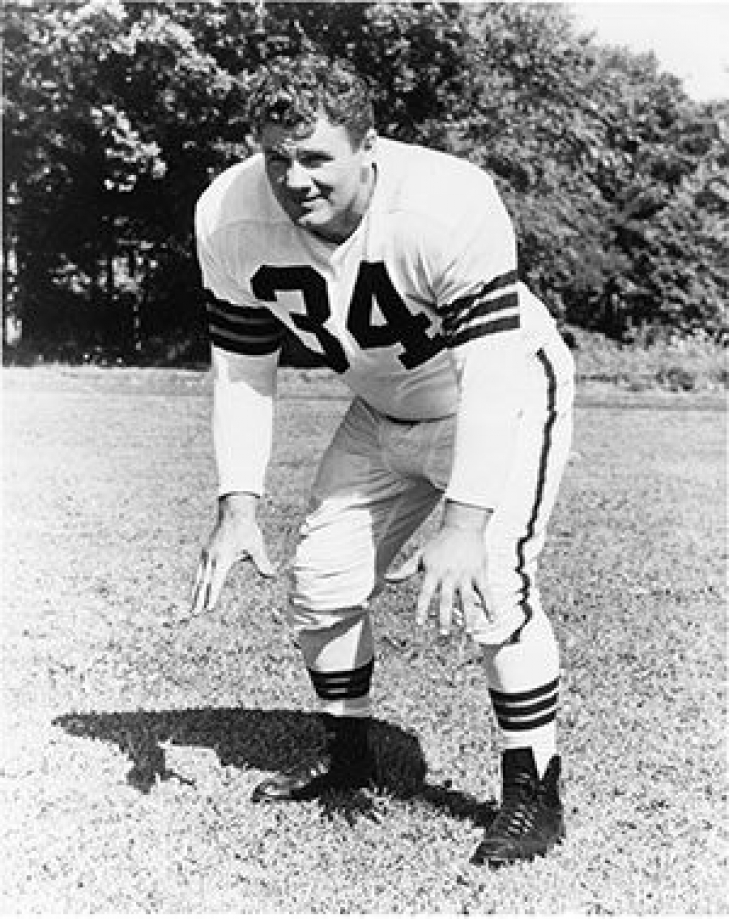
Drafted out of tiny Washington & Lee in the seventh round of the 1951 NFL Draft, Walt Michaels took a roundabout path to becoming a Cleveland icon. Before he ever played a down in the regular season, the Browns traded him to Green Bay. Michaels logged a solid rookie year with the Packers, but Paul Brown quickly realized he had let a talent slip away. Before the 1952 campaign, Brown traded three players back to Green Bay to re-acquire Michaels—a decision that paid massive dividends for the franchise.
Inserted into the middle of the defense, Michaels evolved into the cerebral leader and signal-caller for Paul Brown’s unit. Operating as a pre-snap coordinator on the field, he called the defensive plays with sharp instincts, combining tactical awareness with punishing tackle-to-tackle physical play.
Michaels anchored the defense through Cleveland's championship runs in 1954 and 1955. His relentless coverage and run defense helped shut down opponents’ game plans, including a memorable two-interception performance in the 1954 NFL Championship Game victory over Detroit.
His individual dominance gained league-wide recognition in the second half of the decade. Michaels rattled off five consecutive Pro Bowl selections from 1955 through 1959, consistently ranking among the game's premier linebackers. While official tackle statistics were not tracked during his era, film study and team records indicate he was regularly the team's leading tackler.
After ten seasons in Cleveland (1952–1961), Michaels stepped away from the team, later putting on the pads for one final season in 1963 with the AFL's New York Jets—a franchise he would eventually lead as head coach years later.
With Cleveland, Michaels appeared in 118 regular-season games, picking off 11 passes and recovering eight fumbles while playing in five NFL Championship Games. The organization inducted him into the Cleveland Browns Legends in 2006.
