

 Not in Hall of Fame News
Yes, we know that this is taking a while! As many of…
 Not in Hall of Fame News
Yes, we know that this is taking a while! As many of…
 Not in Hall of Fame News
2002 SEMI-FINAL RESULTS: Thank you for your participation in the Pro Football…
 Not in Hall of Fame News
Yes, we know that this is taking a while! As many of…
 Not in Hall of Fame News
We are diligently working away at Notinhalloffame on revising our Football lists…
 Not in Hall of Fame News
We are diligently working away at Notinhalloffame on revising our Football lists…
 From the Desk of the Chairman
October baseball often turns individual pitching performances into lasting postseason memories. Strikeout…
 From the Desk of the Chairman
For decades, the sports debate ran on gut feeling. Barstool arguments, call-in…
 From the Desk of the Chairman
Introduction to Private Adult Tennis Camps in Prague Adult club players increasingly…
 From the Desk of the Chairman
Unlike in the case of pre-match betting, where you have to pick…
 From the Desk of the Chairman
Kupu178 builds trust with people by using top-end end-to-end encryption. It checks…
 From the Desk of the Chairman
Sports fans thrive on calculating strategy, reading momentum, and maximizing every tactical…



100 Active Potential Football Hall of Famers
-
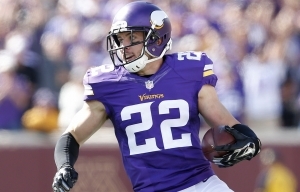 #28 Overall, Harrison Smith, Minnesota Vikings, Strong Safety, #2 Safety2025 Pre-Season Rank #38, 2024 Pre-Season Rank #50, 2023 Pre-Season Rank #72, 2022 Pre-Season Rank #79, 2021 Pre-Season Rank #90, 2020 Pre-Season Rank…in Safeties
 -
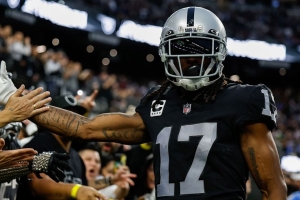 #21 Overall, Davante Adams, Los Angeles Rams, #2 Wide Receiver2025 Pre-Season Rank #23, 2024 Pre-Season Rank #27, 2023 Pre-Season Rank #24, 2022 Pre-Season Rank #43, 2021 Pre-Season Rank #67, 2020 Pre-Season Rank…
 -
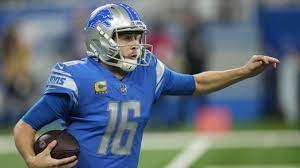 #45 Overall, Jared Goff, Detroit Lions, #8 Quarterback2025 Pre-Season Rank #46, pSeason 2024 Pre-Season Rank #89, 2023 Pre-Season Rank #100, 2022 Pre-Season Rank #112. 2021 Pre-Season Rank #106, 2020 Pre-Season…in Quarterbacks
 -
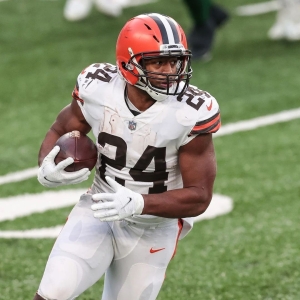 #40 Overall, Justin Jefferson, Minnesota Vikings, #5 Wide Receiver2025 Pre-Season Rank #38, 2024 Pre-Season Rank #50, 2023 Pre-Season Rank #101, 2022 Pre-Season Rank #130. Peak Period: 2020-24 Since he debuted in…
Visit the Fictitious Halls of Fame!


You May Also Like...
EDITOR’S CHOICE
 DDT's Pop Flies
When the veterans committee (VC), officially convening as the Contemporary Baseball Era…



 Live Music Head
Project/Objectan interview with André Cholmondeleyby Live Music HeadOriginally published at timessquare.com on…

LATEST RANKINGS


MOST POPULAR RANKINGS



Committee Chairman
37. Doug Dieken
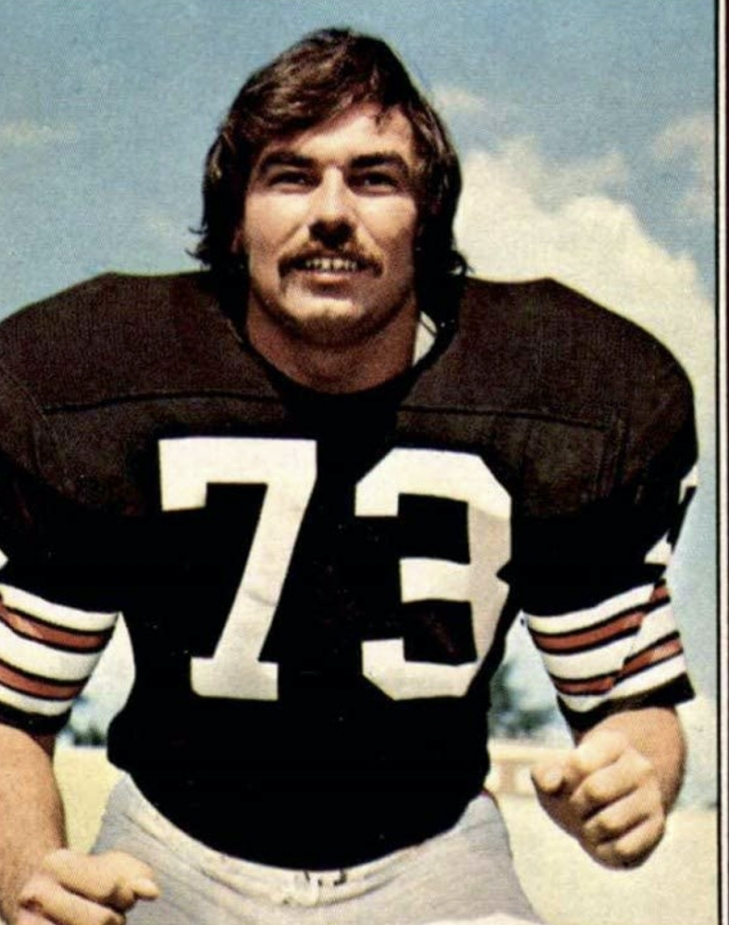
Selected out of Illinois in the sixth round of the 1971 draft, Doug Dieken didn't generate headline noise, but he went on to deliver one of the single best return-on-investment picks in Cleveland football history. Originally a converted tight end, he broke into the lineup at left tackle during his rookie year, starting five games. By 1972, he took total possession of the starting job on the blind side—and didn't let go for well over a decade.
What followed was a remarkable display of durability. Dieken set franchise records by playing in 203 consecutive regular-season games and starting 194 in a row. For 14 straight seasons, he consistently anchored the left side of Cleveland's front line, no matter the opponent or injury, providing dependable pass protection for quarterbacks such as Mike Phipps and Brian Sipe.
His peak individual performance occurred during the historic 1980 "Kardiac Kids" campaign. Dieken was responsible for the most crucial pass-blocking duties, enabling Sipe to secure NFL MVP honors and guiding Cleveland to the AFC Central title. His consistent and clean protection earned him a Pro Bowl selection that season. Additionally, he received widespread acclaim for his leadership, winning the Byron "Whizzer" White NFL Man of the Year Award after the 1982 season.
After ending his playing career in 1984, Dieken stayed with the organization as a radio analyst for the Browns, earning admiration for his wit, line analysis, and institutional knowledge, becoming a beloved figure to fans as both player and broadcaster. Dieken played 203 games, and his unmatched longevity on the field and decades of service earned him induction into the Cleveland Browns Legends in 2006.
35. Greg Pruitt
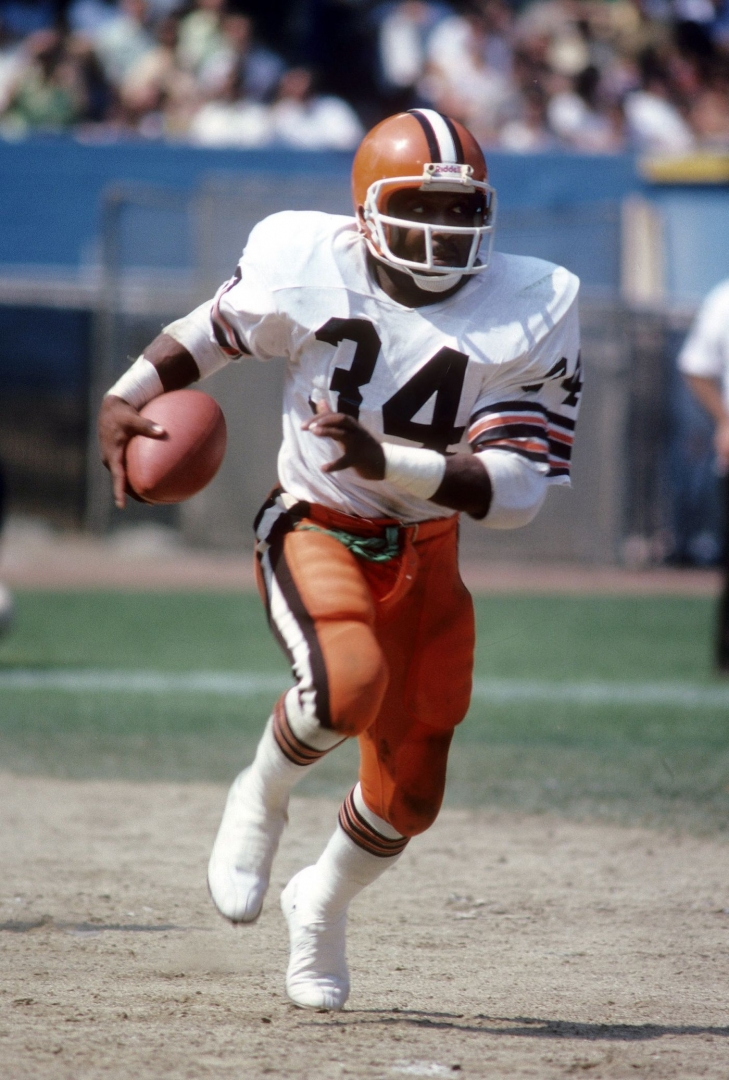
Carrying a frame listed at just 5 feet 10 inches and 180 pounds, Greg Pruitt shattered the misconception that a tailback needed heavy mass to survive the pro game. Fresh off an All-American career at Oklahoma—where he finished as a two-time Heisman Trophy finalist—the Browns spent a second-round pick on him in 1973. Rather than force-feeding him carries right away, Cleveland used his sub-4.4 speed as an open-field return man, earning him a Pro Bowl nod as a rookie.
Pruitt’s role expanded in his second season, setting up a dominant three-year run as Cleveland’s premier offensive threat. From 1975 to 1977, he eclipsed the 1,000-yard rushing mark in three consecutive seasons while operating behind an interior offensive line anchored by Joe DeLamielleure and Gene Hickerson. Known for his signature tear-away jerseys—a tactic designed to prevent tackles that forced the NFL to eventually change its uniform rules—Pruitt earned back-to-back Pro Bowl selections in 1976 and 1977, averaging over 4.5 yards per carry and racking up double-digit touchdowns.
A knee injury in 1979 slowed his raw breakaway gear, forcing him to adapt his game. Instead of fading, Pruitt evolved into a dual-threat weapon out of the backfield for the "Kardiac Kids" era. Over the 1980 and 1981 campaigns, he served as a high-volume safety valve for MVP quarterback Brian Sipe, pulling in a combined 115 receptions as a third-down specialist and perimeter playmaker.
After nine years in Ohio, Pruitt was traded to the Los Angeles Raiders ahead of the 1982 season. He reinvented himself yet again on the West Coast, reinventing his career as an elite punt returner and earning his fifth career Pro Bowl nod in 1983, capped off by a Super Bowl XVIII championship victory over Washington.
Pruitt finished his nine-season tenure in Cleveland (1973–1981) with 5,496 rushing yards, 3,022 receiving yards, and 2,182 return yards, totaling 10,700 all-purpose yards and 42 touchdowns. The organization named him to the inaugural class of the Cleveland Browns Legends in 2001.
34. Chip Banks
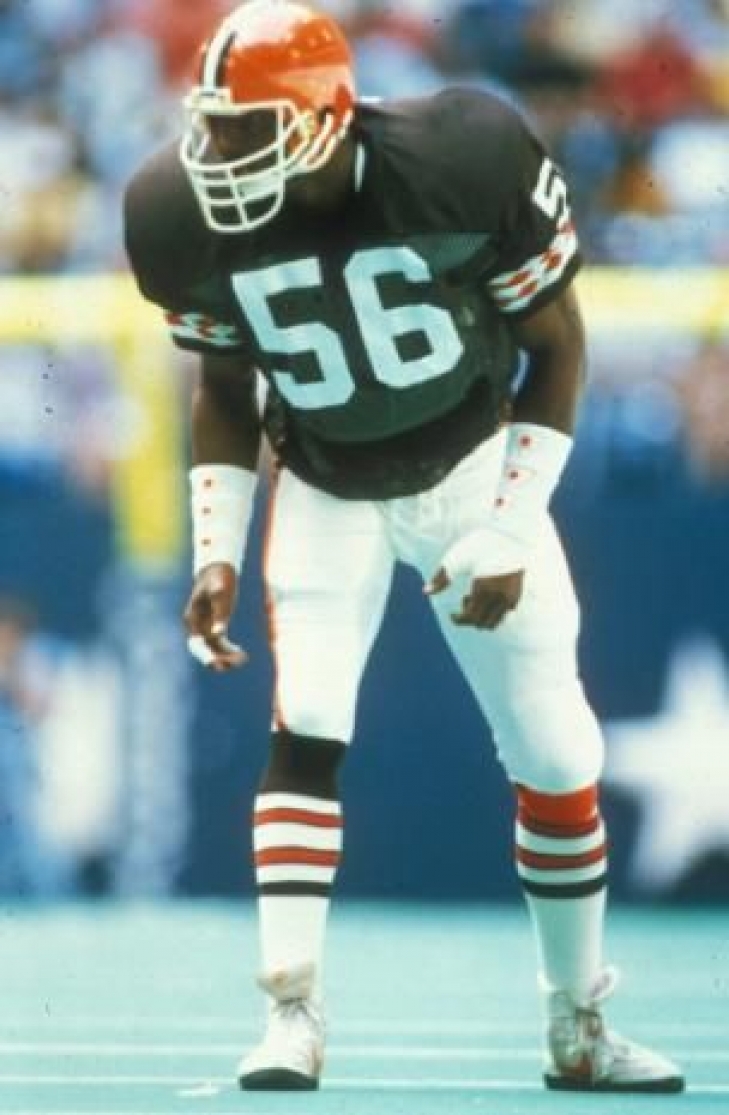
Selecting Chip Banks with the third overall pick in the 1982 draft paid immediate dividends for a Cleveland defense looking for a game-changer at linebacker. The USC product stepped onto the professional stage unfazed by the transition and put together a dominant inaugural campaign. Banks captured the AP NFL Defensive Rookie of the Year award while earning his first Pro Bowl selection, showcasing a rare blend of length, closing speed, and sideline-to-sideline pursuit.
Over his five seasons in Ohio, Banks established himself as one of the premier outside linebackers in the game. He was a versatile cornerstone of Marty Schottenheimer's defense, equally capable of setting the edge against the run, dropping into pass coverage, or blitzing the quarterback. From 1982 through 1986, he made four Pro Bowl appearances and earned First-Team All-Pro honors in 1983, solidifying a stretch when his name was consistently mentioned alongside the elite defenders of his era.
Banks played a key role in Cleveland's resurgence as a conference power, contributing to consecutive playoff runs in 1985 and 1986, and reaching the 1986 AFC Championship Game. In 1985, he achieved a career-best 11 sacks, showcasing his talent for disrupting pass blocking when given the chance on the edge. Over his five years with the Browns, he posted double-digit Approximate Value ratings in four seasons, consistently delivering strong performances.
Despite his superstar trajectory on the field, friction between Banks and the Cleveland front office began to simmer over contract demands. Fearing an impending holdout and a protracted negotiation, the Browns traded him to the San Diego Chargers ahead of the 1987 season as part of a high-profile draft-day swap. His business conflicts followed him to the West Coast, culminating in Banks sitting out the entire 1988 season during a contract holdout before resuming his career with the Indianapolis Colts.
With Cleveland, Banks started all 73 regular-season games he appeared in, racking up 27.5 sacks, five interceptions, and six fumble recoveries.
33. Jerry Sherk
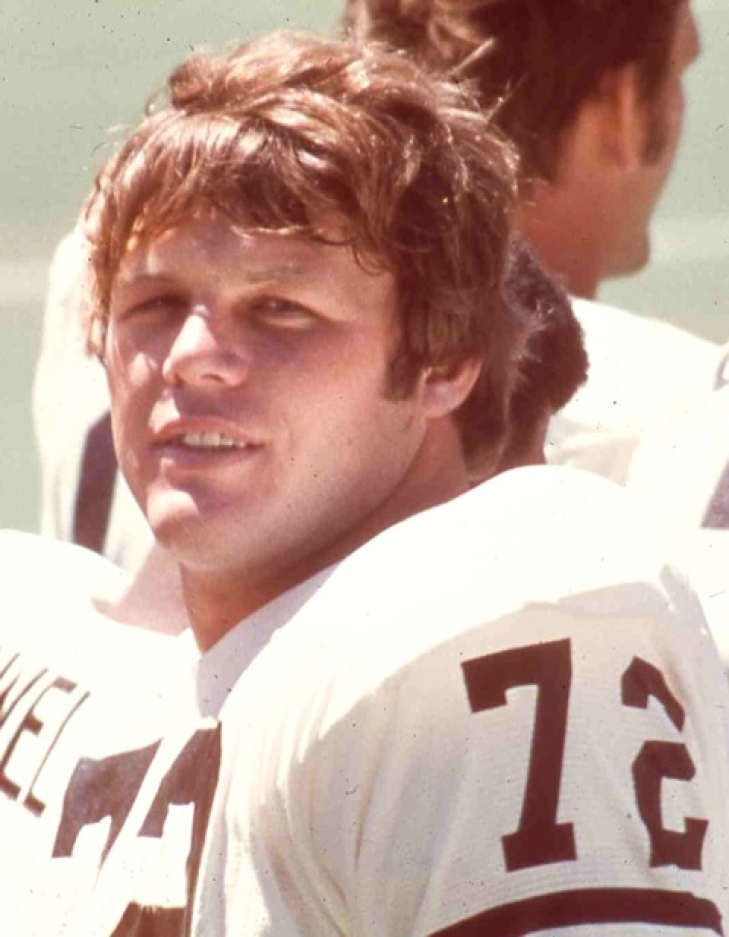
Taken in the second round of the 1970 NFL Draft out of Oklahoma State, Jerry Sherk stepped into Cleveland's defense as an immediate factor along the interior. While the 1970s lacked the championship hardware of previous decades for the Browns, Sherk served as the primary anchor for the franchise's defensive front throughout the entire era.
He won the starting right defensive tackle job as a rookie and quickly established himself as a dominant force against both the run and the pass. Combining raw wrestling strength with explosive lateral quickness, Sherk consistently collapsed the pocket from the inside. Over a stellar four-year stretch from 1973 to 1976, he earned four consecutive Pro Bowl selections, capping that run in 1976 with First-Team All-Pro honors and the Newspaper Enterprise Association (NEA) NFL Defensive Player of the Year award.
Sherk was among the most effective interior pass rushers of his generation. Though sacks did not become an official NFL statistic until 1982, retroactive film study credits him with 69.5 career sacks in Cleveland, including four seasons in which he cracked double digits. His relentless motor kept the Browns competitive through a transitional era, providing a steadying presence amid roster turnover and coaching changes.
A severe knee infection suffered in 1979 nearly ended his career, limiting him to just one game that season. Sherk fought his way back, returning to play three final seasons primarily as a designated pass rusher and veteran mentor before ending his career after the 1981 campaign.
Across 12 seasons spent entirely in Cleveland (1970–1981), Sherk played in 156 regular-season games and recorded 12 fumble recoveries alongside his 69.5 sacks.
