

 Not in Hall of Fame News
Yes, we know that this is taking a while! As many of…
 Not in Hall of Fame News
Yes, we know that this is taking a while! As many of…
 Not in Hall of Fame News
2002 SEMI-FINAL RESULTS: Thank you for your participation in the Pro Football…
 Not in Hall of Fame News
Yes, we know that this is taking a while! As many of…
 Not in Hall of Fame News
We are diligently working away at Notinhalloffame on revising our Football lists…
 Not in Hall of Fame News
We are diligently working away at Notinhalloffame on revising our Football lists…
 From the Desk of the Chairman
October baseball often turns individual pitching performances into lasting postseason memories. Strikeout…
 From the Desk of the Chairman
For decades, the sports debate ran on gut feeling. Barstool arguments, call-in…
 From the Desk of the Chairman
Introduction to Private Adult Tennis Camps in Prague Adult club players increasingly…
 From the Desk of the Chairman
Unlike in the case of pre-match betting, where you have to pick…
 From the Desk of the Chairman
Kupu178 builds trust with people by using top-end end-to-end encryption. It checks…
 From the Desk of the Chairman
Sports fans thrive on calculating strategy, reading momentum, and maximizing every tactical…




100 Active Potential Football Hall of Famers
-
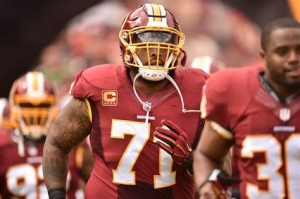 #6 Overall, Trent Williams, San Francisco 49ers, Offensive Tackle, #1 Offensive Lineman2025 Pre-Season Rank #5, 2024 Pre-Season Rank #6, 2023 Pre-Season Rank #6, 2022 Pre-Season Rank #20, 2021 Pre-Season Rank #33, 2020 Pre-Season Rank…
 -
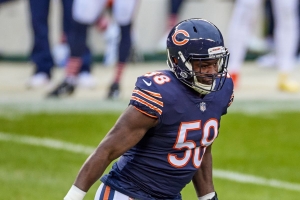 #31 Overall, Roquan Smith, Baltimore Ravens Linebacker, #3 Defensive Lineman/Linebacker: Interior Lineman2025 Pre-Season Rank #39, 2024 Pre-Season Rank #62, 2023 Pre-Season Rank #92, 2022 Pre-Season Rank #133, 2021 Pre-Season Rank #146. Peak Period: 2020-24…
 -
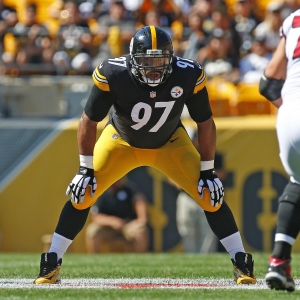 #20 Overall, Cameron Heyward, Pittsburgh Steelers, Defensive End, #9 Defensive Lineman/Linebackers: Pass Rushers2025 Pre-Season Rank #19, 2024 Pre-Season Rank #28, 2023 Pre-Season Rank #33, 2022 Pre-Season Rank #38, 2021 Pre-Season Rank #75, 2020 Pre-Season Rank…
 -
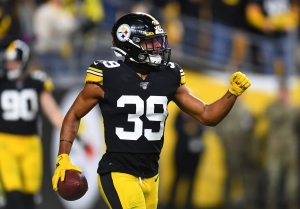 #44 Overall, Minkah Fitzpatrick, New York Jets, Free Safety, #3 Safety2025 Pre-Season Rank #43, 2024 Pre-Season Rank #56, 2023 Pre-Season Rank #63, 2022 Pre-Season Rank #99, 2021 Pre-Season Rank #108, 2020 Pre-Season Rank…in Safeties
Visit the Fictitious Halls of Fame!


You May Also Like...
EDITOR’S CHOICE
 DDT's Pop Flies
When the veterans committee (VC), officially convening as the Contemporary Baseball Era…



 Live Music Head
Project/Objectan interview with André Cholmondeleyby Live Music HeadOriginally published at timessquare.com on…

LATEST RANKINGS


MOST POPULAR RANKINGS


Committee Chairman
41. Mike Pruitt
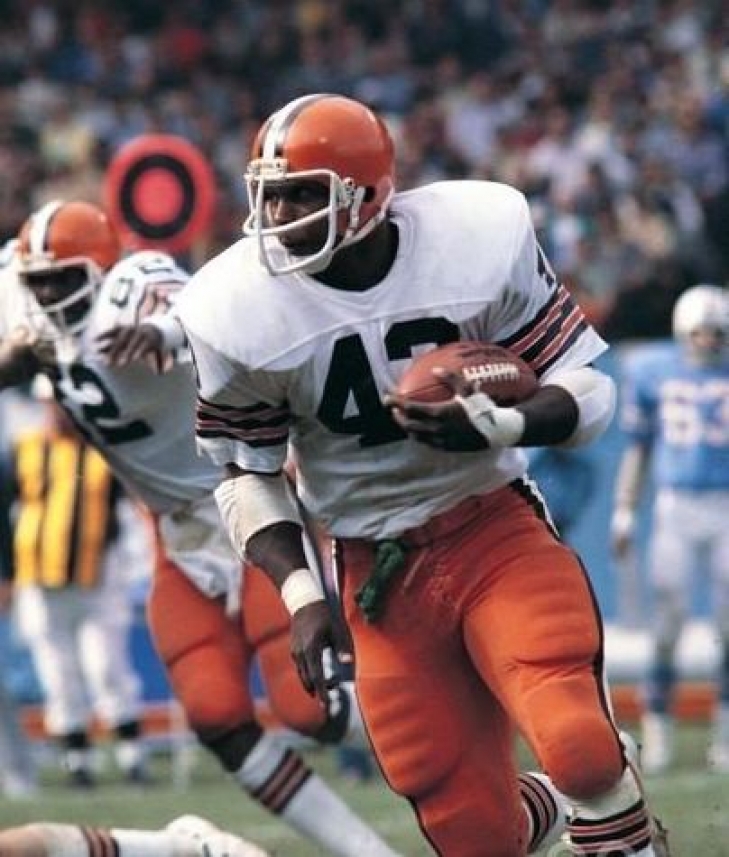
Selected in the second round of the 1976 draft out of Purdue, Mike Pruitt stepped into a Cleveland backfield looking for a new physical identity. The power fullback spent his first two seasons largely stuck on the bench behind established veterans, but when his opportunity expanded in 1978, he showcased a punishing, downhill running style that quickly made him indispensable.
Pruitt smashed through the league in 1979, putting together a breakout campaign for the ages. Operating as the focal point of the offense, he pounded opposing fronts for career highs in rushing yards (1,294) and yards from scrimmage (1,666), scoring nine touchdowns while earning his first Pro Bowl selection. His ability to move the chains on short-yardage downs gave Cleveland a relentless, physical punch that balanced Brian Sipe's passing attack.
He proved that explosive season was no fluke during the historic 1980 "Kardiac Kids" division-winning run. Pruitt racked up 1,034 rushing yards, added 471 receiving yards, and recorded six total touchdowns, earning his second consecutive Pro Bowl nod. He remained a high-volume workhorse over the next several seasons, topping 1,500 yards from scrimmage again in 1981 and logging his fourth career 1,000-yard rushing campaign in 1983.
As injuries and heavy workload mileage caught up to him, Pruitt saw his snap count decline in 1984. Cleveland released the veteran fullback prior to the 1985 season, allowing him to finish his career with short stops in Buffalo and Kansas City.
Over his time with the Browns, Pruitt accumulated 6,540 rushing yards, 1,761 receiving yards, and punched in through the end zone 52 times. The Browns inducted him as one of their legends in 2004.
40. Jim Houston
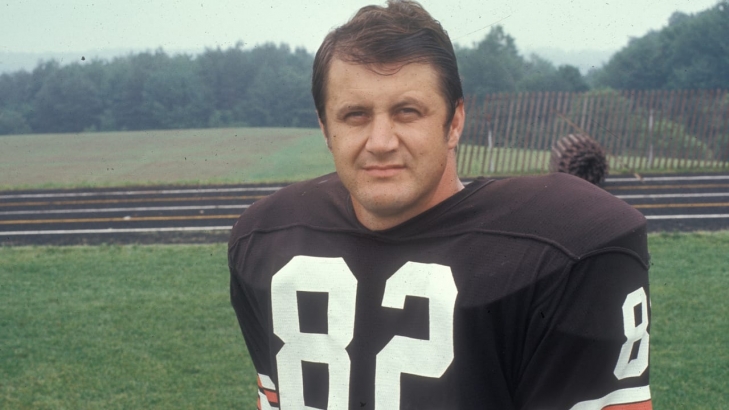
Keeping Ohio State stars in-state was a signature Cleveland Browns strategy, and selecting Jim Houston eighth overall in the 1960 NFL Draft paid off instantly. Coming off an All-American career in Columbus, the rookie immediately locked down a starting job on the outside of Paul Brown’s defense, kicking off a decade-plus of reliable production.
While Cleveland’s 1960s identity was headlined by Jim Brown and an explosive offense, Houston provided the defensive backbone. Billed as "Mr. Dependable," he possessed the athletic versatility to set the edge against the run, blitz off the corner, or drop into deep coverage against running backs and tight ends. His steady play peaked in 1964, when he helped shut out the Baltimore Colts 27–0 in the NFL Championship Game to capture Cleveland's last league title.
His individual honors increased throughout the decade. Houston was selected for four Pro Bowls (1964, 1965, 1969, and 1970), maintaining his status as one of the top linebackers despite a coaching change to Blanton Collier. Known for his relentless play in space, he recorded 14 career interceptions—three of which he returned for touchdowns—and recovered 11 fumbles. Retroactive analysis also attributes 29.5 sacks to him, emphasizing his often overlooked pass-rushing contribution on third downs.
Houston retired after the 1972 campaign, ending a 13-year career spent entirely in Cleveland. The Browns named him as one of its Legends in 2006.
39. Tommy James
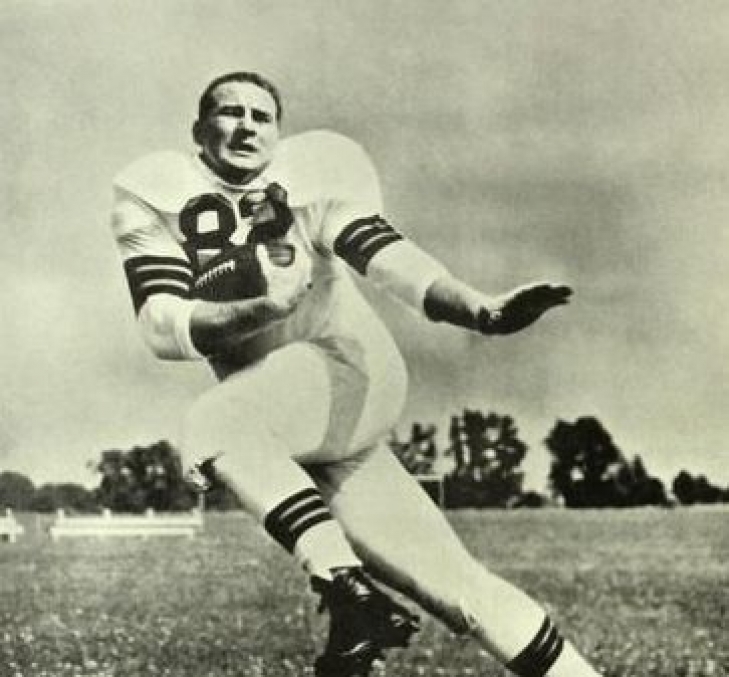
Signing Tommy James after his release from the Detroit Lions turned out to be another masterstroke by Paul Brown. Following an injury-shortened rookie year in Detroit that ended with a broken arm, the former Ohio State defensive back returned to his home state in 1948, quickly earning a starting job in Cleveland's secondary during the final two dominant runs of the All-America Football Conference (AAFC).
James immediately solidified the back end of Paul Brown’s defense. Blending sharp instincts with aggressive, physical coverage, he helped guide Cleveland to back-to-back undefeated and championship AAFC seasons in 1948 and 1949. When the Browns moved to the NFL in 1950, James proved his style translated seamlessly, helping defeat the Los Angeles Rams in the 1950 NFL Championship Game to capture the franchise's third straight league title across two leagues.
His individual production hit its stride in the early 1950s as a focal point of Cleveland’s defense. James earned his lone Pro Bowl selection during the 1953 season, picking off a career-high nine passes and returning them for 164 yards. He went on to help anchor two more championship runs, grabbing back-to-back NFL titles in 1954 and 1955 while regularly shutting down opponents’ downfield passing attacks.
After eight seasons in Cleveland (1948–1955), James spent his final NFL campaign with the Baltimore Colts in 1956 before hanging up his cleats. With the Browns, James played in 94 regular-season games, snatched 34 interceptions, and won five league titles (two AAFC, three NFL). The Browns permanently honored his role as a foundational champion by naming him a Cleveland Browns Legend in 2004.
38. Clarence Scott
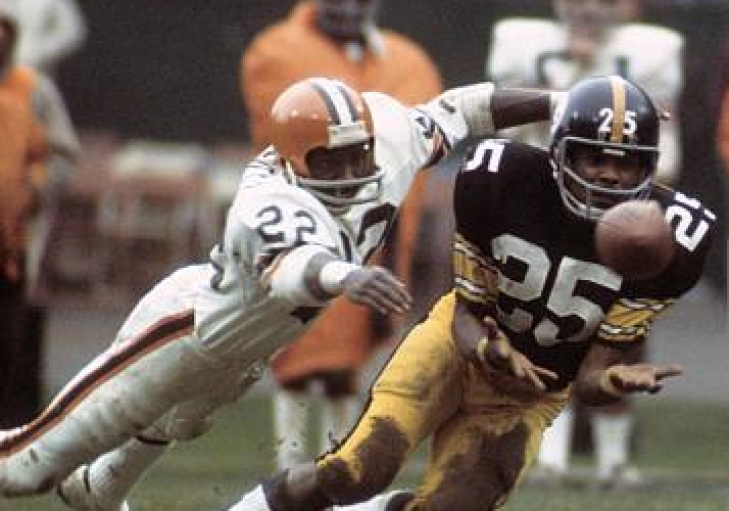
Selecting Clarence Scott with the 14th overall pick in 1971 paid off immediately for a Cleveland defense looking for a blue-chip cornerstone. The consensus All-American out of Kansas State stepped straight onto the field as a rookie starter at cornerback, launching what would become a 13-year career spent entirely in orange and brown.
Scott relied on smooth hips, sharp instincts, and disciplined technique to shut down outer passing lanes. He hauled in four interceptions during his inaugural campaign and hit his individual stride in 1973, picking off five passes to earn a Pro Bowl selection. A model of consistency, Scott snagged at least two interceptions in 12 of his 13 seasons, recording four picks in four separate campaigns while regularly matching up against the opponent's top wideouts.
His durability proved as vital to the Browns as his ball-hawking skills. Over his 13 years with the team, Scott played in 186 regular-season games, including an incredible streak of 178 consecutive appearances. As he entered the second act of his career, he seamlessly transitioned from cornerback to free safety for his final five seasons. The move provided veteran command to the back end of the secondary, helping guide the defensive unit through the high-flying "Kardiac Kids" era and capturing two division titles along the way.
By the time he retired after the 1983 season, Scott had accumulated 39 career interceptions (returning two for touchdowns) and recovered 11 fumbles. The franchise officially enshrined his lifetime of defensive leadership by naming him a Cleveland Browns Legend in 2012.
