

 Not in Hall of Fame News
Yes, we know that this is taking a while! As many of…
 Not in Hall of Fame News
Yes, we know that this is taking a while! As many of…
 Not in Hall of Fame News
2002 SEMI-FINAL RESULTS: Thank you for your participation in the Pro Football…
 Not in Hall of Fame News
Yes, we know that this is taking a while! As many of…
 Not in Hall of Fame News
We are diligently working away at Notinhalloffame on revising our Football lists…
 Not in Hall of Fame News
We are diligently working away at Notinhalloffame on revising our Football lists…
 From the Desk of the Chairman
October baseball often turns individual pitching performances into lasting postseason memories. Strikeout…
 From the Desk of the Chairman
For decades, the sports debate ran on gut feeling. Barstool arguments, call-in…
 From the Desk of the Chairman
Introduction to Private Adult Tennis Camps in Prague Adult club players increasingly…
 From the Desk of the Chairman
Unlike in the case of pre-match betting, where you have to pick…
 From the Desk of the Chairman
Kupu178 builds trust with people by using top-end end-to-end encryption. It checks…
 From the Desk of the Chairman
Sports fans thrive on calculating strategy, reading momentum, and maximizing every tactical…






100 Active Potential Football Hall of Famers
-
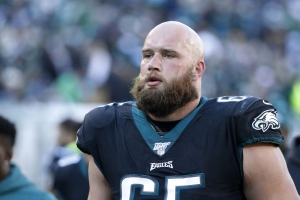 #34 Overall, Lane Johnson, Philadelphia Eagles, Right Tackle, #3 Offensive LinemanPre-Season Rank #27, 2024 Pre-Season Rank #40, 2023 Pre-Season Rank #57, 2022 Pre-Season Rank #107, 2021 Pre-Season Rank #143. Peak Period 2017-18/2022-24 When…
 -
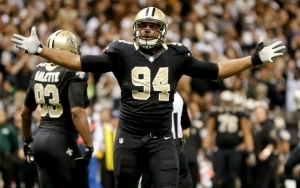 #15 Overall, Cameron Jordan, New Orleans Saints, Defensive End, #7 Defensive Lineman/Linebacker: Pass Rusher2025 Pre-Season Rank #14, 2024 Pre-Season Rank #21, 2023 Pre-Season Rank #27, 2022 Pre-Season Rank #25, 2021 Pre-Season Rank #36, 2020 Pre-Season Rank…
 -
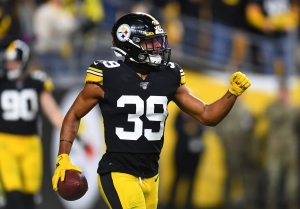 #44 Overall, Minkah Fitzpatrick, New York Jets, Free Safety, #3 Safety2025 Pre-Season Rank #43, 2024 Pre-Season Rank #56, 2023 Pre-Season Rank #63, 2022 Pre-Season Rank #99, 2021 Pre-Season Rank #108, 2020 Pre-Season Rank…in Safeties
 -
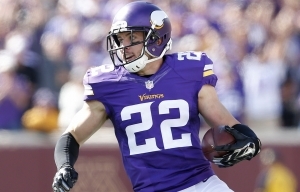 #28 Overall, Harrison Smith, Minnesota Vikings, Strong Safety, #2 Safety2025 Pre-Season Rank #38, 2024 Pre-Season Rank #50, 2023 Pre-Season Rank #72, 2022 Pre-Season Rank #79, 2021 Pre-Season Rank #90, 2020 Pre-Season Rank…in Safeties
Visit the Fictitious Halls of Fame!


You May Also Like...
EDITOR’S CHOICE

 DDT's Pop Flies
When the veterans committee (VC), officially convening as the Contemporary Baseball Era…

 Live Music Head
Project/Objectan interview with André Cholmondeleyby Live Music HeadOriginally published at timessquare.com on…

LATEST RANKINGS





MOST POPULAR RANKINGS
















Committee Chairman
37. Dan Pastorini
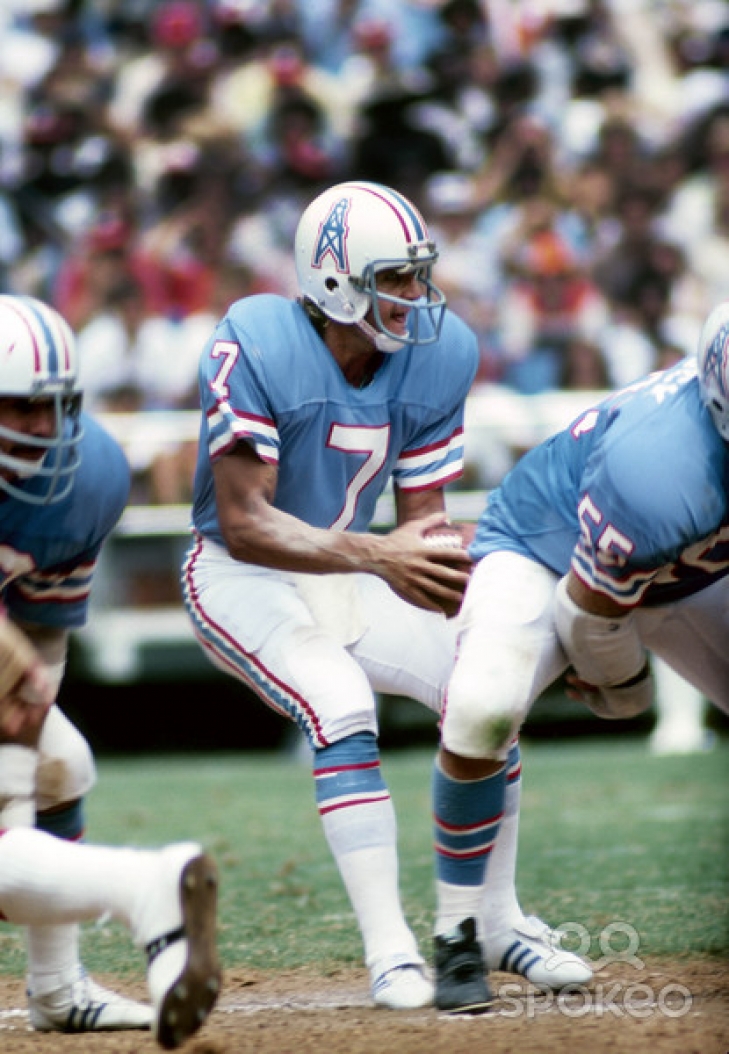
They called the 1971 Draft the "Year of the Quarterback," as the first three picks were Jim Plunkett, Archie Manning, and Dan Pastorini, that last of which was taken by Houston.
The Oilers of the early 70s were not the Oilers of the early 60s, and Pastorini did not have many talents around him. During his rookie season, he became the starter but only had six wins in his first three years and threw far more Interceptions than Touchdowns. It got better as the decade progresses, and he went to the Pro Bowl in 1975, and while his Interceptions were still high, he found ways to win.
In 1978, Pastorini had his best year, throwing for a career-high 2,473 Yards and engineering a league-leading six Game Winning Drives. 1979 better in terms of team success, as Pastorini and the Oilers made it to the AFC Championship Game, and looked to have won it, had not a Touchdown Pass to Mike Renfro been called incomplete. That turned out to be Pastorini’s swansong with Houston.
Pastorini was traded to Oakland for future Hall of Fame inductee Ken Stabler, though he was injured early in the season, and Plunkett, who was taken first in his draft class, took over and would lead them to a Super Bowl win.
As an Oiler, Pastorini threw for 16,864 Yards with a TD-INT ratio of 96-139.
36. Al Jamison
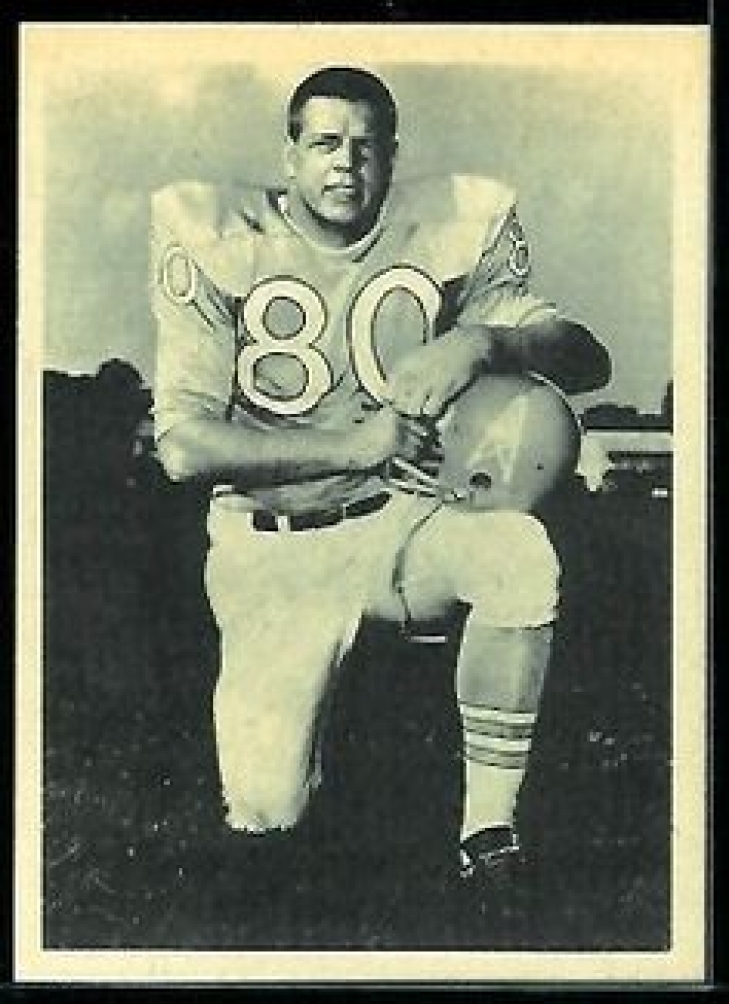
There are a lot of “What ifs?” in sports, but in terms of the Houston Oilers/Tennessee Titans, Al Jamison might have been the first but still the most appropriate.
Undrafted out of Colgate, "The Assassin," as he was known for his punishing play, signed with the Oilers, winning the starting Left Tackle job as a rookie. Jamison was phenomenal, earning First Team All-Pro honors while helping Houston win the inaugural AFL Title. The Oilers won it again in 1961, with Jamison even better, securing a second First Team All-Pro nod. This was the last title for Houston in the AFL, but not the last First Team All-Pro for Jamison, as he did it again in his third year.
A severe back problem rendered 1962 his last season, and he never played football again, thus ending what began as a Hall of Fame worthy career.
15. Clay Matthews Jr.
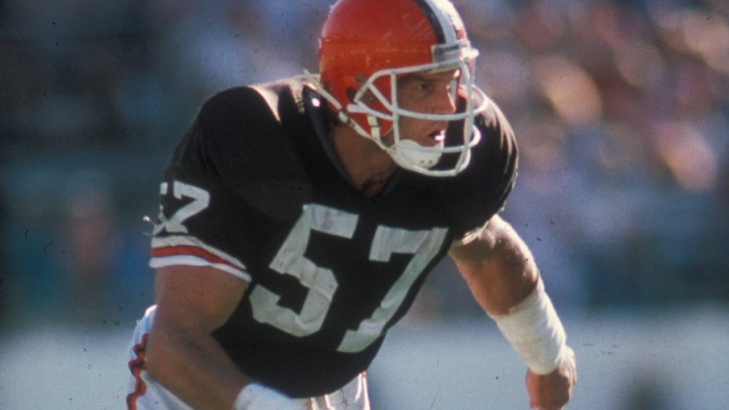
Clay Matthews Jr. carried on an unmatched football lineage. The son of four-year NFL veteran Clay Matthews Sr. and older brother to Pro Football Hall of Fame offensive lineman Bruce Matthews, Clay Jr. spent the first 16 of his 19 professional seasons in Cleveland after he was drafted 12th overall in 1978. He established himself as the ultimate defensive iron-man and a quintessential franchise leader, anchoring the Browns' linebacker corps throughout the late 1970s, 1980s, and early 1990s.
Matthews combined instincts, tactical reading of backfield flows, and rare physical durability. Operating as an outside linebacker in both 4-3 and 3-4 schemes, he possessed the lateral quickness to scrap over the top of blocks to shut down perimeter runs, while also boasting the bend and power to drop quarterbacks off the edge. His longevity and ability to play every down made him the emotional heartbeat of Marty Schottenheimer's physical defenses.
Matthews took over as a full-time starter in his second season in 1979. Over his 16-year run in Northeast Ohio, he recorded eight seasons with at least 100 tackles and led the NFL in combined tackles four times. He hit his pass-rushing stride in 1984, logging a career-high 12.0 sacks and earning Second-Team All-Pro honors.
His peak prime coincided with Cleveland's late-1980s surge, earning four Pro Bowl selections in a five-year span (1985, 1987–1989). Matthews was on the field for the franchise's most iconic AFC Championship battles. His signature postseason moment arrived in the 1989 AFC Divisional Playoff against Buffalo, when he intercepted Jim Kelly at the 1-yard line with seconds remaining to seal a 34–30 victory and propel Cleveland to the AFC title game.
Matthews departed Cleveland following the 1993 season, joining the Atlanta Falcons for three final years before retiring at age 40 as the oldest player in NFL history to record a sack (40 years, 282 days). Across his 232 regular-season games with the Browns, he accumulated 1,430 tackles, 62.0 sacks, 14 interceptions, and 24 forced fumbles. In 2019, Cleveland officially recognized his case for Canton by inducting him into the Cleveland Browns Ring of Honor.
13. Mac Speedie
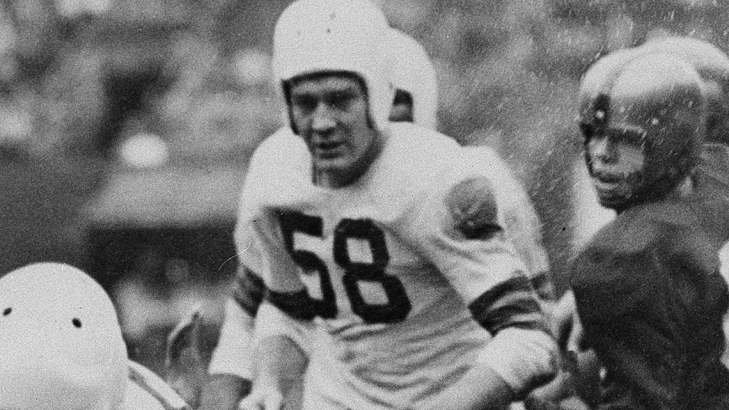
Selected in the 15th round (135th overall) of the 1942 NFL Draft out of Utah by the Detroit Lions, Mac Speedie chose to pause his professional football journey to serve in the U.S. Army during World War II. After returning, he eagerly tried out for Paul Brown's inaugural 1946 Cleveland Browns in the emerging All-America Football Conference (AAFC). Speedie secured a spot on the team and quickly became one of the top wide receivers of his time, teaming up with Dante Lavelli to form one of the most formidable receiving duos in professional football history.
Speedie showcased a graceful stride, perfect timing, and impressive control along the sideline. As Paul Brown’s main split-end threat, he skillfully ran sharp curl and post routes that caught defenses off guard, especially when they laid extra focus on Cleveland's strong ground game. His big hands and sharp tracking skills enabled him to catch passes while moving at full speed, transforming short throws into exciting long-distance touchdowns.
Speedie quickly made a big impact in the AAFC, playing a key role in helping the Browns secure all four AAFC Championships from 1946 to 1949. He was a standout receiver, leading the league in receiving yards twice—amassing 1,146 yards in 1947 and 1,028 yards in 1949—and topping the receptions chart for three straight seasons from 1947 to 1949. During the 1947 season, he even set a professional football record with an impressive average of 81.9 receiving yards per game.
When Cleveland joined the NFL in 1950, Speedie was right there with them. He caught 42 passes for 548 yards during the regular season and played a key role in helping Cleveland win the 1950 NFL Championship in their first year. He also earned Pro Bowl honors in 1950 and 1952, and in 1952, he led the entire NFL with 62 receptions for 911 yards and five touchdowns. Over his seven seasons in Cleveland, he was recognized twice as a First-Team All-Pro (1950, 1952) and also received three First-Team All-AAFC selections.
Following the 1952 season, a contract dispute with head coach Paul Brown prompted Speedie to leave the NFL for the Canadian Football League. He played three seasons in Canada with the Saskatchewan Roughriders and BC Lions before retiring from active play.
Speedie left Cleveland with 349 receptions for 5,602 yards and 33 touchdowns across 86 games. In 2020, he gained national recognition by joining the Pro Football Hall of Fame as part of the NFL's Centennial Class. That year, the franchise also honored him by adding him to the Cleveland Browns Ring of Honor.
