

Our All Time Top 50 Philadelphia Phillies have been revised to reflect the 2025 Season

Yes, we know that this is taking a while!
As many of you know, we at Notinhalloffame.com are slowly generating the top 50 of each major North American sports team. That being said, we maintain and update our existing Top 50 lists annually. We are pleased to present our pre-2026 revision of our top 50 Philadelphia Phillies.
As for all of our top 50 players in baseball, we look at the following:
1. Duration and Impact.
2. Traditional statistics and how they finished in the Major League Baseball.
3. Advanced Statistics.
4. Playoff performance.
5. Their respective legacy on the team.
6. How successful the team was when he was there.
7. Respecting the era in which they played.
Criteria 1-4 will make up the lion’s share of the algorithm. Please note that we have implemented this for the first time. This has changed the rankings all throughout the board.
Last year, the Phillies finished the year with a 96-66 record, which was good enough to win the National League East. However, they were bounced immediately in four games in the Divisional Round by the eventual champions, the Los Angeles Dodgers. There was one new entrant and three elevations based on the 2025 season.
As always, we present our top five, which remains unchanged.
1. Mike Schmidt
2. Robin Roberts
3. Steve Carlton
4. Ed Delahanty
5. Pete Alexander
You can find the entire list here.
Pitcher Zack Wheeler had a huge jump from #31 to #17. He was an All-MLB 2 Selection last year.
Notably, another active pitcher, Aaron Nola, did not move up from last season’s #22 rank.
Bryce Harper climbed up four spots to #30.
Catcher, J.T. Realmuto, went to #43 from #48.
Celebrated slugger Kyle Schwarber makes his debut on the list, coming in at #50. This knocked Carlos Ruiz off the Top 50.
We thank you for your continued support of our lists on Notinhalloffame.com.
Our United States Athletic Hall of Fame announces the 2025 Class

This will now be our most prominent announcement every year.
When we began Notinhalloffame in 2009, the slow goal was to rank those who were not in major Halls of Fame, but once you climb one hill, you want to climb another, and then another again. The natural perception when you cover Halls is to think you can come up with one of your own…so we did.
While looking at other sporting nations, we noticed that many had Halls of Fame dedicated to their sporting accomplishments across multiple disciplines. Yet, the United States of America, the country with the most (and most important) athletic Halls of Fame, does not have one that covers it all.
We changed that four years ago.
Admittedly, this has been an enormous learning process for us, and we continue to figure things out as we go. Mistakes were made, discoveries were uncovered, and we have completed three years of work and voting on the United States Athletic Hall of Fame.
For those discovering the USAHOF, here is how it works:
We have formed a committee to identify the nominees. This committee, which has grown in numbers and prestige annually, contains former athletes, writers, bloggers, and others in sports-related fields.
This group voted on athletes to place on the ballot.
Those athletes are then placed in a months-long public vote, where you help decide who enters the United States Athletic Hall of Fame. Anyone can vote, and all we do at the USAHOF is ensure that you are voting for qualified candidates.
Qualifying is simple, with only two rules in place:
- Be American
- Be at least 50 Years old.
For the first four years, we wanted to play “catch-up”. Considering the plethora of legendary American athletes who qualify, we wanted to induct at least 25 Athletes, five Coaches, and five Contributors to the first four classes. This will be significantly reduced from year five onward.
Let’s get into it!
Here are the newest inductees to the United States Athletic Hall of Fame:
Contributors (5).
Seymour Siwoff (Statistician) Finished First in the Online Vote:
In 1952, Seymour Siwoff bought the Elias Sports Bureau, which had been compiling baseball statistics since 1913. Siwoff, like many others, was enamored of statistics and appreciated the phenomenal work of Elias, but felt it could be much more.
Under Siwoff, his company provided stats that appeared obscure at the time, such as day/night splits, lefty vs. righty, and home/away splits. It would be the vaulting point for advanced statistics and an entirely new way of looking at the game.
Siwoff, who ran the company until he passed away in 2019, expanded the organization to cover statistical support for the National Football League, National Basketball Association, Major League Soccer, and multiple television and radio stations.
Seywoff becomes the first statistician to enter the United States Athletic Hall of Fame.
Bucko Kilroy (Football Executive) Finished Second in the Online Vote:
Frank “Bucko” Kilroy played 13 seasons in the NFL, all for the Philadelphia Eagles, where he won two NFL Championships and was a three-time Pro Bowl Selection. When his career ended in 1956, Kilroy became an assistant coach for the Eagles before moving into scouting. After two years as a scout for Philadelphia, he moved on to similar roles with Washington and Dallas. With the Cowboys, Kilroy helped convince ownership that drafting Roger Staubach would be well worth it, despite the years that the quarterback would have to miss due to military commitments.
Kilroy left the Cowboys for the New England Patriots as their director of player personnel in 1971, where he built the team into a fringe contender by the mid-to-late 70s. Kilroy then moved higher up the executive ladder to the general manager position in 1979, again acquiring talent. Three years later, he moved up to the vice president's role, and with his help, the Patriots made their first Super Bowl, though the Chicago Bears thumped them.
In 1994, Kilroy moved to a different role, back to scouting as a consultant, and he was instrumental in advising the Patriots on the acquisition of key players that helped them win their first three Super Bowls. Kilroy worked until 2007, passing away at age 86.
Jack Kent Cooke (Basketball, Football & Hockey Owner) Finished Third in the Online Vote:
Jack Kent Cooke is one of the few owners to have won championships in more than one of the big four of North American sports.
A Canadian, Cooke’s first foray into sports ownership was in Toronto, where he bought the minor league Toronto Maple Leafs baseball team and was named the minor league executive of the year by the Sporting News. Cooke had designs on bigger and better things, and the media mogul moved to the United States.
Cooke bought 25% of the Washington Redskins in 1961 and was the majority owner in 1974. By 1984, Washington was the sole owner, and he won three Super Bowls.
Cooke purchased the Los Angeles Lakers in 1965, where his teams went to seven NBA Finals and won the 1972 NBA Championship. The Lakers moved to The Forum, which he also bought. In L.A., Cooke was also the first owner of the Los Angeles Kings, one of the six expansion NHL teams that began operation in 1967. Cooke would sell the Forum, the Kings, and the Lakers to Jerry Buss in 1979.
Cooke is arguably the most successful sports franchise owner not to be in any major sports hall of fame, but you have voted him into the USAHOF.
Rube Foster (Baseball Team Owner and Visionary) Finished Fourth in the Online Vote:
Rube Foster is one of the rare nominees who could be looked at in our three main categories: player, coach, and contributor.
Baseball historians have claimed that Foster was the best black pitcher in the early 1900s, and he would later serve as a manager, most notably for the Chicago American Giants, a team he also owned. In 1920, along with six other owners, Foster formed the Negro Leagues, with Foster as its president.
While Foster had been accused of favoring his own team in league decisions, his work was instrumental in keeping the Negro Leagues viable. By the late 1920s, Foster struggled mentally, suffering from delusions, and would literally lose his sanity. He died in 1930.
In 1981, Foster became the first Negro League Executive inducted into the Baseball Hall of Fame, and this year, he becomes the first Negro League representative to enter the United States Athletic Hall of Fame.
Bert Bell (NFL Commissioner) Finished Fifth in the Online Vote:
Bert Bell was the owner of the Philadelphia Eagles (1933-40) and later the co-owner (1941-46), but this nomination is primarily based on his role as the NFL Commissioner.
Bell took on that role in 1946 and oversaw his league in its rivalry against the AAFC. He would broker the merger of the two leagues at the end of the 1949 Season (adding the Cleveland Browns, San Francisco 49ers, and Baltimore Colts), and he was vehemently against gambling, ensuring that anyone who might tarnish the game would face repercussions for tarnishing the game's integrity. Bell's most significant contribution was his foresight regarding the new medium of television.
To ensure fans would go to the games, he initiated televised blackouts and pioneered television "timeouts." He recognized the NFL Players' Union, despite the owners' opposition, realizing that it was for the betterment of the game. He remained the NFL Commissioner until he died in 1959.
Under Bell, the game grew astronomically. Following his passing, the Maxwell Football Club (which was founded by Bell) awards its version of the MVP, which is named after Bell. He becomes the NFL Commissioner to enter the USAHOF.
These five legends join Bill France Sr. (Auto Racing), Branch Rickey (Baseball), James Naismith, David Stern (Basketball), Al Davis, Lamar Hunt, Pete Rozelle, Ron Wolf (Football), Frank Zamboni (Hockey), Dr. James Andrews (Sports Medicine), and Dana White (Mixed Martial Arts) into the Contribtors Wing of the United States Athletic Hall of Fame.
Coaches (5):
Tony Dungy (Football) Finished First in the Online Vote:
Tony Dungy won a Super Bowl as a defensive back with Pittsburgh, and a few years later, he was their defensive back and then their defensive coordinator. After a three-year stint as the Minnesota Vikings' defensive coordinator, he was hired as the Tampa Bay Buccaneers' head coach in 1996.
Dungy fostered a conservative offense with a potent defense that would build the Buccaneers' defense. He left the year before they won the Super Bowl, but it was his scheme that brought Tampa their first title. The team that Dungy left for, Indianapolis, would play in its first Super Bowl under Dungy (XLI).
It is worth noting that Tony Dungy was the first head coach to beat all 32 teams, and he was the first African-American head coach to win the Super Bowl. He would later broadcast for NBC.
Bob Johnson (Hockey) Finished Second in the Online Vote:
Bob Johnson was one of the top college hockey coaches in the 1970s, where his school, Wisconsin, won three National Championships and six WCHA Tournaments. Like his rival, Herb Brooks, who coached Minnesota, Johnson also coached the U.S. at the Olympics (1976), and he was also the head coach for the Americans at the 1981, 1984, and 1987 Canada Cups.
At the NHL level, Johnson coached the Calgary Flames, bringing them to the Stanley Cup Finals in 1986, where they lost to Montreal. Let go in 1987; Johnson came back to the NHL in 1990 with the ascending Pittsburgh Penguins, whom he coached to a Stanley Cup win. This turned out to be his last run as a coach.
After his greatest triumph, Johnson prepared to coach the U.S. for the 1991 Canada Cup. Before the tournament started, he suffered a brain aneurysm, which resulted in a brain cancer diagnosis. Johnson died only a few months later, at the age of 60.
Lou Holtz (Football) Finished Third in the Online Vote:
Lou Holtz’s first head coaching job was in 1969 when he was hired at the College of William & Mary. He did well, bringing his squad to the Tangerine Bowl, and Holtz then moved to North Carolina State, where he won the ACC Championship in 1973. Staying with the Wolfpack for four seasons, Holtz never missed going to a bowl game, winning two (Peach 1972 and Liberty 1973).
After a disastrous one-year turn as the New York Jets head coach, Holtz returned to Division I, this time with Arkansas. Holtz never had a losing record with the Razorbacks, and he went to six bowls in seven years. He went to Minnesota for two years, and his next move, Notre Dame, is what puts Holtz in this Hall of Fame conversation.
With the Fighting Irish, Holtz won the National Championship in 1988, with a Fiesta Bowl win. Notre Dame won the 1989 Orange Bowl, 1991 Sugar Bowl, and 1992 and 1993 Cotton Bowls. Holtz had five top-six postseason rankings at Notre Dame.
Holtz walked away from Notre Dame in 1996 but returned to South Carolina for six years, turning a down-and-out team into SEC respectability.
Eddie Robinson (Football) Finished Fourth in the Online Vote:
One of the most effortless statements to make in football coaching is that Eddie Robinson was the most successful coach in the history of historically black colleges. You can (and we will) go a step further and say that he was among the best.
At age 22, Robinson was hired to coach at Grambling, and he remained in that role until 1997. Robinson turned the school from a forgotten institution into a SWAC power, winning nine black college national titles and 17 SWAC titles. At the time of his retirement, Robinson’s 408 wins were third all-time.
Notably, Robinson was also Grambling’s men’s head basketball coach from 1943 to 1956.
Robinson becomes the first HBCU Coach to enter the United States Athlete Hall of Fame.
Pat Summitt (Basketball) Finished Fifth in the Online Vote:
After playing four years at Tennessee-Martin, Pat Summitt became a graduate student at Tennessee. The Lady Vols coach suddenly retired, and at age 22, Summitt stepped in to fulfill the vacancy.
In those first few years, Summitt was still playing, representing the United States, most notably at the 1976 Olympics, where she won a Silver Medal. In 1982, the NCAA created its National Tournament, and every single one of Summitt’s players who were with her for four years would reach the Elite Eight.
Summitt took the Lady Vols to the Final Four 18 times, winning it all on eight occasions. Winning 1,098 games, she won another 112 in tournament action. She was named the Naismith Coach of the Year five times, and that number should have been higher.
Internationally, she coached the Americans to Gold Medals at the 1979 FIBA World Championship and the 1984 Olympics. By winning it all in Los Angeles, Summitt became the first person to win an Olympic medal as both a player and coach.
Summitt stepped down after the 2011-12 season after having revealed that she had early-onset Alzheimer's. She died four years later.
Under Summitt, Tennessee never had a losing record. Not only was she an incredible coach, but her legacy extended beyond the hardwood. Every one of her players who completed her eligibility at Tennessee under Summitt graduated with a degree.
Every single one.
Summitt becomes the first female Coach to enter the USAHOF.
These five legends join Red Auerbach, John Wooden (Basketball), Bill Belichick, Paul Brown, Walter Camp, Joe Gibbs, George Halas, Curly Lambeau, Vince Lombardi, Amos Alonzo Stagg (Football), and Herb Brooks (Hockey) into the Coaches Wing of the United States Athletic Hall of Fame.
Athletes: (25)
Arthur Ashe (Tennis) Finished First in the Online Vote:
Arthur Ashe was the first African-American male to become a star in the world of tennis, facing many of the racial obstacles that Althea Gibson had dealt with years earlier. Ashe became the first African-American male to win a Grand Slam title, the first to represent the United States in the Davis Cup (he won four), and the first to reach the number one ranking.
One of the classiest players ever to grace the court, Ashe won 76 Titles and three Grand Slams over his long career. Ashe was also active in the Civil Rights movement and among those who fought against Apartheid in South Africa.
Tragically, he died at age 49 from AIDS-related pneumonia in 1993. It is believed that he contracted the disease from a blood transfusion, and he dedicated the last part of his life to AIDS awareness. ESPN would create the Arthur Ashe Courage Award, given annually to a member of the sports world who exhibits courage in the face of adversity.
Eric Heiden (Speed Skating) Finished Second in the Online Vote:
Eric Heiden had already dominated speed skating in the three years leading up to the 1980 Lake Placid Olympics, but what he accomplished at that event has never been duplicated.
Heiden won the Gold Medal in the 500 m, 1,000 m, 1,500 m, 5,000 m, and 10,000 m, a clean sweep of the five categories that were available at the time. Over his career, Heiden set 15 records, and despite competing for a relatively brief time, he can claim to be the greatest speed skater of all time. If that is not the case, his 1980 Olympic performance is without question the best in his sport. To date, he remains the most decorated athlete at a single Winter Olympics.
He retired from speed skating after the 1980 World Allround and would become a doctor. Heiden becomes the first male speed skater to enter the United States Athletic Hall of Fame.
Jimmy Connors (Tennis) Finished Third in the Online Vote:
Arguably the top male tennis star of the 1970s, Jimmy Connors was ranked #1 for 160 consecutive weeks from 1974 to 1978 and held that rank another 108 weeks on top of that.
Winning a male record of 109 singles titles, Connors was an influential player in the development of the flat backhand. When he was on the court, regardless of the opponent, there was no doubt that Connors wanted it more, and his determination to win was evident from the second he walked on to the court. This made him a fan favorite, though he had no problem avoiding relationships with other tennis players.
In the Grand Slams, Connors was the first to capture one on three different surfaces (grass, clay, and hard), and he won eight in total. His rivalries with John McEnroe and Ivan Lendl are legendary.
Walter Payton (Football) Finished Fourth in the Online Vote:
A Chicago Bear for his entire professional playing career, Walter Payton would be the one to eclipse Jim Brown’s rushing record, and for a time, he was the all-time leader in rushing yards (16,726) and all-purpose yards (21,264).
Payton would rush for at least 1,200 yards nine times, making both the 1970s and 1980s All-Decade Teams. A beloved player, Payton always gave back to the community, winning the Man of the Year Award in 1977, the same season he won the MVP.
He died young at 45, falling victim to a rare liver disease. The NFL would rename an accolade he once won, the Man of the Year Award, the Walter Payton Man of the Year.
Perhaps the best way to describe Payton is with a quote from his former coach, Mike Ditka, who said, "the greatest player he had ever seen, but even greater as a human being.”
Billie Jean King (Tennis) Finished Fifth in the Online Vote:
In 1973, Billie Jean King defeated Bobby Riggs, a 55-year-old former men's champion, in the "Battle of the Sexes," a televised event that drew more eyeballs to tennis and made her a household name. Of course, she was so much more than that.
On the court, King won 129 titles, including 11 majors. A six-time Wimbledon winner, King was also an accomplished doubles competitor, winning every possible Grand Slam doubles event except the Australian Open. However, she was a finalist in that tournament twice
King's most significant contribution to women's tennis was her push for equality and pay equity. She co-founded the Women's Sports Foundation and was instrumental in convincing Virginia Slims to sponsor a separate women's tour. Because of the work she did at the U.S. Open, the men's and women's championship prizes were the same.
It is no misnomer to say that King was ahead of her time and a champion of equality.
Reggie White (Football) Finished Sixth in the Online Vote:
An All-American at Tennessee, Reggie White’s pro career began in the USFL with the Memphis Showboats. He landed in Philadelphia when the USFL folded, and he quickly became the franchise's best defensive player. White was a Defensive Player of the Year in 1987 and was chosen to six straight first-team All-Pros.
White shocked the football world by signing with the Green Bay Packers, and on his back, the team returned to power in the NFL. Along with quarterback Brett Favre, White took the Packers to a Super Bowl XXXI win, Green Bay's first since Super Bowl II. As a Packer, "The Minister of Defence" won his second Defensive Player of the Year Award 11 years after he won his first.
White retired in 2000 with 198.0 sacks, second all-time behind Bruce Smith. With this induction, the USAHOF, finally adds a defensive NFL player.
Jackie Joyner-Kersee (Track & Field) Finished Seventh in the Online Vote:
Considered one of the greatest female athletes regardless of sport or nationality, Jackie Joyner-Kersee won medals in four different Olympic Games, placing her in rare company.
Competing for UCLA in track and basketball, Joyner-Kersee made the U.S. Olympic Team in 1984 in the heptathlon, winning the Silver Medal in her familiar city of Los Angeles. Joyner-Kersee truly arrived in 1987, winning the heptathlon and long jump at the Rome World Championships, and she repeated that success by winning both disciplines at the 1988 Seoul Olympics.
She wasn’t done. In 1992 in Barcelona, she retained her heptathlon gold, won Bronze in the long jump, and achieved Bronze again in the long jump at the 1996 Atlanta games. Amidst all this success, Joyner-Kersee was a four-time gold medalist in the heptathlon at the Goodwill Games.
Sports Illustrated would name her the greatest female athlete of all time, an honor that tells you all you need to know about her accomplishments.
Barry Sanders (Football) Finished Eighth in the Online Vote:
Barry Sanders won the Heisman as a member of the Oklahoma State Cowboys, and the elusive running back immediately became one of the most explosive offensive players in the National Football League.
Sanders won the Offensive Rookie of the Year and was named to the Pro Bowl, an accolade he earned every year he played. A Detroit Lion for his entire professional career, Sanders was the reason for any success the team had. He would lead the league in rushing four times, and in the years he didn't, he was never lower than fifth overall.
Known for his elusiveness and durability, Sanders was on track to pass Walter Payton as the NFL’s all-time leading rusher, but he retired abruptly after the 1998 Season, while he was still at the top of his game, and only a year removed from a 2,000-yard season.
Ken Griffey Jr. (Baseball) Finished Ninth in the Online Vote:
The 1990s had their share of superstars, controversies, and up-and-down times, but there was one smile that lit up every ballpark he entered, and it belonged to Ken Griffey Jr.
The son of former Cincinnati Reds star Ken Griffey Sr, Griffey dominated the 1990s, winning four American League Home Run Titles, ten Gold Gloves, and was a perennial All-Star. While unable to lead the Seattle Mariners to a World Series Championship, his five-tool skills made him baseball’s most-watched player.
Despite still being active, Griffey Jr. was named to the Major League Baseball All-Century Team.
Rickey Henderson (Baseball) Finished Tenth in the Online Vote:
One of the more eccentric baseball players, Rickey Henderson, was also one of the quickest, swiping 1,406 bases and shattering the previous record from Lou Brock. The master of the base paths was an expert hitter who was a member of the 3,000-hit club. Known primarily for his time with the Oakland Athletics, Henderson is considered the greatest leadoff hitter in baseball.
In addition to his all-time stolen base record, Henderson is also the Majors' all-time leader in runs scored (2,295) and leadoff home runs (81).
Dale Earnhardt (Auto Racing) Finished Eleventh in the Online Vote:
Dale Earnhardt did not cast an imposing figure, but when he was in his stock car, clad in black, the "Intimidator" had no problem bullying anyone on the track.
Earnhardt’s driving style made him a fan favorite and a consistent winner throughout the 1980s and 90s. Winning 76 races in NASCAR, Earnhardt matched Richard Petty’s seven Winston Cup championships, signifying that he was the best NASCAR racer of the year. Earnhardt only won the Daytona 500 once, but he secured the checkered flag in the Southern 500 and Coca-Cola 600 three times.
Sadly, Earnhardt died in a fiery car crash on the last lap of the 2001 Daytona 500, sending shockwaves throughout the sport. While Earnhardt’s death was tragic, it did lead to increased safety measures in the sport.
Kristi Yamaguchi (Figure Skating) Finished Twelfth in the Online Vote:
Initially a pairs skater, Kristi Yamaguchi elected to focus on a singles career, which proved to be the correct decision.
Yamaguchi quickly rose through the ranks, winning Silver at the 1991 U.S. Nationals and winning the Worlds that year. She continued her upward momentum, winning Olympic Gold in Albertville and retaining her World Title a month later. Yamaguchi’s blend of athleticism and artistry was among the best the sport has ever seen.
Yamaguchi becomes the first Asian-American to be inducted into the USAHOF.
Jerry Rice (Football) Finished Thirteenth in the Online Vote:
With all due respect to every other Wide Receiver in pro football, there is no other greater player at that position than Jerry Rice.
Rice, a three-time Super Bowl Champion with the San Francisco 49ers, holds every receiving record, and it isn't even close. His records include 1,549 receptions, 22,895 receiving yards, 197 receiving touchdowns, 208 touchdowns, and 23,546 all-purpose yards. Rice was so good for so long that it was considered automatic for nearly two decades that he would be a pivotal contributor to the offense, and his last 1,000-yard year happened 16 years after his first.
Can anyone ever do that again?
Bob Cousy (Basketball) Finished Fourteenth in the Online Vote:
An All-American at Holy Cross, Bob Cousy was dubbed the “Houdini of the Hardcourt” for his playmaking skills and evolution of basketball passing. Cousy became a legend with the Boston Celtics, which is fascinating considering that Celtics coach Red Auerbach and Celtics owner Walter A. Brown never wanted Cousy at all.
They passed on him in the 1950 Draft, and when the team that took him, Tri-Cities, folded, the Celtics brass were upset that he was assigned to Boston. As both Auerbach and Brown would later admit, they were wrong.
Cousy would become the best guard in the sport and the cornerstone of which the dynasty was built. Auerbach continued to add stars, and Cousy, the man Boston did not want, won an MVP and led the Celtics to their first NBA Championship in 1957. The 13-time All-Star and 10-time First Team All-NBA Selection led the Celtics to five more NBA titles.
George Mikan (Basketball) Finished Fifteenth in the Online Vote:
Basketball was a different game when George Mikan began playing in the early 1940s, so much so that it was believed his 6’ 10” frame was a liability rather than an asset.
Seriously, that was the belief.
Mikan began as a clumsy kid and ended his career in the game as one of the best. A star at DePaul, Mikan joined Chicago of the NBL, taking them to a championship, and then did so for the Minneapolis Lakers shortly after. As they joined the NBA, Mikan took them to four more titles, using his size on both ends of the basket to dominate the league's early years, and was their biggest star (both literally and figuratively).
Pete Rose (Baseball) Finished Sixteenth in the Online Vote:
When Ty Cobb retired with 4,191 Hits, it seemed to be an unbreakable mark. Pete Rose had other ideas.
Staying injury-free and producing hits at a high rate for two decades, Rose was not a player who compiled; he excelled. Rose led the "Big Red Machine" to two World Series championships in the 1970s and won the coveted MVP and three batting titles along the way.
He not only holds the hit record (4,256) but is the Majors' all-time leader in singles (3,215), games played (3,562), at-bats (14,053), and plate appearances (15,890).
Rose was banned from baseball when it was discovered that he bet on games, including his own. This kept him from entering the Baseball Hall of Fame, but you decided that he belongs in the United States Athletic Hall of Fame.
Honus Wagner (Baseball) Finished Seventeenth in the Online Vote:
Inducted into the Baseball Hall of Fame in the first-ever class in 1936, Honus Wagner was not just the best shortstop of his era but has been called by many as the best at that position.
Wagner, who was nicknamed "The Flying Dutchman," is considered to be the best Pittsburgh Pirate of the first half of the 1900s is still thought of as one of the best baseball players ever, and his eight National League Batting Titles help attest to that.
The shortstop put forth 3,430 hits with a lifetime batting average of .329 with 722 stolen bases, and perhaps you are the lucky one who owns that valuable baseball card!
Dale Earnhardt Jr. (Auto Racing) Finished Eighteenth in the Online Vote:
The son of the legendary Dale Earnhardt, Dale Earnhardt Jr., was born to race on the NASCAR circuit…and dominate it.
Earnhardt Jr. had some big shoes to fill, and he accomplished that with a pair of Busch Series Championships and Daytona 500s, and because of his lineage, the NASCAR fans were behind him every step of the way. It can be argued that Earnhardt Jr. is the most popular driver in history, as he was named the Most Popular Driver 15 years in a row (2003-17).
Can you think of anyone in their respective sport who could win that award if it existed for 15 straight years?
With the selection of both Earnhardt and Earnhardt Jr., the United States Athletic Hall of Fame now has its first father and son inducted.
Mike Schmidt (Baseball) Finished Nineteenth in the Online Vote:
From the mid-1970s to the mid-1980s, Mike Schmidt was the most dominant Third Baseman in the Majors. Nobody else was even close.
A power hitter who won eight Home Run Titles, Schmidt also excelled with his glove, capturing ten Gold Gloves. It was through his leadership and skill that the Philadelphia Phillies finally broke through and won their first World Series in 1980. Without him, there was no way that he would have even contended for Baseball’s greatest prize.
Dan Gable (Wrestling) Finished Twentieth in the Online Vote:
From the state of Iowa, Dan Gable stayed home early in his athletic career, going to Iowa State, where he was the most successful wrestler in school history. Gable won two national championships (1968 and 1969), but a third one escaped him, as he lost to Larry Owings of the University of Washington in the 142 lb final. This was the only loss of Gable’s college career against 117 wins.
When a fighter in any discipline loses for the first time, doubt can creep into their mind, leading them to second-guess everything and become vulnerable. Gable instead got better, easily winning the World Wrestling Championship in Bulgaria that summer, and at the 1972 Munich Olympics, he won Gold in the 68 kg class without surrendering a point.
Gable later became a successful wrestling coach at Iowa State, where from 1976 to 1997, he had a record of 355-21-5 and won 15 NCAA national wrestling team championships.
Gable’s selection brings the USAHOF its first Wrestler.
Randy Couture (Mixed Martial Arts) Finished Twenty-first in the Online Vote:
One of the first elite Mixed Martial Arts fighters in the UFC, Randy Couture is the first fighter to have won World Titles in multiple weight classes.
A three-time All-American wrestler at Oklahoma State, Couture debuted at UFC 13 as a late substitution and surprised everyone by winning the tournament. Couture would later beat Maurice Smith for the UFC heavyweight championship, only to relinquish it over a contract dispute. He came back at UFC 28 to beat Kevin Randleman, and he defended his title twice before losing to Josh Barnett.
Couture continued to fight, winning the UFC Light Heavyweight Title three times (one interim) and engaging in classic battles with Chuck Liddell. He won the heavyweight title for a third time in 2007, when he was 45 years old, making him the oldest person to win a title in the UFC (and still is). After successfully defending his title, he lost it to Brock Lesnar.
As of this writing, Couture holds the records for the most UFC title reigns (6) and UFC championship matches (15).
Couture becomes the first Mixed Martial Arts practitioner to enter the United States Athletic Hall of Fame.
Jack Johnson (Boxing) Finished Twenty-second in the Online Vote:
We can't imagine the racism that Jack Johnson endured during his lifetime. Nobody should have to.
Jack Johnson fought for the first time in 1897, and years later, it was evident that he was the best heavyweight in the game. The problem was that as an African-American, James J. Jeffries, the reigning heavyweight champion, refused to fight him, and with no sanctioning body, there was no way to force the fight.
Jeffries retired, and Johnson defeated Tommy Burns, a Canadian, to win the title in 1908. Johnson was not a shy figure, and he embraced his notoriety, which pressured Jeffries out of retirement as the "Great White Hope" to fight Johnson, but in the "Fight of the Century," it was Johnson who emerged as the winner.
Johnson was hated by a large segment of the population, even more so because he married a white woman. He would eventually lose the belt to Jess Willard (he may or may not have thrown the fight), but what Johnson accomplished for African-Americans, regardless of how his demeanor was perceived, is undeniable.
Gale Sayers (Football) Finished Twenty-third in the Online Vote:
One of the most explosive running backs in NFL history, Gale Sayers was a two-time All-American at Kansas who still boasts the rookie record for Touchdowns (22). A two-time Rushing Champion, Sayers received MVP votes in his first five seasons with the Chicago Bears and was considered the best RB in the game following Jim Brown's retirement. Sayers's ability to change speeds at a dime made it difficult for him to grab, and once he had an open field, it was lights out. As he was the Bears' only significant offensive weapon, all attention was on Sayers, making his accomplishments more impressive.
A devastating knee injury in the 1970 pre-season was the catalyst for the Running Back playing only four more games over the rest of his career. Still, his prime was so potent that he entered the Pro Football Hall of Fame on his first ballot, and remains the youngest to do so at 34.
Bob Gibson (Baseball) Finished Twenty-fourth in the Online Vote:
One of the most intimidating men ever to stand on a pitcher's mound, Bob Gibson played his entire 17-year career with the St. Louis Cardinals, where he won two World Series rings, and it is not a stretch to say that St. Louis would not have those titles without him.
The second player after Walter Johnson to fan 3,000 batters, Gibson was the World Series MVP in both the Cardinals’ 1964 and 1967 wins. In Gibson's 1968 Cy Young and MVP-winning season, he went 1.12 in ERA, the lowest in the live-ball era, and is, without question, the greatest pitcher in Cardinals history.
Jack Dempsey (Boxing) Finished Twenty-fifth in the Online Vote:
If Babe Ruth was the most important American athlete of the 1920s, was Jack Dempsey far behind?
Dempsey was good-looking, talented, and one of the most entertaining pugilists ever to step through the ropes. Dempsey beat Jess Willard for the heavyweight title in 1919 and would defend the championship multiple times in the 1920s, drawing large crowds eager to see Dempsey win. Dempsey was the man who set the first “million-dollar gate” record when he fought French war hero Georges Carpentier, and his bouts helped draw interest in broadcasting live sporting events.
These 25 legends join Mario Andretti, A.J. Foyt, Richard Petty (Auto Racing), Hank Aaron, Roberto Clemente, Ty Cobb, Joe DiMaggio, Lou Gehrig, Rogers Hornsby, Willie Mays, Jackie Robinson, Babe Ruth, Nolan Ryan, Ted Williams, Cy Young (Baseball), Kareem Abdul-Jabbar, Larry Bird, Wilt Chamberlain, Julius Erving, Michael Jordan, Magic Johnson, Oscar Robertson, Bill Russell (Basketball), Muhammad Ali, Joe Frazier, Joe Louis, Mike Tyson (Boxing), Peggy Fleming, Dorothy Hamill (Figure Skating), Sammy Baugh, Jim Brown, Otto Graham, Red Grange, Don Hutson, Joe Montana, Johnny Unitas (Football), Jack Nicklau, Arnold Palmer (Golf), Bonnie Blair (Speed Skating), Matt Biondi, Mark Spitz (Swimming), Chris Evert, Martina Navratilova, John McEnroe (Tennis), Florence Griffith-Joyner, Carl Lewis, Edwin Moses, Jesse Owens (Track & Field), Babe Didrickson-Zaharias (Track & Field & Golf) and Jim Thorpe (Track & Field, Football & Baseball) into the United States Athletic Hall of Fame.
In the interest of transparency, we always announce the remaining vote getters in order of finish.
Contributors:
6. Ed Sabol (Football Filmmaker )
7. Ralph Hay (NFL Founder)
8. Walter A. Brown (NHL & NBA Team Owner)
9. Mike Ilitch (NHL & MLB Team Owner)
10. Ed Barrow (MLB Team Executive)
11. Wayne Embry (NBA Team Executive)
12. Larry O’Brien (NBA Commissioner)
13. Walter O’Malley (MLB Team Owner)
14. Jerry Buss (NBA Team Owner)
15. Ralph Wilson (NFL Team Owner)
16. Bud Adams (NFL Team Owner)
17. Bill James (Baseball Statistician)
18. Ford Frick (MLB Commissioner)
19. Weston Adams (NHL Team Executive)
20. Roone Arledge (Television Executive)
21. James E. Sullivan (Amateur Sports Executive)
22. George Weiss (MLB Team Executive)
23. James E. Norris (NHL Team Owner)
24. Joe Carr (NFL President)
25. Bill Nunn (NFL Scout)
26. Amy Trask (NFL Team Executive)
27. Jeremy Jacobs (NHL & NBA Team Executive)
28. Dick Ebersol (Television Executive)
29. Art Rooney (NFL Team Owner)
30. Charles Bidwill (NFL Team Owner)
31. Robert Kraft (NFL Team Owner)
32. Bill Veeck (MLB Team Owner)
33. Bobby Beathard (NFL Team Executive)
34. Peter Ueberroth (MLB Commissioner & Olympic Organizer)
35. Tim Nugent (Wheelchair Basketball Creator)
36. Al Spalding (Sports Equipment Manufacturer)
37. George Steinbrenner (MLB Team Owner)
38. Arthur Wirtz (NHL Team Owner)
39. Tim Mara (NFL Team Owner)
40. George Young (NFL Team Executive)
41. Don King (Boxing Promoter)
42. Larry MacPhail (MLB Team Executive and Owner)
43. Gil Brandt (MLB Team Scout)
44. Pat Bowlen (NFL Team Owner)
45. Bud Greenspan (Sports Filmmaker)
46. Steve Sabol (NFL Filmmaker)
47. Tex Schramm (NFL Team Executive)
48. Bob Arum (Boxing Promoter)
49. Marvin Miller (MLB Union Lawyer)
50. Frederic McLaughlin (NHL Team Owner)
51. Clint Murchison (NFL Team Owner)
52. Leroy T. Walker (Olympic Executive)
53. Maurice Podoloff (NBA Commissioner)
54. Pat Gillick (MLB Executive)
55. Lou Lamoriello (NHL Team Executive)
56. Wellington Mara (NFL Team Owner)
57. Jerry Jones (NFL Team Owner)
58. Paul Allen (NFL, NBA, and MLS Team Owner)
59. Billy Beane (MLB Executive)
60. Mark Cuban (NBA Team Owner)
61. Clark Griffith (MLB Team Owner)
62. Art McNally (NFL Supervisor of Officials)
63. Bud Selig (MLB Team Owner and MLB Commissioner)
64. Lorenzo and Frank Fertitta (UFC Owners)
65. Jerry Reinsdorf (MLB and NBA Team Owner)
66. Ted Turner (MLB Team Owner, Goodwill Games creator, and Television Executive
67. Max Winter (NFL and NBA Team Owner)
68. Avery Brundage (Olympic Executive and IOC President)
69. Jerry Colangelo (NBA Team Executive)
70. Ned Irish (NBA Team Owner)
71. Craig Patrick (NHL Team Executive)
72. Roger Goodell (NFL Commissioner)
73. Jim Finks (NFL Team Executive)
74. Ban Johnson (American League Executive)
75. Jerry Krause (NBA Team Executive)
76. Lee MacPhail (MLB Team Executive and American League President)
77. Effa Manley (Negro League Executive)
78. Bill Polian (NFL Team Executive)
79. Dan Reeves (NFL Team Owner)
80. Dan Rooney (NFL Team Owner)
81. Eddie DeBartolo Jr. (NFL Team Owner)
82. Tim Finchem (PGA Tour Commissioner)
83. Warren Giles (MLB Team Executive and National League President)
84. Will Harridge (American League President)
85. Paul Tagliabue (NFL Commissioner)
86. Gary Bettman (NHL Commissioner)
87. Joe Dey (PGA Commissioner)
88. Peter Holt (NBA Team Owner)
89. J. Walter Kennedy (NBA Commissioner)
90. Mitch Kupchak (NBA Team Executive)
91. Jack McClosky (NBA Team Executive)
92. Tex Rickard (Sports Promoter)
93. Deane Beman (PGA Commissioner)
Coaches:
6. Phil Jackson (Basketball)
7. Paul “Bear” Bryant (Football)
8. Pat Riley (Basketball)
9. Ara Parseghian (Football)
10. Pop Warner (Football)
11. Sid Gillman (Football)
12. John Heisman (Football)
13. Connie Mack (Baseball)
14. John Madden (Football)
15. Chuck Noll (Football)
16. Bobby Knight (Basketball)
17. Weeb Ewbank (Football)
18. Knute Rockne (Football)
19. Phog Allen (Football and Basketball)
20. Don Shula (Football)
21. Fielding Yost (Football)
22. Cus D’Amato (Boxing)
23. Adolph Rupp (Basketball)
24. Joe McCarthy (Baseball)
25. Frank Leahy (Football)
26. Hayden Fry (Football)
27. Bud Grant (Football)
28. Bernie Bierman (Football)
29. Howard Jones (Football)
30. Bill Walsh (Football)
31. Mike Krzyzewski (Basketball)
32. Henry Iba (Basketball)
33. Pete Newell (Basketball)
34. Bobby Bowden (Football)
35. Jim Valvano (Basketball)
36. Sparky Anderson (Baseball)
37. Tom Landry (Football)
38. Bobby Cox (Baseball)
39. Chuck Daly (Basketball)
40. Geno Auriemma (Basketball)
41. Carlo Fassi (Figure Skating)
42. Don Nelson (Basketball)
43. Ed Temple (Track & Field)
44. John Kundla (Football)
45. George Allen (Football)
46. Frank Beamer (Football)
47. Gregg Popovich (Basketball)
48. Casey Stengel (Baseball)
49. Bill Fitch (Basketball)
50. Tommy Lasorda (Baseball)
51. Joe Paterno (Football)
52. Dean Smith (Basketball)
53. Bud Wilkinson (Football)
54. Ron O’Brien (Diving)
55. Emmanuel Steward (Boxing)
56. Freddie Roach (Boxing)
57. Leo Durocher (Baseball)
58. Abie Grossfeld (Gymnastics)
59. Marv Levy (Football)
60. John McGraw (Baseball)
61. Candy Jim Taylor (Baseball)
62. Darrel Royal (Football)
63. Dusty Baker (Baseball)
64. Bo Schembechler (Football)
65. Bill Snyder (Football)
66. Barry Switzer (Football)
67. Walter Alston (Baseball)
68. Tom Osborne (Football)
69. Nick Saban (Football)
70. Lenny Wilkens (Basketball)
71. Bruce Bochy (Baseball)
72. Peter Laviolette (Hockey)
73. Jimmy Johnson (Football)
74. Frank Selee (Baseball)
75. Eddie Sutton (Basketball)
76. Jarry Tarkanian (Basketball)
77. Terry Francona (Baseball)
78. Woody Hayes (Football)
79. Whitey Herzog (Baseball)
80. Red Holzman (Basketball)
81. Tony LaRussa (Baseball)
82. John McKay (Football)
83. Bill Cowher (Football)
84. Bill Parcells (Football)
85. Tom Flores (Football)
86. Eddie Futch (Boxing)
87. Wilbert Robinson (Baseball)
88. John Thompson (Basketball)
89. Joe Torre (Baseball)
90. Tara VanDerveer (Basketball)
91. Earl Weaver (Baseball)
92, Jim Boeheim (Basketball)
93. Larry Brown (Basketball)
94. Andy Reid (Football)
95. Tom Heinsohn (Basketball)
96. Miller Huggins (Baseball)
97. Urban Meyer (Football)
98. Bo Ryan (Football)
99. C. Vivian Stringer (Basketball)
100. John Tortorella (Hockey)
101. Dick Williams (Baseball)
102. Roy Williams (Basketball)
103. Mack Brown (Football)
104. Jim Calhoun (Basketball)
105. John Chaney (Basketball)
106. Cheryl Reave (Basketball)
107. Clair Bee (Basketball)
108. Lou Duva (Boxing)
109. Bill Self (Basketball)
110. Bill Sharman (Basketball)
111. Billy Southworth (Baseball)
112. Rudy Tomjanovich (Basketball)
113. Jim Tressel (Football)
114. Jody Conradt (Basketball)
115. Lefty Driesell (Basketball)
116. Jim Leyland (Baseball)
117. Pete Carroll (Football)
118. Ned Hanlon (Baseball)
119. Bucky Harris (Baseball)
120. Bob Huggins (Basketball)
121. George Karl (Basketball)
122. Al Lopez (Baseball)
123. Bill McKenchie (Baseball)
124. Lute Olson (Basketball)
125. Rick Pitino (Basketball)
126. Jack Ramsay (Basketball)
127. Jerry Sloan (Basketball)
128. Steve Spurrier (Football)
Athletes:
26. Walter Johnson (Baseball)
27. Mary Lou Retton (Gymnastics)
28. Jeff Gordon (Auto Racing)
29. George Foreman (Boxing)
30. Wilma Rudolph (Track & Field)
31. Warren Spahn (Baseball)
32. Joan Benoit (Track & Field)
33. Yogi Berra (Baseball)
34. Brett Hull (Hockey)
35. Caitlyn (Bruce) Jenner (Track & Field)
36. Pete Sampras (Tennis)
37. Gail Devers (Track & Field)
38. Jimmie Foxx (Baseball)
39. Sandy Koufax (Baseball)
40. Maureen Connolly (Tennis)
41. Greg Maddux (Baseball)
42. Stan Musial (Baseball)
43. John Elway (Football)
44. Shaquille O’Neal (Basketball)
45. Rocky Marciano (Boxing)
46. Evelyn Ashford (Track & Field)
47. Earl Anthony (Bowling)
48. Althea Gibson (Tennis)
49. Bruce Smith (Football)
50. Helen Wills (Tennis)
51. Dara Torres (Swimming)
52. Hakeem Olajuwon (Basketball)
53. Dick Butkus (Football)
54. Andre Agassi (Tennis)
55. Lawrence Taylor (Football)
56. Scott Hamilton (Figure Skating)
57. Sam Snead (Golf)
58. Tony Hawk (Skateboarding)
59. Jerry West (Basketball)
60. Sugar Ray Leonard (Boxing)
61. Dan Marino (Football)
62. Elgin Baylor (Basketball)
63. Sugar Ray Robinson (Boxing)
64. Mike Modano (Hockey)
65. Joe Greene (Football)
66. Patty Berg (Golf)
67. Mia Hamm (Soccer)
68. Bob Feller (Baseball)
69. Wyomia Tyus (Track & Field)
70. Bo Jackson (Football & Baseball)
71. Jenny Thompson (Swimming)
72. Mickey Mantle (Baseball)
73. Johnny Bench (Baseball)
74. Tom Seaver (Baseball)
75. Greg LeMond (Cycling)
76. Mickey Wright (Golf)
77. Alan Page (Football)
78. Dick Button (Figure Skating)
79. Phil Mahre (Skiing)
80. Christy Mathewson (Baseball)
81. Monica Seles (Tennis)
82. Rafer Johnson (Track & Field)
83. Kathy Whitworth (Golf)
84. Dick “Night Train” Lane (Football)
85. Ray Ewry (Track & Field)
86. Bobby Jones (Golf)
87. Michelle Akers (Soccer)
88. Cal Ripken Jr. (Baseball)
89. Chuck Lidell (Mixed Martial Arts)
90. Willie Mosconi (Billiards)
91. George Blanda (Football)
92. Barry Bonds (Football)
93. Randy Johnson (Football)
94. Frank Robinson (Baseball)
95. Michael Johnson (Track & Field)
96. Bill Shoemaker (Horse Racing)
97. Henry Armstrong (Boxing)
98. Al Oerter (Track & Field)
99. Josh Gibson (Baseball)
100. Ben Hogan (Golf)
101. Dennis Conner (Sailing)
102. Bob Mathias (Track & Field)
103. Tracie Ruiz (Synchronized Swimming)
104. Mark Allen (Triathlete)
105. Debbie Meyer (Swimming)
106. Satchel Paige (Baseball)
107. Eddie Arcaro (Horse Racing)
108. Bob Beamon (Track & Field)
109. Deion Sanders (Football & Baseball)
110. Cynthia Cooper (Basketball)
111. Sheryl Swoopes (Basketball)
112. Chris Chelios (Hockey)
113. Lisa Leslie (Basketball)
114. “Bullet” Bob Hayes (Football & Track & Field)
115. Evander Holyfield (Boxing)
116. Dawn Staley (Basketball)
117. Emmitt Smith (Football)
118. Don Budge (Tennis)
119. Cheryl Miller (Basketball)
120. Nancy Lopez (Golf)
121. Greg Loganis (Diving)
122. Tracy Caulkins (Swimming)
123. Dave Scott (Triathlete)
124. Bill Tilden (Tennis)
Thank you all again!
The 2026 Ballot will be out next March.
Our All Time Top 50 Philadelphia Phillies have been revised to reflect the 2024 Season
Yes, we know that this is taking a while!
As many of you know, we at Notinhalloffame.com are slowly generating the top 50 of each major North American sports team. That being said, we have existing Top 50 lists and consistently look to update them when necessary and based on necessity. As such, we are delighted to present our post-2024 revision of our top 50 Philadelphia Phillies.
As for all of our top 50 players in baseball, we look at the following:
1. Advanced Statistics.
2. Traditional statistics and how they finished in the National League.
3. Playoff accomplishments.
4. Their overall impact on the team and other intangibles that are not reflected in a stat sheet.
Please note that our algorithm has changed, which yielded minor changes throughout the baseball lists.
Last year, the Phillies won their division (NL East), but lost in their first round to the New York Mets. The season saw a few elevations and one new entrant
As always, we present our top five, which saw no changes.
1. Mike Schmidt
4. Ed Delahanty
You can find the entire list https://www.notinhalloffame.com/baseball/top-50-baseball-players-by-franchise/top-50-philapdelphia-phillies">here.
Starting Pitcher Aaron Nola moved up one spot to #22.
Another starter, Zack Wheeler went from #38 to #31.
Bryce Harper shot up to #35 from #45.
The new entrant is Catcher J.T. Realmuto, who debuts at #48.
We thank you for your continued support of our lists on Notinhalloffame.com.
Our All-Time Top 50 Philadelphia Phillies have been revised to reflect the 2023 Season

Yes, we know that this is taking a while!
As many of you know, we here at Notinhalloffame.com are slowly generating the 50 of each major North American sports team. That being said, we have existing Top 50 lists out and we always consistently look to update them when we can and based on necessity. As such, we are very happy to present our post 2023 revision of our top 50 Philadelphia Phillies.
As for all of our top 50 players in baseball we look at the following:
1. Advanced Statistics.
2. Traditional statistics and how they finished in Major League Baseball.
3. Playoff accomplishments.
4. Their overall impact on the team and other intangibles not reflected in a stat sheet.
Last year, the Phillies had another great year, advancing to the NLCS. This good year by the team saw two new entrants in the Top 50.
As always, we present our top five, which saw no changes:
1. Mike Schmidt
4. Ed Delahanty
You can find the entire list here.
Pitcher, Aaron Nola, was unable to move up from #23, and remains in that spot.
The new entrants were Pitcher, Zack Wheeler and former MVP, Bryce Harper, who enter at #39 and #45 respectively.
We thank you for your continued support for our lists on Notinhalloffame.com.
Our All-Time Top 50 Philadelphia Phillies have been updated to reflect the 2022 Season
Yes, we know that this is taking a while!
As many of you know, we here at Notinhalloffame.com are slowly generating the 50 of each major North American sports team. That being said, we have existing Top 50 lists out and we always consistently look to update them when we can and based on necessity. As such, we are very happy to present our post 2022 revision of our top Philadelphia Phillies.
As for all of our top 50 players in baseball we look at the following:
1. Advanced Statistics.
2. Traditional statistics and how they finished in the National League.
3. Playoff accomplishments.
4. Their overall impact on the team and other intangibles not reflected in a stat sheet.
Last year, the Phillies had a great year, and won the National League Pennant, though they were defeated by the Houston Astros. Astoundingly, this did not yield any new entrants to the Top 50, though there were three that were very close.
As always, we present our top five, which was not affected by the last season:
1. Mike Schmidt
4. Ed Delahanty
You can find the entire list here.
The only elevation is Aaron Nola, who rocketed to #23 from #38.
As mentioned above, three current Phillies almost cracked the top 50, Zack Wheeler, Bryce Harper and J.T. Realmuto. We expect that all three will vault into the list after our post-2023 revision.
We welcome your input and comments and as always, we thank you for your support.
Our All-Time Top 50 Philadelphia Phillies have been revised
Yes, we know that this is taking a while!
As many of you know, we here at Notinhalloffame.com are slowly generating the 50 of each major North American sports team. That being said, we have existing Top 50 lists out and we always consistently look to update them when we can and based on necessity. As such, we are very happy to present our first revision of our top 50 Philadelphia Phillies of all-time.
As for all of our top 50 players in hockey we look at the following:
1. Advanced Statistics.
2. Traditional statistics and how they finished in the National League.
3. Playoff accomplishments.
4. Their overall impact on the team and other intangibles not reflected in a stat sheet.
This one went a complete overhaul, which was reflected in our top five as seen below.
The complete list can be found here, but as always, we announce our top five in this article. They are:
1. Mike Schmidt
5. Ed Delahanty
Our top five remains the same, and for that matter, there is only one significant change to the Top 50. Pitcher, Aaron Nola debuts at #45.
We welcome your input and commentsand as always, we thank you for your support.
Awards = HOF?: Part Forty-Five: The World Series MVP
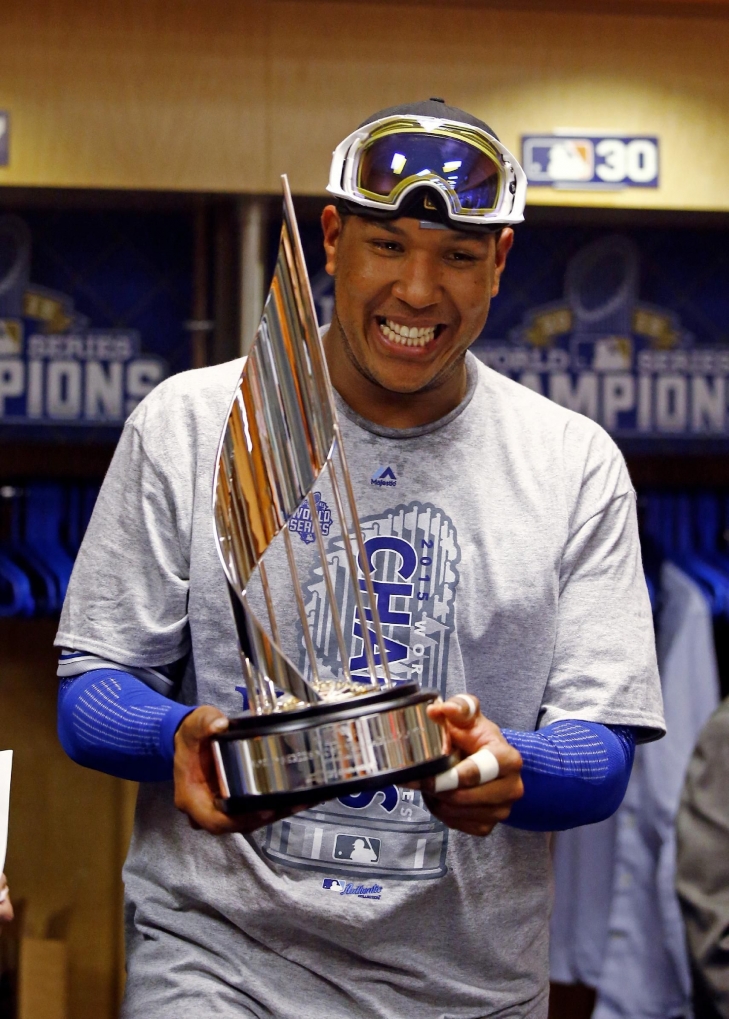
We here at Notinhalloffame.com thought it would be fun to take a look at the major awards in North American team sports and see how it translates into Hall of Fame potential.
Needless to say, different awards in different sports yield hall of fame potential. In basketball, the team sport with the least number of players on a roster, the dividend for greatness much higher. In baseball, it is not as much as a great individual season does not have the same impact.
Last time, we looked at the Bert Bell Award. This time we went back to baseball, and the World Series MVP.
The World Series was first played in 1903, but they did not award an MVP of the Fall Classic until 1955. It goes without saying only a great team can win a World Series, but in a seven-game series any player can get on a hot streak.
So how many World Series MVPs have made the Baseball Hall of Fame?
Let’s find out!
The following are the past players who have won the World Series MVP who are eligible for the Baseball Hall of Fame and have been enshrined.
Whitey Ford, New York Yankees, Pitcher (1961)
Based on who won the World Series MVP from 1955 to 1960, we think it safe to day that Whitey Ford will forever be the first chronological World Series MVP to enter the Baseball Hall of Fame. Ford was a career-Yankee who would help the Bronx Bombers win six World Series Titles. In 1961, Ford won the Cy Young Award with a 25-4 record, and in the World Series he won both starts. Ford pitched 14 Innings without allowing a single run, and the Yankees would defeat the Cincinnati Reds in five games. Inducted into the Hall of Fame in 1974.
Sandy Koufax, Los Angeles Dodgers, Pitcher (1963)
Sandy Koufax was on year two of his second-half of brilliance, and in the regular season he would win the first of five consecutive ERA Titles. In the World Series, his Dodgers were paired against the New York Yankees, and Koufax won both starts. He would throw for 18 Innings with a 1.50 ERA. Los Angeles would sweep New York. Inducted into the Hall of Fame in 1972.
Bob Gibson, St. Louis Cardinals, Pitcher (1964)
Bob Gibson would do well in 1964 with a 19-12 record, but he was still not yet a superstar. The World Series would change that. He led the St. Louis Cardinals to a win over the New York Yankees where he went 2-1 with 27 Innings and 31 Strikeouts. Gibson would go to the All-Star Game annually from 1965 to 1970 but had plenty left to offer. Inducted into the Hall of Fame in 1981.
Sandy Koufax, Los Angeles Dodgers, Pitcher (2)(1965)
Koufax became the first player to repeat as the World Series MVP, and doesn’t it seem appropriate? In between his World Series MVPs, Koufax won the Cy Young and MVP. This year, Los Angeles faced the Minnesota Twins and Koufax went 2-1 with a 0.38 ERA. He played two more seasons, winning the Cy Young in both of them. Koufax retired after that with a record of 165-87 and 2,396 Strikeouts. Inducted into the Hall of Fame in 1972.
Frank Robinson, Baltimore Orioles, Outfield (1966)
The Cincinnati Reds made a colossal error when they traded Frank Robinson to the Baltimore Orioles after 1965 season. Robinson proceeded to have the best year of his life, becoming the first player to win the MVP in both leagues. It got even better, as Robinson led the Orioles to their first World Series, and he would have two Home Runs with a 1.217 OPS in Baltimore’s sweep of the Los Angeles Dodgers. Inducted into the Hall of Fame in 1982.
Bob Gibson, St. Louis Cardinals, Pitcher (2) (1967)
Gibson’s star rose since 1964, and in 1967, he had an even better World Series performance than his first. Gibson pitched three complete games, winning them all, and only allowed three earned runs. His 1.00 ERA was matched with an equally spectacular WHIP of 0.704. Gibson would have a phenomenal 1968 in the “Year of the Pitcher” where he led the National League with a 1.12 ERA and a 0.853 WHIP. He won the Cy Young and MVP that season, and he would play until 1975, ending a career spent entirely with the St. Louis Cardinals. Gibson had a record of 251-174 with 3,117 Strikeouts. Inducted into the Hall of Fame in 1981.
Brooks Robinson, Baltimore Orioles, Third Base(1970)
Brooks Robinson was already a superstar by this point, as he was already a World Series champion (1966), an MVP (1964), and he was on year 11 of 15 straight All-Star Games. The 16-time Gold Glove winner batted .429 with two Home Runs in the Orioles five-game victory over the Reds. Robinson played his entire career with Baltimore and would accumulate 2,848 Hits, 268 Home Runs and 1,357 Runs Batted In. Inducted into the Hall of Fame in 1983.
Roberto Clemente, Pittsburgh Pirates, Outfield(1971)
A legend with 3,000 career Hits, Clemente was already a World Series Champion (1960), and an MVP (1966). In 1971, the 15-time All-Star batted .414 with two Home Runs in the Pirates seven-game win over Baltimore. Clemente only played one more season and died shortly after in a plane crash. He was delivering aid to earthquake victims in Nicaragua. He was fast-tracked to the Baseball Hall of Fame the year after. Inducted into the Hall of Fame in 1973.
Reggie Jackson, Oakland Athletics, Outfield (1973)
Reggie Jackson won the American League MVP this year, and would win the first of what would be four Home Run Titles. In the seven-game win over the New York Mets, Jackson batted .315 with a Home Run, in what was Oakland’s second of three straight World Series Championships. Inducted into the Hall of Fame in 1993.
Rollie Fingers, Oakland Athletics, Pitcher (1974)
This was the last of three straight Oakland World Series titles, and the future Hall of Fame closer was in the beginning of his turn as an elite closer. In this World Series, Fingers appeared in four Games, won one of them, had two Saves with an ERA of 1.93. Fingers would later win the Cy Young and MVP in 1983 when he was with the Milwaukee Brewers. He would play until 1985 and accumulate 341 Saves over his 17-year career. Inducted into the Hall of Fame in 1992.
Johnny Bench, Cincinnati Reds, Catcher (1976)
The Catcher of the “Big Red Machine”, was a two-time MVP by this point and had already won two Home Run Titles. In this year’s World Series, Bench batted .533, a 1.667 OPS with two Home Runs and six Runs Batted In. The 14-time All-Star played his entire career with Cincinnati and would collect 2,048 Hits, 389 Home Runs and 1,376 RBIs. Inducted into the Hall of Fame in 1989.
Reggie Jackson, New York Yankees, Outfield (2)(1977)
This was the first of two straight World Series Championships for the New York Yankees, and it was this year where Reggie Jackson became “Mr. October”. In Game Six of the 1977 World Series, Jackson belted three Home Runs on three first pitches against Dodger hurlers, and that was the clinching game. He would bat .450 with an OPS of 1.792 with five taters. Jackson played until 1987, and would retire with 2,584 Hits, 563 Home Runs, 1,702 RBIs. Inducted into the Hall of Fame in 1993.
Willie Stargell, Pittsburgh Pirates, First Base (1979)
Winning the MVP this year (though he probably should not have), Willie Stargell did earn both NLCS and World Series MVP. The career-Pirate helped his team defeat Baltimore in seven games with a .400 Batting Average with three Home Runs and seven RBIs. He played 21 seasons and retired in 1982 with 2,232 Hits, 475 Home Runs and 1,540 RBIs. Inducted into the Hall of Fame in 1988.
Mike Schmidt, Philadelphia Phillies, Third Base (1980)
This season, Mike Schmidt won the first of what would be three MVPs and it was also the year he set career-highs (also league-leading) in Home Runs (48) and Runs Batted In (121). Schmidt also finished first in Slugging Percentage (.624) and OPS (1.004). The Phillies would win his first World Series this year as Schmidt batted .381 with a two Home Runs and seven RBIs. Philadelphia would beat Kansas City in six games. Schmidt played his entire career with the Phils and would retire in 1989. Overall, he would appear in twelve All-Star Games, win six Silver Sluggers, ten Gold Gloves and had 2,234 Hits with 548 Home Runs and 1,595 RBIs. Inducted into the Hall of Fame in 1995.
Alan Trammell, Detroit Tigers, Shortstop (1984)
This year, Alan Trammell was on his second of what would be six All-Star Games and the Detroit Tigers were an unstoppable team in 1984. In this World Series, Detroit took out the San Diego Padres in five games with Trammell batting .450 with two Home Runs, six RBIs and a 1.300 OPS. He would play his entire career with the Tigers, retiring in 1996 with 2,365 Hits, 185 Home Runs, four Silver Sluggers and three Gold Gloves. Inducted into the Hall of Fame in 2018.
Jack Morris, Minnesota Twins, Pitcher (1991)
Jack Morris already won a World Series title in 1984 with the Detroit Tigers, but this title was especially sweet. In the 1991 World Series, Morris pitched in three games, winning two games with a 1.17 ERA. In Game 7, Morris pitched a ten-inning shutout to win the Fall Classic for the Twins. Morris went on to win two more World Series Rings with the Toronto Blue Jays. He retired in 1994 with a record of 254 Wins against 186 Losses with 2,478 Strikeouts. Inducted into the Hall of Fame in 2018.
Paul Molitor, Toronto Blue Jays, Third Base and Designated Hitter (1993)
Paul Molitor was with the Milwaukee Brewers for 15 years before joining the Toronto Blue Jays in 1993, who were the defending World Series Champions. That year, Molitor would go to his fifth All-Star Game, and led the American League in Hits (211) and would bat .332. The Blue Jays returned to the World Series, and in their successful title defense, Molitor batted .500 with two Home Runs, eight RBIs and a 1.571 OPS. Moltor played until 1998, and retired with 3,319 Hits, 234 Home Runs, 1,307 RBIs with a Batting Average of .303. Inducted into the Hall of Fame in 2004.
Tom Glavine, Atlanta Braves, Pitcher (1995)
The Atlanta Braves were one of the most loaded teams of the 1990s, but it only translated into one World Series win. That was in 1995, and the World Series MVP went to one of the big three, Tom Glavine. He would win the 1991 Cy Young, and later the 1998 Cy Young, and this season was a nice 16-7 year, a 3.08 ERA, and a third place finish in the Cy Young vote. In the World Series, Glavine won both starts and had an ERA of 1.29, a WHIP of 0.714 and 11 Strikeouts. He retired in 2008 with a 305-203 record and 2,607 Strikeouts. Inducted into the Hall of Fame in 2014.
Mariano Rivera, New York Yankees, Pitcher (1999)
Considered to be the greatest Relief Pitcher of all-time, Mariano Rivera would win five World Series Rings, and was a 13-time All-Star. In the 1999 World Series, Rivera appeared in three games, winning one, saving two, and he did not allow a run. Rivera’s overall post-season record was 8-1, 42 Saves, 0.70 ERA, 0.759 WHIP over 141 Innings. Let that sink in! When Rivera retired, he was the all-time leader in Saves (652), Games Finished (952) and a career WHIP of 1.000. Rivera became the first player to be inducted into the Baseball Hall of Fame with a unanimous vote. Inducted into the Hall of Fame in 2019.
Derek Jeter, New York Yankees, Shortstop (2000)
Playing his entire career with the New York Yankees, Derek Jeter was not only the leader of the team, but was the most popular player and recognizable player of his day. In the 2000 World Series, he batted .409 with two Home Runs, two RBIs and an OPS of 1.344. Jeter would overall go to 14 All-Star Games, and was a five-time Silver Slugger and five-time Gold Glove winner. He retired in 2014 with 3,465 Hits, 260 Home Runs, 1,311 RBIs and a Batting Average of .310. Inducted into the Hall of Fame in 2020.
Randy Johnson, Arizona Diamondbacks, Pitcher (co-winner) (2001)
Sharing the World Series MVP with Curt Schilling, Randy Johnson was on the third of four straight Cy Young Awards, one of the most incredible runs of any pitcher in the history of the game. With the Arizona Diamondbacks, Johnson took the team that was still under ten years old to the World Series, and he won three World Series Games with a 1.04 ERA against the Yankees. He also had a WHIP of 0.692 with 19 Strikeouts. Johnson played until 2009, and retired with a record of 202-166 with 4,875 Strikeouts. Inducted into the Hall of Fame in 2015.
The following are the players who have won the World Series MVP who are eligible for the Baseball Hall of Fame and have not been selected:
Johnny Podres, Brooklyn Dodgers, Pitcher (1955)
The winner of the first World Series MVP, coincided with the only championship that the Dodgers would win in Brooklyn. This was Podres third year in baseball, and he had been an average starter at best. He would win both his starts, including a shutout in Game 7. Over 18 Innings, he had a 1.00 ERA with 10 Strikeouts. Podres would play until 1969, mostly with the Dodgers and he retired with a record of 141-116 with 1,435 Strikeouts. He won two more World Series Rings with the Dodgers after they relocated to Los Angeles. Eligible Since 1975. Podres was on the ballot for three years and finished as high as 0.8% in both 1975 and 1978. Unranked on Notinhalloffame.com
Don Larsen, New York Yankees, Pitcher (1956)
After only lasting 1.2 Innings in Game 2 (though all four runs were unearned due to errors), Larsen came back to throw a perfect game, the only time that this happened in the history of the World Series. The Yankees beat the Dodgers in seven games, and Larsen’s Game 5 meant you could not possibly give the World Series MVP to anyone else. Aside from the most spectacular pitching performance ever, Larsen was an average pitcher at best. The 11 regular season Wins that he had in this regular season, was the most he had, and Larsen would only post 81 Wins against 91 Losses. Eligible Since 1973. Larsen was on the ballot for fifteen years and finished as high as 12.3% in 1979. Unranked on Notinhalloffame.com
Lew Burdette, Milwaukee Braves, Pitcher (1957)
This was the only World Series that the Braves would win while competing in Milwaukee. Burdette, who was an All-Star this year, had a 17-9 regular season record, would win all three of his World Series starts, throwing for 27 Innings with a 0.67 ERA. Burdette would go to a second All-Star Game two years later and would retire in 1967 with a 203-144 record. 179 of those wins were with the Braves. Eligible Since 1973. Burdette was on the ballot for fifteen years and finished as high as 24.1% in 1984. Unranked on Notinhalloffame.com
Bob Turley, New York Yankees, Pitcher (1958)
This was the best season of Bob Turley’s career as he was an All-Star for the third (and final) time, and he would have a career-high 21 Wins. For the regular season, he won the Cy Young, and was the runner-up for the MVP. In the World Series, he lost his first start, but won the next two, aiding the Yankees in their seven-game win over the Milwaukee Braves. In the process, the Yanks became the second team to overcome a 3-1 deficit to win the World Series. It was all downhill for Turley, as he never had another 10 Win season again, and he retired with 101 Wins against 85 Losses. Eligible Since 1969. Although he was eligible, he was not on the ballot. Unranked on Notinhalloffame.com.
Larry Sherry, Los Angeles Dodgers, Pitcher (1959)
1959 was Sherry’s second year of an 11-year journeyman career. In the six-game series win over the Chicago White Sox, he appeared in four games, pitched in 12.2 Innings and had a 2-0 record with 2 Saves. He had a 0.71 ERA and a 0.789 WHIP over the Fall Classic. Sherry would have a record of 53-44 with 82 Saves. Eligible Since 1974. Although he was eligible, he was not on the ballot. Unranked on Notinhalloffame.com.
Bobby Richardson, New York Yankees, Second Base (1960)
The sixth World Series MVP finally went to a position player, and while it is not a Hall of Famer, it is of course a New York Yankee! Bobby Richardson was already a two-time All-Star, and he would go to five more over his career. Historically speaking, this was also the first, and to date, only player to win the World Series as the member of the losing team. Richardson would bat .367 with 11 Hits in the Series. While the Yanks lost this one, Richardson would win three rings with the team. He retired in 1966 with 1,432 career Hits. Eligible Since 1972. Richardson was on the ballot for three years and finished as high as 2.0% in 1972. Unranked on Notinhalloffame.com.
Ralph Terry, New York Yankees, Pitcher (1962)
Ralph Terry would only go to one All-Star Game in his career, which would be 1962. That season, he led the American League in Wins (23) and Innings Pitched (298.2) and was 14thin MVP voting. Terry was on the World Series Title the year before with New York, and in this championship, he went 2-1 with an ERA of 1.80 and WHIP of 0.766. This was the best year he had, and he played until 1967, retiring with a record of 78-59. Eligible Since 1973. Although he was eligible, he was not on the ballot. Unranked on Notinhalloffame.com.
Mickey Lolich, Detroit Tigers, Pitcher (1968)
Mickey Lolich had an up and down 1968, and was overshadowed by Denny McClain, who was a 30-Game winner that year. However, in the 1968 World Series, it was Lolich who was the star, winning all three starts with a 1.67 ERA. He would later go to three All-Star Games, and finished his career with a 217-191 record and 2,832 Strikeouts. Eligible Since 1985. Lolich was on the ballot for fifteen years and finished as high as 25.5% in 1988. Unranked on Notinhalloffame.com.
Donn Clendenon, New York Mets, First Base (1969)
A very unlikely winner of the World Series MVP, Donn Clendenon was traded midway through the 1969 season from the Montreal Expos and he would platoon at First Base with Ed Kranepool. Clendendon did not even play on the NLCS, but played in four of the five World Series Games where he batted .367 with three Home Runs and four RBIs. He played until 197 and had 1,273 Hits with 159 Home Runs. Eligible Since 1978. Although he was eligible, he was not on the ballot. Unranked on Notinhalloffame.com.
Gene Tenace, Oakland Athletics, Catcher (1972)
It was in the 1972 post-season where Gene Tenace finally won the starting Catcher’s job, and in what was the first of three straight World Series wins by Oakland, Tenace was on fire. He would bat .348 with four Home Runs and nine RBIs. He would play until 1983, winning a fourth World Series win with the Cardinals in 1982. Eligible Since 1989. Tenace was on the ballot for one year and finished with 0.2% of the ballot. Unranked on Notinhalloffame.com.
Pete Rose, Cincinnati Reds, Third Base (1975)
Pete Rose was at the heart of Cincinnati’s Big Red Machine, and he was already an MVP. In this World Series, Rose and the Reds beat Boston and had a .370 Batting Average with 10 hits with five Walks. Rose would help the Reds win another World Series in 1976, and the first for Philadelphia in 1980. He played until 1986 and would retire as the all-time leader in Hits with 4,256. Eligible Since 1992. Rose was declared ineligible by the Baseball Hall of Fame due to gambling on baseball. Ranked #1A on Notinhalloffame.com.
Bucky Dent, New York Yankees, Shortstop (1978)
Bucky Dent was never known for his hitting, but the three-time All-Star came to life in the 1978 World Series. Prior to that, he hit the Home Run tin the tie-breaker where the Yankees beat the Red Sox to win the AL East. He batted .417 with seven RBIs in the World Series, earning him his second ring, as he was with the Yanks the year before. Dent played until 1984 and retired with 1,114 Hits. Eligible Since 1990. Dent was on the ballot for one year and finished with 0.7% of the ballot. Unranked on Notinhalloffame.com.
Ron Cey, Los Angeles Dodgers, Third Base (co-winner) (1981)
For the first and only time in World Series MVP history, there were three co-winners. Prior to this win, Ron Cey was a six-time All-Star, and had already appeared in three World Series for the Dodgers, albeit in losing efforts. This year, he batted .350 with a Home Run and six RBIs. He played until 1987, and had 1,868 Hits and 316 Home Runs when he retired. Eligible Since 1993. Cey was on the ballot for one year and finished with 1.9% of the ballot. Unranked on Notinhalloffame.com.
Pedro Guerrero, Los Angeles Dodgers, First Base (co-winner) (1981)
For the first and only time in World Series MVP history, there were three co-winners. This season would see the first of five All-Star years for Pedro Guerrero, and in the World Series, he batted .333 with two Home Runs, seven RBIs and an OPS of 1.179. Eligible Since 1998. Guerrero was on the ballot for one year and finished with 1.3% of the ballot. Unranked on Notinhalloffame.com.
Steve Yeager, Los Angeles Dodgers, Catcher (co-winner) (1981)
For the first and only time in World Series MVP history, there were three co-winners. A light hitting Catcher but well-respected handler of pitchers, Steve Yeager had two key Home Runs with a ,286 Batting Average in the World Series. Eligible Since 1998. Yeager was on the ballot for one year and finished with 0.5% of the ballot. Unranked on Notinhalloffame.com.
Darrell Porter, St. Louis Cardinals, Catcher (1982)
Darrell Porter had been a four-time All-Star prior to this World Series, and in this season’s Fall Classic, the Catcher batted .286 with one Home Run and five RBIs. Notable, he batted .556 in the NLCS, and won the NLCS MVP that season. He played until 1987, and retired with 1,369 Hits and 188 Home Runs. Eligible Since 1993. Porter was on the ballot for one year but did not receive any votes. Unranked on Notinhalloffame.com.
Rick Dempsey, Baltimore Orioles, Catcher (1983)
For the third year in a row, a Catcher won the World Series MVP. Dempsey, who was never known for being a great hitter delivered on this stage with a .385 Batting Average and a Home Run in Baltimore’s five-game Series win over Philadelphia. Dempsey would later win a second World Series Ring with the Los Angeles Dodgers in 1988. He played until 1992. Eligible Since 1998. Dempsey was on the ballot for one year and finished with 0.2% of the vote. Unranked on Notinhalloffame.com.
Bret Saberhagen, Kansas City Royals, Pitcher (1985)
In his second year in the Majors, Bret Saberhagen won the Cy Young with a 20-6 record and a league-leading 1.056 WHIP. In the World Series win over the Cardinals, he would win both starts and have a stellar 0.50 ERA and 0.667 WHIP. Saberhagen would win his second Cy Young in 1989. The hurler would play until 2001 and retire with a record of 167-117 and 1,715 Strikeouts. Eligible Since 2007. Saberhagen was on the ballot for one year and finished with 1.3% of the vote. Ranked #65 on Notinhalloffame.com.
Ray Knight, New York Mets, Third Base (1986)
While it could be joked that the World Series MVP was really Bill Buckner, Ray Knight had an incredible World Series. He would bat .391 with an OPS of 1.005 with one Home Run and five RBIs. Knight was an All-Star twice and he played until 1988 with 1,311 Hits. Eligible Since 1994. Knight was on the ballot for one year and finished with 0.2% of the vote. Unranked on Notinhalloffame.com.
Frank Viola, Minnesota Twins, Pitcher (1987)
Finishing sixth in Cy Young voting this year, Frank Viola ascended to the ace of the Twins pitching staff. In the seven-game World Series win over the St. Louis Cardinals, Viola started three of them and went 2-1 over 19.1 Innings with an ERA of 3.72 and 16 Strikeouts. Viola would win the Cy Young the following season, and he played until 1996, retiring with a record of 176-150. Eligible Since 2002. Viola was on the ballot for one year and finished with 0.4% of the vote. Unranked on Notinhalloffame.com.
Orel Hershiser, Los Angeles Dodgers, Pitcher (1988)
Before 1988, Orel Hershiser was already the ace of the Dodgers pitching staff, but he was about to embark on the best season of his career. This year, Hershiser won the Cy Young while leading the National League in Wins (23) and posting an ERA of 2.26 with 178 Strikeouts. Hershiser would win the NLCS MVP, appearing in four games, winning one, and earning an ERA of 1.09. In that World Series, he won both starts against the Oakland A’s winning both games with an ERA of 1.00 and a WHIP of 0.722. Hershiser played until 2000 and would have a record of 204-150 with 2,014 Strikeouts. Eligible Since 2006. Hershiser was on the ballot for two years and finished as high as 11.2% in 2006. Ranked #71 on Notinhalloffame.com.
Dave Stewart, Oakland Athletics, Pitcher (1989)
From 1987 to 1990, Dave Stewart finished in the top four in Cy Young voting, and was the ace of the Oakland staff that went to three straight World Series (1988-90). 1989 was the only one of the three that the A’s would win, and in this year, he would win both starts against the San Francisco Giants with a 1.69 ERA and 14 Strikeouts. Stewart played until 1995, retiring with a 168-129 record and 1,741 Strikeouts. Eligible Since 2002. Stewart was on the ballot for two years and finished as high as 7.4% in 2001. Unranked on Notinhalloffame.com.
Jose Rijo, Cincinnati Reds, Pitcher (1990)
Jose Rijo and the Cincinnati Reds would shock Oakland in a four-game sweep in the World Series, and Rijo won both starts, with a phenomenal 0.59 ERA and 14 Strikeouts. The Puerto Rican played until 1995, and after a five-year layoff due to injury, he returned for two years before retiring for good in 2002. He would have a record of 116-91. Eligible Since 2008. Rijo was on the 2001 ballot and received 0.2% of the ballot, and appeared again in 2008, but had no votes that year. Unranked on Notinhalloffame.com.
Pat Borders, Toronto Blue Jays, Catcher (1992)
An unlikely World Series MVP, Pat Borders never had a season where he hat over 125 Hits and only had two 100 Hit plus years. Regardless, his bat was on fire in the 1992 World Series where he batted .450 with nine Hits, one Home Run and three RBIs. This would be the first World Series win for the Toronto Blue Jays, and he would help them win it again in 1993. He played until 2006. Eligible Since 2011. Although Borders was Hall of Fame eligible, he was never on the ballot. Unranked on Notinhalloffame.com.
John Wetteland, New York Yankees, Pitcher (1996)
John Wetteland played two seasons with the New York Yankees, and this was the second of them. For the first and only time, the closer would lead the league in Saves (43), and he was an All-Star for what would be the first of three times. Wetteland appeared in five games in the ’96 World Series against the Braves, and he would net four Saves with a 2.08 ERA and six Strikeouts. He played until 2000, retiring with 330 Saves. Eligible Since 2006. Wetteland was on the ballot for one year and received 0.8% of the vote. Unranked on Notinhalloffame.com.
Livan Hernandez, Miami Marlins, Pitcher (1997)
In Florida’s shocking World Series win, Livan Hernandez was a rookie, who was the runner-up for the Rookie of the Year Award. Hernandez was incredible in the post-season, winning the NLCS MVP (2-0), and he won both his starts in the ’97 World Series against the Cleveland Indians, albeit with a 5.27 ERA. Hernandez played until 2012, and was a two-time All-Star. He finished his career one game over .500, with a record of 178-177. Eligible Since 2018. Hernandez was on the ballot for one year and received 0.2% of the vote. Unranked on Notinhalloffame.com.
Scott Brosius, New York Yankees, Third Base (1998)
Scott Brosius became very popular when he arrived in 1998 to New York. This would be his only All-Star year, and in the World Series he batted .471 with two Home Runs and six RBIs. Brosius played for three more years, and retired with two more World Series Rings and 1,001 Hits. Eligible Since 2007. Brosius was on the ballot for one year and but did not receive any votes. Unranked on Notinhalloffame.com.
Curt Schilling, Arizona Diamondbacks, Pitcher (co-winner) (2001)
In the regular season, Curt Schilling finished second in Cy Young voting to his teammate, Randy Johnson, which would be the same hurler who he shared the World Series MVP with. In this World Series, Schilling pitched in three games, winning one with an ERA of 1,69 with 26 Strikeouts. He would win two more World Series rings with the Boston Red Sox, and he retired in 2007 with a record of 216-146 with 3,116 Strikeouts. Eligible Since 2013. Schilling has been on the ballot for eight years and has finished as high as 70.0% in 2020. Ranked #5 on Notinhalloffame.com.
Troy Glaus, Anaheim Angels, Third Base (2002)
Troy Glaus was a four-time All-Star, two of which happened before 2002, and two after. In the Angels first World Series win, Glaus batted .385 with an OPS of 1.313. and three Home Runs and eight RBIs. He would play until 2010 and retired with 320 Home Runs. Eligible Since 2016. Glaus was on the ballot for one year and but did not receive any votes. Unranked on Notinhalloffame.com.
Josh Beckett, Florida Marlins, Pitcher (2003)
We think it can be safely stated that the Marlins are the most unlikely two-time World Series Champions, but that is sports for you! Their second World Series MVP was Josh Beckett, who was in his third year in the Majors. In this World Series, he would pitch in two Games, going 1-1 with a 1.10 ERA and 19 Strikeouts. A future three-time All-Star, Beckett would later help the Red Sox win the 2007 World Series, and he played until 2014, retiring with a 138-106 record. Eligible Since 2020. Beckett was on the ballot for one year and but did not receive any votes. Unranked on Notinhalloffame.com.
Manny Ramirez, Boston Red Sox, Outfield (2004)
One of the huge reasons that the “Curse of the Bambino” was finally eradicated in 2004 was because of Manny Ramirez, who was on year seven of eleven straight All-Star Game appearances. In the four-game sweep of the St. Louis Cardinals, Ramirez batted .412 with a Home Run and four RBIs. His controversial career came to an end in 2011, and would have 2,574 Hits, 555 Home Runs and 1,831 RBIs. Eligible Since 2017. Ramirez has been on the ballot for four years and has finished as high as 28.2% in 2020. Ranked #6 on Notinhalloffame.com.
Jermaine Dye, Chicago White Sox, Outfield (2005)
An All-Star in 2000, and later in 2006, Jermaine Dye would win his first and only World Series ring in 2005 with the Chi-Sox. In the White Sox sweep of the Astros, Dye had a Home Run, three Runs Batted In, and a .438 Batting Average. He played until 2009, and would have 1,779 Hits with 325 Home Runs. Eligible Since 2015. Dye was on the ballot for one year and but did not receive any votes. Unranked on Notinhalloffame.com.
David Eckstein, St. Louis Cardinals, Shortstop(2006)
This was the first of two straight All-Star Game years for David Eckstein, and he had already won a World Series Championship with the Anaheim Angels in 2002. Eckstein batted .364 with four RBIs in this World Series, and he played until 2010. Eligible Since 2016. Eckstein was on the ballot for one year and received 0.5% of the vote. Unranked on Notinhalloffame.com.
Mike Lowell, Boston Red Sox, Third Base (2007)
Mike Lowell finished fifth in MVP voting this year, which would be the highest he would ever finish. A four-time All-Star, Lowell already had a World Series Ring with the Marlins, and in this World Series sweep over the Colorado Rockies, he would bat .400 with a Home Run with four RBIs. Lowell played until 2010, and he retired with 1,619 Hits and 223 Home Runs. Eligible Since 2016. Lowell was on the ballot for one year and but did not receive any votes. Unranked on Notinhalloffame.com.
Hideko Matsui, New York Yankees, Outfield (2009)
Hideki Matsui was already a two-time All-Star, and with his MVP in the 2009 World Series, he became the first Japanese to win the award. In the six-game win over the Philadelphia Phillies, “Godzilla” blasted three Home Runs, had eight RBIs, and had a disgusting Slash Line of .615/.643/1.385, meaning he had an OPS over 2.000. He played in the Majors until 2012. Eligible Since 2018. Matsui was on the ballot for one year and received 0.8% of the vote. Unranked on Notinhalloffame.com.
Edgar Renteria, San Francisco Giants, Shortstop (2010)
This was the penultimate season of Edgar Renteria, who was a five-time All-Star, who had previously won a World Series Ring in 1997 as a Florida Marlin. In the 2010 World Series, the Venezuelan Shortstop had two Home Runs, six RBIs and batted .412. Retiring in 2011, Reneteria had 2,327 Hits with 140 Home Runs. He was also a three-time Silver Slugger and twice a Gold Glove winner. Eligible Since 2018. Matsui was on the ballot for one year and received 0.8% of the vote. Unranked on Notinhalloffame.com.
Let’s update our tally, shall we?
|
Award in Question |
Percentage of recipients who have entered the HOF |
Percentage of recipients by year who have entered the HOF. |
|
NBA MVP |
100% |
100% |
|
NHL Norris |
90.5% |
96.4% |
|
NBA All Star Game MVP |
89.5% |
91.7% |
|
NHL Conn Smythe |
74.2% |
85.4% |
|
NFL Bert Bell Award |
73.7% |
71.4% |
|
NFL AP Offensive Player of the Year |
73.1% |
79.4% |
|
NFL AP MVP |
68.3% |
74.0% |
|
NHL Lady Byng |
63.8% |
76.0% |
|
NFL Defensive Player of the Year |
60.8% |
71.1% |
|
NFL Super Bowl MVP |
60.6% |
64.9% |
|
NBA Defensive Player of the Year |
58.3% |
56.5% |
|
NHL Vezina |
57.1% |
66.3% |
|
NBA Rookie of the Year |
56.5% |
56.5% |
|
MLB MVP |
55.0% |
60.2% |
|
NFL Pro Bowl MVP |
52.3% |
54.8% |
|
MLB Lou Gehrig Award |
51.9% |
51.9% |
|
MLB Roberto Clemente Award |
47.4% |
47.4% |
|
MLB/NL/AL Cy Young Award |
44.4% |
55.4% |
|
MLB Babe Ruth Award |
37.0% |
39.3% |
|
NHL Frank J. Selke Trophy |
33.3% |
36.7% |
|
MLB World Series MVP |
33.3% |
36.8% |
|
MLB Hutch Award |
33.1% |
33.1% |
|
NFL Offensive Rookie of the Year |
28.6% |
28.6% |
|
NHL Bill Masterton Memorial Trophy |
27.9% |
27.9% |
|
MLB Edgar Martinez Award |
26.7% |
17.2% |
|
MLB (NL/AL) Silver Slugger (Designated Hitter) |
25.0% |
30.8% |
|
MLB (NL/AL) Silver Slugger (Shortstop) |
23.5% |
52.6% |
|
MLB (NL/AL) Gold Glove |
21.7% |
36.8% |
|
NFL Defensive Rookie of the Year |
20.6% |
20.6% |
|
MLB (NL/AL) Silver Slugger (Catcher) |
20.0% |
22.5% |
|
MLB (NL/AL) Gold Glove (Second Base) |
18.8% |
39.8% |
|
MLB (NL/AL) Gold Glove (Shortstop) |
18.2% |
35.1% |
|
MLB (NL/AL) Silver Slugger (Pitcher) |
18.2% |
20.1% |
|
MLB (NL/AL) Silver Slugger (Second Base) |
16.7% |
32.7% |
|
MLB (NL/AL) Gold Glove (Outfield) |
16.7% |
30.1% |
|
MLB (NL/AL) Silver Slugger (Outfield) |
15.7% |
25.2% |
|
MLB (NL/AL) Gold Glove (Third Base) |
14.3% |
14.3% |
|
MLB (NL/AL) Silver Slugger (Third Base) |
13.6% |
14.3% |
|
MLB (NL/AL) Silver Slugger (First Base) |
13.6% |
13.3% |
|
MLB (NL/AL) Rookie of the Year |
13.3% |
13.3% |
|
MLB (NL/AL) Gold Glove (Catcher) |
10.3% |
15.2% |
|
NBA Most Improved Player of the Year |
5.3% |
3.2% |
|
MLB (NL/AL) Gold Glove (First Base) |
3.8% |
3.2% |
|
NFL AP Comeback Player of the Year |
0.0% |
0.0% |
So, who is up next?
The following are the players who have won the World Series MVP in the NFL who have retired but have not met the mandatory years out of the game to qualify for the Baseball Hall of Fame:
David Freese, St. Louis Cardinals, Third Base (2011)
David Freese will mostly be remembered over his career for his 2011 playoffs, where he won both the NLCS MVP and World Series MVP. In Game 6 of the World Series, Freese tied the game to send it into extra innings. In the 11thinning, he homered to win it, and force a Game 7, which the Redbirds won. Overall, in the World Series, he had seven RBIs, the aforementioned Home Run, and a .348 Batting Average. He played until 2019, and had 1,041 Hits. Eligible in 2025.
David Ortiz, Boston Red Sox, Designated Hitter and First Base (2013)
This season would be the ninth of ten of All-Star seasons, for David Ortiz, which would also see him earn his third and final World Series Ring. In the 2013 World Series against the St. Louis Cardinals, Ortiz had the following Slash Line: .688/.760/1.188. Incredible right? He played until 2016, and would end his career with 2,472 Hits, 541 Home Runs, and 1,768 RBIs. Eligible in 2022.
Ben Zobrist, Chicago Cubs, Second Base (2016)
In what Ben Zobrist’s first of four years in Chicago, the Cubs finally broke their curse and won their first World Series in well over a century. In the regular season, Zobrist was an All-Star for the third and final time, and he would win the World Series for the second straight year, as he was with the Royals in 2015. In this World Series, he batted .357 with 10 Hits and two RBIs. He played until 2019 and retired with 1,566 Hits and 167 Home Runs. Eligible in 2025.
Steve Pearce, Boston Red Sox, Outfield (2018)
This was the penultimate year for Steve Pearce, who over 13 years would never have a 100 Hit season. In the 2018 World Series, his bat was on fire with a three Home Run, eight RBI performance with a .333 Batting Average. He would only have 572 Hits over his career. Eligible in 2025.
The following are the players who have won the World Series MVP who are still active.
Cole Hamels, Philadelphia Phillies, Pitcher (2008)
Cole Hamels led the National League in WHIP this year and in the World Series, he pitched two games, going 1-0 with an ERA of 2.77. Hamels also won the NLCS MVP. 35 Years Old, Playing for the Atlanta Braves.
Pablo Sandoval, San Francisco Giants, First Base (2012)
Exceptionally popular, Pablo Sandoval would bat .500 in the four-game sweep over the Detroit Tigers and the “Panda” would have three Home Runs and four RBIs. 33 Years Old, Playing for the San Francisco Giants.
Madison Bumgarner, San Francisco Giants, Pitcher(2014)
Bumgarner was on year two of a four-year run of All-Star Game years, and he would finish fourth in Cy Young voting. In the 2014 playoffs, Bumgarner was on fire winning both the NLCS MVP and the World Series MVP. In the latter, he went 2-0 with a 0.43 ERA, and earned a save in the deciding Game 7 over the Kansas City Royals. 30 Years Old, Playing for the Arizona Diamondbacks.
Salvador Perez, Kansas City Royals, Catcher (2015)
An All-Star for the third straight year, Salvador Perez batted .364 in Kansas City’s five-game World Series win over the New York Mets. He would also have two Doubles and two RBIs. 30 Years Old, Playing for the Kansas City Royals.
George Springer, Houston Astros, Outfield (2017)
This was the breakout year for George Springer, and the breakout for the Houston Astros, who won their first World Series this year. In the seven-game series over the Los Angeles Dodgers, Springer blasted five Home Runs, with seven RBIs, with a .379 Batting Average and an even 1.000 OPS. 30 Years Old, Playing for the Houston Astros.
Stephen Strasburg, Washington Nationals, Pitcher(2018)
In the regular season, Stephen Strasburg led the National League in Wins (18), and was fifth in Cy Young voting. In the World Series, he pitched twice, winning both games with 14 Strikeouts and a 2.51 ERA. 31 Years Old, Playing for the Washington Nationals.
You can’t win the World Series MVP, without making the World Series, and winning teams have stars, average players, and those who seize the moment. The World Series MVP reflects all of those players.
So, what is up next?
We are going to return to the ice, and look at the Art Ross Trophy, which is awarded annually to the player who has the most Points in a season.
As always, we thank you for your support, and look for that soon.
Awards = HOF?: Part Forty-One: The Baseball MVP
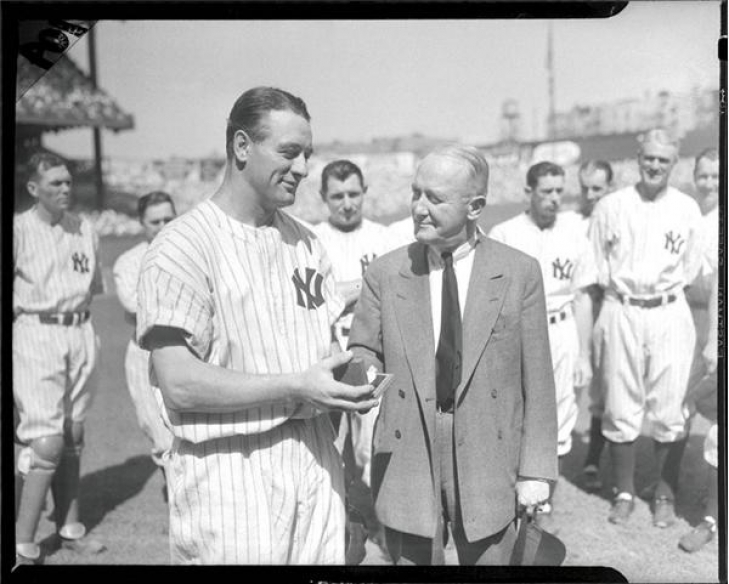
We here at Notinhalloffame.com thought it would be fun to take a look at the major awards in North American team sports and see how it translates into Hall of Fame potential.
Needless to say, different awards in different sports yield hall of fame potential. In basketball, the team sport with the least number of players on a roster, the dividend for greatness much higher. In baseball, it is not as much as a great individual season does not have the same impact.
Last time, we looked at the Bill Masterton Memorial Trophy in the National Hockey League. This time, we finally get to the most important individual accolade in Major League Baseball, the MVP.
Before we rattle off the winners, let’s look at the history of the award first.
The first version of the award came in 1911, in which Hugh Chalmers of the Chalmers Automobile company would give an award to the “most important and useful player to the club and to the league”. Chalmers discontinue the trophy after 1914, as it did not bring his company the overall recognition he desired.
In 1922, The American League brought back the MVP in 1922. It was decided by eight writers, but they were only allowed to pick one player from each team and previous winners were declared ineligible. Basically, if you are wondering why Babe Ruth only one MVP, that is why. This trophy would last until 1928.
The National League began their own league MVP award in 1924, which would go on until 1929. It did not have the same restrictions as their American League counterpart.
In 1931, the Baseball Writers’ Association of America revived the MVPs for both leagues, and their system of voting for ten players, with a weight system of 10 points to 1, remains in existence today.
So how many players have won the MVP have been enshrined to the Baseball Hall of Fame?
Let’s find out!
The following are the past players who have won the MVP in MLB who are eligible for the Baseball Hall of Fame and have been enshrined.
Ty Cobb, AL: Detroit Tigers (1911)
It is very hard to start this with a better player. In this era, you can’t. Ty Cobb was a baseball legend, and while he was widely disliked by other players, none of them could ever say that Cobb was not one of the best the game had ever seen. “The Georgia Peach” would have many great seasons, and this one might have been the best of them all. He would win the Batting and Slugging Title with personal best of .419 and .620, and he also had the best (and his own career-high) in OPS of 1.086. Cobb also led the AL and put forth career-highs in Runs Scored (147), Hits (248), Doubles (24), Triples (24) and Runs Batted In (127). Cobb went on to win seven more Batting Titles and is the all-time leader in Batting Average with .366. He would not be just named to the Baseball Hall of Fame, but it went in with the inaugural class. Inducted into the Hall of Fame in 1936.
Tris Speaker, AL: Boston Red Sox (1912)
This was Speaker’s sixth season in baseball, and it was his best one to date. He would have a career-high 222 Hits with a .383 Batting Average. He would lead the AL in Doubles (53), Home Runs (10), and On Base Percentage (.464). He would later have an even much better season in 1916 (when there were no MVPs) with the Cleveland Indians leading all aspects of the Slash Line (.386/.470/.502). Speaker went on to have 3,514 Hits, 792 Doubles (more than anyone else) and a .345 Batting Average. Inducted into the Hall of Fame in 1937.
Walter Johnson, AL: Washington Senators (1913)
There is no doubt that Walter Johnson was one of the greatest Pitchers ever, and if there were Pitcher of the Year award in his time, he would have won a plethora of them. As it stands, this was his first of two MVPs, and he would lead the AL in Wins (36), Earned Run Average (1.14), Innings Pitched (346.0), FIP (1.90), WHIP (0.780), H/9 (6.0), BB/9 (1.0) and Strikeouts (243). “The Big Train” would go on to win 417 Games and 3,509 Strikeouts. Inducted into the Hall of Fame in 1939.
Eddie Collins, AL: Philadelphia Athletics (1914)
One of the greatest hitters in the history of the game, Eddie Collins had already won three World Series with the Philadelphia Athletics, and this was his last year (in his first run) with the team. In 1914, Collins would lead the AL in Runs Scored (122) for the third straight year, and he would bat .344 with 181 Hits. He would accept a deal to the Chicago White Sox, where he helped them win the 1917 World Series. Collins would accumulate 3,315 Hits with a .333 Batting Average. Inducted into the Hall of Fame in 1939.
Johnny Evers, NL: Boston Braves (1914)
Years after he was part of the triumvirate of the “Tinkers to Evers to Chance” infield that took the Chicago Cubs to two World Series Titles, he was double-crossed by Cubs Management. In 1913, after electing to stay in Chicago after turning down a more lucrative contract with the upstart Federal League, the player/manager was dealt to the Boston Braves after he had helped sign all the Cubs to contracts. With something to prove, Evers had what has to be considered his last productive season, batting .279 with a .390 OBP over 139 Games. He would however, lead the Braves to a World Series win, and he batted .438 in the series. Realistically, Evers probably should not have been the MVP on 1914, but nobody had more of a feel-good story that Evers did this year. Evers would retire with 1,659 Hits. Inducted into the Hall of Fame in 1947.
George Sisler, AL: St. Louis Browns (1922)
George Sisler was one of the best hitters ever and is a wonderful selection for the return of the American League MVP award. Sisler, who won the Batting Title in 1920, won it again this year with a .420 Batting Average. He would also lead the AL in Hits (246), Runs Scored (136), Triples (18) and Stolen Bases (51). Sisler had to sit out 1923 due to Sinusitis but returned to play until 1930. He would accumulate 2,812 Hits with a lifetime Batting Average of .344. Inducted into the Hall of Fame in 1939.
Babe Ruth, AL: New York Yankees (1923)
This was not the best season of Babe Ruth’s career, but he had so many great ones that it can be sometimes be hard to tell them apart. In 1923, Ruth led the American League in Runs Scored (151), Home Runs (41), Runs Batted In (130), Walks (170), On Base Percentage (.545) and Slugging Percentage (.764). He also had a Batting Average of .393, his career-high. The Yankees would also win the World Series that year with Ruth batting .368 with three Home Runs. If you are wondering why this was Ruth’s only MVP, remember this was during a time when a player could not become a repeat champion as we stated in our opening. Ruth would rightfully be a part of the first ever Baseball Hall of Fame Class and had 714 Home Runs. Ruth is also baseball’s all-time leader in Slugging (.690) and OPS (1.164). Inducted into the Hall of Fame in 1936.
Walter Johnson, AL: Washington Senators (2) (1924)
Walter Johnson would become the first repeat MVP in Baseball, and he would do it 12 years apart. Unlike Ruth, Johnson won his first MVP under the previous rules of the inaugural version. This meant that he was not considered a repeat champion, and was eligible for this incarnation. Johnson would go 23-7 leading the AL in Wins, ERA (2.72), FIP (3.31) and WHIP (1.116). He would take the Senators to win the 1924 World Series, the only one of the legend’s career. Inducted into the Hall of Fame in 1939.
Dazzy Vance, NL: Brooklyn Dodgers (1924)
With the return of the National League MVP (the second incarnation), Dazzy Vance would have the best season of his career, capturing this prestigious award. Vance would go 28-6, leading the NL in Wins, ERA (2.16), Strikeouts (262), FIP (2.64) and WHIP (1.022). All of those were career-highs. The Pitcher would go on to win 190 Games with 1,918 Strikeouts over his career. Inducted into the Hall of Fame in 1955.
Rogers Hornsby, NL: St. Louis Cardinals (1925)
Rogers Hornsby was the runner-up for the 1924 MVP, and in 1925, he would win his sixth straight Batting Title. Hornsby had a Slash Line of .403/.489/.756, with the last component being a career-high. The Second Baseman would also top the leader board with 39 Home Runs and 143 Runs Batted In. While he had a significant dip in production the year after, Hornsby would take the Cards to win the World Series. Inducted into the Hall of Fame in 1942.
Lou Gehrig, AL: New York Yankees (1927)
Lou Gehrig would win that honor three years into his tenure as the starting First Baseman with the New York Yankees. He would have a Slash Line of 373/.474/.765 with 47 Home Runs. He would lead the American League in Doubles (52) and Runs Batted In (173) and while it was not leading the AL, he had a career-high OPS of 1.240. Inducted into the Hall of Fame in 1939.
Paul Waner, NL: Pittsburgh Pirates (1927)
As a rookie, Paul Waner finished twelfth in MVP voting, and he would win the big award as a sophomore. The Rightfielder would win his first of what would be three Batting Titles with a career-high .380. He would also lead the National League in Hits (237), Triples (18), and Runs Batted In (131). In the 1930s, Waner would have three top five finishes in MVP voting and would finish his career with 3,152 Hits and a .333 Batting Average. Inducted into the Hall of Fame in 1952.
Mickey Cochrane, AL: Philadelphia Athletics (1928)
Mickey Cochrane was in his fourth season in baseball, and the Athletics Catcher finished fourth in MVP voting the year before. Cochrane won this award mostly on his leadership and defensive skills, though he had a solid Slash Line for a 1920s Catcher of .293/.395/.464. Realistically, in the modern era, he would not win this MVP, and his 1928 bWAR of 3.3 was not in the top ten. Intangibles won it for him this year, but he had much better seasons ahead. Inducted into the Hall of Fame in 1947.
Jim Bottomley, NL: St. Louis Cardinals (1928)
Jim Bottomley would be the third different Cardinal in four seasons to win the MVP. He would help the Cards win the World Series in 1926, and later in 1931, but 1928 was his best individual season. The First Baseman would have a Slash Line of .325/.402/.628 with National League leading 20 Triples, 31 Home Runs and 136 Runs Batted In. Bottomley would accumulate 2,313 Hits over his career. Inducted into the Hall of Fame in 1974.
Rogers Hornsby, NL: Chicago Cubs (2) (1929)
Rogers Hornsby would become the second player to win the MVP twice, and the first to win it with two different teams. This was Hornsby’s first season with the Cubs after one year with the Boston Braves, one with the New York Giants and 12 with the Cardinals. Hornsby led the NL with 156 Runs Scored and a .679 Slugging Percentage, and he would also bat 380, with 229 Hits, 39 Home Runs and 149 Runs Batted In. This was the end of greatness for Hornsby, but he would continue to play until 1937. He would retire with 2,930 Hits with a Slash Line of .358/.434/.577. Inducted into the Hall of Fame in 1942.
Lefty Grove, AL: Philadelphia Athletics (1931)
With a now AP voted MVP for both leagues, the first one in the American League went to Lefty Grove, who had helped the Philadelphia Athletics win the previous two World Series. Grove had many great seasons, but this was his best one. He would have a record of a 31 and 4, with his 31 Wins leading the league. The southpaw also finished first in ERA (2.06), Strikeouts (175), FIP (3.01) and WHIP (1.077). Grove would go on to win an even 300 Wins with 2,266 Strikeouts. Inducted into the Hall of Fame in 1947.
Frankie Frisch, NL: St. Louis Cardinals (1931)
The first MVP of the AP/Modern MVP is of course, a St. Louis Cardinal. Frankie Frisch had previously finished third and second in previous votes, ad in 1931, he would bat .311 with 161 Hits, which was not his best year, and his 3.7 bWAR, while good, is not exactly MVP worthy. Frisch would help the Cardinals win the World Series this year, which would be his third overall, after winning two with the New York Giants. He would win his fourth with the Redbirds in 1934. He would overall accumulate 2,880 Hits with a .316 Batting Average. Inducted into the Hall of Fame in 1947.
Jimmie Foxx, AL: Philadelphia Athletics (1932)
The second Philadelphia Athletic in a row to win the modern MVP, following Lefty Grove. By this time, Foxx had already won the World Series twice (1929 & 1930), but 1931 was his breakout to the hitting stratosphere. Foxx had previously reached 30 Home Runs in the three earlier seasons, but he blasted 58 in 1932 with 169 Runs Batted In, both of which were league leading. He would have a Slash Line of .364/.469/.749 with an OPS of 1.218. Foxx would also for the first and only time lead the American League in Runs Scored with 151. Inducted into the Hall of Fame in 1951.
Chuck Klein, NL: Philadelphia Phillies (1932)
Chuck Klein was the first MVP from the Philadelphia Phillies, and he was the runner-up the season before. In 1932, Klein would finish first in Runs Scored (152), Hits (226), Home Runs (38), Stolen Bases (20), Slugging Percentage (.646) and OPS (1.050), and he would also have an excellent Batting Average of .348 with 137 Runs Batted In. Klein was the runner-up again for the National League MVP in 1933, and he went on to produce 2,076 Hits, 300 Home Runs with a .320 Batting Average. Inducted into the Hall of Fame in 1980.
Jimmie Foxx, AL: Philadelphia Athletics (2) (1933)
For the third year in a row, the American League MVP, went to a Philadelphia Athletic as Foxx also made personal history by being the first ever back-to-back MVP. The slugger would win his second straight Home Run (48) and RBI Title (163), while capturing his first Batting Title (.356). Foxx also would lead the AL in Slugging (.703) and OPS (1.153). Inducted into the Hall of Fame in 1951.
Carl Hubbell, NL: New York Giants (1933)
Carl Hubbell posted his first of five straight 20 Win seasons, with this season seeing him win 23 Games with a 1.66 ERA, both of which would be National League leading. Hubbell also was an inaugural All-Star, and would go into nine in total. He would also lead the league in FIP (2.53), WHIP (0.982) and SO/BB (3.22). That year was especially magical as he would lead the New York Giants in a World Series win over the Washington Senators. Inducted into the Hall of Fame in 1947.
Mickey Cochrane, AL: Detroit Tigers (2) (1934)
Mickey Cochrane became the first Catcher to win the MVP twice, but much like his first win in 1928, there were other years where he should have been considered as opposed to the year he won it. Cochrane would have a very good Slash Line of .320/.428/.412 with a 4.5 bWAR, but he was not in the top ten in Offensive, Defensive of Overall bWAR. In the next season, he would help the Tigers win the World Series, his third overall. Inducted into the Hall of Fame in 1947.
Dizzy Dean, NL: St. Louis Cardinals (1934)
Dizzy Dean finished seventh in MVP voting in 1933, and in 1934, he would begin a three-year run of dominance in the National League. Dean went 30-7 with a 2.66 ERA and a league-leading 195 Strikeouts. He would hurl the Cardinals to a World Series title that year, and was the runner-up for the MVP in the two seasons that followed. Dean would overall go 150-83 in his career. Inducted into the Hall of Fame in 1953.
Hank Greenberg, AL: Detroit Tigers (1935)
Hank Greenberg would become the first player to win an MVP, without going to the All-Star Game. In this season, Greenberg would lead the league in Home Runs (36) and Runs Batted In (168), and he would post a Slash Line of .328/.411/.628. More importantly, Greenberg would power the Tigers to a World Series win. Inducted into the Hall of Fame in 1956.
Gabby Hartnett, NL: Chicago Cubs (1935)
By this point in his career, Gabby Hartnett was a grizzle veteran who had played over a dozen seasons in the baseball, all with the Cubs. The very respected Catcher batted .344, with a .949 OPS, and he was sixth in bWAR for Position Players. This year , he would throw out 60% of all runners who tried to steal on him. Hartnett would later finish second in MVP voting in 1937. Inducted into the Hall of Fame in 1955.
Lou Gehrig, AL: New York Yankees (2) (1936)
This was Gehrig’s second MVP, the first one coming in the award’s earlier incarnation. Since the MVP was reintroduced in 1931, he was in the top five in voting each year, and he would finish second in both 1931 and 1932. This season, he would lead the AL in Runs Scored (167), Home Runs (49), Walks (130), On Base Percentage (.478), Slugging Percentage (.696) with a Batting Average of 354. You know the story where he had to take himself out of the game in early 1939, and it was revealed that he contracted ALS (later renamed Lou Gehrig’s Disease) and he was forced into retirement. He was inducted into the Baseball Hall of Fame that year, and would pass away two years later. Inducted into the Hall of Fame in 1939.
Carl Hubbell, NL: New York Giants (2) (1936)
Carl Hubbell won his second MVP, the first coming in 1933. He would finish ninth and sixth in the two seasons in-between. This season, Hubbell won 26 Games with a 2.31 ERA, both of which would lead the National League. He also finished number one in WHIP (1.059). Hubbell would play until 1943, and he would finish with a record of 253-154 and a 2.98 ERA. Inducted into the Hall of Fame in 1947.
Charlie Gehringer, AL: Detroit Tigers (2) (1937)
Gehringer played his entire career with the Detroit Tigers, and in the five seasons before, he finished in the top five in MVP voting, which included a second place finish in 1934. He had also previously helped the Tigers win the 1935 World Series. In ’37, Gehringer won his only Batting Title with a career-high .371, and he would also have a 7.4 bWAR, fourth in the AL. Gehringer played until 1942, and would collect 2,839 Hits with 184 Home Runs. Inducted into the Hall of Fame in 1949.
Joe Medwick, NL: St. Louis Cardinals (1937)
Joe Medwick was the third St. Louis Cardinal in a seven-year period to win the National League MVP, and he was a former World Series Champion in 1934. 1937 was the season he won the Triple Crown, with 31 Home Runs, 154 Runs Batted In and a .374 Batting Average. He would also lead the NL in Runs Scored (111), Hits (237), Doubles (56) and OPS (1.056). The Outfielder would be smack dab in the middle of a seven-year run of consecutive All-Star Games, and he would have two more when he was with the Brooklyn Dodgers in the early 1940s and a tenth with the New York Giants. Medwick played until 1948, and he would accumulate 2,471 Hits, 205 Home Runs and a .324 Batting Average. Inducted into the Hall of Fame in 1968.
Jimmie Foxx, AL: Boston Red Sox (3) (1938)
Jimmie Foxx made history as the first man to win the MVP three times, but this time he was with the Boston Red Sox, whereas the first two were as a Philadelphia Athletic. This season, Foxx would have his second 50 Home Run Season (finishing precisely at 50), and won his third RBI Title with a personal best of 175. He would sweep first place in the Slash Line with a .349/.462/.704 stat. This season was also number six of nine All-Star Games for the slugger. Foxx finished second in MVP voting the season after and played until 1945. He retired with 2,644 Hits, 534 Home Runs, 1,922 RBIs and a 1.038 OPS. Inducted into the Hall of Fame in 1951.
Ernie Lombardi, NL: Cincinnati Reds (1938)
Ernie Lombardi had always been a good hitting Catcher, but in 1938, he won the Batting Title with a .342 Average. He would also have 19 Home Runs and his 6.0 bWAR was also a career-high. Lombardi won a World Series with the Reds in 1940 and he played until 1947 and retired with 1,792 Hits, 190 Home Runs and a .306 Batting Average. Inducted into the Hall of Fame in 1986.
Joe DiMaggio, AL: New York Yankees (1939)
This was the fourth season of Joe DiMaggio’s career, and he was an All-Star in all of them. The Outfielder would also finish with MVP votes in his first three seasons, eighth, second and sixth and in the last year of the 30s, he was considered the best in the American League. DiMaggio won the Batting Title with a .381 Average and he would smash 30 Home Runs with 126 Runs Batted In. He helped the Yankees win the World Series this year, and this was his fourth, making him four for four in World Series wins. Inducted into the Hall of Fame in 1955.
Hank Greenberg, AL: Detroit Tigers (2) (1940)
This was Greenberg’s second MVP win, with the last coming in 1935. In between the wins, Greenberg would have two third place finishes (1937 & 1938). In 1940, the Detroit Tiger would lead the AL in Doubles (50), Home Runs (41), Runs Batted In (150), Slugging Percentage (.670) and OPS (1.103), and he would also bat .340. Greenberg would play until 1947, and won his second World Series with Detroit in 1945. He retired with 331 Home Runs and a lifetime OPS of 1.017. Inducted into the Hall of Fame in 1956.
Joe DiMaggio, AL: New York Yankees (2) (1941)
Entering year six of his Major League career, “Joltin” Joe DiMaggio would win his second MVP, with this coming off two years removed from his first. He would finish third in the year between, keeping intact his run of top ten MVP placements. DiMaggio’s 1941 stats saw him accumulate 30 Home Runs, 125 Runs Batted (league leading) and a .357 Batting Average. He would also win the World Series this year, besting the Brooklyn Dodgers who were led by Dolph Camitti, the National League MVP. This was also the year that DiMaggio would set a still unbroken record of 56 straight games with a hit. Inducted into the Hall of Fame in 1955.
Joe Gordon, AL: New York Yankees (1942)
Joe Gordon had been in the top ten in MVP voting before, but this was his first win. An All-Star nine times, Gordon was a spectacular defensive player, who had decent offensive capabilities. This season, he was second in Defensive bWAR, had 18 Home Runs, 103 Runs Batted In and batted .322. While the Yankees did not win the World Series this year, Gordon would win four with the Bronx Bombers and one final one with the Cleveland Indians in 1948. He would play until 1950, and would accumulate 1,530 Hits with 253 Home Runs. Inducted into the Hall of Fame in 2009.
Stan Musial, NL: St. Louis Cardinals (1943)
World War II had broken out, and many of the players either volunteered or were drafted into military service. This naturally alters the talent level in Baseball, and Musial himself would bypass MLB for the military in 1945. In 1943, he was in baseball and was 22 years old. The future legend was poised for a breakout. Stan “The Man” would lead the NL in Hits (220), Doubles (48), Triples (20), Batting Average (.357), On Base Percentage (.425) and Slugging Percentage (.562). The Cardinals would win the Pennant, but lost to the New York Yankees in the World Series. Inducted into the Hall of Fame in 1969.
Hal Newhouser, AL: Detroit Tigers (1944)
Hal Newhouser was an All-Star twice before 1944, but he had a losing record, and was not the beneficiary of a lot of run support. This changed in 1944, when he had a breakout season, and he dropped his already good ERA with 2.22. Newhouser would lead the American League in Wins (29), and Strikeouts (187). Inducted into the Hall of Fame in 1992.
Hal Newhouser, AL: Detroit Tigers (2) (1945)
Newhouser went back-to-back in MVPs, which made him the only player to win two titles in the World War II era. This season, he would again lead the AL in Wins (25), and for the first time he won the ERA Title (1.81). The hurler would also finish atop the leaderboard in Innings Pitched (313.1), Strikeouts (212), FIP (2.45) and H/9 (6.9). The most important aspect is that Newhouser would hurl the Tigers to a World Series won two Games. Now we noted that Newhouser won his MVPs during the war-depleted Majors, but he went on to finish second the year after and ninth two years after in MVP voting, He would overall win 207 Games with 1,796 Strikeouts. Inducted into the Hall of Fame in 1992.
Ted Williams, AL: Boston Red Sox (1946)
Ted Williams debuted for in Baseball for the Boston Red Sox in 1939, and in 1941 and 1942, he was the runner-up for the American League MVP Award. He served in the Military, and missed the 1943, 1944 and 1945 season, but he would not be denied the MVP in 1946. The “Splendid Splinter” batted .342 with 38 Home Runs, 123 RBIs, and was league leading in On Base Percentage (.497) and Slugging Percentage (.667). The career Red Sox Outfielder will be mentioned again! Inducted into the Hall of Fame in 1966.
Stan Musial, NL: St. Louis Cardinals (2) (1946)
Stan Musial won his first MVP in 1943, and finished fourth in 1944. He would miss the entire 1945 season due to military service, but he was ready to renascent to the top of the National League. He would lead the National League in Runs Scored (124), Hits (228), Doubles (50), Triples (20), Batting Average (.365), Slugging Percentage (.587), and OPS (1.031) Musial would also take St. Louis to their third World Series Championship in the decade. Inducted into the Hall of Fame in 1969.
Joe DiMaggio, AL: New York Yankees (3) (1947)
Like many of his peers, DiMaggio came back from military duty and returned to the elite. This was a good season, where DiMaggio had 20 Home Runs with a Slash Line of .315/.391/.522, and would win his sixth World Series ring with the Yankees. Realistically, this should have gone to Ted Williams, who was a full 5.0 ahead of him in bWAR. This was his last MVP win, though he had two more top ten finishes in MVP voting before retiring in 1951. DiMaggio would have nine World Series Titles with 261 Home Runs and a .325 Batting Average. Inducted into the Hall of Fame in 1955.
Lou Boudreau, AL: Cleveland Indians (1948)
In 1948, Lou Boudreau was chosen for his seventh and final All-Star Game. He had won the Batting Title in 1944 with a 327 season, but this year he would exceed that with a career-high .355 (though that did not earn him the Batting Title). He also posted personal bests in Hits (199), Home Runs (18), Runs Batted In (106), On Base Percentage (.453) and Slugging Percentage (.534). Boudreau would take the Indians to a World Series Championship that year. The Shortstop would play until 1952 and he retired with 1,779 Hits and a .295 lifetime Batting Average. Inducted into the Hall of Fame in 1970.
Stan Musial, NL: St. Louis Cardinals (3) (1948)
“The Man” won his third (and final) MVP with a career-high 135 Runs Scored, 230 Hits, 131 Runs Batted In, .376 Batting Average, .450 On Base Percentage and .702 Slugging Percentage; all of which were league leading. While this was the last MVP for Musial, his dominance continued for another decade. He would land four more Batting Titles, and retired in 1963 with a lifetime Slash Line of /331/.417/.559. He would have four more second place finishes in MVP voting, and five more top ten tallies. While Musial never won a Home Run Title, he retired with 475 of them. Inducted into the Hall of Fame in 1969.
Ted Williams, AL: Boston Red Sox (2) (1949)
This was Williams’ second (and final) MVP award, and this year he would have 43 Home Runs and 159 RBIs, both of which would lead the American League and were personal bests. He batted .343, with a league leading On Base Percentage (.490), and Slugging Percentage (.650). Williams would have five more top ten MVP finishes and would retire in 1960 with 2,654 Hits and 521 Home Runs. Inducted into the Hall of Fame in 1966.
Jackie Robinson, NL: Brooklyn Dodgers (1949)
Jackie Robinson was not just the man who broke the color barrier. He was the National League Rookie of the Year in 1947, and two years later he was the MVP, making him the first black player to win it. The Infielder would post career-highs in Hits (203), Runs Batted In (124), Stolen Bases (37), Batting Average (.342) and Slugging Percentage (.528). He won the Batting Title and Stolen Base Title, and also had 16 Home Runs. Robinson took the Dodgers to the World Series, though lost to the New York Yankees. He would play until 1956, and would win that coveted World Series in 1955. Inducted into the Hall of Fame in 1962.
Phil Rizzuto, AL: New York Yankees (1950)
Phil Rizzuto’s strength was his defense. On seven occasions, the Shortstop would finish in the top three in Defensive bWAR in the American League. 1950 was no exception, as he was second in that metric, but this was by far his best offensive season career-highs of Hits (200), Runs Scored (125), Home Runs (7), Runs Batted In (66), Batting Average (.324), On Base Percentage (.418) and Slugging Percentage (.439). More importantly, he was part of the Yankees dynasty that won another World Series in 1950. Overall, “Scooter” had 1,588 Hits and seven World Series rings. Inducted into the Hall of Fame in 1994.
Yogi Berra, AL: New York Yankees (1951)
Yogi Berra helped redefine the role of the Catcher, as he was equally adept helping with his bat as he was behind the plate. Berra was in his sixth season, and the New York Yankee was on his fourth consecutive All-Star Game. Berra would bat .294 with 28 Home Runs and 124 RBIs, and remained a pillar on defense. The Yanks went to the World Series, and would win marking the fourth championship of the Catcher’s career. Inducted into the Hall of Fame in 1972.
Roy Campanella, NL: Brooklyn Dodgers (1951)
What Yogi Berra was to American League Catchers, Roy Campanella was to those in the National League, so how fitting that they would win their first MVPs in the same season. Campy had 33 Home Runs, 108 Runs Batted In, and a Slash Line of .325/.393/.590. Of mixed-race (His mother was black, and his father was Italian), he became the first black Catcher to be named MVP. Inducted into the Hall of Fame in 1969.
Roy Campanella, NL: Brooklyn Dodgers (2) (1953)
Campanella won his first MVP in 1951, and in the year in between he finished tenth. This season, he would put up career-high numbers in Home Runs (41), and Runs Batted In (142), with the latter being good enough to lead the American League. Campy had a very good Slash Line of .312/.395/.611, and he would help the Dodgers win the National League Pennant. Inducted into the Hall of Fame in 1969.
Yogi Berra, AL: New York Yankees (2) (1954)
In the previous two seasons, which followed his first MVP, Yogi Berra finished fourth and second in MVP voting, and was still the consensus best Catcher in the American League. His team, the Yankees would not win the American League Pennant (a rarity in that era), but Berra was still very good with 22 Home Runs, 125 Runs Batted In, and a Slash Line of .307/.367/.488. Inducted into the Hall of Fame in 1972.
Willie Mays, NL: New York Giants (1954)
Willie Mays debuted in 1951 and would promptly win the National Rookie of the Year Award. He would miss 1953 due to military service, but when he returned, he immediately shot to baseball’s stratosphere as many suspected he would. Mays won the Batting Title with a .345 Average, and was atop the leaderboard in Slugging Percentage (.667) and OPS (1.078). Mays had excellent power numbers with 41 Home Runs and 110 Runs Batted In. This year he would begin a streak of 19 consecutive All-Star Games. Inducted into the Hall of Fame in 1979.
Yogi Berra, AL: New York Yankees (3) (1955)
This was Berra’s second straight MVP, and his third in five seasons. The popular Catcher again batted .272 with 27 Home Runs and 108 RBIs. This was good, but his bWAR was half of what his teammate, Mickey Mantle had, which reflects how much writers valued any good hitting Catcher. The Yankees would win the Pennant this year, but fell to the Brooklyn Dodgers. Berra played until 1965 and would win 10 World Series Rings as a player. He would also total 2,150 Hits and 358 Home Runs. Inducted into the Hall of Fame in 1972.
Roy Campanella, NL: Brooklyn Dodgers (3) (1955)
This was Campanella’s third MVP in five years, and as per usual, the Catcher had strong power numbers with 32 Home Runs, 107 RBIs and a .318 Batting Average. Much like Berra, Campanella had a teammate who surpassed him quite a bit in traditional and advanced stats in Duke Snider, and like Berra, this shows the writer’s bias towards good hitting Catchers. Campy and the Dodgers would finally beat the Yankees for the World Series, so this was an especially sweet year for the Catcher. He would miss parts of the next two seasons due to injury, but a car accident would render him paralyzed from the shoulders down in 1958, and he was not able to play with the team when they relocated to Los Angeles. He would retire with 1,161 Hits and 242 Home Runs. Inducted into the Hall of Fame in 1969.
Mickey Mantle, AL: New York Yankees (1956)
Realistically, Mickey Mantle should have won this accolade last year, but he was not to be denied in what was an even more impressive season. Mantle led the American League in Runs Scored (132), Home Runs (52), Runs Batted In (130), Slugging Percentage (.705), and he would win his lone Batting Title with a .353 Average. Mantle took his Bronx Bombers to their rightful throne as the World Series Champions, this being his fourth ring. A World Series and the Triple Crown? What a year! Inducted into the Hall of Fame in 1974.
Mickey Mantle, AL: New York Yankees (2) (1957)
Mantle’s 1957 was almost as good as his 1956, and doesn’t that say something! His Home Run total went down to 34, but his Batting Average went up to .365, a career-high. He also had a personal best in OBP with .512, and he matched his 11.3 bWAR, which he had the season before. Mantle was now the most popular Yankee, a title that means a lot in Baseball. New York would win the Pennant but went down to the Milwaukee Braves. Inducted into the Hall of Fame in 1974.
Hank Aaron, NL: Milwaukee Brewers (1957)
Hank Aaron, the one-time home run king only won the MVP once, and this was the season that he hammered the Braves into a World Series win this year. This season was the first of four Home Run Titles, and he would go deep 44 times. Aaron also led the National League in Runs Scored (118) and Runs Batted In (132), and he batted .322. Aaron may never had won another MVP, but he had five third place finishes and another five top ten finishes. “Hammerin’” Hank played until 1976, and he would have 3,771 Hits with 755 Home Runs, and 2,297 Runs Batted In, which is still an all-time Major League record. Inducted into the Hall of Fame in 1982.
Ernie Banks, NL: Chicago Cubs (1958)
Known as “Mr. Cub”, Ernie Banks popular as he was good, which says a lot! The Shortstop had twice finished in the top ten in MVP voting, and this year he would win his first Home Run (47) and RBI Title (129), while also leading the NL in Slugging Percentage (.614). Banks also batted .313 this year, and he was on his fourth of what would be 11 All-Star Games. Inducted into the Hall of Fame in 1977.
Nellie Fox, AL: Chicago White Sox (1959)
Nellie Fox had already established himself as a top tier Second Baseman in the American League, as he had already led the AL four times in Hits, and he was on his ninth straight All-Star Game. Fox had also finished in the top ten in MVP voting three times, and he was a vital member of the “Go Go” Sox teams of the 50s. This season, he batted .306 with 191 Hits, and was a Gold Glove winner. Fox went to three more All-Star Games and would collect 2,663 Hits over his career. Inducted into the Hall of Fame in 1997.
Ernie Banks, NL: Chicago Cubs (2) (1959)
Banks was a back-to-back winner in MVP voting, and he would go deep 45 times with a .304 Batting Average. The Chicago Cub would lead the NL in RBIs for the second straight year with a career-high 143. He would finish fourth in MVP voting the following season, and win his second Home Run Title. Banks never won a World Series, but in a career spent entirely at Wrigley, he would have 2,583 Hits with 512 Home Runs. He would play until 1971. Inducted into the Hall of Fame in 1977.
Frank Robinson, NL: Cincinnati Reds (1961)
Frank Robinson was the Rookie of the Year in 1956, and the Outfielder could do it all as a bona fide five tool baseball player. To date, Robinson had never had a season where he did not receive an MVP vote, and in 1961, he would finally finish first. He would hit 37 Home Runs with 124 Runs Batted In, while batting .323. His .611 Slugging Percentage and 1.015 OPS would lead the National League. Robinson would take the Reds to the World Series in a losing effort against the New York Yankees. Inducted into the Hall of Fame in 1982.
Mickey Mantle, AL: New York Yankees (3) (1962)
The season after his exciting race with Roger Maris to 61 Home Runs, Mickey Mantle would win his third and final MVP. The Outfielder won his first and only Gold Glove this year, and while he should not have won that accolade, his MVP was well earned with his 30 Home Runs and a Slash Line of .321/.486/.605. Mantle would play until 1968 and he would be an All-Star sixteen times and won the World Series seven times, with this season being the seventh. He retired with 2,415 Hits with 536 Home Runs. Inducted into the Hall of Fame in 1974.
Sandy Koufax, NL: Los Angeles Dodgers (1963)
Sandy Koufax is known for having two careers. The first half (1955-60) was largely uneventful, and the second half (1961-66), where he had “the Left Hand of God”. Koufax was an All-Star the previous two seasons, and in 1963, he would go 25-5, leading the NL in Wins, ERA (1.88), Shutouts (11), Strikeouts (306), FIP (1.85), WHIP (0.875) and SO/BB (5.28). He would of course win the Cy Young, and did so again in 1965 and 1966. In those two years he would place second in MVP voting. In 1963, he would also win the World Series, earning MVP honors, and accolade he would repeat in 1965. Koufax retired with a 165-87 Record and 2,396 Strikeouts. Inducted into the Hall of Fame in 1972.
Brooks Robinson, AL: Baltimore Orioles (1964)
Brooks Robinson was regarded as one of the greatest defensive players that ever existed, and the Third Baseman was also an outstanding hitter. Robinson would win the MVP in 1964, and he had career-highs with 194 Hits, 28 Home Runs, 118 Runs Batted In (led the league), .317 Batting Average, .368 OBP and .521 Slugging. Robinson would later win two World Series Rings, and he won 16 Gold Gloves with 268 Home Runs and 2,848 Hits. Inducted into the Hall of Fame in 1974.
Willie Mays, NL: San Francisco Giants (2) (1965)
Over a decade after he won his first MVP, Mays and his Giants were now in San Francisco. In between his first and second MVP, he was a contender for many of them, finishing in the top six in MVP voting in 10 of those 11 years. His second MVP would see him blast 52 Home Runs, which would lead the National League, and was a personal high. He would also finish first in On Base Percentage (.398), and Slugging Percentage (.645), and he would also have a 111 RBIs and a .317 Batting Average. The Outfielder finished third in MVP voting the year after, and that would be the final season where Mays was in the top ten in MVP voting. Mays ended his career in 1973 and would accumulate 3,283 Hits and 660 Home Runs. Inducted into the Hall of Fame in 1979.
Frank Robinson, AL: Baltimore Orioles (2) (1966)
Frank Robinson made history as the first player to win the MVP in both the National League and American League. Robinson was traded the year before when Cincinnati management felt that his best years were behind him, which was promptly proven wrong when he won the Triple Crown with 49 Home Runs, 122 RBIs and a .316 Batting Average. He would also finish first in the AL in Runs Scored (122), On Base Percentage (.410), and Slugging Percentage (.637), and he was the MVP in the World Series, the first championship for the franchise in Baltimore. Robinson would again make history by becoming the first black Manager in the Majors, and he would be the AL Manager of the Year in 1989. As a player, Robinson retired with 2,943 Hits and 586 Home Runs and was a two-time World Series Champion as a player. Inducted into the Hall of Fame in 1982.
Roberto Clemente, NL: Pittsburgh Pirates (1966)
Arguably the most important Latin American baseball player of all-time, Roberto Clemente was on his seventh straight All-Star Game appearance and the career Pirate had already won three Batting Titles. He did not win his fourth in 1966 (he would win it in 1967) but as always, he put forth excellent offensive numbers by batting .317, and collecting 105 Runs, 202 Hits, 29 Home Runs and 119 RBIs. Over the Puerto Rican legend’s career, he would have 12 All-Star seasons, 12 Gold Gloves and win two World Series Titles. Clemente’s career tragically ended after the 1972 season, when the plane that he was in crashed, killing all aboard. He was on his way to Nicaragua to aid in earthquake relief. Clemente would record an even 3,000 Hits over his career. He would be fast tracked into the Hall of Fame the year after. Inducted into the Hall of Fame in 1973.
Carl Yastrzemski, AL: Boston Red Sox (1967)
If baseball fans in Boston weren’t convinced that Carl Yastrzemski was the face of the Red Sox, they were after this season. “Yaz” won the coveted Triple Crown with 44 Home Runs, 121 Runs Batted In and a .326 Batting Average, and he was also the league leader in Runs Scored (112), Hits (189), On Base Percentage (.418), and Slugging Percentage (622). Playing his entire career with Boston, Yastrzemski would win three Batting Titles, five OBP Titles, three Slugging Titles and was an All-Star eighteen times. He retired in 1983 with 3,419 Hits and 452 Home Runs. Inducted into the Hall of Fame in 1989.
Orlando Cepeda, NL: St. Louis Cardinals (1967)
Orlando Cepeda was the National League Rookie of the Year in 1958 when he was with the San Francisco Giants, and he would promptly go to the next six All-Star Games. He was traded to the Cardinals in 1966, and in 1967, he was chosen for his seventh and last All-Star Game, but this year, he was part of an excellent team that won the World Series. Cepeda had 25 Home Runs, and would lead the NL in RBIs (111), with a career-high .325 Batting Average. There were others who could have been chosen for this, but there was no runaway candidate. Cepeda played until 1974, and he would retire with 2,351 Hits with 379 Home Runs. Inducted into the Hall of Fame in 1999.
Bob Gibson, NL: St. Louis Cardinals (1968)
Before 1968, Bob Gibson had already won two World Series Rings with the St. Louis Cardinals, and he was the MVP in both of those championships. In 1968, Gibson went 22-9 with an anemic ERA of 1.12, which of course was leading the National League. Gibson also led all NL Pitchers in Shutouts (13), Strikeouts (268), FIP (1.77), WHIP (0.853), and H/9 (5.8). The Cardinals won the Pennant, but Gibson was not able to will the Redbirds over the Detroit Tigers in the World Series this year. Gibson would later win his second Cy Young in 1970, and he would retire with a record of 251-174 and 3,117 Strikeouts. Inducted into the Hall of Fame in 1981.
Harmon Killebrew, AL: Minnesota Twins (1969)
Harmon Killebrew might be the greatest player in Minnesota Twins history, and if he is not, he is certainly the most iconic. “The Killer” would win his sixth (and final) Home Run Title, and he would tie his personal best with 49 taters. Killebrew would finish first in the AL with 140 RBIs, 145 Walks, and an OBP of .427, which also was personal bests. While overall, this may not have been the best year for Killebrew, it is hard to state that he should not have been an MVP at some point in his career. Inducted into the Hall of Fame in 1984.
Willie McCovey, NL: San Francisco Giants (1969)
How good was Willie McCovey? He was able to escape the shadow of Willie Mays. In 1969, McCovey won his third Home Run Title (45) and second RBI Title (126), and he would also finish first in On Base Percentage (.453), Slugging Percentage (.656), and OPS (1.108). McCovey would also bat .320, the highest of his career. He was third the in MVP voting the year before, and was ninth the season after. He played until 1980, and would accumulate 2,211 Hits and 521 Home Runs. Inducted into the Hall of Fame in 1986.
Johnny Bench, NL: Cincinnati Reds (1970)
Two seasons removed from winning the Rookie of the Year, Johnny Bench won his first MVP. The Reds Catcher would finish first in the National League in Home Runs (45), Runs Batted In (148), and he would have a Slash Line of .293/.345/587, with the Batting Average and Slugging Percentage being career-highs. Bench would also earn his third of what would be ten straight Gold Gloves. Inducted into the Hall of Fame in 1989.
Joe Torre, NL: St. Louis Cardinals (1971)
In 1971, Joe Torre went to his seventh of nine All-Star Games, and he would have the best year of his career. Torre would lead all National League batters in Hits (230), Runs Batted In (137) and Batting Average (.363), and he would have 24 Home Runs. Playing at Third Base this year, Torre played until 1977, and would accumulate 2,343 Hits with 252 Home Runs. As good as he was as a player, he would have a more successful career as a Manager where he would win four World Series rings with the New York Yankees. Inducted into the Hall of Fame in 2014 (as a manager).
Johnny Bench, NL: Cincinnati Reds (2) (1972)
Just like in 1970, Johnny Bench would lead the NL in Home Runs (40) and RBIs (125), and this season he would bat .370 with a career-high in Walks (100) and On Base Percentage (.379). In the next three years, Bench would finish in the top ten in MVP voting and he was in the middle of a thirteen-year run of All-Star Game appearances. Bench would play his entire career with the Reds and helped them win two World Series Titles. He retired in 1983 with 2,048 Hits and 389 Home Runs. Inducted into the Hall of Fame in 1989.
Reggie Jackson, AL: Oakland Athletics (1973)
This was Reggie Jackson’s first time winning the Home Run Title, and he would do it again three other years. Jackson would also lead the American League in Runs Scored (99), Runs Batted In (117), Slugging Percentage (.531) and OPS (.914), and this was also the second of three straight World Series Titles for Jackson and the Oakland A’s. “Mr. October” would have five World Series rings in total with 563 Home Runs in his career. Jackson would have six other years where he would finish in the top ten in MVP voting, which included a second-place finish in 1980. Inducted into the Hall of Fame in 1993.
Joe Morgan, NL: Cincinnati Reds (1975)
By this time, Joe Morgan had already established himself as the best Second Baseman in Baseball, and he finished fourth and eighth in MVP voting in the last two years. The Reds were ready to take over, and with previous MVPs Pete Rose and Johnny Bench, Morgan led “The Big Red Machine” to a Championship in 1975, and Morgan won not only the MVP, the Gold Glove, and he led the NL in On Base Percentage (.466) and OPS (.974). Morgan also had 17 Home Runs with a .327 Batting Average. Inducted into the Hall of Fame in 1990.
Joe Morgan, NL: Cincinnati Reds (2) (1976)
Joe Morgan did it again, doubling up as MVP and World Series Champion, and for the fourth time he would lead the National League in On Base Percentage (.444). This season, he would also win the Slugging Title (.576), OPS Title (1.020), and would have career-highs in Home Runs (27), and Runs Batted In (111). Morgan was also an All-Star for the seventh of what would be ten times, and he secured his fourth (of five) Gold Gloves. The Second Baseman played until 1984, and he would have 2,517 Hits with 268 Home Runs and 689 Stolen Bases. Inducted into the Hall of Fame in 1990.
Rod Carew, AL: Minnesota Twins (1977)
While Rod Carew had an MVP case in earlier seasons, he was not going to be denied in 1977. The Panamanian finished in the top nine in MVP voting the last four seasons, and this year he won his sixth of seven Batting Titles. It was not just a league-leading Batting Average, it was an incredible .388. He also finished first in the AL in On Base Percentage (.449), OPS (1.019), Runs Scored (128), Hits (239) and Triples (16), and he would be named an All-Star in the first 18 of his 19 seasons in the Majors. Carew played until 1985, and retired as a member of the 3,000 Hit Club with 3,053. He would bat .328 over his career. Inducted into the Hall of Fame in 1991.
Jim Rice, AL: Boston Red Sox (1978)
Jim Rice finished fourth in MVP voting the year before, when he won his first Batting Title. In 1978, Rice won his second (of three) Home Run crowns, and he did so with a career-high 46. He would also lead the AL in Hits (213), Triples (15), RBIs (139), Slugging Percentage (.600), and OPS (.970), and he would Have a nice Batting Average of .315. Rice would go on to have three more top five finished in MVP voting and in a career spent entirely with the Red Sox, he would accumulate 2,452 Hits, 382 Home Runs and was an eight-time All-Star. Inducted into the Hall of Fame in 2009.
Willie Stargell, NL: Pittsburgh Pirates (1979)
While Willie Stargell is a deserving Hall of Famer, this might be one of the worst MVP selections ever. His 2.5 bWAR is the worst to date for any MVP, and his co-winner, Keith Hernandez, had more than triple what Stargell had. This was the last good season of Stargell’s career, and he had been an All-Star seven times before, and was an MVP runner-up twice before in much better years. Stargell did not even get to 120 Hits, though his 32 Home Runs and .281 Batting Average were decent, but not MVP worthy. What Stargell did accomplish was win the World Series, which combined with sentiment propelled him to this honor. He retired three years later with 2,232 Hits and 475 Home Runs. Inducted into the Hall of Fame in 1988.
George Brett, AL: Kansas City Royals (1980)
While George Brett arguably should have won an MVP already, Brett’s 1980 season was exceptionally impressive. The Royals’ Third Baseman led everyone in the AL in the Slash Line (.390/.454/.664), and he would have 24 Home Run with a career-high 118 Runs Batted In. Brett only played 117 Games, but he would have a stellar bWAR of 9.4. Largely because of Brett, The Royals would win the Pennant, though would lose to the Philadelphia Phillies. Brett played his entire career in Kansas City where he would accumulate 3,154 Hits, 317 Home Runs, and a Batting Average of .309. Inducted into the Hall of Fame in 1999.
Mike Schmidt, NL: Philadelphia Phillies (1980)
Mike Schmidt and the Philadelphia Phillies would finally make history as the Third Baseman would take the hard luck franchise to their first ever World Series Championship. Schmidt was third in MVP voting in 1976, would win his fourth Home Run Title in 1980, with what would be a career-best of 48. This was his first RBI Title, and his 121 ribbies was his personal best. Schmidt would also lead the National League in Slugging Percentage (.624) and OPS (1.004). Inducted into the Hall of Fame in 1999.
Rollie Fingers, AL: Milwaukee Brewers (1981)
Rollie Fingers had already won three World Series Rings with the Oakland A’s, and here he was in his first season in Milwaukee winning the elusive Cy Young and MVP. Fingers would lead the AL in Saves with 28, and had an exemplary ERA of 1.04, with a WHIP of 0.872. The Brewers would go to the playoffs for the first time this year. Inducted into the Hall of Fame in 1992.
Mike Schmidt, NL: Philadelphia Phillies (2) (1981)
In the strike-shortened 1981 season, Mike Schmidt maintained his elite status as the best Third Baseman in the National League. The career Philadelphia Phillie would win his fifth Home Run Crown (31), second RBI Title (91), and for the first time in his career would finish atop the National League in On Base Percentage (.435). He was also first in Slugging (.644) and OPS (1.080). Inducted into the Hall of Fame in 1999.
Robin Yount, AL: Milwaukee Brewers (1982)
An All-Star for the second time in his career, Robin Yount would lead the American League in Hits (210), Doubles (46), Slugging Percentage (.578), and OPS (.957), and had a career-best in Batting Average (.331), Home Runs (29), and RBIs (114). Yount would lead the Brewers to the American League Pennant, though Milwaukee would lose to the St. Louis Cardinals. Inducted into the Hall of Fame in 1999.
Cal Ripken, AL: Baltimore Orioles (1983)
The legendary Shortstop won the Rookie of the Year the year before and in 1983 Cal Ripken cemented himself as the premier player at his position. The career Baltimore Oriole would lead the AL in Runs Scored (121), Hits (211) and Doubles (47), with all of those numbers being his personal best. Ripken had a Slash Line of .318/.371/.571 and he was named to the All-Star Game, a trend that he would continue until he retired in 2001. Inducted into the Hall of Fame in 2007.
Ryne Sandberg, NL: Chicago Cubs (1984)
Ryne Sandberg had already established himself as an upper echelon Second Basemen in the National League, but this was the year that Phillies fans were beyond consolation over letting Sandberg go in a trade three years before. The Second Baseman would finish first in Runs Scored (114) and Triples (19), and he would have a career-high .314 Batting Average. Sandberg would have two more fourth place finishes in his career for the MVP and he would play until 1997 with 2,386 Hits and 282 Home Runs. Inducted into the Hall of Fame in 2005.
Mike Schmidt, NL: Philadelphia Phillies (3) (1986)
Mike Schmidt made the rare three-time MVP club in 1986, and he was also earning his eighth (and final) Home Run Title this year, with his 37 dingers. Schmidt would also lead the National League in RBIs (119), Slugging Percentage (.547), and OPS (.937), and he would play three more seasons, retiring in 1989. Schmidt retired with 12 All-Star Game appearances, 548 Home Runs and 2,234 Hits. This is without a doubt the greatest Philadelphia Phillie ever, and the success they had in the 1980s does not happen without him. Inducted into the Hall of Fame in 1999.
Andre Dawson, NL: Chicago Cubs (1987)
Andre Dawson joined the Chicago Cubs as a Free Agent in the era of collusion, and the Cubs got an MVP for a half a million dollars. “The Hawk” would lead the National League in Home Runs (49) and Runs Batted In (137), which were both career-highs. He would bat .287 that year. Dawson would belt 438 Home Rus and 2,774 Hits over his career. Inducted into the Hall of Fame in 2010.
Robin Yount, AL: Milwaukee Brewers (2) (1989)
Robin Yount might not have had led any offensive category, but this was an excellent campaign. Yount would have 21 Home Runs, 101 Runs, 103 RBIs, and a Slash Line of .318/.384/.511. He played his entire career with the Brewers, accumulating an impressive 3,142 Hits, and 251 Home Runs. Even though he was only a three-time All-Star, this was a star in every sense of the word and a worthy first ballot Hall of Fame inductee. Inducted into the Hall of Fame in 1999.
Rickey Henderson, AL Oakland Athletics (1990)
For the 10thtime in his career, Rickey Henderson won the Stolen Base Title, but he also matched his previous high of 28 Home Runs. He would have career-highs in all aspects of the Slash Line (.325/.439/.577), and his OBP was good enough to lead the American League, which was the first time that happened. The A’s would go to their third straight World Series, though they lost this year to the Cincinnati Reds. Henderson played until 2003, and retires as the all-time leader in Runs Scored (2,295), and Stolen Bases (1,406). He would also accumulate 3,055 Hits with a .401 On Base Percentage. Inducted into the Hall of Fame in 2009.
Cal Ripken, AL: Baltimore Orioles (2) (1991)
While Cal Ripken did not lead the AL in any traditional metric, his 11.5 bWAR was far and away the best in the league. Ripken would have his best power numbers with 34 Home Runs and 114 RBIS, and he also set a personal best with his .323 Batting Average. Ripken was in the middle of the all-time record of 2,632 consecutive Games. Over his career, Ripken would accrue 3,184 Hits with 431 Home Runs and 1,695 Runs Batted In. Inducted into the Hall of Fame in 2007.
Dennis Eckersley, AL: Oakland Athletics (1992)
Dennis Eckersley was an integral part of Oakland’s three straight American League Pennants (1988-90), and this season “Eck” would lead the AL in Saves (51), Games Finished (65) and would also win the Cy Young. For all intents and purposes, this was his last good year, and he played until 1998. His career was truly two halves, the first as a good starter, and his second as an elite reliever. He retired with 197 Wins and 390 Saves. Inducted into the Hall of Fame in 2004.
Frank Thomas, AL: Chicago White Sox (1993)
“The Big Hurt” was in the top ten in MVP voting the last two seasons, and in the 1993 season, he would belt 41 Home Runs with 128 Runs Batted In, and a Slash Line of .317/.426/.607. None of these would lead any offensive category, but this was still an incredible offensive year that began a five-year run of All-Star runs. Inducted into the Hall of Fame in 2014.
Frank Thomas, AL: Chicago White Sox (2) (1994)
Frank Thomas was excellent again with his bat, leading the American League in Runs Scored (106), On Base Percentage (.487), Slugging Percentage (.729), and OPS (1.217). The last three of those were personal bests for the slugger. Thomas would also bat a career-high .353 and 38 Home Runs and 101 RBIs. He would go on to finish in the top eight in MVP voting in the next three seasons and was the runner-up in 2000. He played until 2008 and would hammer 521 Home Runs with 1,704 RBIs. Inducted into the Hall of Fame in 2014.
Jeff Bagwell, NL: Houston Astros (1994)
In the strike-shortened 1994 season, Jeff Bagwell planted his flag as an upper-echelon player. He would lead the National League in Runs Scored (104), Runs Batted In (116), Slugging Percentage (.750) and OPS (1.201). The former Rookie of the Year had 39 Home Runs with a .368 Batting Average that year. Bagwell would go on to have five more top ten MVP finishes, and he would play his entire career with the Houston Astros retiring in 2005. He would have 2,314 Hits with 449 Home Runs over his career. Inducted into the Hall of Fame in 2017.
Barry Larkin, NL: Cincinnati Reds (1995)
Spending his entire career with the Cincinnati Reds, Barry Larkin was their Shortstop from 1986 to 2004. Larkin was an 12-time All-Star, and this year was right in the middle of his career. He would have 15 Home Runs and batted .319, which was a career-high. Larkin would also win the Gold Glove and Silver Slugger this season, and he would retire winning three Gold Gloves and nine Silver Sluggers. He also had 2,340 Hits with 198 Home Runs and 379 Stolen Bases over his career. Inducted into the Hall of Fame in 2012.
Ken Griffey, AL: Seattle Mariners (1997)
The statistical argument can be stated that Ken Griffey Jr. was worthy of more than one MVP, but this was the one that he captured and thank God that he did. This season, Griffey led all American League batters with 125 Runs Scored, 56 Home Runs, 147 Runs Batted In, and a Slugging Percentage of .646. He would also bat .304. “Junior” would win four Home Run Titles in his career, and was also in the top ten in MVP voting five other seasons. He played until 2010, and would accumulate 2,781 Hits with 630 Home Runs. Inducted into the Hall of Fame in 2016.
Ivan Rodriguez, AL: Texas Rangers (1999)
Ivan Rodriguez had already been considered for a few years to be the best Catcher in the American League. 1999 would see “Pudge” go to his eighth of what would be 14 All-Star Games, and he was also named a Silver Slugger and Gold Glove, of which he would have seven and thirteen respectively. This season, he would bat .332 with a career-high 35 Home Runs and 113 Runs Batted In. He would not lead the AL in any offensive category, but for a Catcher, his numbers were spectacular. The Rangers made the playoffs that year, but were beaten by the New York Yankees in the American League Divisional Series. Rodriguez would later lead the Florida Marlins to the World Series in 2003, where he was the NLCS MVP. He played until 2011, and retired with 2,844 Hits and 311 Home Runs. Inducted into the Hall of Fame in 2017.
Chipper Jones, NL: Atlanta Braves (1999)
Chipper Jones played his entire career with the Atlanta Braves, and in 1999 he would belt a career-high 45 Home Runs with 110 Runs Batted In, and a Slash Line of .319/.441/.633, which equated to a personal best OPS of 1.074. While Jones would not lead the National League in any stat, his numbers were certainly fantastic. Jones would be named to eight All-Star Games, win two Silver Sluggers, and the 2008 Batting Title. He retired in 2012 with 2,726 Hits and 468 Home Runs. Inducted into the Hall of Fame in 2018.
Vladimir Guerrero, AL: Anaheim Angels (2004)
After eight seasons with the Montreal Expos, Vladimir Guerrero joined the Angels and continued to have one of the seasons that was expected from him. Guerrero led the American League with 124 Runs Scored and had 39 Home Runs with 126 Runs Batted In. The “Impaler” had a Slash Line of .337/.391/.598, and while advanced metrics would say that this was not the best year of his career, this was a player who was MVP worthy. Guerrero played until the 2011 season and the nine-time All-Star and retired with 2,590 Hits and 449 Home Runs. Inducted into the Hall of Fame in 2018.
The following are the players who have won the MVP in MLB who are eligible for the Baseball Hall of Fame and have not been selected:
Frank Schulte, NL: Chicago Cubs (1911)
Helping the Chicago Cubs win the World Series in 1907 and 1908, Frank Schulte would have better seasons to come. Schulte made history as the first player in the National League to win a version of their MVP in 1911, and he would lead the NL in Home Runs with 21, which was an incredible number for that time. This year, he would become the first player ever to have at least 20 Doubles, Triples, Home Runs and Stolen Bases, and he would have a Slash Line of .300/.384/.534. He would continue to play until 1918 and had 1,766 Hits over his career. Unrankedon Notinhalloffame.com.
Larry Doyle, NL: New York Giants (1912)
One of the most popular players of his day, Larry Doyle finished third in MVP voting the season before. This year he would bat .330 with 184 Hits. In 1915, when there was no MVP award, Doyle would win his only Batting Title while also leading the National League in Hits (189) and Doubles (40). He would accumulate 1,887 Hits over his career that was mostly spent with the New York Giants. Ranked #42 on Notinhalloffame.com.
Jake Daubert, NL: Brooklyn Dodgers (1913)
Jake Daubert was an underrated hitter in terms of history, but this was not the case in 1913, where he would win his first of two straight batting titles. This year, Daubert would bat .350, which was his personal best. He would also have a career-high of .405 in On Base Percentage. Daubert would accumulate 2,326 Hits, 165 Triples, 251 Stolen Bases and a .303 lifetime Batting Average. Unrankedon Notinhalloffame.com.
Roger Peckinpaugh, AL: Washington Senators (1925)
This is a very strange choice, as while Roger Peckinpaugh was a very good defensive Shortstop, this award happened near the end of his career, and offensively. This year, he only had 124 Hits, though he did have bat .294, the second highest of his career. This was a good player but with a 2.6 bWAR, he is among the worst MVPs in Baseball history. He would have 1,876 Hits with a career Defensive bWAR of 25.0 over his career. Unrankedon Notinhalloffame.com.
George Burns, AL: Cleveland Indians (1926)
George Burns would have the best season of his life this year and he would have a personal best of 216 Hits and 64 Doubles, both of which would lead the American League. Burns would have a Slash Line that year of .358/.394/.494. Over his career, he would win the World Series twice, one with Cleveland (1920) and one with the Philadelphia Athletics (1929). He would have 2,018 Hits with a .307 Batting Average over his career. Unrankedon Notinhalloffame.com.
Bob O’Farrell, NL: St. Louis Cardinals (1926)
Bob O’Farrell was a highly regarded defensive Catcher, and he would become the first man at his position to win an MVP. He would have 144 Hits with a .293 Batting Average and he would help the Cardinals win the World Series that year. He played until 1935, and would have 1,120 career hits. O’Farrell was on the ballot for three years, finishing as high as 2.4% in 1950. Unranked on Notinhalloffame.com.
Bucky Walters, NL: Cincinnati Reds (1939)
While Bucky Walters may have been an All-Star in 1937 when he was the Philadelphia Phillies, he truly arrived in 1939 as a member of the Cincinnati Reds. Walters was the second Red in a row to win the MVP, and he would lead the National League in Wins (27), ERA (2.29), Innins Pitched (319) and WHIP (1.125). He would finish third in MVP voting the following season and help Cincinnati win the World Series. He would retire with 198 Wins. Walters was on the ballot for fifteen years, finishing as high as 23.7% in 1968. Ranked #64 on Notinhalloffame.com.
Frank McCormick, NL: Cincinnati Reds (1940)
For the third consecutive year, a Cincinnati Red won the National League MVP, and this year it was Frank McCormick, their First Baseman. As you can imagine, this led to them winning the 1940 World Series. This was the third season in a row that McCormick would lead the NL in Hits, and he also finished number one in Doubles (44). He would bat .309 this year with 19 Home Runs, and he finished in the top five in MVP voting the two years prior. He would be named to nine All-Stars over his career, and he would accumulate 1,711 Hits with a .299 Batting Average. McCormick was on the ballot for four years, finishing as high as 4.0% in 1964. Unranked on Notinhalloffame.com.
Dolph Camilli, NL: Brooklyn Dodgers (1941)
Dolph Camilli had already proven himself to be a proven power hitter as the First Baseman had previously hit at least 23 or more Home Runs the last six years. A popular player in Brooklyn, Camilli’s 1941 campaign would see him lead the NL in Home Runs (34) and Runs Batted In (120), both were personal highs. He also batted .285 with a .407 On Base Percentage, which was on par from what should be expected by Camilli. The Dodgers would win the pennant that year, but lost to the New York Yankees. He would play until 1945. Camilli was on the ballot for four years, finishing as high as 1.5% in 1958. Unranked on Notinhalloffame.com.
Mort Cooper, NL: St. Louis Cardinals (1942)
Cooper ascended to the ace of the Cardinals staff this year, and he would lead the NL in Wins (22), ERA (1.78), Shutouts (10), WHIP (0.987) and SO/BB (2.24). While Cooper was not great in the World Series (which St. Louis won), he was a huge factor in their pennant win. The pitcher remained in the league during World War II, and he would finish in the top ten in MVP voting on two more occasions. Cooper remained in Baseball until 149, and he would retire with a 129-75 record. Cooper was on the ballot for four years, finishing as high as 1.1% in 1958. Unranked on Notinhalloffame.com.
Spud Chandler, AL: New York Yankees (1943)
Spud Chandler had a career season where he led the American League in Wins (20), ERA (1.64), FIP (2.30) and WHIP (0.992), and went to win the World Series by securing two Wins in the Fall Classic. This was by far the best season he would ever have, and he would win a third World Series Ring in 1947. Overall, Chandler won 109 Games in the Majors. Chandler was on the ballot for five years, finishing as high as 3.0% in 1958. Unranked on Notinhalloffame.com.
Marty Marion, NL: St. Louis Cardinals (1944)
Arguably, this was a strange selection, as Marion was not the best hitter, and he would bat .267 with 6 Home Runs, and 135 Hits, which was a typical offensive season for him. The Shortstop was nicknamed the “Octopus”, and he could always be counted on to be a wizard with the glove, and while advanced metrics were not known in 1944, Marion was the leader in Defensive bWAR with a whopping 3.6. It is weird, in that the voters recognized this side of the game, which is rare. Marion would take the Cardinals to the World Series win that year. Marion was on the ballot for fifteen years, finishing as high as 40.0% in 1970. Ranked #56 on Notinhalloffame.com.
Phil Cavarretta, NL: Chicago Cubs (1945)
Cavarretta’s best seasons in Major League Baseball did take place during World War II, so when he is criticized historically for not being a great player, you can see why that might be the case. No matter. In 1945 Cavarretta won the Batting Title (.355), On Base Percentage (.449), and he would help the Cubs win the National League Pennant. He played until 1955, and would collect 1,977 Hits. Cavarretta was on the ballot for fourteen years, finishing as high as 35.6% in 1975. Unranked on Notinhalloffame.com.
Bob Elliott, NL: Boston Braves (1947)
This was the first year that Elliott was with the Braves after eight years with the Pittsburgh Pirates. Elliott had finished in the top ten in MVP voting three times before, but in ’47, he set career-highs in Batting Average (.317), Slugging Percentage (.517) and Runs Batted In (113), with a 22 Home Run Year. Elliott played until 1953 and he would accumulate 2,061 Hits and 170 Home Runs. Elliott was on the ballot for three years, finishing as high as 2.0% in 1964. Ranked #95 on Notinhalloffame.com.
Jim Konstanty, NL: Philadelphia Phillies (1950)
Jim Konstanty might be the most unlikeliest player to have ever won the MVP Award. First off, he had an average career at best prior to this win, and he went right back to that afterwards. Second, Konstantu was a reliever, who didn’t start a single game in 1950. That is common now, but in 1950, closers were not part of the baseball vernacular. Regardless, the member of the Whiz Kids Phillies team that won the National League Pennant was excellent this season going 16-7 and leading the NL in Games Pitched (74), Games Finished (62) and Saves (22). He was an All-Star this year, for the first and only time, and he would later make dubious history as the first MVP to not even appear on a Hall of Fame ballot. Konstanty was eligible for the Hall of Fame in 1962 but was not on the ballot. Unranked on Notinhalloffame.com.
Bobby Shantz, NL: Philadelphia Athletics (1952)
This was by far the best season by far for Bobby Shantz, who was an All-Star the previous season, but his ’52 year was so much better. Shantz led the American League in 24 Wins, and also led the AL in WHIP (1.048), BB/9 (2.0), and SO/BB (2.41). His Schantz 9.3 bWAR was higher than his closest competitor, Larry Doby by 2.1. He would later win the ERA Title in 1957, and a plethora of Gold Gloves, but realistically he was a Pitcher with one great season. He would finish his career with a 119-99 record with 1,072 Strikeouts. Shantz was on the ballot for five years, finishing as high as 2.3% in 1975. Unranked on Notinhalloffame.com.
Hank Sauer, NL: Chicago Cubs (1952)
While Hank Sauer had a good year, he likely should not have won this MVP, as Stan Musial, Robin Roberts and Jackie Robinson had much better bWARs, but this is not to say that Sauer’s ’52 was average. The Chicago Cub had a great year with 37 Home Runs and 121 Runs Batted In. That led the National League, and likely landed him the MVP. He would also bat .270 that year, and this was his second of two All-Star Game appearances. Sauer played until 1959 and would retire with 288 Home Runs. Sauer was on the ballot for one year, and finished with 1.3% of the vote. Unranked on Notinhalloffame.com.
Al Rosen, AL: Cleveland Indians (1953)
A career Cleveland Indian, AL Rosen won the Home Run Title in 1950, and in 1952 was the leader in Runs Batted In. In 1953, he did both. He would post career-bests in those metrics (43 Home Runs) and (145 Runs Batted In) and in all three Slash Line components (.336/.422/.613). His Slugging Percentage was also league leasing as was his OPS (1.034). Rosen played three more seasons and finished his career with 1,063 Hits and 192 Home Runs. Bauer was eligible for the Hall of Fame in 1962, but was not on the ballot. Unranked on Notinhalloffame.com.
Don Newcombe, NL: Brooklyn Dodgers (1956)
This was the first year of the Cy Young Award, which was designated to be given to the best Pitcher. From 1956 to 1966, there was only one award given, and not one per league. It only took one year for us to see the first dual winner of the MVP and Cy Young as Don Newcombe captured them both in 1956. Newcombe was the Rookie of the Year in 1949 and he was already a two-time 20 Game winner, but he would secure 27 Wins in 1956 and led the NL in WHIP with 0.989. That was the last great year he would have, and he would only have two more 10 Win Seasons. Newcombe played until 1960 and he retired with 149 Wins against 90 Losses. Newcombe was on the ballot for fifteen years and finished as high as 15.3% in 1980. Unranked on Notinhalloffame.com.
Jackie Jensen, AL: Boston Red Sox (1958)
This was the best season of Jackie Jensen’s career, and while this should have gone to Mickey Mantle, Jensen did post good numbers for the Red Sox. Jensen had 35 Home Runs and led the AL in Runs Batted in with 122. He also had an excellent Slash Line of .286/.396/.535. Jensen was an All-Star for the third and final time this year and won the RBI Title the following season, but he would be out of the game two years after. He retired with 199 Home Runs and 1,463 Hits. Jensen was on the ballot for six years and finished as high as 1.1% in 1968. Unranked on Notinhalloffame.com.
Roger Maris, AL: New York Yankees (1960)
While most people think of Maris’ record breaking 1961 season, he was an MVP the season before in 1960 when he led the AL in Runs Batted In (112) and Slugging Percentage (.581). He would have 39 Home Runs, won the Gold Glove, and helped the Yankees win the Pennant, though they would lose to the Pittsburgh Pirates. Maris was on the ballot for fifteen years and finished as high as 43.1% in 1988. Ranked #20 on Notinhalloffame.com.
Dick Groat, NL: Pittsburgh Pirates (1960)
The 1960 season was a magical one for the Pittsburgh Pirates as they were able to win the National League Pennant and go on to defeat the loaded dynasty of the New York Yankees. The winning Home Run in the Series came from Bill Mazeroski, but the league MVP was Shortstop, Dick Groat, who won his only Batting Title with a .325 Average. Groat likely won this due to the Pirates winning of the pennant, as Willie Mays and Hank Aaron arguably had a better year, but again, they did not win the Pennant in 1960. Groat would go to five All-Star Games, won another World Series with the Pirates in 1964, and had 2,138 Hits over his career. Groat was on the ballot for six years and finished as high as 1.8% in 1978. Unranked on Notinhalloffame.com.
Roger Maris, AL: New York Yankees (2) (1961)
This was the year where Roger Maris famously broke Babe Ruth’s single season Home Run record with 61, and he did against backlash from the league (the asterisk), and Yankees fans who wanted it to broken by Mickey Mantle. Regardless, Roger Maris persevered and had the league leading 61 Home Runs, as well topping the American League leaderboard in Runs Scored (132) and Runs Batted In (141). More importantly, the Yanks won the World Series. New York would win the World Series again next year, but the power of Maris diminished and he would have only three more 20 Home Run seasons, finishing with 275 overall. Maris was on the ballot for fifteen years and finished as high as 43.1% in 1988. Ranked #20 on Notinhalloffame.com.
Maury Wills, NL: Los Angeles Dodgers (1962)
Maury Wills had won the previous two National League Stolen Base titles with tallies of 50 and 35, but the Los Angeles Dodger would set a new record with 104 thefts, making him the first player to ever exceed the 100 mark. Wills would bat .299 with 130 Runs Scored and a league-leading 10 Triples. Wills would win three more SB Titles, and went on to record 2,134 Hits and 586 Stolen Bases. Wills was on the ballot for fifteen years and finished as high as 40.6% in 1981. Ranked #73 on Notinhalloffame.com.
Elston Howard, AL: New York Yankees (1963)
For the fourth year in a row, a New York Yankee won the MVP, with Elston Howard being the third different player to earn this honor. The Catcher was on his seventh of nine straight All-Star Games, and he had a career-high 28 Home Runs, batted .287, and won his first Gold Glove. Howard played until 1968, and he would have 1,471 Hits with 167 Home Runs while winning four World Series Championships with the Yankees. Howard was on the ballot for fifteen years and finished as high as 20.7% in 1981. Unranked on Notinhalloffame.com.
Ken Boyer, NL: St. Louis Cardinals (1964)
Ken Boyer had another good season with 24 Home Runs, and a National League leading 119 Runs Batted In, which would be the only time he led in any major offensive stat. He had previously batted over .300 five times, and came close with .295. Boyer and his St. Louis Cardinals would win the Pennant and the World Series. Boyer had a good year, but in 20/20 hindsight, Willie Mays should have secured this award. This year would however be the last of Boyer’s All-Star years, as he was not named to another one, and would retire after 1969. He would have 2,143 Hits with 282 Home Runs over his career. Boyer was on the ballot for fifteen years and finished as high as 25.5% in 1988. Unranked on Notinhalloffame.com.
Zolio Versalles, AL: Minnesota Twins (1965)
From Cuba, we have the first ever Minnesota Twin to win the MVP. Zolio Versalles is not considered historically to be a player you would expect to win an MVP, but this was a year where there was no clear-cut favorite, and Versalles’ career-high 7.2 bWAR (which was almost triple his second best) was more than adequate; especially in a season where the Twins won the Pennant. The Cuban infielder led the AL in Runs Scored (126), Doubles (45), and Triples (12), and he would have 19 Home Runs with a .273 Batting Average. He would become one of the few former MVPs who was not on a Hall of Fame ballot. Although Versalles was Hall of Fame eligible in 1977, he was not on the ballot. Unranked on Notinhalloffame.com.
Denny McLain, AL: Detroit Tigers (1968)
We feel very safe stating that this is the last 30 Win season that will happen in the Majors, as Denny McLain’s 31 Wins won’t see an equal anytime soon…if ever. McClain’s 1968 campaign would see him also win the Cy Young, strike out 280 batters, and take his Detroit Tigers to a World Series Championship. McLain would win the Cy Young again in 1969 with a 24-9 season, but he would never come remotely close to anything like that again. Realistically, he would not even have a season that would be considered good again. He would play until the 1972 season and retired with 131 Wins. McLain was on the ballot for three years and finished as high as 0.7% in 1979. Unranked on Notinhalloffame.com.
Boog Powell, AL: Baltimore Orioles (1970)
While arguably the MVP this year should have been Boston’s Carl Yastrzemski, it was Boog Powell and the Baltimore Orioles that won the World Series this year. Powell had already won a World Series Ring in 1966, and he was the runner-up for the MVP in 1969. While he did not lead the American League in any category, he had great offensive numbers of 35 Home Runs, 114 RBIs, and a Slash Line of .297/.412/.459. Powell played until 1977 and would blast 339 Home Runs. Powell was on the ballot for one year and finished with 1.3% in 1983. Ranked #87 Notinhalloffame.com.
Vida Blue, AL: Oakland Athletics (1971)
Also winning the Cy Young this year, Vida Blue would go 24-8 with AL leading 1.82 ERA, 2.20 FIP and a 0.952 WHIP. Blue would also throw for 301 Strikeouts. While he wasn’t a rookie, this was his first full season and his best one ever. He would go on to win three World Series Rings, and finished in the Cy Young top ten voting four more times. Blue would pitch until 1986, and retired with 209 Wins and 2,175 Strikeouts. Blue was on the ballot for four years and finished as high as 8.7% in 1993. Unranked on Notinhalloffame.com.
Dick Allen, AL: Chicago White Sox (1972)
Dick Allen only played three seasons with the Chicago White Sox, and was an All-Star in each of those years. The first one was 1972, and he would lead the AL in Home Runs (37), Runs Batted In (113), Walks (99), On Base Percentage (.420), Slugging Percentage (.603) and OPS (1.023). A former Rookie of the Year, Allen would retire after the 1977 season, and he would have 1,848 Hits and 351 Home Runs. Allen was on the ballot for fourteen years and finished as high as 18.9% in 1996. Ranked #23 Notinhalloffame.com.
Pete Rose, NL: Cincinnati Reds (1973)
Pete Rose had been generating hits for a decade and in 1973 he would lead the National League in that metric for the fifth time. Rose would have 230 Hits, a career-high, and he would win his third Batting Title with a .338 Average. After his MVP, he would anchor the Reds to two World Series Championships and he would go on to become the all-time leader in baseball with 4,256. Rose has been declared ineligible for the Hall. Ranked #1A Notinhalloffame.com.
Jeff Burroughs, AL: Texas Rangers (1974)
Based on advanced metrics, Jeff Burroughs should not have won the MVP as his sub-4.0 bWAR is one of the lowest to win the award. Regardless, Burroughs made franchise history as the first Ranger to win the honor. He would lead the AL with 118 RBIs, and would have 25 Home Runs with a .301 Batting Average. Burroughs was also an All-Star this season, and was again in 1978 as a member of the Atlanta Braves. He played until 1985 and retired with 1,443 Hits and 240 Home Runs. Blue was on the ballot for one year and finished with 0.2% in 1991. Unranked on Notinhalloffame.com.
Steve Garvey, NL: Los Angeles Dodgers (1974)
Historically speaking, Mike Schmidt of the Philadelphia Phillies was the much better choice as he had more than double the 4.4 bWAR of Steve Garvey, but this was Garvey’s breakout season for a team that would win the National League Pennant. Garvey had 200 Hits, which would be the first of five times that he would reach that number. He would also bat .304 with 21 Home Runs and 111 Runs Batted In. Garvey would have four more seasons where he would finish in the top ten in MVP voting and he would play until 1987, where he would retire with 2,599 Hits and 211 Home Runs. Garvey was on the ballot for fifteen years and finished as high as 42.6% in 1995. Ranked #25 on Notinhalloffame.com.
Fred Lynn, AL: Boston Red Sox (1975)
This was another history making year for the MVP, as Fred Lynn’s win marked with the first time that a player won both the MVP and the Rookie of the Year in the same baseball campaign. The Red Sox Outfielder would hit 21 Home Runs, batted .331 and led the AL in Slugging with .566. This year, he would go to his first of nine straight All-Star Games. Incidentally, Lynn probably should have won this award in 1979, but that would go to Don Baylor. He would retire in 1990 with 1,960 Hits and 306 Home Runs. Lynn was on the ballot for two years and finished as high as 5.5% in 1996. Unranked on Notinhalloffame.com.
Thurman Munson, AL: New York Yankees (1976)
Thurman Munson would become yet another Yankees Catcher to win the MVP, and this season he again batted over .300, with 17 Home Runs and 105 RBIs. This was his fifth of seven All-Star Game appearances and in the two years that followed, he helped New York win the next two World Series Championships. Munson was tragically killed when he crashed the plane he was piloting during an off-day in the 1979 season. Munson would have 1,558 Hits over his shortened career. Munson was on the ballot for two years and finished as high as 5.5% in 1996. Unranked on Notinhalloffame.com.
George Foster, NL: Cincinnati Reds (1977)
A testament to just how good the Cincinnati Reds were in the 1970s, George Foster was the fourth Red to win this accolade in this decade. The runner-up behind his teammate, Joe Morgan in 1976, Foster would blast 52 Home Runs this year with 149 Runs Batted In, which was by far the best in the NL. He was also first in Runs Scored (124), Slugging Percentage (.631) and OPS (1.013). Foster again won the Home Run and RBI crown in 1978, and he was sixth in MVP voting. He would play until 1986 and would belt 348 Home Runs with 1,925 Hits. Foster was on the ballot for four years and finished as high as 6.9% in 1993. Unranked on Notinhalloffame.com.
Dave Parker, NL: Pittsburgh Pirates (1978)
Prior to his MVP win, Dave Parker would have two third place finishes in MVP seasons, and this year, he won his second straight Batting Title with a .334 Average. He also led the National League in Slugging Percentage (.585) and OPS (.979) and had 30 Home Runs with 117 Runs Batted In. Parker would help lead Pittsburgh to a World Series Championship the year after. Later in his career, Parker would have two more top-five MVP finishes when he was with the Cincinnati Reds. Parker played until 1991, and would tabulate 2,712 Hits with 339 Home Runs. Parker was on the ballot for fifteen years and finished as high as 24.5% in 1998. Ranked #21 on Notinhalloffame.com.
Don Baylor, AL: California Angels (1979)
The first California Angel to win the MVP, Don Baylor arguably should not have won it as his 3.7 bWAR was less than half of George Brett and Fred Lynn. Regardless, this was given to Baylor, who would lead the American League in Runs Batted In (139) and Runs Scored (120), and he would have a career-high 36 Home Runs and .296 Batting Average. This was also the year that Baylor would be named an All-Star. Baylor played until 1988, and would have 2,135 Hits with 338 Home Runs. Baylor was on the ballot for two years and finished as high as 2.6% in both 1994 and 1995. Unranked on Notinhalloffame.com.
Keith Hernandez, NL: St. Louis Cardinals (1979)
Hernandez would share this MVP with Willie Stargell, thus marking the first and only time that the voting was tied. Hernandez would win his lone batting title in 1979 with a .344 Average, and he was also first in Runs Scored (111). The First Baseman was an All-Star for the first time, and would go again four more times. He was also the Gold Glove winner for the second time, and would win a whopping 11 of them over his career. He would later win a World Series with the Cardinals (1981), and with the New York Mets in 1986, and he retired in 1990 with 2,182 Hits. Baylor was on the ballot for nine years and finished as high as 10.8% in both 1998. Ranked #28 on Notinhalloffame.com.
Dale Murphy, NL: Atlanta Braves (1982)
This was a banner year for Dale Murphy who not only won the MVP, but also won his first Gold Glove and Silver Slugger Award. The Braves Outfielder would win his first of two straight 109 RBIs, and he would have 36 Home Runs and a Slash Line of .281/.378/.507. Murphy was on the ballot for fifteen years and finished as high as 23.2% in both 2000. Ranked #30 on Notinhalloffame.com.
Dale Murphy, NL: Atlanta Braves (2) (1983)
Murphy would win this honor back-to-back and in his second win, not only did win his second RBI Title, but he finished first in Slugging Percentage (.540) and OPS (.933). Murphy repeated his production of 36 Home Runs and he would bat .302. He would go on to win the next two Home Run Titles, and was in the top ten in MVP voting in both of those seasons. Murphy played until 1993, and would finish with 2,111 Hits and 398 Home Runs. Murphy was on the ballot for fifteen years and finished as high as 23.2% in both 2000. Ranked #30 on Notinhalloffame.com.
Willie Hernandez, AL: Detroit Tigers (1984)
This was a very good Tigers team, and after playing in the Majors since 1977, Willie Hernandez finally came into his own with one of the best relief campaigns ever in a Tigers uniform. Hernandez led the American League in Games Pitched (80), Games Finished (68) and he had 32 Saves with 140.1 Innings Pitched. The Tigers would win the World Series that year, and Hernandez was an All-Star this season and the two that followed. He retired in 1989 with 147 Saves. Hernandez was on the ballot for one year and finished with 0.4% in 1995. Unranked on Notinalloffame.com.
Don Mattingly, AL: New York Yankees (1985)
While arguably Don Mattingly won the MVP in the wrong year (he had a much better 1986), this was a good season for the Yankees legend. This season, “Donnie Baseball” led the American League in Doubles (48) and Runs Batted In (145), and had a career-high 35 Home Runs. He would also have a Slash Line of .324/.371/.567. He was the runner-up for the 1986 MVP, and he played until 1995. He would accumulate 2,153 Hits, and is considered the greatest Yankee never to win a World Series Ring. With this organization, it means a lot! Mattingly was on the ballot for fifteen years and finished as high as 28.2% in 2001. Ranked #40 on Notinalloffame.com.
Willie McGee, NL: St. Louis Cardinals (1985)
This was the best season of Willie McGee’s career, where he would lead the National League in bWAR (8.2), Hits (216), Triples (18) and Batting Average (.353). This was his second All-Star of four, and the only year he would win the Silver Slugger. McGee and the St. Louis Cardinals would win the National League Pennant that year, but would lose to the Kansas City Royals that year. McGee was on the ballot for two years and finished as high as 5.0% in 2005. Unranked on Notinhalloffame.com
Roger Clemens, AL: Boston Red Sox (1986)
This was the break out season for Roger Clemens, who would also win the Cy Young this year. The flamethrower would lead the AL in Wins (24), ERA (2.48), FIP (2.81), WHIP (0.969) and H/9 (6.3). Clemens also threw for 128 Strikeouts. The Red Sox won the American League Pennant that year, but lost to the New York Mets. He would go on to win six more Cy Youngs, win 354 Games and 4,672 Strikeouts. Due to the PED association, he has yet to make the Baseball Hall of Fame. Clemens has been on the ballot for seven years and finished as high as 59.5% in 2019. Ranked #1C on Notinalloffame.com.
George Bell, AL: Toronto Blue Jays (1987)
George Bell made history as the first player from the Toronto Blue Jays (and non-American team) to win the MVP. Bell was in the top ten in MVP voting the two years before, and this year he finally went to his first All-Star Game, and would blast 47 Home Runs, with a league-leading 134 Runs Batted In. He would bat .308 with a Slugging Percentage of .605. Bell played until 1993, and would have 1,702 Hits and 265 Home Runs. McGee was on the ballot for two years and finished as high as 5.0% in 2005. Unranked on Notinhalloffame.com
Jose Canseco, AL: Oakland Athletics (1988)
Jose Canseco was the American League Rookie of the Year two years earlier, and in 1988, he was one of the most high-profile baseball players. This was Canseco’s second of what would be seven All-Star Games, and he would win the Home Run and RBI Title with results of 42 and 142 respectively. He batted .307 and won the Slugging Title with a .569 Percentage. Oakland won the AL Pennant that year, and Canseco and the Athletics won the World Series the following season. He played until 2001 and in his controversial career would blast 462 Home Runs. McGee was on the ballot for one year and finished with 1.1% in 2007. Unranked on Notinhalloffame.com
Kirk Gibson, NL: Los Angeles Dodgers (1988)
This was the season where Kirk Gibson took the underdog Los Angeles Dodgers to the World Series, and on a gimpy leg hit a Home Run in his only World Series At Bat. That was his second World Series win, as he won with the Detroit Tigers in 1984. In the regular season, Gibson had 25 Home Runs with a .290 Batting Average. Gibson was on the ballot for one year and finished with 2.5% in 2001. Unranked on Notinhalloffame.com
Kevin Mitchell, NL: San Francisco Giants (1989)
Kevin Mitchell blasted his way into the MVP in 1989, after seemingly coming out of nowhere. Mitchell had a National League leading 47 Home Runs, 127 RBIs, .635 Slugging Percentage and 1.023 OPS. He would also bat a respectable .291. Mitchell had good power numbers the next season too, but he would regress after. He played until 1998 and had 1,173 Hits and 234 Home Runs. Mitchell was on the ballot for one years and finished with 0.4% in 2004. Unranked on Notinhalloffame.com
Barry Bonds, NL: Pittsburgh Pirates (1990)
Buckle up as we have a lot of Barry Bonds to get to. His first MVP took place with the Pittsburgh Pirates where he had 33 Home Runs, 114 Runs Batted In and batted .301. He would lead the National League in Slugging Percentage (.565) and OPS (.970), and he was named to the All-Star Game for the first time. Bonds is currently out of the Hall of Fame due to his name being associated with PEDs. Bonds has been on the ballot for seven years and finished as high as 59.1% in 2019. Ranked #2 on Notinalloffame.com.
Terry Pendleton, NL: Atlanta Braves (1991)
After seven seasons with the St. Louis Cardinals, Terry Pendleton joined the Atlanta Braves, and he had the season of his life. He led the NL in Hits (187), and won the Batting Title (.319), and had a career-high of 22 Home Runs. The Braves would win the National League Pennant but lost in a seven-game thriller to the Minnesota Twins. Pendleton was second in MVP voting the year after, and he played until 1998. He retired with 1,897 Hits. Pendleton was on the ballot for one and received 0.2% of the vote in 2004. Unranked on Notinhalloffame.com.
Barry Bonds, NL: Pittsburgh Pirates (2) (1992)
Bonds missed out on the 1991 MVP as he was the runner-up, but he would not be denied in 1992. In what would be final season with the Pirates, Bonds smacked 34 Home Runs and for the first and only time would lead the NL in Runs Scored (109). He batted .311, and won his second OBP (.456) and Slugging Percentage Title (.624). Bonds is currently out of the Hall of Fame due to his name being associated with PEDs. Bonds has been on the ballot for seven years and finished as high as 59.1% in 2019. Ranked #2 on Notinalloffame.com.
Barry Bonds, NL: San Francisco Giants (3) (1993)
Bonds signed with the San Francisco Giants as a Free Agent, and in his first year in the Bay Area he won his third MVP in four years. He would win his first Home Run Title (46), and shockingly, this was the only time he led the league in Runs Batted In (123). He batted .336, and for the third time won the OBP (.458) and Slugging Title (.677). Bonds is currently out of the Hall of Fame due to his name being associated with PEDs. Bonds has been on the ballot for seven years and finished as high as 59.1% in 2019. Ranked #2 on Notinalloffame.com.
Mo Vaughn, AL: Boston Red Sox (1995)
Mo Vaughn may not have been the best selection as the American League MVP in 1995, as his 4.3 bWAR was much lower than some of the other players in the AL. Regardless, Vaughn was the winner and he would lead the AL in Runs Batted In (126), while hammering 39 Home Runs and having a .300 Batting Average. Vaughn was an All-Star this year, and would be again twice more. He played until 2003 and retired with 1,620 Hits and 328 Home Runs. Vaughn was on the ballot for one year and finished with 1.1% in 2009. Unranked on Notinhalloffame.com.
Juan Gonzalez, AL: Texas Rangers (1996)
One of the most iconic Texas Rangers of all-time, Juan Gonzalez won his first of two MVPs in 1996, and prior to this year, he would win two Home Run Titles (1992 & 1993). This year, he would have a career-high in taters with 47, and also had 144 RBIs with a .314 Batting Average. As good as this was, his bWAR was under 4.0, and both Alex Rodriguez and Ken Griffey Jr. double this, meaning that “Juan Gone” was not the best choice this year. Gonzalez was on the ballot for two years and finished as high as 5.2% in 2011. Unranked on Notinhalloffame.com.
Ken Caminiti, NL: San Diego Padres (1996)
Ken Kaminiti was the first MVP from the San Diego Padres, and this season he would post career-highs of 40 Home Runs, 130 Runs Batted IN, a .326 Batting Average and an OPS of 1.028. None of his offensive stats were league leading, but his advanced stats and traditional stats place him in the hunt for this award. Caminiti was arguably a one-year winder as this was the only season where he would receive an MVP vote. He played until 2001, and he was a three-time All-Star who retired with 1,710 Hits and 239 Home Runs. Caminiti was on the ballot for one year and finished with 0.4% in 2007. Unranked on Notinhalloffame.com.
Juan Gonzalez, AL: Texas Rangers (2) (1998)
Juan Gonzalez won his second MVP in three years and this season he would lead all American League batters in Doubles (50), and Runs Batted In (157). He would belt 45 Home Runs with a Slash Line of .318/.366/.630. Like 1996, bWAR states that there were better candidates for the MVP like Alex Rodriguez or Derek Jeter, but if this was based only on power, this was not a terrible choice. Gonzalez played until 2005, and had 1,936 Hits with 434 Home Runs. Gonzalez was on the ballot for two years and finished as high as 5.2% in 2011. Unranked on Notinhalloffame.com.
Larry Walker, NL: Colorado Rockies (1997)
Larry Walker was the first Colorado Rockie to win the MVP, and while many believed that the “Coors Field Effect” was in full force, he nevertheless won this award. The Canadian. Led the National League with 49 Home Runs, a .452 On Base Percentage, a .720 Slugging Percentage and an OPS of 1.172. He also batted .366 this year. Overall, he would be a five-time All-Star and would have 2,160 Hits with 383 Home Runs. Walker has been on the ballot for nine years and finished as high as 54.6% in 2019. Ranked #10 on Notinhalloffame.com.
Sammy Sosa, NL: Chicago Cubs (1998)
Sammy Sosa was at the height of his popularity in 1998, and this was the year that he and Mark McGwire chased Roger Maris’ single season home run record. Both of them would break Roger Maris’ 61 Home Runs, McGwire finishing with 70 and Sosa with 66. McGwire would actually have a higher OBP, Slugging Percentage and bWAR than Sosa, but Sosa had the higher Batting Average, and he would lead the National League in Runs Batted In with 158. He would have five more top ten finishes in MVP voting, and played until 2007. He would accumulate 2,408 Hits with 609 Home Runs. Sosa’s association with PEDs has done him no favors with Hall of Fame voters. Sosa has been on the ballot for nine years and finished as high as 12.5% in 2013. Ranked #29 on Notinhalloffame.com.
Jason Giambi, AL: Oakland Athletics (2000)
Jason Giambi finished eighth in MVP voting, and in 2000, he would begin his five-year streak of All-Star Games. Giambi would blast a career-high 43 Home Runs and 137 Runs Batted In, and would lead the AL in On Base Percentage (.476). Giambi would bat .333 this year with an OPS of 1.123. He would have similar stats the year after, but was denied the MVP to Ichiro Suzuki of the Seattle Mariners. Giambi was 5ththe following season, which was his first as a New York Yankee. Giambi played until 2014, and he would total 2,010 Hits with 440 Home Runs. Giambi is on his first year of eligibility. Unranked on Notinhalloffame.com.
Jeff Kent, NL: San Francisco Giants (2000)
Jeff Kent would win the National League MVP instead of his teammate, Barry Bonds, who matched up with him very well statistically. Kent was an All-Star for the second of five occasions and this year he would accumulate 33 Home Runs, 125 RBIs, and a Slash Line of .334/.424/.596; all of which would be career-highs. Kent played until 2008, and would retire with 2,461 Hits and 377 Home Runs. Giambi is on his first year of eligibility. Unranked on Notinhalloffame.com.
Barry Bonds, NL: San Francisco Giants (4) (2001)
This was his first MVP in eight years, but it was not like Bonds was not in the conversation. In five of those years, he finished in the top eight, and was the runner-up in 2001. This season began the era of unprecedented dominance by a hitter. Forget the PEDs for a minute. This time frame was the sickest ever by any hitter, and whether he was juicing or not, there were many in the league who was at this time. Bonds destroyed the single season Home Run record with 73 taters, and he had 137 Runs Batted In. He batted .328, with National League leading .515 OBP, .863 Slugging Percentage and an OPS of 1.379. Bonds is currently out of the Hall of Fame due to his name being associated with PEDs. Bonds has been on the ballot for seven years and finished as high as 59.1% in 2019. Ranked #2 on Notinalloffame.com.
Miguel Tejada, AL: Oakland Athletics (2002)
Miguel Tejada’s Oakland Athletics went to the 2002 Playoffs, which might be why he won the MVP over Alex Rodriguez or Jim Thome. Still, this was a good year for the Dominican, who would bat .308 with 34 Home Runs with 131 RBIs. Tejada played until 2013, and had 2,407 Hits with307 Home Runs. Tejada was on the ballot for one year and received 1.2% of the ballot in 2019. Ranked #92 on Notinalloffame.com.
Barry Bonds, NL: San Francisco Giants (5) (2002)
Bonds was not going to hit 73 Home Runs, but everyone had decided that the best way to stop Bonds was not to pitch to him. He was intentionally walked 68 times, and still blasted 46 Home Runs with 110 Runs Batted In. He won his first Batting Title with a .370 Average, and of course he led the NL in On Base Percentage (.582) and Slugging Percentage (.799). Bonds is currently out of the Hall of Fame due to his name being associated with PEDs. Bonds has been on the ballot for seven years and finished as high as 59.1% in 2019. Ranked #2 on Notinalloffame.com.
Barry Bonds, NL: San Francisco Giants (6) (2003)
In his third year of destruction, Bonds had 45 Home Runs and batted .341, with league leading .529 in On Base Percentage and a .749 Slugging Percentage. Imagine how good he was at this time, when this was arguably his worst year of the four! Bonds is currently out of the Hall of Fame due to his name being associated with PEDs. Bonds has been on the ballot for seven years and finished as high as 59.1% in 2019. Ranked #2 on Notinalloffame.com.
Barry Bonds, NL: San Francisco Giants (7) (2004)
Barry Bonds was walked 232 times this season with 120 of them being intentional. Those are single season records, which will never be touched. He had 45 Home Runs, 101 Runs Batted In, and won his second Batting Title with a .362 Average. He also set the single season record in OnBase Percentage with .609, a number that will likely never be topped. Bonds missed most of 2005 due to injury and returned to approach nearly 500 Plate Appearances in the two years after. That was 2007 when his contract with the Giants expired and no team decided to pursue Bonds as the was being targeted for PED use by the federal government. He ended his career with the all-time record in Home Runs (762) and Walks (2,558), and had 2,935 Hits with a career Slash Line of .298/.44/.607. Bonds is currently out of the Hall of Fame due to his name being associated with PEDs. Bonds has been on the ballot for seven years and finished as high as 59.1% in 2019. Ranked #2 on Notinalloffame.com.
Let’s update our tally, shall we?
|
Award in Question |
Percentage of recipients who have entered the HOF |
Percentage of recipients by year who have entered the HOF. |
|
NBA MVP |
100% |
100% |
|
NHL Norris |
90.5% |
96.4% |
|
NBA All Star Game MVP |
89.5% |
91.7% |
|
NHL Conn Smythe |
74.2% |
85.4% |
|
NFL AP Offensive Player of the Year |
73.1% |
79.4% |
|
NHL Lady Byng |
63.8% |
76.0% |
|
NFL Defensive Player of the Year |
60.8% |
71.1% |
|
NFL Super Bowl MVP |
60.6% |
64.9% |
|
NBA Defensive Player of the Year |
58.3% |
56.5% |
|
NBA Rookie of the Year |
56.5% |
56.5% |
|
MLB MVP |
55.0% |
60.2% |
|
NFL Pro Bowl MVP |
52.3% |
54.8% |
|
MLB Lou Gehrig Award |
51.9% |
51.9% |
|
MLB Roberto Clemente Award |
47.4% |
47.4% |
|
MLB/NL/AL Cy Young Award |
44.4% |
55.4% |
|
MLB Babe Ruth Award |
37.0% |
39.3% |
|
NHL Frank J. Selke Trophy |
33.3% |
36.7% |
|
MLB Hutch Award |
33.1% |
33.1% |
|
NFL Offensive Rookie of the Year |
28.6% |
28.6% |
|
NHL Bill Masterton Memorial Trophy |
27.9% |
27.9% |
|
MLB Edgar Martinez Award |
26.7% |
17.2% |
|
MLB (NL/AL) Silver Slugger (Designated Hitter) |
25.0% |
30.8% |
|
MLB (NL/AL) Silver Slugger (Shortstop) |
23.5% |
52.6% |
|
MLB (NL/AL) Gold Glove |
21.7% |
36.8% |
|
NFL Defensive Rookie of the Year |
20.6% |
20.6% |
|
MLB (NL/AL) Silver Slugger (Catcher) |
20.0% |
22.5% |
|
MLB (NL/AL) Gold Glove (Second Base) |
18.8% |
39.8% |
|
MLB (NL/AL) Gold Glove (Shortstop) |
18.2% |
35.1% |
|
MLB (NL/AL) Silver Slugger (Pitcher) |
18.2% |
20.1% |
|
MLB (NL/AL) Silver Slugger (Second Base) |
16.7% |
32.7% |
|
MLB (NL/AL) Gold Glove (Outfield) |
16.7% |
30.1% |
|
MLB (NL/AL) Silver Slugger (Outfield) |
15.7% |
25.2% |
|
MLB (NL/AL) Gold Glove (Third Base) |
14.3% |
14.3% |
|
MLB (NL/AL) Silver Slugger (Third Base) |
13.6% |
14.3% |
|
MLB (NL/AL) Silver Slugger (First Base) |
13.6% |
13.3% |
|
MLB (NL/AL) Rookie of the Year |
13.3% |
13.3% |
|
MLB (NL/AL) Gold Glove (Catcher) |
10.3% |
15.2% |
|
NBA Most Improved Player of the Year |
5.3% |
3.2% |
|
MLB (NL/AL) Gold Glove (First Base) |
3.8% |
3.2% |
|
NFL AP Comeback Player of the Year |
0.0% |
0.0% |
So, who is up next?
The following are the players who have won the MVP in Major League Baseball who have retired but have not met the mandatory years out of the game to qualify for the Baseball Hall of Fame:
Ichiro Suzuki, AL Seattle Mariners, (2001)
Ichiro Suzuki was already a longtime superstar in Japan, and he signed with the Seattle Mariners for the 2001 season. He became the first Japanese player to win an MVP, and the second player to win the MVP in the same season that he won the Rookie of the Year. This season, he won his first of two Batting Titles, was the American League leader in Hits for the first of what would be seven times, and he also led the league in Stolen Bases. This year also began his streak of ten All-Star Games. Suzuki played until 2019, and amassed an incredible 3,089 Hits. Eligible for the Hall of Fame in 2025.
Alex Rodriguez, AL Texas Rangers, (2003)
This was the third and final season that Alex Rodriguez was with the Texas Rangers, and by this point he had finished as the runner-up twice before, and based on advanced metrics, he probably should have won an MVP already. A-Rod’s ’03 season would see him hammer 47 Home Runs and 118 Runs Batted In, and he led the AL in Slugging Percentage with .600. The Infielder would win his second and last Gold Glove this year. Eligible for the Hall of Fame in 2022.
Alex Rodriguez, AL New York Yankees (2) (2005)
In his second season with the Yankees, Rodriguez would win his fourth Home Run Title (48), and would have 130 Runs Batted In. This would also be the fourth year he would lead the league in Runs Scored (124). He also led the AL in Slugging Percentage (.610) and OPS (1.037). We have one more year of A-Rod to get to, so brace yourself! Eligible for the Hall of Fame in 2022.
Justin Morneau, AL Minnesota Twins (2006)
Justin Morneau would have his breakout season in 2006, and the Minnesota Twin First Baseman would put up career-best numbers in Home Runs (34), Runs Batted In (139), and Batting Average (.321). He would be named to the All-Star Team in the next four years. He played until 2016, and retired with 1,603 Hits and 247 Home Runs. Eligible for the Hall of Fame in 2022.
Ryan Howard, NL Philadelphia Phillies (2006)
Ryan Howard was the National League Rookie of the Year in 2005, and in 2006 he blasted a National League leading 58 Home Runs with 149 Runs Batted In. He would also post career-bests in the Slash Line (.313/.425/.659). Howard won the Home Run title again in 2008, and took the Phillies to a World Series win. In a career spent entirely with the Phillies, Howard belted 382 Home Runs, but only had a career bWAR of 15.0 due to his horrible defense. Eligible for the Hall of Fame in 2022.
Alex Rodriguez, AL New York Yankees (3) (2007)
This was the third and final MVP for Alex Rodriguez and in terms of stats there was no better regular season for A-Rod. This year, he would win his fifth and final Home Run Title with 564 taters, and set a personal high with 156 Runs Batted IN, which also led the American League. His .648 Slugging Percentage an 1.067 OPS would also finish first in the AL, and again would be personal highs for Rodriguez. While Rodriguez would be criticized for his post-season play, he would lead New York to a World Series Title in 2009. Rodriguez played until 2016, and would accumulate 3,115 Hits with 696 Home Runs and ten Silver Sluggers. As he was suspended for PED use, his Hall of Fame candidacy is in doubt. Eligible for the Hall of Fame in 2022.
Jimmy Rollins, NL Philadelphia Phillies (2007)
For the second year in a row, a Philadelphia Phillie won the MVP, as Jimmy Rollins followed his teammate, Ryan Howard in winning this award. Rollins batted .296 with 139 Runs, 20 Triples, 30 Home Runs and 94 RBIs, all of which were career-highs. Rollins and Howard would lead the Phillies to a World Series win in 2008. Rollins would play until 2016, and managed to collect 2,455 Hits with 231 Home Runs. Eligible for the Hall of Fame in 2022.
Joe Mauer, AL Minnesota Twins (2009)
Playing his entire career with the Minnesota Twins had two previous top ten finishes in MVP voting and would have another one following his 2009 win. The six-time All-Star won his third Batting Title in 2009 (.365), and would also lead the American League batters in On Base Percentage (.444), Slugging Percentage (.587) and OPS (1.031), and he would give career-highs in Home Runs (28) and Runs Batted In (96). Mauer played until 2018, and would have 2,123 Hits with a career Batting Average of .306. Eligible for the Hall of Fame in 2024.
Josh Hamilton, AL Texas Rangers (2010)
Josh Hamilton had a long road to the MVP as the highly touted prospect fell under the spell of drugs and alcohol. It took him a while to get clean and he did not make the Majors until he was 26. Hamilton joined the Texas Rangers in 2008, where he played five seasons and was an All-Star in each of them. 2010 was his best year where he won the Batting Title (.359), Slugging Title (.633) and OPS Title (1.044), and he would have 32 Home Runs and 100 RBIs. Hamilton did not play the mandatory ten seasons for the Hall, so he is unlikely to find a place on the ballot unless they give him a Kirby Puckett exemption. Eligible for the Hall of Fame in 2021 should they allow him on the ballot.
The following are the players who have won the MVP who are still active.
Albert Pujols, NL St. Louis Cardinals (2005)
After finishing in the top three in MVP voting in the three years before Albert Pujols finally won his first Most Valuable Player Award. This season, he would lead the National League in Runs Scored with 129, and had 41 Home Runs with 117 RBIs. The Cardinal also batted .330 with an OPS of 1.039. 40 Years Old, Playing for the Los Angeles Angels of Anaheim.
Dustin Pedroia, AL Boston Red Sox (2008)
Dustin Pedroia won the 2007 Rookie of the Year and also won the World Series. Pretty hard to top that, but Pedroia did by winning the American League MVP in 2008. The Second Baseman finished first in the AL in Runs Scored (118), Hits (213) and Doubles (54), and he would bat .326 with 17 Home Runs. He also won the Silver Slugger and Gold Glove this year. 36 Years Old, Playing for the Boston Red Sox.
Albert Pujols, NL St. Louis Cardinals (2) (2008)
In between his fist MVP and his second one, Albert Pujols was finished second and ninth respectively, and in this 37 Home Run campaign, he would lead the National League in Slugging Percentage (.653) and OPS (1.114). The latter stat would be a career-best. 40 Years Old, Playing for the Los Angeles Angels of Anaheim.
Albert Pujols, NL St. Louis Cardinals (3) (2009)
This was the first season where Albert Pujols would lead the National League in Home Runs with 47 Home Runs, and he would also have 135 Runs Batted In. While batting .327, he would lead the NL in On Base Percentage with .443 and it was his third year finishing first in Slugging (.658) and OPS (1.101). 40 Years Old, Playing for the Los Angeles Angels of Anaheim.
Joey Votto, NL Cincinnati Reds (2010)
The Canadian First Baseman already proved himself to be an excellent batter, and this season he would win the first of seven On-Base Percentage Titles and his lone Slugging Title. He had career-highs in Home Runs (37) and Runs Batted In (113) and went to his first of six All-Star Games. 36 Years Old, Playing for the Cincinnati Reds.
Justin Verlander, AL Detroit Tigers (2011)
Justin Verlander’s Detroit Tigers would make the playoffs this year, and he would also win the first of two Cy Youngs. Verlander would later win the World Series with the Houston Astros in 2017. This year he went 24-5 and won the ERA Title (2.40), WHIP Title (0.920) and led the league in Strikeouts (250). 36 Years Old, Playing for the Cincinnati Reds.
Ryan Braun, NL Milwaukee Brewers (2011)
Ryan Braun was the 2007 National League Rookie of the Year, and this year he would belt 33 Home Runs with 111 RBIs, and a Slash Line of .332/.397/.597. His Slugging Percentage was league leading. He would finish second in MVP voting the year after. 36 Years Old, Playing for the Milwaukee Brewers.
Miguel Cabrera, AL Detroit Tigers (2012)
Miguel Cabrera made history as the first Venezuelan to win the MVP. This year he won his second Home Run Title (44), and second RBI Title (139), and also his second Batting Title (.330). Cabrera would also lead the AL in Slugging Percentage (.606), and he took his Tigers to the World Series. 37 Years Old, Playing for the Detroit Tigers.
Buster Posey, NL San Francisco Giants (2012)
Buster Posey was the National League Rookie of the Year in 2010, the same season that he aided the Giants in winning the World Series. This year, he won the Batting Title (.336) with 24 Home Runs, 103 Runs Batted In, and a 408 On Base Percentage. Posey would go the All-Star Game this year (his first of six), and he won his second World Series Ring. Two years later, Posey and Giants won the World Series again. 32 Years Old, Playing for the San Francisco Giants.
Miguel Cabrera, AL Detroit Tigers (2) (2013)
Cabrera went back-to-back with the MVP with another 44 Home Run Year, and his third Batting Title (.348). Cabrera also led the AL with On Base Percentage (.442), Slugging (.636) and had the best OPS of his career (1.078). Cabrera again took the Tigers to the playoffs. 37 Years Old, Playing for the Detroit Tigers.
Andrew McCutcheon, NL Pittsburgh Pirates (2013)
The MVP season of Andrew McCutcheon happened right in the middle of his five-year run of All-Star Games, and was also sandwiched between third place finished for the MVP. This season, the Pirates Outfielder would have 21 Home Runs with 86 RBIS and a Slash Line of .317/.404/.508. 33 Years Old, Playing for the Philadelphia Phillies.
Mike Trout, AL Los Angeles Angels (2014)
Two seasons prior, Mike Trout won the Rookie of the Year, and was also the runner-up for the MVP. He was the runner-up again last season, and he would finish first in 2014. This year he would have 36 Home Runs with a Slash Line of .287/.377/.561. He would also lead the AL in Runs Batted In with 111. 28 Years Old, Playing for the Los Angeles Angels.
Clayton Kershaw, NL Los Angeles Dodgers (2014)
Clayton Kershaw was already entrenched as the best Pitcher in the National League, and in 2014, he would win his third Cy Young in a four-year span. This season, Kershaw went 21-3, and led the NL with a 1.77 ERA, the fourth year that he would win the ERA crown. He would record 239 Strikeouts and had a WHIP of 0.857, which resulted in his fourth consecutive NL lead in that category. 32 Years Old, Playing for the Los Angeles Dodgers.
Josh Donaldson, AL Toronto Blue Jays (2015)
Josh Donaldson finished eighth in MVP voting the year before in what would be his last season in Oakland. The Toronto Blue Jays would trade for him, and he would put forth his best year in Baseball. The Third Baseman would lead the American League in Runs (122), and RBIs (123) and would also belt 41 Home Runs with a .297 Batting Average. 34 Years Old, Playing for the Atlanta Braves.
Bryce Harper, NL Washington Nationals (2015)
Bryce Harper was the 2012 Rookie of the Year, and three years later Harper would win the MVP with the Nationals. He would finish first in the NL in Runs Scored (118), Home Runs (42), On Base Percentage (.460), Slugging Percentage (.649), and he batted .330. He would also win the Silver Slugger in 2015. 27 Years Old, Playing for the Philadelphia Phillies.
Mike Trout, AL Los Angeles Angels (2) (2016)
After winning his first MVP in 2014, he was second in MVP voting in 2015, which was the third time that happened. Trout again ascended to the top winning his first On Base Percentage Title (.441), while batting .315 and hitting 29 Home Runs with 100 Runs Batted In and 30 Stolen Bases. He would also lead the league in Runs Scored (123). 28 Years Old, Playing for the Los Angeles Angels.
Kris Bryant, NL Chicago Cubs (2016)
Having a better first two years than Kris Bryant is pretty hard to do. He won the Rookie of the Year Award in 2015, and was the MVP in 2016. That season, he would finish first in Runs Scored (121), blasted 39 Home Runs and batted .292. More importantly, he led the Chicago Cubs to their first World Series in over a century. It doesn’t get better than that. 28 Years Old, Playing for the Chicago Cubs.
Jose Altuve, AL Houston Astros (2017)
2017 was a special season for Jose Altuve, who had already established himself as an MVP contender with a third place MVP finish in 2016. In 2017, Altuve led the NL in Hits for the fourth year in a row, and he won his third Batting Title with a .346 metric. Altuve had 24 Home Runs with a .410 OBP. He would lead the Astros to their first World Series Championship. 30 Years Old, Playing for the Houston Astros.
Giancarlo Stanton, NL Miami Marlins (2017)
Giancarlo Stanton finished second in MVP voting in 2014, and in 2017 he had the eyes of the baseball world when he belted 59 Home Runs and 132 Runs Batted In, both of which would lead the NL. Stanton would also bat .281 with a Slugging Percentage of .631. This was his last season in Florida as he was traded to the New York Yankees in the off-season. 30 Years Old, Playing for the New York Yankees.
Mookie Betts, AL Boston Red Sox (2018)
Mookie Betts was sixth in MVP voting the year before and in 2018, he would win the MVP, with his first Batting Title (.346), Slugging Title (.640), and would blast 32 Home Runs. Betts also won the Gold Glove, and Silver Slugger, and would lead his team to the World Series Championship. 27 Years Old, Playing for the Boston Red Sox.
Christian Yelich, NL Milwaukee Brewers (2018)
Christian Yelich was a very good player for the Miami Marlins, but in their restructuring, he was dealt to the Milwaukee Brewers. Yelich responded with by winning he Batting Title (.326), Slugging Title (.598), and had 36 Home Runs and 110 RBIs. He would take Milwaukee to the NLCS that year, and he was the runner-up for the MVP the season after. 28 Years Old, Playing for the Milwaukee Brewers.
Cody Bellinger, NL Los Angeles Dodgers (2019)
Cody Bellinger was the 2017 National League Rookie of the Year, and he would win the MVP, though arguably had Christian Yelich not gone injured late in the year, it likely would have gone to him. Bellinger had 47 Home Runs, 115 RBIs, with a Slash Line of .305/.406/.629. 24 Years Old, Playing for the Los Angeles Dodgers.
Mike Trout, AL Los Angeles Angels (3) (2019)
In the two seasons between Mike Trout’s second and third MVP, he would finish fourth and second in MVP voting. In 2019, Trout secured his fourth consecutive OBP Title (.438), and his third Slugging Title (.645). This coincided with his fourth and third straight OPS title (1.083), and he was named an All-Star for the eighth consecutive year. 28 Years Old, Playing for the Los Angeles Angels.
The MVP has generated a few surprises, but for the most part, it is a great determiner of Hall of Fame potential.
We will go back to the ice and look at the Vezina Trophy, the award for the best goalie in the National Hockey League.
As always, we thank you for that support and look for that soon!
Our All-Time Top 50 Philadelphia Phillies are now up
Yes, this is taking a while!
As many of you know, we here at Notinhalloffame.com are slowly generating the 50 of each major North American sports team. We have a new one to unveil today, that of the Philadelphia Phillies, two time World Series Champions (1980 & 2008).
As for all of our top 50 players in basketball we look at the following:
- Advanced Statistics.
- Traditional statistics and how they finished in the American League.
- Playoff accomplishments.
- Their overall impact on the team and other intangibles not reflected in a stat sheet.
Remember, this is ONLY based on what a player does on that particular team and not what he accomplished elsewhere and also note that we have placed an increased importance on the first two categories.
This list is updated up until the end of the 2016-17 Season.
The complete list can be found here, but as always we announce our top five in this article. They are:
We will continue our adjustments on our existing lists and will continue developing our new lists.
As always we thank you for your support.
1. Mike Schmidt
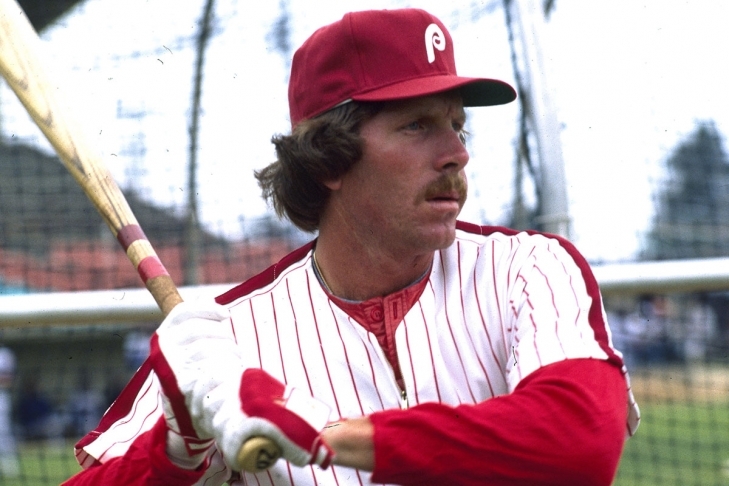
Mike Schmidt first stepped onto the Veterans Stadium turf in September 1972, a second-round draft choice out of Ohio University tasked with manning the hot corner for a struggling franchise. Initially, he appeared thoroughly overmatched by big-league pitching, struggling to a meager .196 batting average during his first full year. Yet, beneath those early growing pains lived a fiercely determined, flawlessly balanced athlete who would systematically revolutionize his position and define a franchise.
After initial struggles as a rookie, Schmidt improved significantly, leading the NL with 36 home runs, along with 116 RBIs, 108 runs, and 106 walks, earning a 9.7 bWAR. He maintained this level of performance for the next two years, hitting 38 homers in both 1975 and 1976. The 1976 season marked a turning point: Schmidt won his first Gold Glove, helped the Phillies reach 101 wins, and ended a 26-year postseason drought. He continued his success in 1977, with 38 homers, 101 RBIs, and a career-high 114 runs, as the Phillies secured the division title again.
After a slight decline in 1978, Schmidt reached a peak in 1980 both individually and as a team. That summer, he delivered an outstanding performance, hitting a career-high 48 home runs and driving in 121 runs to lead the league in both categories, while maintaining a 1.004 OPS. This earned him his first National League MVP Award through a unanimous vote. Significantly, he carried that success into October, hitting two home runs and driving in seven runs, helping the Phillies win the World Series and secure their first franchise championship.
During the strike-shortened 1981 season, he achieved a level of raw efficiency that many consider his peak structural campaign. In just 102 games, Schmidt hit 31 home runs—seven more than any other player in the league, and led the National League in runs (78), RBI (91), walks (73), on-base percentage (.435), and slugging (.644), securing his second straight NL MVP Award. Over the next three years, he continued to dominate the Senior Circuit, winning consecutive home run titles in 1983 (40) and 1984 (36), and regularly leading the league in walks to maintain a high on-base percentage.
His final great season was in 1986, a late-career resurgence when he moved back to third base after a brief stint at first. At 36, Schmidt won his eighth home run crown with 37 homers and led the league with 119 RBI, striking out just 84 times, the fewest in a full season. This high-leverage performance earned him his third National League MVP Award, joining an elite group of icons.
Declining afterward, Schmidt elected to call it a career in May of 1989 at a very emotional press conference. He walked away as one of the rare legends to exceed 100 career bWAR (106.9) entirely with one franchise, leaving behind 2,234 hits, 1,595 RBI, and 548 home runs.
To no surprise, Schmidt was a first ballot Baseball Hall of Fame inductee in 1995. The Phillies inducted Schmidt to their Wall of Fame in 1989, and the franchise retired his number 20 the year after.
Awards = HOF? Part Twenty-Seven: Gold Glove Third Base
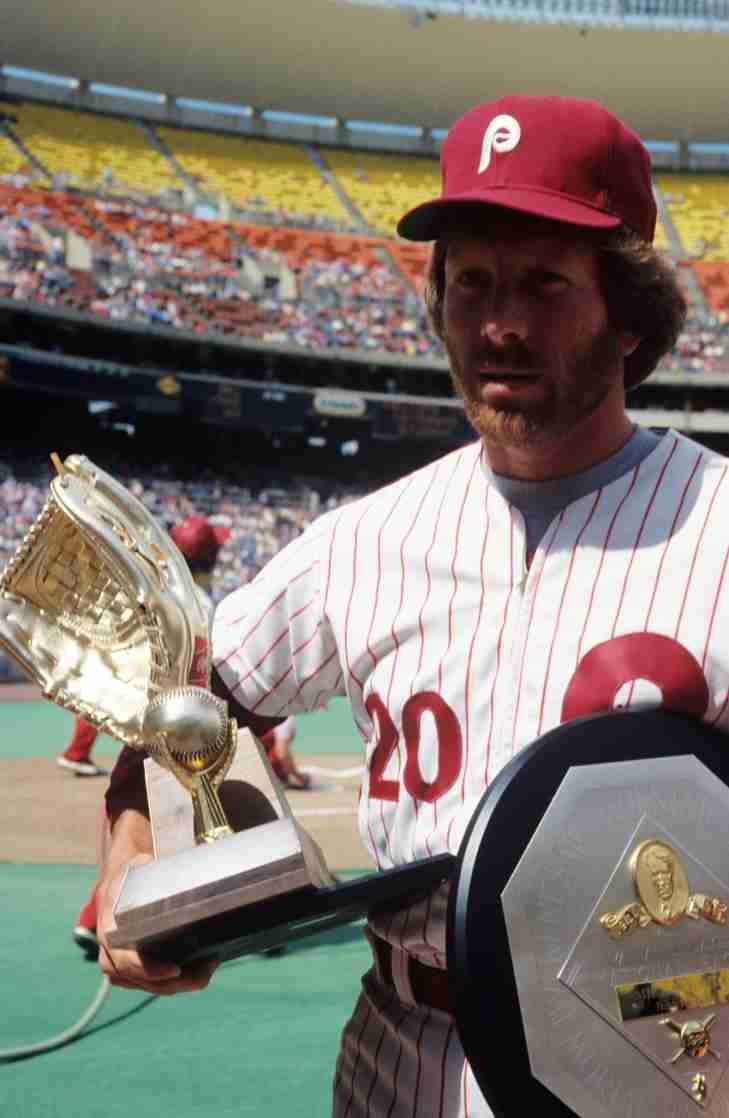
Needless to say, different awards in different sports yield hall of fame potential. In basketball, the team sport with the least amount of players on a roster, the dividend for greatness much higher. In baseball, it is not as much as a great individual season does not have the same impact.
We are now taking a look at the Gold Glove Award, given annually to the best defensive player in MLB in each respective position.
This will take awhile, so be patient with us!
We have just tackled Catcher, First, Second Base and Shortstop.
As you can imagine, we are continuing with “the hot corner” of Third Base.
The following are the past players who have won the Gold Glove at Shortstop who are eligible for the Baseball Hall of Fame and have been enshrined.
Brooks Robinson, AL Baltimore Orioles (1960)
2.0 dWAR. Let’s begin with the long story of the man regarded as the greatest defensive player at Third Base shall we? In what would be his first All Star and Gold Glove season, Brooks Robinson would finish third in American League MVP voting. Robinson finished fifth overall in Defensive bWAR and would lead in Putouts, Assists, Total Zone Runs, Range Factor per Game and Fielding Percentage. Get used to seeing the name Brooks Robinson all over this page! Inducted into the Hall of Fame in 1983.
Brooks Robinson, AL Baltimore Orioles (2) (1961)
1.9 dWAR. An All Star again, Robinson would finish sixth in the AL in Defensive bWAR. While he would only finish first in Fielding Percentage he was second overall in Total Zone Runs. Inducted into the Hall of Fame in 1983.
Brooks Robinson, AL Baltimore Orioles (3) (1962)
2.1 dWAR. This year, Robinson was the American League leader in bWAR and fifth in Defensive bWAR. Like the season before, he would finish first in Fielding Percentage and second in Total Zone Runs. Inducted into the Hall of Fame in 1983.
Brooks Robinson, AL Baltimore Orioles (4) (1963)
1.5 dWAR. Finishing 7th in Defensive bWAR, Brooks Robinson would lead the American League Third Basemen in Assists, Putouts, Double Plays Turned and Fielding Percentage. He was also second in Total Zone Runs and Range Factor per Game. Inducted into the Hall of Fame in 1983.
Brooks Robinson, AL Baltimore Orioles (5) (1964)
2.2 dWAR. Robinson had his best season as he again led the American League in bWAR and was named the Most Valuable Player. Robinson would also finish seventh in Defensive bWAR. In addition to winning his lone RBI title, he would also finish first at his position in Putouts, Assists, Double Plays Turned and Fielding Percentage and would again finish second in Total Zone Runs. Inducted into the Hall of Fame in 1983.
Ron Santo, NL Chicago Cubs (1964)
0.8 dWAR. Ron Santo would offensively lead the NL in On Base Percentage while batting over .300 for the first time. An All Star for the second time in his career Santo finished eighth in MVP voting. While his sub 1.0 Defensive bWAR seems low he was still first among the National League Third Baseman in Assists, Putouts, Double Plays Turned and Range Factor per Game. Inducted into the Hall of Fame in 2012.
Brooks Robinson, AL Baltimore Orioles (6) (1965)
1.2 dWAR. Robinson may be the greatest defensive Third Baseman of all time but he was gifted at least two Gold Gloves. Here is one of them, as he did not lead in any defensive category. Inducted into the Hall of Fame in 1983.
Ron Santo, NL Chicago Cubs (2) (1965)
1.2 dWAR. Santo was again an All Star and he would finish first at his position in Putouts, Assists, Total Zone Runs and Range Factor per Game. This was the first year where he finished first in Total Zone Runs. Inducted into the Hall of Fame in 2012.
Brooks Robinson, AL Baltimore Orioles (7) (1966)
0.6 dWAR. …and here is the second unwarranted Gold Glove for Brooks, though he did finish first in Fielding Percentage. In both 1965 and 1966 he failed to be in the top five amongst American League Third Basemen in Total Zone Runs. Inducted into the Hall of Fame in 1983.
Ron Santo, NL Chicago Cubs (3) (1966)
1.2 dWAR. Lather, rinse, repeat. Santo was again an All Star and he would finish first at his position in Putouts, Assists, Total Zone Runs and Range Factor per Game. Inducted into the Hall of Fame in 2012.
Brooks Robinson, AL Baltimore Orioles (8) (1967)
4.2 dWAR. Talk about a comeback! His 4.2 was more than enough to lead in Defensive bWAR as was his 32 Total Zone Runs marking the first time he led the American League in those metrics. Robinson also finished first at his position in Assists, Range Factor per Game and Fielding Percentage. Inducted into the Hall of Fame in 1983.
Ron Santo, NL Chicago Cubs (4) (1967)
2.7 dWAR. In what would be the best season of Ron Santo’s career, he would finish fourth in MVP voting, first in bWAR and second in Defensive bWAR. Santo would again finish first in Putouts, Assists, Double Plays Turned, Total Zone Runs and Range Factor per Game. He was second overall in Total Zone Runs this season. Inducted into the Hall of Fame in 2012.
Brooks Robinson, AL Baltimore Orioles (9) (1968)
4.5 dWAR. With a 4.5 Defensive bWAR and 33 Total Zone Runs, this season exceed his stellar 1967 defensive run and this was arguably the best of his career. The future Hall of Famer would finish first in Assists and Fielding Percentage. Inducted into the Hall of Fame in 1983.
Ron Santo, NL Chicago Cubs (5) (1968)
1.5 dWAR. Santo finished tenth in the National League in Defensive bWAR. At his position he would lead in Assists, Double Plays Turned, Total Zone Runs and Range Factor per Game. It was the first and only time he would finish at the top in Fielding Percentage. Inducted into the Hall of Fame in 2012.
Brooks Robinson, AL Baltimore Orioles (10) (1969)
2.9 dWAR. This was still good enough to finish second overall in Defensive bWAR and had 23 Total Zone Runs, also enough for second in the AL in first overall at Third Base. Robinson would additionally finish first amongst his peers in Assists and Fielding Percentage. Inducted into the Hall of Fame in 1983.
Brooks Robinson, AL Baltimore Orioles (11) (1970)
0.8 dWAR. Like 1966 & 1967, 1970 was a season where Brooks Robinson should not have been awarded a Gold Glove. He would however help Baltimore win the World Series and was named the MVP of the Fall Classic. Defensively however, Robinson would not come close to finishing first in any defensive category. Inducted into the Hall of Fame in 1983.
Brooks Robinson, AL Baltimore Orioles (12) (1971)
2.8 dWAR. Robinson rebounded defensively with a third place finish in Defensive bWAR. While he did not finish first in any defensive statistic, he was second in Total Zone Runs amongst the Third Basemen of the American League. Inducted into the Hall of Fame in 1983.
Brooks Robinson, AL Baltimore Orioles (13) (1972)
2.6 dWAR. Robinson rebounded defensively with a third place finish in Defensive bWAR. Robinson finished first in his position in Total Zone Runs and Fielding Percentage. Inducted into the Hall of Fame in 1983.
Brooks Robinson, AL Baltimore Orioles (14) (1973)
2.5 dWAR. This season Brooks Robinson finished sixth in Defensive bWAR with a second place finish in Total Zone Runs amongst the AL Third Basemen. He did not finish first in any defensive stat. Inducted into the Hall of Fame in 1983
Brooks Robinson, AL Baltimore Orioles (15) (1974)
2.1 dWAR. You would think we would be tired of writing about Brooks Robinson, but here we are with another top ten finish in Defensive bWAR (fourth place) here we are again! At his position, Robinson would lead in Assists, Total Zone Runs and Range Factor per Game. Inducted into the Hall of Fame in 1983.
Brooks Robinson, AL Baltimore Orioles (16) (1975)
2.5 dWAR. This was the final full season of Brooks Robinson’s legendary career and he finished in style with his sixteenth Gold Glove, earned with a third place finish in Defensive bWAR. 1975 would also see him finish first in Total Zone Runs and Fielding Percentage amongst the American League Third Basemen. Robinson’s positional defensive records include the most Putouts, Assists, Double Plays Turned and Total Zone Runs. In the latter category he is first among all players and is third all time in Defensive bWAR. This WAS the best Third Baseman that ever played the game! Inducted into the Hall of Fame in 1983.
Mike Schmidt, NL Philadelphia Phillies (1976)
1.9 dWAR. Prior to Mike Schmidt’s first Gold Glove, he had already finished in the top ten in Defensive bWAR twice before. In 1976, Schmidt finished ninth in Defensive bWAR and finished third in MVP voting. The Third Baseman would lead his position in Assists and Range Factor per Game, while finishing second in Total Zone Runs. Inducted into the Hall of Fame in 1995.
Mike Schmidt, NL Philadelphia Phillies (2) (1977)
2.5 dWAR. This would be Mike Schmidt’s highest single season in Defensive bWAR and he would also finish first overall in the National League in bWAR. Schmidt would also have career highs in Total Zone Runs (20, leading his position) and also finished first in Assists and Range Factor per Game. Inducted into the Hall of Fame in 1995.
Mike Schmidt, NL Philadelphia Phillies (3) (1978)
1.8 dWAR. Schmidt would finish seventh overall in Defensive bWAR in the NL and would lead in Double Plays Turned and Total Zone Runs at Third Base in the National League. Inducted into the Hall of Fame in 1995.
Mike Schmidt, NL Philadelphia Phillies (4) (1979)
1.1 dWAR. Mike Schmidt did not finish in the top ten in Defensive bWAR in the NL, though this would be the second of four seasons where he would finish first on the Offensive side of the ledger. Schmidt would finish first at his position in Double Plays Turned and Total Zone Runs. Inducted into the Hall of Fame in 1995.
Mike Schmidt, NL Philadelphia Phillies (5) (1980)
1.5 dWAR. How good a 1980 was it for Mike Schmidt? He would win the National League MVP Award, the World Series and the World Series MVP. Defensively, he was tenth overall in Defensive bWAR (while being first in Offensive bWAR) and was the National League Third Base leader in Assists, Double Plays Turned, Total Zone Runs and Range Factor per Game. Inducted into the Hall of Fame in 1995.
Mike Schmidt, NL Philadelphia Phillies (6) (1981)
1.2 dWAR. Schmidt was seventh in Defensive bWAR in the NL, which would be the last time he was in the top ten in that statistic. He would again finish first at his position in Total Zone Runs and Range Factor per Game. Inducted into the Hall of Fame in 1995.
Mike Schmidt, NL Philadelphia Phillies (7) (1982)
0.7 dWAR. Mike Schmidt may have had a lower Defensive bWAR but he would finish first at Third Base in the NL in Assists and Double Plays Turned. Inducted into the Hall of Fame in 1995.
Mike Schmidt, NL Philadelphia Phillies (8) (1983)
0.7 dWAR. Matching the Defensive bWAR he had in the season previous, Mike Schmidt would lead in Assists and Double Plays Turned at the Third Base position. Inducted into the Hall of Fame in 1995.
Mike Schmidt, NL Philadelphia Phillies (9) (1984)
1.4 dWAR. Realistically, this was the last decent season with the glove for Mike Schmidt, while he would not finish first in any defensive metric at Third Base. He would however finish second in Total Zone Runs at Third in the NL. Inducted into the Hall of Fame in 1995.
George Brett, AL Kansas City Royals (1985)
0.4 dWAR. George Brett had an incredible 1985. He finished second in MVP voting and led the Royals to a World Series win. Brett was a first ballot Hall of Famer and the greatest Kansas City Royal of all-time. However, this does not make him worthy of the ’85 Gold Glove. While he did lead in Assists and Double Plays Turned, he was not in the top five in Total Zone Runs. Inducted into the Hall of Fame in 1999.
Mike Schmidt, NL Philadelphia Phillies (10) (1986)
-0.1 dWAR. This is hard for us. We love Mike Schmidt and especially that he is a two time MVP, the second of which he obtained this year. Still, he won a Gold Glove here with a negative Defensive bWAR and did not remotely come close to finishing first in any defensive category. Inducted into the Hall of Fame in 1995.
Wade Boggs, AL New York Yankees (1994)
0.4 dWAR. There was a time when a case could be made for Wade Boggs to win the Gold Glove but that never should have been case when he was with New York.yet here we are. While he did finish first among the AL Third Basemen in Range Factor per Game he was not a top five finisher in Total Zone Runs nor would finish in the top in any other defensive statistic. Inducted into the Hall of Fame in 2005.
Wade Boggs, AL New York Yankees (1995)
0.7 dWAR. Boggs did have a somewhat better Defensive bWAR and he did lead the American League Third Basemen in Fielding Percentage but he also again failed to finish in the top five in Total Zone Runs and was also not in the top five this year in Range Factor per Game. This is a worthy Hall of Famer but not worthy to own two Gold Gloves. Inducted into the Hall of Fame in 2005.
The following are the players who have won the Gold Glove at Third Base who are eligible for the Baseball Hall of Fame and have not been selected:
Frank Malzone, ML Boston Red Sox (1957)
1.2 dWAR. The first Gold Glove winner at third base was the runner-up for the Rookie of the Year and would go to fist of six All Star Games. Malzone also finished seventh in MVP voting and would lead in Putouts, Assists, Double Plays Turned, Range Factor per Game and Fielding Percentage. Although Malzone was Hall of Fame eligible in 1972 he was not on the ballot.
Frank Malzone, AL Boston Red Sox (2) (1958)
1.3 dWAR. Again an All Star, Malzone finished eighth overall in Defensive bWAR, the only time he would do so. He would finish atop the American League Third Basemen in Assists, Double Plays Turned, Total Zone Runs and Range Factor per Game. Although Malzone was Hall of Fame eligible in 1972 he was not on the ballot.
Ken Boyer, NL St. Louis Cardinals (1958)
1.7 dWAR. Boyer would finish eighth overall in Defensive bWAR in the National League and finish first in Putouts, Double Plays Turned and Range Factor per Game. He would also finish second in Total Zone Runs. Boyer was on the ballot for fifteen years and finished as high as 25.5% in 1988. He is ranked #58 on Notinhalloffame.com.
Frank Malzone, AL Boston Red Sox (3) (1959)
0.2 dWAR. While Malzone did lead in Assists and Double Plays Turned, this was not a spectacular defensive year overall. He was not in the top ten in Total Zone Runs. Although Malzone was Hall of Fame eligible in 1972 he was not on the ballot.
Ken Boyer, NL St. Louis Cardinals (2) (1959)
1.1 dWAR. An All Star for the second time of his career, Boyer would finish tenth overall in MVP voting. In terms of defense, Boyer still finished eighth in Defensive bWAR while finishing first amongst the NL Third Basemen in Double Plays Turned and Total Zone Runs. Boyer was on the ballot for fifteen years and finished as high as 25.5% in 1988. He is ranked #58 on Notinhalloffame.com.
Ken Boyer, NL St. Louis Cardinals (3) (1960)
1.0 dWAR. This would be Boyer’s third All Star season and he would finish sixth in MVP voting. This year Boyer would only finish first defensively in Double Plays Turned. Boyer was on the ballot for fifteen years and finished as high as 25.5% in 1988. He is ranked #58 on Notinhalloffame.com.
Ken Boyer, NL St. Louis Cardinals (4) (1961)
1.6 dWAR. Boyer would finish seventh in Defensive bWAR and would again be an All Star. He would finish first in Assists and Total Zone Runs. Boyer was on the ballot for fifteen years and finished as high as 25.5% in 1988. He is ranked #58 on Notinhalloffame.com.
Jim Davenport, NL San Francisco Giants (1962)
1.1 dWAR. Offensively speaking, this was the best season of Jim Davenport’s career as he had career highs in Hits (144), Home Runs (14), Batting Average (.297) and OPS (.813). Whether or not this was the nest defensive year of Davenport’s career can be debated, but this was the season where he won the Gold Glove and was also an All Star. Davenport likely should not have won this as he did not really come close to leading in any defensive category. Although Davenport was Hall of Fame eligible in 1976 he was not on the ballot.
Ken Boyer, NL St. Louis Cardinals (5) (1963)
0.2 dWAR. Of the five Gold Gloves that Ken Boyer would win, this is the one that should be disputed. The only statistic that Boyer would lead in was Errors and he was not a top ten finisher in Total Zone Runs, Range Factor per Game and Fielding Percentage. He would however win the National League MVP and the World Series in 1964. Boyer was on the ballot for fifteen years and finished as high as 25.5% in 1988. He is ranked #58 on Notinhalloffame.com.
Clete Boyer, NL Atlanta Braves (1969)
2.1 dWAR. Had there been no Brooks Robinson, it is possible that Clete Boyer would have won a few Gold Gloves as his defensive prowess as a New York Yankee often rivaled that of the Hall of Fame Oriole. Boyer would finish first in the American League in Defensive bWAR in 1961 and 1962 and in ’69 was fourth in the NL (followed by a second place finish the following year). Boyer would be first amongst National League Third Basemen in Total Zone Runs. While Clete Boyer would retire with only one Gold Glove, he had a career that easily could have warranted five. Boyer was on the ballot for two years and finished as high as 0.7% in 1979.
Doug Rader, NL Houston Astros (1970)
1.0 dWAR. We just looked at Clete Boyer who won one Gold Glove and probably should have won five. Here we have Doug Radar who won five and probably should have won one, which this one could be argued for. Rader finished first in Putouts, Assists, Double Plays Turned, Range Factor per Game and Fielding Percentage. Boyer was on the ballot for two years and finished as high as 0.7% in 1979.
Doug Rader, NL Houston Astros (2) (1971)
0.2 dWAR. While Doug Rader would not finish with a very impressive 0.2 Defensive bWAR, Rader would however finish first in one defensive category, Errors by a Third Baseman. Boyer was on the ballot for two years and finished as high as 0.7% in 1979.
Doug Rader, NL Houston Astros (3) (1972)
0.8 dWAR. Rader would finish first in the National League Third Baseman in Assists and Double Plays Turned. Boyer was on the ballot for two years and finished as high as 0.7% in 1979.
Doug Rader, NL Houston Astros (4) (1973)
-0.2 dWAR. Ugh, we hate it when a Gold Glove is awarded to someone with a negative Defensive bWAR. He did lead in Putouts (and Errors) at Third and was not a top five finisher in Total Zone Runs. Boyer was on the ballot for two years and finished as high as 0.7% in 1979.
Doug Rader, NL Houston Astros (5) (1974)
0.5 dWAR. In what would be the final Gold Glove in the career for Doug Rader, we again see him as someone who is undeserving. This year, he did not finish first in any defensive statistic. Seriously, we think he won five Gold Gloves simply because he played in the most games at Third over this time frame. Over his five Gold Glove seasons, Rader would have a total Defensive bWAR of 2.2. Not exactly stellar is it? Boyer was on the ballot for two years and finished as high as 0.7% in 1979.
Ken Reitz, NL St. Louis Cardinals (1975)
-1.4 dWAR. Is this for real? Ken Reitz had a career Defensive bWAR of 1.3, which is bad enough but he wins a Gold Glove on his worst ever year with the glove? Reitz did play the most games at Third, but still didn’t come close to finishing first in any defensive stat. Who voted for this? Although Reitz was Hall of Fame eligible in 1988 he was not on the ballot.
Aurelio Rodriguez, AL Detroit Tigers (1976)
0.3 dWAR. While there might have been seasons where Aurelio Rodriguez should have won a Gold Glove, this was not one of those years. He would finish first in Fielding Percentage at his position but was nowhere close in any other category. Although Rodriguez was Hall of Fame eligible in 1989 he was not on the ballot.
Graig Nettles, AL New York Yankees (1977)
1.4 dWAR. Graig Nettles had already secured four seasons of a Defensive bWAR over 2.5, but this was the first campaign where he would win a Gold Glove. Nettles had a good defensive season but did not finish at the top in any defensive statistic, though this was also the Yankees World Series championship team. This might have propelled him to a win. Graig Nettles is ranked #77 on Notinhalloffame.com.
Graig Nettles, AL New York Yankees (1978)
1.8 dWAR. Nettles finished sixth in Defensive bWAR, which would be the seventh and final time he would finish in the top ten. 1978 would also see the Yankees win the World Series again, which certainly doesn’t hurt him winning the Gold Glove. He would finish first in Double Plays Turned by a Third Baseman. Graig Nettles is ranked #77 on Notinhalloffame.com.
Buddy Bell, AL Texas Rangers (1979)
3.7 dWAR. This would be Buddy Bell’s finest defensive season in terms of Defensive bWAR, finishing first overall in the American League, and would also do the same for Total Zone Runs. At Third Base, Bell did not finish first in any other defensive metric than TZR, but was second in Range Factor per Game and Fielding Percentage. Bell was on the ballot for one year in 1995 and received 1.7% of the ballot.
Buddy Bell, AL Texas Rangers (2) (1980)
1.6 dWAR. Buddy Bell would finish eighth in the AL in Defensive bWAR while making his first All Star Game appearance since 1973. Bell would finish first among the American League Third Basemen in Range Factor per Game and Fielding Percentage and was second in Total Zone Runs. Bell was on the ballot for one year in 1995 and received 1.7% of the ballot.
Buddy Bell, AL Texas Rangers (3) (1981)
3.3 dWAR. For the second and final time, Buddy Bell would lead the American League in Defensive BWAR and Total Zone Runs. Bell would be tops amongst the AL Third Basemen in Assists, Total Zone Runs and Range Factor per Game. Bell was on the ballot for one year in 1995 and received 1.7% of the ballot.
Buddy Bell, AL Texas Rangers (4) (1982)
1.8 dWAR. Bell would finish overall in the AL in Defensive bWAR and at the hot corner he would statistically rank first in Putouts, Total Zone Runs, Range Factor per Game and Fielding Percentage. Bell was on the ballot for one year in 1995 and received 1.7% of the ballot.
Buddy Bell, AL Texas Rangers (5) (1983)
2.0 dWAR. Finishing fourth overall in Defensive bWAR in the AL, Bell was first at his position in Putouts and Total Zone Runs. He was also second in Range Factor Per Game. Bell was on the ballot for one year in 1995 and received 1.7% of the ballot.
Buddy Bell, AL Texas Rangers (6) (1984)
2.2 dWAR. This was Buddy Bell’s final top ten finish in Defensive bWAR (he finished seventh) and overall posted an excellent career 23.0 in that. In 1984 Buddy Bell would lead all American League Third Basemen in Range Factor per Game and second in Total Zone Runs. Bell was on the ballot for one year in 1995 and received 1.7% of the ballot.
Tim Wallach, NL Montreal Expos (1985)
2.9 dWAR. The year before, Tim Wallach finished with 2.2 in Defensive bWAR, which was good enough for third in the NL. This year, his 2.9 was enough for second, his highest finish ever. Wallach would also record his first Silver Slugger win. At Third Base, Wallach topped all in the National League in Putouts, Assists, Double Plays Turned, Total Zone Runs and Range Factor per Game. Notably, he would also finish first in Total Zone Runs overall in the league. Wallach was on the ballot for one year in 2002 and received 0.2% of the ballot.
Gary Gaetti, AL Minnesota Twins (1986)
1.2 dWAR. Gaetti actually had a stronger case in the two years previous, but this is not a terrible choice. Gaetti finished first at Third Base in the AL in Double Plays Turned, Total Zone Runs and Range Factor per Game. Gaetti was on the ballot for one year in 2006 and received 0.8% of the ballot.
Gary Gaetti, AL Minnesota Twins (2) (1987)
0.6 dWAR. Gaetti finished first in Putouts amongst the American League Third Basemen but also played the most games that year. He was second in Fielding Percentage but nowhere to be found at the top in Total Zone Runs and Range Factor per Game. Gaetti was however on the World Series Champions and was the past winner. Not a great choice this year. Gaetti was on the ballot for one year in 2006 and received 0.8% of the ballot.
Terry Pendleton, NL St. Louis Cardinals (1987)
0.2 dWAR. Hmmmm. In the two years before, Terry Pendleton finished over 2.0 in Defensive bWAR, but this is the year he wins the Gold Glove? Probably, because this was first offensive season that didn’t suck. Pendleton actually had NEGATIVE Offensive bWARs in the two years before. He did however in 1987 finish first amongst the NL Third Basemen in Assists and Range Factor per Game. Pendleton was on the ballot for one year in 2004 and received 0.2% of the ballot.
Gary Gaetti, AL Minnesota Twins (3) (1988)
-0.2 dWAR. While this would be Gaetti’s first All Star Game, he would win his third Gold Glove with a negative Defensive bWAR. He was second in Fielding Percentage but was not top ten in any other defensive statistic. Gaetti was on the ballot for one year in 2006 and received 0.8% of the ballot.
Tim Wallach, NL Montreal Expos (2) (1988)
1.9 dWAR. Wallach would finish ninth overall Defensive bWAR in what was arguably his last great season defensively. Wallach would lead the National League Third Basemen in Putouts and Double Plays Turned and finished second in Total Zone Runs. Wallach was on the ballot for one year in 2002 and received 0.2% of the ballot.
Gary Gaetti, AL Minnesota Twins (4) (1989)
0.9 dWAR. This was Gary Gaetti’s fourth and final Gold Glove and realistically he probably should not have won any of them, though in 1990 he would have a 2.4 Defensive bWAR. Gaetti finished third in Total Zone Runs and second in Fielding Percentage at his position. Gaetti was on the ballot for one year in 2006 and received 0.8% of the ballot.
Terry Pendleton, NL St. Louis Cardinals (2) (1989)
2.3 dWAR. As opposed to the first Gold Glove that he should not have won, the second one from Terry Pendleton was definitely warranted. He would finish sixth in the NL in Defensive bWAR while leading all league Third Basemen in Assists, Range Factor per Game and Fielding Percentage while finishing second in Total Zone Runs. Pendleton was on the ballot for one year in 2004 and received 0.2% of the ballot.
Kelly Gruber, AL Toronto Blue Jays (1990)
-0.6 dWAR. Here is another strange one. Kelly Gruber had a good career in Toronto and in 1990 he put up career highs in Home Runs, RBIs, Slugging Percentage and OPS. He finished fourth in MVP voting that year, also a career high. He would however also have a career low in Defensive bWAR, which showed how much the Gold Glove voters pay attention to the bat. He would have the most Putouts but had a poor season overall defensively. Although Gruber was Hall of Fame eligible in 1999, he was not on the ballot.
Tim Wallach, NL Montreal Expos (3) (1990)
0.0 dWAR. We already said that Wallach arguably had his last great defensive season but that did not mean that he did not win another Gold Glove, though he clearly shouldn’t have. The Expo might have played the most games at Third but he did not finish at the top in any defensive statistic. Wallach was on the ballot for one year in 2002 and received 0.2% of the ballot.
Robin Ventura, AL Chicago White Sox (1991)
0.7 dWAR. The first of six Gold Gloves for Robin Ventura was a bit of a curious one. Ventura finished first in Putouts at Third, but he also finished first in Errors. He did not come close to leading in any other defensive statistic. Ventura was on the ballot for one year in 2010 and received 1.3% of the ballot.
Matt Williams, NL San Francisco Giants (1991)
1.1 dWAR. Williams had a decent year defensively and while there have certainly been more dynamic Gold Glove winners at Third Base this wasn’t a year where there was great competition. He would finish first in Putouts and Total Zone Runs. Williams was on the ballot for one year in 2009 and received 1.3% of the ballot.
Robin Ventura, AL Chicago White Sox (2) (1992)
1.7 dWAR. Ventura would this year finish ninth overall in Defensive bWAR and would go to his first All Star Game. Among his peers at Third Base in the AL, Ventura was atop in Putouts, Assists, Double Plays Turned, Total Zone Runs and Range Factor per Game. Ventura was on the ballot for one year in 2010 and received 1.3% of the ballot.
Terry Pendleton, NL Atlanta Braves (3) (1992)
0.7 dWAR. Now an Atlanta Brave, Pendleton was coming off an MVP season, Pendleton would finish second this year. This was not a terrible season defensively as he finished first in Assists and Range Factor per Game, but he only had 4 Total Zone Runs and was not exactly elite at the Third. Pendleton was on the ballot for one year in 2004 and received 0.2% of the ballot.
Robin Ventura, AL Chicago White Sox (3) (1993)
1.9 dWAR. This year, Ventura would finish tenth in Defensive bWAR while finishing first in Total Zone Runs and second in Fielding Percentage. Ventura was on the ballot for one year in 2010 and received 1.3% of the ballot.
Matt Williams, NL San Francisco Giants (2) (1993)
1.3 dWAR. Williams would finish sixth in MVP voting and was also a Silver Slugger. Defensively he would finish first in Double Plays Turned and second in Total Zone Runs. Williams was on the ballot for one year in 2009 and received 1.3% of the ballot.
Matt Williams, NL San Francisco Giants (3) (1994)
0.9 dWAR. Williams would win the National League Home Run Title and finished second in MVP voting. Again, this was not a spectacular defensive season for Williams but there were not a lot of competition for this. Amongst the National League Third Basemen he finished first in Assists and Range Factor per Game and second in Total Zone Runs. Williams was on the ballot for one year in 2009 and received 1.3% of the ballot.
Ken Caminiti, NL San Diego Padres (1995)
-1.0 dWAR. Once again we have a case of a bat winning a Gold Glove. Caminiti had two Gold Glove worthy seasons (1989 & 1994) and he did not win in those seasons. In 1995, Caminiti had his first 25 Home Run and .300 season. While Caminiti did finish first in Assists and Double Plays Turned, he also played the most defensive games at Third. He also led in Errors, was not in the top five in Total Zone Runs and Fielding Percentage. Caminiti was on the ballot for one year in 2007 and received 0.4% of the ballot.
Robin Ventura, AL Chicago White Sox (4) (1996)
0.9 dWAR. This is the second time that Robin Ventura won the Gold Glove when he probably should not have. While he did finish first in Putouts and Double Plays Turned, his finish in Total Zone Runs and Range Factor per Game was a pedestrian fifth place. Ventura was on the ballot for one year in 2010 and received 1.3% of the ballot.
Ken Caminiti, NL San Diego Padres (2) (1996)
0.3 dWAR. Caminiti was an offensive beast this year with 40 Home Runs and a .326 Batting Average. He was voted the National League MVP and was named a Silver Slugger. Defensively, he was better than 1995, but far from Gold Glove worthy. He would finish first in Range Factor per Game amongst the NL Third Basemen but again he was not in the top five Total Zone Runs. Caminiti was on the ballot for one year in 2007 and received 0.4% of the ballot.
Matt Williams, AL Cleveland Indians (4) (1997)
1.9 dWAR. With a tenth place finish in Defensive bWAR, this would be the only time that Matt Williams would place in the top ten in this metric. Incidentally, it was also the only season he would play in the American League. Williams would not finish first at Third Base in the AL in any defensive stat, but put up a career high 17 Total Zone Runs, enough for second in that statistic. Williams was on the ballot for one year in 2009 and received 1.3% of the ballot.
Ken Caminiti, NL San Diego Padres (3) (1997)
-1.0 dWAR. This was the third in final Gold Glove for Caminiti and he went three for three in terms of not deserving any of them. His highest finish defensively was second…in Errors. Hey, the decisions overall do get better! Caminiti was on the ballot for one year in 2007 and received 0.4% of the ballot.
Robin Ventura, AL Chicago White Sox (5) (1998)
3.4 dWAR. There is no doubt that this was the finest defensive season that Robin Ventura had in Major League Baseball. Not only did the Third Baseman finish first in the AL in Defensive bWAR, he would do so in Total Zone Runs. He would also lead all of the AL Third Basemen in Assists and Double Plays Turned. Ventura was on the ballot for one year in 2010 and received 1.3% of the ballot.
Scott Rolen, NL Philadelphia Phillies (1998)
1.4 dWAR. Rolen was the Rookie of the Year in 1997, and this was a better season both offensively and defensively for the Third Baseman. Rolen finished ninth overall in Defensive bWAR while finishing first among the NL Third Basemen in Putouts and was third in Total Zone Runs. As of this writing, Rolen is on the ballot for the first time.
Scott Brosius, AL New York Yankees (1999)
0.9 dWAR. Scott Brosius was only with the New York Yankees but it did not take long for him to become a very popular one. An All Star in 1998, Brosius would win his only Gold Glove in 1999, though it was far from a dominating season with the glove. Either way, Brosius’ selection was not all bad as he did lead all American League Shortstops in Fielding Percentage and was a respectable third in Total Zone Runs. As there was no clear-cut choice, it didn’t hurt that he was Yankee who had just won his second World Series. Brosius was on the ballot for one year in 2007 but did not receive any votes.
Robin Ventura, NL New York Mets (6) (1999)
2.8 dWAR. While the previous season was arguably the best ever with his glove, 1999 was his best overall. Ventura, now a New York Met would place sixth overall in MVP voting and fourth in Defensive bWAR in his first year in the National League. As for his position, Ventura was tops in Assists, Total Zone Runs and for the first and only time in his career, Fielding Percentage. Ventura was on the ballot for one year in 2010 and received 1.3% of the ballot.
Travis Fryman, AL Cleveland Indians (2000)
0.3 dWAR. This would be Travis Fryman’s fifth All Star year and his lone Gold Glove win, but you have to openly ask why he got it. Fryman would finish first in Fielding Percentage at Third in the AL, but he was not in the top five in any other category. Fryman was on the ballot for one year in 2008 and received 0.4% of the vote.
Scott Rolen, NL Philadelphia Phillies (2) (2000)
0.9 dWAR. 1999 was actually a better season defensively where he finished second in Total Zone Runs and first in Range Factor per Game among his peers. In 2000 he was second and fourth respectively but did not finish first in any Defensive statistic. As of this writing, Rolen is on the ballot for the first time.
Scott Rolen, NL Philadelphia Phillies (3) (2001)
1.2 dWAR. While this was a good defensive season for Scott Rolen, you can’t really say that it was a spectacular one. Rolen did finish first in Range Factor per Game and was third in Total Zone Runs. As of this writing, Rolen is on the ballot for the first time.
Scott Rolen, NL Philadelphia Phillies/St. Louis Cardinals (4) (2002)
1.8 dWAR. Rolen was traded midway through the season from Philly to St. Louis, and was first among his peers in Total Zone Runs and Range Factor per Game. Overall in the National League he was sixth in Defensive bWAR. Notably, this was also the first time that Rolen would make an All Star Team and he would also win the Silver Slugger for the only time of his year. As of this writing, Rolen is on the ballot for the first time.
Scott Rolen, NL St. Louis Cardinals (5) (2003)
-0.2 dWAR. Scott Rolen took a step back defensively but the voters didn’t notice as he won his fifth Gold Glove this year. His highest finish in any defensive metric was fourth in Assists. As of this writing, Rolen is on the ballot for the first time.
Scott Rolen, NL St. Louis Cardinals (6) (2004)
3.3 dWAR. Talk about a comeback. Rolen went from -0.2 to 3.3 in Defensive bWAR and for the first and only time in his career would finish atop the National League. It was also the last time that he would finish in the top ten, though he wasn’t done collecting Gold Gloves. Amazingly, his career high of 27 Total Zone Runs would not top the National League Third Basemen, as Adrian Beltre of the Dodgers had a better number. As of this writing, Rolen is on the ballot for the first time.
Mike Lowell, NL Florida Marlins (2005)
-0.5 dWAR. This was another strange win, but as bad as Mike Lowell’s Defensive bWAR was he still finished third in Total Zone Runs and was first in Fielding Percentage. Lowell was a player who did not make a lot of mistakes but also never exerted himself out of his comfort zone. This is also a strange case as this was the first time in three years that he was not an All Star and he was not rewarded for his offense, as he was barely a .300 OBP player in 2005. As of this writing, Rolen is on the ballot for the first time.
Scott Rolen, NL St. Louis Cardinals (7) (2006)
1.8 dWAR. This is actually a good number for Defensive bWAR but in 2006 it wasn’t enough to make the top ten in the NL, nor was his other defensive stats enough to win any defensive statistic at Third Base in the league. This could be the best “bad” win in Gold Glove history. As of this writing, Rolen is on the ballot for the first time.
Scott Rolen, NL Cincinnati Reds (8) (2010)
1.2 dWAR. In what would be Scott Rolen’s final Gold Glove, he did so as a member of the Reds, the only time he would do so. This wasn’t the most warranted Gold Glove of his career as his best statistical finishes was second in both Range Factor per Game and Fielding Percentage. Overall, Rolen probably should not have won eight Gold Gloves but his 20.6 career Defensive bWAR is very good. As of this writing, Rolen is on the ballot for the first time.
Let’s update our tally shall we?
| Award in Question |
Percentage of recipients who have entered the HOF |
Percentage of recipients by year who have entered the HOF. |
| NBA MVP |
100% |
100% |
| NHL Norris |
90.5% |
96.4% |
| NBA All Star Game MVP |
89.5% |
91.7% |
| NHL Conn Smythe |
74.2% |
85.4% |
| NHL Lady Byng |
63.8% |
76.0% |
| NFL Super Bowl MVP |
60.6% |
64.9% |
| NBA Defensive Player of the Year |
58.3% |
56.5% |
| NBA Rookie of the Year |
56.5% |
56.5% |
| MLB/NL/AL Cy Young Award |
44.4% |
55.4% |
| NHL Frank J. Selke Trophy |
33.3% |
36.7% |
| NFL Offensive Rookie of the Year |
28.6% |
28.6% |
| MLB Edgar Martinez Award |
26.7% |
17.2% |
| MLB (NL/AL) Silver Slugger (Designated Hitter) |
25.0% |
30.8% |
| MLB (NL/AL) Silver Slugger (Shortstop) |
23.5% |
52.6% |
| NFL Defensive Rookie of the Year |
20.6% |
20.6% |
| MLB (NL/AL) Silver Slugger (Catcher) |
20.0% |
22.5% |
| MLB (NL/AL) Gold Glove (Second Base) |
18.8% |
39.8% |
| MLB (NL/AL) Gold Glove (Shortstop) |
18.2% |
35.1% |
| MLB (NL/AL) Silver Slugger (Pitcher) |
18.2% |
20.1% |
| MLB (NL/AL) Silver Slugger (Second Base) |
16.7% |
32.7% |
| MLB (NL/AL) Silver Slugger (Outfield) |
15.7% |
25.2% |
| MLB (NL/AL) Gold Glove (Third Base) |
14.3% |
14.3% |
| MLB (NL/AL) Silver Slugger (Third Base) |
13.6% |
14.3% |
| MLB (NL/AL) Silver Slugger (First Base) |
13.6% |
13.3% |
| MLB (NL/AL) Rookie of the Year |
13.3% |
13.3% |
| MLB (NL/AL) Gold Glove (Catcher) |
10.3% |
15.2% |
| MLB (NL/AL) Gold Glove (First Base) |
3.8% |
3.2% |
The following are the players who have won the Gold Glove at Third Base who have retired but have not met the mandatory years out of the game to qualify for the Baseball Hall of Fame:
Eric Chavez, AL Oakland Athletics (2001)
1.5 dWAR. Chavez would not commit many errors and would lead the AL Third Basemen in Fielding Percentage while also finishing first in Assists. He was third in Total Zone Runs. Eligible in the Hall of Fame in 2020.
Eric Chavez, AL Oakland Athletics (2) (2002)
0.0 dWAR. While Eric Chavez may have finished atop in Assists, Putouts and Range Factor per Game he was not in the hunt at all for Total Zone Runs. This was an unspectacular defensive season. Eligible in the Hall of Fame in 2020.
Eric Chavez, AL Oakland Athletics (3) (2003)
1.0 dWAR. This was better than the season before for sure. Chavez would again lead the American League Third Basemen in Assists and Putouts and for the first time led in Range Factor per Game, though he was again not in the top five in Total Zone Runs. Eligible in the Hall of Fame in 2020.
Eric Chavez, AL Oakland Athletics (4) (2004)
1.4 dWAR. Again, this was an improvement from the season before. Chavez repeated his feat of finishing first among his peers in Assists, Putouts and Range Factor per Game but for the first and only time he was atop in Double Plays Turned. He was also second in Total Zone Runs. Eligible in the Hall of Fame in 2020.
Eric Chavez, AL Oakland Athletics (5) (2005)
1.5 dWAR. This is probably the most deserving of his Gold Gloves, though mainly because he had far less worthy competition this year. Chavez would finish first in Range Factor per Game and for the first time was first in Total Zone Runs. Eligible in the Hall of Fame in 2020.
Eric Chavez, AL Oakland Athletics (6) (2006)
0.5 dWAR. In his final Gold Glove year, Eric Chavez had the highest Fielding Percentage and turned the most Double Plays amongst the AL Third Basemen. That is the good news. The bad is that he wasn’t in the top five in Range Factor per Game or Total Zone Runs. Eligible in the Hall of Fame in 2020.
Placido Polanco, NL Philadelphia Phillies (2011)
1.2 dWAR. Placido Polanco won two Gold Gloves as a Second Basemen prior to this one at Third. Polanco was an All Star for the second and final time in his career and he finished first in Range Factor per Game and Fielding Percentage. He was also second in Total Zone Runs. Eligible in the Hall of Fame in 2019.
The following are the players who have won the Gold Glove at Third Base who are still active.
Adrian Beltre, AL Seattle Mariners (2007)
0.7 dWAR. Prior to winning his first Gold Glove, Adrian Beltre had three seasons where he should have been considered for the Gold Glove. Unfortunately when he finally won his first, it was in a year where he really should not have. Beltre was first in Putouts amongst the AL Third Basemen, but also in Errors and was not in the top five in Total Zone Runs or Fielding Percentage. This almost feels like they were saying sorry! 39 Years Old, Playing for the Texas Rangers.
David Wright, NL New York Mets (2007)
1.4 dWAR. Finishing fourth in National League MVP voting, David Wright also would win his first Silver Slugger. In regards to his NL Third base peers, Wright did not finish first in any defensive stat and while this was not the best choice for Gold Glove this was not terrible. Sadly, that is relevant when we are talking about Gold Gloves. 33 Years Old, Playing for the New York Mets.
Adrian Beltre, AL Seattle Mariners (2) (2008)
3.1 dWAR. Sabremetircally speaking this was the best defensive season of Adrian Beltre’s career and thankfully he won the Gold Glove this year. Beltre would finish first for the first and only time in Defensive bWAR in the American League while finishing first in Assists. 39 Years Old, Playing for the Texas Rangers.
David Wright, NL New York Mets (2) (2008)
0.7 dWAR. David Wright won his second Gold Glove (and coincidentally another Silver Slugger) but other than leading the NL Third Basemen in Assists, there was nothing special about his defensive season. The only saving grace here is that neither did anyone else. Incidentally, in 2012 he was named a Wilson Defensive Player but lost the Gold Glove to Andrelton Simmons of Atlanta, who had a stronger case. 33 Years Old, Playing for the New York Mets.
Evan Longoria, AL Tampa Bay Rays (2009)
2.2 dWAR. Following his Rookie of the Year win in 2008, Evan Longoria would win his first Silver Slugger and Gold Glove in 2009. Longoria finished seventh in the AL in Defensive bWAR while also finishing first in Double Plays Turned and Total Zone Runs among the American League Third Basemen. 31 Years Old, Playing for the Tampa Bay Rays.
Ryan Zimmerman, NL Washington Nationals (2009)
2.5 dWAR. Ryan Zimmerman won only one Gold Glove in his career but this was the year it definitely should have occurred. Zimmerman, who was also named an All Star for the first time finished third in Defensive bWAR finished first in Assists and Range Factor per Game. 33 Years Old, Playing for the Washington Nationals.
Evan Longoria, AL Tampa Bay Rays (2) (2010)
2.5 dWAR. Longoria would finish third in Defensive bWAR in the American League and at his position was the leader in Double Plays Turned. He was also second in Total Zone Runs. 31 Years Old, Playing for the Tampa Bay Rays.
Adrian Beltre, AL Texas Rangers (3) (2011)
1.5 dWAR. Adrian Beltre also won the Platinum Glove though he did not finish first in any defensive statistic amongst the AL Third Basemen. He did however finish second in Total Zone Runs. 39 Years Old, Playing for the Texas Rangers.
Adrian Beltre, AL Texas Rangers (4) (2012)
1.4 dWAR. Beltre would win the Platinum Glove for the second time while leading the American League Third Basemen in Putouts. 39 Years Old, Playing for the Texas Rangers.
Chase Headley, NL San Diego Padres (2012)
0.0 dWAR. By far this was the best offensive season that Chase Headley ever had and he finished fifth in MVP voting. Defensively, this was not the case. He did play the most games at Third in the NL where he would lead his peers in Assists and Total Zone Runs, but there was not exactly a surefire winner this year. 34 Years Old, Playing for the New York Yankees.
Manny Machado, AL Baltimore Orioles (2013)
4.3 dWAR. In his second season in the Majors, Manny Machado with a good offensive year and stellar defensive one. Finishing first in Defensive bWAR by 1.5, Machado also put together a 32 Total Zone Run season! He was also first in Double Plays Turned, Range Factor per Game and Fielding Percentage amongst the American League Third Basemen. He would also win the Platinum Glove and the Wilson Defensive Player Award. 25 Years Old, Playing for the Baltimore Orioles.
Nolan Arenado, NL Colorado Rockies (2013)
3.6 dWAR. In his rookie season Nolan Arenado had an incredible defensive campaign with a 3.4 Defensive bWAR, which was good enough for fourth overall in the National League. Amongst the NL Third Basemen he finished first in Range Factor per Game. 27 Years Old, Playing for the Colorado Rockies.
Kyle Seager, AL Seattle Mariners (2014)
1.7 dWAR. 2014 was the first and only time that Seager would be an All Star or a Gold Glove winner. Seager had a decent season and he would finish first amongst the American League Third Basemen in Total Zone Runs and Fielding Percentage. 30 Years Old, Playing for the Seattle Mariners.
Nolan Arenado, NL Colorado Rockies (2) (2014)
1.9 dWAR. Aranedo secured his second Gold Glove while again leading the National League Third Basemen in Range Factor per Game. 27 Years Old, Playing for the Colorado Rockies.
Manny Machado, AL Baltimore Orioles (2) (2015)
1.9 dWAR. While this was not as good as his 2013 season (how could it be!) Manny Machado still had a very good 2015 with the glove. Machado finished sixth in the AL in Defensive bWAR and would finish first at Third in Double Plays Turned and Range Factor per Game. 25 Years Old, Playing for the Baltimore Orioles.
Nolan Arenado, NL Colorado Rockies (3) (2015)
2.2 dWAR. This was the season where Nolan Arenado put it altogether offensively while maintaining his defensive acumen. He finished eighth in MVP voting, 6th in Defensive bWAR and was also named a Wilson Defensive Player. Amongst those in his position in the National League Arenado was first in Putouts, Assists, Double Plays Turned and Range Factor per Game. 27 Years Old, Playing for the Colorado Rockies.
Adrian Beltre, AL Texas Rangers (5) (2016)
1.8 dWAR. This was the third time that Beltre would finish first in Total Zone Runs, though only first time where he would win the Gold Glove. Beltre finished second that year in Range Factor per Game. 39 Years Old, Playing for the Texas Rangers.
Nolan Arenado, NL Colorado Rockies (4) (2016)
2.3 dWAR. This was enough for Aranedo to finish third overall in Defensive bWAR in the National League and again (though not relevant here) his offense continued to grow! Aranedo would for the fourth time finish first amongst the National League Third Baseman in Range Factor per Game. He also finished first in Assists and Double Plays Turned and was again the recipient of a Wilson Defensive Award. 27 Years Old, Playing for the Colorado Rockies.
Evan Longoria, AL Tampa Bay Rays (3) (2017)
0.7 dWAR. This should not happen in 2017. Longoria was ok in the field in 2017, but did not come close to finishing first in any defensive category. 31 Years Old, Playing for the Tampa Bay Rays.
Nolan Arenado, NL Colorado Rockies (5) (2017)
2.3 dWAR. This season Nolan Arenedo finished second in Defensive bWAR while also finishing fourth in National League MVP voting. Also, for the fifth straight year, Aranedo was the league leader amongst Third Basemen in Range Factor per Game. He also was first in Putouts, Assists and Double Plays Turned. 27 Years Old, Playing for the Colorado Rockies.
The next one will take us awhile. It’s off to the Outfield next…. Look for that God knows when!
Spring maybe?
Awards = HOF? Part Nine: The Silver Slugger (Third Base) (MLB)
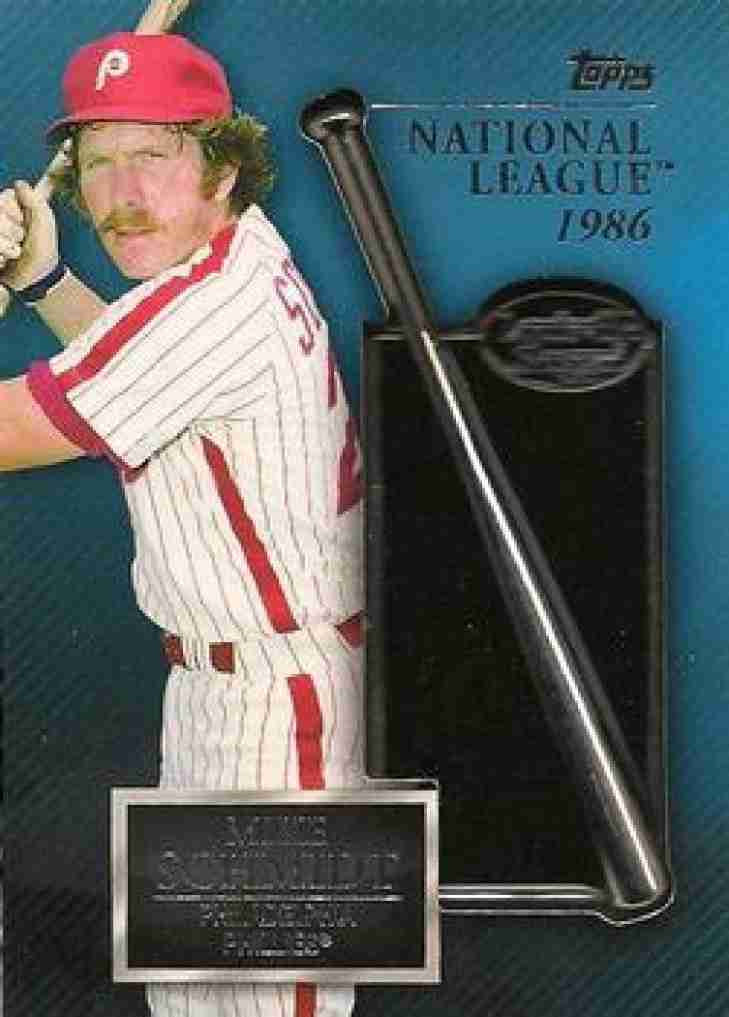
Needless to say, different awards in different sports yield hall of fame potential. In basketball, the team sport with the least amount of players on a roster, the dividend for greatness much higher. In baseball, it is not as much as a great individual season does not have the same impact.
