


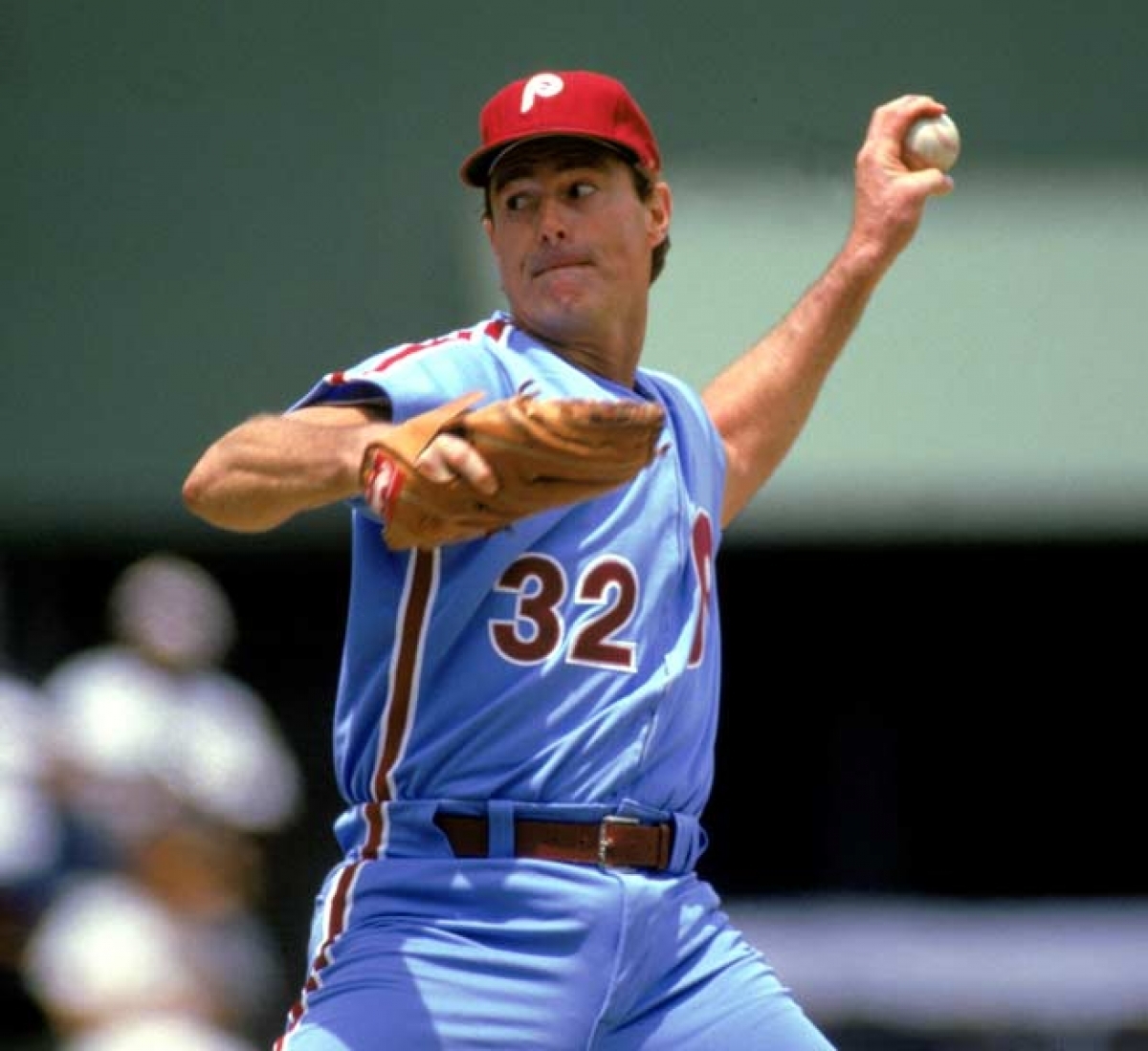




The arrival of Steve Carlton in Philadelphia prior to the 1972 season significantly impacted the baseball world, stemming from a contentious contract dispute with St. Louis. He was not an unproven prospect; he already held a World Series championship and had achieved a 20-win season with the Cardinals. Nevertheless, upon his debut at Veterans Stadium, his career trajectory advanced from commendable to legendary.
His initial summer wearing pinstripes remains among the most remarkable individual accomplishments in the history of sports. Representing a struggling, last-place Phillies team that secured only 59 victories throughout the season, Carlton individually recorded 27 wins—constituting an impressive 46% of the team's total wins. He led the National League with a 1.97 ERA, completed 30 games, and struck out 310 batters, earning his first Cy Young Award. This performance stands as a historic demonstration of resilience and durability, marking the last occasion on which any National League pitcher achieved the 25-win milestone.
As his tenure progressed, Carlton gained equal fame for his enigmatic demeanor and his lethal slider. He adopted a training regimen inspired by Eastern philosophies, involving twisting his left arm through buckets of rice to strengthen his wrist, and enforced a comprehensive, decade-long media blackout. Although this silence distanced him from beat writers, his pitching performance spoke volumes. He maintained his position as the undisputed ace of the rotation as the Philadelphia Phillies assembled a competitive core around Mike Schmidt and Larry Bowa, securing two additional Cy Young Awards in 1977 and 1980.
The 1980 campaign furnished the ultimate validation for his relocation to Philadelphia. Dominating the senior circuit with 24 wins and 286 strikeouts, Carlton led the pitching staff straight into October. In Game 6 of the World Series against Kansas City, he pitched seven exemplary innings to secure the decisive victory, thereby securing the franchise's inaugural world championship.
He secured a historic fourth Cy Young Award in 1982, demonstrating an unwavering dedication to striking out batters, ultimately accumulating 3,031 strikeouts while playing for the Phillies—and a total of 4,136 throughout his entire career, ranking second only to Randy Johnson among left-handed pitchers. The effects of aging gradually diminished his once exceptional arm strength in the mid-1980s, resulting in his release in June 1986 and marking the conclusion of a distinguished fifteen-year tenure with Philadelphia, during which he achieved 241 wins.
In 1988, the Phillies added Carlton to their Wall of Fame and retired his number 32 a year later. Carlton entered the Baseball Hall of Fame in 1994.

Comments powered by CComment