

Our All Time Top 50 Cleveland Guardians have been revised to reflect the 2025 Season

Yes, we know that this is taking a while!
As many of you know, we at Notinhalloffame.com are slowly generating the top 50 of each major North American sports team. That being said, we maintain and update our existing Top 50 lists annually. As such, we are delighted to present our pre-2026 revision of our top 50 Cleveland Guardians.
As for all of our top 50 players in baseball, we look at the following:
1. Duration and Impact.
2. Traditional statistics and how they finished in the Major League Baseball.
3. Advanced Statistics.
4. Playoff performance.
5. Their respective legacy on the team.
6. How successful the team was when he was there.
7. Respecting the era in which they played.
Criteria 1-4 will make up the lion’s share of the algorithm. Please note that we have implemented this for the first time. This has changed the rankings all throughout the board.
Last year, the Guardians were sellers at the trade deadline but got hot and shocked the baseball world by driving toward an AL Central Division Championship. They fell to Detroit in the Wild Card, but considering where they were on August 1, this was a positive campaign for Cleveland. There were no new additions, but movement within the Top 50.
As always, we present our top five, which differs from last year's, both due to the new algorithm and to one active Guardian.
1. Bob Feller
2. Nap Lajoie
3. Tris Speaker
4. Jose Ramirez
5. Lou Boudreau
You can find the entire list https://www.notinhalloffame.com/baseball/top-50-baseball-players-by-franchise/top-50-cincinnati-reds">here.
Major changes were afoot among the top five, as the new algorithm flipped Bob Feller and Nap Lajoie from their previous #1 and #2 spots.
Off the strength of another All-Star campaign, Jose Ramirez broke into the top five. He was ranked at #7 last year.
The only other change among active Guardians players was the return of Carlos Santana, who rose from #41 to #37. He is now with the Arizona Diamondbacks.
We thank you for your continued support of our lists on Notinhalloffame.com.
Our All Time Top 50 Cleveland Guardians have been revised to reflect the 2024 Season.
Yes, we know that this is taking a while!
As many of you know, we at Notinhalloffame.com are slowly generating the top 50 of each major North American sports team. That being said, we have existing Top 50 lists and consistently look to update them when necessary and based on necessity. As such, we are delighted to present our post-2024 revision of our top 50 Cleveland Guardians.
As for all of our top 50 players in baseball, we look at the following:
1. Advanced Statistics.
2. Traditional statistics and how they finished in the American League.
3. Playoff accomplishments.
4. Their overall impact on the team and other intangibles that are not reflected in a stat sheet.
Please note that our algorithm has changed, which yielded minor changes throughout the baseball lists.
Last year, the Guardians entered the season as a World Series contender, and competed in the American League Championship Series, losing to the New York Yankees in five. There was one new entry, though that was based on the new algorithm. There were also changes on the list, based on 2024.
As always, we present our top five, which had a major change based on the algorithm.
1. Nap Lajoie
2. Bob Feller
3. Tris Speaker
4. Lou Boudreau
5. Bob Lemon
You can find the entire list here.
On the top five, we have a brand new number one, based on our adjustments. Nap Lajoie takes over the pole position.
Jose Ramirez made a significant jump from #13 to #7.
Pitcher Shane Bieber remained at #47.
With the new algorithm, Catcher Steve O’Neill enters at #48.
We thank you for your continued support of our lists on Notinhalloffame.com.
49. Steve O'Neill
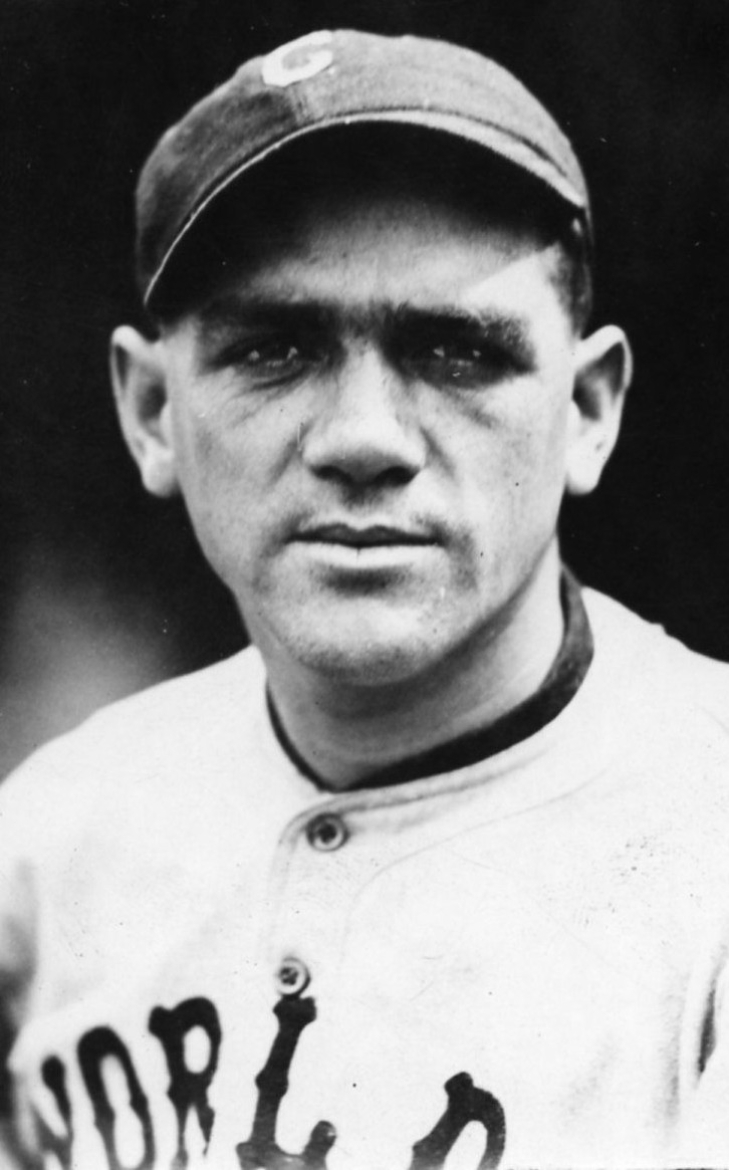
In the bruising, bare-knuckle world of early 20th-century catching, Steve O’Neill was the ultimate ironman of the Cleveland infield. Arriving in 1911, he didn't just occupy the space behind the plate; he anchored the franchise through its most transformative decade. Known for a defensive resilience that bordered on the supernatural.
O’Neill’s stay in Cleveland was defined by a steady evolution from a defensive specialist into a complete, high-frequency offensive contributor. While his reputation was built on being a wizard with the glove, smothering wild pitches and neutralizing the era's aggressive baserunners, his bat caught up to his elite fielding as the league moved into the 1920s. He reached a professional high-water mark in consistency starting in 1919, beginning a four-year run in which he recorded at least 100 hits annually. He was a model of specialized efficiency during the 1920 championship season, providing the veteran poise and steady-state production required to help the Indians secure their first World Series title.
The most profound aspect of his game was a late-career offensive surge that saw him bat over .300 for three consecutive summers from 1920 to 1922. His approach reached statistical outlier status in 1922, a season in which he hit .311 and drove in 65 runs while maintaining his legendary defensive standards. This performance earned him a sixth-place finish in the MVP voting, a rare and prestigious recognition for a catcher in that era. He possessed a specialized durability that allowed him to catch over 100 games in eight different seasons for Cleveland, serving as the primary engine for a pitching staff that relied on his tactical mind and physical toughness.
In 1924, he was traded to the Boston Red Sox, marking the end of a thirteen-year tenure that redefined the catching position for the franchise. With Cleveland, O’Neill compiled 1,071 hits and 467 RBIs while serving as the defensive anchor for the 1920 World Series title.
The organization provided the final punctuation to his legacy in 1951, inducting him into the franchise's Hall of Fame as part of the very first class.
Our All-Time Top 50 Cleveland Guardians Have Been Revised to Reflect the 2023 Season
Yes, we know that this is taking a while!
As many of you know, we here at Notinhalloffame.com are slowly generating the 50 of each major North American sports team. That being said, we have existing Top 50 lists out and we always consistently look to update them when we can and based on necessity. As such, we are very happy to present our post 2022/23 revision of our top 50 Cleveland Guardians.
As for all of our top 50 players in baseball we look at the following:
1. Advanced Statistics.
2. Traditional statistics and how they finished in Major League Baseball.
3. Playoff accomplishments.
4. Their overall impact on the team and other intangibles not reflected in a stat sheet.
Last year, the Guardians failed to make the playoffs and there were no new entries to the Top 50. However, two players did see moderate elevations on the list.
As always, we present our top five, which saw no changes:
1. Bob Feller
2. Nap Lajoie
3. Tris Speaker
4. Lou Boudreau
5. Bob Lemon
You can find the entire list here.
Jose Ramirez climbed to #13 from #16 and Shane Bieber moved up from #49 to #47.
We thank you for your continued support for our lists on Notinhalloffame.com.
Our All-Time Top 50 Cleveland Guardians have been updated to reflect the 2022 Season
Yes, we know that this is taking a while!
As many of you know, we here at Notinhalloffame.com are slowly generating the 50 of each major North American sports team. That being said, we have existing Top 50 lists out and we always consistently look to update them when we can and based on necessity. As such, we are very happy to present our post 2022 revision of our top 50 Cleveland Guardians.
As for all of our top 50 players in baseball we look at the following:
1. Advanced Statistics.
2. Traditional statistics and how they finished in the American League.
3. Playoff accomplishments.
4. Their overall impact on the team and other intangibles not reflected in a stat sheet.
Last year, Cleveland had a great year, making the playoffs, and showing that they have a roster that could go deep this year. This resulted in two changes, one new entrant, and one elevation.
As always, we present our top five, which was not affected by the last season:
1. Bob Feller
2. Nap Lajoie
3. Tris Speaker
4. Lou Boudreau
5. Bob Lemon
You can find the entire list here.
Slugger, Jose Ramirez, climbed to #16 from #21.
The lone new entry is 2020 Cy Young winner, Shane Bieber, who debuts at #49.
We welcome your input and comments and as always, we thank you for your support.
41. Shane Bieber
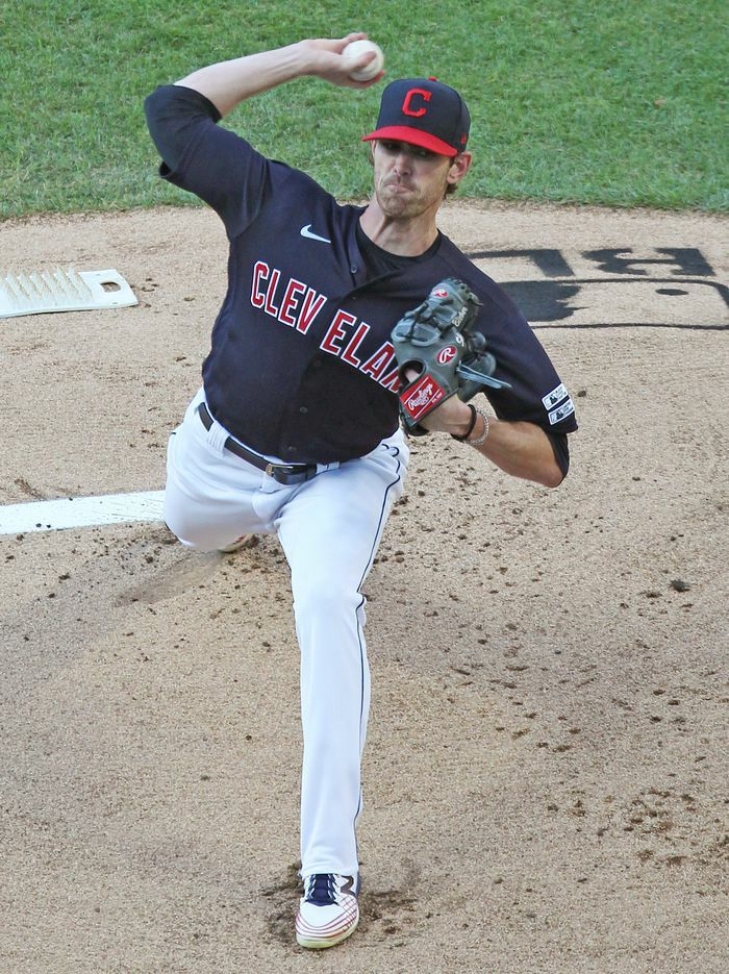
When Shane Bieber arrived in Cleveland in 2018, he brought a level of specialized control that seemed to belong to a different era. A fourth-round find who prioritized precision over raw velocity, the right-hander quickly evolved into the premier tactical force of the American League. For most of the early 2020s, he served as the high-leverage anchor of a Guardians rotation that has long been the gold standard for pitching development, providing a blueprint for how to dismantle elite lineups with a devastating knuckle-curve and an almost surgical command of the strike zone.
Bieber’s tenure in Cleveland was defined by a rapid, high-velocity ascent from a sleeper prospect to a dominant strikeout king. After a foundational rookie campaign, he earned his first All-Star nod in 2019, fanning 259 batters. However, his career reached a historic outlier status during the shortened 2020 season. That summer, Bieber orchestrated one of the most efficient runs in the history of the sport, capturing the Triple Crown of pitching by leading the American League in wins (8), ERA (1.63), and strikeouts (122). He was a model of specialized dominance, posting a staggering 273 ERA+ and a league-leading 14.2 strikeouts per nine innings to secure a unanimous Cy Young Award.
The hallmark of his stay was a professional resilience that saw him transition from a high-strikeout power arm to a more nuanced, efficiency-driven starter as he navigated the physical toll of the modern game. Even as his velocity fluctuated, his individual value remained elite; he collected a second All-Star selection in 2021 and a Gold Glove in 2022, proving he was the most efficient run-preventer on the roster regardless of how the ball left his hand. He served as the primary engine of the 2022 division-winning squad, using veteran poise to lead a young staff back to the postseason. He proved that a player could remain a franchise pillar by mastering the specialized, high-stakes art of sequencing and location.
His presence in Cleveland was defined by a focused intensity that solidified his status as a local icon, famously highlighted by his 2019 All-Star Game MVP performance before the home crowd. However, the narrative reached a pivotal crossroads in early 2024 when he underwent Tommy John surgery. As he navigated his recovery into the 2025 season, the Guardians faced a difficult organizational decision regarding his expiring contract. Bieber was traded to the Blue Jays for their playoff run, thus ending his run on the shore of Lake Erie.
With Cleveland, Bieber compiled 62 wins and 958 strikeouts while securing a Cy Young Award and a Pitcher's Triple Crown.
47. Travis Hafner
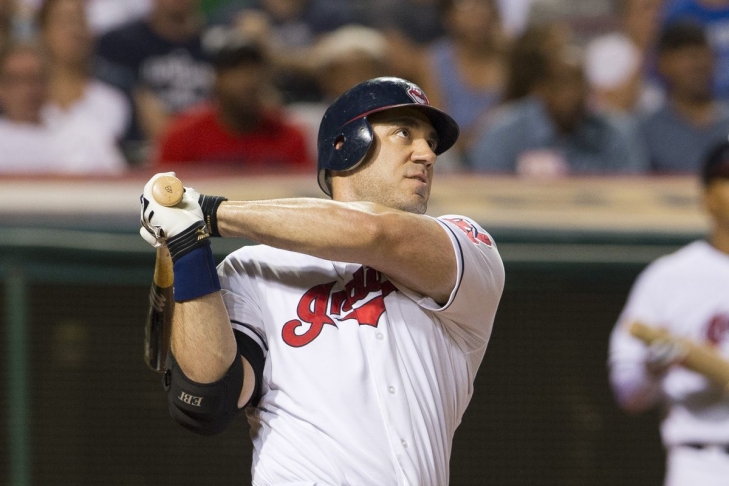
The acquisition of Travis Hafner in late 2002 stands as one of the most lopsided trades in Cleveland history, as the front office managed to extract a premier middle-of-the-order force from Texas for a package that barely registered in the box scores. Known as “Pronk”, a nickname that perfectly captured his imposing physical frame and easygoing demeanor, Hafner arrived in 2003 and quickly transformed the North Coast into a destination for high-velocity offensive output. For a terrifying four-year stretch in the mid-2000s, he was arguably the most feared left-handed hitter in the American League, providing a blend of plate discipline and raw strength that consistently demoralized opposing pitching staffs.
Hafner’s stay in Cleveland was defined by a rapid ascent into the elite tier of modern designated hitters. After securing a full-time role in 2004, he began a relentless run of production, never dipping below 24 home runs or 108 RBIs over four consecutive summers. In 2006, a season that remains a statistical masterpiece. That year, he blasted 42 home runs and led the American League in both slugging percentage (.657) and OPS (1.097). He was a model of steady-state dominance, famously tying the MLB record with six grand slams in a single season, a feat that perfectly illustrated his ability to deliver in the highest-leverage moments.
The most profound aspect of his game was a disciplined eye that balanced his massive power profile. Between 2004 and 2007, Hafner was more than just a slugger; he was a refined contact hitter who maintained a batting average north of .300 for three straight years. He possessed a specialized ability to drive the ball to all fields, serving as the primary engine for an offense that returned to the top of the AL Central standings. While he narrowly missed out on the MVP award, finishing fifth in 2005 and eighth in 2006, he was the undisputed heart of the Tribe’s lineup, providing the veteran-like poise required to anchor a young, explosive roster.
His presence in Cleveland was eventually tested by a series of persistent shoulder and hand injuries that began to sap his strength in 2008. Despite these physical hurdles, he showed a professional resilience by remaining a valuable contributor for the organization through 2012, occasionally flashing the "Pronk" power that had defined his prime.
After a decade of service, he signed with the New York Yankees in 2013, marking the end of one of the most productive eras for a left-handed hitter in club history. He departed with a career .509 slugging percentage as an Indian and a reputation as a man who could change the scoreboard with a single flick of the wrists.
With Cleveland, Hafner compiled 200 home runs, 1,039 hits, and a .906 OPS while leading the league in slugging in 2006.
45. Ray Chapman
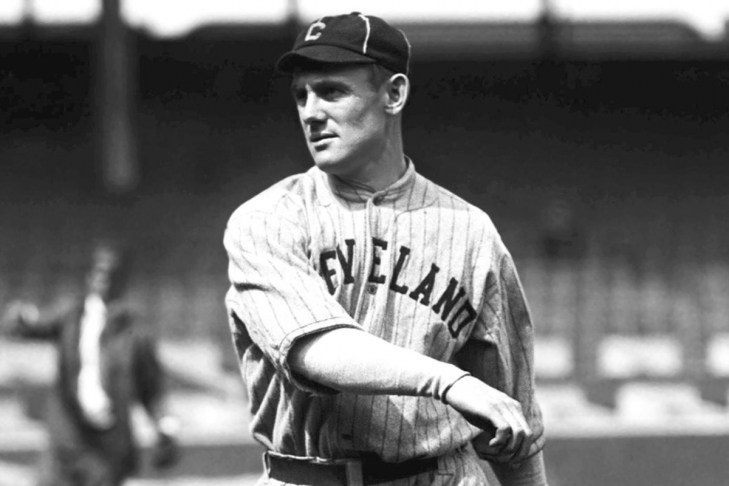
Ray Chapman was more than just a shortstop for Cleveland; he was the soul of an era that balanced the gritty mechanics of the Deadball age with the emerging power of the 1920s. Arriving in 1912, the Kentucky native quickly became a fixture in the middle of the diamond, earning a reputation as one of the most intellectually sharp and physically reliable players in the American League.
Chapman’s tenure in Cleveland was defined by defensive brilliance and a selfless offensive approach. He established himself as an elite run-preventer at shortstop, three times leading the league in putouts, assists, and range factor. While he was a versatile athlete capable of sliding to second or third base when the situation demanded, his mastery of the "six" hole was his primary contribution. Offensively, he was a model of specialized discipline; he was a premier bunter who three times paced the circuit in sacrifice hits, a skill that still sees him ranked sixth on the all-time MLB leaderboard. He possessed a keen eye, leading the league in walks in 1918 and providing the table-setting patience required to ignite the Cleveland offense.
The 1920 season was intended to be the final chapter of his professional journey. Having recently married into a prominent family, Chapman had quietly planned to retire at the conclusion of the year to join the family business. He authored a superb campaign, batting .300 and scoring nearly a run per game, as he led the Indians toward a high-stakes showdown with the Yankees. However, the narrative took a tragic and permanent turn on August 16, 1920. Struck in the temple by a "submarine" delivery from Carl Mays, Chapman collapsed at the plate. In an era where "doctoring" the ball was common, the dark, scuffed baseball was nearly impossible to track in the twilight, and the impact proved fatal. He passed away the following morning, becoming the only player in major league history to die as a direct result of an on-field injury.
With Cleveland, Chapman compiled 1,053 hits, 671 runs, and 233 stolen bases while helping the club to its first World Series title.
50. Sonny Siebert
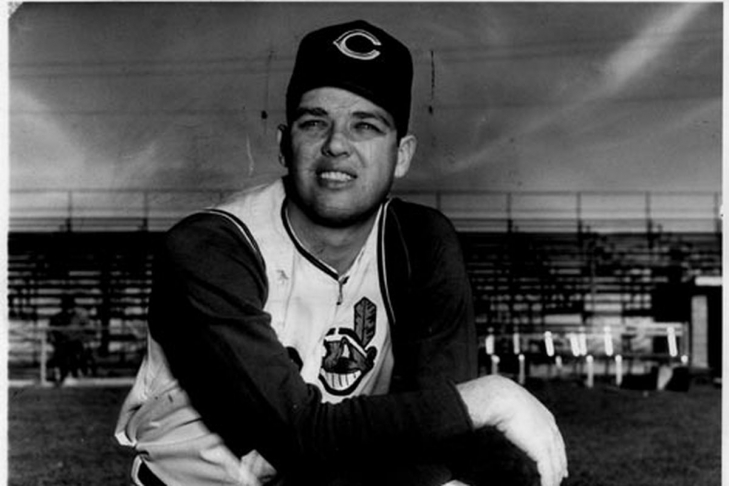
The decision by Sonny Siebert to trade the hardwood of the NBA for the red clay of a big-league mound remains one of the more inspired pivots in the history of Cleveland sports. A multi-sport phenomenon drafted by the St. Louis Hawks, Siebert possessed a raw, explosive athleticism that the Indians recognized could be weaponized on the rubber. Despite not being a pitcher when he first signed as an amateur free agent, he underwent a clinical transformation into a high-velocity starter, evolving from a project into a quality starter of the Cleveland rotation during the mid-1960s.
Siebert’s tenure on Lake Erie was defined by an immediate and high-frequency impact once he secured a regular role in the rotation. His best stretch with the Tribe was between 1965 and 1966, stringing together back-to-back 16-win campaigns. During this run, he wasn't just a reliable arm; he showed flashes of dominance, punctuated by a legendary no-hitter against the Washington Senators in June 1966. He possessed a specialized power that saw him strike out 786 batters in a Cleveland uniform, earning his first All-Star nod in 1966 while establishing himself as one of the premier run-preventers in the American League.
The versatile athleticism that often saw him contribute at the plate and on the mound was a remnant of his days as a collegiate star. While his win-loss records in 1967 and 1968 were occasionally hindered by a lack of run support, his underlying efficiency remained elite; he consistently ranked among the league leaders in shutouts and hits allowed per nine innings. He proved that a player could become a franchise pillar by mastering a completely new craft, providing the steady-state reliability required to navigate the grueling 1968 "Year of the Pitcher" schedule.
In 1969, he was dealt to the Boston Red Sox in a significant multi-player trade. With the Indians, Siebert compiled a 61-48 record and 786 strikeouts while throwing a no-hitter in 1966.
40. Charlie Jamieson
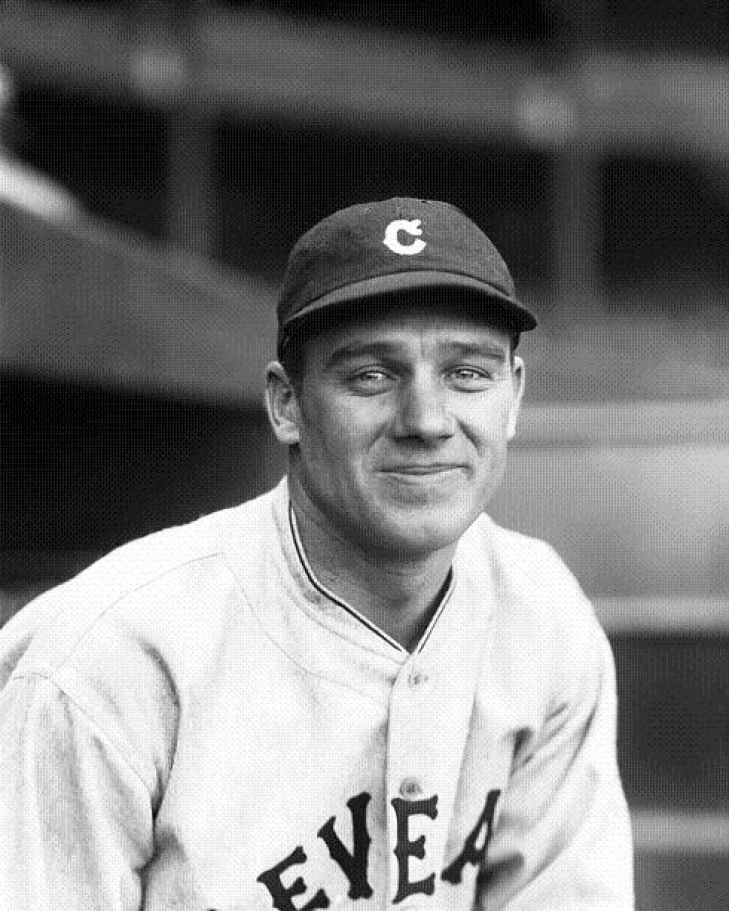
In the high-scoring landscape of the 1920s American League, Charlie Jamieson emerged as the quintessential leadoff man for Cleveland. Arriving via trade in 1919 after modest stints in Washington and Philadelphia, the left-handed outfielder didn't just find a home on the North Coast; he became the table-setter for one of the most prolific offensive eras in franchise history. Known for a specialized ability to manipulate the bat and a relentless approach at the plate, "Cuckoo" Jamieson spent over a decade proving that a hitter didn't need the frame of a titan to become a star.
Jamieson’s tenure in Cleveland was defined by a high-velocity transition from a reserve role to a frontline tactical force. While he provided the veteran poise that helped the 1920 squad capture the franchise's first World Series title, his individual production improved in the years that followed. He was a model of specialized efficiency, authoring a seven-year stretch from 1921 to 1927 where he recorded at least 150 hits annually. This was most evident in 1923, a summer where he led the American League with 222 hits and batted a career-high .345, serving as the high-leverage engine that ignited the Cleveland offense.
The most profound aspect of his game was a professional resilience that allowed him to maintain a .316 average across nearly 1,500 games in a Cleveland uniform. Jamieson was a master of the "small ball" era, twice leading the league in at-bats and consistently ranking among the elite in singles and triples. While he lacked the raw power of the era’s emerging sluggers, launching only 18 home runs during his stay, he compensated with a high-frequency ability to reach base and score. He twice eclipsed the 100-run plateau and was a fixture in the top ten for batting average, proving that his value was built on the steady-state excellence of a professional contact hitter.
Age caught up to him, and after the 1932 season, he left the Majors. He departed with 942 runs scored, 1,753 hits, and a .316 batting average while leading the league in hits in 1923.
The organization provided the ultimate punctuation on his career nearly a century later, inducting him into the Cleveland Hall of Fame in 2016.
46. Michael Brantley
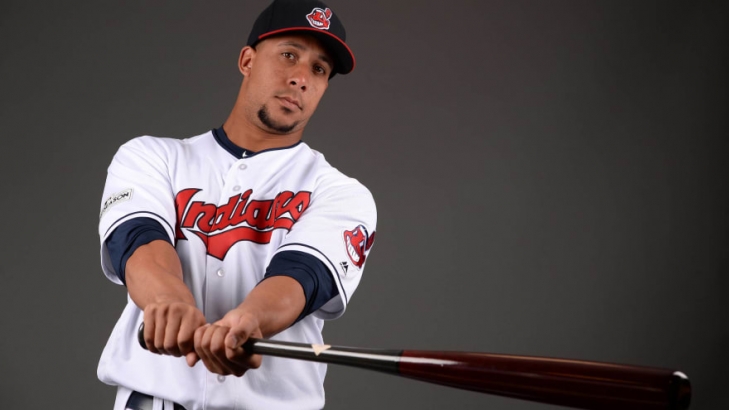
The acquisition of Michael Brantley in 2008 remains one of the most lopsided "player to be named later" transactions in baseball history. Originally a secondary piece in the blockbuster trade that sent C.C. Sabathia to Milwaukee, Brantley arrived on the North Coast with a quiet confidence and a left-handed stroke that would eventually become the gold standard for contact hitters in the American League. Known as "Dr. Smooth" for his effortless mechanics and professional approach, he evolved from a "throw-in" prospect into the steady heart of a Cleveland lineup that returned to postseason prominence in the mid-2010s.
After a foundational debut in 2009, he established himself as a reliable fixture in left field by 2011, posting back-to-back seasons with over 150 hits and a .280 average. However, the true breakout arrived during a historic 2014 campaign. That summer, Brantley orchestrated a masterclass in all-around production, reaching the 200-hit plateau and recording career highs in nearly every statistical category. His .327 average, 20 home runs, and 97 RBIs earned him a Silver Slugger and a third-place finish in the MVP voting, proving he was the most efficient offensive force on a roster chasing a division title.
The hallmark of his game was a disciplined approach that prioritized gap-to-gap power and elite contact. Even as he shifted from a high-average hitter to a more complete middle-of-the-order threat, he remained a model of high-frequency output, leading the American League with 45 doubles in 2015. He possessed a rare ability to stay within himself regardless of the game situation, serving as the primary stabilizer for the Cleveland offense. While a significant shoulder injury limited him to just 11 games during the club's 2016 World Series run, he showed a remarkable resilience by returning to All-Star form in 2017 and 2018, batting over .300 and providing the veteran poise required to keep the Tribe atop the AL Central.
After the 2018 season, he signed with Houston as a free agent. With Cleveland, Brantley compiled 1,195 hits, 87 home runs, and 528 RBIs while securing a Silver Slugger and three All-Star selections.
48. Bert Blyleven
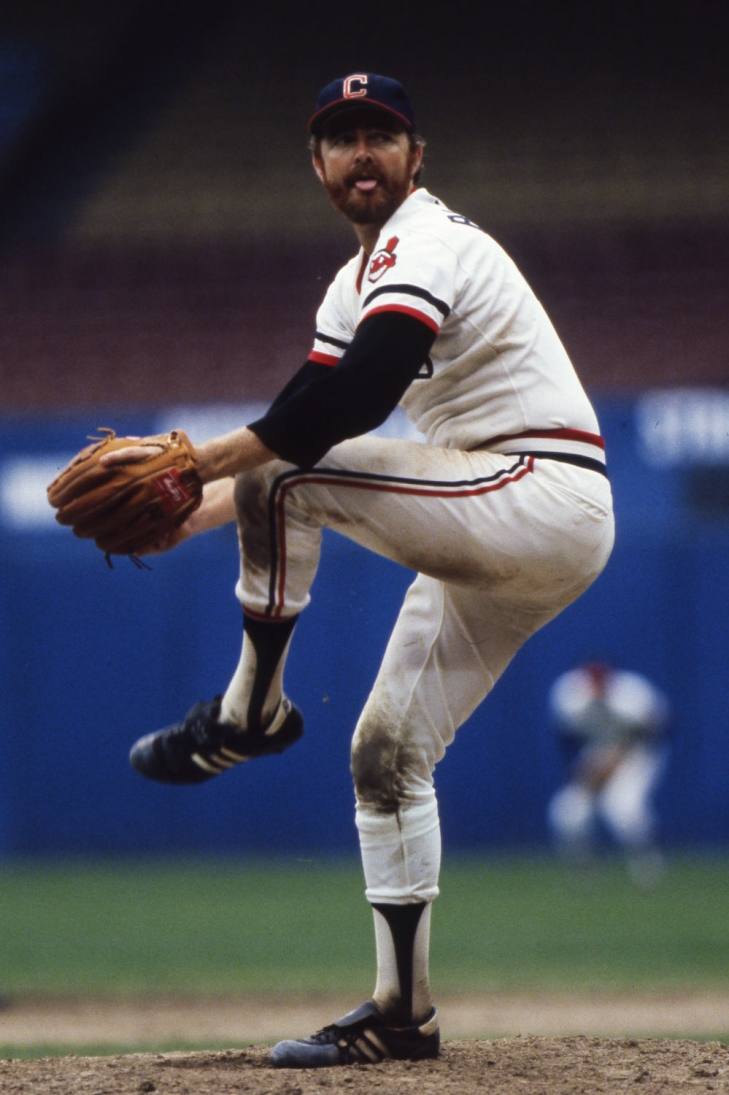
While Bert Blyleven is often draped in the colors of Minnesota or Pittsburgh, his five-season residency in Cleveland provided some of the most statistically dominant pitching of the 1980s. Born in the Netherlands and raised in California, Blyleven arrived in 1981 as a proven champion with a curveball many hitters considered the best in the sport's history.
Blyleven’s arrival in Cleveland was defined by an immediate and relentless efficiency. Despite the strike-shortened nature of the 1981 campaign, he established himself as a model of specialized dominance, finishing the year with an 11-7 record and leading the American League in bWAR for pitchers. He possessed a rare, high-leverage durability that allowed him to navigate a serious elbow injury in 1982 and return with a focused intensity. His approach reached a second era of excellence in 1984, a summer when he orchestrated a masterclass in run prevention. That year, he posted a 19-7 record with a 2.87 ERA, earning a third-place finish in the Cy Young voting and proving he was still the most efficient starter in the league.
Blyleven’s calling card was a high-frequency strikeout ability paired with a "rubber arm" that allowed him to lead the league in shutouts and complete games. Even during a volatile 1985 season, Blyleven remained a model of steady-state production; while the Indians hovered near the bottom of the standings, he earned an All-Star selection on the strength of his individual metrics. He was a tactical engine that kept the club competitive in every start, eventually being traded to Minnesota at the deadline, where he finished the year by leading the league in strikeouts (206) and securing another top-three Cy Young finish.
With Cleveland, Blyleven compiled 48 wins and 548 strikeouts while leading the American League in pitching bWAR in 1981.
The ultimate punctuation on his career arrived in 2011, when he was finally inducted into the Baseball Hall of Fame.
44. Luis Tiant
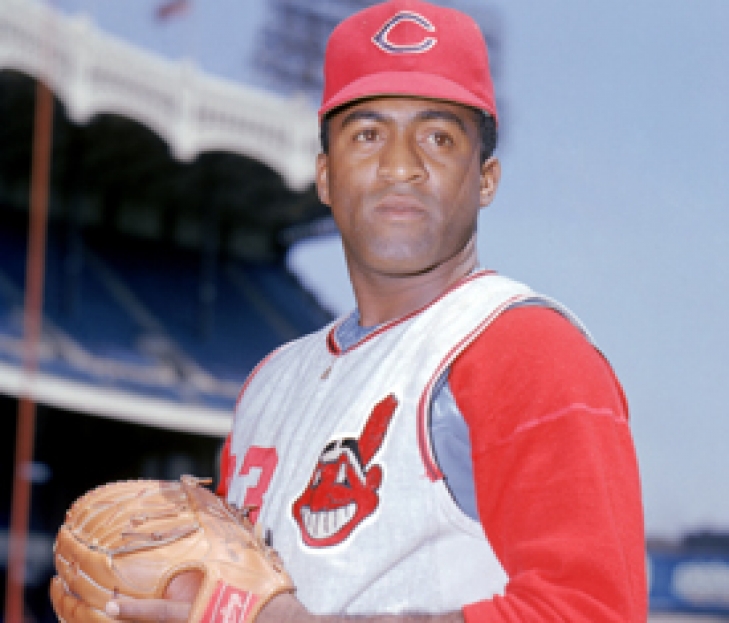
While the high-leg kick and Fu Manchu mustache became icons of Fenway Park, the foundation of Luis Tiant’s legend was laid in the specialized pitching environment of 1960s Cleveland. Arriving from the Mexican League with a deceptive delivery and a professional resilience that would define his two-decade career, "El Tiante" transformed from a high-upside rookie into one of the most untouchable arms in the American League.
Tiant’s tenure in Cleveland began with a high-velocity entrance in 1964, where he posted a 10-4 record and a 2.83 ERA. He immediately established a model of specialized efficiency, ranking tenth in bWAR for pitchers in both his rookie year and 1966. He possessed a rare, high-leverage durability, serving as a pillar of the rotation throughout the mid-60s even when the run support was lean. His approach was built on a unique, corkscrew delivery that hid the ball until the final possible moment, a technical advantage that allowed him to consistently rank among the league leaders in efficiency metrics long before his traditional "win" totals caught up to his true value.
The absolute peak of his Cleveland stay arrived in 1968, a season that remains a statistical landmark in franchise history. Tiant orchestrated a campaign of total dominance, leading the American League in ERA (1.60), hits per nine innings (5.3), and bWAR for pitchers (8.5). He reached the magical 20-win plateau for the first time, punctuating his season with a career-high 264 strikeouts and a fifth-place finish in the MVP voting.
In 1969, Tiant faced a difficult "fall back to earth," leading the league with 20 losses despite maintaining a respectable strikeout rate. However, as the old baseball adage suggests, a pitcher has to be exceptionally talented to be trusted with enough starts to lose 20 games. This professional resilience remained his calling card even as a trade sent him to Minnesota in 1970, a move that eventually paved his way to immortality in Boston. He departed Cleveland with 75 wins and over 1,000 strikeouts, leaving behind a 2.84 ERA that stands as a testament to his elite command of the zone.
He eventually earned his place in the Cleveland Guardians Hall of Fame.
36. Charles Nagy
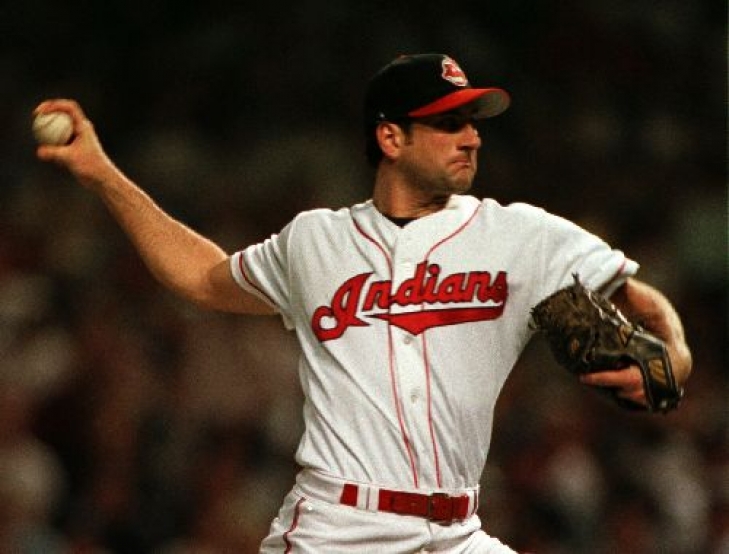
Long before he was a fixture in the Cleveland rotation, Charles Nagy was already a champion, arriving on the North Coast with an Olympic Gold Medal from the 1988 Seoul Games. When he stepped onto the Major League stage in 1990, he traded his national colors for the Tribe’s navy and red, beginning a thirteen-season journey that would see him become the iron man of the franchise's most explosive decade.
Nagy’s career in Cleveland was a study in professional resilience, as he evolved from a young prospect into the staff’s undisputed workhorse. He established himself as a frontline winner during the club's resurgence, authoring a consistent peak that saw him reach the 17-win plateau on three separate occasions. These were not merely volume stats; he was a model of specialized efficiency, earning All-Star honors in each of those 17-win summers and consistently appearing in the top ten of the American League Cy Young voting. He possessed a specialized ability to eat innings, providing a steadying presence for a team that was constantly under the high-leverage pressure of the postseason.
The most profound aspect of his tenure was his role as a statistical titan during the club's legendary run at Jacobs Field. Nagy was a master of the "big game" workload, starting 297 games for the organization and twice leading the league in games started. His craftsmanship reached a statistical summit in the mid-90s, where he finished in the top ten for Pitcher bWAR three times, proving that his value extended far beyond the win-loss column. He served as the tactical engine of a rotation that bridged the gap between the lean years of the early decade and the championship-contending era, securing 129 victories in a Cleveland uniform.
The organization provided the ultimate punctuation on his career in 2007 by inducting him into the Cleveland Hall of Fame.
37. Carlos Santana
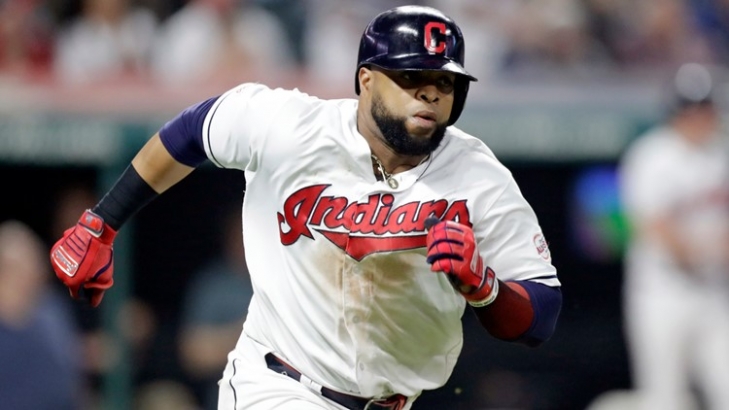
Whenever a nickname perfectly summarizes a player's primary contribution to the game, it becomes the only logical place to start. For Carlos Santana, the moniker "Slamtana" was more than just a catchy title; it was a warning to American League pitchers that a mistake over the plate would likely result in a ball clearing the outfield wall. Arriving in Cleveland as a highly touted catching prospect in 2010, the Dominican slugger evolved into one of the most disciplined offensive forces in the franchise’s modern era, defined by a rare combination of switch-hitting power and an elite refusal to swing at bad pitches.
Santana’s initial run in Cleveland was marked by a steady reliability that saw him transition from behind the plate to first base to preserve his health and his bat. He established a baseline of specialized production that few could match, launching at least 20 home runs in five of his first seven full seasons. While his batting average often hovered in the modest range, he was a model of high-frequency on-base efficiency. His skill was defined by a legendary eye, leading the American League with 113 walks in 2014 and consistently forcing opposing starters to run up high pitch counts early in the game.
After a single-season hiatus in Philadelphia, his return to Cleveland in 2019 provided a triumphant second act that stands as his professional high-water mark. That summer, Santana played with a level of focused intensity that transformed him from a reliable contributor into a legitimate MVP candidate. He reached a career-best .281 average while setting personal records in home runs (34) and RBIs (93), earning his first All-Star selection and a Silver Slugger Award. He was the veteran poise in a young lineup, providing the high-leverage hits required to keep the club in the hunt for a postseason berth.
The final chapter of his Cleveland story was written in 2025, when he returned for a third stint after the club traded Josh Naylor. While this homecoming lacked the statistical fireworks of his 2019 peak—resulting in a .225 average and 11 home runs, it served as a meaningful homecoming for a player who considered the city family.
With Cleveland, Santana compiled 227 home runs and 1,286 hits while leading the American League in walks twice across 1,450 games.
33. Bobby Avila
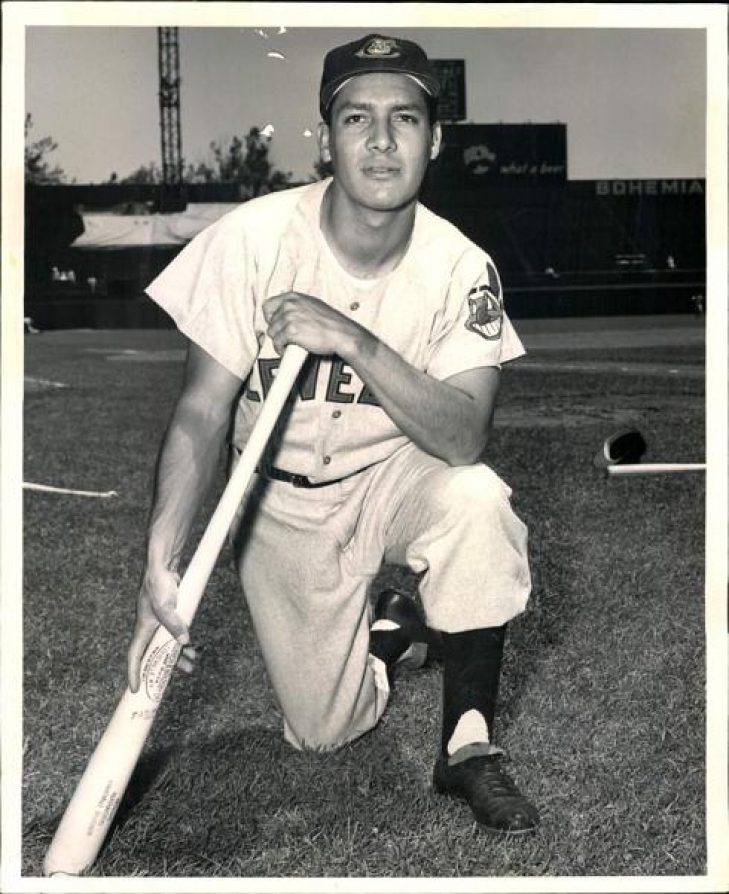
The 1949 arrival of Bobby Avila in Cleveland wasn't just a roster move; it was a watershed moment for international baseball. As the first Mexican-born player to truly seize a starring role in the Major Leagues.
Avila forced his way into the permanent starting lineup by 1951, immediately proving that his bat belonged at the top of a championship-caliber order. He possessed a specialized knack for finding gaps, hitting over .300 in each of his first two full seasons as a regular. His athleticism was on full display in 1952 when he led the Junior Circuit in triples and earned his first invitation to the Midsummer Classic. He was a model of specialized consistency, serving as the high-leverage spark plug for a Cleveland squad that featured some of the most storied pitching staffs in the game's history.
The definitive apex of his career arrived during the magical 1954 campaign. That summer, Avila authored a historic performance by capturing the American League Batting Title with a .341 average, becoming the first Latin American player to ever lead the league in hitting. His craftsmanship was the primary engine behind Cleveland’s record-setting 111-win season and its march to the World Series, earning him a third-place finish in the MVP voting. He was a high-frequency producer who combined elite bat control with a veteran poise, proving he could out-hit legends like Minnie Miñoso and Ted Williams over the course of a grueling pennant race.
Beyond the box scores, Avila’s presence was defined by a trailblazing resilience that made him a national hero in his homeland. He remained the tactical anchor of the Cleveland infield through 1957, utilizing a workmanlike approach to accumulate over 1,200 hits in a Tribe uniform. Whether he was lacing a line drive into the corner or providing sure-handed defense at the keystone, he competed with a focused intensity that solidified his status as a franchise pillar. He proved that a player could become an international icon by mastering the fundamental requirements of the "inside game" at the highest level.
Following a sharp decline in 1958, the team traded to Baltimore and finished its final lap in the league in 1959.
43. Grady Sizemore
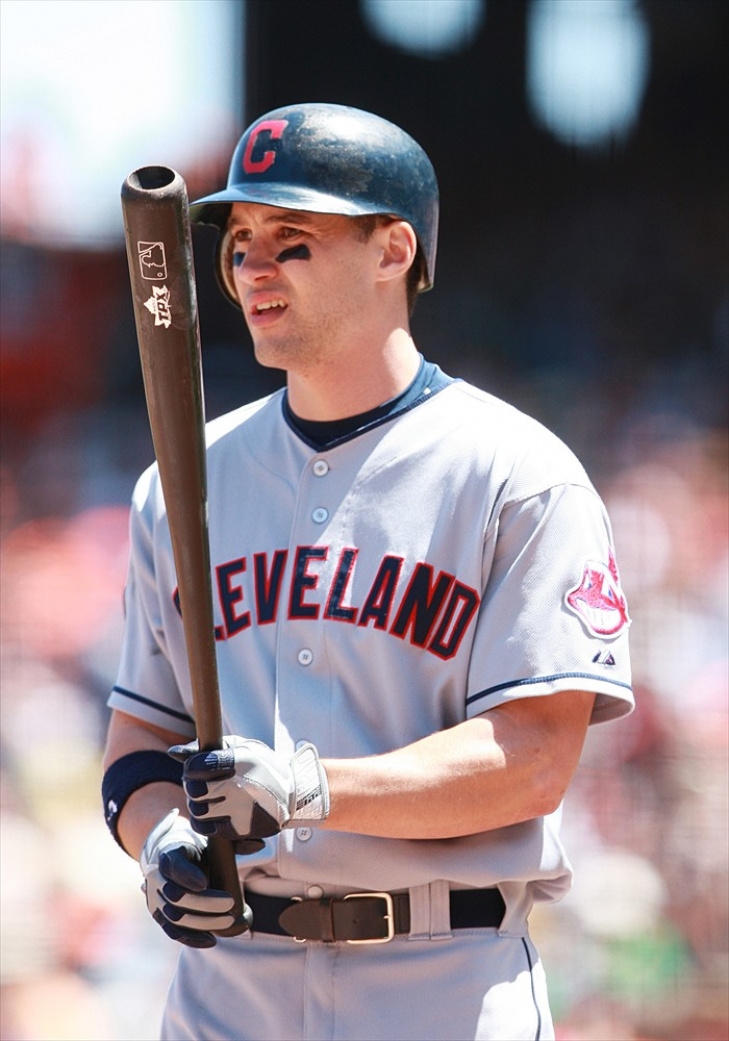
The arrival of Grady Sizemore in Cleveland was a masterstroke of organizational foresight, acquired as a "throw-in" in the legendary 2002 trade with Montreal that also brought Cliff Lee to the Indians. While he debuted in 2004, it was the following summer that signaled the dawn of a new era, as the dynamic center fielder combined a reckless, high-speed defensive style with a sophisticated offensive approach. For a brilliant, condensed window in the late 2000s, Sizemore was the undisputed engine of the franchise, a five-tool superstar who played with all-out intensity, making him the most electric talent in the American League.
Sizemore’s tenure in Cleveland was defined by a high-velocity ascent to the absolute top of the sport. By 2005, he had established himself as a model of specialized versatility, launching 22 home runs and batting .289 in his first full season. This was merely the prelude to a historic three-year stretch from 2006 to 2008, where he became a perennial All-Star and a fixture in the MVP conversation. In ’06, he led the American League in runs scored (134) and doubles (53) while maintaining a professional resilience that allowed him to play all 162 games.
The most profound aspect of his game was a rare combination of power and speed that few in Cleveland history have mirrored. Sizemore was a high-frequency producer of extra-base hits, belting at least 24 home runs in four consecutive seasons and twice reaching the 30-homer plateau. He possessed a specialized athleticism that earned him two Gold Gloves and a Silver Slugger, proving he was the most efficient run-preventer in the outfield and a tactical nightmare on the basepaths. He served as the primary engine for the 2007 squad that pushed within one game of the World Series, utilizing his high-leverage talent to ignite the offense from the leadoff spot.
His presence on the field was defined by a focused intensity that eventually took a heavy physical toll. Sizemore’s "collision-course" style of play led to a series of debilitating back and knee injuries that began to mount in 2009. Despite multiple surgeries and a two-year hiatus from the sport, he showed remarkable professional resilience by attempting comebacks with Boston, Philadelphia, and Tampa Bay later in his career.
With Cleveland, Sizemore compiled 948 hits, 139 home runs, and 115 stolen bases while twice winning the Gold Glove.
34. Willis Hudlin
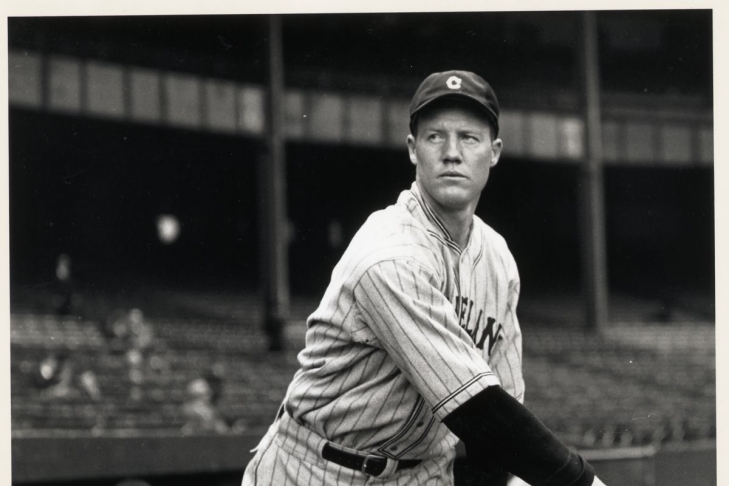
When Willis Hudlin stepped onto the mound at League Park in the late 1920s, he brought with him a pitch that was still a dark art to most hitters: the sinker. A mainstay of the Cleveland rotation for fifteen seasons, Hudlin wasn't the kind of fireballer who hunted headlines; he was the blue-collar engine of the staff, a dependable right-hander who could transition seamlessly from the starting block to the bullpen.
Hudlin’s career in Cleveland began with a splash in 1926, and by his first full season, he had established himself as a frontline winner, posting an 18-12 record as a rookie. He possessed a specialized, heavy sinker that became his trademark, allowing him to navigate the high-scoring environment of the "Live Ball" era with professional poise. His craftsmanship reached a statistical summit in 1929, a summer where he quietly became the most valuable pitcher in the Junior Circuit. That year, he led all American League hurlers with a massive 7.5 bWAR, proving that his game was built on a foundation of elite efficiency rather than raw velocity.
The most impressive aspect of his longevity was his role as a tactical bridge for the organization. Hudlin was a model of specialized versatility, earning five different seasons with at least 15 victories while splitting time between the rotation and high-leverage relief work. He was a high-frequency workhorse who consistently ranked in the top ten for games started and innings pitched, providing the Cleveland staff with an anchor during the transitional years of the 1930s.
With the Indians, Hudlin compiled 157 wins, 796 strikeouts, and 165 complete games across 15 seasons.
42. Jeff Heath
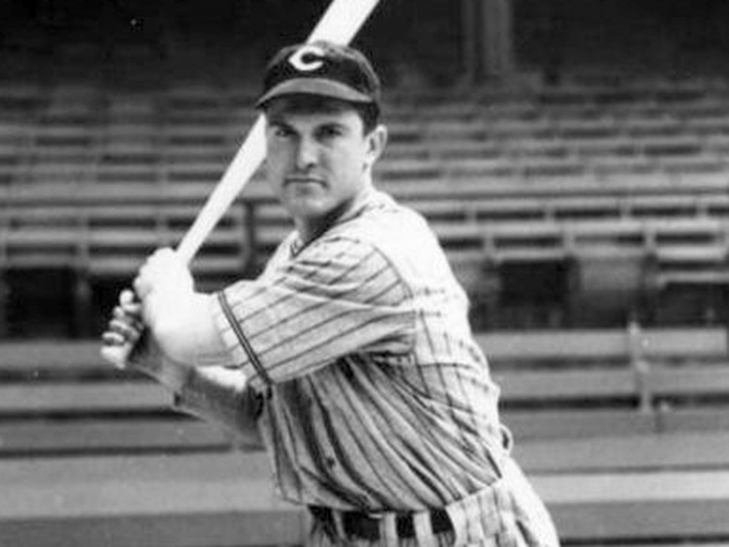
The arrival of Jeff Heath in Cleveland in 1936 brought a specialized blend of Canadian-born grit and explosive athletic power to the Indians. By the time he secured a full-time role in 1938, the left-handed outfielder had established himself as one of the most dangerous and efficient triple-threats in the American League.
Heath’s tenure in Cleveland was defined by an immediate and relentless offensive efficiency. During the 1938 campaign, a summer when he batted a staggering .343 and led the American League with 11 triples. This performance earned him an 11th-place finish in the MVP voting and signaled the arrival of a force in the Cleveland outfield. He was a model of specialized versatility, blending elite contact skills with a surprising power surge that saw him become a fixture in the heart of the Tribe's batting order.
The hallmark of his career was his unique ability to generate high-frequency extra-base hits. In 1941, Heath reached a statistical outlier status by leading the league in triples for a second time, recording a career-high 20 three-baggers while maintaining a .340 batting average. He was a model of steady-state dominance, earning All-Star selections in 1941 and 1943 and consistently ranking among the league leaders in total bases and slugging percentage. He possessed a specialized athleticism that allowed him to pressure opposing defenses in every facet of the game, providing the high-leverage production required to keep Cleveland competitive during the volatile years of the early 1940s.
After the 1945 season, he was traded to the Washington Senators, marking the end of a decade on the North Coast. He departed with a career .298 average, 1,040 hits, 122 home runs, and twice led the American League in triples.
39. Hal Trosky
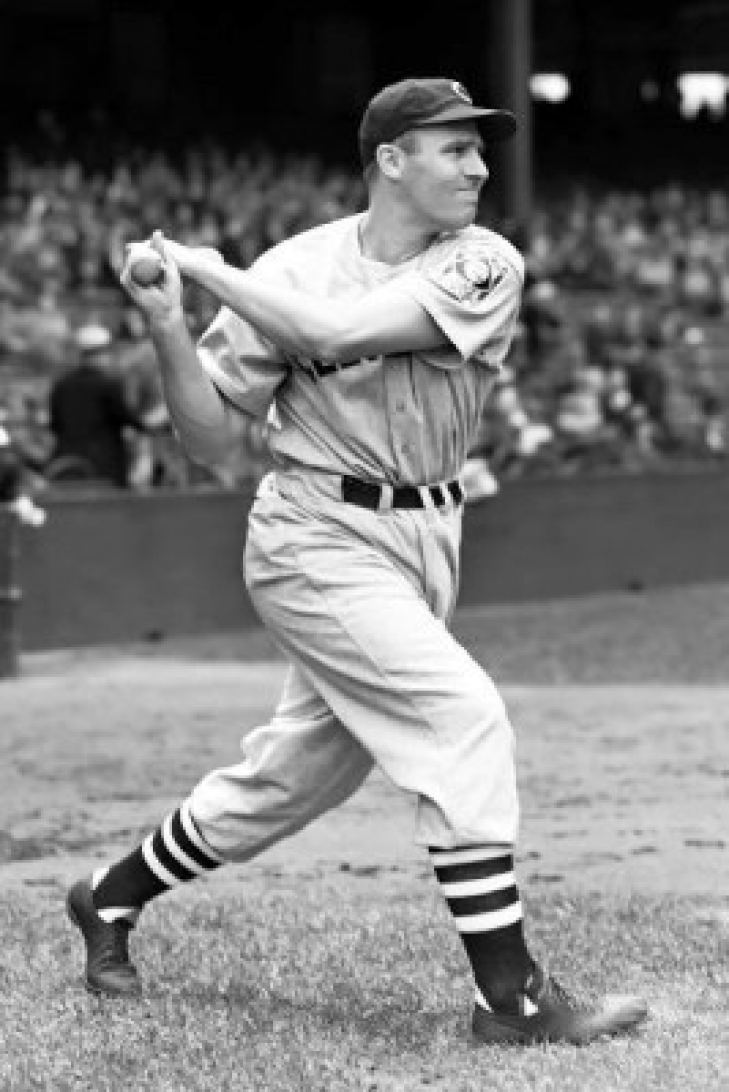
The narrative of Hal Trosky is one of the most compelling "what-if" stories in the history of the American League. Arriving on the North Coast in 1933, the Iowa native carried expectations that bordered on the impossible, with some observers prematurely labeling him the heir to Babe Ruth’s throne. While he never reached the mythical status of the "Bambino," Trosky established a baseline of specialized power that, in any other era, would have made him a perennial All-Star and a household name across the country.
Trosky’s tenure in Cleveland was a study in elite offensive efficiency during the most crowded era of talent in baseball history. He operated as a high-frequency run producer, anchoring the middle of the Tribe's lineup with a left-handed swing that generated at least 25 home runs in six of his first seven full seasons. He was a model of steady-state dominance, surpassing the 100-RBI plateau in six consecutive campaigns starting in 1934. In 1936, he blasted 42 home runs and led the American League with a staggering 162 RBIs while maintaining a .343 batting average, which remains one of the best power years in team history.
The most extraordinary aspect of his game was the consistency he maintained while playing in the shadow of legends like Gehrig, Foxx, and Greenberg. Trosky possessed a specialized athleticism that allowed him to finish among the league leaders in extra-base hits and total bases annually, providing the tactical stability required to keep Cleveland competitive in a powerhouse Junior Circuit. He served as the primary engine of the offense throughout the 1930s, demonstrating professional resilience to post a career .313 average in a Cleveland uniform. He proved that a player could become a franchise pillar by simply being one of the most dangerous hitters in the world, even if the All-Star ballots were crowded with future Hall of Famers.
His presence on the field was defined by a focused intensity that was tragically undermined by forces beyond his control. Beginning in 1938, Trosky was plagued by a series of debilitating migraines that began to impact his vision and his timing at the plate. Despite this physical toll, he continued to compete with a workmanlike approach until the condition forced a premature retirement in 1941.
The story in Cleveland concluded with 216 home runs, 911 RBI, and a reputation as one of the most underrated sluggers of all time. He left the organization with a career .551 slugging percentage, a mark that reflects nearly a decade of elite power hitting on the North Coast before he made a brief, wartime comeback in Chicago.
The organization recognized the sheer magnitude of his contribution by including him in the inaugural Cleveland Hall of Fame class in 1951.
