


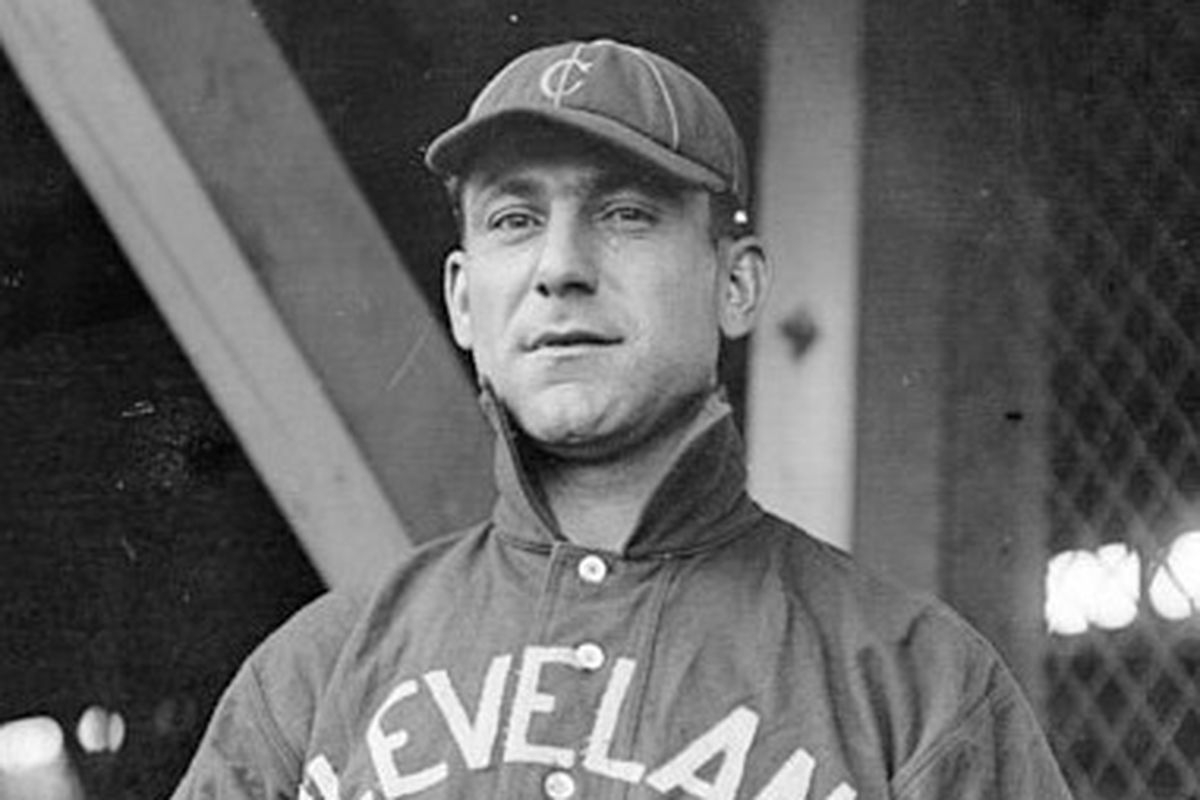



When Nap Lajoie arrived in Cleveland in 1902, he didn't just bring a legendary bat; he brought the validity of an entire league. After a messy legal battle with the Phillies that saw him jump to the Athletics and then flee to Cleveland to avoid a Pennsylvania injunction, Lajoie became the first true titan of the American League. He was so instantly beloved on the Lakefront that by 1903, a fan poll officially changed the team's name from the Bronchos to the "Naps" in his honor. He wasn't just playing for the city; he was the city's identity for over a decade, hitting a blistering .379 in his first partial season and proving that the junior circuit was a force to be reckoned with.
Lajoie was a hitting machine who made the Deadball Era look easy, capturing batting and slugging titles in 1903 and 1904. He was the "Maestro of the Second Base," a fielder so graceful that contemporaries like Cy Young claimed his line drives could take a third baseman’s leg off. His 1910 season remains one of the most controversial chapters in baseball history; while he officially finished second to Ty Cobb in the batting race, the "Chalmers Award" scandal, where the St. Louis Browns intentionally played deep to allow Lajoie to bunt for hits, resulted in both men receiving a brand new car. Modern statistical audits actually suggest Lajoie was the rightful champion with a .384 average, adding a layer of "what-if" to an already decorated career.
Beyond the plate, Lajoie was the ultimate franchise identity figure, serving as player-manager from 1905 to 1909. While the dual role eventually took a toll on his offensive output, his leadership anchored the team through its most formative years. He led the league in hits, doubles, and fielding percentage multiple times, serving as a vacuum at second base who paced the league in Range Factor five times. He played with intensity for thirteen seasons in Cleveland, accumulating 2,047 hits and a .339 average that remains the gold standard for the franchise.
The final walk toward the exit came after the 1914 season, when his contract was sold back to the Athletics. It was the end of an era so significant that the team had to find a new name, eventually settling on the "Indians" to fill the void left by their namesake. Lajoie left Cleveland as a pioneer who had legitimized a league and a city, earning his place in the very first Hall of Fame class in Cleveland history in 1951.
Lajoie arrived as a legal fugitive from Philadelphia and left as a permanent monument of Cleveland baseball. He proved that while players come and go, some names are so powerful they define the jersey itself. Whether he sits at number one or two, he remains the foundation upon which the entire franchise was built.

Comments powered by CComment