


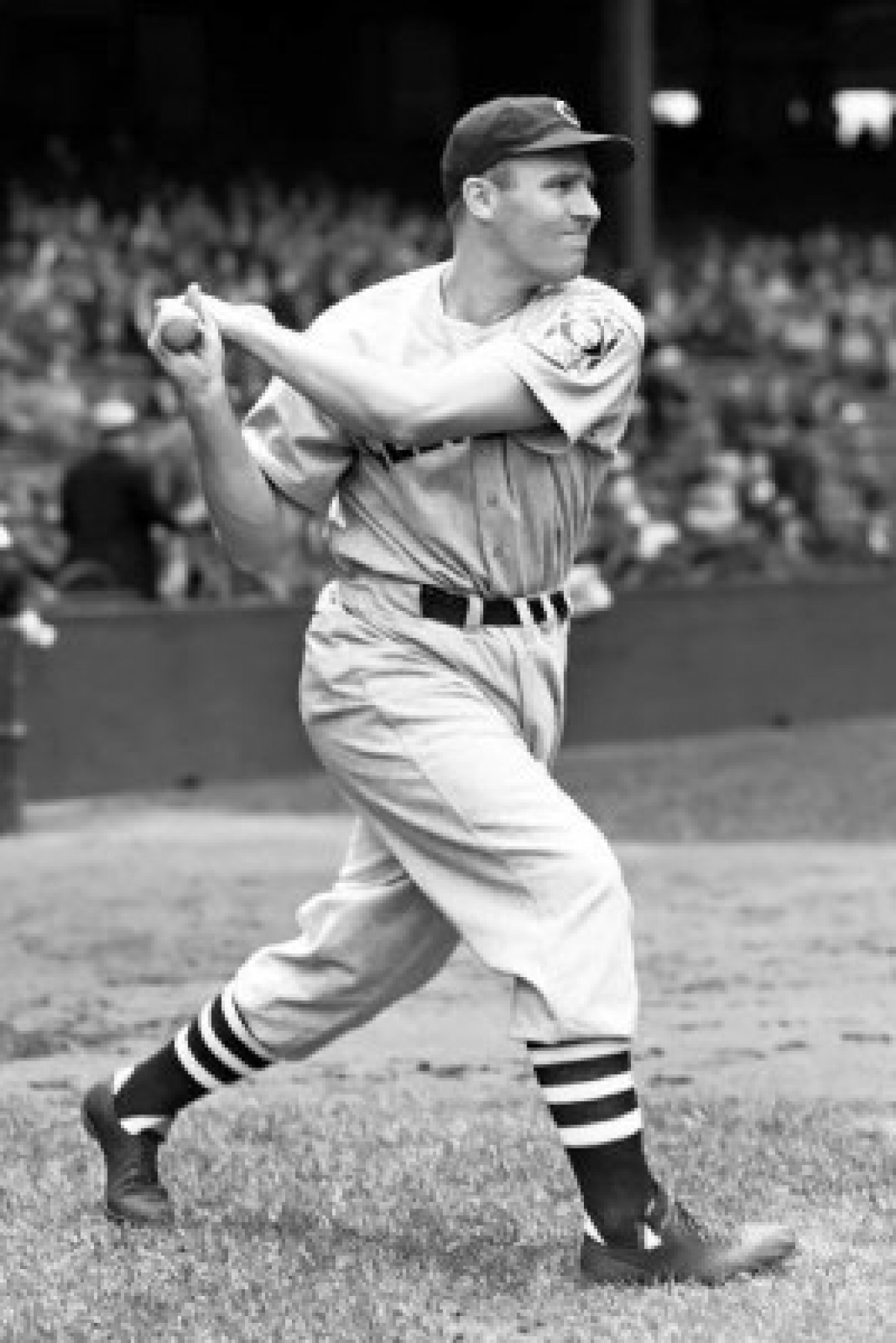

The narrative of Hal Trosky is one of the most compelling "what-if" stories in the history of the American League. Arriving on the North Coast in 1933, the Iowa native carried expectations that bordered on the impossible, with some observers prematurely labeling him the heir to Babe Ruth’s throne. While he never reached the mythical status of the "Bambino," Trosky established a baseline of specialized power that, in any other era, would have made him a perennial All-Star and a household name across the country.
Trosky’s tenure in Cleveland was a study in elite offensive efficiency during the most crowded era of talent in baseball history. He operated as a high-frequency run producer, anchoring the middle of the Tribe's lineup with a left-handed swing that generated at least 25 home runs in six of his first seven full seasons. He was a model of steady-state dominance, surpassing the 100-RBI plateau in six consecutive campaigns starting in 1934. In 1936, he blasted 42 home runs and led the American League with a staggering 162 RBIs while maintaining a .343 batting average, which remains one of the best power years in team history.
The most extraordinary aspect of his game was the consistency he maintained while playing in the shadow of legends like Gehrig, Foxx, and Greenberg. Trosky possessed a specialized athleticism that allowed him to finish among the league leaders in extra-base hits and total bases annually, providing the tactical stability required to keep Cleveland competitive in a powerhouse Junior Circuit. He served as the primary engine of the offense throughout the 1930s, demonstrating professional resilience to post a career .313 average in a Cleveland uniform. He proved that a player could become a franchise pillar by simply being one of the most dangerous hitters in the world, even if the All-Star ballots were crowded with future Hall of Famers.
His presence on the field was defined by a focused intensity that was tragically undermined by forces beyond his control. Beginning in 1938, Trosky was plagued by a series of debilitating migraines that began to impact his vision and his timing at the plate. Despite this physical toll, he continued to compete with a workmanlike approach until the condition forced a premature retirement in 1941.
The story in Cleveland concluded with 216 home runs, 911 RBI, and a reputation as one of the most underrated sluggers of all time. He left the organization with a career .551 slugging percentage, a mark that reflects nearly a decade of elite power hitting on the North Coast before he made a brief, wartime comeback in Chicago.
The organization recognized the sheer magnitude of his contribution by including him in the inaugural Cleveland Hall of Fame class in 1951.

Comments powered by CComment