


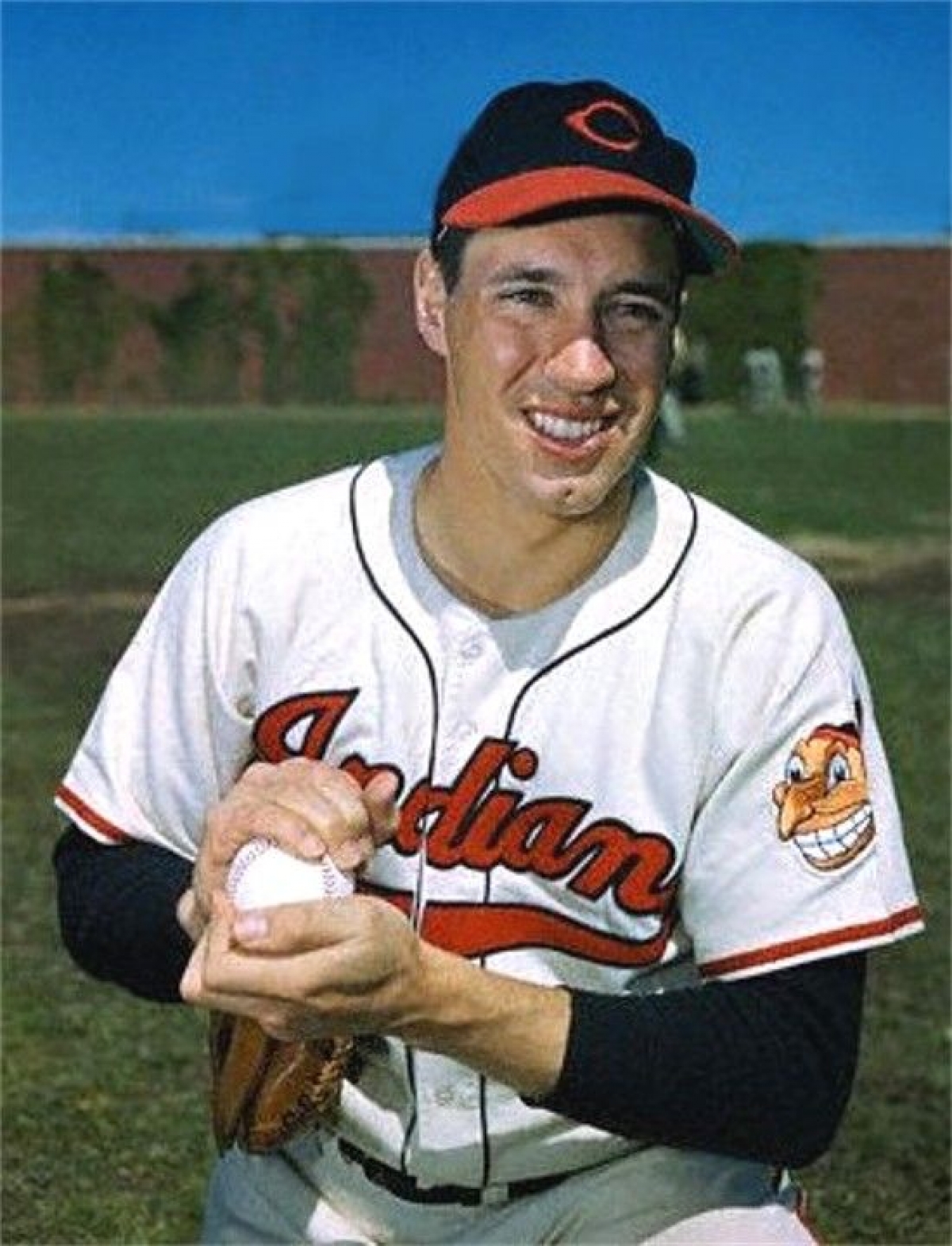



When Bob Feller arrived in Cleveland in 1936, he was a 17-year-old high school student who looked like a farm boy but threw like a god. Bypassing the minors entirely, he famously struck out eight Cardinals in an exhibition game before he had even graduated. By the time he was 19, "Rapid Robert" was already the most feared strikeout artist in the American League, leading the circuit with 240 K's in 1938. His residency in Cleveland began with a level of hype that would have crushed a lesser player, but Feller thrived under the pressure, pairing a legendary fastball with a devastating curveball that left future Hall of Famers like Ted Williams calling him the fastest pitcher they had ever seen.
The peak of his pre-war journey arrived in 1940, a season that began with the only Opening Day no-hitter in Major League history. Feller was a statistical outlier that year, capturing the pitching Triple Crown by leading the league in wins (27), ERA (2.61), and strikeouts (261). He was the undisputed ace of the Tribe and the face of the sport, a player who seemed destined to shatter every cumulative record in the books. However, his journey took a dramatic, selfless turn on December 8, 1941. Two days after the attack on Pearl Harbor, Feller became the first professional athlete to volunteer for combat, walking away from a $50,000 contract and his athletic prime to serve as a gun captain on the USS Alabama.
The middle chapter of his career was a testament to his sheer resilience. Returning to the mound in late 1945 after missing nearly four seasons of his prime, Feller didn't just pick up where he left off, he found a second gear. In 1946, he threw a career-high 371 innings and struck out 348 batters, a single-season record that stood for nearly two decades. He anchored the rotation for the 1948 World Series champions, providing the veteran gravity that pulled the franchise toward its first title in 28 years. Even as his velocity eventually began to wane in the early 50s, his "junk" and his competitive fire allowed him to post one final 20-win season in 1951, proving that he could outthink hitters just as easily as he once overpowered them.
Beyond the box score, Feller was a pioneer who understood the value of the players who made the game possible. He was an early, outspoken critic of the reserve clause and a driving force behind the development of the memorabilia and barnstorming circuits, creating vital secondary income for his peers. He was a man who never hedged an opinion and never forgot the blue-collar roots of the game, serving as a permanent ambassador for the Indians long after his playing days were over.
His final walk toward the exit came in 1956, concluding an 18-season residency spent entirely in a Cleveland uniform. He left the "Tribe" as the franchise’s all-time leader in wins (266), strikeouts (2,581), and shutouts (46). The team wasted no time in honoring its greatest son, making his number 19 the first retired jersey in Cleveland history just one year after he hung up his spikes. In 1962, he was ushered into Cooperstown on the first ballot—the first player since the inaugural 1936 class to earn that honor.
Bob Feller arrived as a teenage prodigy from Iowa and left as a national hero and a permanent monument of the Cleveland landscape. He proved that while the war might have cost him some stats, it could never touch his legacy as the most dominant right-hander to ever toe the rubber for the Indians.

Comments powered by CComment