


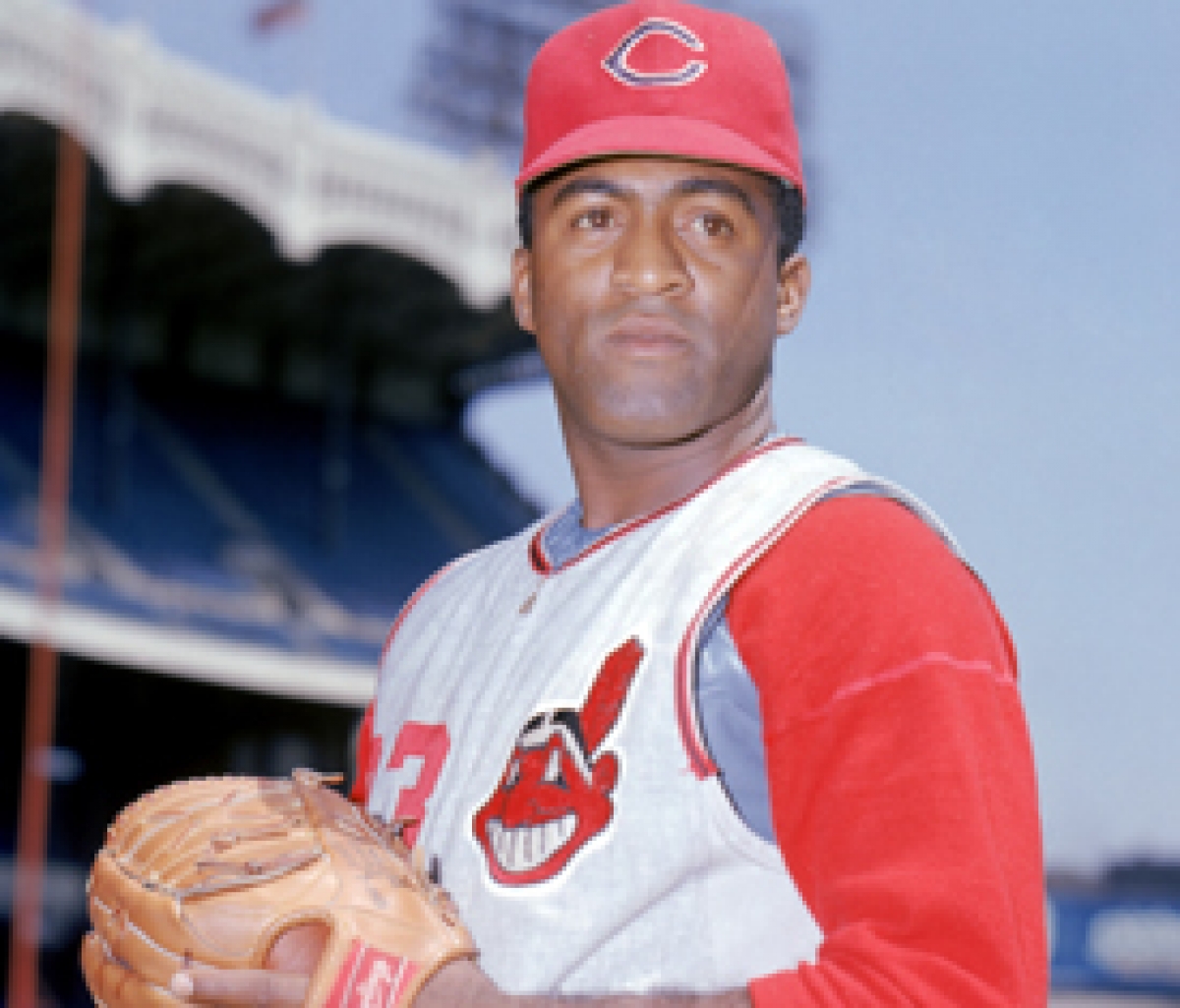


While the high-leg kick and Fu Manchu mustache became icons of Fenway Park, the foundation of Luis Tiant’s legend was laid in the specialized pitching environment of 1960s Cleveland. Arriving from the Mexican League with a deceptive delivery and a professional resilience that would define his two-decade career, "El Tiante" transformed from a high-upside rookie into one of the most untouchable arms in the American League.
Tiant’s tenure in Cleveland began with a high-velocity entrance in 1964, where he posted a 10-4 record and a 2.83 ERA. He immediately established a model of specialized efficiency, ranking tenth in bWAR for pitchers in both his rookie year and 1966. He possessed a rare, high-leverage durability, serving as a pillar of the rotation throughout the mid-60s even when the run support was lean. His approach was built on a unique, corkscrew delivery that hid the ball until the final possible moment, a technical advantage that allowed him to consistently rank among the league leaders in efficiency metrics long before his traditional "win" totals caught up to his true value.
The absolute peak of his Cleveland stay arrived in 1968, a season that remains a statistical landmark in franchise history. Tiant orchestrated a campaign of total dominance, leading the American League in ERA (1.60), hits per nine innings (5.3), and bWAR for pitchers (8.5). He reached the magical 20-win plateau for the first time, punctuating his season with a career-high 264 strikeouts and a fifth-place finish in the MVP voting.
In 1969, Tiant faced a difficult "fall back to earth," leading the league with 20 losses despite maintaining a respectable strikeout rate. However, as the old baseball adage suggests, a pitcher has to be exceptionally talented to be trusted with enough starts to lose 20 games. This professional resilience remained his calling card even as a trade sent him to Minnesota in 1970, a move that eventually paved his way to immortality in Boston. He departed Cleveland with 75 wins and over 1,000 strikeouts, leaving behind a 2.84 ERA that stands as a testament to his elite command of the zone.
He eventually earned his place in the Cleveland Guardians Hall of Fame.

Comments powered by CComment