


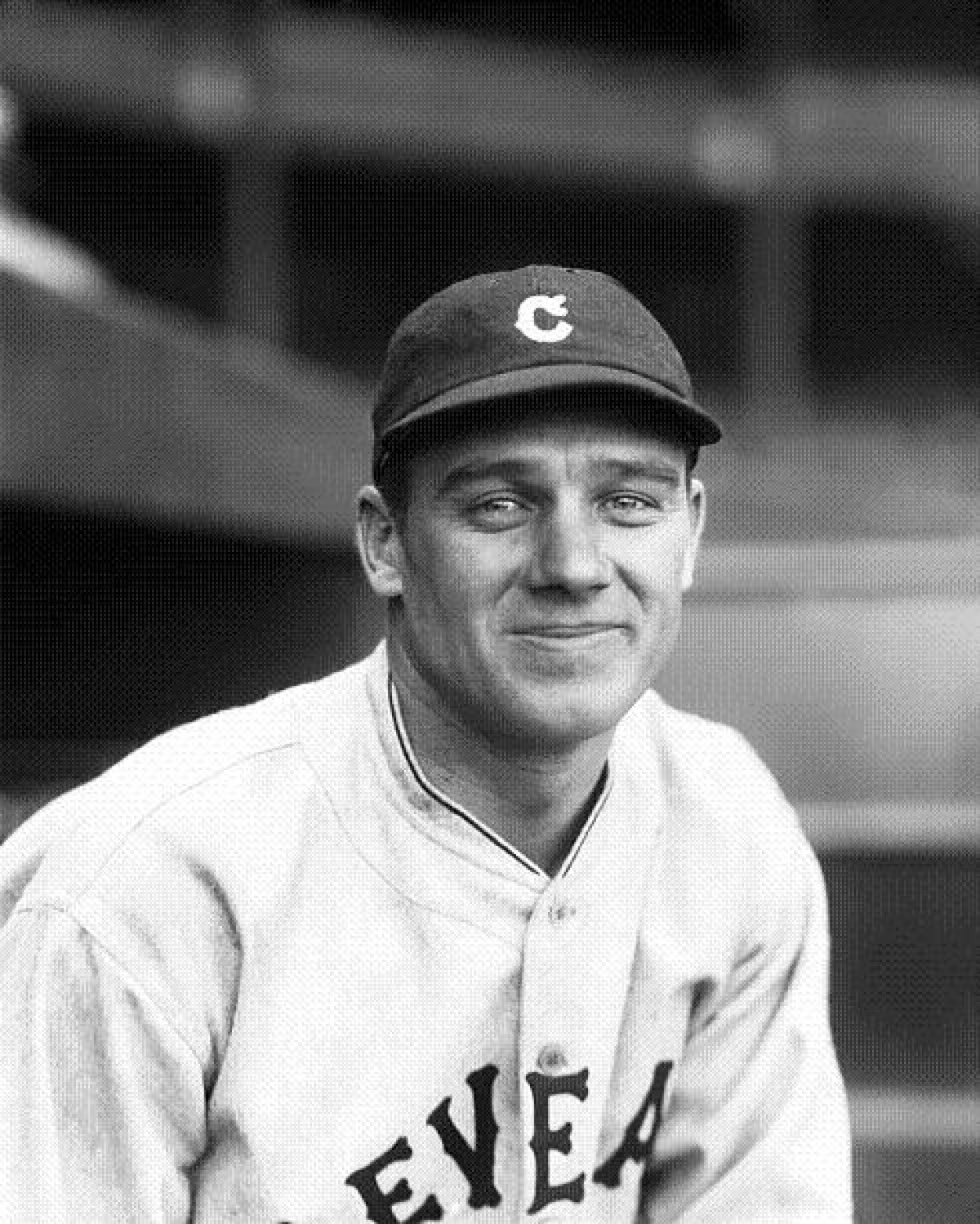


In the high-scoring landscape of the 1920s American League, Charlie Jamieson emerged as the quintessential leadoff man for Cleveland. Arriving via trade in 1919 after modest stints in Washington and Philadelphia, the left-handed outfielder didn't just find a home on the North Coast; he became the table-setter for one of the most prolific offensive eras in franchise history. Known for a specialized ability to manipulate the bat and a relentless approach at the plate, "Cuckoo" Jamieson spent over a decade proving that a hitter didn't need the frame of a titan to become a star.
Jamieson’s tenure in Cleveland was defined by a high-velocity transition from a reserve role to a frontline tactical force. While he provided the veteran poise that helped the 1920 squad capture the franchise's first World Series title, his individual production improved in the years that followed. He was a model of specialized efficiency, authoring a seven-year stretch from 1921 to 1927 where he recorded at least 150 hits annually. This was most evident in 1923, a summer where he led the American League with 222 hits and batted a career-high .345, serving as the high-leverage engine that ignited the Cleveland offense.
The most profound aspect of his game was a professional resilience that allowed him to maintain a .316 average across nearly 1,500 games in a Cleveland uniform. Jamieson was a master of the "small ball" era, twice leading the league in at-bats and consistently ranking among the elite in singles and triples. While he lacked the raw power of the era’s emerging sluggers, launching only 18 home runs during his stay, he compensated with a high-frequency ability to reach base and score. He twice eclipsed the 100-run plateau and was a fixture in the top ten for batting average, proving that his value was built on the steady-state excellence of a professional contact hitter.
Age caught up to him, and after the 1932 season, he left the Majors. He departed with 942 runs scored, 1,753 hits, and a .316 batting average while leading the league in hits in 1923.
The organization provided the ultimate punctuation on his career nearly a century later, inducting him into the Cleveland Hall of Fame in 2016.

Comments powered by CComment