


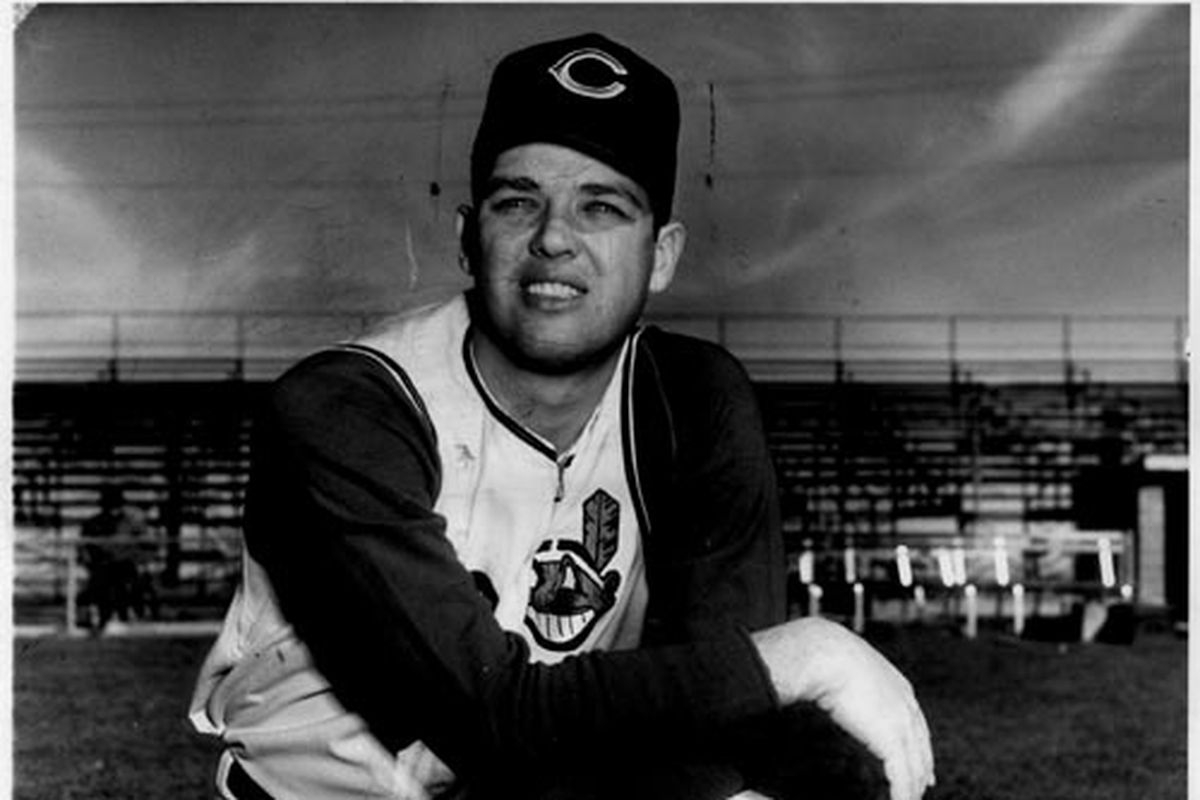

The decision by Sonny Siebert to trade the hardwood of the NBA for the red clay of a big-league mound remains one of the more inspired pivots in the history of Cleveland sports. A multi-sport phenomenon drafted by the St. Louis Hawks, Siebert possessed a raw, explosive athleticism that the Indians recognized could be weaponized on the rubber. Despite not being a pitcher when he first signed as an amateur free agent, he underwent a clinical transformation into a high-velocity starter, evolving from a project into a quality starter of the Cleveland rotation during the mid-1960s.
Siebert’s tenure on Lake Erie was defined by an immediate and high-frequency impact once he secured a regular role in the rotation. His best stretch with the Tribe was between 1965 and 1966, stringing together back-to-back 16-win campaigns. During this run, he wasn't just a reliable arm; he showed flashes of dominance, punctuated by a legendary no-hitter against the Washington Senators in June 1966. He possessed a specialized power that saw him strike out 786 batters in a Cleveland uniform, earning his first All-Star nod in 1966 while establishing himself as one of the premier run-preventers in the American League.
The versatile athleticism that often saw him contribute at the plate and on the mound was a remnant of his days as a collegiate star. While his win-loss records in 1967 and 1968 were occasionally hindered by a lack of run support, his underlying efficiency remained elite; he consistently ranked among the league leaders in shutouts and hits allowed per nine innings. He proved that a player could become a franchise pillar by mastering a completely new craft, providing the steady-state reliability required to navigate the grueling 1968 "Year of the Pitcher" schedule.
In 1969, he was dealt to the Boston Red Sox in a significant multi-player trade. With the Indians, Siebert compiled a 61-48 record and 786 strikeouts while throwing a no-hitter in 1966.

Comments powered by CComment