
12. Zach LaVine

Arriving as part of a blockbuster trade that sent Jimmy Butler to Minnesota, Zack LaVine became a scoring star in Chicago, though many basketball pundits believed that would transpire.
24. B.J. Armstrong
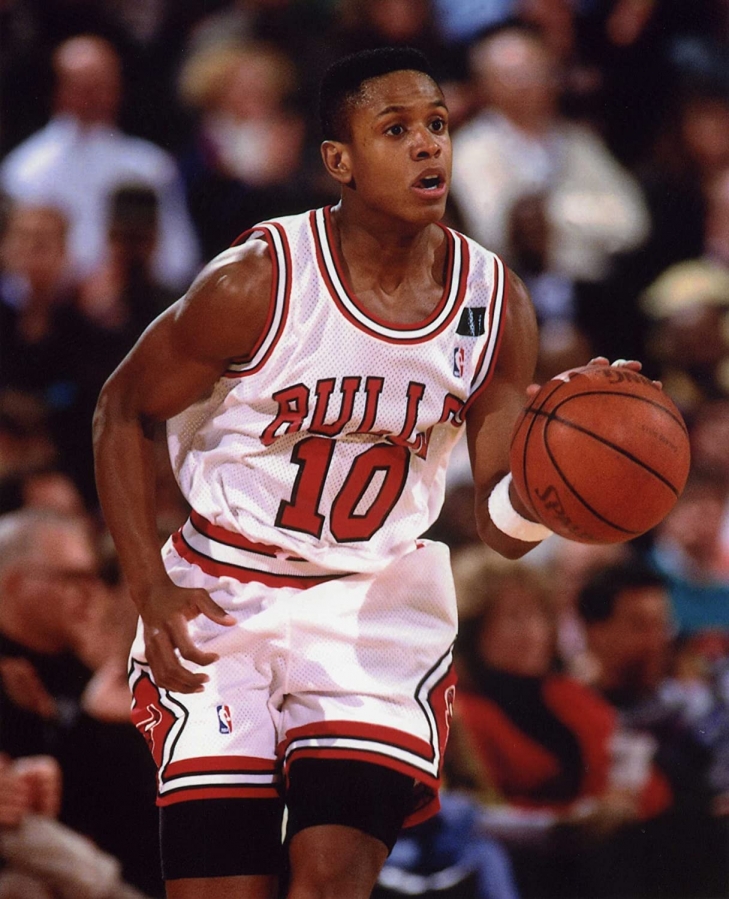
B.J. Armstrong left the University of Iowa as their all-time Assists leader, and who was he going to pass to as a pro? Michael Jordan.
Taken Eighteenth Overall in 1989, Armstrong came off the bench in his first three seasons with the Bulls, but he saw increasing minutes each year. Armstrong was part of the Bulls' first three-peat (1991-93), and he was no longer coming off the pine in the last championship year. Now the starting Point Guard, Armstrong led the NBA in Three-Point Field Goal Percentage (.453), and he averaged 12.3 Points per Game.
With Jordan retiring to play baseball after the 1992-93 season, Armstrong had an increased workload on offense. The Point Guard went to the All-Star Game in 1994, and he had a career-high in PPG with 14.8. He averaged 14.0 Points the following season, which was the same one where Jordan returned in the late winter. Armstrong would not have another full season with MJ, as the Toronto Raptors plucked him in the Expansion Draft.
23. Dennis Rodman
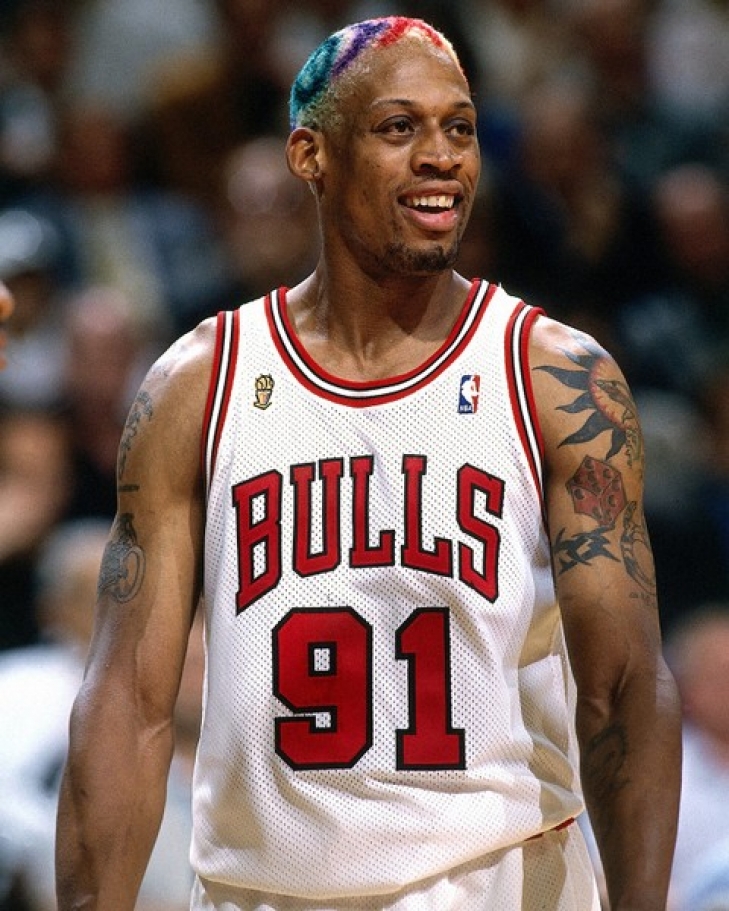
On every best-of list for a team, there is one player who seems impossible to rank. For the Chicago Bulls, that is Dennis Rodman, whom we have rated lower than most other publications, though statistically we can justify placing him five spots lower.
22. Ben Gordon
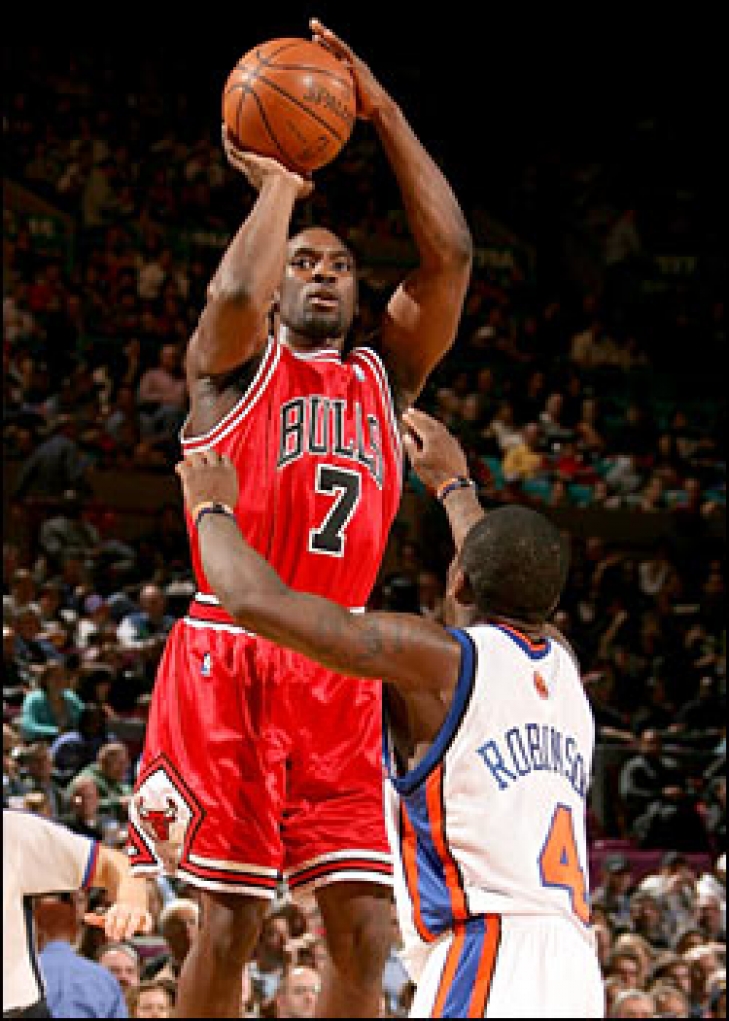
Ben Gordon led the University of Connecticut to an NCAA Championship in 2004, raising his draft stock to where he was taken number three by the Chicago Bulls.
15. Tom Boerwinkle
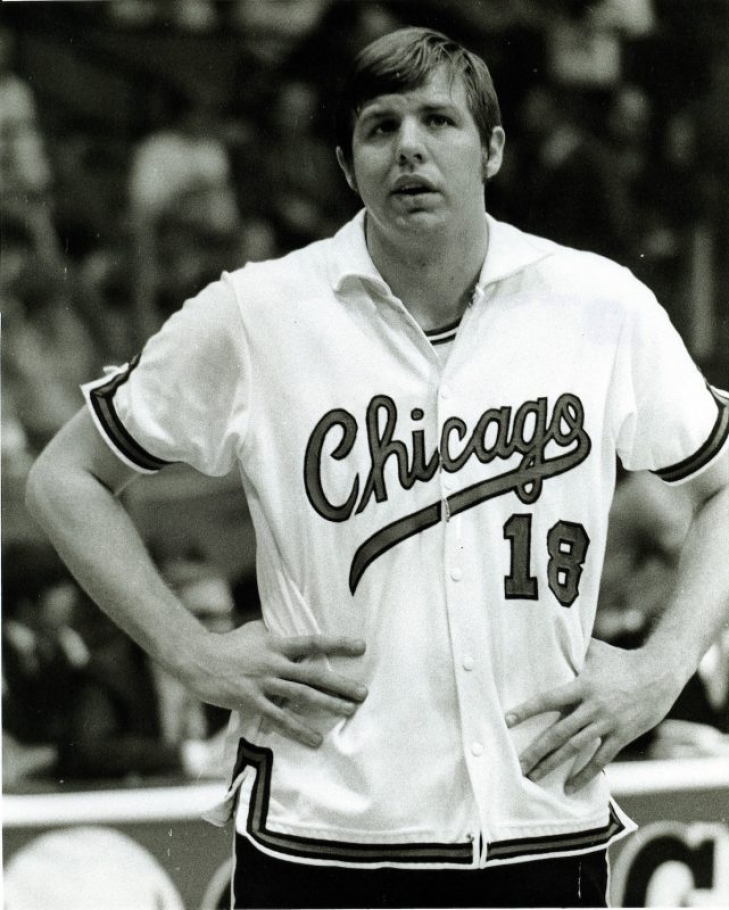
Tom Boerwinkle had a good college career with the Tennessee Volunteers, where he helped them win the SEC in 1967, and the big man landed with the Bulls as the No 4. Pick in the 1968 Draft. This would be the only team that Boerwinkle ever played for, though it was a decade-long career.
14. Norm Van Lier
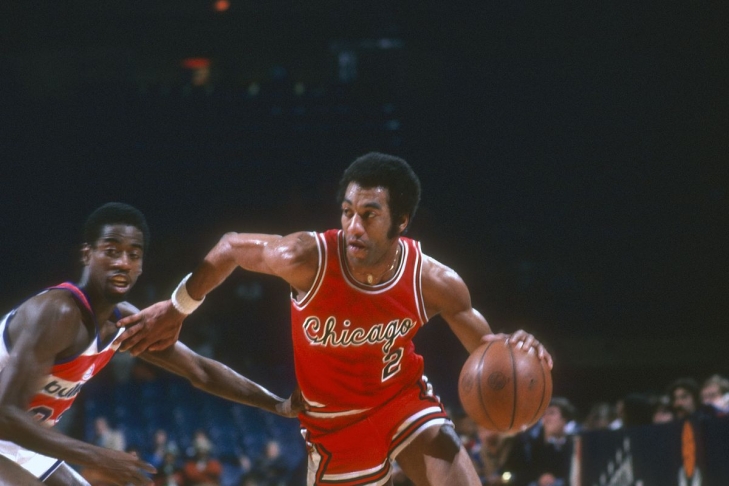
Norm Van Lier played at Saint Francis, and though it was a small school, the Chicago Bulls took him in the Third Round in 1969. So, this is where run in Chicago started, right? No.
13. Bob Love
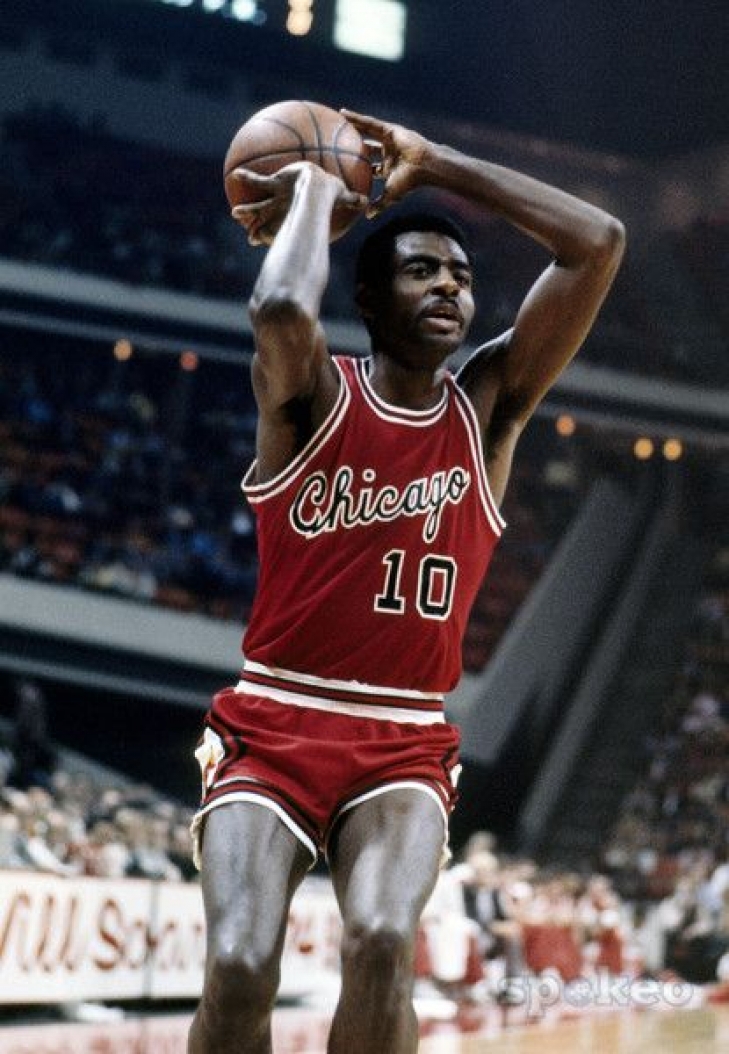
Bob Love played his college ball at Southern, and he did well enough for the Cincinnati Royals to get drafted in the Fourth Round in 1965. Love didn't make the team, but after a year in the Eastern Basketball League (where he was the MVP), he tried again to make the Royals, and he made the roster.
11. Jerry Sloan
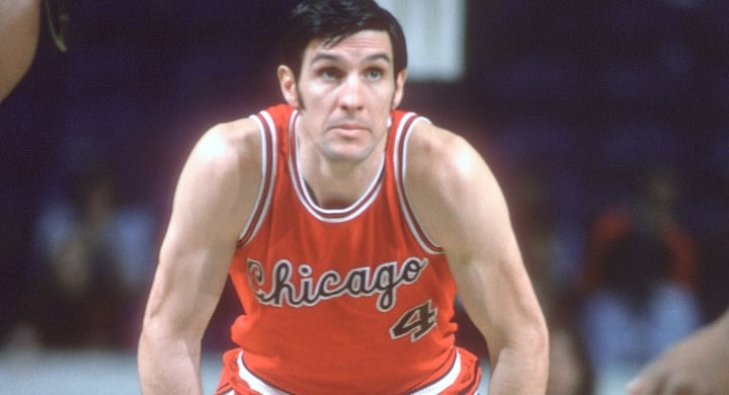
A two-time ICC (Indiana Collegiate Conference) Player of the Year when he was an Evansville Purple Ace, Jerry Sloan's professional career began with the Baltimore Bullets, but would only last there one year. This was not due to a lack of skill, but rather because the Chicago Bulls were formed, and Sloan was taken in the 1966 Expansion Draft.
16. Kirk Hinrich
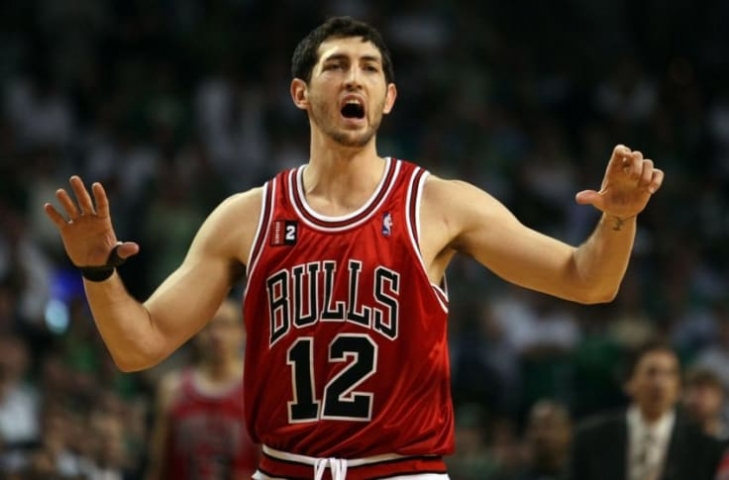
A Third-Team All-American at the University of Kansas, Kirk Hinrich was taken by the Chicago Bulls with the Seventh Overall Pick in the loaded 2003 Class. Hinrich was never a star NBA player, but his workmanlike skills carved out a long career in the Association.
21. Bob Boozer
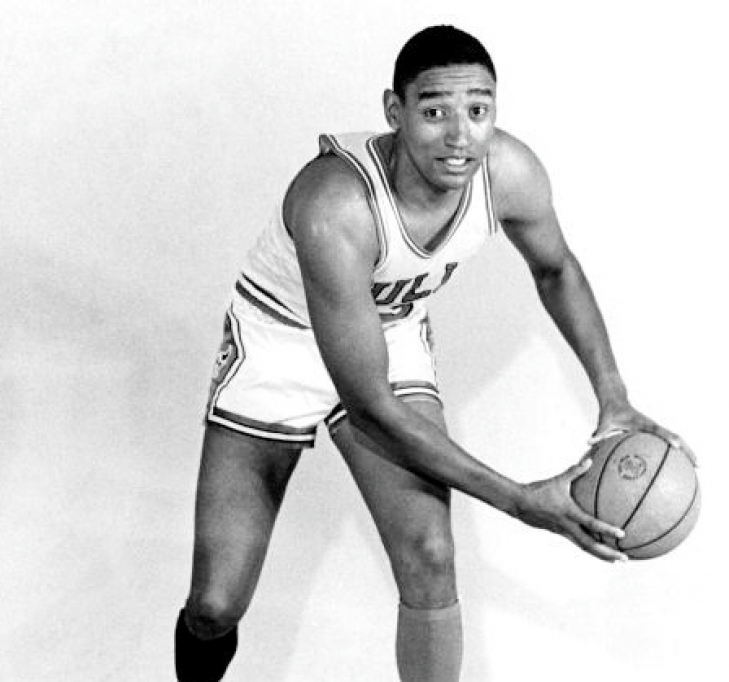
Bob Boozer had a long list of accomplishments before he ever donned a Chicago Bulls uniform.
17. Reggie Theus
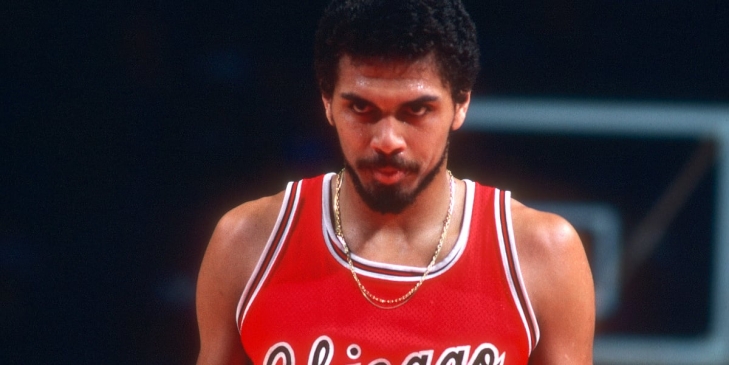
Reggie Theus is arguably the player who put UNLV on the map, as he was the star who took the Runnin' Rebels to their first Final Four. This put Theus on the national radar, and he was the Ninth Overall Pick, taken by the Chicago Bulls in 1978.
The Guard was a First Team All-Rookie with 16.3 Points per Game, which was followed by a 20.2 PPG. "Rush Street Reggie" was slightly worse statistically in his third year (18.9 PPG), but he was named an NBA All-Star, representing Chicago in that game. With similar metrics in his fourth year, Theus had his best season in Professional Basketball right after (1982-83), when he was an All-Star again, posting career highs of 23.8 PPG and a 19.2 PER.
Despite his strong performance, Theus was unable to get the Bulls deep into the playoffs, or even there, as he was only there once with Chicago. The Bulls traded him to Kansas City for draft picks in 1984. Theus averaged 18.8 Points per Game as a Bull.10. Toni Kukoc
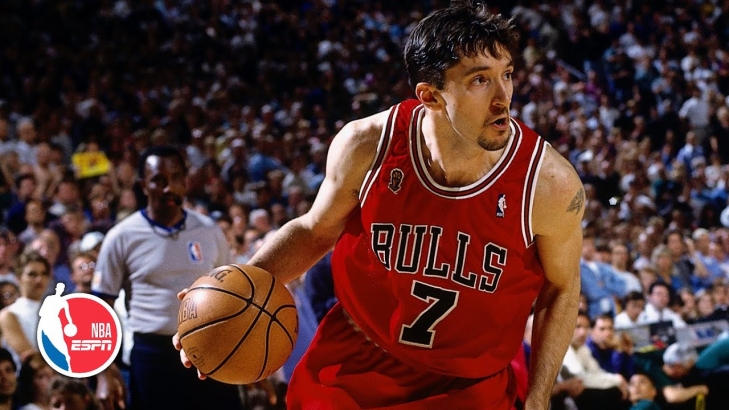
Toni Kukoc was a superstar in Europe in 1990, playing for Jugoplastika in Croatia and winning the EuroLeague Final Four MVP award after leading his team to the EuroLeague Title. Despite those accomplishments, Chicago fans scratched their heads when the Bulls used their Second Round Pick to take him. Two EuroLeague Titles later (the second one being with Treviso of the Italian League), Kukoc was ready to join the Bulls.
Kukoc was immediately popular with Chicago fans, and he logged heavy minutes despite usually coming off the bench. Michael Jordan returned from his stint as a minor league baseball player, and Kukoc was a considerable part of the second three-peat dynasty (1996-98), with Kukoc winning the Sixth Man of the Year in 1995-96. The Small Forward never had a season in Chicago where he didn't have at least 10 Points per Game, and his best season was an 18.8 PPG campaign in 1998-99, the year after Jordan retired a second time.
The Bulls were in rebuilding mode, and he was traded to Philadelphia in 2000. As a Bull, Kukoc averaged 14.1 Points per Game with a PER of 18.6, and would enter the Naismith Basketball Hall of Fame in 2021.
9. Derrick Rose
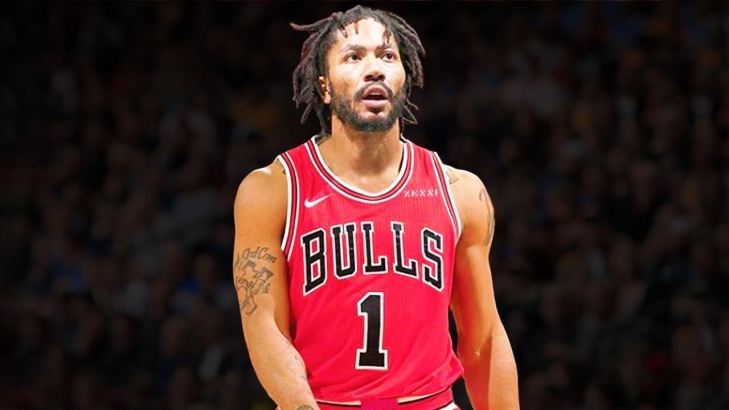
When we began this, we thought Derrick Rose would be ranked a little higher, but here we have an MVP who was never the same after a torn ACL.
Rose’s career met early expectations. Drafted First Overall in 2008 after a season in Memphis, Rose won the NBA Rookie of the Year with a 16.8 Point and 6.3 Assist per Game year. The Point Guard was an All-Star the following year, as he cracked the 20 PPG mark. This was a very good pair of opening seasons, but Rose was ready to ascend to greater heights.
In this third year in the NBA (2011-12), Rose averaged an even 25.0 PPG with a 7.7 APG. Not only was Rose an All-Star, but he was also a First Team All-Star and the league MVP. Chicago went deep into the playoffs that year, and at age 22, he had yet to reach his peak, and Rose looked to be the best Bull since Jordan. Or so we thought.
Rose was an All-Star again in the strike-shortened 2011-12 season, but in the first round of the playoffs against Philadelphia, Rose tore his ACL. He missed the following year, and when he returned in 2013-14, he tore his meniscus ten games in. Rose came back in 2014-15 but missed another 20 Games. The Point Guard played 66 Games in 2015-16, but after that torn ACL, Rose just wasn't the same player, averaging 17.4 Points with a PER of only 14.1
The Bulls gave up on Rose, trading him in June of 2016, but this is a former MVP, so calling him a disappointment seems wrong. We can say that it could have been so much more, but injuries have a winning record.
8. Luol Deng
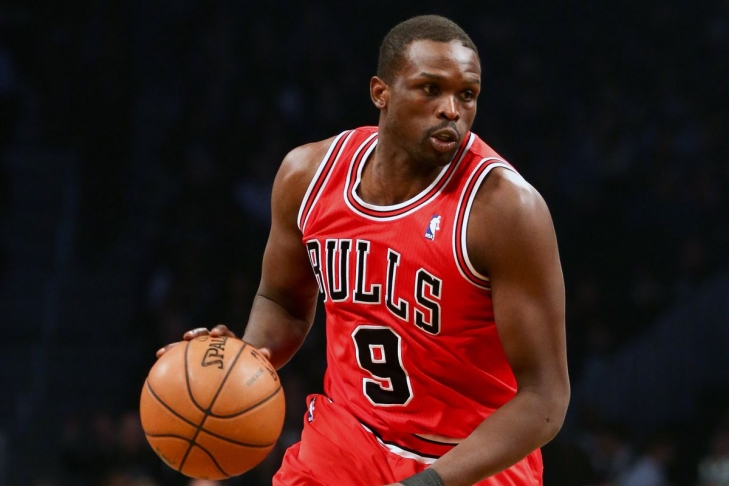
From Sudan, raised in England, and schooled at Duke, Luol Deng was a top-ten pick by the Phoenix Suns, who, as part of a pre-arranged draft day agreement, entered the National Basketball Association with the Chicago Bulls.
Like most high picks, Deng showed gradual improvement, built on his good 11.7 PPG rookie year, and would have four years as a Bull, averaging at least 17 Points and 6 Rebounds per Game. Calling Deng a superstar might have been a stretch, but he was a two-time All-Star Game participant, both in years when he led the NBA in Minutes per Game.
Deng was eligible to be a Free Agent in 2017, and before the 2016-17 campaign ended, Deng was traded to Cleveland. With the Bulls, Deng averaged 16.1 Points per Game in nearly ten seasons, with none of them falling below 11.
7. Jimmy Butler

Jimmy Butler is an interesting basketball player. He is phenomenal on the court, enigmatic off of it, and when his career ends, we want to see a detailed career retrospective on Butler in the vein of Jordan's "Last Dance." We're serious; we find him fascinating!
6. Joakim Noah
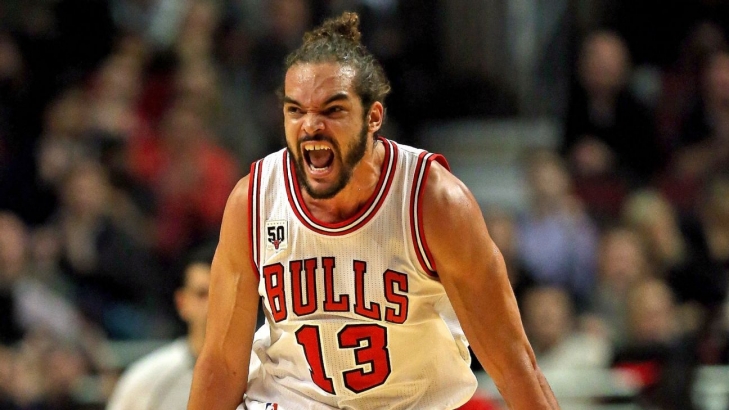
One of the more enduring scenes of the 2007 Draft was the image of Joakim Noah, in a suit that only he could wear, a Bulls cap on his head with a mountain of hair spilling out of it. The son of the former tennis star, Yannick Noah, might have looked a little silly to some "traditional" viewers. What they should have been seeing was an excellent basketball player.
Noah was part of a trio with Corey Brewer and Al Jefferson that won two National Championships at Florida. The Center was the Ninth Overall Pick in 2007 by the Chicago Bulls. They slowly worked Noah into their system, with him becoming a permanent starter in his third year, where he averaged a double-double (10.7 Points and 11.0 Rebounds). He did it again the following year (11.7 Points and 10.4 Rebounds) with a Second Team All-Defensive Selection as a reward.
Noah’s boarding average slipped below 10 in 2011-12 (9.8), but he followed that with his two best years as a basketball player. Noah went to the All-Star Game in both 2013 and 2014, again with double-double averages. Noah’s defense was stellar in his timeframe as First Team All-Defensive in both years, and he won the coveted Defensive Player of the Year in 2013-14.
Noah's play slipped over the next two years, and his stay in Chicago ended when he signed with the New York Knicks in 2016. With the Bulls, Noah had averaged 9.3 Points, 9.4 Rebounds, and 1.4 Blocks per Game.
5. Horace Grant
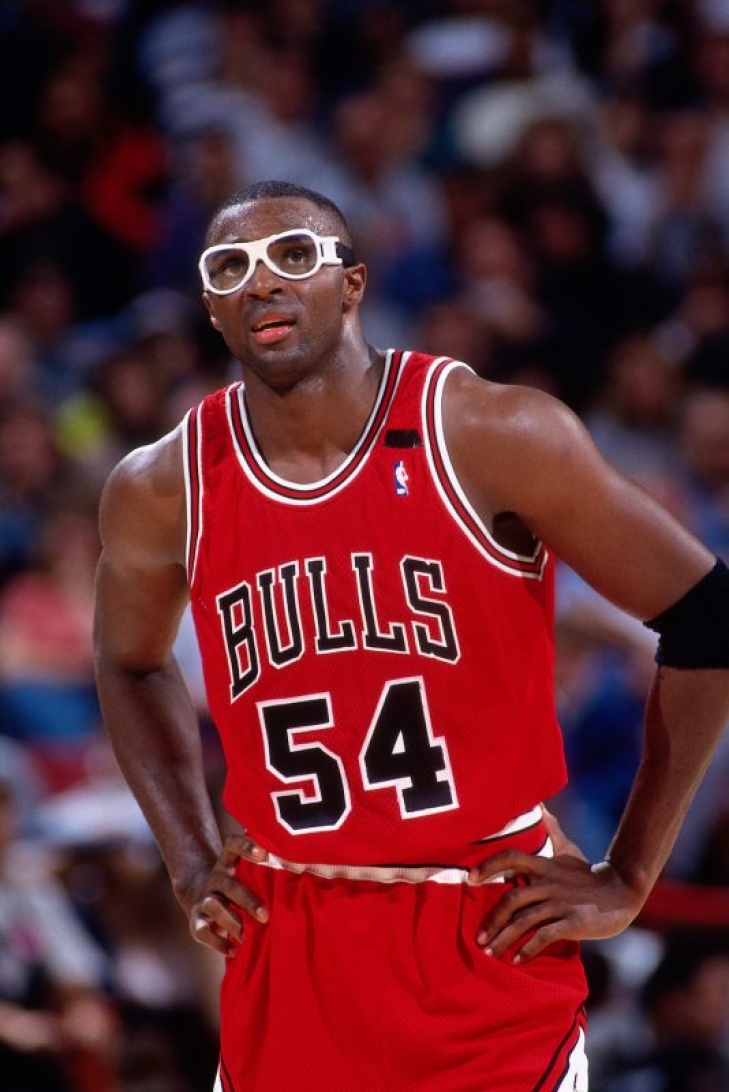
Horace Grant was the 1987 ACC Player of the Year when he played at Clemson, which helped him become a First Round Pick (10th Overall) by the Bulls.
4. Chet Walker
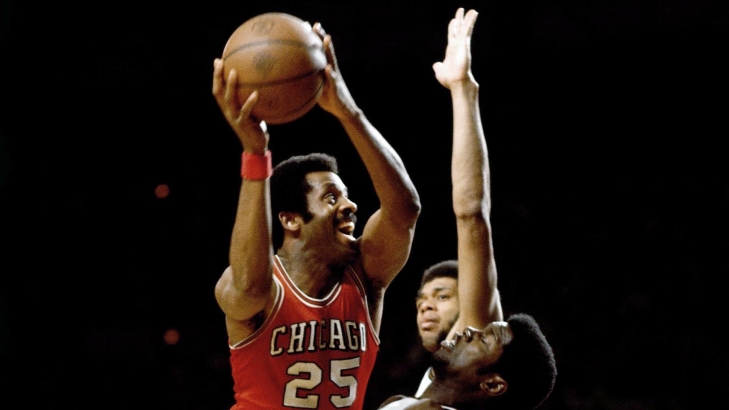
Walker’s NBA career began in 1962 as a Syracuse National, and when the team moved to Philadelphia and turned into the 76ers, his career grew alongside his team's audience. Walker was a three-time All-Star in Philly and a champion when the team won the title in 1967. But this isn't a list about the greatest Sixers.
Walker was traded to the Chicago Bulls in 1969, and he would do more with the rock as a Bull on a team that was far less talented overall than the Philadelphia 76ers. The Small Forward scoring efficiency was higher in Chicago, with his Field Goal Percentage going over .475 five times with Chicago, in comparison to his one time in Philadelphia. Walker never had a Free Throw Percentage lower than .832 as a Bull, and he led the NBA in that stat in 1970-71 (.859).
The former Bradley Brave played in four All-Star Games with Chicago and averaged 20.5 Points per game in the Windy City.
Walker entered the Naismith Basketball Hall of Fame in 2012.
3. Artis Gilmore
After the selections of Jordan and Pippen, it does not become as easy to rank the greatest Bulls of all-time. But that makes it all the more fun, doesn't it?
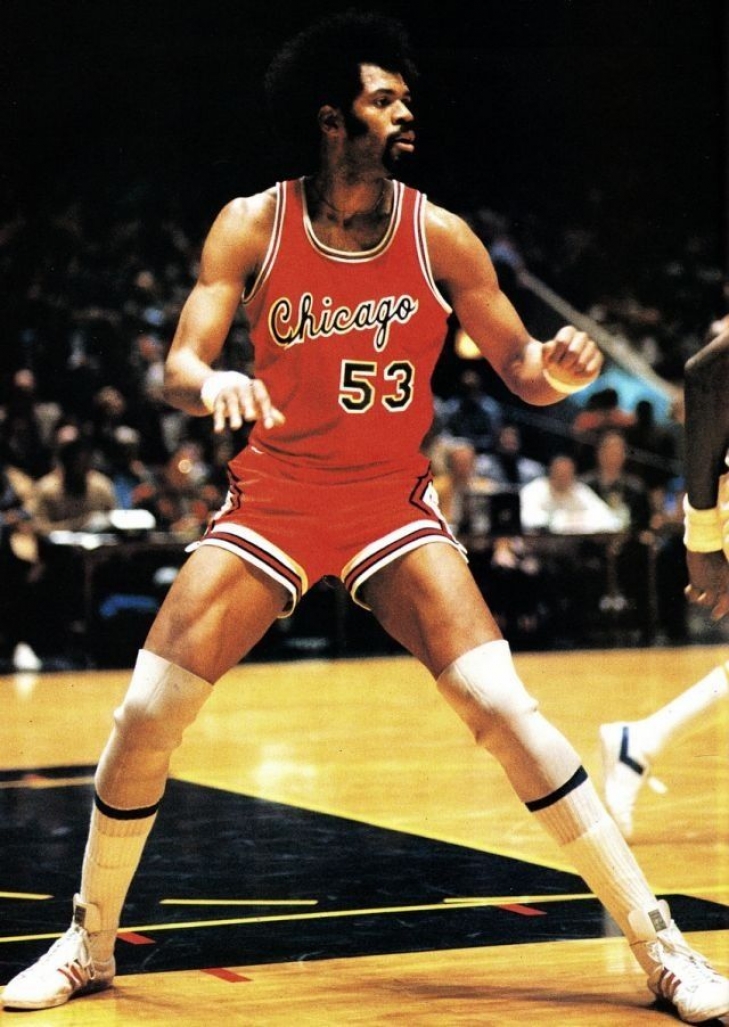
The Chicago Bulls took Gilmore with their Seventh Round Pick in 1971, but this was not a slight on Gilmore's skill, but rather that they knew he would sign with the ABA instead. The Center joined the Kentucky Colonels, where he played for five seasons before the ABA was absorbed into the NBA, sans the Colonels, who folded and had their players dispersed. Who got Gilmore? The Bulls took him first overall in that specific draft.
Gilmore would not be an MVP like he was in the ABA, but this was still an elite Center. Playing for the Bulls for six years, Gilmore was an All-Star four times. With the Bulls, Gilmore consistently kept his rebounding in double digits, and he was still a good scorer, with his worst season in Chicago at 17.8 PPG and a peak of 23.7. Gilmore led the NBA in Field Goal Percentage in 1980-81 & 1981-82, but that would be his last two years as a Bull…well, not really.
Chicago traded Gilmore to San Antonio, but he was traded back in 1987. Gilmore only played 24 Games before being waived. Gilmore joined Boston for the rest of the year and was in Europe after.
With the Bulls, Gilmore posted averages of 19.3 Points, 11.1 Rebounds, and 2.1 Blocks per Game. The Basketball Hall of Fame called his name in 2011.
2. Scottie Pippen
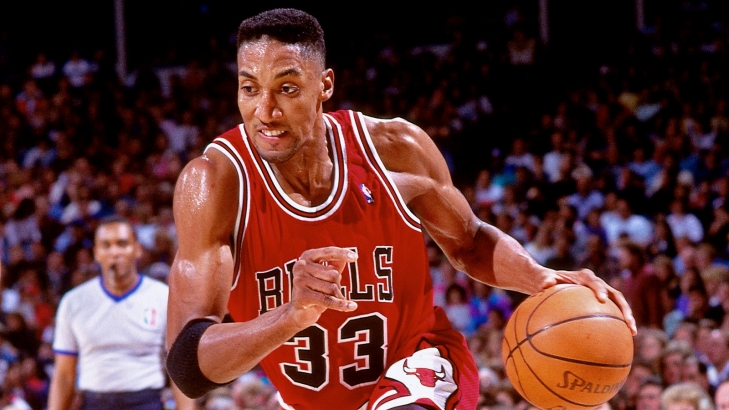
Choosing Michael Jordan as the greatest Chicago Bull of all time was the easiest decision we have ever made. It was almost as easy to anoint Scottie Pippen as number two.
