

 Not in Hall of Fame News
Yes, we know that this is taking a while! As many of…
 Not in Hall of Fame News
Yes, we know that this is taking a while! As many of…
 Not in Hall of Fame News
2002 SEMI-FINAL RESULTS: Thank you for your participation in the Pro Football…
 Not in Hall of Fame News
Yes, we know that this is taking a while! As many of…
 Not in Hall of Fame News
We are diligently working away at Notinhalloffame on revising our Football lists…
 Not in Hall of Fame News
We are diligently working away at Notinhalloffame on revising our Football lists…
 From the Desk of the Chairman
October baseball often turns individual pitching performances into lasting postseason memories. Strikeout…
 From the Desk of the Chairman
For decades, the sports debate ran on gut feeling. Barstool arguments, call-in…
 From the Desk of the Chairman
Introduction to Private Adult Tennis Camps in Prague Adult club players increasingly…
 From the Desk of the Chairman
Unlike in the case of pre-match betting, where you have to pick…
 From the Desk of the Chairman
Kupu178 builds trust with people by using top-end end-to-end encryption. It checks…
 From the Desk of the Chairman
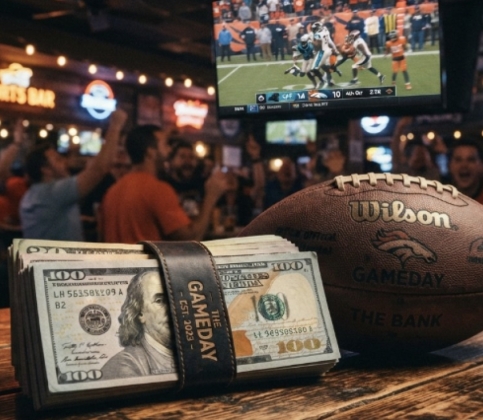
Sports fans thrive on calculating strategy, reading momentum, and maximizing every tactical…
100 Active Potential Football Hall of Famers
-
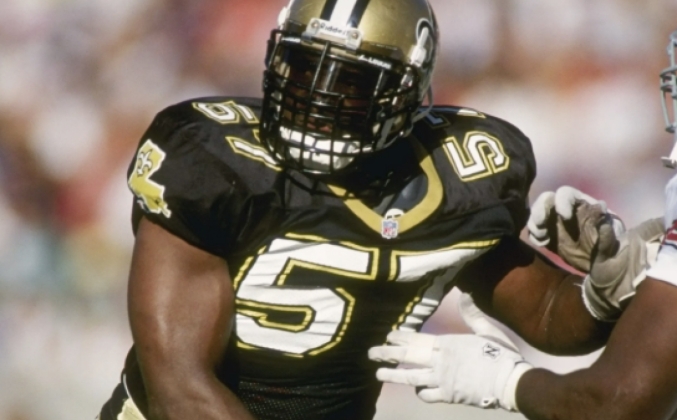
 #15 Overall, Cameron Jordan, New Orleans Saints, Defensive End, #7 Defensive Lineman/Linebacker: Pass Rusher2025 Pre-Season Rank #14, 2024 Pre-Season Rank #21, 2023 Pre-Season Rank #27, 2022 Pre-Season Rank #25, 2021 Pre-Season Rank #36, 2020 Pre-Season Rank…
 -
 #18 Overall, Mike Evans, San Francisco 49ers, #1 Wide Receiver2025 Pre-Season Rank #13, 2024 Pre-Season Rank #18, 2023 Pre-Season Rank #35, 2022 Pre-Season Rank #58, 2021 Pre-Season Rank #73. Peak 2020-24 How…
 -
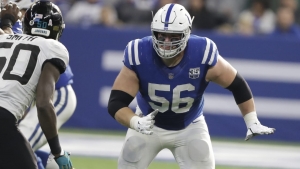 #22 Overall, Quenton Nelson, Indianapolis Colts, Left Guard, #2 Offensive Lineman2025 Pre-Season Rank #2025, 2024 Pre-Season Rank #29, 2023 Pre-Season Rank #42, 2022 Pre-Season Rank #51, 2021 Pre-Season Rank #78, 2020 Pre-Season Rank…
 -
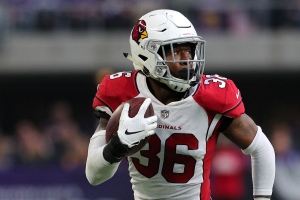 #24 Overall, Budda Baker, Arizona Cardinals, Free Safety, #1 Safety2025 Pre-Season Rank #28, 2024 Pre-Season Rank #43, 2023 Pre-Season Rank #78, 2022 Pre-Season Rank #86, 2021 Pre-Season Rank #113, 2020 Pre-Season Rank…in Safeties
Visit the Fictitious Halls of Fame!
You May Also Like...
EDITOR’S CHOICE
 DDT's Pop Flies
When the veterans committee (VC), officially convening as the Contemporary Baseball Era…



 Live Music Head
Project/Objectan interview with André Cholmondeleyby Live Music HeadOriginally published at timessquare.com on…

LATEST RANKINGS


MOST POPULAR RANKINGS








Committee Chairman
10. Travis Tritt
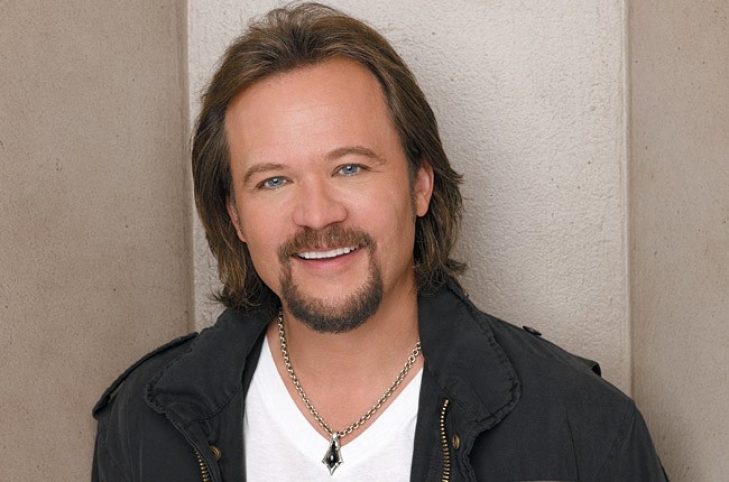
With the Hall having already added Garth Brooks and Alan Jackson, Travis Tritt is another member of the legendary “Class Of ‘89” in country music, having released his debut single in 1989. 1989 was an important year in country music where a brand new class of artists debuted, which while they faded out some of the older singers, this was also a turning point for bringing in new music and some new audiences. Signing with Warner Bros Records, Travis’ original contract was only for 6 songs. They would not release an album unless one of those songs became a hit. Luckily he was a hit right out of the gate. Bringing some southern rock influences into his songs, Travis was able to inject energy into mainstream country music that wasn’t being brought in by his fellow peers. His radio career ended up being kind of up and down and it faded out quicker than some of the other stars of that era, but his personality and great catalogue of songs keep people coming back to him. Having 9 Grammy award nominations and 15 CMA award nominations, Travis should probably be making his way into the Hall Of Fame in the years to come.
1. Shania Twain

Being raised in a small Canadian town doesn’t give off the idea that someone will become a worldwide country music star, but that is exactly what happened. Not only one of the biggest country stars of all time, but one of the biggest stars of any genre, Shania helped change the game for country music in the 1990s. Her album “Come On Over” sold more copies by itself than most artists sell in their entire careers (over 40 million copies, and it remains the best selling country album of all time, the best selling album by a Canadian of all time, and the best selling studio album by a female artist of any genre). Traditional country audiences might not be huge fans of hers because of the large number of pop sounds she brought into her songs, but her sales and influence on the genre as a whole cannot be denied. Her first album in 1993 was a failure, but once she connected up with rock producer Mutt Lange, they were unstoppable. Over the course of her career, she truly only has 3 albums that hold all of her success. But those 3 albums alone make her one of the best-selling artists of all time in any genre, and forever a legend in the music world.
The Toy Hall of Fame announces the 2021 Finalists
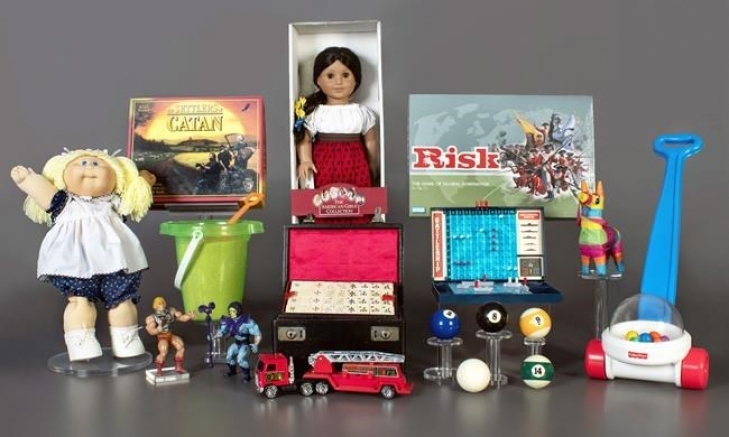
We always get a kick out of anything that comes from the Strong Museum in Rochester, New York. Today, they announced the Finalists for the 2021 Class of the Toy Hall of Fame.
The nominees are:
-American Girl Dolls: Created in 1986 by educator and newscaster Pleasant Rowland, each doll comes with a narrative that reflects an era of American history.
- Battleship: Originally played with paper and pencil, Milton Bradley’s 1967 plastic adaptation popularized the two-person strategy game. It was among the first board games to be computerized in 1979.
- Billiards: Commonly known as pool in the United States, the game evolved from earlier European outdoor games and became popular in the 1800s.
- Cabbage Patch Kids: The dolls, each unique, were launched in 1979. Complete with adoption papers, they were the must-have holiday toy of 1983, paving the way for Tickle Me Elmo, Beanie Babies, and Furby that followed.
- Fisher-Price Corn Popper: Introduced in 1957, the push-toy got toddlers walking, mesmerized by bright flying balls and the popping sound.
- Mahjong: The gambling card game originated in China became popular in the United States in the 1920s.
- Masters of the Universe: He-Man, She-Ra and the line's other action figures became popular through Mattel’s use of comic books and television, including the cartoon series He-Man and the Masters of the Universe, from 1983 to 1985.
- Piñata: The treat-filled paper mache object is commonly associated with Mexican culture but may date back to early 13th-century China.
- Risk: The strategy board game first published in the United States in 1959 challenges players to control armies and conquer the world.
- Sand: The substance is perhaps the most universal and oldest toy in the world, according to the National Toy Hall of Fame.
- The Settlers of Catan: The cooperative board game now called “Catan" was first published in Germany. Players representing settlers establish a settlement on an island by spending resources, which are earned through trade and rolls of the dice.
- Toy fire engine: Materials, design and technology have evolved but the appeal has remained.
The winners will be inducted on November 4, and will join 74 other toys.
Ryan Braun Retires
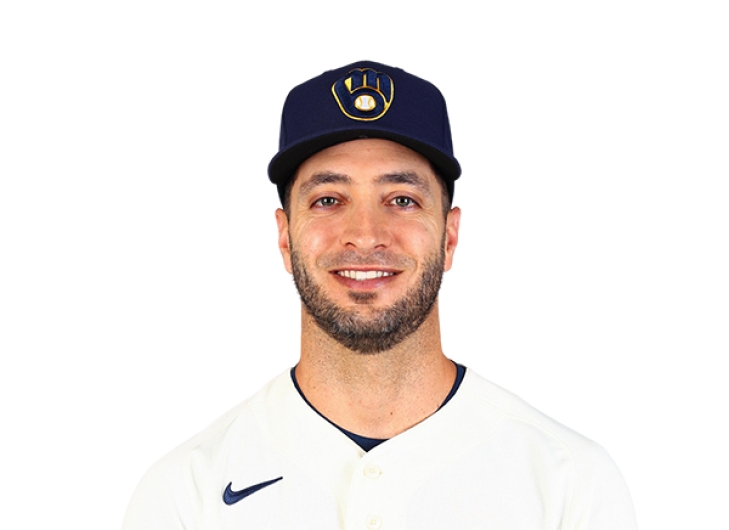
A significant retirement has taken place in the world of baseball as Ryan Braun announced his retirement.
Braun has not played this season after being unable to find a new home when the Brewers declined to exercise the option on his contract.
Debuting in 2007 for Milwaukee, the only team he ever played for, Braun was an instant star, winning the American League Rookie of the Year and subsequently the Slugging Title. Over the next five years, Braun was one of the top sluggers in the National League, going to the All-Star Game in all of those campaigns, all of which seeing him collect at least 100 RBIs. Braun led the NL in Hits in 2009 (203), batted over .300 five times, and was a five-time Silver Slugger. He also won the Home Run Title in 2012 (41), won the MVP in 2011, and led the NL in OPS twice.
Braun infamously failed a PED test in 2011, though successfully won the appeal, though would be suspended two years later through the Biogenesis scandal.
He retires with 1,863 Hits, 352 Home Runs, 1,154 RBIs, a Slash Line of .296/.358/.532, and a bWAR of 47.1. Braun is 25th in JAWS among Leftfielders with 42.9, a good number but well below the average Hall of Fame Leftfielder number of 53.7.
Braun is Hall of Fame eligible in 2026, but his PED issues hurt what would be a borderline candidate.
We wish Braun the best in his post-playing career.
