

 Not in Hall of Fame News
Yes, we know that this is taking a while! As many of…
 Not in Hall of Fame News
Yes, we know that this is taking a while! As many of…
 Not in Hall of Fame News
2002 SEMI-FINAL RESULTS: Thank you for your participation in the Pro Football…
 Not in Hall of Fame News
Yes, we know that this is taking a while! As many of…
 Not in Hall of Fame News
We are diligently working away at Notinhalloffame on revising our Football lists…
 Not in Hall of Fame News
We are diligently working away at Notinhalloffame on revising our Football lists…
 From the Desk of the Chairman
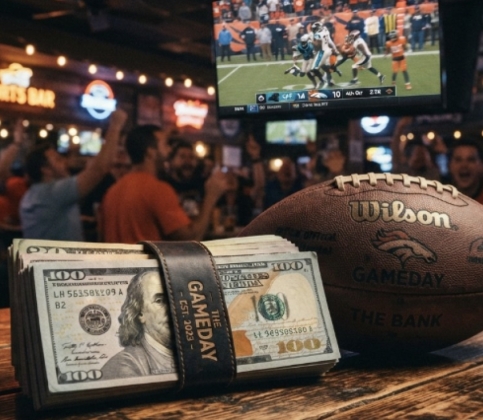
Sports fans thrive on calculating strategy, reading momentum, and maximizing every tactical…
 From the Desk of the Chairman
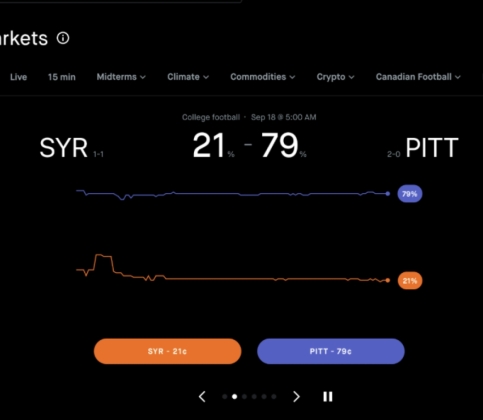
The 2026 NFL season is two weeks old and the division races…
 From the Desk of the Chairman
Sports communities are often built around things that have nothing to do…
 From the Desk of the Chairman
Every hall of fame eventually faces the same problem. The selection process…
 From the Desk of the Chairman
Pete Rose died in 2024. On May 13, 2025, Commissioner Rob Manfred…
 From the Desk of the Chairman
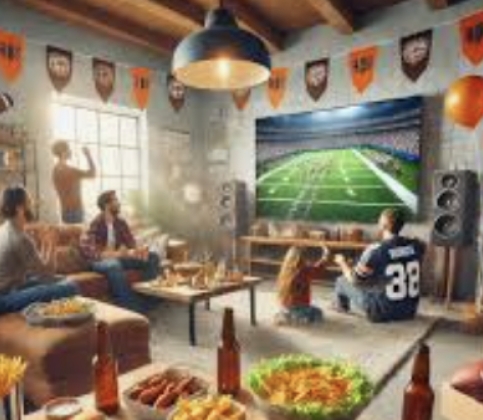
For NFL fans, game day offers much more than three hours of…





100 Active Potential Football Hall of Famers
-
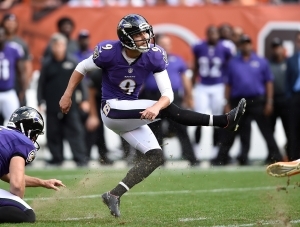 #36 Overall, Justin Tucker: Free Agent, Place Kicker, #1 Kickers & Special Teams2025 Pre-Season Rank #29, 2024 Pre-Season Rank #26, 2023 Pre-Season Rank #22, 2022 Pre-Season Rank #28, 2021 Pre-Season Rank #42, 2020 Pre-Season Rank…
 -
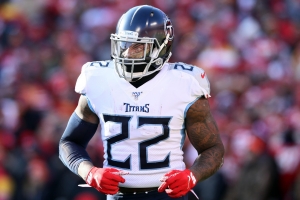 #11 Overall, Derrick Henry, Baltimore Ravens, #1 Running Back2025 Pre-Season Rank #11, 2024 Pre-Season Rank #23, 2023 Pre-Season Rank #39, 2022 Pre-Season Rank #47, 2021 Pre-Season Rank #70, 2020 Pre-Season Rank…
 -
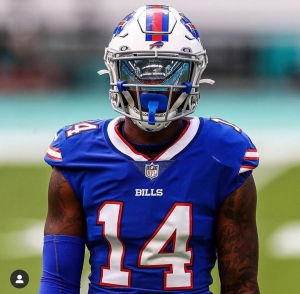 #43 Overall, Stefon Diggs, Washington Commanders, #7 Wide Receiver2025 Pre-Season Rank #40, 2024 Pre-Season Rank #38, 2023 Pre-Season Rank #48, 2022 Pre-Season Rank #57, 2021 Pre-Season Rank #118. Peak Period 2019-23…
 -
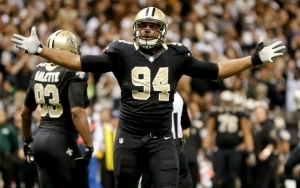 #15 Overall, Cameron Jordan, New Orleans Saints, Defensive End, #7 Defensive Lineman/Linebacker: Pass Rusher2025 Pre-Season Rank #14, 2024 Pre-Season Rank #21, 2023 Pre-Season Rank #27, 2022 Pre-Season Rank #25, 2021 Pre-Season Rank #36, 2020 Pre-Season Rank…
Visit the Fictitious Halls of Fame!


You May Also Like...
EDITOR’S CHOICE

 DDT's Pop Flies
When the veterans committee (VC), officially convening as the Contemporary Baseball Era…


 Live Music Head
Project/Objectan interview with André Cholmondeleyby Live Music HeadOriginally published at timessquare.com on…

LATEST RANKINGS




MOST POPULAR RANKINGS
















Committee Chairman
The Evolution of Pro Football in Canada: A Historical Journey
Across the globe, sports embody the spirit of competition and camaraderie, presenting numerous games that enthrall spectators and inspire athletes. Among the myriad of sports, football, with its rich heritage and universal appeal, has forged its distinct mark, reaching even the northern expanse of Canada. The history of professional football in Canada is a saga of thrilling evolution filled with unforgettable moments and game-changing progress.
Just as students may rely on write my essay online for cheap graduate paper writing services to excel in their academic pursuits, Canadian athletes have built upon the achievements of their predecessors to excel in the demanding world of professional football. This article aims to provide a glimpse into the evolution of Pro Football in Canada, highlighting key milestones and how the sport has shaped and been shaped by Canadian culture and identity.
The Early Beginnings: Football in Canada
Canadian football first took root in the late 1800s, initially resembling rugby rather than its American counterpart. The sport began to pique interest among Canadians, eventually shaping its distinctive rules and characteristics. In 1861, the University of Toronto hosted the earliest known football game in Canada, marking a significant step in the nation’s sporting history.
In 1884, the formation of the Canadian Rugby Football Union (CRFU) signaled another key milestone. Serving as the sport’s regulatory body, the CRFU established standardized rules and brought structure to football in Canada. This development signified the dawn of organized football in the country, paving the way for a sport that would deeply embed itself into Canada’s cultural persona.
The Canadian Football League (CFL)
The Canadian Football League (CFL) was established in 1958, serving as the highest level of competition in Canadian football. Over the years, the CFL has been the stage for many historic moments and legendary players, contributing significantly to the popularity and growth of Canadian football.
The CFL has also introduced unique features that distinguish Canadian football from its American counterpart. For instance, Canadian football fields are larger, teams have 12 players instead of 11, and there are three downs instead of four. These differences have given Canadian football a unique flair and appeal.
Pro Football in Canada: Cultural Impact and Global Recognition
Canadian football has not only been a source of entertainment but also a significant cultural symbol. Teams like the Toronto Argonauts, the Hamilton Tiger-Cats, and the Montreal Alouettes have ingrained themselves in their local communities, fostering a sense of unity and pride.
Additionally, Canadian players and teams have made a global impact. Players like Warren Moon and Doug Flutie have excelled both in the CFL and the National Football League (NFL) in the United States, helping bring recognition to Canadian football on a global scale.
Technological Advancements and Pro Football
The advent of technology has greatly impacted sports, and pro football in Canada is no exception. The incorporation of modern technology in the game has revolutionized how players train, how coaches strategize, and how games are analyzed.
In training, wearable technology and analytics software enable teams to monitor player performance in real time, adjusting training regimens accordingly to optimize physical performance and minimize injury risk. On the strategy front, advancements in video technology and data analysis tools provide coaches with more detailed insights into both their team’s performance and that of their opponents. This granular level of detail facilitates more effective decision-making and game planning.
Growing Interest in Women’s Pro Football in Canada
Alongside the evolution of men’s pro football, women’s football in Canada has seen a wave of increasing interest. The establishment of organizations like the Maritime Women’s Football League and the Western Women’s Canadian Football League bears testament to the rising popularity of the sport among women.
These leagues afford women the opportunity to engage in competitive football, thereby bolstering the sport’s development in Canada. Beyond expanding football’s reach, these leagues are pioneering the promotion of inclusivity and gender parity in sports. The growing acknowledgment and support for women’s football herald a more diverse and dynamic future for the sport in Canada.
Future of Pro Football in Canada
With increasing global interest in football, the future of pro football in Canada looks promising. The CFL continues to grow and evolve, with plans to expand its global reach and influence. Moreover, Canadian athletes’ successes in the NFL will likely inspire a new generation of Canadian football players, further strengthening the sport’s foundation in Canada.
A Game of Passion: Pro Football in Canada’s Past, Present, and Future
Tracing its journey from its modest origins to becoming a professional sport followed by millions, pro football in Canada stands as a tribute to the nation’s enduring enthusiasm for the game. The sport has offered not only edge-of-the-seat competition but also emerged as a crucial thread in Canada’s cultural tapestry.
In the same way students utilize the best paper writing services to augment their educational pursuits, Canadian pro football persistently builds on its illustrious past and vibrant present to shape an optimistic future. The sport’s evolution in Canada exemplifies the nation’s progress, resilience, and steadfast passion for sports.
Our All-Time Top 50 Boston Celtics have been revised to reflect the 2022-23 Season
Yes, we know that this is taking a while!
As many of you know, we here at Notinhalloffame.com are slowly generating the 50 of each major North American sports team. That being said, we have existing Top 50 lists out and we always consistently look to update them when we can and based on necessity. As such, we are very happy to present our post 2022/23 revision of our top 50 Boston Celtics.
As for all of our top 50 players in basketball we look at the following:
1. Advanced Statistics.
2. Traditional statistics and how they finished in the National Basketball Association.
3. Playoff accomplishments.
4. Their overall impact on the team and other intangibles not reflected in a stat sheet.
Last year, Boston made it to their second Eastern Conference Final, and they are legit contenders to make it there again. There were some significant jumps on the list based on last season.
As always, we present our top five, which was not affected by the last season:
1. Bill Russell
2. Larry Bird
4. Bob Cousy
5. Paul Pierce
You can find the entire list here.
Jayson Tatum only went up two spots to #15, despite a second consecutive First Team All-NBA, but that is more due to the incredible players the franchise has had.
Veteran Center, Al Horford, went up two spots to #22.
Jaylen Brown, who was named a Third Team All-NBA player last year, advanced five spots to #27.
Marcus Smart, who is now with Memphis did not jump from #29. This is not a reflection on Smart’s season, but more of a commentary on how loaded this list is and how hard it is to jump.
We welcome your input and comments and as always, we thank you for your support.
The best bookmakers: what criteria are used for rankings

Today, there are enough sites on the Internet that review the betting market. On these sites you can find a variety of information about individual bookmakers, useful materials for beginners, industry news and much more. Almost every portal offers its own ranking of offices based on various factors. Such lists are a good help for people looking for a reliable betting platform.
All compilers have their own approach to determining the best. A real bookmakers rank is the result of the scrupulous work of experts who have evaluated the advantages and disadvantages of each platform from their own experience. The following points must be taken into account during the analysis:
- quality of customer service on the site;
- accessibility and convenience of the mobile application;
- a variety of sporting events in the betting line;
- the level of odds compared to other bookmakers;
- additional gaming features, such as online casinos;
- bonuses and promotions for customers;
- choice of payment systems and the speed of withdrawal of funds;
- reputation of the company among the gamblers.
Estimates for these and other criteria become the basis for comparing the performance level of offices. Some ratings creators do it easier. They use the top lists of other sites, processing them at their own discretion. There is no particular harm from such “analytics” if a good primary source is processed correctly.
How much can you trust bookmaker ratings?
Any rating is subjective, even if its compilers approached the work as responsibly and impartially as possible. The fact is that everyone has their own priorities regarding key criteria. For example, one person is more interested in the overall diversity of the betting line, while the other looks for the choice of events for the most popular sports. For some, the conditions of the bonus program are of increased importance, while others definitely need access to live video broadcasts. And so on.
The authors of individual bookmakers' ranks depart from objectivity, including companies among the best not according to the “sports principle”. This is usually associated with a financial interest. It is almost impossible to determine whether the compiler resorted to such methods. Even well-known sites help partner bookmakers in this way, so it’s better not to limit yourself to one rating. Comparing several lists will help you immediately see companies that are not regulars in the tops.
Before registering on a selected site, it does not hurt to conduct a small check of your own. It is worth reading reviews about the office on the Internet. The activity of each bookmaker is accompanied by both negative and positive feedback. Studying the comments will help to find out if the office has recently had serious problems that could adversely affect the quality of its service.
The Essentials to be an NFL Fan
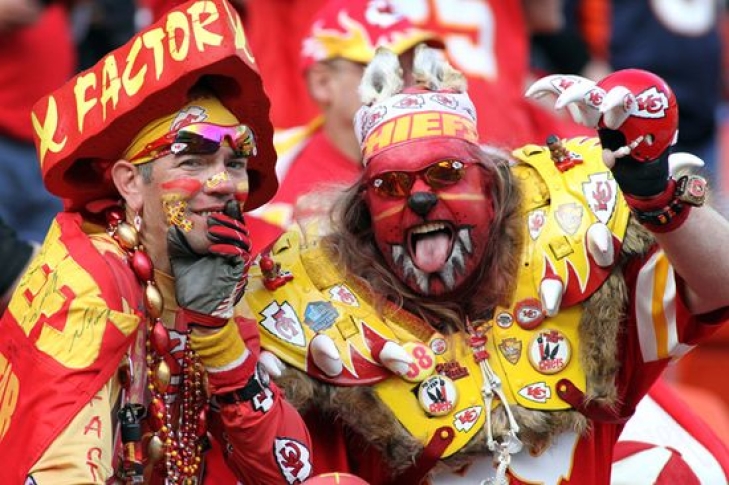
The USA loves sports of all kinds, and there are few competitions more American than the NFL. To hammer that point home, most of the world outside the US refers to the NFL as simply, American football.
It’s estimated almost 75% of US citizens regularly watch American football in some form, whether NFL or college-based competitions. When NFL games are broadcast live on television, audiences of around 16-17 million are commonly recorded.
Around the world, the figures are even higher and around 400 million people globally refer to themselves as NFL fans. When the season-ending showcase event, the Super Bowl, is broadcast, over 150 million people watch inside and outside the USA.
Though some sports do record higher global audiences, these are games played by athletes and teams across several nations. While some American football teams do exist outside the US, these are insignificant in comparison to those nation’s other sports.
While watching the NFL is a ritual ingrained in US culture, new fans around the world are often far less experienced. For true NFL fans, watching a game involves a little more preparation than simply turning on the TV.
Here is our beginner's guide to the essentials everyone needs to become a true NFL fan.
- The team
Don’t panic, we’re not suggesting you ask the bank for millions of dollars to start your own franchise. What we are saying is, you should find an existing club that you can adopt as your own.
Like many things in life, the more you put into sports, the more you get out. We can all appreciate the abilities of the athletes but, for the real experience, we need to be emotionally invested.
By choosing a team to support, we open ourselves up to the highs and lows of winning and losing. Choose based on location, color of jerseys, or some part of the team’s story but choose once, and never change.
- The knowledge
Once you have a team, you need to immerse yourself in the information that will keep you invested in them. Read the stats, learn about the legends, and research the stories, other fans will expect you to know this information.
Once you have the background and the history, you need to keep up to date with the current team news. By knowing the players, their talents, and their injuries, you can be ready for the next piece of the puzzle.
- The odds
Emotional involvement is one thing, but the more you have at stake, the more exciting an NFL game can be. By joining a sportsbook and placing wagers on your team’s games, the watching experience can be heightened even more.
To give this some context, spinning a roulette wheel is always more exciting when you have chips on the table. If you have doubts, try playing a few rounds of Lightning Roulette at Rainbow Riches and see for yourself.
- The merch
Once you know the team, the news, and the odds, you need to demonstrate your allegiance to other people. Pick up a club jersey, scarf, flag, or cap, or anything you can do to associate yourself with your team.
By doing this, you can ensure you’re quickly recognized by fellow fans and rivals so you can interact accordingly. The superstitious among us would also argue that wearing the right outfit is critical to aiding your team’s success.
- The crew
Watching the NFL can be a solo activity, and many people much prefer it that way, but not most. By assembling a crew of like-minded people with whom to watch games, you turn an activity into an event.
Gather together friends, family, or colleagues, and turn game viewing into a social occasion that everyone can enjoy together. This allows you to feed off each other’s energy, and gives you an audience for those witty and insightful observations.
- The set up
Before any game begins, you need to make sure you have everything you need to sustain yourself through it. Beers or sodas need to be in the cooler, snacks in the oven, on the grill, or ordered for delivery.
Chairs need to be positioned correctly around the screen and any mid-game errands should be scheduled for the half-time break. Of course, all this is irrelevant if you don’t have the most important ingredient, which we’ll come to next.
- The TV
If you’re going to watch NFL properly, it should be in HD, with surround sound, on the biggest possible screen. If you have a choice of venue, choose the one with the best TV technology for the greatest viewing experience.
You’ll also need to make sure you have the right broadcast or streaming service for your chosen game. Different matches are offered through different channels in different locations, do your research and preparation in advance to avoid disappointment.
Once you have all this in place, you’re ready to begin your career as a real NFL fan. Now all you need to do is learn to handle winning with humility and losing with grace, if you can.
