

 Not in Hall of Fame News
Yes, we know that this is taking a while! As many of…
 Not in Hall of Fame News
Yes, we know that this is taking a while! As many of…
 Not in Hall of Fame News
2002 SEMI-FINAL RESULTS: Thank you for your participation in the Pro Football…
 Not in Hall of Fame News
Yes, we know that this is taking a while! As many of…
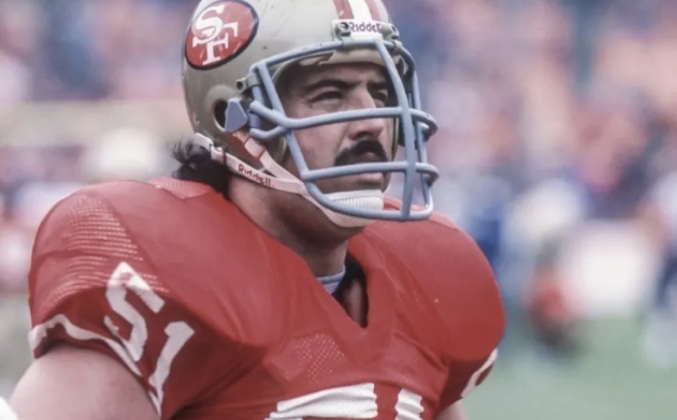 Not in Hall of Fame News
We are diligently working away at Notinhalloffame on revising our Football lists…
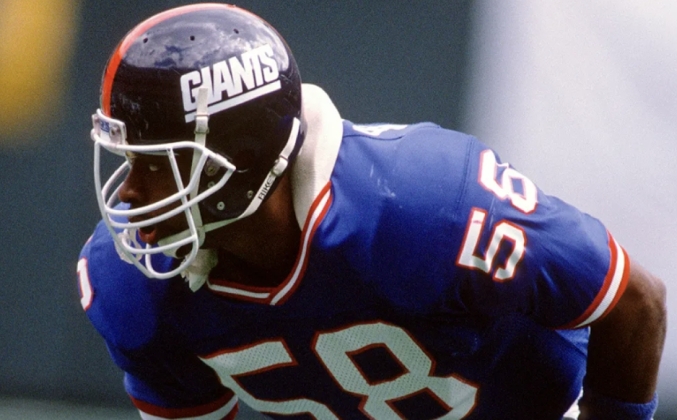 Not in Hall of Fame News
We are diligently working away at Notinhalloffame on revising our Football lists…
 From the Desk of the Chairman
Sports fans thrive on calculating strategy, reading momentum, and maximizing every tactical…
 From the Desk of the Chairman
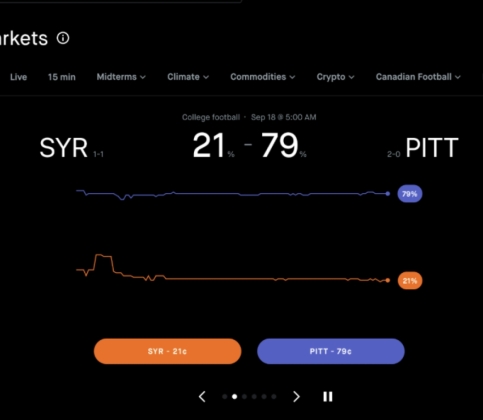
The 2026 NFL season is two weeks old and the division races…
 From the Desk of the Chairman
Sports communities are often built around things that have nothing to do…
 From the Desk of the Chairman
Every hall of fame eventually faces the same problem. The selection process…
 From the Desk of the Chairman
Pete Rose died in 2024. On May 13, 2025, Commissioner Rob Manfred…
 From the Desk of the Chairman
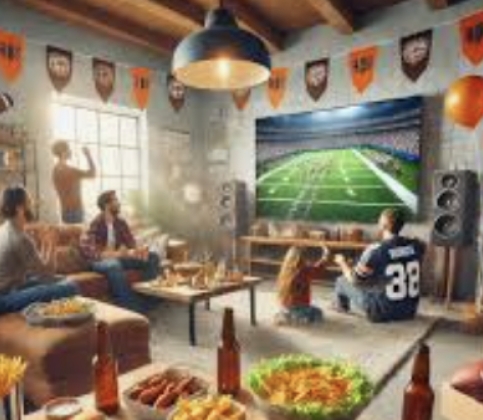
For NFL fans, game day offers much more than three hours of…




100 Active Potential Football Hall of Famers
-
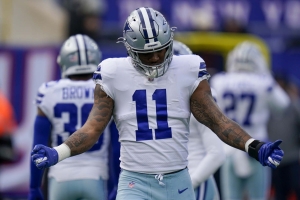 #29 Overall, Micah Parsons, Green Bay Packers, Linebacker, #10 Defensive Lineman/Linebacker: Pass Rusher2025 Pre-Season Rank #54, 2024 Pre-Season Rank #79, 2023: Pre-Season Rank #102. Peak Period: 2021-25 Here is what we wrote about Micah Parsons…
 -
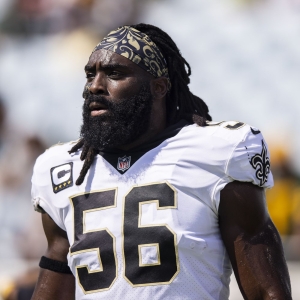 #48 Overall, DeMario Davis, New York Jets, Linebacker, #4 Defensive Lineman/Linebacker: Interior Lineman2025 Pre-Season Rank #47, 2024 Pre-Season Rank #47, 2023 Pre-Season Rank #61, 2022, Pre-Season Rank #137. Peak Period: 2019-23 Davis, a veteran player,…
 -
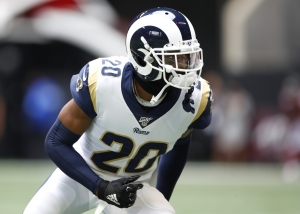 #23 Overall, Jalen Ramsey, Pittsburgh Steelers, #1 Cornerback2025 Pre-Season Rank #20, 2024 Pre-Season Rank #20, 2023 Pre-Season Rank #23, 2022 Pre-Season Rank #35, 2021 Pre-Season Rank #54, 2020 Pre-Season Rank…in Cornerbacks
 -
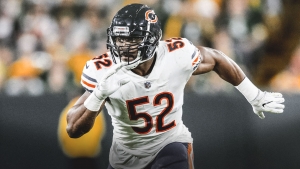 #13 Overall, Khalil Mack: Los Angeles Chargers, #5 Defensive Lineman/Linebacker: Pass Rusher2025 Pre-Season Rank #8, 2024 Pre-Season Rank #12, 2023 Pre-Season Rank #14, 2022 Pre-Season Rank #19, 2021 Pre-Season Rank #26, 2020 Pre-Season Rank…
Visit the Fictitious Halls of Fame!


You May Also Like...
EDITOR’S CHOICE
 DDT's Pop Flies
When the veterans committee (VC), officially convening as the Contemporary Baseball Era…

 Live Music Head
Project/Objectan interview with André Cholmondeleyby Live Music HeadOriginally published at timessquare.com on…

LATEST RANKINGS

MOST POPULAR RANKINGS
Committee Chairman
47. Freddie Joe Nunn

Freddie Joe Nunn was selected 18th overall from Ole Miss in the 1985 NFL Draft, bringing exceptional speed and athletic flexibility to St. Louis. During his nine seasons with the Cardinals, he was frequently moved between a traditional 4-3 defensive end and a stand-up outside linebacker. This constant position switching, along with playing for struggling teams in St. Louis and Phoenix, kept him out of the national spotlight. However, when allowed to pursue pass rushes, Nunn proved to be extremely effective.
Nunn demonstrated exceptional quickness right from the start, often leveraging a fast first step to consistently beat boundary tackles and turn the corner. Whether he was positioned with his hand in the dirt or in space, his pure speed enabled him to make impactful tackles early, often before the offensive pockets were fully formed.
Nunn reached his peak in 1988 as the franchise moved across the country. During a season focused solely on rushing the quarterback, he achieved a career-high 14.0 sacks in Arizona's first desert season. He then continued with two solid years, recording 11.0 sacks in 1989 and 9.5 in 1990, cementing his role as the defense’s main disruptor.
Despite off-field legal distractions and a roster that struggled to contend in the NFC East, Nunn’s back-to-back-to-back sack totals anchored the franchise's front seven through the late 1980s and early 1990s.
When Nunn departed for Indianapolis in 1994, he held the Cardinals' official franchise record with 66.5 career sacks—a mark that stood for nearly three decades before Chandler Jones finally surpassed it in 2021.
46. Charley Johnson
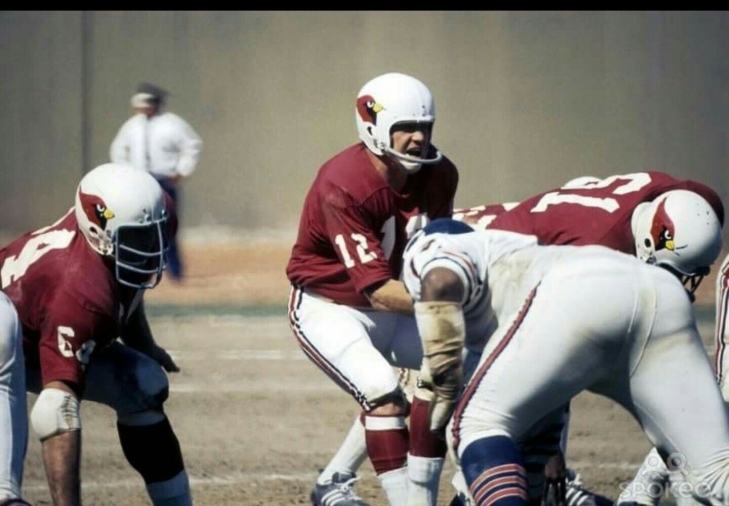
Before ever taking his first NFL snap, Charley Johnson had already etched his name into college football history. A tenth-round draft choice in 1960 out of New Mexico State, Johnson remains the only player to win back-to-back Sun Bowl MVP awards (1959, 1960) and became the first athlete in NMSU history to have his jersey number retired. After serving as a reserve during his 1961 rookie season, he inherited the starting job in 1962 and quickly proved that his intellect matched his arm talent.
Johnson brought a cerebral approach to the quarterback position. In fact, his off-field intellect was literally academic: while serving as the Big Red's starting signal-caller, he earned both a master's degree and a doctorate in chemical engineering from Washington University in St. Louis. On the field, he weaponized deep vertical routes to receivers like Sonny Randle and Bobby Joe Conrad, establishing St. Louis as one of the NFC's premier big-play offenses.
Johnson hit his absolute peak during the 1963 season. Guiding the Cardinals to a 9-5 record, he led the entire NFL in both completions (223) and passing yards (3,045) while throwing 21 touchdown passes to earn his first career Pro Bowl selection. He followed that performance up in 1964 by leading the Big Red to another 9-3-2 record—just missing the postseason—while throwing for 3,045 yards and 21 touchdowns. In 1963 and 1964, Johnson posted back-to-back 3,000-yard passing seasons, leading the NFL in yardage in '63 and anchoring the franchise's highest-scoring era of the decade.
Johnson's tenure in St. Louis was also marked by unique military service; while actively playing for the Cardinals, he fulfilled a two-year commitment in the U.S. Army Reserve working as a second lieutenant with NASA.
As injuries caught up to him and youngster Jim Hart emerged under center, Johnson was traded to the Houston Oilers in 1970. He later capped his 15-year NFL career by leading the Denver Broncos to their first-ever winning season in 1973. Across nine seasons in a Cardinals uniform, Johnson threw for 14,928 yards and 108 touchdowns in 105 regular-season games.
43. E.J. Junior
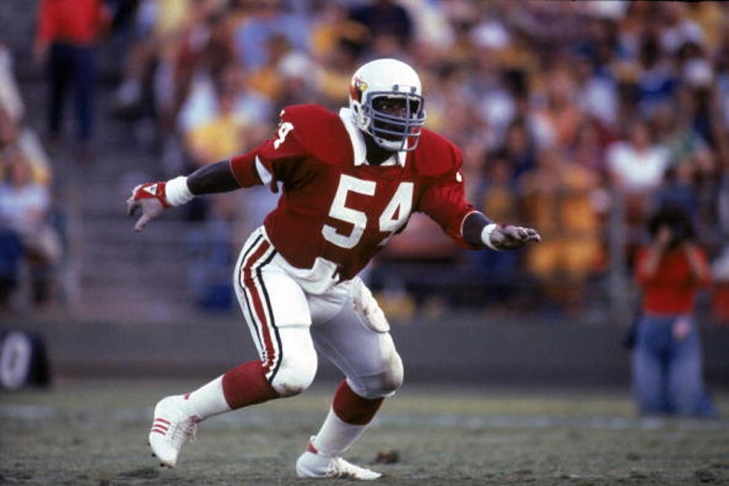
With the Fifth Overall Pick in the 1981 Draft, the St. Louis Cardinals selected E.J. Junior, who was the second Linebacker taken behind someone you may have heard of; Lawrence Taylor. Junior did not have Taylor’s career (who could?) but the Cardinals got a lot of good football from the eventual College Football Hall of Fame inductee.
Junior won the starting job during the season and, by the mid-80s, was one of the best interior Linebackers in the NFC. His best season was in 1984 when he was a First Team All-Pro and began a two-year run of Pro Bowls. From 183 to 1985, Junior had eight Interceptions and 19.0 Sacks, and though he tailed off afterward, he was still a solid NFL player.
He left the Cardinals behind in 1988, joining Miami as a Free Agent. The Cardinals were not significant in the 1980s, but this does not detract from Junior's work in St.Louis/Phoenix.
42. Carson Palmer
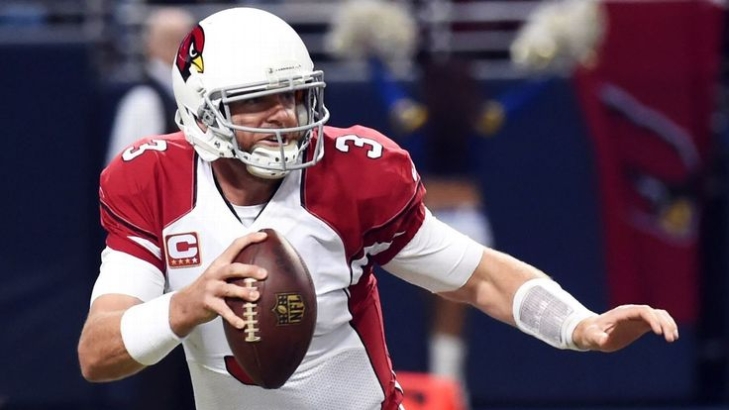
When Carson Palmer arrived in Arizona via a trade with Oakland in 2013, the Heisman Trophy winner and former No. 1 overall pick was widely regarded as a player in the twilight of his career. Yet, under the tutelage of head coach Bruce Arians, Palmer orchestrated one of the most remarkable late-career revivals in modern NFL history, elevating the Cardinals offense into a downfield powerhouse.
Palmer was the archetypal pocket passer, possessing rare arm strength, field vision, and the willingness to take hits while standing tall in the pocket. In Arians’ "no risk, no biscuit" system, Palmer excelled at pushing the football into high-degree-of-difficulty windows, driving outer-third boundary routes and vertical seams with exceptional velocity and touch.
His debut season in 2013 saw him pass for 4,274 yards and 24 touchdowns, making him the first quarterback in NFL history to post a 4,000-yard passing season for three different franchises. Though a torn ACL cut short a promising 6-0 start in 2014, Palmer returned in 2015 to put together a single-season masterpiece.
At 36 years old, Palmer set single-season franchise records with 4,671 passing yards and 35 touchdown passes. He led the entire NFL in total QBR (76.4), yards per attempt (8.7), and yards per completion (13.7) while guiding Arizona to a 13–3 record and an NFC Championship Game appearance. That performance earned him a Pro Bowl selection, Second-Team All-Pro honors, and a top finish in AP NFL MVP voting behind winner Cam Newton. Palmer's 2015 campaign remains the golden standard for Cardinals quarterbacks, setting untouched franchise records with 4,671 passing yards, 35 touchdowns, and a 104.6 passer rating.
Palmer backed up his MVP candidate campaign with another heavy-volume year in 2016, throwing for 4,233 yards and 26 touchdowns. After a broken arm prematurely ended his 2017 season in Week 7, he officially announced his retirement in early 2018. Across 60 games in an Arizona uniform, Palmer posted a 38-21-1 record—the highest winning percentage by any starting quarterback in franchise history.
He finished his desert tenure with 16,782 passing yards and 105 touchdown passes, earning induction into the Arizona Cardinals Ring of Honor in September 2019.
