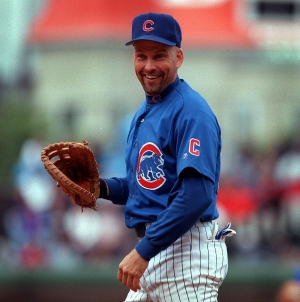
gold star for USAHOF
 

Top 50 Chicago Cubs

When it comes to iconic sports teams in North America, few can come close to the Chicago Cubs.

The Cubs first came into existence in 1870 as the Chicago White Stockings would join the National League in 1876.  Before 1900, Chicago was one of the most successful teams.  Led by Cap Anson, Chicago would win the National League Pennant in 1876, 1880, 1881, 1882, 1885 & 1886.  They would go through a couple of name changes to the Colts, Orphans and would officially adopt the name of the Cubs in 1903.

The Cubs did well in the first decade of the 1900s where with stars like Joe Tinker, Johnny Evers, Frank Chance, and Three Finger Brown and would win the World Series in 1907 and 1908.  That would begin the longest championship drought in sports.

You know the story.  The alleged curse of the goat.  Steve Bartman. 

It would take until 2016 when they would win the World Series again, although they did win the National League Pennant multiple times between them (1910, 1918, 1929, 1932, 1935, 1938 & 1945).  They also had Hall of Famers at that time, like Ernie Banks and Ryne Sandberg.

As of this writing, three World Series Championships is not very many for a team that has been around since the beginning, but again, how many organizations are as well known as the Cubbies!

Not too many!

This list is up to the end of the 2024 season.

Note: Baseball lists are based on an amalgamation of tenure, traditional statistics, advanced statistics, playoff statistics, and post-season accolades.
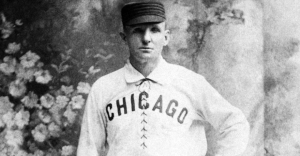
When Cap Anson joined the Chicago White Stockings in 1876, the National League was in its infancy. Over the next 22 years, Anson didn’t just play for Chicago; he was Chicago baseball. He arrived as a cornerstone and left as the most statistically dominant force the 19th century ever saw. His run was a relentless, two-decade march of production that defined the "Old Eight" era, including a staggering 15-year streak of batting over .300. Anson was the game’s first true "accumulator" and its first "clutch" icon. He captured three batting titles and led the league in RBIs eight times—a total…
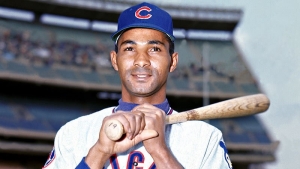
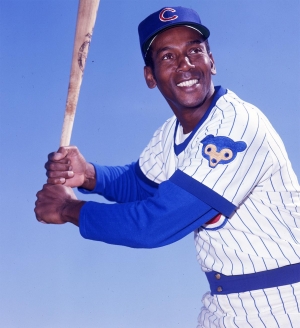
In the long, often heartbreaking history of the Chicago Cubs, there is one name that serves as a permanent northern star: Ernie Banks. He didn't just play for the Cubs; he became the personification of the "Friendly Confines." Arriving late in 1953 as the franchise's first Black player, Banks didn't just break a barrier, he built a monument. His story is one of pure, unadulterated joy, famously captured in his "Let’s play two!" mantra, even as the team around him struggled to find its footing. His first act was a masterclass in power that redefined the shortstop position. By 1955,…
Ryne Sandberg’s journey to Wrigley Field began as a footnote in what would become one of the most lopsided trades in baseball history. When the Cubs sent Ivan DeJesus to Philadelphia in 1982, they weren't just looking for veteran shortstop Larry Bowa; they were secretly eyeing the young, versatile outfielder the Phillies were willing to throw in. That "extra" player, Ryne Sandberg, arrived in Chicago as a man without a fixed position, bouncing from the outfield to third base before finally finding his permanent home at second. It was a move that didn't just solidify the Cubs' infield; it altered…
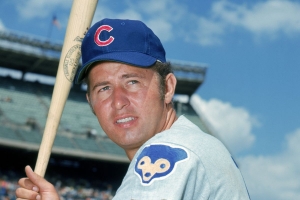
Ron Santo didn’t just play third base for the Chicago Cubs; he anchored it with a grit that defined an entire generation of North Side baseball.  Arriving as a rookie in 1960, he quickly evolved into the gold standard for the "hot corner." For over a decade, Santo was the rare triple-threat: a defensive vacuum, a disciplined on-base machine, and a middle-of-the-order slugger. What the fans didn't know at the time was that Santo was achieving all of this while privately managing Type 1 diabetes, a battle that makes his durability and production seem less like sports and more like…
When Billy Williams arrived at Wrigley Field, he brought with him a left-handed stroke so smooth and effortless that it earned him a nickname for the ages: "Sweet-Swinging Billy." But behind that picturesque mechanics was a player carved out of granite. Williams didn't just play for the Cubs; he was their heartbeat, a fixture in the lineup so dependable that manager Leo Durocher famously said he didn't pencil Billy’s name in—he wrote it in ink. His journey began with a bang in 1961, when he captured the National League Rookie of the Year Award with a 25-homer campaign. It was…
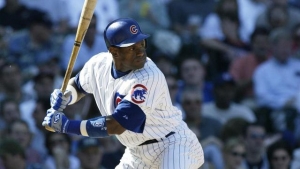
The Chicago Cubs’ acquisition of Sammy Sosa in 1992 remains one of the most lopsided "fleece" jobs in the history of the Crosstown Classic. While the White Sox received an aging George Bell, the North Side inherited a raw, chaotic ball of energy that would eventually transform into a global icon. He arrived as a high-strikeout enigma and evolved into "Slammin' Sammy”, a player who didn't just hit home runs; he staged a daily production in right field, complete with a heart-tap, a kiss to the camera, and a full-tilt sprint to the bleachers. The story reached its crescendo in…
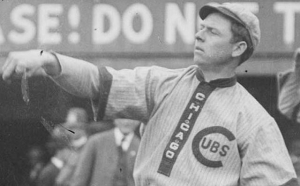
In the early 1900s, the Chicago Cubs weren't just a team; they were a dynasty, and at the center of that whirlwind was a man with a mangled hand and a heart of iron. Mordecai Brown arrived in Chicago in 1904 via a trade with the Cardinals, carrying the physical scars of a childhood farm machinery accident that had cost him parts of two fingers. To any other man, it would have been a career-ending tragedy. To Brown, it was a secret weapon. He learned to grip the ball in the gaps of his remaining digits, creating a "wicked" downward…
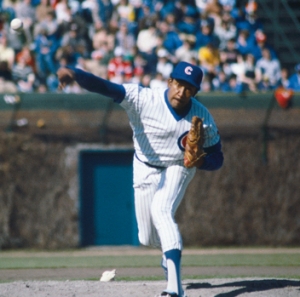
When Ferguson Jenkins arrived in Chicago in 1966, the Philadelphia Phillies thought they were trading away a spare part. Instead, they handed the Cubs the greatest pitcher in the history of the franchise. Jenkins didn’t just break out in 1967; he detonated, winning 20 games and signaling the start of a six-year reign of durability that has few parallels in the modern game. For a generation of Cubs fans, a Jenkins start meant one thing: the bullpen could take the afternoon off. His run was defined by a surgical, almost defiant precision. In an era of flamethrowers, Fergie was a…
In an era of baseball defined by rugged toughness and loud personalities, Stan Hack was a different kind of weapon. He arrived in Chicago in 1932 and quickly made the "hot corner" his permanent residence, but it wasn't just his glove that made him indispensable. As the Cubs' permanent leadoff man, Hack brought a scientific approach to the top of the order. While others were swinging for the fences, Hack was busy mastering the art of the professional plate appearance. He didn't just hit his way on base; he haunted pitchers by working the count, finishing his career with a…
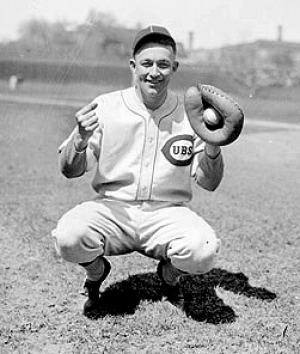
For nearly two decades, the heartbeat of the Chicago Cubs lived behind a chest protector. Gabby Hartnett didn’t just play catcher; he revolutionized it. Arriving in Chicago in 1922, he spent the next 19 seasons proving that the man calling the game could also be the one to end it. In 1925, he became the first catcher in baseball history to launch 20 home runs in a season, a feat that, at the time, felt like a glitch in the game’s logic. By the time he hung up the mask, his 236 home runs stood as a record for the…
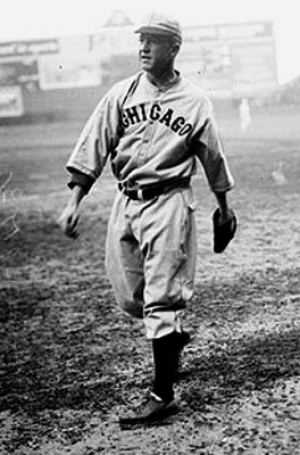
When Grover Cleveland Alexander arrived in Chicago in 1918, he didn't come by choice, and he didn't come whole. The Philadelphia Phillies, desperate for cash, had sold the greatest pitcher of the era to the Cubs just as the shadow of World War I loomed over the sport. Before he could throw a meaningful pitch for Chicago, Alexander was shipped to the front lines of France. He returned a year later, physically alive but mentally scarred—suffering from shell shock, partial deafness from the artillery fire, and a growing dependency on alcohol to quiet the ringing in his ears. It was…
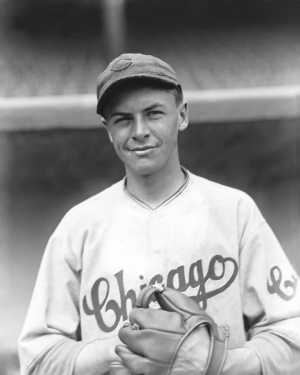
Before he arrived in Chicago in 1913, James “Hippo” Vaughn was the definition of a baseball nomad. He had bounced through the minors and struggled to stick with the Yankees or Senators, looking like a massive talent that simply couldn't find its rhythm. But when he stepped onto the mound at West Side Park, something clicked. The journeyman vanished, and in his place stood the most formidable left-hander in the senior circuit. By 1914, he was a 21-win powerhouse, beginning a run where his sheer bulk and deceptive speed became the nightmare of every hitter from New York to St.…
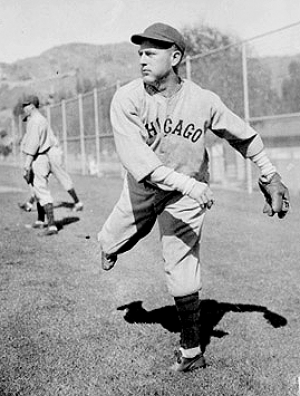
In the long, star-studded history of Chicago Cubs pitching, there are bigger names and flashier legends, but there is only one man at the top of the mountain when it comes to the "W." Charlie Root arrived in Chicago in 1926 as a castoff from the St. Louis Browns, and he spent the next 16 seasons proving that the Browns had made a historic mistake. His story is one of pure, unadulterated durability, who in every sense of the word took the ball more often, threw more innings, and walked off the mound a winner more times than any other…
When Billy Herman arrived at Wrigley Field in 1931, he brought with him a brand of baseball that was as elegant as it was efficient. He didn't just play second base; he patrolled it with a spatial awareness that made it feel like he was playing a different game than everyone else. For a decade, Herman was the "vital cog" in a Cubs machine that churned out three National League pennants, providing a defensive foundation that anchored the team's greatest era of the 1930s. He arrived as a rookie with a reputation for his glove, and he spent the next…
When Frank Chance joined the Chicago roster in 1898, he arrived as a catcher, but his destiny lay at the opposite end of the infield. By the time he transitioned to first base, he had become the heartbeat of a Chicago squad that would soon terrorize the National League. Chance was the rare thinker of the Deadball Era, a man who combined a sophisticated understanding of the game’s nuances with a raw, aggressive playing style. He didn't just inhabit the bag at first; he patrolled it like a commanding officer, serving as the final, reliable destination for the throws coming…
Listed at 6'3" and well over 220 pounds, the man they called "Big Daddy" looked more like a neighborhood plumber than a premier athlete. But that portly physique masked a startlingly athletic pitcher who could move off the mound with a cat’s grace and run the bases well enough to be used as a pinch-runner. He didn't overpower hitters with heat; he dismantled them with a sinking fastball and a relentless refusal to give away free passes. His run in Chicago was defined by a quiet, high-level competence that was frequently wasted on mediocre teams. While he amassed 135 wins…
When Bill Nicholson joined the Cubs in late 1939, he arrived as a raw, 205-pound specimen with a swing designed for the cavernous gaps of Wrigley Field. He didn't just step into the box; he commanded it, performing a signature ritual of elongated practice swings, each one ending with his bat pointed like a bayonet at the pitcher. To the Brooklyn fans who mocked him, he was "Swish," but to the Chicago faithful, he was "Big Bill," the most reliable source of lightning on the North Side. His trajectory reached a historic peak during the height of World War II.…
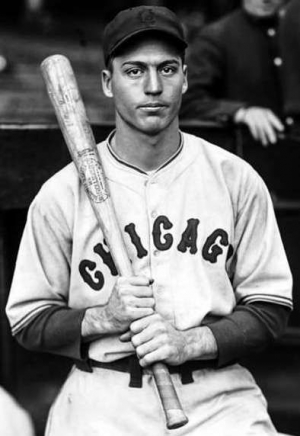
When Phil Cavarretta first stepped onto the grass at Wrigley Field in 1934, he was a mere teenager, making his debut just weeks after his 18th birthday. He arrived with the heavy burden of "future star" expectations, but for much of his early twenties, it looked like those expectations would be crushed by the training room table. Between 1936 and 1941, Cavarretta was a frequent visitor to the injury list, struggling to find the consistency or the health to stay in the lineup for a full season. He was a player in limbo, talented enough to keep, but too fragile…
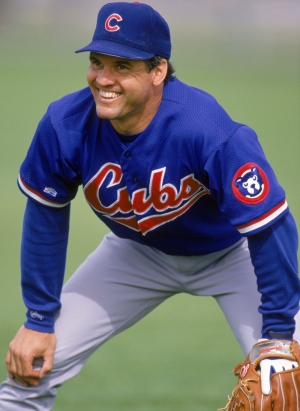
When Mark Grace was drafted in the 24th round in 1985, he arrived with almost no fanfare. Most scouts didn't expect a kid chosen that low to ever see the Ivy at Wrigley, but Grace didn't seem to care for their projections. He cracked the roster in 1988 and immediately locked down first base, finishing second in the Rookie of the Year race. He wasn't the stereotypical "slugging" first baseman of the era; he was a pure, high-contact technician who used the entire field. He arrived as a long shot and left the rookie season as a cornerstone, proving that…