


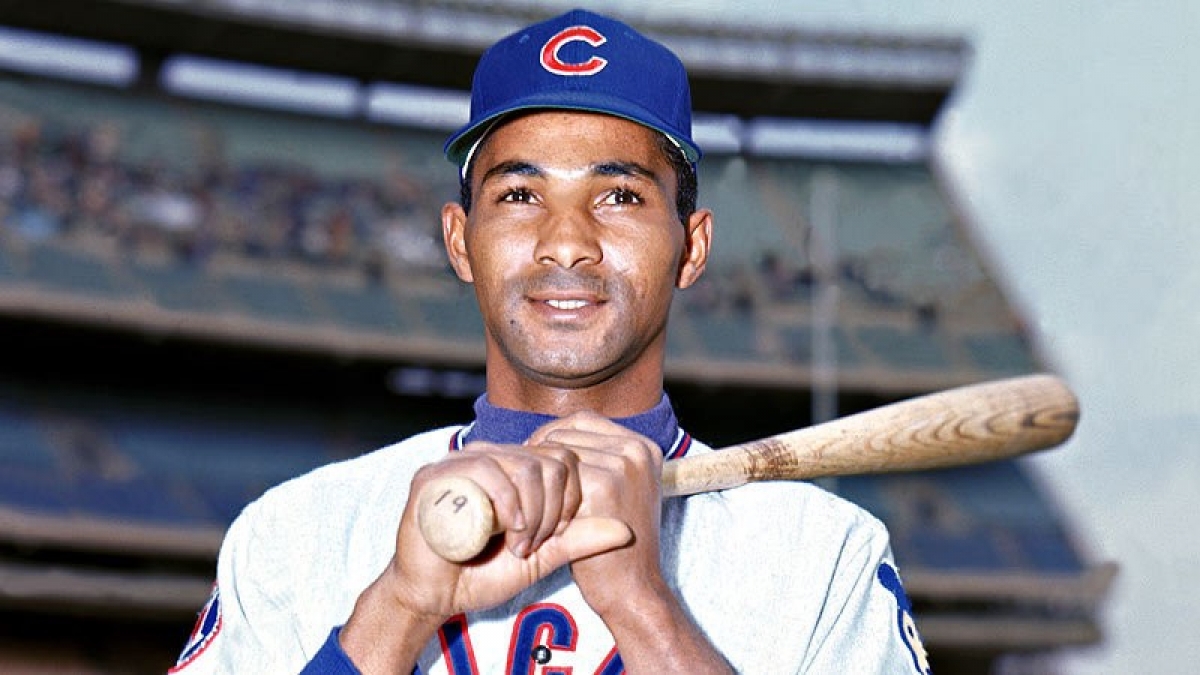



When Billy Williams arrived at Wrigley Field, he brought with him a left-handed stroke so smooth and effortless that it earned him a nickname for the ages: "Sweet-Swinging Billy." But behind that picturesque mechanics was a player carved out of granite. Williams didn't just play for the Cubs; he was their heartbeat, a fixture in the lineup so dependable that manager Leo Durocher famously said he didn't pencil Billy’s name in—he wrote it in ink.
His journey began with a bang in 1961, when he captured the National League Rookie of the Year Award with a 25-homer campaign. It was the start of a historic run of consistency that saw him blast at least 20 home runs for 13 consecutive seasons. The pinnacle arrived in 1970, an "Iron Man" year where he led the NL in hits (205) and runs (137) while launching a career-high 42 home runs. He finished as the MVP runner-up that year, a feat he would repeat in 1972 when he claimed the National League Batting Title with a .333 average and led the circuit in slugging. In any other era, Williams would have walked away with a shelf full of trophies; instead, he frequently found himself as the "best in the world,” standing just a half-step behind Johnny Bench.
Perhaps most remarkably, Williams set a National League record by playing in 1,117 consecutive games between 1963 and 1970. He didn't just show up; he produced at an elite level while refusing to take a day off, a streak that showcased mental toughness often overlooked because of his soft-spoken nature. He was the quiet engine of a legendary core that included Banks, Santo, and Jenkins, a team that flirted with greatness but never quite reached the October summit.
In late 1974, with the Cubs looking to rebuild, Williams was traded to the Oakland Athletics in a deal that finally gave the veteran a taste of the postseason. He left Chicago with 392 home runs and 2,510 hits, a statistical titan who never lost his humble edge. The franchise rightfully hoisted his number 26 to the foul pole in 1987, the same year he took his place in Cooperstown. He arrived as a rookie sensation and left as "Mr. Consistency," the man who proved that being "sweet-swinging" didn't mean you weren't as tough as they come.

Comments powered by CComment