


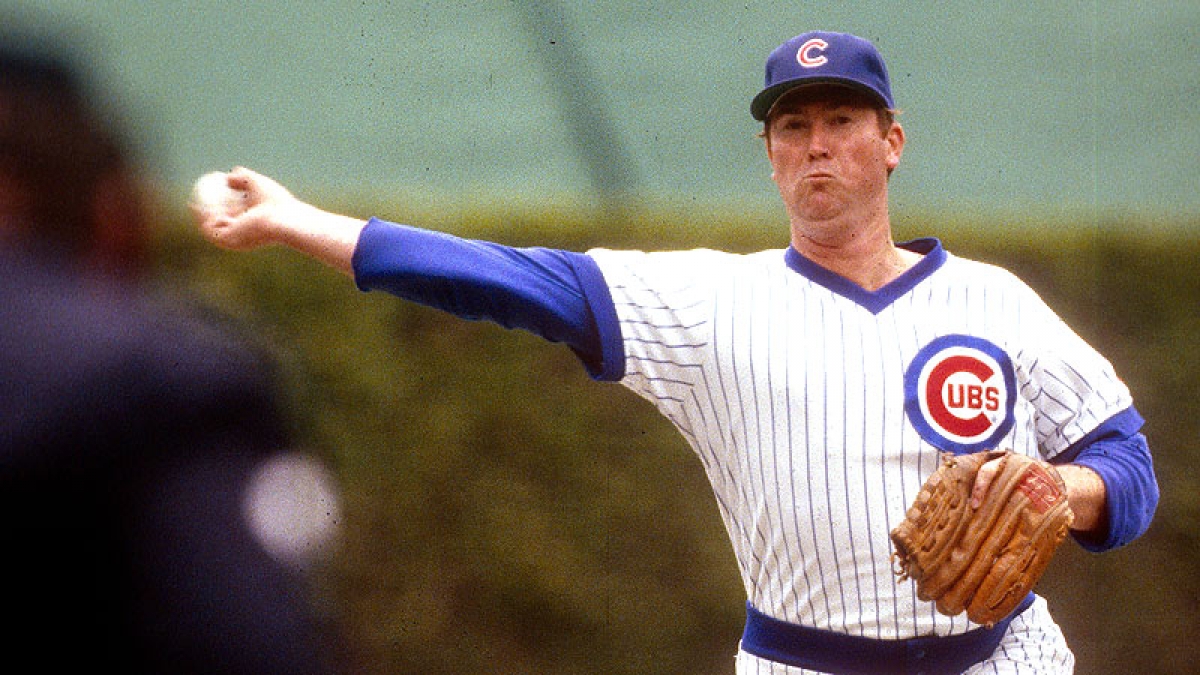


Listed at 6'3" and well over 220 pounds, the man they called "Big Daddy" looked more like a neighborhood plumber than a premier athlete. But that portly physique masked a startlingly athletic pitcher who could move off the mound with a cat’s grace and run the bases well enough to be used as a pinch-runner. He didn't overpower hitters with heat; he dismantled them with a sinking fastball and a relentless refusal to give away free passes.
His run in Chicago was defined by a quiet, high-level competence that was frequently wasted on mediocre teams. While he amassed 135 wins in a Cubs uniform, his value was often obscured by a lack of run support and a shaky defense behind him. The singular, traditional peak of his tenure arrived in 1977, a season where everything finally aligned. Reuschel captured 20 wins, earned his first All-Star nod, and finished third in the Cy Young voting, leading the league in home-runs-per-nine innings. It was the year the old-school stats caught up to his actual talent.
However, the real story of Reuschel’s tenure is found in the numbers that weren't sexy at the time. Modern metrics reveal that he was a sabermetric titan hiding in plain sight. He led the Cubs in bWAR seven times, including a five-year streak from 1976 to 1980. He was a workhorse who specialized in the unseen skills, inducing ground balls, limiting damage, and keeping the ball in the park, that wouldn't be fully appreciated until the 21st century.
After a brief, injury-plagued exit and return in the early 80s, Reuschel eventually found his second act elsewhere, but his identity remained rooted in Chicago. He left the franchise with 49.1 bWAR, a total that places him among the most effective players to ever call Wrigley home. When the Cubs inaugurated their Hall of Fame in 2021, "Big Daddy" was an automatic selection for the first class. He arrived as a deceptive rookie and left as a retroactive superstar, the man who proved that you don't have to look the part to dominate the game.

Comments powered by CComment