
gold star for USAHOF
 

Top 50 Baltimore Orioles

While it would seem to many that the Baltimore Orioles were a charter American League team, that was far from the case. 

An inaugural team of the American League in 1901, the organization was initially known as the Milwaukee Brewers (no, not those Brewers).  The association in Wisconsin lasted for only one season, as they relocated to St. Louis, and would be renamed as the Browns.

This change of scenery would last for over 50 years, but the Browns were not a powerhouse in the AL.  They would only win the Pennant once in 1944, but they would not be able to win it all. 

The competition with the St. Louis Cardinals of the National League would finally be their undoing, and they would move to Baltimore in 1954.  The first few seasons were the same as they had been in St. Louis, but they methodically built a defensive gem of a team.  The turning point would be a trade with the Cincinnati Reds, that netted them, Frank Robinson.  Baltimore would win their first World Series in 1966, and secured their second title in 1970. 

Baltimore would win their third World Series Championship in 1983.

This list is up to the end of the 2025 regular season.

Note: Baseball lists are based on an amalgamation of tenure, traditional statistics, advanced statistics, playoff statistics, and post-season accolades.
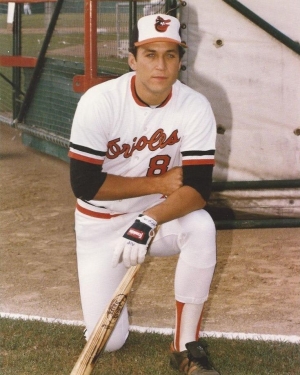
The selection of Cal Ropken Jr. at the top was straightforward. Cal Ripken Jr. is, without question, the greatest Baltimore Oriole ever, and also one of the best baseball players who ever existed. Playing his entire pro career with Baltimore, Ripken appeared in only 23 Games in 1981 and was still eligible to be a rookie in 1982.  Why do we mention this?  Because he would become the American League Rookie of the Year in '82!   This was not just a ROY year, as it was the beginning of the greatest iron man streaks of sports.  Ripken Jr. would play…
Playing his entire Major League career with the Baltimore Orioles, Jim Palmer overcame a lot of early arm trouble to become one of the best hurlers in the 1970s. Palmer made his debut in 1965, and he threw for 92 Innings in 27 Games.  The year after, he was put in the starting rotation, and he went 15-10 and helped Baltimore win its first-ever World Series.  Arm trouble kept him out of most of 1967, and in 1968, he was in rehab for the entire year.  It was expected that he would never regain his form, but he returned in…
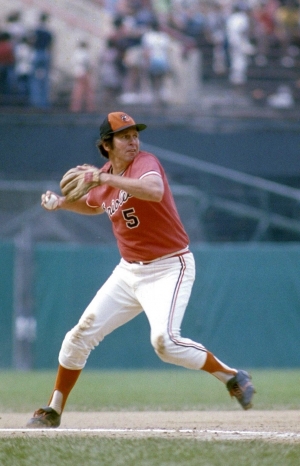
Signed as an amateur free agent in 1955, Brooks Robinson debuted that year in Baltimore as an 18-year old.  It was clear from the beginning that he was a wizard with the glove, but it took him some time to develop his hitting game.  In 1960, he did that, and throughout the decade and beyond, he was considered the best Third Baseman in the game. 1960 began a 15-year run of All-Star Games and a 16-year streak of Gold Glove wins.  All discussions about Robinson begin with his glove.  He would lead the American League in Defensive bWAR twice and…
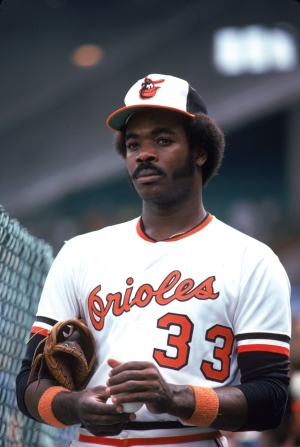
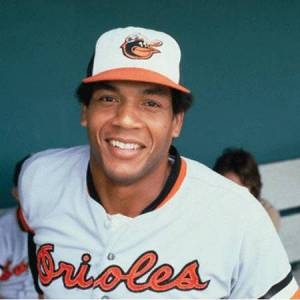
It takes a special kind of player to hit 3,000 Hits and 500 Home Runs over a career.  Eddie Murray was just that.  Murray debuted in the Majors in 1977 with the Orioles, where he had 27 Home Runs in a Rookie of the Year-winning season.  Power and hits would become the First Baseman’s calling card, and from 1977 to 1985, he would have at least 20 or more Home Runs, with three of those years seeing him exceed 30.  He would win the Home Run title with 22 in the strike-shortened year in 1981, and he also won the…
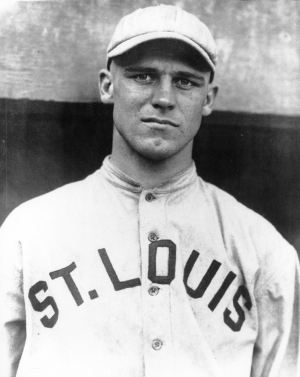
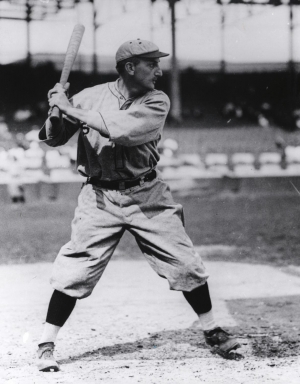
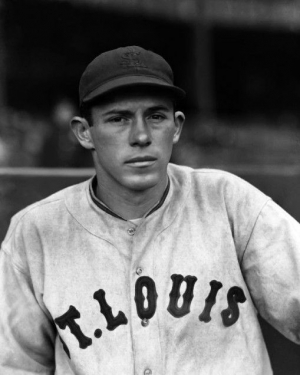
When we eventually pivot to the greatest players from defunct or relocated franchises, the conversation for the St. Louis Browns begins and ends with George Sisler. As the Browns relocated to Baltimore to become the Orioles, Sisler remains the spiritual anchor of the franchise—a legend who defined a city’s baseball identity without ever donning the orange and black of Baltimore. Signing as a free agent in 1915, Sisler arrived in the majors as a southpaw pitching phenom. While he was immediately effective on the mound—famously outdueling Walter Johnson twice—Browns manager Branch Rickey recognized that Sisler’s bat was far too lethal…
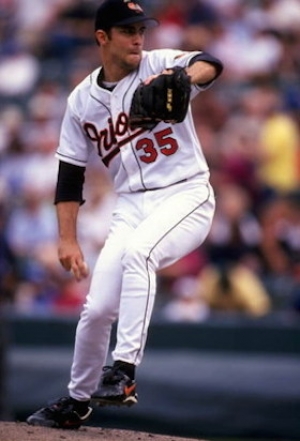
Mike Mussina anchored the Baltimore rotation for a decade (1991–2000), evolving almost instantly from a standout USC Trojan into one of the most sophisticated arms in the American League. By just his second season, "Moose" had established himself as an elite top-of-the-rotation force, combining a lethal knuckle-curve with a cerebral approach that made him a master of the in-game adjustment. Selected to five All-Star Games during his Baltimore tenure, Mussina was the definitive model of consistent efficiency. From 1992 through 2000—every season he served as a full-time starter for the Orioles—he ranked among the top eight in the league for…
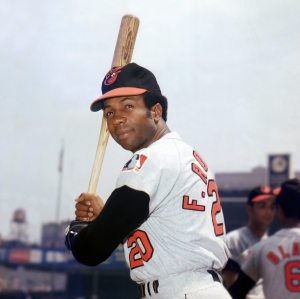
Prior to the 1966 season, the Baltimore Orioles pulled off what remains arguably the most lopsided trade in baseball history. Frank Robinson, a former Rookie of the Year and MVP with Cincinnati, was sent to Baltimore in exchange for Jack Baldschun, Milt Pappas, and Dick Simpson. Defending the move, Reds owner Bill DeWitt infamously labeled Robinson an "old 30." The legendary outfielder responded by authoring the greatest season of his career, instantly transforming the Orioles into a global baseball powerhouse. In that 1966 debut, Robinson delivered a season for the ages, capturing the American League Triple Crown and becoming the…
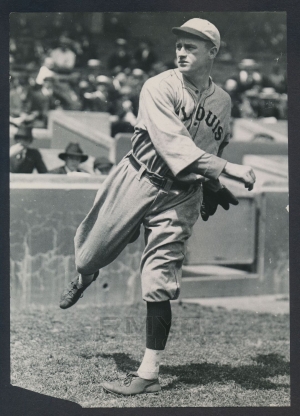
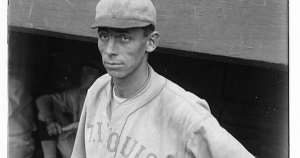
The greatest pitcher in the history of the St. Louis Browns, and arguably the owner of the most memorable name in the sport, is Urban Shocker. Though his career began and ended with the New York Yankees, his seven-year peak in St. Louis (1918–1924) cemented his status as the premier arm of the franchise’s Midwestern era. After a quiet debut following a 1918 trade from New York, Shocker exploded into the regular rotation in 1919. What followed was a stretch of durability and dominance rarely seen in the "Live-Ball" transition. From 1920 to 1923, Shocker reeled off four consecutive 20-win…
In the golden era of the Baltimore Orioles, few figures loomed as large—physically or culturally—as John Wesley "Boog" Powell. A massive, 6-foot-4 presence at first base, Boog was the primary power engine for the great championship teams of the late 1960s and early 70s. With a nickname born of childhood mischief and a swing that could launch mammoth home runs into the far reaches of Memorial Stadium, he was the definitive fan favorite of a generation. Signed as an amateur free agent in 1959, Powell debuted for Baltimore just two seasons later and quickly established himself as a premier run-producer.…
In 1902, Bobby Wallace made a cross-town leap that shifted the balance of power in Missouri, jumping from the National League’s St. Louis Cardinals to the fledgling American League’s St. Louis Browns. It was a move that secured the Browns a cornerstone for the next 15 years and provided the AL with its definitive defensive shortstop for its first decade. Wallace’s value was rooted in a revolutionary approach to the position. He was among the first shortstops to master the "continuous motion" play—fielding and throwing in one fluid movement—a skill that made him a statistical outlier in an era of…
Ken Williams arrived in St. Louis in June 1917 via the Portland Pacific Coast League, but his ascent was briefly paused by military service in 1918. He returned to the Browns in 1919, flashing his potential with a .300 average in limited action. It was a mere prelude to a breakout that would see him become one of the most feared offensive forces of the early Live-Ball Era. From 1920 to 1925, Williams was a model of elite consistency, batting at least .300 in six consecutive seasons. He was a master of the strike zone, maintaining an on-base percentage of…
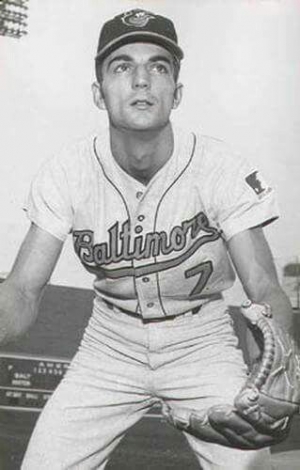
The Baltimore Orioles of the 1960s and 1970s were an impenetrable defensive fortress. While Brooks Robinson famously anchored the hot corner, Mark "The Blade" Belanger proved his equal play-for-play at shortstop. Spending 17 of his 18 seasons in an Orioles uniform (1965–1981), Belanger was the defensive heartbeat of the winningest era in franchise history. Belanger’s resume is a masterclass in middle-infield excellence. A perennial vacuum at short, he captured eight Gold Gloves and, from 1973 to 1978, reigned as the annual American League leader in Defensive bWAR. He was a three-time overall leader in Total Zone Runs, consistently turning hits…
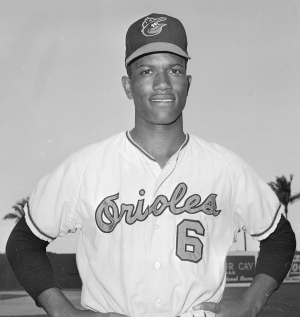
While the legendary Orioles infield of the 1960s and 70s took the headlines, Paul Blair patrolled center field at a level few have matched in the history of the sport. A defensive gem of the highest order, Blair roamed the outfield for Baltimore from 1964 to 1976, serving as the air-traffic controller for the greatest era in franchise history. Blair’s defensive resume is staggering. A twelve-time American League leader in Total Zone Runs (seven of those in center field), he captured eight Gold Gloves as an Oriole. His range was so vast that he consistently ranked among the top ten…

ATLANTA BRAVES VS. NEW YORK YANKEES

Mar 13, 2026

Buy your Tickets to see Atlanta Braves vs. New York Yankees HERE!

TORONTO BLUE JAYS VS. MINNESOTA TWINS

Mar 13, 2026

Buy your Tickets to see Toronto Blue Jays vs. Minnesota Twins HERE!

TOURS: TRUIST PARK

Mar 13, 2026

Buy your Tickets to see Tours: Truist Park HERE!

COLORADO ROCKIES VS. TEXAS RANGERS

Mar 13, 2026

Buy your Tickets to see Colorado Rockies vs. Texas Rangers HERE!

 
Harlond Clift arrived in St. Louis in 1934, immediately manning third base with a rookie campaign that featured 14 home runs and a .260 average. While he led the American League in strikeouts that year, Clift authored a rare and impressive mid-career adjustment. Unlike many power hitters who remain plagued by the "swing-and-miss," Clift refined his approach, drastically reducing his strikeouts while becoming one of the most disciplined hitters in the game. This transformation turned Clift into a premier offensive weapon. He paired his power—recording four 20-home run seasons in St. Louis—with elite patience, registering five years with over 100…
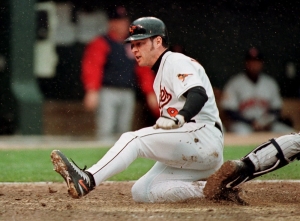
Best known for his sideburns and that inexplicable (actually, many think they can explain it) 50 Home Run Season in 1996, Brady Anderson played 14 seasons for the Orioles.
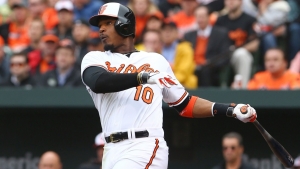
In the winter of 2008, the Baltimore Orioles executed a franchise-altering trade, acquiring Adam Jones as the center jewel of a five-player package from Seattle in exchange for Erik Bedard. It was a transaction that would define an era; had the deal been a simple one-for-one swap, the Orioles still would have emerged as the runaway winners. Jones stepped into center field as a 22-year-old and anchored the position for the next 11 seasons. A five-time All-Star and four-time Gold Glove winner, "Pappo" became the heartbeat of the clubhouse. He was a model of durable power, swatting at least 25…
While Ken Singleton first established himself as a frontline starter in Montreal, it was his 1974 trade to Baltimore that transformed him into one of the most feared and disciplined hitters in the American League. The Expos’ decision to part with the switch-hitting outfielder remains one of the most regrettable moves in their history, as Singleton would spend the next decade becoming a cornerstone of the Orioles' offensive philosophy. A three-time All-Star (1977, 1979, and 1981), Singleton combined steady power with a surgical approach at the plate. He reeled off four consecutive 20-home run seasons between 1977 and 1980, peaking…
Dave McNally arrived in Baltimore as a 19-year-old in 1962, flashing immediate brilliance with a two-hit shutout in his debut. By the mid-60s, the crafty left-hander had evolved into a cornerstone of the rotation, famously firing a four-hit shutout in the clinching Game 4 of the 1966 World Series to secure the franchise’s first title. It was the start of one of the most dominant pitching runs in the history of the American League. From 1968 to 1971, McNally authored a standard of excellence that remains the benchmark for Orioles' southpaws. He reeled off four consecutive 20-win seasons, headlined by…
While Bobby Grich is often associated with the California Angels, he "cut his teeth" and reached his statistical zenith as a member of the Baltimore Orioles. A first-round pick in 1967, Grich was so talented that he forced the Orioles to trade away an incumbent All-Star (Davey Johnson) just to get his bat and glove into the lineup full-time by 1972. It was a move that paid immediate dividends, as Grich became the premier all-around second baseman in the American League. Grich was a cornerstone of the Orioles' defensive "Iron Wall." Between 1973 and 1976, he captured four consecutive Gold…