


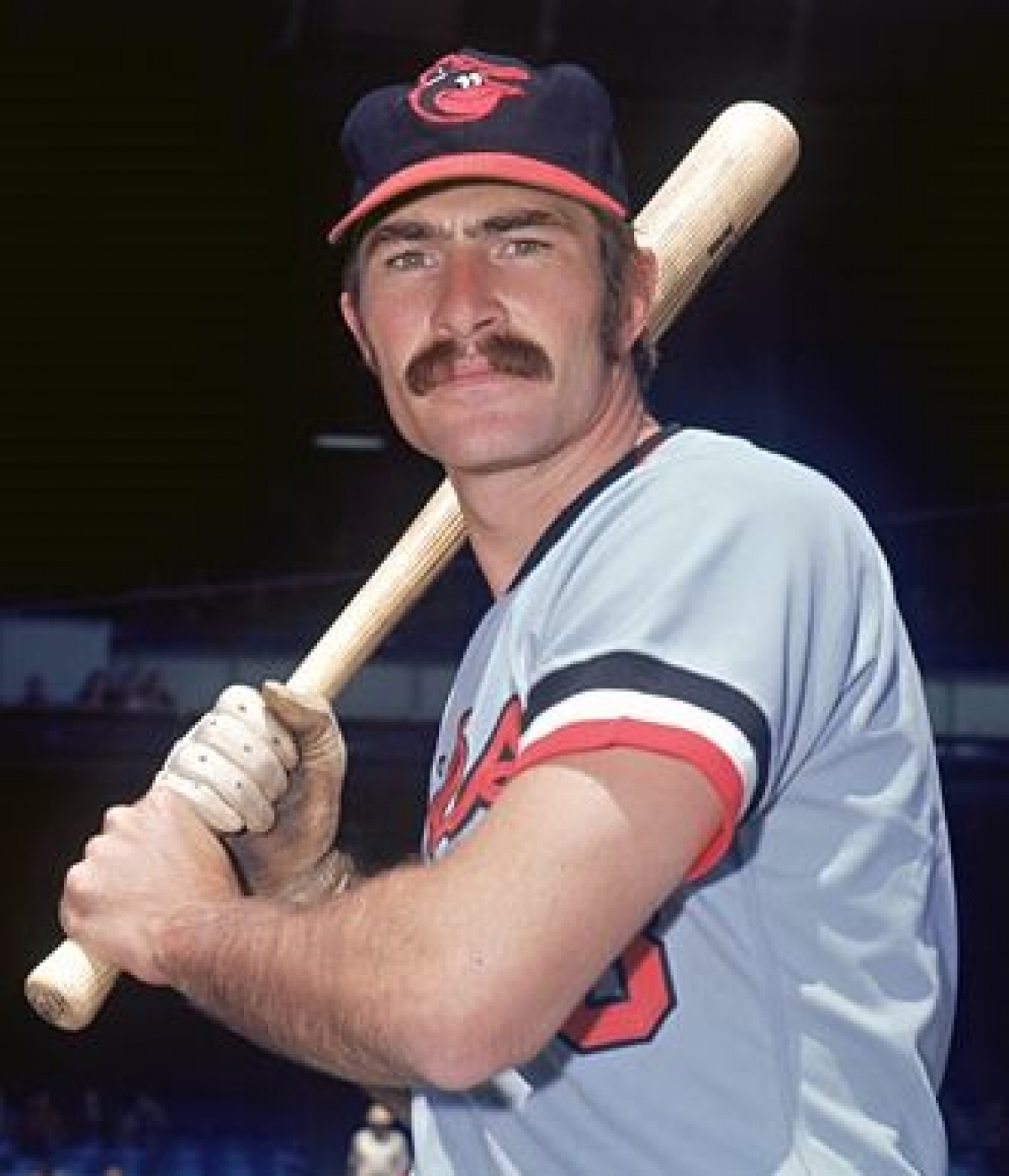


While Bobby Grich is often associated with the California Angels, he "cut his teeth" and reached his statistical zenith as a member of the Baltimore Orioles. A first-round pick in 1967, Grich was so talented that he forced the Orioles to trade away an incumbent All-Star (Davey Johnson) just to get his bat and glove into the lineup full-time by 1972. It was a move that paid immediate dividends, as Grich became the premier all-around second baseman in the American League.
Grich was a cornerstone of the Orioles' defensive "Iron Wall." Between 1973 and 1976, he captured four consecutive Gold Gloves, anchoring a middle infield alongside Mark Belanger that remains the gold standard for run prevention. His 1973 campaign was a masterpiece of "Era Dominance"; he set an all-time Major League record with a .995 fielding percentage and recorded a staggering 4.0 Defensive bWAR. That same year, Grich led the entire American League in total bWAR with an 8.3, proving that his "invisible" value was more impactful than the league's most famous sluggers.
Offensively, Grich was a pioneer of the "on-base revolution." While his .262 Baltimore average was modest for the era, his elite eye produced a .372 on-base percentage and five seasons of 13 or more home runs. He was a three-time All-Star in Charm City before departing for California as a free agent in 1976. Remarkably, though he played nearly 450 more games for the Angels, Grich’s peak value remained in Baltimore, where he accumulated more bWAR (36.0) in just seven seasons.
Inducted into the Baltimore Orioles Hall of Fame in 1998, Grich remains a favorite of historians and analysts alike—a player whose true greatness was revealed not by the back of a baseball card, but by the modern metrics that prove he was a giant of the diamond.

Comments powered by CComment