

Committee Chairman
5. Boomer Esiason
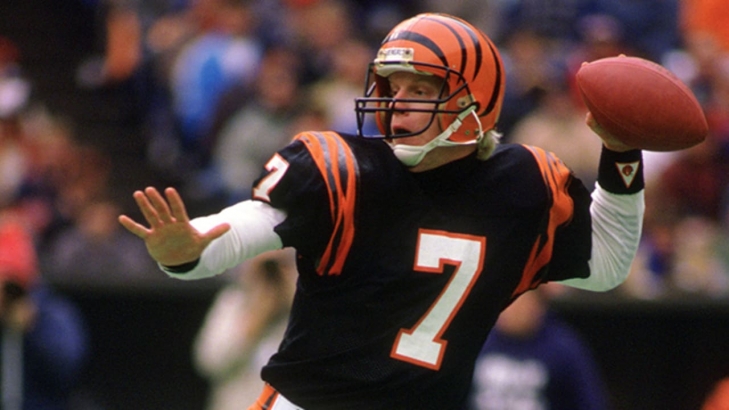
Chosen in the second round (38th overall) of the 1984 NFL Draft out of Maryland, Norman "Boomer" Esiason arrived in Southwestern Ohio as the designated heir apparent to franchise legend Ken Anderson. Despite falling to the second round, Esiason held the distinction of being the first quarterback taken in his draft class. Armed with a fiery swagger, a cannon for a left arm, and an innate knack for play-action deception, he stepped into the starting spot and ushered in a high-octane era of Cincinnati football.
Esiason brought commanding physical stature and left-handed pocket poise to the position. Operating under head coach Sam Wyche, he became the field general for Cincinnati's innovative "No-Huddle" offense. Esiason possessed one of the smoothest, most convincing play-fake motions in NFL history, freezing linebackers with subtle ball handling before launching deep vertical strikes off play-action. His quick mental processing allowed him to dictate tempo, catch defenses in bad personnel groupings, and spread the ball across the field with touch and velocity.
Esiason saw his first extensive action as a rookie in 1984, starting four games while learning behind Anderson. By 1985, he assumed full-time starting duties, leading Cincinnati to a 9-7 record while throwing for 3,049 yards and 27 touchdowns.
In 1986, he made his first significant step into elite levels by earning his initial Pro Bowl. Esiason totaled 3,959 passing yards and 24 touchdowns, guiding the NFL's best offense and helping the Bengals attain a 10-win season. Following a challenging, strike-shortened 1987 season across the league, Esiason rebounded with one of the best individual quarterback performances of the 1980s.
Esiason’s peak campaign came in 1988 when he led the league's most potent offense. He posted a 97.4 passer rating, threw for 3,572 yards, and scored 28 touchdowns with only 14 interceptions. He earned the AP NFL MVP award along with First-Team All-Pro and Pro Bowl selections. Significantly, Esiason led the Bengals to a 12–4 season and an AFC Championship appearance, bringing Cincinnati back to Super Bowl XXIII for a memorable rematch against the San Francisco 49ers.
Esiason upheld his elite level over the subsequent two years, securing Pro Bowl selections in 1989 and 1990. During a 1990 game against the Los Angeles Rams, he delivered a remarkable performance, throwing for 522 yards—the third-highest single-game passing record in NFL history.
Traded to his hometown New York Jets before the 1993 season, Esiason demonstrated he still had plenty of skill by earning his fourth Pro Bowl selection in his first year in East Rutherford. After playing for New York and Arizona, Esiason returned to Cincinnati for a memorable final season in 1997. Coming off the bench late in the season, he went 4-1 as a starter, throwing 13 touchdowns with only two interceptions, finishing his career on a high note.
In his 10 total seasons with the Bengals (1984–1992, 1997), Esiason played in 134 regular-season games, accruing 27,149 passing yards and 187 touchdowns alongside 1,293 rushing yards and 7 rushing scores. At the time of his departure, he ranked right beside Ken Anderson at the top of virtually every franchise passing leaderboard. In 2023, the organization celebrated his legacy by inducting Esiason into the Cincinnati Bengals Ring of Honor.
3. Geno Atkins
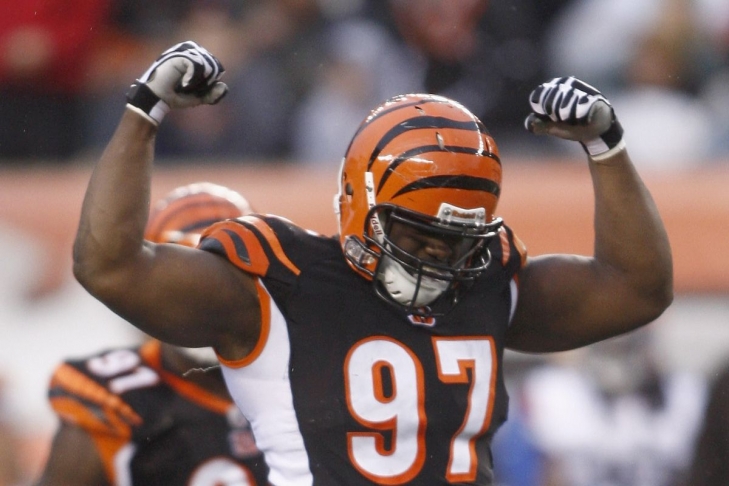
Geno Atkins from the University of Georgia was picked in the fourth round (120th overall) of the 2010 NFL Draft by the Bengals. He faced many questions about his size; at 6 feet 1 inch, scouts doubted he had the length to compete inside against large interior linemen. However, Atkins utilized his low center of gravity and quick first step, transforming the role of a modern three-technique defensive tackle and becoming a key part of Cincinnati's defense for more than ten years.
Atkins played with leverage and leverage-driven power. He combined a violent, quick-hand swim move with a bull rush that caught guards on their heels, collapsing passing pockets directly into the quarterback's face. His sudden lateral quickness allowed him to shoot B-gaps before interior linemen could set their stance, making him a nightmare against draw plays and inside zone schemes.
In 2010, as a rookie, Atkins played mainly in a rotational role and recorded 3.0 sacks. He became a starter in 2011 and quickly achieved recognition by earning his first Pro Bowl selection and Second-Team All-Pro honors, thanks to his 7.0 sacks.
His career peak came in 2012 when he led as an interior lineman, recording 12.5 sacks, 53 tackles, and four forced fumbles. That year, he earned his first First-Team All-Pro honor and his second Pro Bowl invitation, playing a key role in a defense that took Cincinnati to the playoffs.
After suffering an ACL tear midway through the 2013 season, Atkins returned to top form in 2015. He tied his career high with 11.0 sacks, earned his second First-Team All-Pro nod, and led a 12–4 Bengals team to an AFC North crown. Atkins rattled off six consecutive Pro Bowl selections from 2014 through 2019, including a 10.0-sack campaign in 2018. Across the 2010s, no defensive tackle in the NFL recorded more total sacks than his 75.5.
A severe shoulder injury limited Atkins to just eight games in 2020, bringing his tenure with the Bengals to a close. In 11 seasons in Cincinnati (2010–2020), he played in 161 regular-season games, racking up 75.5 sacks, 384 total tackles, 99 tackles for loss, and 8 forced fumbles. His decade-long dominance earned him a coveted spot on the NFL 2010s All-Decade Team.
2. Ken Anderson
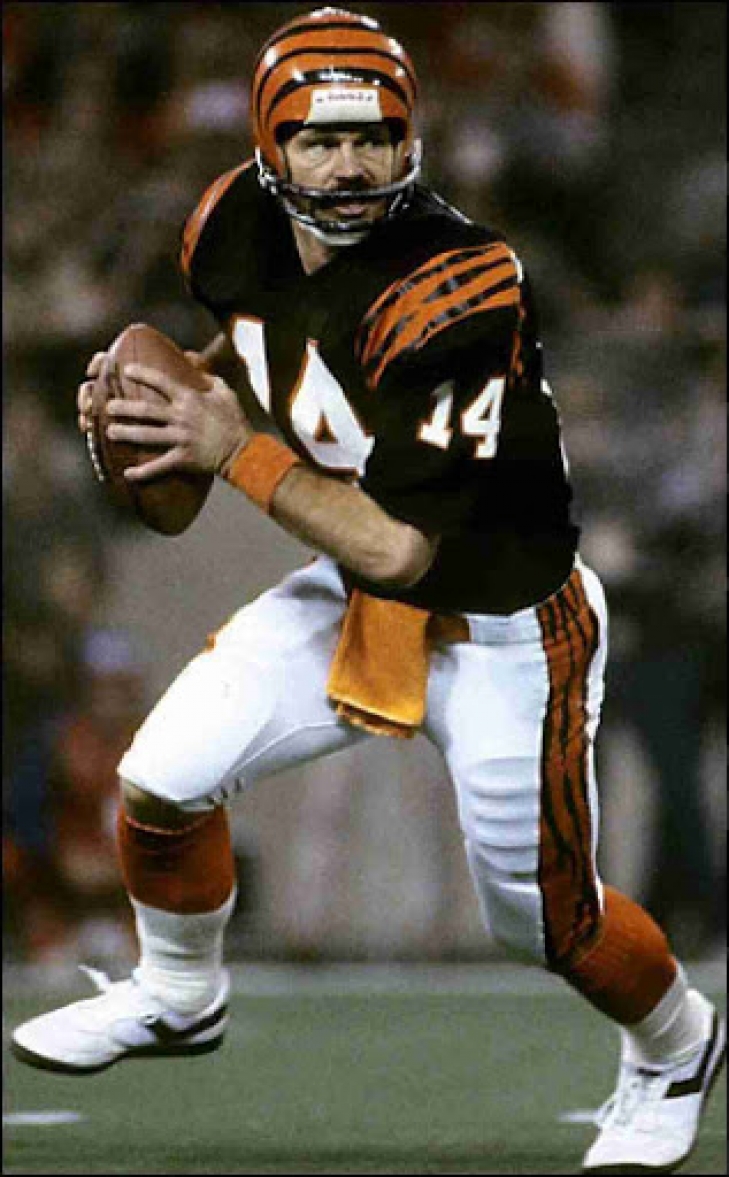
Ken Anderson was drafted in the third round (67th overall) of the 1971 NFL Draft from Division III Augustana College. He joined Cincinnati quietly, without the fanfare typically given to marquee college stars. Throughout his 16-year career with the Bengals, Anderson developed into an accurate passer, a trailblazer of contemporary offensive strategies, and one of the most productive quarterbacks in franchise history.
Anderson provided a clear blueprint for effective passing. Under offensive coordinator Bill Walsh's guidance, he became the primary driver of what is now called the "West Coast Offense." Anderson emphasized quick reads, precise dropback footwork, and accurate ball placement on short and intermediate horizontal routes. While he had the arm strength to challenge defenses deep, his true skill was in his decision-making—consistently taking what defenses allowed and avoiding costly turnovers.
Anderson assumed the permanent starting role in 1972, guiding Cincinnati to a 7-6 record before emerging as a top-tier passer in the following two years. In 1974, he won his first league passing titles, leading the NFL in passing yards (2,667) and passer rating (95.7), with a completion percentage of 64.9%.
He led the NFL in passing yards again in 1975, with 3,169 yards and 21 touchdowns, earning his first Pro Bowl and Second-Team All-Pro honors. Off the field, his character was recognized with the 1975 Walter Payton NFL Man of the Year award. He continued his excellence with another Pro Bowl appearance in 1976, consistently helping Cincinnati remain in playoff contention despite roster changes late in the decade.
Anderson's career reached its peak in 1981. After overcoming early-season setbacks, he delivered an outstanding season, achieving career bests with 3,754 passing yards, 29 touchdown passes, and a league-best 98.4 passer rating. He secured all major individual awards, including the AP NFL MVP, AP Comeback Player of the Year, AP Offensive Player of the Year, and the Bert Bell Award, along with First-Team All-Pro honors.
Most importantly, Anderson guided Cincinnati to a 12–4 record, a legendary victory over San Diego in the icy "Freezer Bowl," and the franchise's first-ever appearance in Super Bowl XVI. In the championship game against San Francisco, Anderson completed 25 of 34 passes for 300 yards and two touchdowns, setting a then-Super Bowl record for completion percentage (73.5%).
During the strike-shortened 1982 season, Anderson set an NFL single-season record by completing 70.6% of his passes (218 of 309 for 2,495 yards), a record that stood for nearly three decades. He earned his fourth career Pro Bowl nod and led the league in completion percentage once more in 1983 (66.7%).
As injuries began to take their toll, Anderson transitioned into a backup role behind Boomer Esiason before retiring following the 1986 campaign. Across 16 seasons in Cincinnati, he played in 192 regular-season games, holding enduring franchise records with 32,838 passing yards and 197 touchdown passes, while adding 2,220 rushing yards and 20 rushing touchdowns on the ground. At the time of his retirement, he ranked sixth in NFL history in career passing yardage.
Long regarded as one of the finest quarterbacks not yet enshrined in Canton, Anderson reached the final doorstep as a Senior Finalist for the Pro Football Hall of Fame Class of 2026. When the franchise created the Cincinnati Bengals Ring of Honor in 2021, Anderson was fittingly enshrined as one of the four inaugural charter members alongside Anthony Muñoz, Paul Brown, and Ken Riley.
1. Anthony Munoz
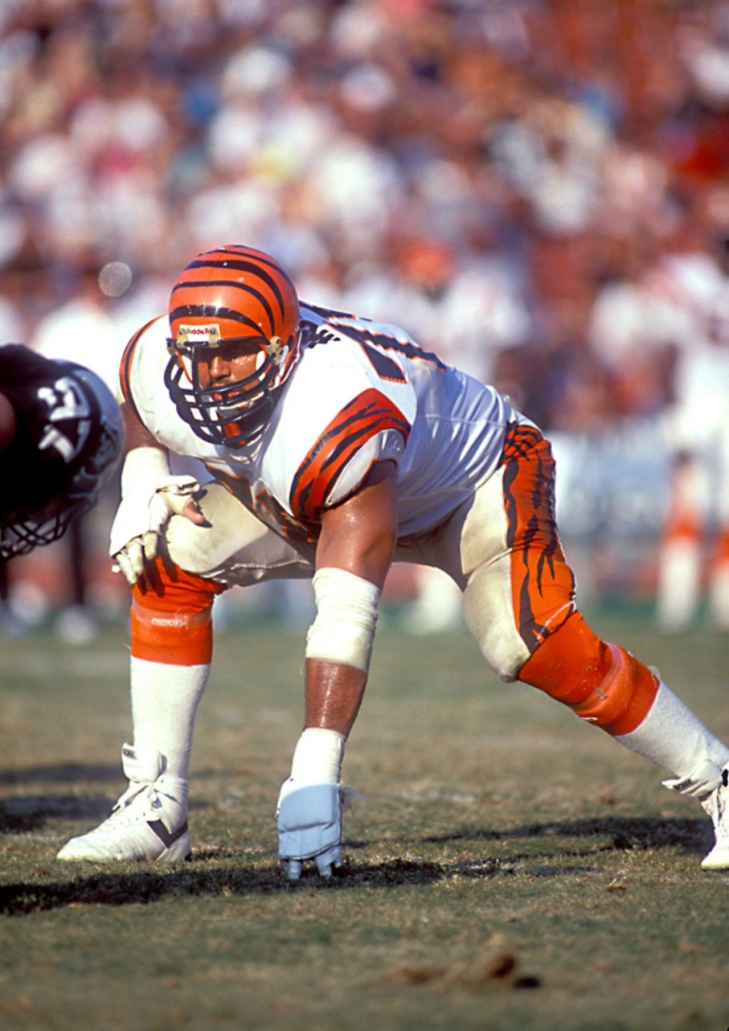
Who else could it possibly be?
Drafted third overall in the 1980 NFL Draft from USC, Anthony Muñoz joined Cincinnati after excelling in both football and baseball at college, winning national titles in each. Despite significant knee injuries that kept him out for most of his last two college seasons and led several teams to pass on him, the Bengals made a strategic gamble. This choice laid the groundwork for the franchise's success over the next 13 years and is often regarded as producing the NFL's greatest offensive tackle.
Muñoz, standing 6 feet 6 inches and weighing 278 pounds, redefined what edge pass protectors are capable of. With basketball-style footwork and exceptional upper-body strength, he could handle top pass rushers independently, without assistance from tight ends or running backs. His intense offseason training—lifting heavy weights and running stadium stairs—built his exceptional fourth-quarter stamina. In pass protection, his wide stance and forceful hand strikes effectively countered both speedy rushers and powerful bull-rushers. In the running game, he demonstrated explosive lateral quickness, allowing him to reach block interior tackles or ascend to the second level to block linebackers.
Muñoz made an instant impact as a rookie in 1980, starting all 16 games and earning PFWA All-Rookie Team honors while nearly halving the sacks surrendered by Cincinnati's offensive line. His sophomore season in 1981 launched an unmatched decade of individual dominance. Anchoring Ken Anderson's blind side, Muñoz earned his first First-Team All-Pro selection and Pro Bowl trip while powering the Bengals to an AFC Central title, a victory in the icy "Freezer Bowl," and an appearance in Super Bowl XVI.
From 1981 to 1991, Muñoz achieved an impressive streak of 11 consecutive Pro Bowl selections. He was awarded First-Team All-Pro honors in nine of those seasons (1981–1983, 1985–1990) and received Second-Team All-Pro recognition in two (1984, 1991). Additionally, he was named NFL Players Association Lineman of the Year four times (1981, 1985, 1988, 1989) and was recognized as NFL Alumni Association Offensive Lineman of the Year four times (1987, 1989–1991).
His athletic versatility made him a weapon near the goal line. Lining up as a tackle-eligible receiver on short-yardage plays, Muñoz caught seven career passes for 18 yards and four touchdowns, including a touchdown reception from rookie Boomer Esiason against Cleveland in 1984.
During Cincinnati's 1988 championship season, Muñoz served as the physical anchor for the league's top-ranked rushing attack. He led the way for Ickey Woods and James Brooks as the Bengals stormed to a 12–4 record and advanced to Super Bowl XXIII, where his line gave up zero sacks in a heartbreaking 20-16 loss to San Francisco.
Off the field, Muñoz established himself as a Pillar in the Queen City community. His charitable devotion earned him the 1991 Walter Payton NFL Man of the Year award, highlighting a career dedicated to youth programs and civic leadership across Southwestern Ohio.
Battling lingering injuries in 1992, Muñoz played eight games in his final year in Cincinnati before retiring after 13 seasons. Across his regular-season career in stripes, he played in 185 games, starting 182 of them.
Selected to the NFL 1980s All-Decade Team, the NFL 75th Anniversary All-Time Team, and the NFL 100th Anniversary All-Time Team, Muñoz represents the gold standard for his position. His legacy received its ultimate national recognition when he was elected to the Pro Football Hall of Fame in 1998 on his first ballot, standing as the first primary Bengal to enter Canton. In 2021, when the franchise created the Cincinnati Bengals Ring of Honor, Muñoz was enshrined as an inaugural charter member.
Muñoz will likely be number one for decades to come.
